← Passion Struck with John R. Miles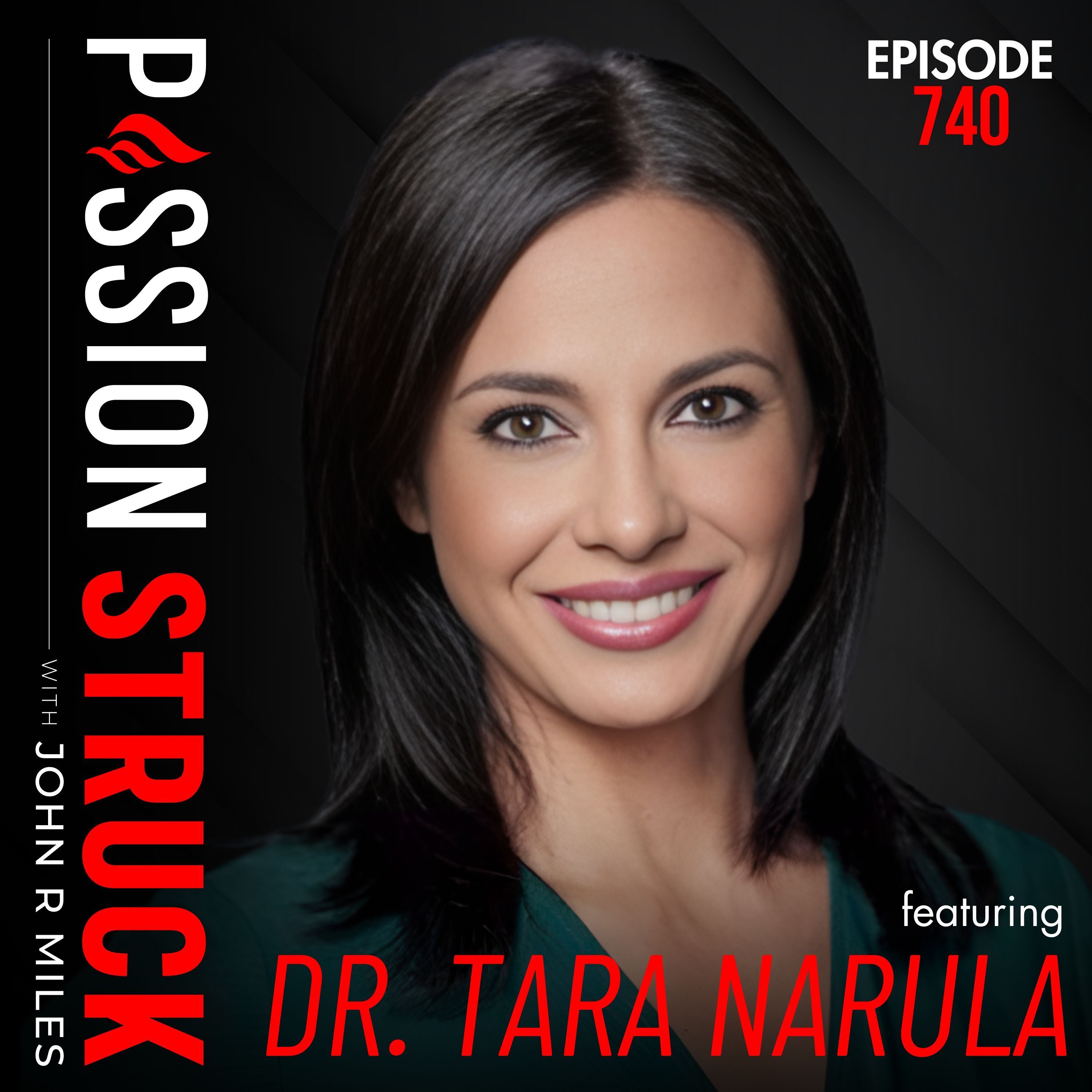
Passion Struck with John R. Miles
Become the CEO of Your Health Through Resilience | Dr. Tara Narula — EP 740
01:00:27
Loading summary
Transcript70 lines
- [00:01]
Progressive Insurance Announcer
This episode is brought to you by Progressive Insurance. Do you ever find yourself playing the budgeting game? Well, with a name your price tool from Progressive you can find options that fit your budget and potentially lower your bills. Try it@progressive.com, progressive Casualty Insurance Company and affiliates. Price and coverage match limited by state law. Not available in all states.
- [00:22]
Grocery Outlet Announcer
Welcome to Big Savings this week at Grocery Outlet, your extreme value headquarters. Right now, Sanderson Farms. Boneless skinless chicken breasts are only $1.99 per pound and get one dozen large large cage free eggs for only 99 cents. However you cook them up, you're saving big on fresh quality. Stock up on these family favorites today. These deals are only available until March 17 while supplies last selection varies by store. See weekly ad or in store for grade and size details.
- [00:48]
John Miles
Grocery Outlet Bargain Market Coming up next on Passion Struck.
- [00:53]
Dr. Tara Narula
Hopefully when we start to realize how damaging stress is to us on a long term basis, then we start to realize how important turning off the stress response is. And that is where therapy comes in and mindfulness and meditation and exercise and all of the things that we are in control of. So it's not our body in control of us. We can actually flip the switch and release the counter mechanisms to turn dial it down. And that's really my hope too is that people recognize okay, stress chronically is bad, even acutely. We know there are things like stress induced heart attacks when you have a sudden stressor, but that we are empowered and there are ways that we can elicit the reverse reaction.
- [01:35]
John Miles
Welcome to Passion Struck. I'm your host John Miles. This is the show where we explore the art of human flourishing and what it truly means to live like it matters. Each week I sit down with change makers, creators, scientists and everyday heroes to decode the human experience and uncover the tools that help us lead with meaning, heal what hurts, and pursue the fullest expression of who we're capable of becoming. Whether you're designing your future, developing as a leader, or seeking deeper alignment in your life, this show is your invitation to grow with purpose and act with intention. Because the secret to a life of deep purpose, connection and impact is choosing to live like you matter. Hey friends. Welcome Back to episode 740 of Passion Struck. Over the past several episodes in our Life beyond the Script series, we've been exploring what it means to evolve beyond the roles, identities and expectations that once defined us. Earlier this week in my conversation with Dave Asprey, we looked at transformation through a biological lens. How our brain, nervous system and physiology shape our resilience, energy, and emotional capacity. Because rewriting your life isn't only psychological, it's also physical. But today we shift the conversation to something even more fundamental. Because what if one of the most powerful determinants of your health isn't just genetics or lifestyle or access to care? What if it's resilience? Not resilience as grit or endurance, but as as a learnable skill that shapes how your body responds to stress, trauma, illness and uncertainty. My guest today is Dr. Tara Narula, Board certified cardiologist, chief medical correspondent for ABC News, and author of the new book the Healing Power of Resilience. Tara's journey didn't begin in a newsroom or even an operating room. It began with curiosity, entrepreneurship, becoming a patient herself and recognizing that modern medicine too often treats the body while overlooking the mind. As Tara explains in this conversation, human beings are far more resilient than we realize, and that resilience can profoundly influence recovery, well being, and even survival. In today's episode, we explore what it truly means to become the CEO of your own health, how fear, stress and trauma physically impact the body, why connection and love act as powerful buffers against disease, and how small daily choices can produce outsized health outcomes. This conversation is about healing, but more importantly, it's about agency. Because your health is not something that simply happens to you, it's something you participate in. Before we dive in, a quick ask if this episode resonates with you, share it with someone who might benefit from it. You can also watch the full conversation on YouTube. And if you haven't yet, leaving a rating or review on Apple Podcasts or Spotify helps more people discover these important conversations. Now let's dive into my conversation with Dr. Tara Nerulo. Thank you for choosing Passionstruck and choosing me to be your host and guide on your journey to creating a life that matters. Now let that journey begin.
- [05:03]
Rakuten Announcer
Don't you wish everything was more rewarding with Rakuten? Almost everything is. You can earn cash back on those new shoes you've been wanting. You can save on the next trip you book. You can cash in on groceries. Just join, shop your favorite brands and save Target, Instacart, Expedia, Macy's, Sephora, cvs. The list is long. Save online, in store and at over 22,000 restaurants. And and when it's time to redeem those rewards, get your money exactly how you want it. Choose PayPal, check, Bilt points, or cash out with gift cards. So go ahead, take a trip, fill a cart. Order dessert. Rakuten is a world of rewards. Join today for free. Go to rakuten.com or get the app that's R a K u T E
- [05:53]
Progressive Insurance Announcer
N. Support for this podcast comes from Progressive, America's number one motorcycle insurer. Did you know? Riders who switch and save with Progressive save nearly $180 per year. That's a whole new pair of riding gloves and more. Quote today, Progressive Casualty Insurance Company and affiliates national average 12 month savings of $178 by new customers surveyed who saved with Progressive between October 2022 and September 2023. Potential savings will vary.
- [06:27]
John Miles
I am so honored today to have
- [06:29]
Podcast Host (Interviewer)
Dr. Dr. Tara Narula join me on Passion Struck. Tara, how are you today?
- [06:33]
Dr. Tara Narula
I'm good. How are you?
- [06:35]
Podcast Host (Interviewer)
I am doing fabulous. And I was so excited when this opportunity came to interview you about your brand new book, the Healing Power of Resilience. Congratulations on its launch and bringing that into the world.
- [06:48]
Dr. Tara Narula
Thank you so much. I appreciate it.
- [06:50]
Podcast Host (Interviewer)
So on this show, I really like to focus on human flourishing. And sometimes people ask what does it mean to be passion struck? And, and I always tell them it's not something you just fall into. It's something typically you have to pursue with intentionality. And I think your backstory is an amazing example of someone who is passion struck. We often think that people stumble into positions like yours on the news and it just happens without any effort or forethought in the background. But you actually started this journey, as I understand it, as an internal. And I was hoping maybe you could take us back to there.
- [07:28]
Dr. Tara Narula
Absolutely. Well, I love the concept of following your passion and your mission and your dreams and really finding that. And so for me, John, when I was young, I grew up, my father was a cardiologist. I loved science. So I always was definitely destined, it seemed, in some direction that had to do with science. But at the same time, I really loved writing and communicating and teaching. And so when I was actually in medical school, school, I remembered telling my friends at the time that, you know, and this was back in the early 2000s, that I wanted to do what Sanjay Gupta did. And at the time, he was really the only doctor who you saw on television talking about medical and health issues. And I remember my friends at the time saying, well, how are you possibly going to do that? I mean, that's a very niche, tiny little role. How are you going to get there? And I said, I don't know, but I'm going to find a way because I do believe that there's really value to, to Someone who can really communicate the science in a relatable, understandable, approachable way. We can do all the research we want in our labs and in our clinical trials, but if people don't really understand it and it doesn't resonate with them, then it doesn't matter. So I went off to my residency in Boston at Brigham and Women's Hospital in Harvard, again with that sort of dream in the back of my mind. But at the time, I was immersed in my residency, which is a lot of work and a lot of effort, and I said to my program director, I'm interested in medical journalism. And he said, well, I'm not quite sure how to help you. I wish I could help you. We don't really have a program here. So at that point, I thought, okay, well, I'm applying for my cardiology fellowship. I can apply anywhere in the country. And I intentionally applied to programs in New York City, thinking if I want to pursue this dream along with my cardiology training, I should really be positioned in the right place. So that was intention. Point number two was coming to New York City. So I came to New York. I was doing my cardiology fellowship at New York Presbyterian Cornell, and. And in my very final year, I thought, okay, this is it. This is the time where I need to pursue this. So I basically had no connections, no idea how to do this. So I just sent my resume, and of course, I was a cardiology fellow to every single magazine, news network, talk show that I could just with it with an email, a cold email on my resume saying I was interested in learning about medical journalism and media and I would love to work for free. And every single place I sent my letter to, nobody wrote me back except for NBC Nightly News. At the time, there was a person there named Robert Bizzell who did all of their science reporting. And they wrote me back and said, we'd love to meet you. We've never had a doctor as an intern. We always have college students, but go ahead and come on down. And so I went and met with them, and they accepted me into this internship, and I was thrilled. But challenge number two was I had to go back to my program director in cardiology and say, listen, I need to leave the hospital one day a week to go to Rockefeller center, which they weren't too thrilled about. Um, and I had to really fight to get that approved, but thankfully they did. And so for a one day a week, my last year of cardiology, I went to Rockefeller center, and I just learned everything I could. So I Worked with the medical team that was doing Robert Bizzell's nightly news health reporting. And I learned how they research the stories that they put on the news, how they write them, them, how they pick the doctors that they want to interview, what makes for a good doctor. Right. So I got to see everything behind the scenes and it was really an invaluable kind of training and teaching for me. And then when I finished my fellowship, of course I could no longer be an intern because you're not in a training program. So I started my job at Lenox Hill Hospital as an attending cardiologist. And I intentionally now went to the PR office and said I'm happy to comment anytime there's any news stories, studies, I'll just send them my way. And so one thing led to another. At first I did some like web based interviews and articles here and there, a couple local news segments. And then eventually I did a couple things. One thing for cnn, NBC. And I landed on CBS Morning, the CBS Morning show, and did a segment. And pretty soon after that I would say maybe one or two times after being on their show, I got a call saying they didn't want me to work anywhere else and they wanted to hire me as a medical contributor exclusively to work at CBS. And so in 2014, I signed a contract with CBS News and started as their medical contributor. By 2020, I was their senior medical correspondent and then have moved from there to cnn, NBC, and now abc where I've been for the last year as their chief medical correspondent. So it was a 20 year in the making journey, but well worth the effort on a path that was not carved out, but one that I felt really strongly and passionately about.
- [12:10]
Podcast Host (Interviewer)
I just have to ask you a background question. So I worked for Lowe's for many years and I know many people at Home Depot. And although the companies were very different, we shared a lot of the same values and respected each other. How different are the newsrooms? Because you've been with a bunch of them. Are they drastically different or are they fairly similar?
- [12:33]
Dr. Tara Narula
As my agent says, I've checked off my network bingo card. Yeah, I've pretty much been everywhere except for Fox. I think they run pretty similarly in the sense that they all have a team dedicated at least to healthcare reporting and these individual silos or niches. And then you're sifting through the same sort of data, you're reading the same studies, the same stories, and really then it comes down to what do you think is important, what do you want to put out there? And for the most part, they compete with each other. So they all want to get the top stories and the top bookings. So there's a lot of similarity in terms of what if you have all three networks on, you may see very similar coverage. And then I think the differences lie in obviously the people that you see on the air and sometimes the way they tell stories. So some shows are kind of a faster paced and some shows are slower. So there are little bits of differences. But in general, I would say at least morning television kind of has that same pace, intensity, energy, no matter where you are.
- [13:29]
Podcast Host (Interviewer)
Okay, well, thank you for that. And as I understand it, your father is a well known cardiologist down in South Florida. Yeah, I'm talking to you from Tampa, but I've spent a lot of time in Aventura and Hollywood earlier in my career. What a melting pot it is down there. It must have been a really eye opening place to grow up.
- [13:47]
Dr. Tara Narula
I loved growing up in South Florida. I was actually just talking about that with another native person from Miami and saying how it was such a wonderful place to live as a child. You could be outside all the time. It was so multicultural. It's just a beautiful place to live in general, but definitely as a kid it was the perfect environment. And yes, my father is a cardiologist. He's been practicing down in Miami since, gosh, since I was born in the 1970s. And he's still practicing. Actually he's 88 years old and he's still seeing patients, which is incredible. But he's one of the kind of. He was very famous during his time as one of the founders of the field of cardiac electrophysiology. So he wrote the initial books on the electrical system of the heart, did all the initial research, traveled all over the world and lectured. So I like to tell the story. When I went on my interviews for cardiology training and I would sit there and say I wanted to come to this institution, the people interviewing would, interviewing me would say, are you Dr. Nerula's daughter? Everybody at that time knew him because he was so famous. Yeah, it was a great legacy to continue the tradition in cardiology where I
- [14:47]
Podcast Host (Interviewer)
wanted to go with this because I understand your mom was also in the medical profession. I think she's a nurse.
- [14:53]
John Miles
Was.
- [14:54]
Podcast Host (Interviewer)
So you went to Stanford. You get these two degrees in economics and biology. If I have my background. Correct. And you don't initially follow in either of their footsteps, you take a dramatic turn and you decide to be an entrepreneur. We have a lot of younger audience Members. One of the things I wanted to do with this is oftentimes we think where we start out is going to be the ending point. I'm a big believer and I have a daughter who's a senior in college now trying to make the same decision you were. And I think sometimes when you're that young, it's the perfect time to go after something because you don't have a lot of the baggage that comes later on in life. But what was going on at that point in your life.
- [15:34]
Dr. Tara Narula
Yeah, it's interesting. So I, as I said, I like my whole life I had a bend towards science. I went to science camp I loved. I would go to the hospital and make rounds with my father. I did research in the department of cardiac surgery when I was in high school. So I went to Stanford thinking I'm going to be a cardiac surgeon. And then as I was there, it was actually my father who said to me, medicine's a really hard life, especially if you want to have kids and a family. Have you ever thought about business? And I said, well, I haven't really thought about business. It was never really an interest of mine. But I thought, well, maybe he knows what he's talking about. So I majored in economics, which I really was not passionate about. And I did a minor in biology to keep my pre meds in case I needed them. But I like to tell the story. When I graduated Stanford, I would. All my colleagues were going on these interviews for investment banking and consulting in Silicon Valley and in San Francisco. And they would say to me, why do you want to do this? And I would sit there in the interviews and I had no answer because I really, my heart wasn't in it. So when I graduated Stanford, the day of graduation, I had no job, I had no plan, I had no job. And it was like a really difficult feeling to feel like I've finished four years of college and I have no idea where I want to be or what direction I'm going in. And at the time I thought, okay, well, what could I do with my degree that wasn't investment banking or consulting? And initially I thought about opening a restaurant, which my family thought was a little bit of a huge undertaking. So I said, well, maybe I could do something smaller. Jamba Juice, which is a very big company in California, was super popular at the time, making smoothies, coming from South Florida. I knew how popular that would be there. And at the time that, you know, back in 1998, seven, there was really not much in the smoothie world. In South Florida, believe it or not. So. So I thought this could make a great business and a great franchise, that I could open multiple stores all over Florida and really this could be my baby. So I had no idea how to go about doing that. And so I took a job after graduating Stanford, back at the Jamba Juice on the Stanford campus. I lived in a hotel and I worked for a month blending smoothies and seeing how many fruit cartons arrived every day and how many blenders they had and how many employees they had. And I would keep a little notebook in my hotel room of all of this information. And when I finally thought I had accumulated enough knowledge, I quit my job at Jamba Juice and I flew back to Miami and I bought a book from Barnes and Noble on how to write a business plan and just really, at 22 years old, crafted this on my own. But my store, which is ultimately called Sun Juice Smoothies, took about nine months to get off the ground. A full pregnancy. And it was my heart and soul as an entrepreneur. You. I did everything. I picked the menu board, the logo, the tile in the store, the every single detail was me. And then I worked in the store every day of the week for 12 hours a day. I was the manager, I had 15 employees. And here I was in my early 20s. And so the store was really successful, actually. We got a lot of write ups in magazines in Miami. We were doing really well. And so it should have been a really great time in my life because I had built this business. And after a year we were making money and I was unhappy. And I remembered coming home at night, I was living at home with my parents and sitting down at dinner one night and just saying, I can't do this anymore. I cannot do a job where my heart is not in it. And I said, I have to. I want to go to medical school. And so all of a sudden, my whole career, everything pivoted. So I had to take the medical school entrance exam and finish my pre meds and actually got into medical school while I still had Sun Juice. And so I left for California. My parents ultimately sold the store when I was finishing my first year of medical school, but it is still there today. I actually just went there to visit with my family last weekend when I was home and I took my kids to Sun Juice to get smoothies. So it's still alive and flourishing and it's really great to see something you've built from scratch. And it was a great lesson for me in so many ways. It built my confidence. But the one thing it showed me that was so important. Well, two things. Number one, that you have to love what you do, otherwise you will die a little bit every day on the inside. And number two, that it's okay to shift gears, that nothing is set in stone, that you can pick up and move and change your trajectory if you need to.
- [19:39]
Podcast Host (Interviewer)
I think it's an important lesson at any age, especially as so many people in the middle of their careers are unfulfilled with what they do and they want to do a switch.
- [19:48]
Dr. Tara Narula
Exactly.
- [19:50]
Podcast Host (Interviewer)
But a couple of the things that you said resonated with me. I have an older son as well who's 27. And when he was graduating high school, one of his best friends, both his parents are podiatrist. And the father said instead of sending you to uva, where he ended up going, and he's now on his path to becoming a doctor, he said, I'll give you the $200,000 it's going to cost and have you start a startup business because I guarantee you, you're going to learn a lot more doing that startup than you ever are going to uva.
- [20:23]
Dr. Tara Narula
Yes, yes. You learn a lot when you're thrown into it and you're doing everything.
- [20:28]
Podcast Host (Interviewer)
So one of the things I am sure that you learned during that experience was the power of resilience. And where I'm going with this is your new book because it's something now that you have seen as one of the most powerful determinants of our health outcomes. Maybe you can bring those two together.
- [20:48]
Dr. Tara Narula
I think, to back up, obviously, resilience is something that I've always really believed in. I remembered like I recently picked up my high school yearbook and there was a quote. My senior page quote is the first quote in the book, which is, I am the master of my fate. I am the captain of my soul. Right. And that is a quote from a poem, Invictus. And so clearly from the age of 16, I had this belief that we are really in control of our destiny, no matter what happens to us. And obviously I saw resilience in my own life professionally. I witnessed it in my parents story. My father was an immigrant. And then when I was in medical school, I had my own health journey. An issue where I lost vision in part of my eye and had to suddenly become the patient. And my whole world became really upended at that point. But then I think what really became apparent to me was as I was entering this world of journalism and at the same time seeing patients here in my office practice In Manhattan, I was seeing stories of resilience and the people that I would tell their stories of health challenges. And I was seeing it in my patient practice when I would walk in the room and tell someone, you have heart disease, or you just had a heart attack, or you have heart failure. And, you know, what really emerged was a couple things. One, that human beings are so much more innately resilient than we believe. And I think it's really important that they understand that this is a gift, that we all have this ability to be resilient in the face of challenge, whatever that challenge may be. But number two, that it's a skill that we can build and that the worlds of psychology teach us that. And I think the third thing was that unfortunately, to date, the worlds of psychology and clinical medicine have been sadly separated. So all the research that has happened on resilience and stress has happened very siloed in the psychology worlds and departments. Medicine is practiced in a whole nother way where we tell patients diagnoses, we give them a prescription, we tell them they need surgery, and we send them on their way. And as I was talking to my patients and seeing that fear they had every time I told them a diagnosis and they would look at me and say, when am I going to be myself again? It became apparent to me that we're really missing the boat. And we're not healing people and we're not helping them because we're not looking at their psychological well being, number one, and tying it into their physical health. But number two, we're not teaching them how to be resilient in the setting of what is a traumatic event. Nobody talks about a medical diagnosis as a trauma. We talk about a financial loss, our business collapses, divorce, a death in the family, a hurricane. Right? But we don't think about being told you have breast cancer as a traumatic event. But every time you face a trauma or challenge, your body's reaction is the same. It is a stress reaction. You elicit the release of cortisol and epinephrine and norepinephrine, and all of these hormones, which initially were designed to help us survive, but when they stay turned on all the time, are actually damaging. So the stress in our lives currently in America is just out of control. And we allow that stress response to be turned on chronically day after day, and it's doing a lot of damage. And so what we need to do is when we have a traumatic event happen is to turn on a resilient response. And we can do that no matter what the trauma is. But in particular, my hope with this book is that we realize that we need to do this for our patients. We need to scaffold them with support so that when something happens, we tell them, look, here's your diagnosis and here's my book. Here's the pathway to taking what's happened to you and building your resilience so that ultimately you can maintain your joy and quality of life. And for me, that's what it's about. My patients want quality of life. They're never going to be who they were before something happened, but they can still be an engaged, happy, joyful person in the world. And that is my hope, is that with resilience you can retain joy and meaning in your life no matter what you're faced with.
- [24:38]
John Miles
Before we continue, I want to pause for a moment. One of the deeper themes of this series is reclaiming ownership of your identity, your direction and your well being. And health is a central part of that. On theignitedlife.net, our substack, I'm sharing companion reflections and articles for each episode in this series designed to help you think more deeply about your own life. Because awareness creates insight, but action creates change. If you want to explore the reflection for this episode, visit theignitedlife.net Now, a quick break for our sponsors. Thank you for supporting those who support the show. You're listening to Passion Struck on the Passion Struck Network. Now let's return to the conversation with Dr. Tara Narula.
- [25:25]
Podcast Host (Interviewer)
Tara, my wife, for background, is a primary care provider, but before she went back to school for that, she spent about 10 years in the NICU, well, in the neuro intensive care unit at one of the large hospitals down here in Tampa. And she saw something that is similar to what you saw. Patients would come into the ICU, nearly identical diagnosis. Some that she would think there's no way they're going to make it. Others that she would go home at night and say smooth sailing. And she'd come home and come back the next day and find out they passed away. So it was interesting because they had the same access to care, same treatment plans, all this care around them, yet very divergent outcomes.
- [26:09]
Dr. Tara Narula
That's right.
- [26:10]
Podcast Host (Interviewer)
When was the first time you realized as a doctor that medicine alone wasn't the only thing that could explain what was happening?
- [26:19]
Dr. Tara Narula
Well, as I said, I mean, my own story of being a patient back when I was in medical school, when you're on the other side and something's happening to you and you have to suddenly Realize, how am I going to get through this? I realized these are the things that were important to me, that helped me move forward. And so that was probably the beginning. But then, as you said, with your wife's example, my patients have taught me so much. So I have seen exactly what you said. I have seen patients with the same diagnosis, end stage heart failure, and one of them dies within months, the other one lives for years. What's the difference between these two people? They're on the same medications and sometimes it comes down to what's happening up here, right? It's the psychology of it. How engaged are they in life? How connected are they? What is their outlook? Are they hopeful and optimistic? Do they have love in their life? How do they think about challenges when they happen? So all of the resilience skills and tools that I put in the second half of the book, I have seen my patients exhibit and I have seen it make a difference in the course and the trajectory of one patient's outcome versus another. So when I was writing the book and picking out from the worlds of psychology research what I wanted to include as my tools, so to speak, in the last half of the book, it was important for me to also draw upon what had been helpful to me and what I had seen work in my patients. And that is where kind of the eight things that we talk about come into play. Because I think they're all really critical. And in addition, it was really thought out, well thought out, about how I wanted to sequence those tools with acceptance being the first one and and progression all the way to purpose as the last one. Because you do in some ways have to accept your diagnosis before you can start to work on all of the other things. This kind of plan or blueprint for how to approach something that's happened to you was born out of my own experiences, what I've seen in the lives of friends, family stories I've covered, but most importantly in my patients, to be
- [28:17]
Podcast Host (Interviewer)
honest, and I'm going to just take with what you just said there for a second yesterday. Well, I should say today, as we're interviewing this, I released an episode with the world famous poet Mark Nepo and a poem he wrote called Accepting. This was very influential to my sister, who unfortunately passed away from pancreatic cancer a couple of years ago. But where I want to tie this in is through. At about the same time that I launched this podcast about five years ago, Carolyn was diagnosed with pancreatic cancer. At that time, I did a number of interviews with Mark Hyman and Then I interviewed Maria Menounos, and all of them use this term as in different ways, but especially Maria and my sister, that they realized that if they wanted the treatment that they needed to become the CEO of their own health. And it's a term that I've heard you use as well. What does that mean for listeners in practice? Not just conceptually.
- [29:13]
Dr. Tara Narula
I think, unfortunately, we think as patients that we're going to show up, our doctor is going to tell us what to do, and we're going to be on our way. And we give over a lot of that control and power to the physician. And for many years, medicine, medicine was crafted like that, with the physician being up here and the patient being down here, even the way when you walk into a room and the patient is on the bed laying down and the doctors hovering above them, the whole way medicine has been structured is in that very hierarchical way. And I think, thankfully, over the last five, 10, 15 years, we have seen this shift in terms of really understanding that patients have to be in the driver's seat. They have to be the ones leading the ship of their own healthcare. And that means a lot of things. It means reading about your diagnosis and understanding it so that you can be health literate and know what the course is, what symptoms to look out for, what the treatment plans are. It means taking charge of your visits. So when you go into the visit, making sure you're prepared with your medications, your questions you want to ask, writing things down, being very purposeful about what in many cases is very limited time with the doctor, 15, 20 minutes, you don't have a lot of time, so you have to be organized about that. It means being thoughtful about finding second opinions. I tell patients a lot. You didn't like that provider, go find somebody else. Right. We do this instinctually when it comes to our money. We do it when it comes to our kids. We're not so great about really fighting for what we need to fight for ourselves. And yes, we just did a segment on this, a really great one on Good Morning America that was all around being the CEO of your health. And we structured it as preparing for your visit before you even go in to see the doctor. What are the things that you need to be thinking about on the day of your visit? What are the things that should be top of mind? And then when you leave, how do you implement that? Right. How do you take whatever was prescribed to you and make sure that it happens? We need to start telling people to think about their health care in the same way as if they were running a business or running something for their. An investment or their child. It is an investment in your health. And it takes being mindful. It takes being organized. It takes effort and time. You have to show up for your visits. You have to plan for them. Health care is. It is in your hands. And now, particularly with all the tools we have in terms of, like, devices, the watches and all of these tech tools, hopefully. And I think it does. It allows people to be even more on top of what's happening in their body with data that they can bring in to the doctor's office. But I hope that people come away from all of these conversations understanding that, yes, they are in the driver's seat. They should be in the driver's seat. The doctor is there to give you advice and to guide you, but you have to be the one behind the wheel.
- [31:58]
Podcast Host (Interviewer)
Yeah. And my way of thinking about this is our bodies are like a tree. And oftentimes the medical system tends to treat us like the leaves or the branches instead of looking at the whole holistic tree. So either your primary care provider that you go to should be trying to look at the whole holistic self, but that's what you, as a person, needs to do. And so that's why that example of Maria Menounos is so great, because she was having all these symptoms that she wasn't feeling well. She didn't like the answers that she was getting. And so she had the resources to get a full body scan, which is what diagnosed her pancreatic cancer. In the case of my sister, she did a CAT scan or she did a CT that showed that she had stage 2 pancreatic cancer, but she didn't believe it. So she had MD Anderson do an MRI that showed it was only stage one. She fought for them to go in and look at it closer. And when they examined it, it, in fact, was still stage one, which allowed her to get the Whipple surgery, which prolonged her life by several years, had she just listened to the first advice she'd gotten. So those are just two extreme examples, but good examples.
- [33:14]
John Miles
But what I wanted to ask you.
- [33:15]
Podcast Host (Interviewer)
Why do you think so many patients hesitate to ask questions? And what's the cost of staying quiet in the exam room?
- [33:22]
Dr. Tara Narula
It's a huge cost. And again, I think they hesitate because there's still that feeling of the doctor's in charge. It's a very differential dynamic, and I respect them. I don't want to step on their toes. I don't want to impose, but questions are the way that you're going to get the information you need to be able to take care of yourself. And as I said, because you have such limited time, you want to think about what do I want to ask before I even go in the room, what's important for me to know. And I think that data, that information really key to helping you with whatever the next steps are going to be. So people should absolutely ask questions. They should read about and go and read about your issues, your and then I think believing your symptoms of what you just the examples you gave. Too often people are dismissed by the health. I see it. I see patients come to me who tell me, I saw another cardiologist who told me my chest pain was acid reflux or I'm just anxious. Your body, if something's going on and if you feel something's not right, you have to advocate, you have to push. And I think that's a big lesson, particularly for women. I work a lot in the space of women's health and go red for women in the American Heart association and a lot of what we try to educate is that women should not downplay their symptoms. They really have to pay attention and they have to seek out help. You know what's happening to you better than anybody else.
- [34:40]
Podcast Host (Interviewer)
I want to dive a little bit into your chapter two on the mind body divide. And a few years ago I had Dr. Chris Palmer on the show and he did this amazing research that found that our guts are actually linked to, to many of the mental health issues that, that people have, which was a pretty big breakthrough discovery. But a lot of people look at western medicine and who practice western medicine historically separate mental and physical health. And I saw this myself, I'm a combat veteran and I had a lot of symptoms that were overlapping PTSD and I had several traumatic brain injuries. And in the VA they tended to lean more towards treating the mental health aspects and weren't focusing on the traumatic brain injury issues, which turned out to be the case of most of my symptoms because I had long term inflammation of the brain and so I had to fight to get that care. But what you have shown is that fear, anxiety, depression directly influence things like inflammation, immune response, blood pressure. So to me, what you're really making is the case that ignoring mental health isn't just incomplete, but it's medically negligent, 1,000%.
- [35:59]
Dr. Tara Narula
And gosh, I really hope that this book, if nothing else, it really, it, it does open people's eyes to just how important psychology and what's happening up here is to the Development of disease and to how well we're able to treat disease. They're all linked to the psychology. Your brain is linked intricately to every other process in your body. And those, as I said, when you have an event happen to you, it literally affects the amygdala, the hippocampus, all of these structures in the brain. Hormone release from the brain that then triggers release of hormones from the adrenal glands that then triggers cortisol and inflammatory markers. And I think one of the difficult things is that the research on the stress reactions in our body is relatively new. So this field has evolved over the last 100 or so years. It's not that old. And so we are learning more and more. But I think people think of stress as this amorphous concept. Oh yeah, stress is bad, but they don't understand biologically what's happening inside. And so I've given a lot of talks in cardiology actually to groups about what happens when you are under stress to your body. And I think if people can start to see the pathways, that is very helpful. And one of the things that's happened in the last several years is the emergence of imaging technology which has allowed us to do PET scans of the brain and the body at the same time. And suddenly you're seeing the brain structures light up and the bone marrow cells that are inflammatory be released and the lining of the blood vessels becoming irritated or inflamed. And it becomes very hard to ignore the fact that everything is tied together. And so hopefully when we start to realize how damaging stress is to us on a long term basis, that then we start to realize how important turning off the stress response is. And that is where therapy comes in and mindfulness and meditation and exercise and all of the things that we are in control of. So it's not our body in control of us. We can actually flip the switch and release the counter mechanisms to turn dial it down. And that's really my hope too, is that people recognize, okay, stress chronically is bad, even acutely. We know there are things like stress induced heart attacks when you have a sudden stressor, but that we are impact and there are ways that we can elicit the reverse reaction. And that is critically important for us in terms of disease prevention and how we heal and how we treat disease. And that, that's what I said is really the missing gap right now in medical, in the medical world, we just don't. In my practice, I wish I had a psychologist to refer every patient to. And I don't. But that should be built in the same way that we have cardiac or we have tobacco cessation programs and we have physical therapy and we have nutrition. Why, John, do we not have resilience training programs for people in health care so that when they're given a diagnosis or they're undergoing treatment, we are supporting them psychologically to help them recover? It is low hanging fruit. It would not cost a lot of money to hospitals and healthcare. And my dream is that this book pushes hospitals and healthcare systems to build resilience training programs into every single one of them.
- [39:14]
John Miles
Yeah.
- [39:14]
Podcast Host (Interviewer)
And I think it goes to the point that we were talking about earlier about acceptance. And especially if you're getting a major diagnosis, a life changing diagnosis, that acceptance carries a lot of weight. Anything does. And you're going to go through probably that same storming, norming, forming type of mentality, but it's difficult to do that alone. That is a huge example of where helping that patient with a guide to process that acceptance could be a huge thing. So I completely agree with you.
- [39:47]
Dr. Tara Narula
We all need help. And I think, unfortunately, it's still like a stigma for people to talk about therapy. For example, I personally think everyone should have a therapist in their corner, someone to help them through stressful times, someone to teach them these resilience skills and coping skills and cognitive behavioral therapy skills. You know, it is so valuable to treat our mental health, to treat what's happening in our brain for so many reasons. But I wish that we can continue to pull the curtain back and stop making it a negative or shameful thing that is stigmatized.
- [40:21]
Podcast Host (Interviewer)
Tara, I want to jump to chapter five, which is one of my favorite ones from the book, because it's something that I study all the time. I wrote a whole book about this and I have. What we're going to be talking about is small changes, big impact. I call this the bee and turtle effect. And the reason I do this is I think a lot of times in life we have these goals. And so these goals become like a slow moving sea turtle who sees something in the different distance and is methodical about it. But then you need the worker bee. And the worker bee cares about the 24 hours of action that you do to produce for the hive. And I think what people don't realize is it's those small changes, those small actions which add up. And this show has been the number one alternative health podcast now for over three years. And people sometimes ask me because I get into a lot of personal development, how do you categorize this as alternative Health. Well, I study a ton of behavior science. And what I have heard from every one of those scientists I have ever interviewed is that it's the microchoices that we make in life that determine our sleep, our nutrition, our daily routines. So why is it so important for consistency and sustainability of these choices in your life to pay off?
- [41:46]
Dr. Tara Narula
I'm so glad you brought this up, because I see this in my practice every single day. And I think there are two things at play. I think people get afraid and overwhelmed with the concept of going from point A to point B, right? I want to lose 50 pounds. Oh, my God, how am I going to get to that point? I want to start training for half marathon, but that goal seems so far away. And when you set these big goals, it's wonderful. But I think for a lot of people, it becomes unreachable because you get overwhelmed by how am I ever going to get there? And that is where I think small choices, small changes can pay off because getting from point A to point B does not happen overnight. It takes little, small incremental changes that build up over time. I love the movie Shawshank Redemption where they say, time and pressure, right? When you're escaping, he's escaping from prison, it's time and pressure. That wall breaks down, right? It's both. And I think all of the changes I see my patients make, the ones who are successful, it's because they put in the time and they've made little changes that all of a sudden they look back and they say, my God, I used to only be able to walk a couple city blocks, and Now I'm walking 10 blocks and now I'm walking 20 blocks. Or I didn't think I would be able to add an additional 20 minutes to my sleep, but I started doing five, then I did 10. And so suddenly, as you make these small changes, it becomes easier and easier. I think that's the first thing. So giving yourself permission to have small be okay is really important. And then I think the next thing is recognizing that it's hard work. Anything you do, whether it's changing your diet and your nutritional status, or exercising or building in sleep, or building resilience skills, as I talk about in the book, this is not something that is just easily done, right? All of this stuff is conscious choices. So when you walk into that supermarket and you're trying to pick a cereal, you have to stop and look at the. Take the boxes out and read the labels and say, okay, I really want this one, but I'm going to do this one right. Or when you have to go to sleep at night and say, am I going to get up in the morning to work out? Okay, I really don't want to, but I'm going to do it. I'm going to get up in the morning. It is hard work to make these lifestyle changes, and that's true with the psychological changes, but the payoff is massive. And so I think recognizing time and pressure, little goals can result in big changes. But also you're going to have to put in the effort to get where you want, and that's okay. That is the key to unlocking habitual change, because then the habits and the patterns start to form and it becomes easier, which is why I'm a huge advocate for starting earlier in childhood with all of this, so that kids start to do these habits and these patterns early. So by the time they're adults, it's just ingrained. It's easy for them to make these choices every day. That makes sense for their health. Whereas, unfortunately, I see a lot of adults who have to rewire and retrain, and that's hard. It's hard work.
- [44:46]
Podcast Host (Interviewer)
A big reason why I advocate to so many people. Whether you want to read James Clear's book or Charles Duhigg's or Jud Brewer's or Tiny Habits, reading a book on the habit loop formation is absolutely, to me, essential reading for anyone because it, once you understand it, it makes so much sense and also sense on how you have to reset it if you get off track. So I want to talk about fear, because confronting fear is something that is really huge, especially if you have a health scare. And you write that acknowledging fear can actually fuel change. How do people learn to work with fear instead of against it?
- [45:23]
Dr. Tara Narula
Yeah, I think fear is a huge component of medical care and medical diagnoses. And what happens to you? I told you, when I became a patient, it was the most scared I've ever been. When I lost a vision in my eye. The most scared, hands down. And I remember that fear and I see it in the faces of my patients that I've cared for all these years. And it can paralyze you, where you literally think, how am I possibly going to go forward with my life? Because this is going to happen again. What if this happens again? What if tomorrow I have another stroke? What if tomorrow I have another heart attack? And that fear can really prevent you from moving forward. It can prevent you from making all of these changes, from enjoying your life. And so I think it was really important for me to say it's number one, it's normal. And I think to really have people recognize it is normal. And so many times with my patients, I will say, it's okay that you're afraid, and people just need to hear, and they love hearing, wow, it's normal that I feel this intense reaction because I was told I have heart disease. And I think just allowing yourself to recognize that that is a normal reaction, you are. You're not abnormal. To feel that way is the first step. And then I think the second is. And this is what I talk about with my patients, is really knowing that over time, the fear will get less and less. And I have had many patients where I have said, I cannot predict when you might have the next event. No one can. It's not in my hands. But I can tell you that in a month, the level will not be a fear and anxiety will not be where it is today. In three months, it won't be in six months. So you have to put one foot in front of the other. Day after day, keep doing what you're doing, keep growing, and eventually you will look back and realize, wow, a year has gone by and I have been okay. And just that time will diminish the fear. And then I think the last element is really, in many cases, working with a therapist. So sometimes the fear can be really overwhelming and hard to process on your own. And having someone who can apply techniques and like CBT or therapy techniques like that, that help you in the moment, stop and say, okay, I recognize I'm going down this pathway. This is what I'm going to do to shift how I'm thinking about this, which will then shift how I feel is really critical. And so I think time support by professionals can help groups who have gone through the same thing. Other people, role models, survivors, is invaluable. A lot of times for patients who've had a diagnosis, just talking with someone who can say, I've been there. I know what this feels like. Again, it's a validation and it's a. It's a light of hope to see someone else has gone through my journey and they're okay and they're still living their life. So, yeah, fear is a really powerful thing, but it doesn't have to stop us in our tracks.
- [48:14]
Podcast Host (Interviewer)
One of the things I was fearful of for so many years is I was exposed to a lot of traumatic issues, especially when I was in Iraq. And I was told by many of the peers I served with to just suppress it. No one wants to deal with that and I eventually it was. It became a real stumbling block for me. I could not move forward emotionally because I was holding onto so much. And it was a real fear for me to go through prolonged exposure therapy and cognitive processing therapy. You mentioned cbt. CBT is a component of it. But once I identified what those stuck points were and I dealt with them, my life opened up in ways that I couldn't even imagine. And it opened up healing in so many other parts of my life that were contained because of those stuck points. So I completely agree with what you're saying. Yeah, Tara. A big part of my work, in fact, I just finished my edits to my book that's coming out in the fall, is around the topic of belonging or mattering. And so I have really looked at loneliness, at hopelessness, burnout, all these different things. And I think that they're all a bigger symptom that so many people feel the word I use is invisible or unseen in their life. But as I had Julian Holt Lunstad, who's the professor who brought up that loneliness is as damaging as smoking 15 cigarettes a day. But I had Gordon Flood on the show as well, who's been studying mattering now for 30 years and has shown that it's a risk factor, like you have shown in your book, for heart disease, mortality, anxiety, depression, all kinds of different things. The bottom line is connection is extremely important, as Bob Waldinger and the Harvard Adult study showed. Why don't people realize how much that our relationships act as a buffer against stress and poor outcomes?
- [50:11]
Dr. Tara Narula
That's a great question. I don't know why they don't realize it. I think we live in a society in America that is very individualistic, right? Every man for himself. I can do this. I can do this without support. It's almost like it's like a great thing. If you can do something on your own, you don't need help. I feel like that is the culture that we teach that were brought up in other parts of the world. I think it's very different. And it's much more like group and community centric. But I agree with you. I've told the story many times of my friend Vivek Murthy, who I trained with in residency, who's written extensively, obviously about loneliness and what a crisis it is in this country. And I think, yes, we are starting to finally talk about that and recognize how damaging it can be to our health. And I hope that, and that's why I wrote about it in the book, is really opening up people's eyes to the fact that surrounding yourself with support. And that can be. That can take a lot of different forms. Right. That can be a yoga group that you join or a walking group. That can be a group of survivors. That can be one single friend, one person in your corner. There are so many ways to stay connected, but it is so critical. It's so critical for both our physical and our mental health to have that we are wired as humans to be connected to other humans. We are social creatures. We're not meant to survive alone. And so I think, yeah, I'm really glad that we're at a time where we're finally talking about this and recognizing it and hopefully teaching people all the multiple different ways that they can stay connected. I talk a lot about this with my patients, especially my patients who are older, many of whom naturally become more isolated because their family doesn't live close by or their friends have died. And we talk about what ways. How can they find ways to get involved with others? And again, maybe for some, that's their church group that they go to or if they. I have a patient who loves art, and we talked about, well, maybe there's an art club now with online. There are groups you can join online. Any way that we can stay engaged with others has meaning and value.
- [52:13]
Podcast Host (Interviewer)
Yeah. One of my favorite chapters of the book was your one on love. And I just want to read from it, if you don't mind. Yes, you write. As we contemplate how to build resilience, especially for the prevention or treatment of chronic disease, I can't help but think that it all comes down to love. And then you go to. A therapist of mine once told me to do an exercise, imagine yourself blind. And then you're suddenly granted the gift of being able to see again, but only for a few minutes. And he asked, would you. What would you want to see again in those few minutes? And you answered, the faces of David, Sienna, and Layla were the three people closest to your husband and your two daughters. The reason I'm bringing this up is on Tuesday, I released an episode with Dr. Steven Post, who wrote a book called Pure Unlimited Love. And I asked him to define it, and his answer was, in your last moments of love life, who would you want to see in those moments? And it reflected back to the same thing that you answered. Yeah, why is love so important?
- [53:16]
Dr. Tara Narula
Oh, it's so funny, because I had no idea how impactful this chapter was going to be. And I feel like everyone who's read the book has made the same comment that they've really highlighted this particular chapter. And I will say, for me, it was really important to include, include this chapter in the book. And it is a little bit different. Most of the psychologists who study resilience have not talked about love, but it was important for me again, John, because I've seen the power of it in my own life, in the lives of my patients and family and friends and the stories I've told. And I think love takes two forms. It takes, and this was important for me to convey that the idea of self love and self compassion, in order for us to love and be loved, we have to love ourselves. And I think really understanding who we are, giving ourselves grace, learning to love ourselves, imperfections and all that's step number one. And step number two is opening yourself up to that more intimate, deep connection with someone else that's different from the social connection that we talk about. And that intimate love, whether it be with a partner, a spouse, a parent, a child of yours, a sibling, there's something deeply moving there that kind of drives us forward, that heals us, and it's like nothing else. And I, again, I've seen it in my office where partners are lifting each other up when one is falling and the other one's in the exam room. Not physically, but mentally, they are boosting them. They are there with them every step of the way of their journey, helping them heal. Parents who come with their children to my office visits together, and I see that connection there and how helpful that elderly parent is by that child just being there at that visit. Love. You know, we release hormones when we touch and hug and have. Are physically affectionate. Oxytocin, the bonding hormone, right there is literally, again, a physical reaction that happens when we are intimately close with someone. And yeah, for me, it was really important to put that towards the end of the book and highlight that because for me and my vision of what's important in life, I think the reason we're here on this planet is to love and be loved and to learn how to love. Everything else doesn't matter. I think that is the key. And so really finding those really deep connections is really important. And thankfully, yes, I have been so blessed to find David and Sienna and Layla. And I love that exercise because it was so natural. I hadn't really thought about it. And when he said, close your eyes, it was like it came to my mind immediately. And so it's those moments where you realize, he said to me, you have everything you want right in front of you. All the time you just have to open your eyes and suddenly you're like, oh, my God, he's right. All the other stresses in my life, this thing that didn't work out or this, whatever, it doesn't matter. I have David and Sienna and Layla. It's so grounding and it makes you feel gratitude, which is another really important thing in terms of healing and living.
- [56:09]
Podcast Host (Interviewer)
Yeah. Isn't it so interesting when you write a book that the parts that you think are going to be the most consumable are completely different than what people gravitate towards? I. I have this chapter in my book called the Mosquito Auditor, and it became the chapter everyone wants to talk about. And I just thought it was a hooky, a goofy title and no one would resonate with it, but it's the one that people resonated with the most
- [56:35]
Dr. Tara Narula
and it was interesting. I remember when we were writing the book and the question came up, well, how do you define love? And I think it's exactly what you said. It is a difficult definition. I think for everyone it's different. For me it was when it is that connection where you give of yourself selflessly to someone else. I mean, to me, like, that is when you love someone, you sacrifice, you give to someone else. And that's a very different form of connection than other site types of social connection.
- [57:04]
Podcast Host (Interviewer)
Tara, as we get close to wrapping up, like, my big takeaway from reading the book is that what you're trying to tell people is that your health is something that doesn't happen to you. It's something that you need to participate in. What's one small decision someone listening today can make to become a better CEO of their own health.
- [57:26]
Dr. Tara Narula
I think as we talked about, advocating for yourself is really important. I hear a lot of people who say, I just didn't feel comfortable in that visit or I didn't feel heard, I didn't feel listened to. And that should never be the way that it feels when you're in the room with your physician. They especially in this day and age where it's very difficult to get information that's accurate. We have a lot coming out now from the seat. People don't know where to go for a trusted and a valuable source of information. Suddenly your primary care doctor, your trusted doctor, is the voice that you're going to want to go to. And so I think we just can't downplay the importance of finding a team, a person you know, who is your trusted healthcare provider that you feel seen and heard and valued and that you feel you can advocate for yourself. So really taking the time and effort and it's not easy to find a doctor that you love, but, but they're really going to be your partner in your healthcare journey. And so it's important to put the investment into finding someone that sees you for who you are as a whole person. That was great that you said that too because I think so many times we see the parts of the person, nobody's looking at the whole person and you have to look at the whole person.
- [58:36]
Podcast Host (Interviewer)
And you know what I love about your definition? It's the very definition of mattering. So you have to feel like you matter to your physician.
- [58:44]
Dr. Tara Narula
Yes.
- [58:44]
Podcast Host (Interviewer)
I have one last question for you that I ask all guests. What does it mean for you to live a passion struck life?
- [58:50]
Dr. Tara Narula
Well, it means to be passionate about what I do every single day. And I could not feel more blessed to see patients in my office and be a doctor and help people on their health journey and to be a medical journalist and teach on this really broad scale. So my dreams and passion towards my career have come true. I'm happy with where that part of my career is. And then I think the second half is passion in my life with my family. And I feel extremely blessed to have my husband and my two girls who are my, they are my life. Everything else could go away tomorrow and they're it. My kids are my legacy. So I, I have it. I've got passion in both areas, thankfully. And I feel very grateful for that.
- [59:31]
Podcast Host (Interviewer)
Tara, Often when I have a guest on the show, I'm doing a ton of research because of their obscurity and it's difficult to find interviews. You're the opposite. There were like so many interviews of you out there. I had to dive into them to get more of your backstory because you're so discoverable, people can search your name. But if they want to buy the book and learn more about this, specifically, where would you point them to?
- [59:56]
Dr. Tara Narula
Certainly they can go to Simon and Schuster, which is the publisher, and buy the book through Simon and Schuster. There's other outlets, obviously, Amazon target all kinds of places that they can buy. But I would say certainly starting with Simon and Schuster, Amazon is a great place to start.
- [60:11]
Podcast Host (Interviewer)
Okay, great. Well, thank you so much for joining us today. It was real honor to have you.
- [60:15]
Dr. Tara Narula
Thank you so much for having me. Such a pleasure to be with you today.
- [60:21]
John Miles
That brings us to the end of Today's conversation with Dr. Tara Narul. And if there's one message I hope
- [60:26]
Podcast Host (Interviewer)
you carry forward, it's this.
- [60:28]
John Miles
Your health is not something that simply happens to you. It's something you help shape through your choices, your connections, and your response to adversity. Tara's work reminds us that resilience is a skill, not a personality trait. Stress and trauma leave physical fingerprints on the body, and small, consistent actions can dramatically change outcomes. If this conversation resonated with you, I encourage you to explore Tara's book, the Healing Power of Resilience and reflect on one small step you can take today to become a better CEO of your own health. Next week on Passion Struck, I'm joined by Dr. Robert Wachter, one of the leading voices on the future of medicine, to discuss how artificial intelligence is transforming healthcare from diagnosing disease to reducing clinician burnout. AI has the potential to reshape how care is delivered and how decisions are made, but it also raises critical questions such as what happens to human judgment? What role will doctors play? And how do we ensure technology improves care without losing compassion? It's a fascinating look at where medicine is headed and what it means for all of us.
- [61:32]
Dr. Robert Wachter
I'm more optimistic about healthcare AI than I am about the AI and the rest of our lives. Because in healthcare I can't find a doctor, a nurse, or a patient who says the system's just perfect and we don't need to screw around with it. It's delivering the high quality, safe, accessible care at an affordable price. Nobody thinks that, and I don't think we can deliver on what patients need unless we have the assistance of a technology like AI. So it really is both the quality of the technology and the desperate need that we have to make things better.
- [62:05]
John Miles
If today's episode meant something to you, share it with someone who might benefit from it. Leave a five star rating or review on Apple podcasts for Spotify and explore more reflections from this series@theignitedlife.net until next time. Remember, you don't have to control everything that happens to you, but you can influence how you respond and how you move forward. I'm John Miles and you've been Passion struck.
- [62:39]
From Rebel Announcer
Did you know you can save up to 70% on the best brands just by shopping? @fromrebel.com we're talking about strollers, car seats, high chairs, espresso machines, cookware. Everything you need for way less. Here's how it works. Every single day, rebbl drops thousands of new products on the site for up to 70% off. It is a constant stream of endless deals from top brands like Uppababy, Nuna, Baby bjorn, Breville, Nespresso, KitchenAid, Le Creuset and more. But you have to act fast because every deal is one of a kind. So if you see something you love, make sure you add to cart fast. So stop paying full price when you don't have to. Whether it's baby gear, kitchen upgrades, or a treasure for your home you didn't know you needed, Rebel has it for way less. Up to 70% less. Shop from rebel.com and save big.