← Passion Struck with John R. Miles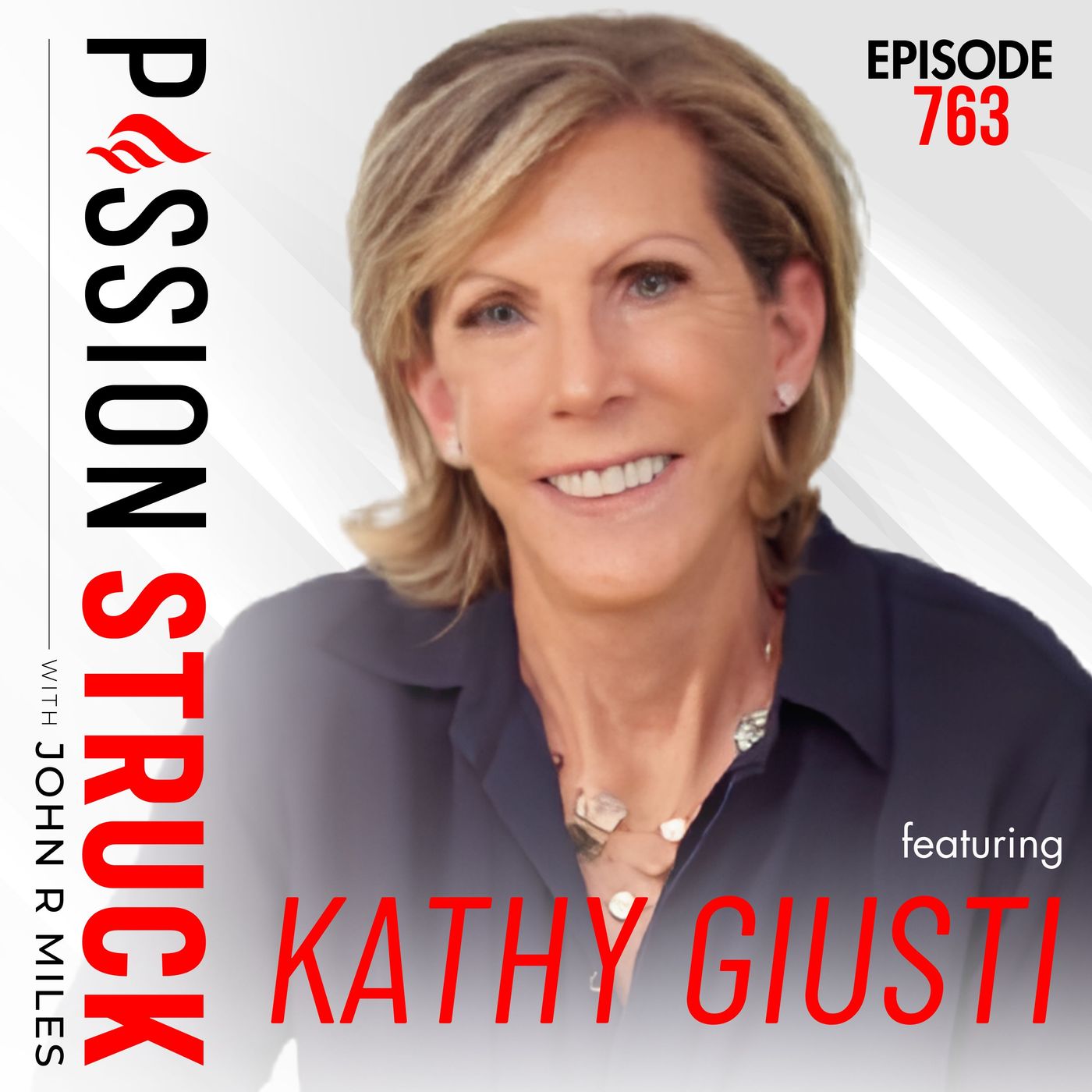
Passion Struck with John R. Miles
From Passenger to CEO: The Mindset That Can Save Your Life | Kathy Giusti - EP 763
00:57:11
What if beating cancer isn’t just about survival, but about transforming your life in the face of it? In this episode of Passion Struck, I sit down with Kathy Giusti, two-time cancer survivor, healthcare innovator, and founder of the Multiple Myeloma...
Loading summary
Transcript109 lines
- [00:01]
SpinQuest Advertiser
I'm here with spinquest, where you can play and win from the comfort of your own home with hundreds of slot games and all of the table games you love with real cash prizes. Right now, $30 coin packs are on sale for $10. For new users, it's all@spinquest.com that's s p I n q U-E-T.com SpinQuest is
- [00:24]
Liberty Mutual Advertiser
a free to play social casino void where prohibited. Visit spinquest.com for more details. And Doug, there's nowhere I wouldn't go to help someone customize and save on car insurance with Liberty Mutual. Even if it means sitting front row at a comedy show.
- [00:42]
Kathy Giusti
Hey, everyone, check out this guy and his bird. What is this your first date?
- [00:46]
SpinQuest Advertiser
Oh, no.
- [00:46]
Liberty Mutual Advertiser
We help people customize and save on car insurance with Liberty Mutual together. We're married. Me to a human, him to a bird.
- [00:53]
Kathy Giusti
Yeah, the bird looks out of your league.
- [00:54]
Liberty Mutual Advertiser
Anyways, get a quote@libertymutual.com or with your local agent.
- [00:58]
Kathy Giusti
Liberty. Liberty. Liberty. Liberty. Hate cleaning, Hate scrubbing. Hate dishwashing. Bro, we got you millions of videos about smart cleaning hacks will make your chores feel like a breeze. Download TikTok and check it out.
- [01:16]
John Miles
Coming up next on Passion Struck.
- [01:18]
Kathy Giusti
I think the fear of relapse is what survivors struggle with the most. Because whenever you have a certain ache or pain or things happen, your automatic instinct is to think the cancer is back. And it does happen. In multiple myeloma, we have survivors that have been out 10 years in remission and it's still relapsed. It does happen. That's why we continue to force progress on new treatments. And oncology has seen unbelievable advancements. Thank God.
- [01:48]
John Miles
Welcome to Passion Struck. I'm your host, John Miles. This is the show where we explore the art of human flourishing and what it truly means to live like it matters. Each week I sit down with change makers, creators, scientists and everyday heroes to decode the human experience and uncover the tools that help us lead with meaning, heal what hurts, and pursue the fullest expression of who we're capable of becoming. Whether you're designing your future, developing as a leader, or seeking deeper alignment in your life, this show is your invitation to grow with purpose and act with intention. Because the secret to a life of deep purpose, connection and impact is choosing to live like you matter. Welcome back, friends, to passion struck episode 763. Whether this is your first episode or or your 200th, thank you for being part of this global community committed to living intentionally, leading with purpose, and creating a world where Every person feels like they matter. If you've been following along, you know, we just wrapped up our Purpose by Design series where we explored a powerful idea. That purpose isn't something you stumble upon. It's something you design through your choices, your identity, your relationships, and the way you engage with possibility. But there's another truth we have to confront. Because sometimes life doesn't follow your design. Sometimes purpose isn't chosen, it's forged. That's why this month, which honors mental health awareness, we begin a brand new series called Forged in How Struggle Shapes Meaning, Resilience and transformation. And this series will unfold in four weekly acts. Week one focuses on endurance, how we face hardship. Week two focuses on recovery, how we rebuild from those hardships. Week three on transformation, how struggle reshapes us. And week four on contribution, how we turn pain into service. Because adversity doesn't just challenge who we are, it reveals who we're capable of becoming. And there may be no better person to begin this journey with than today's guest, Kathy Giusti. Kathy is a two time cancer survivor, a healthcare innovator, and the co founder of the Multiple Myeloma Research foundation, an organization that has helped transform one of the deadliest cancers into one of the most treatable. But her story didn't begin with innovation. It began with a moment. At 37 years old, at the height of her career, with a young family and everything finally falling into place, Kathy was diagnosed with multiple myeloma and given just a few years to live. And in that instant, everything changed. As she describes, when you're faced with that kind of reality, the question becomes unavoidable. What truly matters now? What she did next wasn't just about survival. It was about transformation. In this conversation, we explore what it means to become the CEO of your own life in a moment of crisis. Why urgency can be both a superpower and a cost. How broken systems force individuals to reclaim agency. And how adversity, when met with intention, can become a calling. Because this episode isn't just about cancer. It's about what happens when life forces you to confront your limits and you decide to expand them anyway. Before we dive in, a quick note. If this show has ever positively impacted your life, please share it with a friend or family member, leave a rating or review on Apple podcasts or Spotify and watch the full episodes on YouTube. It helps us reach more people who are searching not just for answers, but but for a better way to live. Now let's dive in to my conversation with Kathy Giusti. Thank you for choosing passionstruck and choosing me be your host and guide on your journey to creating an intentional life that matters. Now let the journey begin.
- [05:37]
SpinQuest Advertiser
Whether it's slots or live dealers, Spinquest.com has the fun and action you're looking for with Spinquest exclusives. Blackjack, roulette, baccarat, and even live dice with craps and bubble craps. The games never stop so you don't have to. And right now, new users get $30 coin packs for just 10 bucks. Play now@spinquest.com Spin Quest is a free
- [06:02]
Liberty Mutual Advertiser
to play social casino void where prohibited. Visit spinquest.com for more details. And Doug, there's nowhere I wouldn't go to help someone customize and save on car insurance with Liberty Mutual. Even if it means sitting front row at a comedy show.
- [06:19]
Kathy Giusti
Hey everyone, check out this guy and his bird. What is this your first date?
- [06:23]
SpinQuest Advertiser
Oh, no.
- [06:23]
Liberty Mutual Advertiser
We help people customize and save on car insurance with Liberty Mutual together. We're married. Me to a human, him to a bird.
- [06:29]
Kathy Giusti
Yeah, the bird looks out of your league.
- [06:31]
Liberty Mutual Advertiser
Anyways, get a quote@libertymutual.com or with your local agent.
- [06:34]
Kathy Giusti
Liberty Liberty. Liberty Liberty.
- [06:37]
Podcast Host
Protein packed meals in 10 minutes. TikTok's got millions of them. Could you whip one up in under eight? Probably. But hey, it's not a race. Grab the recipes on TikTok and start cooking. I am absolutely thrilled today to welcome Kathy Giusti to Passion Struck. Welcome, Kathy. How are you?
- [07:02]
Kathy Giusti
I'm great. Thanks so much for having me.
- [07:06]
Podcast Host
So, Kathy, that you have a great new book out that could be so helpful for millions of people who unfortunately are battling cancer. But your book is called Fatal to fearless 12 steps to beating Cancer in a Broken Medical System. What made you bring this out into the world and why was the right timing for it? 2026?
- [07:28]
Kathy Giusti
That's a good question. I started in working in oncology when I was diagnosed with multiple myeloma at the age of 37. So that was three decades ago. And I ended up starting the Multiple Myeloma Research foundation and really working toward accelerating a cure for that disease. You can imagine having been in oncology for an extended period of time, that anybody and everybody who has myeloma and other cancers will reach out to you and ask you what is the path and getting the best care you can in cancer. And I found myself, no matter what kind of cancer they had, answering the question in very consistent ways or asking them questions in very consistent ways. And so I thought it would be really important for me to put the 12 steps that I knew were the most important into one place for every patient. I feel like it's even more important today because the science is moving so fast in cancer research, which is a great thing, but there's also a fear of missing out, because if you don't play the system the right way, you really could limit your life extension.
- [08:40]
Podcast Host
So I want to get into that, but I want to personalize this a little bit more by going into your story, because you opened the book up with a really powerful question, and it's one that when I interviewed Chris Carr and Maria Menounos, they both talked about it as well. If today you were given a scant chance of three to five years, what would you do? How did that question change you?
- [09:04]
Kathy Giusti
Well, I think the question, of course, I'm faced with a fatal illness, right? And you think to yourself, what really matters to me right now? Well, I actually know the answer to that question, John, because I started writing in a journal the very day I got diagnosed. And so I know exactly what I was thinking. It's sitting here on my desk right now. And so for me, the point was I wanted to live long enough that my daughter would remember me. That was all that mattered to me. Our daughter was 18 months old when I was diagnosed, and I had heard children start remembering their mom around the age of five. So for me, it was, I want to extend my life long enough that she'll remember me, and I want her to have good memories as well. So I knew exactly what I wanted to do. I was going to fight. But I have asked many people that question of what they would do, and the answers are so diverse. It's travel, it's pull the covers up over my head. It's stay working. I wouldn't change a thing. So I am fascinated. But I think what's most interesting about my book is that I had to go back and read 30 journals of my entire life, one for every year. I never expected to live to know exactly what was important to me through every year of my life. And that's not easy to read sometimes, but, boy, it's powerful to understand what really matters.
- [10:28]
Podcast Host
Can you take us back to that time because you were a busy executive, you had a young newborn, as you were just describing. So when you first heard the diagnosis, was it one of those things that this can't possibly be true? I've got so many things going on in my life. What was going on in your head?
- [10:49]
Kathy Giusti
Well, I tell the story that my husband and I were putting up Our Christmas tree. We were living outside of Chicago and we literally looked at each other and said, oh my gosh, we are finally here. Happily married, a beautiful 18 month old daughter, both in careers that we'd loved, and we just bought our first new home. And so I remember thinking, we have everything. Like, I can't believe we paid off the loans. We're finally here. And then we had gone to a clinician just to get referred to a fertility specialist for our second child. And the results came back on that physical and said that there was something wrong. And I got called back in to do more blood testing. So the issue with cancer is it does take a little bit of time to get diagnosed. So there was some suspicion. And then along the way, I finally asked the doctor, what is it that you think I have? And he said, multiple myeloma. And I kept probing and probing only to find out that this was a fatal cancer and would indeed change my life for an extended period of time. So at that point, you're right. It was like, how did this just happen? We ended up putting the Christmas ornaments back and wondered if I would even be around to open that box the next year. Because at that point in time, multiple myeloma, which is a blood cancer, was so incredibly fatal that most patients live just three years at best.
- [12:17]
Podcast Host
We have a friend, one of my wife's best friends, her husband had a blood cancer and he has survived it. But man, has it been a journey for him, including all the transfusions he's had to get. And I, I think for a period of six to nine months, he had to be almost in like an incubator type of environment where no one could see him because they were so worried about the risk to him of, of contacting some type of cold or something else.
- [12:45]
Kathy Giusti
Right. And that's similar because in my. Did a stem cell transplant with my twin sister. And yet that point in time, you're. I was up at Dana Farber. You're up there for a month, you're in isolation, and when you get home, you just stay in isolation until your immune system grows back. These are, look, battling cancer. It's not for the faint of heart, no matter what the journey is. I've had myeloma now. I've also had breast cancer and been through double mastectomy. None of these journeys are easy. And it is why whenever I'm thinking to myself, one in two of us are going to get this diagnosis, people, we all have to be aware because you don't want to get it some of them are easier than others. But in no way is it fun.
- [13:31]
Podcast Host
I have a friend, Bill Potts, who is also on this show, who wrote a great book called up for the Fight, and it has some similar parallels to your book. But Bill now has had cancer six times. And after his first one, one of the reasons he feels he has had so much reoccurrence is they overdid his blast of radiation. And so he got almost as much radiation as exposure Chernobyl would have given you. And so it's created this ongoing issue. But I've heard you talk about another podcast that one of the scary things about cancer is just the feeling in the back of your head that it's never gone right.
- [14:12]
Kathy Giusti
I think the fear of relapse is what survivors struggle with the most, because whenever you have a certain ache or pain or things happen, your automatic instinct is to think the cancer is back. And it does happen. In multimyeloma, we have survivors that have been out 10 years in remission, and it's still relapsed. It does happen. That's why we continue to force progress on new treatments. And oncology has seen unbelievable advancements, thank God.
- [14:44]
Podcast Host
One of the reasons I have these conversations specifically on cancer is because it's very personal to me. I lost my fiance to cancer when I was in my early 20s, my best friend to colon cancer, my grandmother to colon, and then she developed lung cancer. And most recently, my sister passed away from pancreatic cancer. Unfortunately, it is something that I've had a lot of exposure to for many years. But I remember when my sister told me she had cancer. One of the things that really struck me, because she was diagnosed at MD Anderson in Houston, but she was also seeking treatment at University of Texas, where she lives in Austin, was how overwhelming and fragmented the system felt. In fact, one system would only use MRIs, and the other system would only use CTs, and they wouldn't view an MRI. And it was just so confusing to me. Have you found the same thing is still happening?
- [15:48]
Kathy Giusti
The medical system is so unbelievably fragmented, and it was not designed with the patient in mind. So what's happened is just like your sister, you get diagnosed and you're trying to understand exactly what kind of cancer you have. And in today's world, we get diagnosed because it shows up on our portal. Right? So we see this information now before our doctors do. That's the law. The doctors in the clinic, they don't have time to call us anymore. So now you're looking at this, and you're realizing how complex your diagnosis is. You're trying to pull the language out of your portal so you can do research on it and understand it better. And then the next part of this becomes trying to figure out your medical team. So you're being referred on to a hematologist, oncologist, or a surgical oncologist. Eventually you're going to see a medical oncologist, a radiation oncologist, and you're in charge of putting that entire team together and trying to make sure you're getting the second opinions and going to the right academic centers. And meanwhile, you have to make sure that all of the diagnostic testing is right. Are you getting biomarker testing? Are you doing the right imaging? Are you getting genomic sequencing done? So all of this, you're hoping that your community oncologist. 70% of care is handled by the community oncologist, not the academic is on top of all this. But it's changing so fast, it's not wise to think that one oncologist is going to know every single thing about your very precise type of answer. Because in a world where we can really get to these precision areas, you want to know you care more about living than anybody else does. And so I feel like so much of this decision making and the integration has now fallen to the patient. And then the patient has to rely on a caregiver. Hopefully they have one. And now the caregivers are feeling equally as stressed as the patients because they don't want to get it wrong either. And so I think in a system today where you could miss out on so much, it's a huge problem for the patient and the caregiver. When I was diagnosed 30 years ago, science wasn't changing quickly. If I was just doing my research along the way, when I could follow the abstracts and some articles, that was all that was happening. And today, if you're buying yourself a year, you could buy yourself a trial that could save your life. That's a lot. It's good, but you don't want to miss out.
- [18:29]
Podcast Host
Carolyn was able to have the Whipple surgery, and unfortunately, about two years later, her body scan found that it had come back. And then we talked to this Dr. Fean, who's one of the lead physicians around clinical trials in the pancreatic cancer space. And he said what you just said, Carol. She was on this interview. I can't believe she did it with me. But a good one for you to tune into if you ever.
- [18:54]
Kathy Giusti
Yeah.
- [18:55]
Podcast Host
Want to go back. But she was asking him questions. And I was. But one of them was, what would be your biggest advice for me? And he said, live as long as you possibly can, because science is moving so quickly that you never know next month what might be available to you. And unfortunately, she didn't get the time. But I think the message is very important for people to hear because it is changing very rapidly.
- [19:22]
Kathy Giusti
It is so hard. And I feel multimyeloma was exactly where pancreatic and glioblastoma and others are still today. Back 30 years ago, that's where we were. And now really good groups like the pancreatic action network is very good in pancreatic cancer. But some of these tumors are really hard to work with. And what I learned, and the reason we founded the multimyeloma research foundation was because if I was going to live long enough that my daughter would remember me, I was going to have to do something dramatic. And that meant starting this organization that would focus on new drug development in the field of multiple myeloma. But as a business person, I knew that if we were going to do that, we had to change the entire system. And I was going to work with the scientists and the clinicians with a business mindset to say, how do we change the system to drive cures faster? And today, myeloma has seen 15 new drugs approved. And we now believe that we are curing myeloma patients. And I truly believe we'll see a cure in my lifetime, which is so interesting to say. I think the reason that I'm still here and the reason that I really care is that I spent five years up at Harvard business school teaching other groups how to do what we did at the mmrf, because what's the point of working on one cancer and developing these unbelievable business models if you're not sharing it with everybody else? But the ability to share across cancers, believe it or not, is not an easy thing to do, because everybody in healthcare is already swamped, and they don't have a lot of time to just say, okay, here's what we're doing here. Let me share that with the leaders over in this other organization. It was why my work up at Harvard business school was probably one of the favorite highlights of my career.
- [21:18]
John Miles
Before we continue, a quick note. If today's conversation is making you reflect on how you respond to adversity, not just how you endure it, but how you grow through it, I want to invite you to go deeper. Because throughout the forged in adversity series, we're exploring something deeper than resilience we're exploring transformation. And that's exactly what I'm writing about each week in my substack@theignitedlife.net through reflections, frameworks and tools designed to help you not just survive difficult moments, but use them to build a more intentional, meaningful life. Because adversity doesn't define you, but how you respond to it does. If you want to go deeper into building resilience, meaning and transformation, visit theignitedlife.net now a quick break for our sponsors. Thank you for supporting those who support the show.
- [22:06]
SpinQuest Advertiser
Forget whatever plans you have this weekend because you're staying at home and playing on spinquest. And there's never been a better time to sign up than right now. New users get $30 coin packs for just $10. All the table games you love with hundreds of slot games and real cash Prizes. That's at spinquest.com S P I N Q U E-S-T.com Spinquest is a free
- [22:29]
Liberty Mutual Advertiser
to play social casino void where prohibited. Visit spinquest.com for more details. And Doug, there's nowhere I wouldn't go to help someone customize and save on car insurance with Libert. Even if it means sitting front row at a comedy show.
- [22:47]
Kathy Giusti
Hey everyone, check out this guy and his bird. What is this, your first date?
- [22:51]
SpinQuest Advertiser
Oh no.
- [22:51]
Liberty Mutual Advertiser
We help people customize and save on car insurance with Liberty Mutual together. We're married. Me to a human, him to a bird.
- [22:57]
Kathy Giusti
Yeah, the bird looks out of your league.
- [22:59]
Liberty Mutual Advertiser
Anyways, get a quote@libertymutual.com or with your local agent.
- [23:02]
Kathy Giusti
Liberty, Liberty, Liberty, Liberty.
- [23:06]
Podcast Host
Yes you can. A five minute quick and easy calorie burning workout. Give it a try. Come join our sweat sesh on TikTok.
- [23:26]
John Miles
You're listening to Passion Struck right here
- [23:27]
Podcast Host
on the Passion Struck Network.
- [23:29]
John Miles
Now back to my conversation with Kathy Giusti.
- [23:32]
Podcast Host
Well, in my work with Pancan and then I have tried to reach out to potential donors and even members of Congress. The disappointing thing about pancreatic cancer is that a lot of wealthy people do not want to invest in it or aren't investing in it. And I got part of this by talking to two billionaires who invested and then stopped was because they weren't seeing any return on their investment, meaning the money was not creating any solution that they could see or had viability to potentially see in their lifetime. So they actually stopped funding it. And I've heard that from multiple members of Congress too, which is really disappointing because you would want to pour more money into it to try to get the system moving Faster, because as you said, so many other cancers, the life expectancy is dramatically changing, and pancreatic cancer is as well, but just not as fast.
- [24:30]
Kathy Giusti
Exactly. And I think the question becomes, because at the mmrf, I have to be honest with you, we ran into similar issues. I loved the business side and sitting down with the scientists, clinicians, everybody in industry, which is where I came from, and understanding what were the challenges we were facing. Like, early on, we were facing that we had no funding, no scientists were working in the field because there was no funding. So how do we generate the funding? And then secondly, we didn't know the biology. So then we had to build a tissue bank. And once we built the tissue bank, then we had to sequence the genome. And so we moved very methodically as an ecosystem, building all of this out. But I will tell you, once I was writing all of these business plans, I would have to go out like a venture capital person and basically reach out to anybody I could find to help fund these different models. And so typically, the major donors for the MMRF were people that had the disease. But multiple myelomas use older male and African American. So it wasn't like we were inundated in consumer companies that wanted to help us or with billionaires either. But fortunately for us, there were enough that were able to get us to the level of funding that we were able to drive these new business models, clinical networks, tissue banking, everything. And I think it's what made a huge difference that early. Big money to get us off the ground. But you are right. Then over time, some of them would say, well, I put some money in, and they did see the progress, and they were on the drugs that we were helping to develop at the mmr. So we were able to keep them with us for a long time. But I'd have to go to new donors, and I'd have to say, okay, well, our model is one that other cancers can use. And then they might fund us because we were sharing our model across cancers. But I always found it interesting that the philanthropy was so hard. I would say it was one of the hardest parts of my job. And I kept thinking, why are not more philanthropists funding oncology when the odds are you are your loved one is going to get it, so why do we not care? And in today's world, where there's limited government funding going on, it's even more important and I think probably a big frustration for many people running these organizations.
- [26:48]
Podcast Host
So, Kathy, one of the things I want to talk to you about, we'll Come back to some of these larger system issues that you talked about. But I do want to talk about something that affects many patients, not just cancer patients. But I've experienced this myself for other treatments. So you get this diagnosis. It could be you have cancer. It could be you're suffering from a traumatic brain injury. It could be you have diabetes. It could be many things. But then the system seems to move so slowly. And I remember this with my sister at the time she was diagnosed, her tumor was like a million millimeter and a half. Or no, it was small. So all she wanted was to get that surgery as fast as she possibly. And then it's like weeks and weeks go by, and you're sitting here saying, like, every moment that we're waiting, this thing could be getting larger. It could metastasize. In the book, you talk about how you realized that the system was moving slower than your life. How did that urgency shape your behavior, and what would you recommend to listeners?
- [27:55]
Kathy Giusti
Well, it basically shaped everything I did. And for the longest period of time, it served me unbelievably well. Until it didn't. So let me fill you in on that. The reason the urgency served me well was, number one, when I was doing working on my own diagnosis, I was going to be a pit bull on finding out exactly what I had and creating a plan for myself. And I brought in extra support. So just like your sister, I brought in my sister and my husband, and we were all over this. So my sister was doing the research again. There was no Internet back then. We were literally at libraries printing things out and looking for abstracts. So we did all the research together to understand exactly what I had. But in this situation, I had to find out, was my sister truly identical twin, where my brother's a match, like, you have to figure everything out yourself. So I took a leave of absence from work. I was lucky to have a great employer, and this was 100% of my job. What is my plan? How do I make this decision? Who do I need to talk to understand it? And I sat on that phone and I'm telling you, I called anybody and everybody I could find, and that was my life. And thank God I wasn't working at the time, but they were still holding my insurance. Simultaneously, though, I was starting to write in my journal. And I always say this to everybody. Write down what you need and then write down what you want. And I could see what I needed was to understand, like, how is this going to affect my life? Who's going to take care of our Daughter, should we move back east? Who's going to take care of our family? Like, how do I keep everybody safe? So all these things were coming into play, but it was also, what do I want if I only have a year two left, what do I want to do with it? And that was to have another child because I had an identical twin and I wanted my daughter to have that. So I feel like for me, I was urgent, I was going to get all these things done all at once. And I did. I had a child while trying to understand my diagnosis through IVF all by 1997, it was insane. When I go back and read the journal, I don't know what I was thinking, but I was urgent at the same time. I start the MMR app with my sister and next thing I know, now I'm the fundraiser and I'm now an entrepreneur, which I had always been working for big companies. And in that situation I'm thinking I'm never going to live unless we find new treatments. So the urgency was also sitting with me at the MMRF every day. So it didn't matter where I was going, whether I was sitting in my life trying to find ways to make my family safe and to build good memories with my family, or whether I was trying to save my life over here and get to a point where we might find new treatments for myeloma patients. Everything was urgent, everything. I never sat still, ever. And so that was highly effective in that I got a lot done. Got a lot done. And then I think what happens when you read the book is having gone back and reading through it, I was like, talk about having purpose in life. Waking up every day with a purpose to cure your cancer and save thousands of others while you cure it, that is purposeful. But at the end of it all, when I read the books and all the 30 journals back, I realized that level of urgency. I was torturing my family. I never settled down. I think my husband just wanted a little peace in our household. I was just always like this. And so that took a toll on everybody and my single minded focus. Somehow I wasn't paying attention to other things going on. And I think that became a real reset in my life. What's the point of having purpose and being successful and driving all those things forward? If you don't have somebody to share it with, the people around you don't like you, that's tough to take. And so I had to really do a major reset of my life late in life and decide what was important to me. So Urgency is an amazing thing, but you have to be careful with it.
- [32:04]
SpinQuest Advertiser
Whether it's slots or live dealers, Spinquest.com has the fun and action you're looking for with Spin Quest exclusives. Blackjack, roulette, baccarat, and even live dice. With craps and bubble craps. The games never stop so you don't have to. And right now, new users get $30 coin packs for just 10 bucks. Play now@Spinquest.com SpinQuest is a free to
- [32:29]
Liberty Mutual Advertiser
play social casino void where prohibited. Visit spinquest.com for more details. And Doug, there's nowhere I wouldn't go to help someone customize and save on car insurance with Liberty Mut. Even if it means sitting front row at a comedy show.
- [32:46]
Kathy Giusti
Hey everyone, check out this guy and his bird. What is this, your first date?
- [32:50]
SpinQuest Advertiser
Oh, no.
- [32:50]
Liberty Mutual Advertiser
We help people customize and save on car insurance with Liberty Mutual together. We're married. Me to a human, him to a bird.
- [32:56]
Kathy Giusti
Yeah, the bird looks out of your league.
- [32:58]
Liberty Mutual Advertiser
Anyways, get a quote@libertymutual.com or with your local agent.
- [33:01]
John Miles
Liberty, Liberty, Liberty, Liberty.
- [33:05]
Podcast Host
Want to keep up with everything trendy? From breaking news to shareable jokes, pop culture bites to viral food spots, it's all on TikTok. Download TikTok now to explore. Absolutely great advice. I know. Another thing that a lot of listeners struggle with is that sometimes they're early signals, but oftentimes you dismiss them, regardless of what the ailment might be. And when I talked to Maria Menounos, this was something that she talked about. In her case, she had the early signals and she kept forcing the issue because she felt something was wrong. Oftentimes people ignore it. Were there moments where you almost dismissed what your body was telling you? And what do you recommend to people?
- [33:52]
Kathy Giusti
I was losing weight and I was tired, I was fatigued. But I was also running worldwide operations for a pharmaceutical company. I was all over the place. And so that level of fatigue, I kept thinking, why I'm so, so tired. But I kept thinking to myself, oh, it's just part of what's going on. So by the time I was getting to this doctor to get referred on to a fertility specialist, I was curious to see what the blood tests were going to show, to be honest with you. And so I guess in some ways I wasn't surprised when they asked me to come back and repeat them. But I didn't think it was going to be cancer, and I certainly didn't think it was going to be a cancer like multiple myeloma that I had Never heard of. Even though my grandfather had it, I'd never heard of it before. So I think the advice I give everybody, and this is really important, especially for people my age, where we have younger children, especially because cancer is really affecting this next generation, is that you have to really pay attention to your body. If my kids ever say that there's something up, they're not feeling well, they're tired, I had them to a primary care doctor so fast saying, you've got to get this checked out. And so I think what I always recommend for everybody is have a really good primary care internist, have somebody that's doing a physical every single year. Make sure they know your family history, make sure you know your family history, get all of that information input so that you can get screenings earlier if you need them. And when signs and symptoms develop, make sure you're talking to that doctor about them. And if they're not making this easy for you to get additional testing done, find another doctor. Because in today's world, where this just happened in our own family, where one of my children was having GI issues and everybody just kept saying it's an anxious stomach, but it had been going on for an extended period of time, and you can't take those things lightly. She had to go in colonoscopy, endoscopy, getting all the testing done, which is waiting for results now. And you really have to take it seriously. So I'm a big fan of making sure that these resources are available to you. And a lot of the testing that we're now doing, by the time that our kids are getting to older, it's going to be blood testing. It's not going to be so complicated anymore. CTDNA is like new technology that they're doing so they can start looking at these early diagnostic tests like Grail and Garden are offering. And I know some people are worried that it might give you a false positive, but, and I agree with that, like, you have to be careful who takes these tests. But if you're worried there are options and resources available to you today that are up and coming that you, again, want to stay in the know about.
- [36:48]
Podcast Host
One of the things that I've heard you talk about and write about, Bill Potts has written about, Maria talks about, is this whole concept of becoming the CEO of your own healthcare journey. But Bill framed it a little bit differently. And you and he are both from large business organizations. When he says it, he actually means you need to think about yourself being the CEO of a small business, which is your treatment plan because as he was explaining it to me, you're going to have, as you already alluded to, a team of doctors that you have to search out for, but you also have to manage your family. And those expectations. You also have to. Which she said was one of the most difficult things, travel is how you set yourself up for travel, especially if some of the specialists are far away. And how do you manage the money for all this, coordinating it, the scheduling? So as he was describing it, it really did feel like you were running a business. Do you feel the same way?
- [37:53]
Kathy Giusti
Yeah, I felt like I was a CEO two ways. I was the CEO of the Multiple Myeloma Research foundation trying to get a cure, but I was also the CEO of my own care in that situation, when it's personal, as a patient, it's absolutely true. You are the CEO because you set the tone. You set the tone of how badly you want to live, how hard you're going to fight, how many places you're going to travel to, how well you're feeling and when. You know, if you have to wave the white flag, when are you going to do that? So you set the tone, you set the culture, and then everybody else is going to rally around you. Everybody around me knew I was going to fight as hard and as long as I possibly could. When you build that team, you're looking and saying, okay, I've got the medical team. That is a full time job in itself. Like I said, you've got medical, surgical, radiation, stem cell, so many medical specialists that you're working with at any one time. The second part is you've got your direct caregiving team. For me, that's my husband and my sister, they're the ones that are taking the day to day, getting you to the doctor's visits, taking notes with you, making the decisions with you. There's a whole other third group which I talk about in the book, which was if you just rely on one or two caregivers, that's going to be hard in your journey. So I had a group of friends that also supported me that were still the closest in relationships today, which I'm so glad I've had them through this long term journey because they've made so much of a difference in my life. And so how you want to live is up to you. And I think beyond those people, it's still up to you to find the resources that are specialist. So maybe you need a social worker, maybe you need a counselor, like whatever, a navigator. It's still up to you to Define what don't I have in this direct team that I don't want to pay for with my own strength and time, and what do I need to bring in? It's outside expertise that's also still really important. So I think that's a huge part of it. I think on the other side, as CEO of the mmrf, you had to set the tone there, too. And you talked about this already. The tone was urgent. How fast can we possibly get this done? And I think by working with so many people in that ecosystem and bringing them all together and deciding what space we wanted to work in, but having a culture that was, we can do this. Like, we've already done great work. We can keep doing this and show our success and our true colors. And I think that tone was really important, too.
- [40:30]
Podcast Host
When I think about your nonprofit and what you've accomplished, it's similar to what Michael J. Fox has been working on with his ailment. And I was just hearing the other day that, that because of his work, he has brought in almost $2 billion. And that money is now extending so many lives, not just in duration, but making their lives more comfortable as well. For you, what are the main major pillars that you're trying to work on with the organization, and where do you think you've succeeded, and where are the biggest focus areas going forward?
- [41:08]
Kathy Giusti
When we founded the MMRP in 1998, we were one of the first research foundations out there. So the three foundations that we're doing really well were Michael J. Fox, the mmrf, and Cystic Fibrosis. And fortunately, we were all friends. And so we shared our models and our ideas, and we truly appreciated and respected each other for the great work that we were doing for the mmrf. I think our pillar of strength was that we were a funding entity, but we were a doing entity. We were going to sit down with the medical community and the drug development community and say, let's put the whole crazy fragmented system aside. Let's all come together and decide exactly what we need in this disease. That was really part of my business background of, if we can convene and find that white space, how do we work together and stay together? Because keeping everybody and building that level of critical mass in an uncommon cancer was the most important. As I mentioned before, the first problem was no scientists. We funded them. We got them to the field. The second problem was no basic biology. We did the sequencing of the genome. We built that out. Then came thalidomide, serendipity, which happens sometimes in cancer. Oh, Novel drugs could work. So then we built a clinical network which has done over 100 phase 1 and 2 trials. Then we said, nobody's sharing data. How do we build out our own data set in myeloma that every scientist in the world can use? That was our compass study. That was a $50 million investment, but it helped us to identify low, mid high risk in myeloma and understand how the treatments were working. And then we said, okay, now immunotherapy starting to come into the fold. How do we keep attracting those drugs when we've already had so many successful drugs in myeloma? And that became the myeloma investment fund. We kept building like this. And so where we are today, John, is that we went from a five year survival of under 30 when I was diagnosed, and today it is at 62. And so when the American Cancer Society put their report out just recently, they actually acknowledged that myeloma, as a rare tumor, was one of the most successful cancers in the country. We are the case study in how to do this. But now look where we are. Two or three weeks ago, there was a huge myeloma meeting. And the topic of the meeting was cure. How do we define cure? Because we believe we are curing this disease now. So we've gone from like the lowest of 5 year spirals to now talking cure. And we reached consensus, our scientists and clinicians reached consensus that if you were a patient that was MRD negative 10 to the negative 6 for 5 years without treatment and clean scans, you were cured. Now you can imagine what this means for all of us as a patient. You can actually say, oh my God, I don't have to freak out. You can still have some patients that might relapse, right? But we really believe this is going to be where you are. You can go off treatment. We can now use that as an endpoint in our clinical trials. It changes everything. But the goal, and I speak to this a lot, is to get us from that 62 to the 92 five year. So survival, right? And I want to make sure we do that in my lifetime. So the question is, could we do it in 15 years if it took us 30 years to get from a 32 year survival to 62, can we get to 92 in 15 years? I believe we can. And the way we're going to do it is we have so many unbelievable therapeutics in the field already and in the pipeline. So the question is, how do we dose them, how do we combine them, how do we sequence them? And I think the more we pay attention to our ability to do that will be what drives success moving forward as well as having really innovative clinical trial designs. But the other areas are I was a smoldering patient with multiple myeloma, which meant they didn't treat me. They just wanted to wait and see when I went really active. And at that point they would treat me. In today's world, if you're high risk, they will treat you for smoldering. We may never have patients that have to get to stem cell transplants and car T's if we can identify them very early on. And then look at the world of AI and how it's going to change every bit of this. Because maybe AI can go back in and find all of these smoldering patients that we need. Maybe AI can help us to identify what targets are still missing and how to do new drug development in that field. Maybe AI can find every patient we need for these clinical trials and what's up baby?
- [45:58]
Podcast Host
It's Bretzky and I'm here to tell you that spinquest.com is giving out free sweeps coins. All you got to do is purchase a ten dollar coin pack and guess what? They're going to give you the coins from a $30 coin coin pack that lets you play all your favorite games like Blackjack, Wanted, Dead or Wild. And we're talking real cash prizes, baby.
- [46:19]
Liberty Mutual Advertiser
Spin Quest.com Spin Quest is a free to play social casino void where prohibited. Visit spinquest.com for more details. And Doug, there's nowhere I wouldn't go to help someone customize and save on car insurance with Liberty Mutual. Even if it means sitting front grow at a comedy show.
- [46:38]
Kathy Giusti
Hey everyone, check out this guy and his bird. What is this, your first date?
- [46:42]
SpinQuest Advertiser
Oh, no.
- [46:43]
Liberty Mutual Advertiser
We help people customize and save on car insurance with Liberty Mutual together. We're married. Me to a human, him to a bird.
- [46:49]
Kathy Giusti
Yeah, the bird looks out of your league.
- [46:50]
Liberty Mutual Advertiser
Anyways, get a'@libertymutual.com or with your local agent.
- [46:54]
Kathy Giusti
Liberty, Liberty, Liberty, Liberty. Maybe AI absolutely is going to make every patient better informed to have better discussions with their doctors. So my focus on the future is unbelievably positive. And I don't know if two years ago I would have said this, that we'll find a cure in my lifetime, but I really do believe we can. Now, I think the tools are available and then I think the question becomes again, your podcast is about purpose and I care deeply about that. The question really becomes, how do we transfer this knowledge across all cancers? Because it's one thing to get to 92 in one cancer. It's really important to get to that in many cancers because of the knowledge sharing that I wish would happen so much more often.
- [47:43]
Podcast Host
Speaking about purpose, and I've been jumping all around on your 12 steps instead of going through them chronologically. But I want to come back to step three, because it's really about deciding what matters. And you write that life kind of becomes divided into before cancer and after cancer. So before cancer, you were this big exec in pharma and Gillette before that. And then after cancer, your life changes. So in step three, you say to ask the question, what do I need? What do I want? Why is that question so hard for people to answer?
- [48:22]
Kathy Giusti
Because you really have to dig deep to be able to answer it. And I don't think people want to be digging deep into themselves. I think human nature is, this is how my life has rolled. These are the things that happen to me, and this is how I'm going to try to live with it or address it, as opposed to taking the time to say, this is the person that I've been. And certainly you feel like that when you're battling cancer and then thinking to yourself, who is the person that you want to be moving forward? And so I write about this a lot in the book. You finish your journey with cancer, and a lot of people talk about ringing the bell and that you're supposed to be done and you're supposed to celebrate. While very few of us feel that way, we do feel like, thank God I got through the treatment. But I remember getting in the car with my husband after my stem cell treatment and having been in isolation for such a long time up at Dana Barber, and just sitting in the car as we drove home and just finally feeling the fresh air, like when we got in the car and just saying, I feel so small and so tiny that I don't know how I'm going to deal with life. I don't even know how I would drive a car. I don't know how I would run a meeting. And I just came out feeling like I was going to have to heal physically and emotionally. And I think what happened when I was writing the book was to really understand that I was still scared, and I felt like I could still relapse and I wanted to continue running the MMRF at full tilt and eventually do my work up at Harvard and keep running. And I think the question becomes, at what point do you set up some boundaries so that you can start to look at yourself and say, are you truly leading the life that you want to live? Because mine was so focused on cancer that I was missing a lot that was going on in my family. And I could tell by talking to people in my family that I was missing a lot. And unfortunately, I didn't realize that until I was writing the book. And it took me too long to understand how much I was sacrificing to try to reach cures in such a rapid and fast way.
- [50:43]
Podcast Host
And I wanted to ask another question that kind of tacks onto this, because it was something I didn't really think about. But that is, what does survival cost that we don't often talk about enough
- [50:55]
Kathy Giusti
for cancer survivors, it depends on so much of this is individual, right? Because myeloma was still considered fatal. So even though I'd been through a stem cell transplant, the idea that would come back at that point in time, it always came back. This was still 2010. Right. So I kept moving forward and moving forward. Some people will be told that your cancer is in remission, you're doing great, and you can go off in five years. If you get that clean for five years or 10 years, you're going to be fine. I think where we are today in survivorship is much better than where we used to be, because now we can do what's called MRD testing so we can start to understand how deep is your remission. And can you truly believe, Just like we said in myeloma, we believe you're cured at this point in time. We've only had that in the last year. It's not like people have been doing MRD testing left and right and in solid tumors, using CTDMA to actually track patients over time. It's not there yet. Like, they're still not doing it. My sister has stage three breast cancer, and she gets monitored. And they're like, they do. They'll do imaging, but by the time they see things on imaging, you're really nervous. So I think the issue with survivorship is the same issue that we face a lot. How much time do you have to spend saving your life versus living your life? And I talk about this a lot in the book. I feel like the whole challenge of my life was how much time was I going to spend saving it? And then if my true North Star was keeping my family safe and building these wonderful memories with my family, then if I was putting all of my eggs into that, saving my life because I wanted to be alive for everybody, then how am I gonna live my life? And I think that's the same thing in survivorship. Like I try to help patients to understand just on social media and other places. These are the quick updates you need to know. Here's what's going on in targeted therapy, immunotherapy, diagnostics, and the reason I'm doing that is because I don't want them spending hours like I do every morning researching what's going on in oncology. I want them to have a quick fix of. These are the questions you need to ask. This is what you need to know. Survivorship can take a huge toll if the patient can't get themselves out of that fear of relapse. And the only way you can get out of that is by doing the appropriate testing, having the appropriate conversations with your doctor of knowing your plan and getting yourself out of that game of thinking back as opposed to thinking what you want in the future.
- [53:33]
Podcast Host
So this begs the follow on question for me. After everything you've been through, Kathy, how do you now define some people? Might ask it a meaningful life. I would ask it, what does a passion struck life mean to you?
- [53:46]
Kathy Giusti
For me, it's understanding that we all want to leave this world thinking that we've made a difference. And I could sense that. Like I said, I still had that first journal when I that first day I wrote that sits here on my desk. And the things that go through your mind are, I want the people that care about me the most to remember me well. I want them to remember me as having done good things and I want them to remember me as a good girl person. And I think when I was writing the book, I realized that people remember me well and respect me for the work I had done and my tenacity in curing cancer, I never left this field, ever. I still haven't. I'm still in it from 37 to 67. I've never given up on helping every patient find a cure. But I think what I did realize was the relationships that you have matter so much more and that if you can find a way to enjoy that purpose with the people that you love and that they truly respect you and like you for it, that you'll be better off and much, much happier. I think part of what happened in my survivorship is you're so busy saving your life that, and I talk about this in the book, so it's why I can talk about it here is that if my sister was going through a really challenging divorce, right? But she had to be there to give me her immune system, right? And yet when she called me to tell me she had breast cancer, she called three times before I picked up the phone. Because I was always running, chasing in this meeting, in that meeting. And so you look at it and you think, that wasn't nice. That wasn't being a good person. Like, I could understand why the people when I was writing the book wanted apologies from me because I was always on the run and I wasn't paying attention. The other example I give is our daughter. She was in middle school when I was going through our stem cell transplant. And for my kids, they couldn't have kids, Friends over, God forbid you get me sick, and God forbid you get mom sick ever. And so I think all of those things take a toll or my husband was the caregiver. He did all, anything and everything for me, sold his company so he could move east. And, you know, all of that for one person, you have to be able to be gracious and thoughtful and spend equally amounts of time caring about their lives as they cared about yours. Cancer is not the trump card.
- [56:28]
Podcast Host
I can definitely relate to you about the writing process and kind of tuning out on other things in life. As my editor this week, I thought I was through copy editing contacts me at 4 o' clock on Monday. Today we're talking on a Wednesday, telling me that they've decided they don't want me to use a couple of the stories in the book, so I have to rewrite two chapters. And they said that they needed it by today to close the business. I'm like, you are absolutely out of your mind. Do you think that is the only thing I have to do? But writing a book takes its toll because I think especially a project like you're doing, you want to put your heart and soul into it. And so for me, I go into this tunnel vision because I concentrate so much on trying to make it the best that I can. But it ultimately, unfortunately creates waves in other parts of my lives.
- [57:18]
Kathy Giusti
It's really true. And I feel like what happened with me was I had this incredibly purposeful life where all I did was study cancer and live cancer. And I had no boundaries. And anybody could call me at 9 o' clock at night or on Saturday. I'd always get back to them because as a patient, I understood you need answers right now. And I was always that person doing that for them. I had no boundaries at all in that situation. But I think the second part of my life, when I was writing the book and realizing I wish I'd been a better person, like I Wish I'd paid more attention. I think what saved me a lot there was one of those best friends that was helping me through my cancer was also the person walking with me every day. Like we'd walk every morning while I was writing the book. And she had been through aa and that kind of approach, that kind of program is like, well, you know what? If you actually care about relationships, you can study that field too. And I realized I'd never read a single book on relationships ever. And next thing I knew, I was reading every single book you could find, thinking, oh, my God, I had no idea all this information was out there. I could have been such a better person. And I really put myself into that. And that was the best walking friend I could have ever had. Because I think in today's world, I still work in cancer, I'm still urgent, I still care deeply, but I still have boundaries to protect my time with those relationships that matter the most. And I think that's the hard part, right, is that we all want to have purpose in our lives and we want to make a difference and we want to be known for something that was relevant. But at the same time, we all want to share that with the people that we love the most, and we
- [58:59]
Podcast Host
need to keep them close for the listener. I purposely didn't go through the book step by step because it's something that I want you to purchase, but I'll just give an overview of it. In part one, Kathy goes over the wake up call. And this part of the book is really about what we talked about earlier. Survival isn't just about the medical system. It's about how do you learn to navigate a broken, fragmented system with urgency. Like we talked about strategy and agency. You go through meeting the specialists, diagnosis, other things like that. And then part two is really about buying time, which we talked about early on. And this section is really about actively managing treatment and maximizing outcomes. And then part three really goes into living ahead. So adaption, meaning legacy, like we've been talking about right now, and the importance of never missing a screening and protecting your family. So it really does give a tremendous amount of knowledge, not just for a cancer patient, but I think anyone who has any type of illness that is trying to navigate this system and deal with what life is like before and afterwards and how you have to change as a person. Thank you so much for bringing this into the world. And where can listeners go to learn more about you, Kathy?
- [60:22]
Kathy Giusti
So anywhere with my name. So it's Kathy and Juicy is G I U S T I but I'm on LinkedIn, Instagram, Facebook, and my website is kathyjusty.com Kathy, it was such an
- [60:37]
Podcast Host
honor to have you today and thank you for bringing so much work and tremendous research and everything else to so many people who are now benefiting from it.
- [60:46]
Kathy Giusti
Thank you so much for having me.
- [60:51]
John Miles
That brings us to the end of today's conversation with Kathy Giusti. And what stood out most to me is this we often think adversity is something to overcome, something to get past, something to survive. But Kathy's story reminds us something far more powerful. Adversity isn't just something you endure, it's something that can redefine you. Because when everything is stripped away, certainty, control, the future you thought you had, you're left with a single what truly matters now? And how you answer that question has the power to shape everything that comes next. Maybe resilience isn't just about strength. Maybe it's about clarity. And maybe transformation begins not when life gets easier, but but when you decide to meet it differently. And that brings us to what's next. In our next episode in the Forged in Adversity series, I'm joined by Dr. Majid Fotoui, a Harvard and Johns Hopkins trained neurologist and author of the Invincible Brain. In that conversation, we explore how the brain heals, how cognitive resilience is built, and how adversity doesn't just shape your life, it reshapes your mind.
- [61:55]
Kathy Giusti
As a neurologist specializing in memory and Alzheimer's disease, I've seen thousands of patients with different levels of memory problems, concussion related problems, different forms of dementia. I know this field really inside and out and what I seen over and over again that many of these older people who have memory problems can be much sharper. In my Clinic we had 25 brain coaches, people who helped to incorporate these five pillars of brain health, which we'll discuss shortly into their lives and address the treatable parts like we're just talking about how depression is a treatable component of when somebody develops Alzheimer's disease.
- [62:33]
John Miles
If this episode resonated with you, share it with someone navigating a difficult season. Leave a five star rating or review on Apple or Spotify and explore more insights@theignitedlife.net until next time, remember adversity doesn't
- [62:46]
Podcast Host
have the final word.
- [62:48]
John Miles
Transformation does. I'm John Miles. You've been passion struck. Remember, choose meaning, create resilience and as always, create the life you've always wanted.
- [63:13]
SpinQuest Advertiser
Forget whatever plans you have this weekend because you're staying at home and playing on spinquest. And there's never been a better time to sign up than right now. New users get $30 coin packs for just $10. All the table games you love. With hundreds of slot games and real cash Prizes. That's at spinquest.com S P I N Q U-E-T.com Spinquest is a free to
- [63:36]
Liberty Mutual Advertiser
play social casino void where prohibited. Visit spinquest.com for more details.
- [63:43]
SpinQuest Advertiser
I sold my car in Carvana last night.
- [63:45]
Kathy Giusti
Well, that's cool.
- [63:46]
SpinQuest Advertiser
No, you don't understand. It went perfectly. Real offer down to the penny. They're picking it up tomorrow. Nothing went wrong.
- [63:52]
Kathy Giusti
So what's the problem? That is the problem.
- [63:54]
SpinQuest Advertiser
Nothing in my life goes as smoothly.
- [63:56]
Kathy Giusti
I'm waiting for the catch. Maybe there's no catch.
- [63:58]
SpinQuest Advertiser
That's exactly what a catch would want me to think.
- [64:01]
Kathy Giusti
Wow. You need to relax.
- [64:02]
SpinQuest Advertiser
I need to knock on wood. Do we have wood? Is this table wood?
- [64:04]
Kathy Giusti
I think it's laminate.
- [64:06]
SpinQuest Advertiser
Okay.
- [64:06]
Kathy Giusti
Yeah.
- [64:06]
SpinQuest Advertiser
That's good. That's close enough.
- [64:07]
Kathy Giusti
Car selling without a catch Sell your car today on Carvana. Pick up fees may apply. Are you really buying a car online on Autotrader right now? Really? I can get super specific with dealer listings and see cars based on my budget. You can can really have it delivered or pick it up. I think kid is walking up the slide. Really? Autotrader. Buy your car online. Really?