← Passion Struck with John R. Miles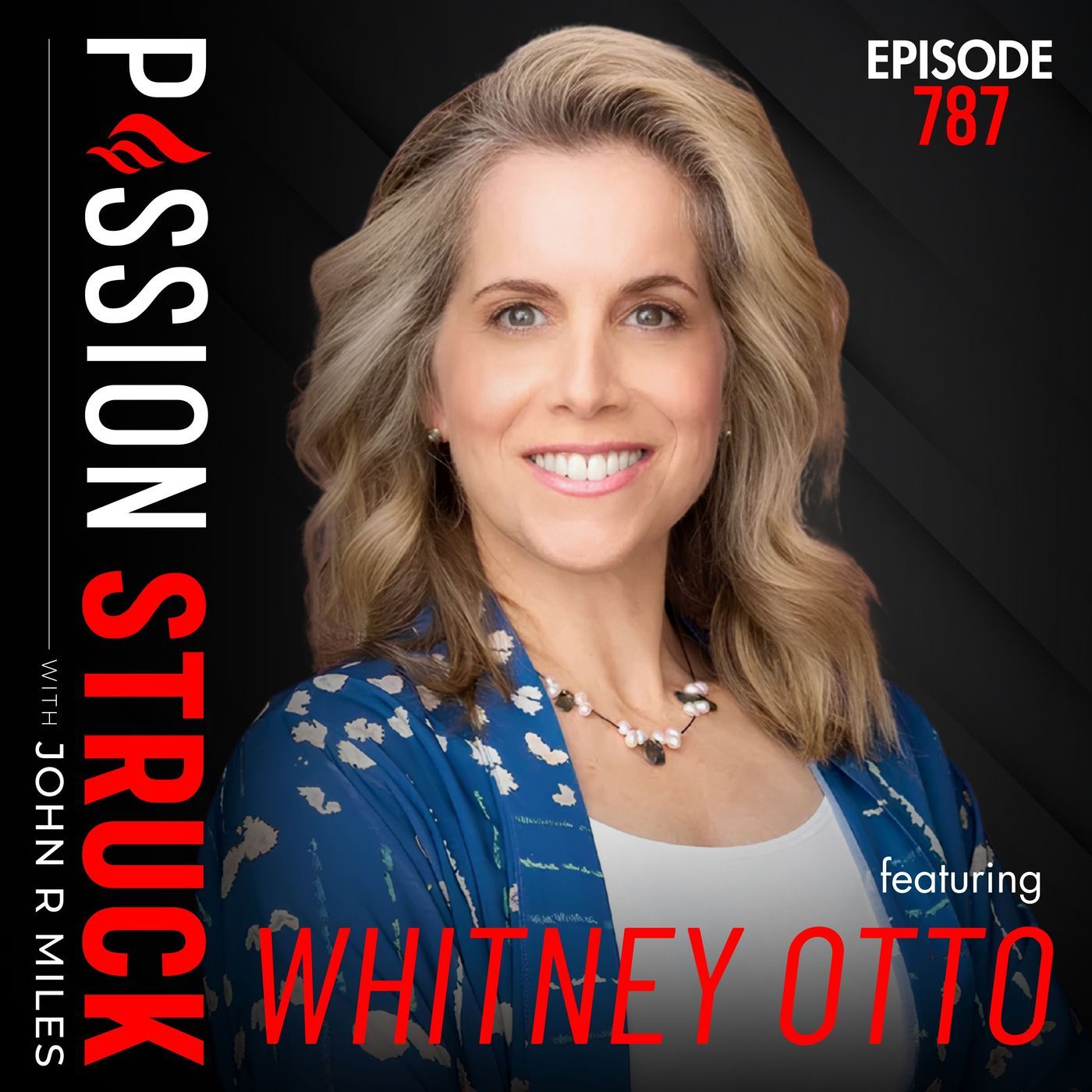
Passion Struck with John R. Miles
Healing Your Body Image From the Inside Out | Whitney Otto - EP 787
00:55:18
In this episode of Passion Struck, John R. Miles sits down with executive coach, former therapist, and former U.S. National Team rower Whitney Otto to explore one of the most personal struggles people carry: their relationship with their bodies.Drawing from her new book, Body Image Inside Out, co-authored with Deb Schachter, Whitney challenges the belief that body image is merely about appearance. Instead, she reveals how our feelings about our bodies are deeply intertwined with our experiences of belonging, family, achievement, health, and self-worth. Their conversation explores why negative body image often becomes a container for overwhelming emotions, how shame thrives in secrecy, and why curiosity may be a more powerful path to healing than self-improvement.John and Whitney discuss the hidden costs of being at war with ourselves, the role of relational mirrors in shaping identity, and why many high performers continue to struggle with feeling comfortable in their own skin desp...
Loading summary
Transcript101 lines
- [00:02]
John Miles
Hey, friends. A few years ago, I attended a retreat with about 100 fellow veterans. What struck me wasn't just the camaraderie. It was the conversations. Nearly 90% of the veterans there talked about how psilocybin had become an important part of their healing journey. They shared stories about finding greater clarity, reconnecting with loved ones, and finally feeling like they were moving forward after years of feeling stuck. Since then, I've interviewed neuroscientists, psychiatrists and researchers studying psychedelics, and it's become clear why there's so much excitement around this field. Emerging research suggests psilocybin may help promote new neural pathways in the brain, which is why many people report improvements in focus, creativity, mood and connection. That's why I appreciate what Schedule 35 is doing. They're bringing a thoughtful, science backed approach to psilocybin with precisely dosed products, educational resources, and beginner friendly guidance designed to help people understand exactly what what they're taking and why. Get 15% off all orders with code PASSIONSTRUCK at schedule 35CO. That's 15% off at schedule 35CO and use code Passionstruck. Hey, friends. A few years ago, I attended a retreat with about 100 fellow veterans. What struck me wasn't just the camaraderie, it was the conversations. Nearly 90% of the veterans there talked about how psilocybin had become an important part of their healing journey. They shared stories about finding greater clarity, reconnecting with loved ones, and finally feeling like they were moving forward after years of feeling stuck. Since then, I've interviewed neuroscientists, psychiatrists and researchers studying psychedelics. And it's become clear why there's so much excitement around this field. Emerging research suggests psilocybin may help promote new neural pathways in the brain, which is why many people report improvements in focus, creativity, mood and connection. That's why I appreciate what Schedule 35 is doing. They're bringing a thoughtful science backed approach to psilocybin with precisely dosed products, educational resources, and beginner friendly guidance designed to help people understand exactly what they're taking and why. Get 15% off all orders with code PASSIONSTRUCK at schedule 35CO. That's 15% off at schedule 35CO and use code Passionstruck. Coming up next on Passion Struck.
- [02:20]
Whitney Otto
You know, anything that we practice, we get better at. So if we are practicing criticizing ourselves, looking for that part of ourselves we don't like, wishing a part of ourselves were different or all of ourselves were different, we are practicing wanting to be different want and not liking ourselves and thinking we need to fix ourselves. And that practice can follow us into other areas of our lives. Right.
- [02:48]
John Miles
Welcome to Passion Struck. I'm your host, John Miles. This is the show where we explore the art of human flourishing and what it truly means to live like it matters. Each week I sit down with change makers, creators, scientists and everyday heroes to decode the human experience and uncover the tools that help us lead with meaning, heal what hurts, healing, and pursue the fullest expression of who we're capable of becoming. Whether you're designing your future, developing as a leader, or seeking deeper alignment in your life, this show is your invitation to grow with purpose and act with intention. Because the secret to a life of deep purpose, connection and impact is choosing to live like you matter. Hello friends, and welcome Back to episode 787 of Passion Struck. Over the past month, we've been talking about the connection crisis. We've explored loneliness, attachment, identity, belonging, leadership, and the ways modern life can leave us feeling disconnected from one another and sometimes from ourselves. But at some point, every conversation about what's broken has to lead somewhere. It has to lead to a a bigger question. What does a healthy, flourishing life actually look like? That's where we're headed this month. Our new series is called How Humans Become Fully Alive. Over the next few weeks, we're going to explore what helps people wake up to their lives, change old patterns, build environments that support growth, contribute their gifts, and keep becoming the people they're meant to be. We're starting at a place that touches every, every single one of us, whether we talk about it or not, our relationship with our bodies. Because it's hard to flourish when you're fighting yourself every day. It's hard to be present with the people you love when so much energy is spent wishing you looked different, weighed less, or measured up to somebody else's standard. My guest today is Whitney Otto. Whitney is an executive coach and former therapist whose work sits in at the intersection of performance, psychology and well being. Before coaching leaders and executive teams, she competed at the highest levels of rowing, serving on the US National Team and as an alternate for the 2000 Olympic Games. She and her co author, Deb Schachter have written a book called Body Image Inside Out. And what I appreciate about their approach is that they don't ask us to wage another battle against our bodies. They ask us to get curious about the stories, relationships, and experiences that shape the way we see ourselves. In today's conversation, we talk about why jealousy can actually teach us something how relationships become mirrors for the way we view ourselves and what it looks like to move from criticizing our bodies to becoming more curious about them. If you've ever looked in the mirror and thought, if I could fix just one thing, everything else would feel better, I think this episode is going to speak to you before we get started. If these conversations are helping you, please share them with a friend or family member. And if you haven't already, leaving a rating or review on Apple Podcasts or Spotify helps more people discover the show. You can also download today's companion workbook and reflection guide at theignitedlife.net and now let's dive into this conversation with Whitney Otto. Thank you for choosing Passion Struck and choosing me to be your host and guide on your journey to creating an intentional life that matters. Now let that journey begin.
- [06:24]
I am absolutely thrilled today to welcome Whitney Otto on Passion Struck.
- [06:29]
Welcome Whitney.
- [06:30]
How are you?
- [06:31]
Whitney Otto
Hi John. I'm really excited to be here.
- [06:34]
John Miles
Well, I'm excited to have you too,
- [06:36]
and I wish we had your co author Deb Schachter as well. But I am so happy to have you here. And I think the reason I mentioned Deb is because I'd really like to understand, since you wrote the book Body Image Inside out, what made the two of you come together to write this book.
- [06:55]
Whitney Otto
So I am currently an executive coach, but I started out as a therapist. So I was working in the field of eating disorders and body image. And Deb and I were colleagues and friends. And so the origin story is that not only were we really working in the field, but we were also still healing our own body image. And we just found that when we were having body image thoughts and dialogues by ourselves, they were full of shame and depression and very heavy. But when we had those same dialogues with one another, they had a lightness, they could be funny. They had a very different outcome. And that was the origin of, hey, what if we brought what we're doing with one another and taught other folks how to do it? So that was the origin of our workshop series which led to the book.
- [07:44]
John Miles
Well, I know body image is something that a lot of people historically think of as an issue that many women deal with. But I've had a few male guests on the show, Johann Hari being one of them, who talked about their own struggles with body image. When we think about this topic, many people think body image is about how we look. What you and Deb say is that it reveals how we are actually, what does body image become? Or I should Say, why does body image become the place where so much of our self worth hides?
- [08:20]
Whitney Otto
Oh my gosh. Just start with a giant question. Okay, great question. So body image, by definition is our own subjective image of how we look. So that begs the question, what influences that subjective image and what we found from doing the work, sitting in rooms with people, individuals and groups is that is formed by how we move through the world. Our families, our cultures, our lived experiences, the present moment. There are so many factors that influence how we see ourselves. And we all have an experience of having a friend that sort of matches the ideal body. Right. That America has, has offered us. And they don't agree, they don't feel like they have a positive, a good body image. And then we have got that friend that doesn't look like the ideal but feels great in their skin. So we can all disprove the myth that the closer you are to the ideal that our culture gives us, the healthier or happier your body image is. Because it's just not true in our lived experience.
- [09:27]
John Miles
And if we zoom out, what do
- [09:28]
you think is the real cost of being at war with the body? Yeah, because to me, you have to live your life in it. And I know that there's so many people who just dread staring at themselves in the morning and feel so much shame for the body that they live in, which is why I termed it being at war with your body.
- [09:50]
Whitney Otto
I, I had a lived experience of being at war with my body. Right. Wanting to change it, wanting desperately to fix it, wanting it to be different. If only it was like this, then I would have all these. And I think there's a lot of costs to that. Right. So one, it's a very private battle, right. I can be looking happy and healthy on the outside and having a very different experience, dialogue with myself on the inside. So there's something very private about that and therefore dangerous about it. Right. People aren't aware of it and they can't communicate with us. It can create a lot of shame. Right. I shouldn't feel this way. Why do I feel this way? There's a lot of secrecy. And shame has staying power because then we don't share it with other people. And the other thing is that anything that we practice, we get better at. So if we are practicing criticizing ourselves, looking for that part of ourselves, we don't like wishing a part of ourselves were different or all of ourselves were different. We are practicing wanting to be different and not liking ourselves and thinking we need to fix ourselves. And that practice can follow us into other areas of our lives. Right. So I always say this to my kids, right, who are at the age where there's social media and influences. And I say when you say those negative things to yourself, you're practicing that. You're practicing telling yourself that and thinking it'll get you somewhere. Right. So I think there's a lot of. If we think of it as training our mental muscles towards negativity, I think that's one of the dangers of it and that it's private. We don't always know what's happening inside for people, so we can't always intervene. So there's probably eight others. What do you think are the dangers or the costs of those early negative dialogues when we stand in front of the mirror?
- [11:52]
John Miles
Well, I'll just go into a personal story about myself when I was young. I experienced a traumatic brain injury when I was 5 or 6. And as a result of that, I started to experience different issues in the world. Some of those were communication issues. And so I didn't want to be around people because I stuttered and had a severe speech impediment. So I ended up becoming sedentary for many of those young years and gained a lot of weight. And so not only did I have the repercussions from that head injury that I had, but then I looked at myself in the mirror and I looked fat. And it was something that I remember my grandmother especially would get on my case about losing weight and not wanting to look like my dad and not wanting to end up being overweight when I got older. And to be honest, no matter if I was in the military working out five, six days a week throughout my life, weight has always been, I think, a hereditary issue that I've always had to fight. So for me, it really has been a war in some ways because I think we feel so much more confident when we fit into our clothes, when we feel like we.
- [13:12]
Suzanne Giesemann
We.
- [13:13]
John Miles
That we look good.
- [13:14]
And I think oftentimes it's an internal thing because people probably think we look great, but internally we feel we don't. So for me, it's definitely been something that has been there and one of those things that I've had to mentally overcome.
- [13:29]
Whitney Otto
Well, I really appreciate you sharing that story, and that's. We've actually found that to be a pattern that health challenges can get very intertwined with body image. Right. And I've been watching it lately with my husband, who's somebody who I've always would have thought has amazing body image, and he's had some health challenges. And on the days when he doesn't feel good, his body image isn't as good. And when he feels healthier, his body image is better. Right. And this is somebody who's never dealt with it before. Right. So how we feel in our bodies very often becomes how we end up feeling about. About our bodies. Does that resonate?
- [14:11]
John Miles
Yeah, it does.
- [14:12]
And that's one of the reasons why, when I was reading the book, some of your deeply personal stories, like the Crazy Raisin like, resonated with me because I think naming things in general helps to unlock healing. Did you find it did that for you?
- [14:31]
Whitney Otto
Yeah. And just hearing other people's stories, right, because again, that the privacy, the shame of all of this. Many people feel shame that they even have feelings about having a negative, that they put time and energy into it. Right. This isn't a value of mine. Why do I spend so much time eating my body? Right. I care about service and humanity, and here I am focusing on myself. But that's it. That again, gives it the staying power, Right? Because it's not something we're talking about at cocktail parties. No one's saying, like, hey, what are you doing for the holidays? And how's your body image? Right. We're not talking about it. And I do think there's just incredible power in saying, yeah, here's some of my body image story and here how mine's doing right now, just making it normal, right? That it's not perfect. Because in. In this crazy culture that we live in, we're supposed to feel good about ourselves all the time. That's part of the deal, right? But we don't. We're human.
- [15:33]
John Miles
And I know when I was growing up, it's funny, my brother gets jealous of me because I still have color to my hair and he's younger than me and is already gray. I was always jealous of him because he is one of those metabolisms that he like when throughout most of his life, he could eat whatever he wanted and he would be skinny as a rail. My two kids have that same difference. Not with the hair, because they're young, but one has to watch what they eat. The other one seems to pour whatever they want into the diet and has no effect. But since we were talking about identity, how can a person who's listening identify their own character, the one that's causing their insecurity?
- [16:16]
Whitney Otto
Oh, yeah. So I talk about giving funny little nicknames to our insecure parts, right? When I was younger, and I use this word then, and I don't use it loosely, but I called myself the Fat Temp. Right. Because I was a Tempo at the time and I had just come back from the Olympics and I had all this potential. And here I was in a basement doing finances with a ruler and graph paper way back in the day, and it just made light of it. Whereas, like, inside of myself, this felt terrible and awful. So what I like to do is give cute little nicknames to our. To our parts that are having struggles with our body image. Right. So we might talk about Couch John.
- [16:56]
Suzanne Giesemann
Right.
- [16:57]
Whitney Otto
When you were younger, Couch John had some challenges. Right. And probably what's how we feel about ourselves colludes with the messages we receive from our culture that say a million times a day through images, advertising, now social media. If you look like this, you get all that comes with it. This smiling, happy person. You will. So it is the answer to all your problems. But the reality is, when Couch John was sitting there, there was so much out of his control. He couldn't control what was happening. You couldn't control what was happening with your brain and then the effects of that. Right. But there was a perception. I can control my body. Right. To a Probably it became compelling to think, oh, if I was just in this body, all these other things wouldn't be so problematic. I don't know if that was your experience, but that was my experience over and over again. If I'm in this body or all these other things will go away.
- [17:55]
John Miles
Yeah, I think in part it was. I think it's interesting to how we look at people who are athletes or once were. Like, I was a Division 1 athlete myself.
- [18:09]
Whitney Otto
What was your sport?
- [18:10]
John Miles
I was cross country and track.
- [18:12]
And then, believe it or not, I. I made the crazy decision to transition to rugby. So then I played rugby, which is probably the hardest crossover you could imagine from a cross country runner.
- [18:23]
Whitney Otto
And.
- [18:23]
John Miles
Yeah.
- [18:24]
Whitney Otto
Very different body type, Right?
- [18:26]
John Miles
Very different body types. And I have to say, during that period of time, my body did transform because I was eating a lot more, lifting a lot more. I remember my cross country coach wanted us to do no lifting at all.
- [18:37]
But it.
- [18:39]
The reason I'm bringing this up is I've met a whole bunch of professional athletes who get older and. And when they do, they no longer have that professional athlete body identity Persona anymore. I have a friend who played on the national Championship Notre dame team from 88, and I know a whole bunch of that team and many of them no longer look like the studs that they were when they played.
- [19:05]
Whitney Otto
Yeah, but.
- [19:06]
John Miles
And I think when People see them, they expect them to still resemble that 22 year old.
- [19:13]
Suzanne Giesemann
Yeah.
- [19:13]
John Miles
Person who is on the football field.
- [19:15]
How do you think?
- [19:16]
Especially I think when it comes to people who are in the spotlight, we judge people so much.
- [19:25]
Whitney Otto
Well, I'm gonna let you start there because it sounds like you've given a little bit of thought there and then I'll chime in.
- [19:32]
John Miles
Well, I think sometimes it's difficult to let go of the image that we see and we set this unfair expectation. And I see it from my. More my military background where you have operators, whether they were green berets or seals, rescue swimmers that now 20 years downrange, they've put on a lot of weight and they've lost that. That image of their body that they once had. And I think sometimes we think what happened to them? Did they drift? Are they not sticking with the practice of keeping up with exercise and everything else? So I think my mind goes to. They've gotten lazy or they've become complacent or something like that. At least as I've thought about this, that's where I think people go. How about you?
- [20:20]
Whitney Otto
Well, I think that again, our culture, we end up with archetypes, right. Or celebrities are like archetypes are. The military folks were hero archetypes, right. The athlete, there's the athlete archetype. And we fit them into that archetype. And then. But we're human beings at the end of the day, right. And our bodies change and our priorities change and our motivations change and. Or wane. And so the reality is we may go through different. Our bodies may change a lot over the course of our life. But again, I think as a culture we think in terms of, well, that they're that archetype and so they're going to remain there. And I'm. I should remain there, right? Like how many. We've seen so many folks mothers really challenged because their body has to change in order to create a child. And again, our culture says we'll have the baby and then you should be like within two months you should have your body back versus your whole life has just changed and your values have changed and therefore your body may change. And this is part of the human experience. Experience, right. So I think again, what we're sold about what our body should do and look like, don't allow for the human experience. Right.
- [21:36]
John Miles
Before we continue, thank you for supporting Passion Struck and for helping us bring these conversations to people around the world. One thing I've learned over the years is that people rarely change because someone gave them better information. They change when they begin seeing themselves differently. That's true when we're talking about our relationships, our work, our health, and even the way we think about our bodies. It's one of the ideas I explore in my upcoming book, the Mattering Effect. When people know they matter, they stop living as projects that need to be fixed and start living with a greater sense of purpose, connection and possibility. If you want to go deeper in today's conversation, every episode in this series includes a free companion workbook with reflection, questions and practical exercises. You can find all of them@theignitedlife.net my substack and now a quick break for our sponsors. Thank you for supporting those who support the show. You're listening to Passion Struck right here on the Passion Struck Network. Now let's get back to the conversation with Whitney Otto.
- [22:42]
So you and Deb write that negative body image can be a container for overwhelming emotions. And we've already talked about shame. But what emotions are people really trying to avoid?
- [22:55]
Whitney Otto
Well, a lot of folks weren't in ideal world, you're a young child and you're surrounded by people and when you have a big feeling, you can go to them and they'll help you regulate those feelings with their presence. And they'll teach you through example and over time how to regulate your feelings. They'll attend to your anger, attend to your sadness, and teach you how to do that for yourself. Right? That's the ideal. But for a lot of reasons, a lot of people don't get that kind of parenting, that kind of modeling. So they've got to figure out, well, how do I handle my anger, how do I handle my sadness, how do I handle my frustration, my yearnings, what do I do with this? And some people will do different things. Some people will be super successful, some people will be super angry. And some people will try and perfect their bodies. And I'll say, for me, having been a high level athlete, what did I do with my extreme feelings? Well, I had an eating disorder. That was part of how I regulated or managed them. And I had this very large habit of exercise that also supported a very successful athletic career. And I was rewarded for that, right? I was rewarded for staying in a thin ish body. I was rewarded for doing well in athletics. And those things helped me manage my unmanageable feelings. It wasn't sustainable, right? When I wasn't working out three times a day, those feelings were there and I still didn't know how to deal with them, right? So I think a lot of it is, but always I could turn to focusing on food, focusing on diet, focusing on my body as a way that pursuit, if I just get it right and all the efforts that went into that pursuit, organized helped me feel organized and gave me that promise of feeling valued, feeling like I belong, feeling part of something. Right. And then you throw in and this is where it. There's so many complexities to it. The if you're in a family or if you're in a sport or where thinness or a certain body type is valued, then your association between a thin or smaller or muscular or whatever or larger. If you're a rugby player, body is going to be associated with belonging. This body type is synonymous with belonging. So that gets hardwired in there, right. For all the years that you're doing this, what's your, does any of that resonate or, or.
- [25:32]
John Miles
Well, it does. I just think of some sports as you were talking about that since I started this with sports, that it would be so hard to keep up after you were, were going through the motions of being elite at that sport. One of them to me would be gymnastics because it is such a high repetition, high practice sport that you're in that of course you're going to be burning a gazillion calories like a swimmer. Another one I would think of would be a hockey player. My I, I also played hockey and those times when I was playing a lot, I was in some of the best shape of my life because you're getting so much cardiovascular exercise that comes with it. And so of course it's very difficult when you're not at that elite level to stay that elite body type that you had had. But I also think it's something that so much of our body image ends up becoming seen or unseen since you were talking about belonging by the people who shape us and also the people we interact with. So how do you think that concept that we have of our body image impacts how we think other people are seeing us or unseeing us?
- [26:51]
Whitney Otto
Well, there's two little mini stories I like to. Or vignettes or whatever principles I like to share. The first is I like to prove that body image is contextual. So we've all probably had the experience of waking up and being like, hey, I'm looking pretty good today, right? And then something happens during the day. Maybe you have a bad interaction at work, maybe you have a bad interaction with a romantic partner or something doesn't feel as stable and by you go home and you're like, I feel disgusting. I feel 10 times uglier than when I left this morning. But you know, your body didn't change, could not have changed, right? In a course of 12 hours. But how you feel in your skin has changed. And so I like to share that, to really prove that our body image can shift and change quickly. And it's not just. And it isn't just about how we look, right? So the other thing I like to talk about is relational mirroring. And again, going back to this idea that some folks, some parents, some caregivers were really equipped, able, skilled at mirroring us appropriately, right? The babies, mothers are that first mirror the caregivers, right? The baby smiles, we smile. The baby sad, we respond, right? There's that immediate response. But in a lot of families of origin, that wasn't able to take place, right? So there isn't accurate mirroring. And so what folks, what we have to do very often is what we called in the book, puzzle piecing. Okay? I know that when I'm sad around so and so, I get less of their attention, but when I'm funny or helpful, I'm. They approve of me, they see me as very helpful. So I'm going to do more of that because that's going to get me more belonging, right? So we call that early shape shifting, right? It's shaping how our energy, how our personality shows up in a room over time. But then that can be early training. We talk about this idea of training for at some point, changing our body, changing our body to fit in or changing our body because there's a promise that if we do, we'll get all the promises that go with that particular body type. And one of the things that happens around that I like to an exercise we really like to give folks to empower them is to give them a little worksheet with a little mirror and say, think of the person that makes you feel so comfortable in your skin you like, when you're around them, you feel even better about yourself, right? Who are they and how do they make you feel? And then think about somebody when you're around them, you leave feeling ickier, not as good about yourself. And very often those folks will have a negative impact on your body image, right? And if you really start to track this in your life, that and definitely for folks who have body image concerns or challenges, we empower them to say who makes you feel good about your body and who doesn't make you feel good about your body because it's how we feel in their presence, literally what they're mirroring back about us. And we start to see that it. That some people are just terrible relational mirrors. They can't see us accurately. And some people are beautiful relational mirrors. They reflect back the best of who we are.
- [30:26]
John Miles
Well, using that as the foundation, then how could a listener become a better mirror for the people that they love?
- [30:35]
Whitney Otto
Well, I think the first is just focusing on how do I make this person feel right? How do I show up in a way that makes them comfortable? How do I show up in a way that helps them feel like unconditionally cared for? Right. So I think that's one question. And I also think it's. I encourage folks to get curious about who they feel, who are their positive relational mirrors, and who are their negative relational mirrors. Because again, it gives them more agency and it helps you have. Oh, if I'm going to be around like three negative relational mirrors, like, I want to prepare for that and I want to have a really nice plan for when the day is over and how I'm going to take care of myself because I'm going to feel icky and maybe I'm going to feel like I need to change my body, but I will know why that is. Right. I still have negative body image moments all the time. And to just call it that, I'm having a bad body image moment. Not I'm bad, I'm wrong. I need to change myself. I need to fix myself. Just that very simple externalizing it. I'm having what we call a bim and I. And there's a reason for it, and I'm going to get curious about that. So you go back to why is it dangerous? Or why what's the cost of having this really negative relationship with ourselves and standing in the mirror and going, I hate what I see. I don't like myself. What's wrong with you? I hear people in my corporate practice all the time saying, what's wrong with me? That I can't do this or I can't do that. And I, I always challenge people. What's wrong with this situation? Let's assume you're right and everything about you is great. What's wrong with the situation? Right. So it's the same thing. Oh, I have this terrible body. Okay, what else is going on? If I'm not inherently bad or my body isn't inherently bad, what else might be leading me to feel this way?
- [32:35]
John Miles
Yeah, because it's not just about being overweight. People have negative body images for tons of different reasons. Weight just being one of them.
- [32:43]
Whitney Otto
Right. And even if there is, I think it's so important to say that we do live in a culture with a lot of biases. Right. And we do. If you are living a larger body, you're probably experiencing a lot of negative messaging. And to not to negate that and to say there's other layers to this that we do have, we can look at and be curious about, because there's a lot of layers to all of this.
- [33:11]
John Miles
There are so many different layers to it. And I have this friend, Lisa Edwards, happened to be her birthday yesterday. And I say this now on the podcast and other podcasts I'm on, but I got it from her. She has this saying that the most incredible person you are ever going to meet in your entire life is the person who stares back at you. But the biggest critic you're ever going to meet in life is also that person who stares back at you. And I think that's the chasm so many of us struggle to cross in life, in our life. And I think this is especially true, I find, with many high performers, many of which are listeners to this show. I was one of them who built these extraordinary lives. But they still feel like failures in their own skin, I call it. They still feel invisible in their own skin. How do you think that's the case?
- [33:59]
Whitney Otto
Well, I think that Altai talked about this a couple episodes ago on the.
- [34:04]
Suzanne Giesemann
She.
- [34:05]
Whitney Otto
Her book, the Ambition Trap, and she talks about ambition, I think, similarly to how I talk about body image. Right. Is that it's the relation. Ambition's not inherently bad. Body image isn't inherently bad. It's our relation to it that can be challenged and very often influenced by. She talked about core wounds. I use the framework of internal family systems. Are you familiar with that?
- [34:26]
John Miles
Yep.
- [34:27]
Whitney Otto
Model. So the idea being that we have parts of ourselves. We go back to the critic. Right? That we have parts of ourselves that came on board at different stages of our lives to help us out. So maybe at one point, the critic. What's wrong with you? Why can't you do it this way? Why can't you perform better? Why can't you have. This body may have been trying to help us. If we really believed that this body was going to get us belonging, success, happiness, safety, whatever it is. So it. Its original job was in our favor. It began with a noble intent. But very often those parts stick around and never get the memo that we're 20, 30, 40, 50. And then we have more resources and we don't need the critic quite as much. But we'll all notice, right? There's certain moments where the criticism pops up louder or stronger, right? I have that in my own life. I'm like, wow, where'd that come from again? Right? What's going on? That critic thinks it needs to help me in this old way. So I like to have a benevolent view of my own negative or critical parts that at one point, they thought they were trying to help me. So that's one of the things we do in the book and I do in my work is helping people come into relationship with all the parts charts. The ones that are going, you need to fix with yourself, and the ones that are saying, you're beautiful and the most amazing person on the face of the earth because they're all part of me, and they're all think they're helping.
- [36:09]
John Miles
Well, one thing I wanted to talk to you about was curiosity. This was something I that really piqued my interest when I wrote in the book, or read it in the book you wrote.
- [36:18]
It's not every day that you hear
- [36:20]
someone say, I've been feeling really curious about my body image lately. What most of us hear is some version of, I need to fix myself or I need to love myself. But what you two write is curiosity is at the heart of developing our body selves. Why is that the case? Because I wouldn't naturally link curiosity with body image and body image success.
- [36:43]
Whitney Otto
And again, there are a lot of strategies when it comes to body image. And the one strategy is just focus on what you like about yourself. Yourself. And that just didn't work for me. That didn't work for Deb. Which is where. Why we came up with a different strategy. And our strategy is let's look the critic in the eye and get to know them and learn why they're there when they came on board, what they're trying to do for us, how they think they're trying to help, and how they're trying, what they're protecting us from, right? So the. When we have a negative body image, what we call a bad body image moment, there's three things we like to practice, right? So let's say I couldn't find an outfit before I came on this podcast, right? Let's say nothing felt right. I didn't like how anything looked, and I was having a bad body image moment. First, I would say, not, I'm a terrible person. I can't find anything to wear. Nothing looks good. I'm. My body's bad. I would say, ha. I'M having a bad body image moment. Right. So I would externalize it, Externalize what's happening. I would observe it, right. I'm watching it versus I am it. And then I would get curious. Why might this be challenging for some part of me? Right? What's going on? So the other thing is that shame and judgment and fixing are contracting energies. Right. Our tunnel gets narrower, and curiosity's, oh, what could it be? Right. It naturally opens things up. It's hard to be ashamed and curious at the same time. Right? There's like a benevolence to curiosity, huh? As long as it's not. Not said with an attitude. And then once we have a little of that opening, right. To bring some compassion in. Right? Oh, you haven't done a podcast in a while. Maybe you have feelings about it, right? Used to run your own. You're not doing that now. What does that feel? Right? So. So being curious and having some compassion for whatever might be going on. And again, that's almost like the reparenting, right. If we never got someone who said, oh, I see, you're having a hard time, what's going on? I'm curious, I'm interested. Why might you be feeling this way? And let me bring some compassion to it. We never learn that. So these are like micro moments of reparenting ourselves in a loving way. And again, you put those reps in over time, right? If I do, if I learn how to deal with my negative body image moments, if I learn how to deal with other people's negative body image moments that way, then I might deal with other parts of my life that way. Versus being critical, being shaming, telling myself there's something wrong with me and telling myself I need to fix myself.
- [39:29]
John Miles
I'm gonna try something, Whitney. I'm gonna see if this works.
- [39:32]
Whitney Otto
Oh, I'm excited.
- [39:33]
John Miles
And then I will cut this. But I am going to try to share my screen, see if this works. And I wanted to put up, for those of you who were watching this while I was looking, I wanted to put up this body self rotary guide that you have in the book, because it was something that so caught my eye. Could you just. And you'll have to do this verbally a little bit too, for those who aren't watching it. But can you walk them through this image that. That I'm showing?
- [40:01]
Whitney Otto
Yes. So there's a little figure in the center, and they're saying, I'm having a bad body image moment. I'm having a bim. Right. And then there's like, A rotary or a cycle going on around her at the very top. It says you're experiencing overwhelming feelings, right? Having big feelings. Often they're around, they can be around. Events, job interviews, dates, Right. The things that involve big feelings in clothing tend to create bad body image moments, right? So then what happens is you have uncomfortable sensations. Ooh, I feel squishy. I feel big. And then, oh, I, there's something wrong with me. I don't like my body. I know There were like 19 billion ads for how I can fix my body in my Instagram app. Let me pick one. I'm gonna fix myself and by next month I'm gonna have a different body and these pants are going to fit. You recognize. But then what we're teaching folks to do is to say, oh, I'm in an old pattern. I'm going into that fix it strategy. Because when you go into the fix it strategy, if I had continued around this and gone on that Instagram diet, I never would have dealt with those feelings that originally set me off on this path, right? Those feelings of feeling sad or anxious or scared or overwhelmed, I never would have dealt with them. So here this step number four, I'm recognizing that I'm in a pattern and then I can choose something else. You're a coach. You know that choice is like the root of empowerment, right? To be at choice. So then that's where curiosity can pop in. What else might be going on? Why might I be having a bad body image moment? Let's get curious about that. Give my pretend I'm a friend to myself, offer some compassion, right? And then, you know, the rest of the book is really about how do I resource myself, how do I attend to my feelings, how do I meet my own needs versus trying to meet my needs by changing my body. Because that's really what it is at the heart of this. How do I meet my. The needs I am having as a human being by changing my body versus how do I meet my needs directly? Right. What I really probably need is someone to listen to me and assure me. Right. So did you want to add anything to the rotary?
- [42:34]
John Miles
It caught my eye, especially the last step in it, which is offering compassion. What I was wondering, does the rotary restart? Is this an ongoing cycle that you go through and you use this again and again or is it meant to be a one time circle?
- [42:51]
Whitney Otto
Well, great question. I wrote the book from Boston, Massachusetts, where we. A lot of horrible rotaries that go round and round and round.
- [42:59]
John Miles
Yes, there are.
- [43:00]
Whitney Otto
And what the reason we did it Is because if I decided I'm going to go on a diet and I'm going to fix myself, then I would just keep going round and round because then the next time I had overwhelming feelings, we would be off to the races again, right? But if we intervene and say, oops, I'm having a bad body image moment, what the heck's going on? How do I bring myself compassion and offer myself some resources, I'm actually learning to attend. So I'm finally leaving the rotary and going where I would like to go, right? To another town, to a field, to the airport, versus being stuck on this rotary. And my lives stay small when we're on these rotaries. And again, once we can kind of do this with ourselves, with our body image, we can start to do this in other areas of our lives. Where else am I going on rotaries? Right?
- [43:51]
John Miles
Exactly. And I'm going to digress here, but since you brought up New England earlier this summer, I spent some time in Portsmouth, New Hampshire. And they must have the largest rotary circle it really my entire life.
- [44:03]
Whitney Otto
They should have a sign, home of the largest rotaries.
- [44:08]
John Miles
But it was like even for an experienced driver who, when you're not used to those things, it's a little bit intimidating, especially as you're trying to cross three lanes of traffic, as you're trying to cross over from one side to the other.
- [44:21]
Whitney Otto
And if you don't have the skills of a Boston driver to be a jerk, you're really in trouble.
- [44:32]
John Miles
Well, another thing that you say in the book is jealousy can be a teacher. And I think for those of us who. Who have struggled with body image issues, jealousy, I know, is something I felt for those friends of mine who didn't have to deal with it when it was so hard for me to watch them eat and do other things and realize I had to portion control and do things completely differently. But what do you think jealousy is really pointing us toward that oftentimes we're afraid to admit?
- [45:04]
Whitney Otto
I think jealousy, when seen as a discipline, can lead us to different places other than just envy and frustration. And I myself am prone to jealousy. So it has. My jealousy has turned into a discipline for me. So what I do when I get jealous, very often we can be jealous of somebody's body type, right? Or how they look, and it can happen in an instant. We see someone, oh, I wonder what their life is like. What would it be like to be them? And that's what happens. We focus on the body, but our brain creates a story about their lives. Our brain Creates a story about how much belonging they have and how much love they have and how much adventure they have. So I discipline myself saying, what do I think comes with that body? Right. What do I think comes with that skin that looks like it's 30, but it's 50? What do they get to have in their lives? And I will invariably come up with some answers, and then I get to say, oh, you want more adventure, Whitney? Oh, you want more time by yourself? Oh, you want more, I don't know, prestige? Okay. That's what you want. So how do you get more of it versus going, oh, well, if I get that body, then that comes with that body, which actually isn't true necessarily. Right. So the discipline. And again, I can be jealous of somebody's body or all sorts of other things. I say, okay, Whitney, what do you think they get to have because they have that body? So what do you think of that strategy or discipline? It's probably harder with siblings, but easier with people you bump into in the world.
- [46:47]
John Miles
I. I would agree with that, because I think sometimes it's hard to get past that jealousy you might feel for a sibling because you. You were used to seeing it so
- [46:56]
Whitney Otto
many times, and it's got so many reps in there.
- [46:58]
John Miles
Yes.
- [46:59]
Whitney Otto
But I'm sure there are people very jealous of you. He's got this role. He's got a podcast, he's got lala. Right. They have all these associations with what comes with your title, your success. That may or may not be true.
- [47:13]
John Miles
It's interesting that you brought that up. I went back this fall to. To my alma mater, the Naval Academy, and my rugby team, and I actually got indoctrinated into the rugby hall of fame at the Naval Academy, which was fantastic experience. But it was really interesting for me because this group of people who I've known now for decades, and I feel I remember us when we were 18, 19 years old.
- [47:36]
Whitney Otto
Right.
- [47:37]
John Miles
It was so interesting because I had classmates who were almost afraid or intimidated to come and talk to me, and I. It was really weird for me because I don't feel like I'm any different from what I was back then. But you're right. People look at you and they see you differently. I had one person describe me as a celebrity, and that's certainly not how I feel about myself, but it was interesting to see that perspective from others.
- [48:06]
Whitney Otto
You could have caused people all sorts of bad body image moments without even knowing it.
- [48:12]
John Miles
Well, speaking of body image moments, I know one of the moments that can be traumatic for many of Us is the moment we're in our closet getting dressed and we're staring in front of the mirror, maybe trying on clothes, we're figuring out what we're going to wear. What do you think questions are that listeners could start asking when they're in front of their closet?
- [48:37]
Whitney Otto
Again, we see the closet as a training ground for body image. Improving our body image and it's like eating. It's something we encounter every day. And we can have a healthy relationship with our clothes in our closet or we can have an unhealthy. Right. We can keep clothes around. I talk about clothes that talk back, right. If they're tight in certain ways that we don't like. And like, every time you move your leg, it's going, your leg is too big, your leg is too big. This is the experience I have had with many pairs of pants, right? So just being curious, like, how do my clothes make me feel? Do I like the way my clothes literally feel from a sensory experience on my body? So starting there, how do I feel in these things? And taking your present day body and making sure the not your someday body, not your last year body, that your present day body feels good in the things in your closet and not. And again, like, maybe it's really tight and that feels good to you. Maybe it's really like soft material and that feels good to you. Maybe it's a vibrant color and that makes you feel a certain way. So it's. It's practicing both sensory comfort and alignment, right? You don't want I should wear the black blazer? That's a little too tight in the arms because that's what everybody's wearing, right? Those shoulds will probably cause negative. Some negative body image feedback because. Because it's body. Negative body image is also very sensory, right. It's a feeling. So the more comfortable we feel in our skin and one of the things we have found is that sensations all get rerouted into I feel too big, but it could be, I feel squishy, it could feel, I feel tingly, it could feel, I feel loud. But we just make fat a shorthand for all sorts of feelings. So if we have sensations is a big part of recovery, I think, or healthy body image. So our clothes are a sensory conversation that we want to make sure is reciprocal and positive. And then the other piece is alignment. When I turned 50, I got my colors done and I threw out. Everything was black, white and gray. And I have so much more fun getting dressed, right? Because everything I have a response to it. It matches A mood or it doesn't. And so it's much more like, how do I feel on this day and what matches my current mood? Of course, there's. If I have an interview, I have to wear the appropriate thing and all that stuff, but there's always a little room within any of those constructs. What do you think? Do you have fun with your closet? How do you. What's your relationship like with your closet?
- [51:30]
John Miles
Well, there have been times of my life where I hate the closet because there are especially jeans or dress pants or something I want to wear, and they're just not fitting me like they once were. I get angry at myself for putting on the extra pounds and not being able to fit into them. And then there are other times where I've regained that body figure and I'm wearing them again and I feel confident and great and other things. So I think they're different seasons for me of life. I. I will tell you something I was laughing about as you were talking is here in Florida, we wear a ton of T shirts, and I have this whole drawer of T shirts, which are like my T shirts that I wear when I go out. But most of those aren't the comfortable, soft T shirts that I wear again and again until they almost wear themselves out. So there's definitely this, the softness feeling for me that I like compared to some of those that feel more starchy when you put them on.
- [52:26]
Whitney Otto
Golf ready. Right. We would encourage you during to have to not torture yourself with any genes in the future. Right. To. To being in charge of your clothes versus your clothes. Being in charge of you.
- [52:44]
John Miles
Exactly. Well, if someone who's listening feels their body is the enemy, what is the most compassionate first question that they should ask themselves right now?
- [53:00]
Whitney Otto
What are you feeling body to listen to it? What is it like to be you? To just open the dialogue? Right. Because there's no dialogue in. You need to either be positive or you need to change it or fix it. That's not a conversation. And the main thing we want to start is conversations so that we can build a relationship with our bodies, ourselves, our body image, all those things. But at the heart of it, it's getting to know ourselves better and getting to know what's. What got so much gets shoved into the closet with negative body image. I'm just going to pursue all the sorts of feelings and hopes and dreams and all sorts of things, get shoved in the closet and saying, all right, let's let you out. Let's get to know you a little bit. So I would say, how are you body? I really want to know.
- [53:55]
John Miles
Whitney, it was such a pleasure having you on today. For people who want to learn more about your work and debs, where's the best place for them to go?
- [54:03]
Whitney Otto
We do have a website, body imageinsideout.com where you can learn more about us and upcoming trainings. And then the book Body Image Inside Out, a Revolutionary approach to Body Image Healing is available on Amazon and Barnes and Noble and all the places you find books. It's a good way to enter the conversation or get gain some tools to enter into the conversation.
- [54:25]
John Miles
Well, thank you so much for joining us here on Passion Struck. It was really a fun conversation.
- [54:30]
Whitney Otto
I loved being here. Thanks for inviting me.
- [54:33]
John Miles
That brings us to the end of today's conversation with Whitney Otto. What stayed with me is the idea that our bodies are carrying stories that our minds haven't fully put into words yet. For many of us, body image has been framed as a problem to solve. Lose the weight, change the appearance, fix the thing that's bothering you. But Whitney invites us to ask a different question. What if our relationship with our bodies has something to teach us? What if comparison, jealousy, or even those difficult days when we don't feel comfortable in our own skin are pointing towards something deeper that needs our attention? As we begin this series on flourishing, I think it's an important place to start because flourishing isn't about becoming a different person. It's about learning how to live more honestly as the person you already are. And sometimes that begins with offering ourselves the same compassion that we so freely extend to other people. Next episode, we'll continue our flourishing series with Suzanne Giesemann. Many of you will remember Suzanne from her previous appearance on the show. She's a former naval commander and aide to the Chairman of the Joint Chiefs of Staff who's gone on to become one of the world's most respected spiritual teachers and best selling authors. Her new book is called Always Connected and our conversation centers on what helps us stay grounded when life takes an unexpected turn. We talk about the health challenges she's faced over the past year, the practices that keep her centered, and why she believes that connection is something we can experience even in seasons of loss, uncertainty and change. We'll also explore her journey from military leadership to spiritual leadership, the inspiration behind her hey Siri to hey Spirit story and what it means to live with a deeper awareness of ourselves and the world around us. If June was about understanding disconnection, July is about learning what helps us come alive. And Suzanne's perspective offers an important part of that conversation.
- [56:23]
Suzanne Giesemann
One of the things that gets in the way of mediumship is trying to connect and also not understanding how mediumship works. It's not like picking up a phone and having a conversation. This nervous system does act as a filter. There are certain kinds of information that can't get through because it's compressed so much by the nervous system that we can't get specific types of data. But we certainly get symbolic imagery. We do hear phrases and thoughts. We have feelings that reflect what those in spirit are trying to show us. We have a knowing that goes beyond data.
- [57:03]
John Miles
And I'm grateful that you're taking this journey with me. If today's conversation resonated with you, please share it with someone who may need it. You can find today's companion workbook and additional resources@theignitedlife.net and until next time, remember this. The relationship you have with yourself shapes every other relationship in your life. I'm John Miles and you've been passion struck.
- [57:25]
Whitney Otto
Sam.