← Passion Struck with John R. Miles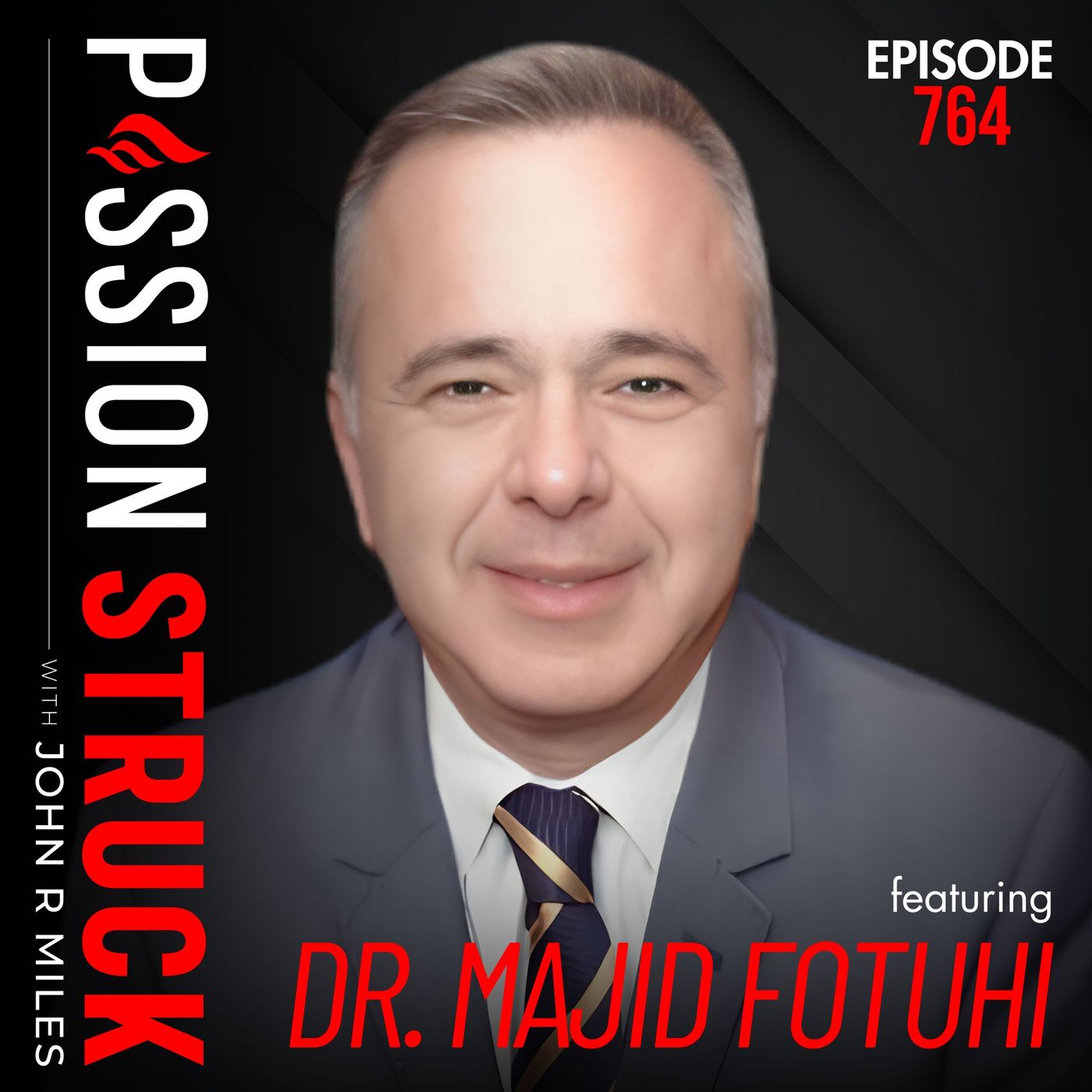
Passion Struck with John R. Miles
Regrow Your Hippocampus: The Science of an Invincible Brain | Dr. Majid Fotuhi – EP 764
01:13:54
What if protecting your brain is not about fighting time, but about learning how to partner with it? In this episode of Passion Struck, John R. Miles sits down with Dr. Majid Fotuhi, world-renowned neurologist and adjunct professor at Johns Hopkins...
Loading summary
Transcript102 lines
- [00:00]
Dr. Majeed Fatoui
Neighbor game. Oo.
- [00:02]
Liberty Mutual Spokesperson (Doug's Partner)
And Doug, there's nowhere I wouldn't go to help someone customize and save on car insurance with Liberty Mutual. Even if it means sitting front row at a comedy show.
- [00:12]
Liberty Mutual Spokesperson (Bird Commentator)
Hey, everyone, check out this guy and his bird. What is this, your first date?
- [00:15]
Liberty Mutual Spokesperson (Doug's Partner)
Oh, no.
- [00:16]
Liberty Mutual Spokesperson (Together Voice)
We help people customize and save on car insurance with Liberty Mutual together.
- [00:19]
Liberty Mutual Spokesperson (Doug's Partner)
We're married. Me to a human, him to a bird.
- [00:22]
Liberty Mutual Spokesperson (Bird Commentator)
Yeah, the bird looks out of your league.
- [00:24]
Liberty Mutual Spokesperson (Together Voice)
Anyways, get a quote@libertymutual.com or with your local agent.
- [00:27]
Liberty Mutual Spokesperson (Bird Commentator)
Liberty. Liberty. Liberty. Liberty.
- [00:30]
Grainger Advertiser
If you work in university maintenance, Grainger considers you an MVP because your playbook ensures your arena is always ready for tip off. And Grainger is your trusted partner, offering the products you need all in one place, from H VAC and plumbing supplies to lighting and more. And all delivered with plenty of time left on the clock. So your team always gets the win. Call 1-800-GRAINGER visit grainger.com or just stop by Grainger for the ones who get it done.
- [01:02]
Liberty Mutual Spokesperson (Doug's Partner)
And Doug, there's nowhere I wouldn't go to help someone customize and save on car insurance with Liberty Mutual. Even if it means sitting front row at a comedy show.
- [01:12]
Liberty Mutual Spokesperson (Bird Commentator)
Hey, everyone, check out this guy and his bird. What is this, your first date?
- [01:16]
Dr. Majeed Fatoui
Oh, no.
- [01:16]
Liberty Mutual Spokesperson (Together Voice)
We help people customize and save on car insurance with Liberty Mutual together.
- [01:20]
Liberty Mutual Spokesperson (Doug's Partner)
We're married. Me to a human, him to a bird.
- [01:22]
Liberty Mutual Spokesperson (Bird Commentator)
Yeah, the bird looks out of your league.
- [01:24]
Liberty Mutual Spokesperson (Together Voice)
Anyways, get a quote@libertymutual.com or with your local agent.
- [01:27]
Liberty Mutual Spokesperson (Bird Commentator)
Liberty. Liberty. Liberty. Liberty.
- [01:30]
John Miles (Host of Passion Struck)
Coming up next on Passion Struck.
- [01:33]
Dr. Majeed Fatoui
As a neurologist specializing in memory and Alzheimer's disease, I've seen thousands of patients with different levels of memory problems, concussion related problems, different forms of dementia. I know this field really inside and out and what I seen over and over again that many of these older people who have memory problems can be much sharper. In my clinic, we had 25 brain coaches, people who helped to incorporate these five pillars of brain health, which we'll be discussed shortly into their lives and address the treatable parts. Like we're just talking about how depression is a treatable component of when somebody develops Alzheimer's disease.
- [02:11]
John Miles (Host of Passion Struck)
Welcome to Passion Struck. I'm your host, John Miles. This is the show where we explore the art of human flourishing and what it truly means to live like it matters. Each week I sit down with change makers, creators, scientists and everyday heroes to decode the human experience and uncover the tools that help us lead with meaning, heal what hurts, and pursue the fullest expression of who we're capable of becoming. Whether you're designing your future, developing as a leader, or seeking deeper alignment in your life, this show is your invitation to grow with purpose and act with intention. Because the secret to a life of deep purpose, connection and impact is choosing to live like you matter. Welcome back, friends, to episode 764 of Passion Struck.
- [03:03]
John Miles (Interviewer)
If you've been following along, you you know we're in the middle of our
- [03:06]
John Miles (Host of Passion Struck)
new series, Forged in How Struggle Shapes Meaning, Resilience, and transformation. In our last episode, we explored endurance through my conversation with Kathy Giusti and what it looks like to face life when everything changes in an instant. But endurance doesn't only show up in moments of crisis. Sometimes it shows up in uncertainty, in the quiet fear of what might happen. And the stories we tell ourselves about our future, especially when it comes to our health. Because for many people, when they hear words like dementia or Alzheimer's, endurance takes on a different form, becomes the ability to sit with fear without surrendering to it, to keep showing up even when the future feels uncertain, and to resist the instinct to believe that decline is inevitable. Today's guest has spent decades helping people do exactly that. Dr. Majeed Fatoui is a Harvard and Johns Hopkins trained neurologist, leading expert in memory and brain health, and the author of the Invincible Brain. What makes his work so important in this conversation about endurance is he challenges one of the most deeply held fears we have, that cognitive decline is something we're powerless to stop. Instead, his research shows that much of what we experience is not immediate loss, but but something unfolding over time, something influenced by how we live, and something we have more capacity to engage, and something we have more capacity to engage with than we've been led to believe. In this conversation, we explore why fear can shut down curiosity and accelerate decline, how misdiagnosis and misunderstanding shape our expectations, and what it means to stay engaged with your mind, even in uncertainty. Because endurance isn't just about pushing through, it's about about how you hold yourself when the outcome isn't clear. Before we dive in, one quick note. If this show has ever made a difference in your life, please share it with someone who might need it. Leave a rating or review on Apple Podcasts or Spotify, and follow along on our YouTube channels for full episodes and our clips.
- [05:10]
John Miles (Interviewer)
All of those things helps us reach
- [05:12]
John Miles (Host of Passion Struck)
more people who aren't just searching for answers, but for a better way to live. Now let's dive in to episode 764 with Dr. Majeed Fatouy. Thank you for choosing Passionstruck and choosing me to be your host and guide on your journey to creating an intentional life that matters. Now let that journey begin.
- [05:33]
Liberty Mutual Spokesperson (Doug's Partner)
And Doug, there's nowhere I wouldn't go to help someone customize and save on car insurance with Liberty Mutual, even if it means sitting front row at a comedy show.
- [05:42]
Liberty Mutual Spokesperson (Bird Commentator)
Hey, everyone. Check out this guy and his bird. What is this, your first date?
- [05:46]
Liberty Mutual Spokesperson (Doug's Partner)
Oh, no.
- [05:47]
Liberty Mutual Spokesperson (Together Voice)
We help people customize and save on car insurance with Liberty Mutual Together.
- [05:50]
Liberty Mutual Spokesperson (Doug's Partner)
We're married. Me to a human, him to a bird.
- [05:53]
Liberty Mutual Spokesperson (Bird Commentator)
Yeah, the bird looks out of your league.
- [05:54]
Liberty Mutual Spokesperson (Together Voice)
Anyways, get a quote@libertymutual.com or with your local agent.
- [05:58]
Liberty Mutual Spokesperson (Bird Commentator)
Liberty. Liberty. Liberty. Liberty.
- [06:01]
Grainger Advertiser
If you work in university maintenance, Grainger considers you an MVP because your playbook ensures your arena is always ready for tip off. And Grainger is your trusted partner, offering the products you need all in one place, from H VAC and plumbing supplies to lighting and more. And all delivered with plenty of time left on the clock. So your team always gets the win. Call 1-800-granger. Visit grainger.com or just stop by Grainger for the ones who get it done.
- [06:33]
Liberty Mutual Spokesperson (Doug's Partner)
And Doug, there's nowhere I wouldn't go to help someone customize and save on car insurance with Liberty Mutual, even if it means sitting front row at a comedy show.
- [06:43]
Liberty Mutual Spokesperson (Bird Commentator)
Hey, everyone, check out this guy and his bird. What is this, your first date?
- [06:46]
Liberty Mutual Spokesperson (Doug's Partner)
Oh, no.
- [06:47]
Liberty Mutual Spokesperson (Together Voice)
We help people customize and save on car insurance with Liberty Mutual together.
- [06:50]
Liberty Mutual Spokesperson (Doug's Partner)
We're married. Me to a human, him to a bird.
- [06:53]
Liberty Mutual Spokesperson (Bird Commentator)
Yeah, the bird looks out of your league.
- [06:55]
Liberty Mutual Spokesperson (Together Voice)
Anyways, get a quote@libertymutual.com or with your local agent.
- [06:58]
Liberty Mutual Spokesperson (Bird Commentator)
Liberty. Liberty. Liberty. Liberty.
- [07:05]
John Miles (Interviewer)
I am extremely honored today to have Dr. Majid Fatoui with me on Passion Struck. Welcome, Majeed. How are you today?
- [07:13]
Dr. Majeed Fatoui
I'm fine. Thank you very much for inviting me, John.
- [07:16]
John Miles (Interviewer)
Really honored that you're here because when it comes to the brain and especially looking at dementia, you were one of the leading experts in the world, which I think is extremely important to bring to the audience when people today are concerned about this condition.
- [07:34]
John Miles (Host of Passion Struck)
So I thought that maybe the best
- [07:36]
John Miles (Interviewer)
place to start, depending on where people's understanding is, when people hear the words dementia or. Or Alzheimer's, fear tends to shut down curiosity. So before we go further, I was hoping you might be able to clarify the difference between the two and why the distinction matters so much.
- [07:54]
Dr. Majeed Fatoui
Dementia is a clinical syndrome. It can have many different causes, and it means that a person has had significant cognitive decline to the point that they cannot Function independently. So for example, a patient with dementia may not be able to remember names of their children, or to get lost in their own neighborhood or have significant behavioral changes. And dementia could be due to Parkinson's disease or strokes, or it could be due to too much alcohol or too many concussions. It's a broad term that says somebody has had brain problems to the point they can't live by themselves anymore. Alzheimer's disease is a subset of dementia. For example, dementia may cause difficulty with walking as well as memory problems. But Alzheimer's disease affects primarily memory and cognitive abilities. Early in the stages of Alzheimer's disease, a person may ask the same question multiple times. There's a condition called mild cognitive impairment, characterized by repeating something like five, ten times and forgetting that you had to see the answer. Alzheimer's disease is characterized by too many plaques and tangles in the brain. These plaques and tangles are collections of proteins that have aggregated and become toxic and they cause brain to shrink. Alzheimer's disease usually causes memory problems more so than other brain related issues.
- [09:24]
John Miles (Interviewer)
Maybe just to make this real, I'm going to give two real examples in my family. So maybe you could help diagnose which was going on in each case. Before we came on the show, I told you about my grandfather. My maternal grandfather, who was a brilliant man, worked at Kraft Foods and their research and development for many years. But he had cognitive heart failure which caused him to have a series of mini strokes. And when he reached his mid-80s and 90s, he developed dementia. And in his case he would have very good retention of long term memories such as growing up on a farm, earlier life experiences, but had almost zero memory of real time occurrences. And one of the most disturbing things for me was my grandmother passed away before he died. And he would constantly bring up, where is Estelle? Why isn't she here? And I would watch him do that 40, 50 times a day, which was just disheartening. So in his case, what was going on?
- [10:31]
Dr. Majeed Fatoui
That's a good example of vascular dementia. Vascular dementia happens when a person has multiple strokes and somebody who has a congestive heart failure has difficulty with supplying the brain with the blood flow. That's need. And that's a typical story of someone with vascular dementia. Vascular dementia is more common in people who have vascular risk factors. Hypertension, diabetes, high cholesterol. Those risk factors contribute to heart failure. And some people may have congestive heart failure for too much alcohol or a viral etiology. That's an example of vascular dementia and it's Very sad to see that somebody who was communicating with you and was a person all of a sudden doesn't know what year it is, and they ask for their spouse, even though she had passed away years ago. It's very difficult for family members to have that interaction.
- [11:27]
John Miles (Interviewer)
And then I'll give another scenario, and this one, I'm gonna hide their identity. Last night, we had dinner with another loved one. And in this situation, we were watching the news about Greenland. And probably in the course of five minutes, she asked us the same question probably 10 times. Why is President Trump so amped on wanting to take control of Greenland? And we would give it an answer. Thirty seconds later, she would ask the same question. What is that typically a symptom of?
- [12:01]
Dr. Majeed Fatoui
If a person asks the same question over again, but they're able to live by themselves alone or need very little assistance, that would be called mild cognitive impairment. It's not mild because obviously a person asking so many questions, but if she also can't drive anymore, then it's not MCI anymore. It's not mild cognitive impairment anymore. It's possibly Alzheimer's disease. However, we can't be sure it's Alzheimer's disease. A mistake a lot of people make is, is to assume that if somebody has memory problems, they must have Alzheimer's disease. Sometimes a person may have significant depression. Vitamin deficiency, poor sleep, congestive heart failure. Because the repeating of the question doesn't say what caused it. It just says that the part of the brain that's important for acquiring new information, which is called hippocampus, is not working, even in the case of vascular dementia. And the front of the brain is damaged, but the part of the brain from memory, the hippocampus, is also affected. So in her case, she needs to have an evaluation to determine what may have contributed to damage to her hippocampus. There's a strong possibility that it may be Alzheimer's disease after all, but we can't be sure until she has further evaluations.
- [13:21]
John Miles (Interviewer)
And just one follow on to this is Sometimes a person can experience assistance symptoms of dementia, but they're being. But it actually could be depression instead of dementia symptoms, but they appear to be the same. How do you determine when it's dementia versus depression or depression? Feeding in and maybe expanding upon the symptoms that the person has?
- [13:52]
Dr. Majeed Fatoui
Yes, that's an excellent question, and you actually answered it. Impart yourself. So when a person has depression, they also have other features, such as melancholy, or they don't want to talk or they don't want to eat or they have symptoms of depression when you see them, they are depressed. You don't have to be a psychiatrist to talk with someone and appreciate that they have melancholy, they're sad, or they have way out of proportion anxiety. Whereas a person who have Alzheimer's disease, she may ask the same question and not know what year it is. But they're pleasant and happy. They're not really depressed. They have no idea. They have asked the same question 40 times. As far as they concerned, they're asking the question now. And if you let them alone with the grandchildren, don't play with the grandchildren, they'll have a ball. They don't have insight that there's a problem. They're happy in their own world. Whereas a person with depressed doesn't want to socialize, doesn't want to do things, and they're depressed now. Depression, maybe the early stages of Alzheimer's disease. It could be that a person is starting to realize that their brain is not working and they are becoming depressed in that setting. Or the parts of the brain like frontal lobes may have issues that don't have. They don't allow the person to be cheerful and have a normal, regular personality they had before. One way to figure it out practically is that you treat the depression in the person that you think has depression. And if they get better, that's what it was in a lot of patients. That is exactly what happens. In my practice. I've seen thousands of patients with different forms of dementia. And I can't tell you how many times somebody came convinced that they have Alzheimer's disease and the family were saying that they're repeating themselves, they're not doing things. And we treated them with antidepressant medications or we provided them with psychologists or therapists who helped them with cognitive behavioral therapy, and three months later they were much better. So we would cure someone's Alzheimer's disease by these interventions, but they didn't have Alzheimer's disease, they had depression. In the past, depression in elderly was called pseudo dementia because people realized that it looks like dementia, but it's not dementia. Practically speaking, many people in their 80s have a combination of some degree of depression and some degree of Alzheimer's disease. And as you said, the depression then worsens the problems with Alzheimer's disease. So even in a person who has a combination of depression and Alzheimer's disease, treating the depression component makes the person one notch better. The person may not come back to be normal again, but they will function better and they also feel better. They may still not know what year it is, but they feel better.
- [16:56]
John Miles (Interviewer)
Thank you for explaining that. And I just wanted to hit on the prevalence of this. I was recently visiting a loved one in assisted living center and I got on the elevator and on all the elevators they had these large placards on them that were explaining the prevalence of dementia, which on it, it read, if my statistics are correct, 1 out of 10 people around the age of 65 is prone to this. And it said that once people were getting into their mid-70s to 80s, it was as high as 1 in 4. Are those pretty accurate ratios?
- [17:36]
Dr. Majeed Fatoui
They're exaggerated. I think the problem. I have noticed that too many people have been looking at this downside of what could happen. It's like saying people in their six days, they have some chance of dying. Well, yeah, everybody eventually dies. And you can't say, well, it's a problem because everybody eventually dies. The other thing is that the diagnosis of dementia and Alzheimer's disease is not easy. It's not as black and white as diagnosing HIV or cancer because multiple things can happen in the brain little by little to cause problems. The good news is this. The incidence of Alzheimer's disease in many Western European countries is declining. I will talk to you soon about the five pillars of brain health and how lifestyle interventions can reduce the brain atrophy that causes those symptoms. And in places like Sweden, Denmark, Norway, the incidence, the number of new Alzheimer's cases has dropped by 20% in the past 25 years. Even in the United States. In a Framingham study where participants small town or Framingham have been monitored for decades, researchers found that the incident of Alzheimer's disease. How many new cases of Alzheimer's disease is being diagnosed every year? Has gone down by 13%. My attitude, my approach to these numbers is don't look at doom and gloom and think that you're one of them. Look at how people have been able to have successful aging and minimize their risk and do well to ward off and defy Alzheimer's disease. This is where I talk about my book and this is what, that's what's empowering to people. Also, you have to realize that just because something has been happening for a long time, it's. It doesn't mean it will continue to happen the same way. In 1950s, 1960s, if you went to a bar or restaurant or even in an airplane, people used to smoke. And so you would ask for how common is it for people to be smoking? You can get 50, 60% of population that were smokers, but it didn't mean that it was normal and that it will always be the case in the future. We now know that in the United States, I don't know the exact numbers. See anyone smoke in restaurants or even bars or definitely not in the airplanes. And I like your listeners to appreciate just because something is common is accidentally life is common. Spending too much time on your social media is common, but that's not normal and that's not necessarily the way it will be for you. People need to appreciate that their brain has a lot of malleability. Their brain is like a muscle and it can grow and become stronger at any age. So I want them to look at the positive, look at the fact that they can stay sharp in their 70s and 80s and don't be bothered by these numbers, which are not as black and white as the incidence of, for example, HIV or cancer, which are more specific conditions.
- [21:04]
John Miles (Host of Passion Struck)
Before we continue, a quick note. If today's conversation is shifting how you think about your brain from something fragile to something you can actively strengthen, I want to invite you to go deeper. Because throughout this Forged in Adversity series, we're exploring more than resilience, we're exploring how to rebuild. And that's exactly what I'm writing about each week at theignitedlife.net where I break down the science and psychology of meaning, recovery and transformation into practical tools that you can actually use. Because your future isn't just something that happens to you. It's something you can shape through the choices that you make every single day. If you want to go deeper, visit theignitedlife.net Now, a quick break for our sponsors. Thank you for supporting those who support the show.
- [21:49]
Liberty Mutual Spokesperson (Doug's Partner)
And Doug, there's nowhere I wouldn't go to help someone customize and save on car insurance with Liberty Mutual. Even if it means sitting front row at a comedy show.
- [21:58]
Liberty Mutual Spokesperson (Bird Commentator)
Hey, everyone, Check out this guy and his bird. What is this, your first date?
- [22:02]
Liberty Mutual Spokesperson (Doug's Partner)
Oh, no.
- [22:03]
Liberty Mutual Spokesperson (Together Voice)
We help people customize and save on car insurance with Liberty Mutual. Together.
- [22:06]
Liberty Mutual Spokesperson (Doug's Partner)
We're married. Me to a human, him to a bird.
- [22:09]
Liberty Mutual Spokesperson (Bird Commentator)
Yeah, the bird looks out of your league.
- [22:10]
Liberty Mutual Spokesperson (Together Voice)
Anyways, get a quote@libertymutual.com or with your local agent.
- [22:14]
Liberty Mutual Spokesperson (Bird Commentator)
Liberty. Liberty. Liberty. Liberty.
- [22:17]
Grainger Advertiser
If you work in university maintenance, Grainger considers you an MVP because your playbook ensures your arena is always ready for tip off. And Grainger is your trusted partner, offering the products you need all in one place, from H Vac and plumbing supplies to lighting and more. And all delivered with plenty of time left on the clock. So your team always gets the win call 1-800-GRAINGER visit grainger.com or just stop by Grainger for the ones who get it done.
- [22:47]
Blue Lizard Australian Sunscreen Advertiser
The sun is calling. Are you ready? From beach days to soccer plays. Blue Lizard Australian Sunscreen helps protect your family skin skin so you can focus on the fun, not the sun. With no fragrances, parabens or phthalates, our mineral sunscreen is designed for your sensitive skin and trusted by dermatologists, pediatricians and parents alike. Be fearless in the sun with Blue Lizard Australian sunscreen shop now on Amazon.com.
- [23:24]
John Miles (Host of Passion Struck)
You're listening to Passion Struck right here on the Passion Struck Network. Now back to my conversation with Dr. Manjid Fatoui.
- [23:32]
John Miles (Interviewer)
And you've mentioned your book and for the audience it is titled the Invincible the clinically proven plan to age, proof your brain and stay Sharp for Life, March 3. Harper Wave is the publisher. Congratulations on the book. Why did you think now was the time to bring this science out to the world?
- [23:54]
Dr. Majeed Fatoui
I think this is the most important thing for the population at large to appreciate. As a neurologist specializing in memory and Alzheimer's disease, I've seen thousands of patients with different levels of memory problems, concussion related problems, different forms of dementia. I know this field really inside out and what I see seen over and over again that many of these older people who have memory problems can be much sharper. In my Clinic we had 25 brain coaches, people who helped to incorporate these five pillars of brain health, which we'll be discussed shortly into their lives and address the treatable parts. Like we're just talking about how depression is a treatable component of when somebody develops Alzheimer's disease. And our office was doing really well at one point. Our office was open from 8am to 8pm every day, a full schedule. We couldn't find a single open slot of 25 people working in this large brain center. I had and that's when I realized I'm into something and there is a need. Because unfortunately, the media has been always talking about the doom and gloomy aspect of Alzheimer's disease. The media have not been talking about the positive news, the positive research discoveries that show you can improve your brain functions at any age, that your brain can generate new cells at any age. That just because you have memory loss, it doesn't mean you have Alzheimer's disease, that you can help people significantly to have better cognitive function. These are all published scientific discoveries in major journals. It's not like some neurologist in this little village has this elixir that helps people that nobody else knows about. There have been hundreds of randomized control trials to show that your brain has neuroplasticity, that your brain can improve at any age, that you can have significant, significant improvement, your cognitive functions, even in your 70s. And I feel like this is the time to balance all the negative news in the media, like the one when you go to the elevator. It says all 20 have it in 60s, 40% having 80s. Basically you're doomed to get demented and die soon. It's very alarming to see these news and provoke anxiety inside people. I'm my 60s, I have no plan to get dementia anytime soon. Based on my understanding of literature, I know I'm going to be able to keep my brain healthy just like the way I can keep my teeth healthy or my heart healthy. See, people used to think that you're 60s, what are you doing? Just sit home and you go to gyms. These days you see a lot of people in their 60s, 70s and 80s who are just exercising and looking good. I was doing a triathlon four years ago and I was so proud of myself. I had, I did the swimming part for a mile and a half. I had done 26 miles of biking. I was finishing my 10 miles of running. And as I was finishing, I saw this gentleman who clearly was in his 80s, was about to pass me. I said, oh yeah, I'm not going to let that happen. But I loved it that this gentleman had gone through the whole triathlon and it was to reach the finish line and I had to really try hard to be just this much ahead of him to finish. And in that group, there were plenty of people who are in their 70s, maybe a handful of people in the 80s. So I think people need to stop worrying about Alzheimer's disease and stop thinking like they're the next victim and learn about the so many different ways that they can improve their brain functions. And the good news is it doesn't take years to get better. I did the program, which was for 12 weeks, and 84% of our patients who are in their 60s, 70s and early 80s improved on specific cognitive tests. It wasn't that people said, I feel better. 100% of them said they feel better. But 84% of them had a statistically significant improvement in objective cognitive testing provided by third party. And we published that in three different papers, three different scientific journals, peer reviewed scientific journals. So 12 weeks is enough to see a noticeable difference. People come to me telling me that forgetting things or repeating themselves, they're not the person they used to be. And we show them how to memorize 10 words, 20 words and then every week they would learn 20 more words and by the time they finish they memorize 100 words forward and backwards. And people could not believe they had done it. I remember one time I saw this gentleman who was young, actually he was in 60s, was a very successful businessman who's a big, generally big guy. And he said he had our first appointment and I realized in talking to him he wasn't as bad as he thought he was. He thought he had Alzheimer's disease, but he actually he had obesity, had diabetes and fixing his sleep apnea. And those are all fixable. So I was 100% he was going to get better. I said, Sir, I'm 100% confident you'll be significantly better. And he said in his big voices, doc, I'll give you anything. Our memory will not get better. I said, listen, I'll bet you a hundred dollars you will get better. He went to his pocket, he brought $100. I banged on my desk, said doc, here's the money you give me, make me better, you can have this. I said, sir, I was kidding, I'm not going to accept money from you anyway. He started our program and five weeks later I was in between patients and he walked in, he knocked my door. Can I talk with you for a second? I said, sure. He said, doc, here's a hundred dollars. I really want you to have it. I have already memorized 100 words. And he was thrilled. And of course I didn't accept it. He insisted and we decided that we're going to pay the hundred dollars and get some food for the staff, which we did. So I've seen this over and over again. People thinking I forgot my keys, I went to the garage, I didn't know where I was, I forgot an appointment. I had said something to someone in a meeting and then I totally forgotten about it and I sent an email to someone and I got a reply. I had no idea I had sent that email in the first place. And then within 12 weeks those worries are gone. And I love my job because I really touched the people's lives. And I loved it when people came back and said, Dr. Fatui, you changed my life, Dr. Fatui, this is the best thing I ever did. And that's when I realized this is too good to be provided for small community just outside Washington D.C. this is something that can help people around the world. And that's why I decided to put my clinical work aside and make this a full time job. To give lectures around the world, to make an online course, to really provide this information for the world, and not just for a small area around Washington,
- [31:18]
John Miles (Interviewer)
D.C. so I'm glad you went through all of that, because at the core of the book, what it delivers is a pretty rigorous message that brain activates atrophy is often reversible. And I wanted to get into some of the background now about this, because throughout the book, what you continually bring up is that oftentimes people, they're not suffering from irreversible neurodegeneration, but from brain shrinkage caused by what you say are modifiable factors such as stress, sleep, metabolic dysfunction, depression, and physical inactivity. So those are your bucket of the big five. And I was hoping you could go through. We could go through each one of these and discuss them and maybe start it out with why sleep is so important.
- [32:10]
Dr. Majeed Fatoui
Sleep is important because during deep sleep, your brain goes through a natural rinsing and cleaning process is called the glymphatic system. During the sleep, the fluid in the brain called csf, which usually lives around the blood vessels like a sleeve around the blood vessels, gets pushed with each pulse of the heart and the brain. It's beautiful how it's designed. I'm fascinated how it works. The pulsing of the heart causes a vibration of the arteries inside the brain. And with each pulse, the. The fluid that lives around them, like a sleeve around the blood vessel, it gets pushed into the brain milieu, brain environment, and then on the venous side, the fluid which rinses the brain and collects any junk or trash, things like the metabolic byproducts of chemical reactions that need to be cleared, or things like amyloid, which is a hallmark of Alzheimer's disease. It gets cleared, it gets rinsed with each pulse and it's collected in the sleeve around the vein. And then it goes to the top of the brain and gets cleared through what's called superior sagittal sinus and the lymphatic system to get out of the brain. So with each pulse, your brain gets clean. And for some reason, this happens better and more effectively during sleep than during the day when you don't get enough sleep. You are preventing this rinsing process. You're preventing the garbage collection that happens in your brain throughout the night. Imagine if there was no garbage collection in New York for a month. Just imagine what this ugly environment situation would be, because dirt that doesn't get collected actually affects the neurons. It's extremely important to sleep seven to eight hours a night because you need to have that process to happen in order for your brain to remain fresh and vibrant. When you don't get enough sleep, all the junk accumulates. It affects brain cells. The brain cells can't function when it's dirty around them. They can't function when there's too much magnesium, calcium, all the different enzymes they need to be cleared. Neurons are very fragile and very delicate. And so when the garbage accumulates around them, they can't function anymore. And how do you know they can't function? You feel like a brain fog. You feel like you're not quite sharp. And many people actually feel better. When you have a good night's sleep, you feel much better than if you have not had a good night's sleep. I mean, even from your own perspective, you can tell that you feel better if you had a good night's sleep. When these things happen for a year or two, your brain can recover and things get back to normal. But when you have had insomnia, which means sleeping fewer than six hours a night for 20 or 25 years, the size of hippocampus, which is the part of your brain from memory, is reduced to almost half its original size. That's a major risk for Alzheimer's disease. Alzheimer's disease happens when this part of brain called hippocampus shrinks. Hippocampus is the size of your thumb. You have one on the right, one on the left. And this is the ground zero for learning a memory. When the hippocampus shrinks, your memory worsens. And when people have had insomnia for two decades, hippocampus is almost half its original size and their memory and learning ability is half its original capacity.
- [35:47]
John Miles (Interviewer)
I wanted to just ask a follow on question about this. I had a guest on the show a couple months ago. He was saying that there was some new scientific evidence that the amyloid plaque isn't the issue, but the issue was more related to vagus nerve stimulation or distimulation. Have you seen any correlation to vagus nerve functioning related to this memory loss?
- [36:14]
Dr. Majeed Fatoui
Yes. Your guess was right in that the hallmark of Alzheimer's being these proteins that aggregate at the amyloid plaques and tail tangles, which cause inflammation and cause problems. For a long time, scientists have focused too much on these and not on these other things that cause brain shrinkage. Things like diabetes, obesity, anxiety, sanitary, lifestyle, all those things, poor blood flow to the brain, all of those things individually can affect the brain and make it shrink in parallel to plaques and tangles that can shrink the brain and Studies that have evaluated eliminating amyloid in the brain, such as the new Alzheimer's drugs, have been minimally effective because amyloid is not the full story. Amyloid is just part of the story. And it makes sense that if you remove amyloid, you won't be like curing someone's Alzheimer's disease. We've not seen that in human studies. What I have done over the years is to work on these treatable components of brain atrophy. And one way to improve brain function is to increase blood flow and reduce cortisol levels. Cortisol is toxic and it gets higher when you have stress and anxiety. So one way to reduce the levels of cortisol and improve the brain function is through activation of the vagus nerve. Now, you don't need a vagus nerve stimulation to reach that point. You could do something called hrv biofeedback, heart rate variability. Biofeedback is form of biofeedback where you sit down and breathe slowly for 10 to 30 minutes. You just breathe in with a count of six, hold for a count of three and breathe out for a count of six. When you do that, you slow down your heart rate. You also increase the variability from beat to beat. See, let's say your heart is beating at 60 per minute, but it's not exactly 1 per second. One is 1.1 second, the other one's 0.98 second, the other 1.97, the other one's 1.2. There's a real variability on the time between one heartbeat to next heartbeat. And that's a natural and a good thing to have. It means that your sympathetic and parasympathetic are balanced. And then when you breathe in, your heart rate goes a little faster. And you breathe out, your heart rate is a little slower. It means that you're in tip top shape. And when someone is stressed out, this heart rate becomes rigid. The sympathetic system overrides the parasympathetic system and your heart rates become rigid. It beats exactly at the same time. There's less variability. Now when you do this slow breathing, you increase heart rate variability, you increase the activity of parasympathetic nervous system, which through your vagus nerve go to your brain and it sets a tone in your brain. Your brain literally calms down and the cortisol levels are reduced and the blood flow is improved. So I think that that the vagus nerve stimulation through things like heart rate variability are good for the brain. But I wouldn't go as far as if you put a stimulation on Your vagus nerve, that it can reverse Alzheimer's disease. Studies have shown that the vagus nerve stimulation can help depression, which is wild in my opinion. You put something that stimulates your vagus nerve, which goes to the brain, and somehow it improves your mood, which is great. Again, it improves the blood flow to the brain and reduces cortisol, which then makes a person feel better. However, in order to have a healthier brain, you really need to have those five pillars of brain health and not just one.
- [40:07]
John Miles (Interviewer)
Yeah, thank you for going through that and for explaining that about the vagus nerve, because I think it's an important thing for our listeners to understand. So I think we should talk about the next pillar. And I'm walking through ones that people experience probably the easiest in their life. So the second one after sleep for me would be your food intake. So what is the number one food most people aren't eating enough of? And why does it matter so much for inflammation and cognition?
- [40:38]
Dr. Majeed Fatoui
Fruits and vegetables are extremely important for reducing inflammation in the brain. The standard American diet, unfortunately, is very pro inflammatory. Studies have shown that people who eat a standard American diet, which is a lot of sandwiches and french fries and sodas, have a smaller brain. And the worse the diet, the smaller the brain size. And multiple studies have shown that. And it makes sense because you need to have blood flow to the brain. And when you have these things that increase number of plaques in the arteries, it reduces blood flow to the brain. And this less blood flow, the brain can't function. Neurons need blood, they need oxygen and nutrients. So the counter to that is eating a Mediterranean diet, especially fruits and vegetables. Most fruits and vegetables have a whole range of vitamins and minerals, are really good for you. From magnesium to iron to thiocyanides. There are lots of vitamins, natural vitamins in fruits and vegetables. I do my best every day. I hardly ever eat any junk food. Like maybe once a week would I indulge in ice cream or have a french fries. If I have french fries, I'll have just one little piece. I will never sit down and have a whole bag of french fries. I think that people need to be mindful of the role of diet in their brain. Many people don't think that the food they eat affects their brain, but it does. The food they eat affects their heart, their kidney, the guts, their eyes, their skin and their brain. The junk food that we see in fast food chains is horrible. It's not food. It's highly processed mesh of things that have been put together and then some spices have been added to them to make them taste good. So they may taste good, but in most cases they have very real nutritional value. Of course, you can always get salad wherever you go, but the things that are advertised on television really makes me nauseated just to look at them. When they show that you get this fried chicken and a bag of chips and a big soda for $5, I think, oh my God, don't do that. Don't do that. It's horrible. It's horrible. So Mediterranean diet has extensive data to show to reduce the amyloid and the levels of amyloid plaques and tau tangles in the brain to make your brain up to 18 years younger if you eat a Mediterranean diet regularly reduces inflammation, improves blood flow. It's just. It's a big difference.
- [43:31]
John Miles (Interviewer)
For someone who might be struggling with their diet, are there a few simple food swaps they could implement that reduce?
- [43:38]
Dr. Majeed Fatoui
Yeah, I think you should think of junk food like cigarettes. We used to. People smoke all the time and now they don't. Most people don't. I think you should look at junk food like smoking. It's really bad for you. So if it's a cookie or a donut or a bag of chips that you know deep in your heart it's junk food. You don't have to be a nutritionist or dietitian to know junk food from real food. Real food is from farmer, fruits, vegetable things that are fresh. There are very little processing until from where they're produced to when you eat it. Like orange is always an orange. You can't process it. It's an orange. Or a banana is a banana. So try as much as possible to avoid things that comes in boxes and cans. And if there's fresh vegetables, you buy frozen vegetables in a package. I think that's okay because still it's real vegetables. It's not processed and gone through several stages until you see it. So realize that the food you eat makes a huge difference to your brain. And don't put junk food in your mouth. Unfortunately, it's very difficult. I was in train station in New York and I wanted to get something to eat. So I just walked around looking at restaurants and what the people eating to see which one to go. I couldn't pick a single restaurant to go to because they all look bad. They all look bad. And it's unfortunate. Like if there is a fair and all the food from hot dogs to hamburgers to final cakes, everything they sell is high sugar, high fat. It's. You can't find healthy food. And I really Feel horrible about that, that we have a system that cheap food dominates. And cheap food is cheap because it's made with chemicals. Most of it is not real food. I feel horrible that a bag of grapes. I love grapes. So you want to buy a pound of grapes, $2 a pound. So it's a bag of. A two pound bag of grapes is four or five dollars, which is comparable to what you would get for a sandwich, french fries and a soda. People who don't have financial means may be thinking like, I can get a whole meal that fill me up versus something that can be only a dessert. But unfortunately it is what it is and we just have to be mindful of how important it is to eat healthy and go through the extra pain of finding some food and avoiding junk food. When I go abroad, when I travel, I usually go to a supermarket. I buy a whole bunch of fruits and I buy some real food. And I stay in places that are Airbnb and actually cook. I avoid going to restaurants as much as possible unless there's a good restaurant. There are a few restaurants. I know the food is good and I recognize that it's well prepared, it's not too salty. I'm not saying I've never go to restaurants, but I will pick the restaurants that I would go to carefully.
- [46:52]
John Miles (Interviewer)
And the next one I wanted to touch on is. You mentioned how you were running and the 80 year old was keeping up with you and your seeing more active elder adults who are at the gym. How does our fitness level play into this?
- [47:07]
Dr. Majeed Fatoui
Of the five pillars of brain health, I will put exercise as number one. Exercise increases the number of mitochondria, these energy producing organelles inside the cells everywhere in our body, in our heart, in our kidneys, in our eyes and skin, everywhere. It also reduces inflammation and also increases blood flow. It increases levels of protein called bdnf, brain drive neurotrophic factor, which is like a brain fertilizer. It reduces levels of amyloid plaques in the brain. Studies have shown that people who walk 3,5000 steps have lower levels of these plaques and tangles in the brain. That's incredible. Exercise increases the number of neurons in the hippocampus. People used to think that you die with as many neurons you were born with or fewer. Because some of them die, we can't generate new neurons. We now know for a fact, with certainty that adult humans are producing new brain cells all the time. And there are things that increase it, such as exercise. I strongly recommend exercise above all the other five pillars of brain health. Exercise is really the fountain of youth. If you want to have, if you want to do one thing and one thing only, it would be to exercise about three hours a week and maintain that level of fitness. You should be able to go up two flights of stairs like that. You should be able to walk three miles like that. It shouldn't be a big deal to do these things. You should have flexibility in your body, whether it's yoga or tai chi or just stretching that you could do by yourself to make sure that your body parts are lubricated and not stiff. Because as you get older, you may be at higher risk of falls. When you exercise with weight training, you strengthen your muscles and you increase myokines, which are proteins from the muscle which go to the brain and have neuroprotective properties. So my exercise is a no brainer.
- [49:14]
John Miles (Interviewer)
My parents are both now in their 80s and they go to the YMCA four to five times a week. And they're both sharp as a tax.
- [49:23]
Dr. Majeed Fatoui
Yes. See, this is what we need to advertise. This is what we need to tell more and more people that if you maintain a level of fitness and have a decent diet and make sure you sleep well, you get your 80s and you enjoy life. It's not just you live longer, you're actually enjoying your 80s because you can play pickleball, you can go with hiking with your friends, you can go skiing. I went skiing in Aspen last year and I was waiting to go and lift a chair and I saw these three ladies and I thought they're college students. And as it turned I saw them like there were three ladies in their 80s, but they were all like thin and all nice ski outfits and giggling. And I thought, this is the way to do it. You want to get through your 80s and enjoy life. You don't want to be dragging yourself through 80s and die with fear that you have Alzheimer's disease. The problem with telling people that you have Alzheimer's disease or that you're going to get Alzheimer's disease is that when they have memory problems, they say, oh, Alzheimer's is kicking in. And they withdraw from social gatherings, from doing things, because they feel like I am the beginning of the end. And the less they do, the more their brain shrinks. Your brain is like a muscle. The more you use it, the stronger it gets. I think people need to appreciate that, hey, I can always get better. At any age. I can get better in 12 weeks if I change my habits a little bit. It may take me six months, but the things I have to don't require any equipment, don't require any supple magical supplements, just normal daily habits can make a huge difference on the trajectory of whether you end up someone sharp or end up someone who's becoming demented.
- [51:20]
John Miles (Interviewer)
And I know one of the things that was a real barrier for me earlier in my career was stress. And so when I went down a different career path, I used to be a senior executive in Fortune 50 companies and my stress level was. I can't even tell you how high that reduction of stress in my life has played. Such a huge difference, which is why I'm such a big fan of biofeedback and mindfulness practices. But for a listener, why is reducing their stress level so important?
- [51:54]
Dr. Majeed Fatoui
When you're stressed out, you increase levels of a hormone called cortisol. And a little bit of spike in cortisol levels with day to day stresses is a part of life. If you're late catching a flight or somebody is really ill in your family, it's okay to be stressed out and have high cortisol levels. It is what it is. When you're in dangerous situation, the high cortisol levels allow you to run faster and breathe faster and deal with emergencies. Unfortunately, some people's carriers, like the one you had, the cortisol levels remain high all the time, is that cortisol goes up and come down and the life continues. We were talking about sympathetic versus parasympathetic nervous system earlier. When you're stressed out, your sympathetic system, the fight or flight system, is up and is intended to be up for minutes, maybe a couple hours, not constantly. People who are in high stress jobs, they're always stressed out. I was in a national television earlier this week and the stress of people walking around, it was just crazy just looking at them trying to get everything was live show with Kelly and Mark show and I felt bad looking at these people stressing out to make sure this live television go without any glitches the way it's supposed to. So bottom line is that these high cortisol levels can kill brain cells. Cortisol is toxic to the hippocampus. And the higher level of stress you have, the more cortisol you have and the more your hippocampus shrinks. I know that now. And it really takes a lot to make you stressed out. A lot of things happen that I used to get stressed out. Things don't work out. You spend a lot of time on an app and then at the end they say, sorry, we can't do this and you can Say, well, what do you mean you can't do this? Well, we can't. Well, you said you could. Well, that person who told you you could made a mistake, we can't. And you spend so much time doing it and now you have to start from scratch or so many things happen that are really stressful. And unfortunately a lot of people have financial stresses which really can be significant. However, you have to realize your brain is the most important treasure you have. And you can't waste it and you can't destroy it with cortisol. My younger daughter told me one thing I never forget. She is non college, but I have two daughters in college and the younger one, when she was like second grade, was preparing to read a book and write a little paper about it, a summary of it. And I remember telling to her, sweetie, this book review, you're supposed summary, you're supposed to write in two is due two days and you haven't even read the book yet. And she said, dad, you're stressing me out. And that's not good for my hippocampus. So she had come to many of my lectures and had learned about hippocampus and she just told me something that was true. So I think we should always ask ourselves, is this event, is this deadline, is this situation worth our hippocampus, which is really the most important part of brain that determines whether we stay sharp or we get Alzheimer's disease? When it shrinks, people lose their ability and ask the same question. When somebody asks the same question 40 times, it's because hippocampus is not there. The information is not registering. It is coming here. It's not consolidating, it's not registering. And it goes out if that part is not there. So if somebody doesn't have an arm, they don't have an arm. They just don't. They may have all the other body parts, they just don't have an arm. And the things that they would do with the arm won't happen. And somebody who doesn't have hippocampus, they can see and they can walk and they can talk, but the part of brain that registers and consolidates and saves the events is not there. So they ask the same question 40 times because it never registered. That part was not there.
- [56:04]
John Miles (Interviewer)
Earlier in the conversation, you were talking about a gentleman who gave you $100 because you were able to improve his memory. And this is where the fifth pillar really comes in, which is brain training. And this is something that I saw play out very effectively with my Paternal grandmother. She lived to be 101, and to the day she died, she was as sharp as a tattoo back. And one of the things that she always said was the reason for this is she was huge on playing card games. And so she would constantly play solitaire, but with a group of her friends, she was playing bridge or pinochle or other games all the time, constantly trying to stimulate her brain. And she also loved to read books and do things like crochet and other things. So she had always thought that her not being one of the types who just sat there and watched tv, but trying to stay active with her mind was a huge thing. And this is something you highlight as well. So why is cognitive challenge such an important thing?
- [57:14]
Dr. Majeed Fatoui
When you challenge your brain, the parts of the brain that are important for that function literally grow. There's a part of brain called the cortex, which is like a blanket that covers all other brain areas. And this part of brain is important for your cognitive abilities to read, write, type, do your taxes. All your higher brain functions depend on cortex, and the memory and learning depends on the hippocampus, which is actually an extension of the cortex. So cortex and hippocampus are important for all your core cognitive abilities. And a unique feature of cortex and hippocampus is that they grow when they're stimulated. Just like when you lift a heavy weight more than your comfortable level, you increase the volume of your muscles. When you do something that's difficult and makes you think, you increase the volume of the cortex and hippocampus, and the more of it you do, the more it grows. And it's not something that applies only to children or young adults. They did a study in college students, and they showed them how to juggle three balls, and it took about a week for them to learn. And they practice it every day for three months. They did MRIs of their brains at the beginning. After three months, and then three months after, when they had not practiced juggling balls any further, they saw a significant improvement in brain areas for hand eye coordination. From zero to three months. These college students had increased the volume of the hippocampus in areas that are important for keeping eyes on the ball and maintaining their balls in the air. When they didn't practice for three months, that volume had gone down, but not to the same level as baseline. It was one notch higher. But that increase in brain volume that happened during three months was down by 70, 80%. They did the same thing in people in their 70s, and they saw the same thing that this older Gentleman, older participants. It took them longer to learn it, but after three months they had learned and they had become good at it. The part of brain, those same parts of the brain increase in volume. And when they didn't, for three months, it went back down. So your brain ability, your brain's ability to grow and become bigger and stronger remains in place throughout life. And you can take advantage of that by doing things that challenge your brain. If you read something, it's good for you. It challenges your brain because you have to sustain your attention and keep track of the plot as you read in the book. But things that are more challenging will be even better for you. So if you learn how to dance, if you learn how to go fishing, if you learn a new hobby, if you learn how to fix things around the house, anything that makes you think, anything that makes you frustrated, like it's not working, that moment of frustration is when a new synapse is born. Just like when you go through pain, they say, no pain, no gain in bodybuilding, Same in the brain. When you go to the moment of frustration or you're playing the piano or guitar or any instrument that you're learning, you make the mistake and you do it again, and you do it again and you finally get it. That's when new synapses are born, and that's where the hippocampus and cortex are starting to grow. The stretching is the pain that you feel. It's a good thing. It's a good thing. So if you learn something new and you're frustrated, you should give yourself a patent back. My brother is a psychologist at University of Pittsburgh, and he said that you should be proud of your mistakes. You should be proud of your failures. Because if you go skiing and you fall, you failed in a way. You may think of it as a failure, but. But you have then got up and then did it again, and you didn't fall as much. It's a necessary step to learn. Nobody can go to ski resort from day one and just zoom down. It doesn't happen like that. Your brain has to learn. Your brain has to form new networks, New connections need to be made for you to be able to come down the ski hill and just maintain good shape. Otherwise, just go down to pizza, and that's all you do. And when you feel frustrated that you want to do it and it's not happening, and then you learn and you do it and you're getting better, then the corresponding parts of the brain are growing. A lot of people who get older don't Try new things because they say I'm too old and that's a huge mistake because they're depriving their brain of the opportunity to grow and become stronger. It's a huge mistake. Instead, they should enjoy their failure. They should put themselves in things that are difficult, which then makes them fall, or have mistakes which then they correct by doing it again and again, which then causes new brain growth, which then helps them stay sharper longer. So I think brain training and challenging your brain is one of the very important pillars of brain health. Again, if you have only one hour in a day, I would spend 50 minutes of it exercising and 10 minutes of it do breathing exercises, do HIV biofeedback, and do the brain training later. In terms of the weight of how effective they are, I think it's good that you have time for it and make a priority and hopefully do all five pillars of brain health every day. But in terms of priorities, I think exercise, sleep, stress reduction, diet are more important than brain training. Brain training is like a nice addition to top it off.
- [63:14]
John Miles (Interviewer)
So jeed. Next, I want to talk about Simon Sinek for a second. Simon is very famous for getting you to think about your why. And I have been in a entire series through the month of January on the meaning makers, trying to explore the importance of meaning and how vital it is to our lives. And this is something that you touch on towards the end of your book, where you show that people with a strong sense of purpose experience slower brain aging. So what's happening neurologically when meaning is present in people's lives? And why is this so important?
- [63:52]
Dr. Majeed Fatoui
We don't know the exact biological mechanism for the why having a sense of purpose is so important because we can't have a group of animals have a sense of purpose and a group that doesn't. We can put animals that exercise and don't exercise or eat something and eat an alternative option. So the biology of a sense of purpose is not known. But we do know that people who have a sense of purpose, people feel passionate about something. People who find that there's meaning in their life is that they're far less likely to get Alzheimer's disease, up to 40% less likely to get Alzheimer's disease. They have a 50% reduction in strokes. 50%. And it's not that the risk factors are the same. So when you compare people in longitudinal studies, you correct for everything else. There's a 50% reduction in in strokes. People who have sense of purpose have 50% fewer strokes than people who don't. There's a 19% reduction in risk of heart attacks. People with sense of purpose live longer, have less stress, sleep better, enjoy life more. The benefits of sense of purpose is just incredible. We don't know exactly why and which neurotransmitter systems are activated. There's some evidence that dopamine is activated when you feel that what you do today is in line with what you find meaningful. Like I love talking about prevention of Alzheimer's disease. I do so many podcasts, and I enjoy each one of them because to me, it's great that, let's say a thousand people who listen to your podcast decide, you know what, I'm going to change the way I look at aging. And from today I'm going to do this five pillars of Brain health, and I'm going to set the goal that I'm going to reach the age of 90 and be sharp and independent. I feel great that I contributed to a thousand lives. Now, other person may have strong religious drives. They love the fact that they are spiritual and they are doing things that in line with their faith, whether it's Jewish, Christian, Muslim, or if they're Buddhist, or they have their own faith. Having that faith enables them to feel good about themselves because every day they do something in line with their faith. And so it changes the whole tone of the brain. When we talk about blood flow to the brain inflammation, we talk about the biology of the brain. But with sense of purpose, it's like the whole brain as a whole, the entire brain's mode of operation that changes. Not just nitty gritties, it gives tone and direction to the whole brain. And having a sense of purpose facilitates following the five pillars of brain health. People, again, as I mentioned, who have a sense of purpose in life, they usually are more active, they usually sleep better, they usually eat better, they usually stress less, they usually are more engaged. I teach a course at Johns Hopkins called Advances in Neuroplasticity and its Applications in Neurology. And I give 26 hours of lectures about all the different things that affect the brain. And I teach for one hour and I go over 30, 50 studies that have shown the benefit of sense of purpose in life. And I've written also a review article in a journal called Practical Neurology for Neurologists about the importance of having a sense of purpose in life. And if you don't have it, you can gain it. In my book, I have a list of seven questions that people can answer to find their sense of purpose. And Simon obviously talks about it too, but it's not that hard to acquire it. For example, you can ask the questions like, what would you do if people didn't pay you for your job? What kind of job would you do that you would still do it and people didn't pay you? I do these things. If people didn't pay me, I don't get any payment. Talking with you, and I'm fine, I'm enjoying it. And so one way to find out ask yourself, what would you do? What would you still do if people didn't pay you for it? Another thing is to ask yourself, what do you want people to say to you after you pass away in your eulogy, in your memorial service? What do you want people to say about you? Do you want to say he was a great physician, a great philanthropist, a great businessman, a great father? What do you want people to say about you? Because that really taps into your deep values as to what things are important for you. And there are other questions that once you answer the question, a picture emerges that, yes, this is my sense of purpose. And once that becomes clear, that becomes like a northern light, that then you do things in line with it.
- [69:03]
John Miles (Interviewer)
Mujeed, since you're on the Passion Struck podcast and we were just talking about meaning and passion, what does it mean for you to be passion struck?
- [69:13]
Dr. Majeed Fatoui
I think it's great that I have found my passion and have found what makes me excited and to do everything in line with the things that important to me, I think is a gift to have had since I was a kid to like the brain and been teaching about it at Hopkins, at Harvard, and along the way. So I feel fortunate to have had this for a long time and and get the opportunity to be doing everything every day. Other people may have a 9 to 5 job, that's administrative job, but they're really passionate about something totally different. And so they need to really find a balance to do the things that pay mortgage and then do other things on their own personal time. So I feel lucky to have this opportunity to be able to have my day job, to be my what I feel passionate about.
- [70:09]
John Miles (Interviewer)
What struck me the most in today's conversation is that brain health isn't about fighting time, it's learning how to partner with it and to use these five areas that we've gone through today, plus this whole area of meaning in life, as a way to structure your time more wisely so that you can take the proactive steps that can help prevent someone from ever experiencing this. And I want to go back to Framingham, Massachusetts, because it's a well known study. But what strikes me about this town is that they're not under necessarily a microscope where this town is being told that you have to do all these things. And yet we're seeing people there reverse a lot of the issues that had been plaguing them. For someone listening today, what are the biggest takeaways that you want them to get from the conversation?
- [71:07]
Dr. Majeed Fatoui
I think it's important for them to keep brain health a priority for themselves and realize they don't have to do huge things to have a healthier brain. To take care of your teeth, you brush twice a day, you floss, and you see a dentist, three to six months. It's not rocket science, it's not that hard. And so for your brain, you just have to realize that there are five things that are important for it. And four of those five things are good for your heart, for your skin, for your liver, for your kidney, for every organ in your body. Exercise, sleep, nutrition, stress reduction are good for every part of your body. People sometimes talk about libido and sexual problems and those four things will improve some sexual performance and libido and enjoyment of sex and skin is healthier. I've talked to a dermatologist, they say don't stress. They're dermatologists and they tell you don't stress because stress affects your skin. If you see ophthalmologists or if you see a cardiologist or a rheumatologist, they all tell you to exercise. So exercise is really a fountain of youth. It's good for everything. You can't not do it. You can't. And then sleep, everybody tells you sleep is good. It is really good for you think that just because other people have sleep problems, you're just justified for you not to sleep. You need to figure out what sleep is, what's limiting your sleep. And if the sleep problem is too much stress, really make that a priority. You should not be stressed all the time. You shouldn't be. It's not normal, it's not healthy. And eating healthy food is good for your skin, it's good for your heart, it's good for your eyes, it's good, good for your kidney, your liver. Everything is better when you eat healthy. And so realize of the five things I told you, four of them is good for everything. And the brain training is like an added thing for your brain. And so every day move a little, make sure you don't eat junk food, don't stress too much. When something stressful realize, hey, it's not worth my losing my brain over it. And at home, spend 10 minutes, 15 minutes, do a Sudoku or join a podcast. Listen to a podcast that you learn something that counts. Or go hiking where you're talking with your friend about different things and you're walking and you're in nature. So you're exercising, you're reducing stress and you're learning. Or take a dance class, you're exercising, you're learning, you're socializing. You can do things that sort of fit multiple buckets at the same time. But be mindful of that on your daily habits. And it's the daily habits that then determine the trajectory of your brain as a brain that's going to grow or become a little stronger every day, or brain that is becoming a little frail and more fragile every day. Those little daily habits would make a huge difference. And don't listen to these things that you see on elevators and everywhere else. Like in 1930s, most people have dental problem. I remember when I was a kid, most of my grandparents had dental dentures. Dentures. And these days you don't find too many people in their 60s, 70s with dentures because people figure out that take care of your teeth stays healthy. This is not rocket science. And so I can imagine that in 1930s there will be something in the elevator says that 50% of people in their 60s develop dental then need dentures. Yeah. So just because this happens, it doesn't mean it should happen to me. I know better. I've listened to this podcast and this is not the first time somebody's talking about these things. The principles I've talked to you are the things that everybody's talking about. I'm not the only person. I have a lot of scientific backing for everything I say. But the bottom line of is eat well, exercise, don't stress, are common sense things that people have heard. So make those things a priority for yourself. Enjoy life. Don't make it into big production. Just keep it simple, make them habits. And once they're habits, then you're good for life.
- [75:28]
John Miles (Interviewer)
Last question is for the listener who wants to learn more about you and your work. Where's the best place for them to go?
- [75:35]
Dr. Majeed Fatoui
Yes, people can listen. The people can check my social media platform and Instagram LinkedIn. I also have a website, Dr.futuhi.com is-r f o t u h I dot com. You can put their email and I send them a newsletter. And I would appreciate people buy and read the book because I think it will help them. It really helps to have all the information in one place to read from COVID to cover and get the whole thing at once.
- [76:09]
John Miles (Interviewer)
It was such an honor to have you today. Thank you so much for joining us on Passion Start.
- [76:14]
Dr. Majeed Fatoui
Yes, my pleasure, John. Take care.
- [76:17]
John Miles (Host of Passion Struck)
That brings us to the end of Today's conversation with Dr. Majeed Fatoui. What stayed with me most is this endurance isn't always loud. It doesn't always look like pushing harder or doing more. Sometimes it looks like staying engaged when fear is trying to pull you away. Because when it comes to the brain, fear has a way of convincing us the story is already written, that decline is inevitable, that loss is just a matter of time, and that there's nothing we can do. But today's conversation challenges that at its core, because as Majeed showed us, the brain isn't fixed. It's responsive. It's shaped not just by time, but by how we live, how we think, and whether we choose to stay engaged with it. And that brings us to what's next week in our next episode. We begin week two, which is focused on recovery in the Forged in adversity series with Dr. Paul Conti and his new book, what's going. A powerful new method for optimizing your mental health. Because once we learn how to endure, the next question becomes how do we begin to rebuild and how do we shift our focus from what's broken to what's still working?
- [77:18]
Dr. Paul Conti
And the thought that a book about mental health would be about mental illness. Right. Is a natural thought to have. And I think it follows from how the system frames mental health and it frames it just in terms of what's wrong with us.
- [77:34]
Dr. Majeed Fatoui
Right.
- [77:34]
Dr. Paul Conti
And there are enough numbers in the book of diagnoses to give all of us a whole bunch of diagnoses. What does that do? It just makes us. It creates fear and confusion in us and we see mental health through that reflexive shame. What's wrong with me Lens as opposed to seeing, hey, I'm interested in this. I want to build good mental health just as we build good physical health.
- [77:58]
John Miles (Host of Passion Struck)
If this episode resonated with you, share it with someone navigating uncertainty. Leave a five star rating or review and explore more at theignitedlife.net until next time. Remember, endurance isn't about having all the answers. It's about staying present when you don't. I'm John Miles and you've been passion struck.
- [78:15]
Dr. Majeed Fatoui
Sam.