← Passion Struck with John R. Miles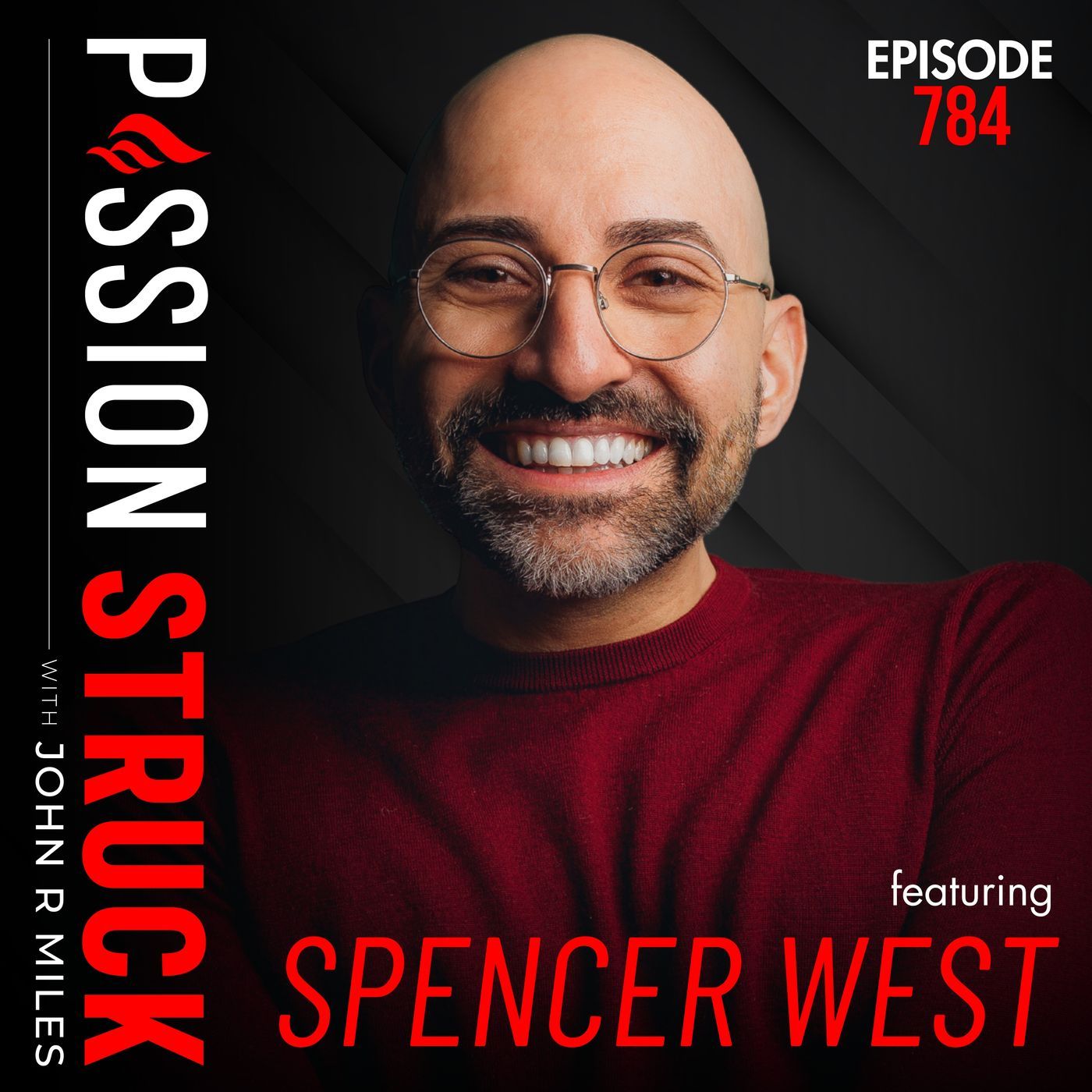
Passion Struck with John R. Miles
How to Overcome Identity Distortion and Live Authentically | Spencer West - EP 784
00:54:35
In this episode of Passion Struck, John R. Miles sits down with internationally acclaimed speaker, activist, and best-selling author Spencer West to explore the journey of breaking free from external expectations and overcoming identity distortion.Drawing from his remarkable life—including climbing Mount Kilimanjaro on his hands—Spencer shares why so many of us unknowingly build lives around inherited definitions of success and why safety often becomes the greatest obstacle to authenticity. Together, John and Spencer examine why belonging without authenticity ultimately leaves us feeling empty, how identity becomes distorted over time, and why flourishing begins the moment we stop asking who the world wants us to be and start asking who we truly are.Their conversation explores the psychological mechanics of what Spencer calls "the trap," the profound difference between simple belonging and true mattering, and how he redefined his disability from a medical circumstance into a core p...
Loading summary
Transcript118 lines
- [00:01]
Blue Lizard Sunscreen Announcer
Be adventurous in the sun Be protected in the sun Be confident in the sun Be Fearless in the sun with Blue Lizard Australian Sunscreen as experts in mineral sunscreens for nearly 30 years, we've earned awards for our high quality products and the trust of healthcare professionals. Embrace every moment in the sun with your family and Blue Lizard by your side. Be fearless in the sun Shop Blue Lizard Australian Sunscreen now on Amazon.com this
- [00:30]
John Miles
podcast is sponsored by Talkspace.
- [00:33]
Spencer West
Last year I went through many different life changes. I needed to take a pause and examine how I was feeling in the inside to better show up for the ones who need me to be my best version of myself.
- [00:45]
John Miles
When you're navigating life's changes, Talkspace can help. Talkspace is the number one rated online therapy, bringing you professional support from licensed therapists and psychiatry providers that you can access anytime, anywhere.
- [00:57]
Spencer West
Living a busy life, navigating a long distance relationship, becoming a first stepfather, Talkspace made all of those journeys possible. I could speak with my therapist in the office. I could speak of my therapist in the comfort of my home. I was never alone.
- [01:11]
John Miles
Talkspace works with most major insurers and most insured members have a $0 copay. No insurance, no problem. Now get $80 off your first month
- [01:20]
Spencer West
with promo code space80 when you go
- [01:22]
John Miles
to talkspace.com match with a licensed therapist today at talkspace.com save $80 with code
- [01:28]
Spencer West
space80@talkspace.com so here's how you can save
- [01:32]
Sponsor/Advertisement Voice
up to 70% on your favorite brands from rebel.com has everything for your home, family and life, from strollers to skincare at unbeatable prices. Every day, REBBL drops thousands of new products for up to 70% off. It's a constant stream of endless deals from brands like UPPAbaby, Nuna, Baby Bjorn, Nespresso, Breville, Wilson, Dyson, Caraway and more. Every listing is one of a kind and the best things go first, so you have to move fast. Save big on your favorite brands. Shop now for up to 70% at from Rebel.
- [02:00]
Passion Struck Narrator
Com Coming up next on Passion Struck,
- [02:03]
Spencer West
asking yourself the question why am I here? And really leaning into that and stop worrying about what life is and start wondering what it could be. I think those are the two things that, as when I was writing this book that really resonated and that I hope people will pick up on, is to really just pause and take a look around you and why am I here and what do I want? And then having that ability to wonder what could be? Because part of the framework Also for this book is this idea that we have to have self trust and self confidence. The self trust to be able to listen to what's in here and what we want, and the self confidence to believe that you can actually achieve whatever that is. And so to do that, I think we have to start with those questions.
- [02:45]
Passion Struck Narrator
Welcome to Passion Struck. I'm your host, John Miles. This is the show where we explore the art of human flourishing and what it truly means to live like it matters. Each week I sit down with change makers, creators, scientists and everyday heroes to decode the human experience and uncover the tools that help us lead with meaning, heal what hurts, and pursue the fullest expression of who we're capable of becoming. Whether you're designing your future, developing as a leader, or seeking deeper alignment in your life, this show is your invitation to grow with purpose and act with intention. Because the secret to a life of deep purpose, connection and impact is choosing to live like you matter. Hello friends, and welcome Back to episode 784 of Passion Struck. Have you ever looked around at your life and realized that somewhere along the way you became the person everyone expected you to be, but not necessarily the person you were meant to become? Maybe you've chosen the career that looked successful on paper, stayed in relationships because they felt safe, measured your worth by accomplishments instead of authenticity, or spent years trying to fit into expectations that never really belonged to you. Throughout our Connection Crisis series, we've been exploring the invisible forces that shape how we relate to ourselves and to one another. Last Tuesday, Kati Morton revealed how our earliest experiences create emotional blueprints that continue influencing us throughout adulthood. And then on Thursday, Adam Lane Smith helped us understand how attachment patterns quietly shape the relationships we build and the stories we tell ourselves about love, safety and belonging. Today, we're asking an equally important question. What happens when the person you become isn't actually you? My guest today is Spencer West. Spencer is an internationally acclaimed speaker, activist and best selling author whose remarkable life, including climbing Mount Kilimanjaro without legs, is inspiring in ways that go far beyond physical resilience. Because beneath every extraordinary achievement is a much more universal story. It's the story of learning to separate your identity from from everyone else's expectations. In this conversation, Spencer shares why so many of us unknowingly build lives around inherited definitions of success, why safety often becomes the greatest obstacle to authenticity, and how breaking free isn't about becoming someone new. It's about remembering who you've been all along. We'll explore why belonging without authenticity ultimately leaves us feeling empty, how identity becomes distorted over time, and why flourishing begins the moment we stop asking who the world wants us to be and start asking who we truly are. If you've ever felt successful on the outside while quietly wondering whether you're living your own life for someone else's, this conversation may become one of the most important you've ever heard. Before we begin, if today's episode resonates with you, please share it with someone who may be need this message and if you haven't already, leaving a rating or review on Apple Podcasts or Spotify is one of the best ways to help others discover Passion Struck. You can also download today's companion workbook and reflection guide completely free@theignitedlife.net and now let's dive in with Spencer West. Thank you for choosing Passion Struck and choosing me to be your host and guide on your journey to creating an intentional life that matters. Now let that journey begin.
- [06:20]
Blue Lizard Sunscreen Announcer
Be Fearless in the sun with Blue Lizard Australian Sunscreen Whether you're diving into ocean waves or simply chasing your kids around the backyard, Blue Lizard has you covered so you can enjoy every moment worry free. Designed for your whole family and free from fragrances, parabens and phthalates, Blue Lizard is your go to mineral sunscreen trusted by dermatologists, pediatricians and parents. Shop now on Amazon.com and feature be Fearless in the sun with Blue Lizard Australian Sunscreen the sun is calling. Are you ready? From beach days to soccer plays, Blue Lizard Australian Sunscreen helps protect your family's skin so you can focus on the fun, not the sun. With no fragrances, parabens or phthalates, our mineral sunscreen is designed for your sensitive skin and trusted by dermatologists, pediatricians and parents alike. Be Fearless in the sun with Blue Lizard Australian Sunscreen Screen. Shop now on Amazon.com so here's how
- [07:20]
Sponsor/Advertisement Voice
you can save up to 70% on your favorite brands from rebel.com has everything for your home, family and life. From strollers to skincare at unbeatable prices. Every day, Rebel drops thousands of new products for up to 70% off. It's a constant stream of endless deals from brands like UPPAbaby, Nuna, Baby Bjorn, Nespresso, Breville, Wilson, Dyson, Caraway and more. Every listing is one of a kind and the best things go first, so you have to move fast. Save big on your favorite brands. Shop now for up to 70% at from rebel.com.
- [07:54]
John Miles
I am absolutely honored today to welcome Spencer west to Passion Struck. Spencer, how are you doing today in
- [08:00]
Spencer West
Canada, first of all, I'm so grateful to be here, and I'm good. It's a bit of a gray, rainy day, but I kind of like that. It's kind of nice to have the juxtaposition every now and then.
- [08:09]
John Miles
I love to bring in guests from Canada.
- [08:11]
Spencer West
Canada.
- [08:11]
John Miles
Because it's one of my top three listening countries that I have a lot of people tune into. So it's nice when I can take these interviews out of the United States. So I'm excited about it.
- [08:23]
Spencer West
Happy to represent.
- [08:27]
Passion Struck Narrator
Spencer, for those meeting you for the
- [08:29]
John Miles
first time, can you take us back to the beginning? We have all what I think are defining moments, and you had one when you were five years old, but for you, it started even before that. Can you talk about the early moments of your life and what shaped it?
- [08:48]
Spencer West
For sure. So when I was born, so I'm originally from the United States, so I toe the line between the two countries. I'm a citizen in both countries. But when I was born in the state of Wyoming, my parents, no one knew that anything was wrong with me until I came into the world. And then they realized that I had a genetic disease called sacralogenesis, which caused the muscles in my legs not to work. And that's a pretty rare disease. Even to this day, they don't really understand how or why it happens. And there's varying degrees to it. So for me, it affected the muscles in my legs, and we realized that I wasn't able to move my legs. I could feel them, but I wasn't able to move them. So at the age of two, they amputated my legs at the knee. And the hope was that they could fit me with prosthetic legs and then I would navigate the world that way. But when it came time to actually do that, they just didn't work for me. So then we went back to the drawing board and they decided to amputate my legs just below my pelvis so that way I could get around on my hands and also potentially use prosthetics and use a wheelchair. So that's how I acquired my disability. It was at birth. So this is all that I've ever known. So now that's how I navigate the world a little bit on my hands and mostly as a wheelchair user.
- [09:59]
John Miles
And I'm going to just bring this up because when I was five years old, I went from being your typical kid, doing your typical kid stuff, until one day I was in the middle of a game of tag and was running away from my next door Neighbor when he pushed me from behind. Listeners have heard this story. You haven't. But I went headfirst through a ba. Through a basement window, and it forever changed my life. I developed a sensory processing disorder, speech impediments, eyesight issues, chronic migraines, issues with cognition. And it's been a battle for me ever since then. And so I think they're visible wounds, and then they're invisible wounds that a lot of us carry. But for me, one of the worst parts of this whole experience was that I was told early on initially that my life was going to be different. And I started to accept that until I met a speech therapist who wouldn't allow me to accept that and said, you don't have to condition yourself to live your life like this. That's a choice. You have another choice, John, and that is to live your life however you want to and to accomplish whatever you want to. Did you ever face a decision or circumstances like that?
- [11:20]
Spencer West
Oh, John, A, thank you for sharing that, and B, what a great person in your life to give you the autonomy to choose. I think that's so lovely. After my second surgery, they were like, every kid wants to walk, so we want to give you these prosthetic legs. And prosthetics are so helpful for so many people, but they weren't for me. They were, like, so difficult to use, and I found them so challenging. And not only did they say that every kid wants to walk, but they kept reinforcing this idea that, just like everyone else, you're just like everyone else. And so in my mind, I was like, these two things don't add up. You keep saying I'm like everyone else, but then when I'm out in public, people are asking me inappropriate questions about myself and my body, so then I'm not like everybody else and being singled out. And then these legs that you want me to use are so difficult and so challenging. So from kindergarten to sixth grade, I use them with a wonderful physical therapist and a teacher's aide. And then in sixth grade, we all sat down and they all said, do you like using these? And I was like, no, it's so challenging, and I can get around much faster on my hands as a wheelchair user.
- [12:20]
Sponsor/Advertisement Voice
So.
- [12:21]
Spencer West
And that's what I've been doing ever since. But, yeah, that was, like, that was the first time where someone gave me autonomy and asked me the question of, like, what do I want? And that was the first time where I even realized that I had that option. So, yeah, that was a very. One of the first transformative experiences for me.
- [12:38]
John Miles
I'm not sure if you're familiar with Jen Bricker Bauer.
- [12:41]
Spencer West
The name sounds familiar.
- [12:43]
John Miles
Jen is a personal friend of mine, and I had her on the show a number of years ago, but she was born in Romania without legs, and her parents gave her up for adoption because of, I guess, the expectations that they didn't think that they could fulfill of giving her the life that they wanted her to have.
- [13:07]
Spencer West
Yeah.
- [13:07]
John Miles
And she was adopted by a family in southern Illinois. And one of the things that she told me was that early on, her parents made it clear to her that they were never going to treat her like she had any kind of limitation. So they raised her with the belief that nothing was off the table. And she said it completely changed her life. Having that mentality that anything is possible. And it seems like your experience is very similar to that, that you have had always this thought that you could shape your life however you want to from a physical standpoint.
- [13:46]
Passion Struck Narrator
And.
- [13:46]
John Miles
But we're going to get into an identity standpoint, as this interview goes on. Is that kind of a true understanding?
- [13:52]
Spencer West
I think that it was a tr. It isn't. It's like a mix of the two. Because I think that idea that I could do anything that I put my mind to was very helpful as a young person because it gave me the freedom and the excitement at what life could be and what it could look like. And this was a very popular thing to tell disabled kids in the 80s and 90s was you can be just like everyone else and you can go and do all the things that you want to do. And part of that is true, and part of that isn't true. You know what I mean? Because there's still barriers today that stop me from being who I want to be and prevent me from doing things that I would like to do. Stairs instead of ramps, getting to a place, and there isn't an accessible bathroom. So I. I think it's important when we talk about disability, is that mindset was helpful for me in the beginning, but as I've gotten older, I've realized it can be also harmful because it can create a false sense of what the world is like for disabled folks. And there's still so many barriers that exist, both attitudinal and physical, that prevent disabled folks from fully participating in society. And this is something that I experienced even in my early teens, and I was trying to get a job. And this was back in the day when you would literally take your resume and application and hand it in person. And all of my friends were getting jobs and I wasn't. And I had more experience than my friends because I'd worked for my grandmother to real estate business during the summer. And so I was starting to see some of these barriers that exist that were out of my control, that had nothing to do with me necessarily. But everyone else's idea of what disability is. The answer is yes and no at the same time. Both things exist.
- [15:30]
John Miles
Spencer, part of the reason we're here today, and I thank you for going into that, to help set the backdrop, is we're here to discuss your brand new book, Breaking Free. And as I was reading through it, I think the heart of the book is that it isn't about disability. It's a book about identity distortion. Is that a good way to think about it?
- [15:52]
Spencer West
That's definitely a part of it. And me leaning into those identities, for sure.
- [15:56]
John Miles
Yeah. And that one of the key things that you want people to understand is that we're not limited by our circumstances, but more through the expectations that are imposed on us by the external structures that we interface with. And so I know this personally because I lived through most of my life always feeling like I was never enough. And I was becoming a person that I thought the world wanted, but that felt more and more like an imposter to me because everything that made me, I was putting on the shelf thinking that if I expose those things, that the world wouldn't welcome me in. And I think that although I'm talking about me, the more that I have done this podcast, the more people who are listening to it, I actually think it's the vast majority of people on the planet. What are your thoughts on that?
- [16:53]
Spencer West
The whole crux of the book is around one of my favorite quotes by Paulo Coelho from the Alchemist, who says, maybe our journey is to not become anything. Maybe our journey is to become everything that isn't really us. And that's what I've been doing for the last 25 years of my life, is peeling back all those expectations that I put on myself or that society give you some examples. It's from the time that we're born, there's a emphasis on who you should love and who you should have a relationship with, what success should look like, what your career and what the American dream is and all the things that you're supposed to chase to have a normal, successful life. And so we did all of those things. And then A, it didn't feel right, and B, it didn't work out for me. One example Is when I got to college, I had. Because I had just listened to everyone else. I didn't know what I wanted to study. I picked a major that I didn't enjoy. I failed a class for the first time in my entire life. I normally got really good grades and did really well in school. And I really had to listen, what do I actually want? What do I want to do? Not what's going to go make me a lot of money. And so I really had to do that. And at the same time, I was also coming to the realization that I was gay and that I didn't fit into this mold that people were trying to put me into. Although I tried really hard to, it just never felt right, and it never felt like it was me. So the crux of this book is this idea. And although I'm queer and disabled, I realize that's not everyone's experience, but this idea that we all have these expectations that are put on us, and so we go in the direction of those. And then when they don't work out or they don't feel right, then no one tells us what to do once that happens. And that's what I've done in this book, is to tell people what I did and how I did it in hopes that it provides a bit of a roadmap for them to do the same in whatever capacity there is. Maybe it's not coming out or being disabled, but maybe it's being in a relationship you don't want to be in, or a career that you're not enjoying, or a city you don't want to live in anymore. They can be simple things like that.
- [18:50]
John Miles
You open up the book by describing yourself as a warrior, and you talk about opening up for Demi Lovato in front of almost 20,000 people, climbing Mount Kilimanjaro, living what looks like an extraordinary life, and then you kind of pull the rug out from under it and you say, none of those things came from circumstances, talent, whatever. They came from the decision to reject a safe, uninspired life. Yeah. So why do you think so many of us fall into that trap of living that safe life instead of living the inspired life that I believe God put us here to live?
- [19:38]
Spencer West
I think for everyone, it's different, but for me, it was safer at the time. You know what I mean? I came from a small town in Wyoming. I was trying to figure out who I was and see the world, and it was safer and easier to just believe and accept what people were telling me was the right thing to do. And that was like, such an important lesson for me to learn and continue to learn is the idea that, oh, sometimes what keeps you safe isn't always what you need. You know what I mean? And so. And sometimes we also make a trap of our own design. This is part of the book that I also talk about. When I graduated college and I came out into the world, I was like, great. I did the thing you told me to do. I have a degree, I'm going to get a really good paying job, I'm going to make all the money that I'm looking for and that'll be it. And that didn't happen. No one cared that I had a degree and I couldn't get a job in my field. And I eventually got a job at a salon as the client operations director. And from the outside, I had everything that society told me that I should want and need. I had money and stuff and. But inside I was like, oh, this doesn't feel right. And I'm dreading the work week and living for the weekend. But in my mind I was like, but I'm making money, so this must be the thing that I'm supposed to be doing. So I got caught in my own trap of, well, I need money to live and this job is fine for now, so I'll just keep doing this thing. And then four years goes by and you're like, wait, I stayed here because it was safe, because it gave me what I thought I needed. And then after four years, I was like, this is not what I want. This is not what I need. I want a job with purpose and I want a job that is not in this specific field. And that's what started to change as I realized I was like, oh, I'm in this trap that I then created myself. And I had to figure out, how do I now get out of that? But the first step was recognizing that I had put myself in this space to begin with.
- [21:26]
Passion Struck Narrator
Before we continue, thank you for supporting Passion struck and for making these conversations possible. One of the biggest themes emerging throughout the Connection Crisis series is that disconnection doesn't always begin with other people. Sometimes it begins the moment we disconnect from ourselves. When we build our identities around achievement, around expectations, around proving our worth, we can spend years chasing a version of success that never actually satisfies us. That's one of the central ideas behind my upcoming book, the Mattering Effect. Because genuine fulfillment doesn't come from becoming more impressive. It comes from knowing that who you already are has inherent significance in building a life that reflects that truth. To help you apply these ideas, every episode includes a free companion workbook with reflection, questions and practical exercises you can find@theignitedlife.net now a quick break for our sponsors. Thank you for supporting those who support the show. Hey friends, When I launched Passion Struck, I thought the hard part would be creating great content. But what I didn't realize was how many hats I'd have to wear. Creator Marketer Customer Support Website Designer when you're building something meaningful, your to do list never seems to get shorter. That's why having the right tools matters Shopify is the commerce platform behind millions of businesses and 10% of all E commerce in the United States, from household names like Heinz and Mattel to brands just getting started. It helps you build a beautiful online store with ready to use templates, and you can even use AI tools to help write product descriptions and improve product images. And everything from inventory to payments to analytics is in one place, making running your business a whole lot easier. Start your business today with the industry's best business partner, Shopify, and start hearing Cha Ching Sign up for your $1 per month trial today at shopify.com passionstruck go to shopify.com passionstruck that's shopify.com passionstruck Cha Ching starting something new can be terrifying. I still remember launching Passion Struck and thinking, what if nobody listens? What if this completely fails? When you build something that matters to you, there's always the moment of doubt before you hit publish. But sometimes the biggest breakthroughs in your life start with betting on yourself. And if you're building a business today, having the right platform behind you makes all the difference. That's where Shopify comes in. Shopify powers millions of businesses around the world and gives you everything in one place, from beautifully designed online storefronts to AI tools that help you write product descriptions, improve images, and streamline your workflow. And when it comes to marketing, Shopify helps you create email and social campaigns so you can actually find your audience. It's time to turn those what ifs into Cha Ching with Shopify. Today, sign up for your $1 per month trial at shopify.com passionstruck go to shopify.com passionstruck that's shopify.com passionstruck Cha Ching as I've gotten older, I've realized something Recovery matters just as much as performance. There was a time when I could push hard, bounce back, and never think twice about it. But lately I started noticing that some workouts left me more drained than energized. My sleep focus and recovery just felt off. And what surprised me is how much of that can start beneath the surface with markers most people never think to check. Things like magnesium, iron and even your hormone levels can directly affect your energy recovery and performance. When they're off, everything feels harder than it should. When they're aligned, your body responds differently. That's why I use function. It gives me real insights into what's happening inside my body so I can make more informed decisions about my health, training and longevity. I use this and you should too check your health the way I do. 160 plus lab tests a year for $365 plus the ability to dive deeper into your results through functions connections to platforms you already use like ChatGPT and Claude join@functionhealth.com passion or use gift code passion25 for a $25 credit towards your membership. You're listening to Passion Struck right here on the Passion Struck Network. Now let's get back to the conversation.
- [25:47]
John Miles
I want to go back to some of your early childhood examples that you have in the book.
- [25:53]
Spencer West
Sure.
- [25:53]
John Miles
Because I think I spent a lot of my time talking about belonging versus mattering. And a way I try to frame this is imagine you're at school and it's gym class and you're going to play kickball and as it always happens, the teacher says I'm going to pick two of you and then you're going to pick who you want on your team. Belonging to me is when someone picks you to be on the team. But mattering is something altogether different. Mattering is feeling that they actually want you on the team and they're celebrating your uniqueness by being on the team. And I remember being in those situations where especially because of what happened to me, I wasn't the first person who was picked. And sometimes that was at the very long line of getting picked or not. And then you know what it's like to feel excluded because no one passes the ball to you and they put you in the outfield where you're not going to make any damage and they're winning or anything like that. And I have to imagine you felt much that same way. But can you maybe talk about this, what it felt like for you and how that made you think about your own uniqueness and your own feeling like you were enough.
- [27:09]
Spencer West
I have such a similar experience, so I really appreciate you you sharing what you did. I dreaded gym class all through school for the same scenario. No one ever wanted me on their team. And then when they did, it was they were forced to. And then often would hear them complain under their breath of, great, I guess our team's not going to win today. The only time people wanted me on their team was when we were playing dodgeball because I was, like, short and fast and hard to hit. But any other time, no one wanted me on their team. And so for a long time, I internalized that and thought, oh, I'm not an athlete. I don't have anything to contribute to an athletic team. And there's going to be a point to this, so stick with me. When I got to high school, I was told by the administration, if you want a good college application, you really should think about playing a sport to add it to your application. I was like, okay. So I tried out for cheerleading because I had done gymnastics as a kid. My parents are really great at fostering some of those early passions. And I tried out, and lo, behold, I made the squad. And they embraced me with open arms, and it was really great. And it was myself and three other boys. And that year we went to the state cheerleading competition, and we took first place and brought home a state championship title for that year. And that was the first time where I felt like what you just described, where I didn't just belong, but I mattered. And that for me, I could be a part of this team, and collectively, we could all bring our gifts together and bring home this great win. And that was the first time where I felt that more as like a young adult and understanding how important that was, and then also understanding that I shouldn't rely on other people to give give me that feeling. I also have to own that and feel that for myself, which I just learned about 10 years ago through lots of therapy. But I think that's really important. I think it's a good framing that you put that through. So I definitely had that experience.
- [28:59]
John Miles
And I think there are different forms of isolation in childhood that we're all going through. And I recently wrote a children's book about mattering. Because the sad thing is, for kids 4 to 8 years old, almost 40% of them don't feel like they matter for various different reasons. But it's just. I think everyone is susceptible to this experience of feeling isolated. And it happens during different stages. It could happen when you're going into middle school and people are bullying you because you wear different clothes than they do, or you talk differently than they do, or you name it, and then that leads to isolation in college, and then it leads to Fear of abandonment and then withdrawing further. And then you start going into a life where you're visible on the outside, but you feel more and more invisible on the inside.
- [29:56]
Spencer West
Yeah.
- [29:56]
John Miles
And for you, you went through all that and then there was a breakthrough that happened. What was that breakthrough?
- [30:05]
Spencer West
I had a couple. The first one really was when I was in college and I was studying for my degree. But I. I was miserable because I was starting to explore being queer and what that looked like and starting to understand that that's who I was. And that was a really like, formative time in my life to. To be able to admit that and say it out loud and then live it and to. To understand that that was okay and that I did matter and that I was allowed to take up space and I was allowed to be who I authentically was born to be. So that was like the first time and then the second time where I broke free from this mold and this idea of what the world tells us we should be and how we should be is after when I was working at that salon, I was pretty miserable. And a friend invited me to go on a volunteer trip to Kenya with him to help build the school because he knew I was struggling and he was like, let's like, get you outside of your comfort zone and let's go do something different. And so we went and it was a life changing experience for all the things we were working for. Volunteering with a not for profit. And we helped build a school, but then had the opportunity to visit one of the local schools and hang out with the kids. And they were very cute and wanted to give me a tour of their schools. And then they wanted to ask me some questions about myself and about my body and about my disability. When after I shared a bunch of just about me, a young girl said to me that she didn't know something like this, meaning the loss of my legs could also happen to white people too. And that phrase brought everything into focus for me. And up until that point, my disability was just something I thought that had happened to me. It wasn't really an identity yet. And that was the first time I was like, oh, there's something about my disability that I've missed. And on the flip side, I was like, oh, maybe I could be a motivational speaker. And I don't know if this has been your experience, John, but there's this interesting thing for folks that like, have very visible disabilities is everyone wants you to tell them your story so they can feel inspired and they can do good things in the world. And I never wanted to be that type of speaker. And so when I went on this trip, I was like, oh, maybe it could be a speaker. And although I could tell my story, it would be in service to and on behalf of this organization that I had fallen in love with. And so then when I came back to North America, I just. I applied for a job there and a few months later moved to Canada, where I was only going to stay for two years. And then I never left. I've since moved on from that organization, but that was the other really big time where I broke free of all of these ideals and carved my own path and went my own way. Does that answer your question?
- [32:33]
John Miles
I think it does. I'm gonna be vulnerable with you and lean into this a little bit because maybe it'll help one of the listeners. I do a lot of public speaking, and every single time, it is absolutely terrifying. And it's the largest stage I have ever been on was I did the keynote at Dreamforce in the late 2000s, like 2009ish, 10ish, 11ish timeframe, and get up on stage, and I'm out there with Marc Benioff, who's the CEO of the company, and there are 45,000 people out there. And we had rehearsed the day before. We had a teleprompter in front of us. And I knew Mark and I knew that he goes off the script all the time, so we didn't do anything that we had rehearsed for nothing on the teleprompters.
- [33:26]
Spencer West
Oh, no.
- [33:27]
John Miles
And to make it worse, Will, I am from the Black Eyed Peas, who's a good friend of his, was in the front row doing googly things at us, trying to get us to crack up. That's not what makes it terrifying for me. What makes it terrifying for me is because of what happened to me from that head injury. Oftentimes, what is going on in my mind and what is coming out at my mouth are two entirely different things. And so I misspeak. I mispronounce, I still listen. And when it happens, it makes me seem sometimes like an idiot because I will say the wrong thing, because what I'm thinking is the right thing, but what comes out of my mouth is completely different.
- [34:07]
Spencer West
Yeah.
- [34:08]
John Miles
And it happens. And so now I've learned to. If it does happen, I lean into it and I say, this is why it happens. And it totally. And it gets smoothed over, but you never want it to happen.
- [34:21]
Passion Struck Narrator
Yeah.
- [34:22]
John Miles
And it happens sometimes without even you knowing it. It happens because you go. You rush through the moment and don't even realize you've misspoken.
- [34:31]
Spencer West
Totally.
- [34:32]
Passion Struck Narrator
So.
- [34:32]
John Miles
So I like to speak. It's important that I speak, especially get the message out that I want to, but it's never something that I intentionally want to do. Yeah, there are ways I've tried to compensate for it by taking improv classes and doing Toastmasters. So I'm putting myself out there and trying through just mere practicing, trying to get more comfortable that it's not going to happen. And that's what typically happens, is it happens less.
- [35:01]
Spencer West
That's great. And I think that's good to get outside of your comfort zone. But I will say I definitely. I've never had a fear of public speaking. I get nervous, but I'm not afraid to do it. But what I think, and I wish it's easy for me to say, but for me, I just think when we make mistakes, like, that's the stuff that I love as an audience member, because I'm like, oh, you're human. You're like me, and I'm like you. I just. One of those moments happen. I actually love it now because I'm like, oh. It gives me a chance to like, oh, this was a mistake, all right. And then it allows people to do the same, to lean into the vulnerability of we're not going to get everything right all of the time. And if we try to move past it or pretend like it didn't happen, that's not helpful. And so what you're doing is by explaining what's happening and why it's happening. I think that's so beautiful because I think that's where connection happens, because then we can see ourselves in that person.
- [35:55]
John Miles
So in the book, Spencer, you talk about something called the trap. What did that look like for you personally?
- [36:03]
Spencer West
Yeah, there was two things. The big one was really my job working at the salon at the time and. And being. And creating this trap of my own design of, okay, well, I got a good job, and it's making me lots of money, so I did the thing, so I might as well just stay here. And then that's. Like I said, after four years, I was like, oh, I don't want to be here anymore. This is not where I want to be. And I needed get outside of my comfort zone and try something else. What started for me is to get out of that trap is I was living with my best friend, and he was taking interior design classes at Scottsdale Community College. I was living in Phoenix at the Time. And I was watching how excited and passionate he was about his life, and I was like, oh, I don't feel that way at all. And in fact, I'm kind of jealous this is how you're feeling about your life when, like, I am miserable over here. So I started to take theater classes again because I did theater all through school. And that's initially what I wanted to do from with my life, but then realized it's probably not going to work out for me. But I started taking theater classes again, and that's how I slowly started to get out of that trap. Because the joy came back in my life of like, oh, yeah, I forgot there's things that I love to do. And so it was true. That helped me recognize, oh, I was in this trap, in this loop that I no longer want to be in. And the first step to get out of that was to find something that I loved to do that brought me that joy, which then made me realize, oh, I want more of this joy. I want to keep feeling this way. Which then ultimately led me to go to East Africa. So, yeah, the trap was something that I created myself and then had to figure out how to get myself out of.
- [37:37]
John Miles
And for someone who's listening right now, how would they recognize that they're in that trap?
- [37:43]
Spencer West
Yeah, I think there's a couple of things. It's to really take a look at, where am I at right now? What am I. Am I feeling happy about everything in my life? Are there areas of my life that bring me joy? Or are there areas of life that I'm like, wow, I'm really struggling with this specific area. Again, maybe it's where you live, maybe it's a relationship, whatever that might be. And then really looking at, where do I want to be? Like, where do I want to go? And then we can ask ourselves some questions of am I showing up as my full self all of the time? Are there parts of myself that I'm hiding? If so, why start to answer some of these questions? And that's what I did in the book, which I might've mentioned earlier, is at the end of every chapter. I've given people questions and exercises and different perspectives to think about in hopes to help them figure these answers out for themselves as well, like I did.
- [38:35]
John Miles
So two of the central questions that I like from the book are, why am I here? And where do I want to be in the future?
- [38:42]
Spencer West
Yeah.
- [38:43]
John Miles
And I think it's really important that we're discussing this. I'm not sure if you've ever heard of Tom Gilovich, who's a professor at Cornell University, or his research, but.
- [38:53]
Spencer West
Oh, please tell me.
- [38:55]
John Miles
So he has really been studying, among other things, regrets that people have. And he has spoken to thousands of people who are in their third trimester of life, and 76% of them have the same regret. And it's not living their ideal life. And it's interesting because as I've talked to hospice nurses, Bronnie Ware being one of them, who wrote the book Five sayings of the dying. I can't remember the book. I should brain fart. But she mentions the same thing in a different way. But what's interesting to me is it's the same exact thing from observing this with people in the actual experience of going through that phase and someone who's looking at it through a scientific lens. But if that's 76% of us, that's a ton of people who still have a child inside of them who had this dream when they were younger, like you did of being an actor.
- [39:56]
Blue Lizard Sunscreen Announcer
Yeah.
- [39:57]
John Miles
In many ways are still dreaming those dreams, but they're letting them mission just die on the vein until it's too late to do something about it.
- [40:05]
Spencer West
Yeah.
- [40:06]
John Miles
And to me, that's really sad. And it's one of the main reasons that I'm motivated to do this podcast and other things, because I think that is one of the reasons that is leading so many people to feel the way that we are in society today. And to me, a lot of this gets back to I. I recently did this solo episode about the Truman show. And when people see that movie, a lot of people gravitate to the end of the movie when he is sailing in the storm and he runs into the side of the sphere and then he walks out and does the bow. But what I really concentrated on was spotlight moment.
- [40:48]
Sponsor/Advertisement Voice
Yeah.
- [40:48]
John Miles
When a spotlight falls from the sky and he's, what in the world is going on? But everyone around him is acting like life is completely normal. And I think we all have spotlight moments like that. Some are more visible than others, but it's really about activation. And when that spotlight happens, how do you stop waiting for permission for you to do something different with your life and identify how to take that next step? What do you advise people to do
- [41:21]
Passion Struck Narrator
when that spotlight hits them?
- [41:23]
Spencer West
Yeah, it's so funny. That's literally the name of one of my chapters is find your spotlight.
- [41:27]
John Miles
No, that's why I use it.
- [41:29]
Spencer West
I figured. Yeah. Like I said, for me it was like taking that theater class and remembering how much Joy it brought me. And not that I was doing it for a job, but just that it gave me that simple sense of pleasure, which then brought more pleasure into my life and then wanted me to. It forced me to start seeking more of that in other areas of my life. So, like, oh, this is making me feel good. I should find a job that makes me feel good. So I think it's like doing those small things now. You don't have to go to East Africa and you don't have to necessarily take an acting class, but maybe you're like, I'm gonna try a yoga class and see if that works out for me, see how that feels. Something that I recently started doing. I still do this in my own life all the time. I started learning how to sew with a sewing machine. There's a great little place near where I live in the city here in Toronto, where they do, like, adult sewing classes where you learn how to make a tote bag and learn how to use a pattern. So just like, getting out there and doing some things that you used to love to do or currently love to do, and just making space and time for those things. Another example to just even simplify it even further, when I was in therapy, my therapist was like, what do you like to do in your spare time? And I was like, I don't know. My. My life is my work and my work is my life. I don't know. And she was like, I think you really need to foster a sense of play here. And one of the things that I realized that I love to do is put together Lego. And so even it's just simple as carving out an hour for yourself to put Lego together. That's what sort of helps you find your own spotlight. It doesn't necessarily mean on a stage, but it means what's something that you just love to do, that you want to do? And I think that's what helps us aid towards looking at, like, how do I bring all of these aspects into my life so that I'm feeling joy everywhere?
- [43:06]
John Miles
It's funny, the name of this podcast, obviously, is passion struck, and I wrote a book of the same name. And I started to realize on Amazon when I was getting some reviews for it that weren't very kind, that these people, for whatever reason, were targeting the book and had never read it when they were talking about that it was about passion and relationships and how it dies and how the book wasn't delivering on that promise. Okay, but I'm going into this because one of the key areas you focus on in the book is. Is going from passion to purpose, which is really a lot of what the term passion struck is about for you. When you hear those words, passion struck, what does it mean for you to live a passion struck life?
- [43:55]
Spencer West
Yeah, I think for me is whenever possible, I want to do things that I feel passionate about. I want to spend my time doing things that bring me joy, that bring me light and love and excitement, and then to take that further and then to also have some sort of purpose to it. But there are passions that we do, as I mentioned, like Lego and sewing, which are just for me. But Kilimanjaro was an example of that. I had this passion of this organization that I was working for, and I was traveling 200 days of the year as a speaker, which was great and also grueling. And I was telling audiences, you need to get involved with the things you're passionate about. You need to run campaigns, whether that's fundraising or awareness. But I was just talking about it, and I never actually done it myself. And then I wasn't getting time with my friends and family because I was traveling so much. And that's what I learned was so paramount to recharging my batteries. And so I'd been speaking for so long, that had become my passion, but there was no purpose to it anymore. It was just a job. And so that's when I decided to climb Mount Kilimanjaro. And it wasn't just to climb the mountain. So many disabled people have climbed the mountain before me and so many have climbed after me. That was old news to me. But I wanted to raise a half a million dollars for clean water in East Africa. And I wanted that passion to translate into a purpose. So it wasn't just living for myself that I could translate that to other things as well. So, yeah, so passion struck for me is that idea of, oh, everything that I do, I want to have some sort of passion in it and hopefully have some joy and then translate that into some sort of purpose. The same reason why I use social media. I don't use social media because I want attention. I use social media because I want to educate folks on the intersectionality of my identities and what that looks like. So, yes, we can have some fun and make some jokes and do some fun things every now and then, but also there needs to be a purpose to it. And I think that's what really helps us break free from all of the things that we're trying to break free from is when we move from passion to Purpose.
- [45:46]
Sponsor/Advertisement Voice
Yeah.
- [45:47]
John Miles
And in the book you write when you were in Kenya, I found the link between what I love to do and what I felt called to do.
- [45:53]
Spencer West
Yeah.
- [45:53]
John Miles
And that was to combine my love of performance through public speaking with the power of my own disability. And I think that is something we don't realize is we have superpowers. But sometimes I don't think we see the superpower in the same way that other people might see it. A lot of people would think, my disability, how could that ever be my superpower? And for you, you double down upon it. Why do you think that's something we tend to ignore? Not to double down on something that other people see as a weakness, but we, if we really looked at it, would see it as a core strength that we have.
- [46:31]
Spencer West
I think for me, it was like, because people were always singling me out from physically looking different all of the time. Every day I was like, I just want to fit in. I just want to feel normal, so to speak. But now, as I've gotten older in heights and I'm like, oh, like, that's not what I want. What makes me. I want to say this. I think for me, what I realized is the beauty is in the difference. It's not in. If we all looked the same and we were all doing the same thing and all speaking the same way and dressing the same way, life would be so boring. But that felt so safe at the time because I didn't want to be singled out because people were doing it anyway. But then when I was like, oh, if I take control of the narrative, if I'm the one that is leaning into this identity, then that feels better for me. And every time that I did the opposite of what I thought I should do is where all of the magic lived. You know what I mean? So leaning into my disability suddenly was like, oh, everything started to work out for me when it wasn't working out before. So the part just felt really important to me. But I think it was because before that, I just wanted to fit in real. Not realizing that that was actually not helpful for me.
- [47:44]
John Miles
Spencer, there's a part in the book that gotta get you to tell this story. So I was never fortunate enough to meet General Norman Schwarzkopf, but I actually know his daughter who lives here. And you write that he gave you a Spirit of courage award. But can you go through the background of this and what happened? Because I thought it was a pretty interesting event.
- [48:09]
Spencer West
Totally. So I. Growing up in Wyoming, my dad and his dad and his brothers are very Much men who like to hunt and to fish, and it's very. They're very passionate about it. And that's a lot of their identity, which I have such appreciation for. But they wanted me. My dad wanted me, as his only son, to be that person, too. And I just really wasn't. When I was 16, my grandfather always wanted to take me hunting in South Africa. And I just. I never liked the idea of it. It was so uncomfortable for me. I don't feel like I should have that much power over another living being. But I was like, all right, I'll go. Because it's like he's been talking about it forever, and I might as well try. And so we went and we went hunting, and we did all the things. And I didn't really like that aspect of it, but I liked being in South Africa. And then when I came home, this. The Safari Club International, which is. That's a whole other story for another day. But they wanted to give me this award called the Spirit of Courage award for going hunting in South Africa. And General Norman Schwarzikop was going to present the award. And at the time, George Bush was the president, the first George Bush senior. And he was also there. And so I went and accepted this award. But in my mind, I was like, this feels so silly. This disabled person went hunting, and now you're honoring me for. You're giving me an award. He didn't take courage. The thing that took courage is wanting to hang out with my grandfather, my dad, and build things. That was terrible. That's what took me courage. So there's just this weird thing about disabled people and doing normal things that are celebrated for. And it's like I'm just living my life. But that was such a weird thing that I never quite understood.
- [49:43]
John Miles
I have to ask Spencer, what does it mean to become the Karen for others? I mean, maybe I'm mispronouncing the name.
- [49:49]
Spencer West
No, that's right. So first, just context. Karen I learned when I was on Kilimanjaro. So one of the days, my buddies and I were really struggling. Altitude was affecting us, and we were bickering back and forth because we hadn't slept well. And we'd noticed that there was, like, these intentional piles of rocks along the route at Kilimanjaro. And when we were struggling, our guide just said, us. And, guys, let's take a break. And he's. Let's talk about what these are. And then he told us. He was like, these are Karens. And a Karen is a symbol for when you're lost. It shows where the path is again, both physically and emotionally and spiritually. And that was like. That was like a big moment for all of us to remember a why we're there. But for me, it was also a bit of validation. Oh, I think that's part of my job here. This life that I have right now is to be that sort of Karen for other folks to be like, hey, I figured a few things out, so follow me over here, and I've got a few answers. And we all have the capacity to be that for other people. This is not just something that I can do because I've written a book or I've gone on a tour with Demi Lovato. This is something we all have the capacity to do. You do with your podcast is just giving folks an example of what life could look like and then daring them to keep walking on the path to create that for themselves and then vice versa. But I think it's important for us to recognize that we all have that power to be able to do so and to lean into that whenever possible.
- [51:10]
John Miles
I think it's a powerful symbol. And I always like acronyms and symbols because I think they help you to at least help me to remember things. I always try to. To create an acronym for everything and then link it to something that I can visually remember, especially when I'm doing public speaking, because that's what helps me keep the order of things.
- [51:30]
Blue Lizard Sunscreen Announcer
Yeah.
- [51:31]
John Miles
In place. I did want to take an opportunity to go outside the book for a second.
- [51:36]
Spencer West
Sure.
- [51:37]
John Miles
Given that you are such a prolific public speaker. And I know that's something that either members of the audience are aspiring to be more of, or maybe it's something that scares people half to death. What have you found? Are some of the keys that have made you such a success in this space.
- [51:57]
Spencer West
I had a really great mentor who was. Although was a bit harsh, and I wish maybe he could have been a bit softer. Was so helpful in helping me understand how to be a good speaker. And I'll never forget, he was so lovely to work with me every Sunday in the office to. I would present my speech and then he would give me feedback. I remember the first time that I presented a speech. At the end, he was like, spencer, I have my legs. Why should I care about this? And that was the first time that I learned one of the most important rules of and what I think is the most important to be being a really great speaker is to know your audience. And by knowing your audience, how can you relate Your story. Story to them. Because if you're just going to get up there and tell your story, that's nice, and people might be inspired by that, but then they're going to go home, and that's kind of going to be it. And so he really helped me understand how to tell his story. So although I'm telling you how I lost my legs, at the end of the story, I usually will bring it back to the audience and help them understand how what that means to them or for them or what that looks like. So I think it's really understanding your audience and knowing that anytime you're going to tell a story, how is it relating to them or how can you relate it to them? And I think for me, that has been the key to my success. The other thing that I would say is, I, for so long, I was like a youth speaker because I was in my mid to late twenties when I started speaking professionally. So I was speaking to a lot of schools and a lot of middle school, high school, and university students. And then they were like, we want you to maybe transition into corporate speaking. Would you be interested in that? And I was like, okay. And tried to write this corporate speech. Tried to read a bunch of books on business and tried. That wasn't my degree. I studied communication, not business. And then I had another mentor who sat me down, and he was like, you don't need to understand anything about business. He was like, your job is to share lessons that you've learned. So he was like, tell me a couple stories that you love to tell or stories that people never heard before. And he helped me understand them. Oh, there's a lesson here for corporate people. I'll give you an example. One of them is I talk about. My speech is the importance of asking for help, and I talk about climbing Kilimanjaro and help Friends needed my help at the end, and I needed their help at the beginning. But then I related back to the audience and this idea that depending on the audience, it's like, if you work in hr, your job is to help folks navigate the company and all the things that come along with that. Or if you're a teacher, your job is to help students get the knowledge they need to then go beyond whatever they want to be out in the world. And so although my story is about Kilimanjaro, the lesson is we all have the capacity to ask for help and should. So I think it's those two things. Know your audience, and how can you relate to what you're talking about to the audience. So it's not just you telling your story.
- [54:38]
John Miles
When you do your public speeches, do you invite a Q and A or Typically, not always.
- [54:45]
Spencer West
I love Q and A. And that's actually one of the ways that I learned to. My speaking wasn't effective in the beginning because I would give this great speech. And then at the end, undoubtedly, someone raised their hand and want to know what happened to your legs? Because I wasn't really telling that part of the story. And it was like, oh, my God, they've heard nothing. That's the thing that they've been thinking about this whole time is like, where are your legs? So I like Q and A because it gives you a chance to expand on what you've talked about. But B, sometimes it's also helpful to get some feedback. And, oh, what were people listening to? What did they hear? What did they pick up? And are these things that I should lean into more or things that maybe I shouldn't lean into? So I love a good Q and A. Yeah.
- [55:25]
John Miles
What's one of the most bizarre Q and A questions you've ever gotten?
- [55:32]
Spencer West
This wasn't necessarily a question, but I remember I have a speech where I talk about leveraging talent with disabilities and the importance of hiring disabled folks. And I break down some of the myths of why, what stops employers from hiring folks like myself. And then I was talking about how we can all be allies and what we can do for the disability community. And then I was in a city where it was, like, snowing that day. And I'll never forget one of the guys who worked for the city who runs one of the snowplows is like, this is all great, but I'm just telling you that I'm not going to be able to have the sidewalk plowed by the time you leave. Sorry, I can't be an ally. And so I remember that thinking that was so funny and that he was just being honest and vulnerable in that moment. And then one time years ago, I had a high school student raise their hand and be like, do you wear boxes or briefs? Like. So I've had a whole slew of odd and funny questions over the years, but those are the two that come to mind currently.
- [56:22]
John Miles
Yeah. Because I've recently published this children's book. I've been now talking to a lot of elementary students, and I will tell you, they ask some of the most profound and unexpected questions you will ever not be prepared for in your life.
- [56:38]
Spencer West
Totally. Totally. And it's such a spectrum. Right. Because sometimes it's this really deep question that you're like, how does your little brain, your little body know to think these things? And then other times it's like, what's your favorite dinosaur?
- [56:48]
John Miles
Yes, I. Yes. And I've gotten both of those full spectrums of questions.
- [56:54]
Spencer West
Totally.
- [56:56]
John Miles
Spencer. I always like to end these episodes by giving the listeners some homework. If someone's listening and they feel right now like their life doesn't just quite fit, what's one step that they could take today to help them break free and start living the life that they want to?
- [57:16]
Spencer West
I think there's two things, I think you mentioned earlier that asking yourself the question why am I here? And really leaning into that and stop worrying about what life is and start wondering what it could be. I think those are the two things that, that you know, as when I was writing this book that really resonated and that I hope people will pick up on is to really just pause and take a look around you and why am I here and what do I want? And then having that ability to wonder what could be. Because part of the framework also for this book is this idea that we have to have self trust and self confidence. The self trust to be able to listen to what's in here and what we want and the self confidence to believe that you can actually achieve whatever that is. And so to do that, I think we have to start with those questions.
- [58:03]
John Miles
Awesome. Spencer, for people who want to learn more about you, where's the best place for them to go?
- [58:08]
Spencer West
You can find me on social media, on Instagram and TikTok and YouTube. Spencer. The number two, the West. So, Spencer, to the West. And then I've got a website which is west.com and if you're not familiar
- [58:19]
John Miles
with Spencer's accounts, you definitely want to check them out. You are quite, quite the hit on social media. So congratulations to you on that success and thank you so much for joining me on Passion, sir.
- [58:32]
Spencer West
It's my pleasure, John. And thank you for all the kindness and caring that you put into today. It was very much appreciated and noticed.
- [58:38]
Passion Struck Narrator
That brings us to the end of today's conversation with Spencer west. And what I hope stays with you is this. The greatest limitations in our lives are often not physical. They're psychological. They're the expectations we've inherited, the identities we've accepted, the stories we've repeated so often that they begin to feel like the truth. Spencer reminds us that flourishing doesn't begin when our circumstances change. It begins when we stop living someone else's definition of success. And Begin trusting our own voice. Authenticity isn't something we discover, it's something we uncover. It's what remains after we've stripped away everything that never truly belonged to us. As we continue the Connection Crisis series, we'll be joined by Adrian Gostic. For decades, Adrian has studied one of the most overlooked drivers of human connection. The simple but profound experience of feeling seen, valued, and appreciated. Together, we'll explore why so many workplaces unintentionally create cultures of fear instead of trust. Why recognition is far more powerful than rewards, and what every leader can do to help people feel that they truly matter. Because whether we're talking about families, friendships, or organizations, people flourish where they believe they are valued.
- [59:54]
Sponsor/Advertisement Voice
We're all living right now in these uncertain world, and you can't take that away from people. You can't make the world this simple, easy to understand place anymore. We're living in Vuca, right? Volatility, uncertainty, complexity, ambiguity. That's our borderline place right now. That's the baseline. And so with that, though, you don't have to amp things up. You don't have to create more pressure. I was in one big Fortune 500 big brand, and one of the employees told me, he says, working here, he says they have this description that a gun is placed in your back when you start and the trigger is pulled. If you stop sprinting, the bullet will get you.
- [60:33]
Passion Struck Narrator
If today's conversation challenged the way you think about identity, please share it with someone who may need the reminder that they don't have to keep living someone else's story. You can find today's companion workbook and additional resources@theignitedlife.net check us out on YouTube. And until next time, remember, the life you were meant to live doesn't begin when you become someone else. It begins when you finally have the
- [60:56]
John Miles
courage to become yourself.
- [60:58]
Passion Struck Narrator
I'm John Miles, and you've been passion struck.
- [61:03]
Blue Lizard Sunscreen Announcer
Sa.