← Passion Struck with John R. Miles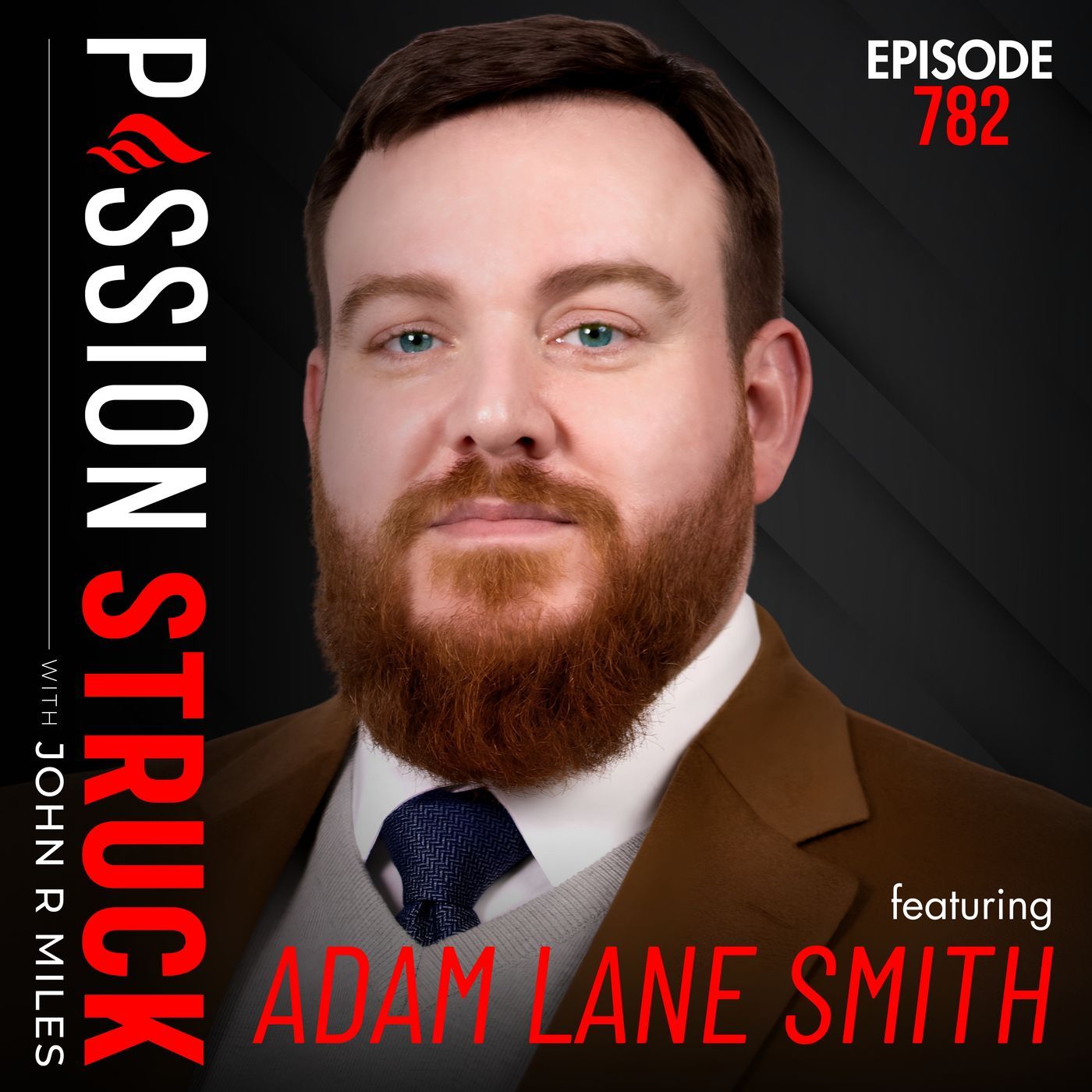
Passion Struck with John R. Miles
How to Rewire Your Attachment Style | Adam Lane Smith - EP 782
00:59:26
In this episode of Passion Struck, John R. Miles sits down with attachment expert, former licensed marriage and family therapist, and relationship coach Adam Lane Smith to explore why so many people struggle with relationships—not because they're broken, but because they're living out unconscious attachment patterns formed in childhood.Drawing from more than two decades of research into attachment science, neurobiology, and human behavior, Adam explains how insecure attachment shapes everything from our romantic relationships and family dynamics to leadership, workplace culture, anxiety, burnout, and even our physical health. Together, John and Adam examine why relationship chaos isn't random, how early family systems program our nervous system for survival instead of connection, and why so many high achievers unknowingly sacrifice belonging in pursuit of performance.Their conversation explores the biology of attachment, the role of oxytocin, cortisol, serotonin, and dopamine in sh...
Loading summary
Transcript93 lines
- [00:00]
Sponsor Announcer
This podcast is sponsored by Talkspace.
- [00:02]
Guest Contributor
Last year I went through many different life changes. I needed to take a pause and
- [00:08]
John Miles
examine how I was feeling in the inside to better show up for the ones who need me to be my best version of myself.
- [00:15]
Sponsor Announcer
When you're navigating life's changes, Talkspace can help. Talkspace is the number one rated online therapy, bringing you professional support from licensed therapists and psychiatry providers that you can access anytime, anywhere.
- [00:27]
John Miles
Living a busy life, navigating a long
- [00:30]
Guest Contributor
distance relationship, becoming a first stepfather, Talkspace
- [00:33]
John Miles
made all of those journeys possible.
- [00:36]
Guest Contributor
I could speak with my therapist in the office. I could speak with my therapist in
- [00:39]
John Miles
the comfort of my home. I was never alone.
- [00:41]
Sponsor Announcer
Talkspace works with most major insurers and most insured members have a $0 copay. No insurance, no problem. Now get $80 off your first month with promo code space80 when you go to talkspace.com match with a licensed therapist today at talkspace.com save $80 with code space80@talk workspace.com finding great candidates to hire can be like, well, trying to find a needle in a haystack. Sure, you can post your job to some job board, but then all you can do is hope the right person comes along. Which is why you should try ZipRecruiter for free at ZipRecruiter.com Zip ZipRecruiter doesn't depend on candidates finding you. It finds them for you. Its powerful technology identifies people with the right experience and actively invites them to apply to your job. You get qualified candidates fast. So while other companies might deliver a lot of hay, ZipRecruiter finds you what you're looking for. The needle in the Haystack.
- [01:38]
Adam Lane Smith
See why 4 out of 5 employers who post a job on ZipRecruiter get a quality candidate within the first day. The smartest way to hire. And right now you can try ZipRecruiter for free.
- [01:50]
John Miles
That's right, free at ZipRecruiter.com Zip that's ZipRecruiter.com Zip ZipRecruiter.com Zip from taco night
- [02:01]
Sponsor Announcer
in Tulum to sushi in Tokyo, make every bite rewarding with gold from Amex wherever you dine four times Membership rewards points at restaurants worldwide are piling up. Learn more@americanexpress.com Explore Gold terms and points
- [02:14]
John Miles
Cap Apply Coming up next on Passion
- [02:16]
Adam Lane Smith
Struck, Our family of origin maps out how we are going to function, so our caregivers train us to understand. Are people going to care about us and meet our needs or Are we not worthy of that, or are we not in a system where people have the capacity to care for each other and there's different ways that we can split from that? I think it was the novel Anna Karenina where she said at the beginning, the author says happy families are all exactly the same, but each unhappy family is unhappy and unique in their own, similar in their own special way. And that's what we're finding is you can have a lot of dysregulated families that map out to a lot of dysregulation, but there's only really one healthy pathway with variants, but one healthy pathway towards secure families that build real, lasting connection.
- [02:59]
John Miles
Welcome to Passion Struck. I'm your host, John Miles. This is the show where we explore the art of human flourishing and what it truly means to live like it matters. Each week I sit down with change makers, creators, scientists, and everyday heroes to decode the human experience and uncover the tools that help us lead with meaning, heal what hurts, and pursue the fullest expression of who we're capable of becoming. Whether you're designing your future, developing as a leader, or seeking deeper alignment in your life, this show is your invitation to grow with purpose and act with intention. Because the secret to a life of deep purpose, connection and impact is choosing to live like you matter. Hello friends, and welcome Back to episode 782 of Passion Struck. Have you ever looked back at a relationship and wondered how you ended up there again? Maybe it was another friendship where you felt taken for granted, another romantic relationship where the same arguments kept repeating. Another workplace where you felt disconnected from the people around you. Or maybe you found yourself asking a deeper question. Why do certain relationships feel feel safe while others leave us anxious, exhausted, or constantly questioning ourselves? Throughout our Connection Crisis series, we've been exploring why so many people feel disconnected from one another and from themselves. In my conversations last week with Greg McKeown and Marcus Buckingham, we examined why people need to feel understood, seen, valued and significant in order to flourish. Then in our last episode on Tuesday, Kati Morton helped us understand how child childhood experiences create emotional blueprints that continue shaping our behavior long after we've forgotten where those patterns began. Today, we're taking that conversation one level deeper because understanding your patterns is important. Understanding why those patterns keep showing up may change your life. My guest today is Adam Lane Smith, attachment specialist, relationship expert, and one of the leading voices helping people understand the hidden forces that shape how we connect with others. According to Adam, relationship chaos isn't random. The ways we seek love belonging, reassurance, approval, and safety are often driven by attachment patterns that were formed years or even decades earlier. Those patterns influence who we trust, who we're attached to, how we handle conflict, and whether we feel secure or anxious
- [05:33]
John F.
in our closest relationships.
- [05:35]
John Miles
In today's conversation, you'll learn why loneliness is rising despite unprecedented connectivity, why some people constantly seek reassurance while others withdraw when relationships become too intimate, and how attachment patterns affect everything from romantic relationships to parenting, leadership, and friendship. More importantly, you'll discover practical ways to build healthier relationships by understanding the hidden programming that may be running beneath the surface. If you've ever wondered why the same relationship challenges seem to follow you from one season of life to the next, today's conversation will give you a completely new lens through which to understand them before we dive in. If this episode helps you better understand yourself or someone you care about, please share it with them. Taking a minute to leave a rating or review on Spotify or Apple podcasts helps us continue reaching people who are looking for healthier relationships and more meaningful lives. And don't forget to subscribe on YouTube and download today's companion workbook and reflection at our substack@theignitedlife.net now let's dive in with Adam Lane Smith. Thank you for choosing Passion Struck and choosing me to be your host and guide on your journey to creating an intentional life that matters. Now let that journey begin.
- [06:53]
Sponsor Announcer
From taco night in Tulum to sushi in Tokyo, every bite is rewarding and Pulse worthy with MX Gold's 4X Membership Rewards points at restaurants worldwide. Wherever you dine, points are piling up, so bring your friends along for your next course because it's not all about the posts, it's about the company and the memories. How can Gold from Amex sweeten your next flight? Learn more@americanexpress.com Explore Gold terms and Points
- [07:21]
Cap Apply Be adventurous in the sun Be protected in the sun Be confident in the sun Be fearless in the sun with Blue Lizard Australian Sunscreen as experts in mineral sunscreens for nearly 30 years, we've earned awards for our high quality products and the trust of healthcare professionals. Embrace every moment in the sun with your family and Blue Lizard by your side. Be fearless in the sun Shop Blue Lizard Australian Sunscreen now on Amazon.com with
- [07:53]
Guest Contributor
networks like Fox News, CNN, Ms. now and more, sling is the best way to get the news you care about, which is great for everyone. Well, almost everyone.
- [08:03]
Sponsor Announcer
Where's that dang paper boy? I need my news outdated and rolled up like A burrito. Finally. Now I can read all about what happened forever ago.
- [08:13]
Guest Contributor
Get the most important news delivered reliably at the best price. Sling lets you do that. Visit sling.comnews to see your offer.
- [08:27]
John Miles
I am so excited today to welcome Adam Lane Smith. The passion struck Adam, how are you doing today?
- [08:33]
Adam Lane Smith
I'm doing great today, thank you. How you doing?
- [08:36]
John F.
I'm great and I am so excited to get this episode on the books. I'm a big fan of your work on attachment and everything that you've been working on for the past 20 years. And what I realized when I started doing the research for this is it's taken you 20 plus years to realize relationship chaos isn't random. It's actually programming that's happening to us.
- [09:01]
John Miles
Can you walk us through the aha
- [09:03]
John F.
moment that changed everything for you?
- [09:05]
Adam Lane Smith
Absolutely. So my life seems broken up into 20 year segments. I'm 40 years on the dot. My first 20 years I had insecure attachment. I didn't know how to connect to other people in a way that was direct, honest, transparent, and what we call secure, which is where you get your needs met by telling them what your needs are and asking if they can meet them. Then you ask them what their needs are and you meet those needs too. It's very simple. And most people can't do it. Today, the research says about 65% of American adults can't do that. We're instead living in structures where we try to please people, we try to run away from people, we try to give hints, we try to do nice things for them, hoping they'll read our mind and take care of us in return. And that's why relationships aren't working. So for the first 20 years of my life, I tried to play the games. I did it wrong. I disappointed myself and everybody around me. And I found that other people were doing exactly the same. So 20 years old I said, if this is all relationships are, I'm out. I'm tired of this. So instead I'm going to do everything opposite of what I would normally do. I'm going to see how that goes. And it turns out it went really well. I started just talking to people, being open about what I needed, saying no when I meant no, and having boundaries and trying to build toward a larger purpose and being clear with people about how I felt. And it turns out people like that. And it's something called secure attachment. So I went to psychology. I spent nine years becoming a licensed marriage and family therapist. I worked with the most severe extreme trauma cases I could find because that fascinated me. And what I found, whether it was working with millionaire trust fund families or blue collar families, was families didn't know how to connect anymore. And I started studying that. It turned into this thing called attachment theory from the 1950s that almost no one wanted to talk about because it doesn't make you much money because there's no drugs or medications related to it. So I started pulling that out and dusting that off. I started pulling that and synthesizing attachment theory with hormone research from experts like Dr. Sue Carter about oxytocin, vasopressin bonding hormones that we need, and cutting edge psychology models, but also neuro linguistic models and brain changing models as well, from Dr. Caroline Leaf about how you remap brain pathways. And I synthesized all those together into something called attachment science. And now to me, this answers the question of why families are falling apart, why dating is broken, why divorce rates are through the roof, why depression rates and loneliness rates are so catastrophic, why drug addictions are so prevalent. Everything is coming out. We also know that this is related to fertility issues, heart attacks, cancer, stroke, insomnia, autoimmune disorders, immune system non functioning, all kinds of other issues, human growth hormone deficiencies. Everything is mapping out our relationship. So when I say it's not just random chaos, we mean it. It's relationship issues.
- [11:44]
John F.
I want to deep dive a couple things that you just brought up.
- [11:47]
Adam Lane Smith
I get that a lot.
- [11:48]
John F.
And I've had Caroline Leaf on the podcast. She's a great person to interview and I love her work, so shout out to her. I have recently finished writing a new book that's coming out in October called the Mattering Effect. And one of the chapters that I spent the most time on was the topic around what is happening in families. Because I think that is where mattering is first evaporating. And oftentimes what happens is every family has a dynamic that you exist in. In some, you're rewarded for your silence, in others, you're rewarded for your performance. But you're typically stuck as a figure in it. Some people become the floor, others become the water heater. But I think once that happens to you, it's very difficult to reorient yourself and what fixture you've been determined to be in that household. Does your research find the same thing?
- [12:52]
Adam Lane Smith
Absolutely. Our family of origin maps out how we are going to function. So our caregivers train us to understand. Are people going to care about us and meet our needs, or are we not worthy of that? Or are we not in a system where people have the capacity to care for each other. And there's different ways that we can split from that. I think it was the novel Anna Karenina where she said at the beginning, the author says, happy families are all exactly the same, but each unhappy family is unhappy and unique in their own, similar in their own special way. And that's what we're finding is you can have a lot of dysregulated families that map out to a lot of dysregulation, but there's only really one healthy pathway with variants, but one healthy pathway towards secure families that build real, lasting connection. We know that if a child does not get proper oxytocin bonding in childhood, that they don't feel a sense of belonging and safeness and closeness. We know that can remap the brain in one of a couple different ways. One, it can underdevelop your prefrontal cortex so that you are chasing oxytocin and approval and belonging to then release GABA to suppress your cortisol. This creates anxious attachment style for children where they feel not worthy and they feel like they have to people please to make other people like them enough so people will make them feel safe with approval and attention. A lot of women get this one, but increasingly men as well. We know that if you get almost no oxytocin and high cortisol, flood with low emotional intimacy or with high criticism. Instead, you can go the other direction and say, I'm not the problem, other people are the problem. And develop avoidant attachment style where you keep other people out. Your oxytocin usually is very low. Your GABA is usually very low. So you have unregulated cortisol. Your vasopressin is usually very low, meaning you don't bond with other people by solving problems with them. Because you don't solve problems with anyone. You think other people make problems worse. So then you don't shift into your parasympathetic rest and digest system. So you also don't generate much serotonin, that neurotransmitter for contentment and fulfillment. All that's really left out of those four being gone. There's two left that you can play with. One is dopamine binges, which our society does very well today, and binging dopamine in every conceivable way. And the other is cortisol, the stress hormone. So right now you have a lot of people running around who are flooded with overwhelming cortisol. And they do one of two things. One, they pull away from Other people avoidant. They pull away from others and isolate when things get too real. And they binge dopamine with partners or whatever else it may be. And they binge dopamine to cool their nervous system, then sneak back and pretend nothing happened. Or they're anxiously attached and they say, I can't make myself feel better. I need someone to approve of me and make me feel safe. So they go find someone who will overwhelm them. We'll say with intimacy at the beginning and make them feel approved of and safe. And then we'll pull back. And they chase and pursue that obsessively. Even if the person mistreats them, they continue to chase them for that approval. And those are the two different, really distinct styles that we tend to see. There's a blending of the two. The third style, disorganized style, but those are the two primaries were seeing. But it all begins at home, just as you're saying.
- [15:50]
John F.
And I'm sure that's why so many of us end up in intimate relationships where we're trying to get either A or B filled by someone because of what happened to us in our childhood. I want to take this to the path that then happens. So say you're this child and you're impacted in one of those four different ways. How does that carry forward to us then, as we go through adolescence and then as we get into adulthood? What are the ramifications?
- [16:27]
Adam Lane Smith
100%. What I've seen is emerging from childhood into young teens and adolescents. Generally, what starts to happen is your anxiety begins to grow, because now you live in a world where your brain chemistry says, I'm alone. No one will help me. I have to figure it out by myself. I either have to keep other people out and do it alone, or I have to people, please, so they will do it for me. But either way, no one's really going to build loyalty with me. It's never going to happen. So you develop usually what we now call generalized anxiety disorder, where you're flooded with anxiety. If it gets too intense, you get panic disorder and panic episodes. If you've had trauma that resolved in this, then you start developing PTSD signs. You start showing that if it's really intense, you start developing some of the other mental health challenges. And all of this builds out into what we now call the medical model of psychology of the you have a disorder, your chemistry is wrong. We don't know why. Take these three pills and talk to a therapist for the next 50 years, and hopefully you'll just barely may be able to scrape out a living. And that's the model we run today. A lot of psychology. Unfortunately, when I was going through school, the answer was, we don't know why people have these mental disorders. We just treat them. And that sounds terrifying. That's why. That's one thing that started me on my mission of trying to figure out what's causing it. So we see the rise of anxiety. We see pursuing aggressively, pursuing partners. Instead of friendships or mentorships or community, people try to focus into the biggest return on investment, which is a partner, which will give you an overwhelming flood of the chemistry you're looking for. And they look for that saturation with one person who is not going to have proper boundaries. So they don't pull back and make you wait to bond. They give it to you all right, right up the front. And yes, people fixate into the romantic sexual partner aspect first. But I do tend to see this in work. I work with a lot of executives who if they're avoidantly attached, they cannot bond to their teams, they cannot bond to their co executives, they can't bond to their co founders, to their board of directors. They rise through the ranks incredibly fast and build an amazing company and then stall out and get pushed out or burn out of their own company because no one is loyal to them or bonds with them. Usually they have medical issues about 45, sometimes cancer or heart attack, sometimes 55, if they're lucky. They wait long enough. But usually they pick the partner who was anxiously attached, who emotionally craves their connection, validation. And their partner usually will not advocate for their own needs until they have children. And then their partner advocates fiercely for the needs of the children that the surprises that avoidant partner. And all of a sudden they have a war on their hands at home, which they feel like they're losing. So then they hyper fixate into work to compensate. Everything is money, work, and they work 16 hours a day, six days a week. And they come home, feel like a failure at home. Their partner feels more distant than ever. The K grow up in this and say, wow, this is normal. This is how family works. This is terrible. And then they split apart and they tell the kids something like, sometimes love just doesn't work out. As if there's no variables that we can track. And the message we send to our children is, well, there's just no hope. It's a complete random crapshoot. It's 5050 whether you're going to get divorced and have your guts ripped out by the person you think you Love. So I wouldn't even bother getting married kids because it's so catastrophic. And that's why Gen Z right now, they say 49 of Gen Z when they interview them, says it is not important at all to have children or build a family. That is the least important thing. I am so focused on everything else in my life, they don't even want to have kids. The divorce rates actually are going down, but only because nobody's wanting to even get married anymore. That's what we're finding. So this has been going on for about 110 years. It's got worse and worse over the last 110 years from what I can map out.
- [19:57]
John F.
Well, I think a lot of it is in the family system. You're treated as a utility often. And that utilityism is being passed down from one generation to the next. I've recently been watching the second season of Landman. Not sure if you're a fan of it or not, but I remember there's a scene where Sam Elliott is talking to his son in it, Billy Bob. And he's kind of telling him that you only have so many years left in your life, given where you are, to experience psyching moments. And he's trying to have a conversation with them because he missed making those moments because of the relationship he had with their mom. He was absent for most of it because he. He wanted to just be away from it. But you can see in, in the way that they're depicting the whole series that Billy Bob Thornton is basically following in his father's footsteps in the way that he's parenting. And that's what ends up happening, is so many of us learn that and it's very difficult to get out of. I found myself starting to parent like my father did when my child, my first child was like 12 or 18 months. And I found it extremely hard to change directions. But I did. But it really took a very forceful intervention of myself realizing the patterns that I was introducing on my son that my father had introduced on me and choosing to break that pattern. Why do so many people find that they can't do that or maybe don't even recognize they're doing it?
- [21:45]
Adam Lane Smith
Our nervous system gets programmed in childhood for what's going to be safe and not safe. And if we try to deviate from what we think is safe and do things that feel not safe, our nervous system is supposed to stop us. Unfortunately, our nervous system learns that talking to people about feelings is unsafe. And being open and transparent is unsafe. Being honest is unsafe. Talking to people about dreams and hopes is unsafe, right? All of these things that would build loving, intimate relationships get tagged as unsafe. So our systems stop helps us. And if we do try, usually we accidentally attract partners who have the same beliefs because we're signaling to them in the way that says, I don't talk about those things. So if you don't want to talk about those either, come with me. Let's have feelings. And we build relationships based on how we feel about each other at the moment instead of what we're building together long term. And that creates a perpetual cycle of, I can't break out of this. And then we try. We learn skills. Maybe we learn skills or we go to therapy, whatever it is. We develop our prefrontal cortex, the thinking part of our brain, and we learn all these skills. We listen to great podcasts, we read great books, and our prefrontal cortex says, okay, I know what to do. Then we walk into a situation with our child or our partner or our business partner, and we get scared, and our nervous system takes over and says, I'm in danger. Prefrontal cortex goes offline in a tenth of a second, and the limbic system activates instead the amygdala and everything through there, and it says, I am in danger. I will fight, I will flee. I will fawn people, please, or I will freeze. Which one is accurate? Which one should I do today? And it erases all the skill training and knowledge that we have right there in our prefrontal cortex. And then we do whatever it is. We do something catastrophic that we otherwise don't agree with. But we do it because that survival part of our brain has taken over and says, this is the right thing to do. Then we do it, and then we separate from the situation. Our emotional agitation calms down, prefrontal cortex comes back online, and we go, why did I do that? Who am I now? Am I a bad person? I did something stupid. My dad's words came out of my mouth. What? I swore I would never do that to my kids. What happened? Different parts of your brain. You have to retrain the limbic system and on the amygdala over what is scary and what's dangerous and what's not. To do that, first you have to regulate your nervous system. Then you have to train in how to speak and what to say and how to engage with people. You have to make sure you're picking someone that's actually going to work with you so you can even have a productive conversation so they don't punish you for it. Then you work with them and as you do, you have an experience with them. You mentioned Dr. Caroline Leaf's research. She's brilliant. I agree. She shows that in 58 to 63 days, if you have enough repetitions, those experiences remap the neural pathways so you can remap one significant pattern at a time over about two months by doing this process. So I will speak to my children this way instead of this way. Can remap in two months if you calm your nervous system, apply the skills, work with the right person to have the conversation, and then have those outcomes and experiences. You can reprogram those. Doesn't take that long. It's just one at a time. You plug away at it. But that's how you prevent dad from coming out of your mouth.
- [24:50]
John Miles
Before we continue, thank you for supporting Passionstruck and for helping us bring these conversations to people around the world. One of the biggest themes emerging throughout the Connection Crisis series is that many of us are trying to solve relationship problems without understanding the deeper patterns driving them. We often assume that if we communicate better, achieve more, become more successful, or find the right person, we'll finally feel secure, connected and valued. But what if the deeper issue isn't what we're doing? What if it's the story we've inherited about ourselves? That's one of the central questions I'm exploring in my upcoming book, the Mattering Effect. Why do so many people spend their lives chasing validation while still feeling unseen? And what changes when we build our lives on the foundation of genuine significance? Instead, to help you apply these conversations more intentionally, we create companion workbooks, weekly reflections, and practical exercises for every episode. You can access all of those resources completely free@theignitedlife.net now a quick break for our sponsors. Thank you for supporting those who support the show.
- [25:57]
Sponsor Announcer
Be Fearless in the sun with Blue Lizard Australian Sunscreen Whether you're diving into ocean waves or simply chasing your kids around the backyard, Blue Lizard has you covered so you can enjoy every moment worry free. Designed for your whole family and free from fragrances, parabens and phthalates, Blue Lizard is your go to mineral sunscreen trusted by dermatologists, pediatricians and parents. Shop now on Amazon.com and be fearless in the sun with Blue Lizard Australian Sunscreen.
- [26:27]
Adam Lane Smith
Mom, can you tell me a story?
- [26:29]
Sponsor Announcer
Sure.
- [26:29]
Adam Lane Smith
Once upon a time, a mom needed a new car. Was she brave? She was tired mostly. But she went to Carvana.com and found
- [26:36]
Sponsor Announcer
a great car at a great price.
- [26:37]
Adam Lane Smith
No secret treasure map required. Did you have to fight a dragon?
- [26:40]
John Miles
Nope.
- [26:41]
Adam Lane Smith
She bought it 100% online from her bed, actually. Was it scary?
- [26:45]
Sponsor Announcer
Honey, it was as unscary as car buying could be.
- [26:47]
Adam Lane Smith
Did the car have a sunroof? It did, actually. Okay, good story.
- [26:51]
Sponsor Announcer
Car buying you'll want to tell stories about. Buy your car today on Carvana. Delivery fees may apply.
- [26:57]
Jake Stauch
I'm Jake Stauch, co founder and CEO of Cervel. We built Serval to automate the IT work that slows companies down. Onboarding password resets, access to applications. My laptop stopped working. While employees wait for help, their real work is put on hold. It desperately wants to automate this work. And that's why they need Servil. You just tell Servil what you want to automate in plain English and it's built. No drag and drop workflows, no expensive consultants. Employees get unblocked and IT teams go from drowning in tickets to building what actually matters. With Serval, it becomes the AI engine for powering the entire company. This is a new way to run it. We guarantee you'll automate 50% of all tickets and we'll prove it to you in a free four week pilot. Go to serval.comtickets that's S E R val.comtickets.
- [28:00]
John Miles
You're listening to Passion Struck right here on the Passion Struck Network. Now let's get back to the conversation.
- [28:12]
John F.
Thank you for sharing that. And in addition to the adult book I've got coming out, I just published a children's book called you matter Luma. Really trying to focus on the three to eight year old group because through my research, you've probably seen the same research. Developmental psychology will tell you that is one of the best times to intervene. And what I have found is when I saw to my own kids when they get to become teenagers, it's much harder to intervene at that point than it is to create the value system and support system for a child when they're younger. So that's what I was hoping to do with that book. But I just want to go to one more question on this before I switch directions. And that is what you're talking about when you're explaining the rising anxiety levels, the rising depression levels. We're seeing this grow so significantly in adolescence, as well as the fact that now 40% of teenagers are either chronically sad or feel hopeless, which is exactly what is happening with what we're both trying to describe here. When these feelings and the relationships that they're building younger aren't established and then it's impacting them, especially now with the evolution of social media and digital technologies, which they're trying to use to fill the void, and it's just making it worse. What's your thought on that?
- [29:39]
Adam Lane Smith
Very good insight. You're very insightful. Yes. Anxiety, when it hurts enough and you lose hope that you're ever going to be able to figure it out, turns into depression. Depression is hopelessness. Depression is helplessness. It's your system crashing into a dorsal vagal shutdown, saying, I'm just going to deal with the pain. I will live with chronic pain forever because there is no hope. That is what depression is. We used to say depression was caused by low serotonin. Now they're saying that's actually not accurate, but it is correlated with low serotonin. We know that serotonin is released primarily in our gut when we're in the parasympathetic rest and digest state. Now that's the state we go into when we feel connected and bonded to our tribal structure, our family, our friends, our kith and kin, the people around us who love us. Our system says, I don't have to be afraid. I'm surrounded by people that will help me if something goes wrong. I can rest and digest. And that's where serotonin is produced, down in the gut. Now, if we never ever get to slip into that mode because nobody, we don't feel, believe biochemically that someone loves us and is protecting us. There's an old saying up in Iceland. Bear is the back of a brotherless man. If you don't have someone watching you, you're naked back there and something can attack and hurt you. So you're always afraid. Your cortisol is high. It's dysregulated. Of course your serotonin will be low, and of course you're going to have depression. I think depression is a natural evolution of the endless fear and pain and disappointment. I don't think teens naturally become depressed. I don't see any other species on the face of the planet that when they go out through they their adolescence, they reach a crushing, suicidal level of depression. I've never seen a species on our planet that does that except for ours. Yes, it's normal to have some turbulence that in the ape world where the, the adolescents go out and attack trees and play and get weird, but they don't get suicidally depressed like ours do. But I also see, I think that we have a natural craving for this biochemistry. We need the bonding. We are relational beings. I don't think a human is meant to be alone and isolated. That's why individual isolation in a prison is one of the most horrible things you can inflict on a human being. If we were not relational beings, solitary confinement would be fine. You'd kick your feet up and relax for three weeks. Right? It wouldn't be an issue. Solitary confinement is one of the most brutal punishments humans can experience because we are relational beings. We're meant for that. So when we have correct chemistry through our relationships, the depression just doesn't appear. We don't see the teens plunging into endless depression and anger and resentment. Yes, they differentiate from their parents, but they don't hate their parents. Yes, they have some sibling rivalry, but kids don't hate each other as if they're fighting for survival in the nest over resources that are dwindling. You don't see families ripped apart. When you're building secure systems, there's a whole pocket of securely attached to families that are invisible to the rest of us. And everyone else takes insecure attachment as normal. This is not how humans are meant to live. You're very correct in that.
- [32:40]
John F.
I want to jump to the Gen Z discussion that you brought up earlier. And that is saying more and more Gen Z people are saying they don't want kids. They might not even want to get married. What I'm finding through my research is that a large bunch of them don't even want to be in a relationship, and the excuse that they're giving is because they need to do work on themselves. I'm sure you've seen this too, and I agree that we all need to do self work, but what I found in my own relationships is like, how much self work are you possibly going to do? Because it kind of just keeps delaying that need to be in the relationship. What do you think is going on here?
- [33:26]
Adam Lane Smith
I think that when you are terrified of relationships and you don't think that there's any hope and you're afraid to reach out and open up to other human beings, it is immensely attractive when gurus come along and tell you that all of your work should go internal, that you should sit alone in a room, read books, listen to podcasts, which I love, but that you should just do that for 40 years, that you should watch YouTube channels and just learn and endlessly focus inside yourself as a solitary being forever. And at some point you'll reach a magical level where you are so perfect you are now ready to somehow have the most perfect relationship on the planet. And in fact, now they're teaching the perfect partner will somehow Simply appear at the perfect moment without any effort on your part whatsoever. And you don't really need better friendships or better community. Again, it's all internal. So read more books, listen to more, more podcasts, meditate harder and then when you're 45, maybe think about starting a family. That's what I'm hearing and it's catastrophic. This is the opposite of how humans work. This is in the old days, what they used to call an aesthetic life. This is monastic life. You're teaching people to be a monk in a monastery or a temple. That's what you're raising people to do. Now, nothing against that life if someone chooses that, but telling young people that is the only pathway to being healthy or happy and that everything else will destroy them. That they have to become a 45 year old monk or nun before they'll be ready to even date one time or have one child. I think that's a fundamental misunderstanding about how human biology and brains work. I don't think that will ever make anybody really happy.
- [35:01]
John F.
That's what I think it is really interesting what is happening. My son is in his late 20s and he talks to me all the time about how difficult it is to meet someone else now. And I know a lot of the younger generations are using apps to help facilitate it, but when I was growing up we didn't have those apps and yet it wasn't that difficult to meet someone else because you were communicating with them on a regular basis, because that's how it was done. And it oftentimes it was done naturally because of the communities you were in. And that's how you would meet the other person, whether that was a church community or it could be even something like an improv class that you do or an art class that you did together or even a bar environment. But that doesn't seem to be happening now. What is going on in in this aspect?
- [36:00]
Adam Lane Smith
There's two stats that concern me about this right here. I love that you brought this up. Two stats. One, they're showing that 2/3 of Gen Z men are single right now. 2/3 are single. One third of Gen Z women are single, meaning one third of Gen Z women are dating up into older generations. Not three years older, five, 10, 20, 30, 40, 50 years older. They're dating way up. So there's a third of a generation of men who don't have available partners at all. There's just don't. And their level of loneliness. When we chart it out, the only other population on the planet that has a Similar level of loneliness is women who are 70 years plus that level of loneliness. There's going a tongue in cheek joke going around that 25 year old men should just be with 75 year old women. It would solve both of their problems and it's tongue in cheek. But it's also the only solution people can seem to find right now. There is not much option apart from that, which is why Gen Z men are largely giving up and checking out. There is nobody to date. Then they go on the apps. Remember that in 1995, the research is clear on this. In 1995, 65% of people met through family and friend network networks. Your partner would come through family and friends. They were pre filtered. You had 15 or 20 years of data on them already. You knew what their toilet training habits were like. You knew what their favorite food was. You knew if they wanted commitment or not. You knew everyone they'd ever slept with. You knew everything about their history. And they came incentivized to be polite and honest with you because their network would hurt them if they didn't. So you were safe. That was just 30 years ago and 20. No, 12% of them met through what we called at the time, computer dating. Computer dating was 12% at the time 30 years ago. Now those numbers have reversed. 12% meet through family and friend networks now and 65% meet through the dating apps. I think the reason for that is not that the dating apps are better, they're worse. The reason for that is that people don't have family friend networks anymore. Like you said you would date. You date through your community, you date through your church network. You date so your friends set you up. That's what people were doing. And for all of human history, we had what was called assisted marriage. It's not where you're assigned a partner and you're forced to marry them. It's people go, hey, I have someone for you. Do you want to meet them? Yeah, sure. Tell me about him. Well, he's a great guy. He's kind, he's smart, he's thoughtful, he's very gentle. He has three sisters. He's really good with women. Okay, sign me up. Let's see how it works. Right? It's those blind dates that we all used to hear about. That's how humanity is meant to find part partners were meant to source them and filter them correctly through family and friends. Then we are incentivized to be correct. Now we're dating strangers online with no incentive whatsoever to be honest with us. And like I said 65 of adults now have secure, insecure attachment where they can't be honest. They're just trying to get feelings. They just don't want to be alone, but they don't trust themselves or anybody else. Now we're dating strangers in that network, and it's not going well. And that's why Gen Z men especially are just going, guys, I'm out. I'm going to work, I'm going to grind, I'm going to hustle, I'm going to stack cash, and I'm going to buy a private island where I play video games by myself. And if I can get a robot wife in 20 years, I'll do that. That's what a lot of Gen Z men are saying right now, because there just does not seem to be an alternative for them.
- [39:06]
John F.
Adam, I want to talk about your equation that I found. Ownership plus skills plus new experience equals positive change. What does each part actually look like in daily life? Maybe we can apply one of the scenarios we've been talking about using this equation.
- [39:22]
Adam Lane Smith
It's very simple. Ownership means I control how I feel, which means I must control how I feel. Many people don't understand that their nervous system is a physical, tangible piece of them. And that, yes, your logical brain diminishes in functioning and your emotional brain escalates. But your hind brain, everything back there, the physical processes that can decrease the agitation on your emotional brain. If you use physical processes to manage your nervous system, most people try to think their way out of how they feel, and that's why it doesn't work. You can't meditate, think, or any of that way out of how you feel. When you use physical processes. Tensing and releasing muscles, vagus nerve stimulation and vagus breathing, intense cardio. When you use these pieces, that's how you manage your nervous system. And you bring it down from 9 out of 10 agitation to 2 out of 10. That's where your prefrontal cortex comes back online. You can start thinking clearly. So taking ownership of how you feel and controlling the way your emotions are flowing, this allows you clear thinking. Are we with me so far? That's the ownership piece. Beautiful. When that unlocks, like I said, your prefrontal cortex comes back online. Now you can use all those fancy skills that you spent. Some of my clients spend 20 years in therapy and can't use the skills because they don't have the nervous system set. When the nervous system set, all of a sudden those skills work. I have worked with a lot of executive men at Work. They're incredible communicators. They're calm, they're exact, they're focused, they're considerate, they're empathetic, they listen, they have incredible leadership. And they go home and talk to their wife, and it dissolves the moment he walks across the front porch.
- [40:55]
Jake Stauch
What do you want?
- [40:56]
Adam Lane Smith
Okay. Yeah, sure. Well, I just. I can't handle that right now. And he's completely at home. Skills are gone. Even if he's trying to talk to her, gone, it's because his prefrontal cortex is offline. If you can take the skills from your prefrontal cortex, learn how to speak, learn how to be effective in your communication, learn how to be measurable. I teach something called the what, why, and how often method of needs not. I want to be loved. Okay, great. What are two things that help you feel loved? Two exact, measurable things. Observable. And why is that important to you? And why is it important to the relationship? So I understand its place. And how often or how much of it do you need? Help me understand how to help you feel loved, and I will do it. The what, why, and how often method. If you can learn to deploy those skills and ask clarifications, then you can generate. That's the skills. Then you generate the different experiences. Number three part of the equation. So you take ownership of nervous system to keep your prefrontal cortex online to use skills to generate different outcomes. If you have a wife who is saying, I want to feel loved, and you say, okay, do you want chocolates, diamonds, like a new car? What do you want? And she goes, no, I want to feel loved. You say, well, what does that mean? She says, well, if you loved me, you would understand. Right? And it doesn't. I would love for you to feel loved. Help me understand what are two things I can do. Why do those need to be done? Help me understand that. And how much do you need? Well, it helps me feel loved when you sit with me in the evening for 20 minutes, talk to me about my day and share about your day. Well, honey, I don't want to share about my day because I'm going to stress you out. No, you won't. I enjoy hearing about your day, and I feel closer to you. Okay? That's what you want. Makes me feel closer to you. It makes me feel connected. I will do that. 20 minutes a day. How many nights a week? Five nights a week. Okay, I can do that now. It's measurable. Now you have experiences. Now you. Now, number one, that's an experience of working together to solve it. Now you have the experience of sitting with her in the evening for a week or two instead of seeing her affection for you increase. Seeing her say thank you, you've helped me feel loved. How can I help you feel loved now? And that goes back. And it's reciprocal. That's another experience. All of these are experiences that begin reprogramming all those neural pathways where the brain says, closeness with my wife isn't dangerous. She's not unreasonable. She's not demanding. She's actually very kind. And she wants to help me feel loved too. It's okay for me to talk to her. This feels good. I should do more of this. And it reprograms the brain to head towards secure connection instead. That's the process. Is that tracking? Is that making sense?
- [43:24]
John F.
It tracks. The one thing I would probably want to talk about a little bit more is the skills element of it. In the scenario that you described.
- [43:34]
Adam Lane Smith
Hey, it's your ceiling vent. So I'm dripping. Could be the rain. Could be the upstairs bathroom. Yikes. You could hire the guy your neighbor recommends amended. But I'm pretty sure that's just his cousin. Do we know if he's licensed or does he just stone a ladder?
- [43:52]
Sponsor Announcer
Listen to your home Go with thumbtack. Upload a photo or voice note and we'll diagnose your project and match you with the right pro for the job. Thumbtack. We know homes Hire the right pro today.
- [44:05]
John Miles
Hey friends, When I launched Passion Struck, I thought the hard part would be creating great content. But what I didn't realize was how many hats I'd have to wear. Creator, marketer, Customer support Website designer when you're building something meaningful, your to do list never seems to get shorter. That's why having the right tools matters. Shopify is the commerce platform behind millions of businesses and 10% of all E commerce in the United States, from household names like Heinz and Mattel to brands just getting started. It helps you build a beautiful online store with ready to use templates. And you can even use AI tools to help write product descriptions and improve product images. And everything from inventory to payments to analytics is in one place, making running your business a whole lot easier. Start your business today with the industry's best business partner, Shopify, and start hearing Cha Ching Sign up for your $1 per month trial today at shopify.com passionstruck go to shopify.com passionstruck that's shopify.com passionstruck Cha Ching as I've gotten older I've become much more intentional about how I train, recover, and take care of my health. A few years ago, if I felt tired, my workouts weren't clicking, I'd just push harder. But I've learned that sometimes the answer isn't more effort, it's better information. What surprised me is how much of your performance and recovery comes down to what's happening beneath the surface. Things like your glucose, which affects how your body produces and uses energy, your omega 6 to omega 3 ratio, which can influence inflammation and recovery, or DHEA sulfate, one of the building blocks your body uses to make testosterone. When those markers are off, you can be doing all the right things and still not feel like your best. That's why I use function and you should too. It helps me understand what's actually happening inside my body so I can make more informed decisions about my health and longevity. Check your health the way I do. Function provides 160 plus lab tests for a dollar per day and member pricing on MRI and CT scans. Join@functionhealth.com passion or use gift code passion25 for a $25 credit towards your membership.
- [46:06]
John F.
When the person comes home and the skills aren't functioning, I think what's happening to a lot of people, both sex sexes, is they come home from whatever they do and they're exhausted. And so that exhaustion is needing a recovery loop of some sort. And so they're not processing the skills because I think they have immersed so much of their being into that work environment that they've come from or whatever it is that's exhausting them and therefore they're depleted by the time they come home. Do you see this as well?
- [46:48]
Adam Lane Smith
You are exactly correct in that they come home, one of them is exhausted, usually the avoidant partner. They've given everything at the office for 16 hours and their partner is anxious and desperate for approval and connection and says, you're home, we finally get to connect. And their partner goes, oh, I'm home now, I have to connect. And they walk in and it's this exhaustion that the anxious person misunderstands as you're not happy to see me. And the other partner is saying, I just need. And they're not saying it out loud inside their head. They're saying, I just need time to myself, why won't you listen? And they walk in and give one word answers to push the other person away because they don't know how to articulate what's necessary. And the other person feels so rejected and abandoned, they follow them around like a Puppy dog trying to get attention and they just make it worse. Without meaning to one set of skills, ownership would be. And skills would be able to sit down with your partner not at that moment, but on a weekend and say, I've noticed a pattern between us, right? I'm going to regulate enough to have a conversation with you. Then I'm going to talk with you and say, I've noticed a pattern. I come home exhausted, I'm out of my mind, and I don't even tell you that I'm tired. I just try to brush you off because I'm so tired and I shouldn't do that. I also see that you are desperate for connection and you feel like I'm rejecting you and pushing you away. Does that match? Is that what you're seeing? Okay, it is. Here's what I propose. When I come home, I need to tell you how tired I am. Number one, I'm committing to that. I will tell you how tired I am. Number two, I need you to understand, if I'm tired, it's not about you. Please don't chase me and make it feel like I'm being mean to you because I feel like I'm being mean to you and I don't want you to feel that way and I don't want to feel that way. So if we can give me a 5th, 10, 15 minute window where I can grunt, tell you I'm tired, go wash my face and not talk about feelings for 15 minutes. I promise after that I can come back and talk about the day and give you what you need as well. Can we set it up this way? You do that conversation on the weekend. That would be a skill. And you set that up in advance. And then when you come home, you go very tired, really grumpy, can't see going to the bathroom. The other person goes, gotcha, thank you, love you. And they just like pat you on the shoulder as you walk by. Fifteen minutes later you come back, go, thank you. I feel like a human being again. How was your day? Oh, it was great. And you get to talk and share and now you've both got your needs met. That right there is a multitude of skills that have chained together, but most couples don't know how to have that conversation. Right there.
- [49:08]
John F.
Adam, are you familiar with the book what got you here won't get you to where you want to go by Dr. Marshall Goldsmith?
- [49:14]
Adam Lane Smith
I am familiar. It's a wonderful book.
- [49:17]
John F.
So earlier in my career, I was younger than you. I was 35, 36. Ish. I was working at Lowe's Home Improvement. I was a senior executive there. And they had brought in an executive search firm that had a bunch of organizational psychologists who were evaluating people who had been put on the high potential list for the ability to someday become C levels in the company. And we were going through this very comprehensive psychological evaluation that they were doing. And I remember I had my final interview with the lead psychologist who was leading this engagement. And she brought up the book to me and she said, John, you've been on this rocket ship of advancement. I, I was the youngest vice president at Lowe's. And she kind of said to me, what got you here, which was my intellectual ability to kind of outperform people, wasn't going to get me to where I wanted to go. And she was hinting that as I got more and more senior, it was going to be the relationships that I developed and that attachment skill which was going to ultimately get me to where I wanted to be, which was in the CEO role someday. And at first, I have to tell you, I was really pissed off at her because at the time I didn't see what she was talking about. Now in retrospect, I see exactly what she was talking about is I'd gotten there without the need to develop those relationships because I was able to outperform or outwork people. I understand you recently did a TEDx talk where you went into applied attachment science to the workplace. Something that you call bio loyalty, I think is the name of it. If you take my scenario, how can leaders use the same secure attachment principles we've been talking about to build real loyalty instead of a dopamine driven dependency?
- [51:22]
Adam Lane Smith
That's a great question. Thank you for asking that. A lot of the times what we have is we have, Our biochemistry in the workplace is also off. Remember that you have people coming in, high performers who come in from families with very low oxytocin, very low emotional, intimate bonding at home. They don't do much vasopressin bonding at home. Solving problems together, they solve them alone. Turns them into incredibly productive work who solve all their problems alone. Don't complain, don't whine, don't bring drama into the workplace. They are locked into their office working 14, 16 hours a day without complaining. They don't even ask about overtime and they don't take vacation. They work like dogs. They rise through the ranks up to vp. I had one gentleman who rose to the ranks through VP and burned out so hard that two weeks later he had a mental breakdown and quit with a One line email, and everyone was devastated. They said, how could this have happened? No oxytocin, no gaba, no vasopressin, no serotonin. All that's left is unregulated cortisol. And when you rise through the company, it's something we call the cortisol ladder. It gets narrower and shakier and darker and you're farther away from everybody else around you, so you have no security. All that's left is dopamine, which diminishes because you can only get so many bonuses, so many vacations, so many attaboy emails, so many awards in the company. And they all diminish in the hit that they give you till you get to the top. Unregulated cortisol, no relationships, and no dopamine hits anymore. Anymore. This is where people flame out. This is where loyalty dies. And most companies are running this exact equation at every level of the company. That's why you lose your best talent. The research now is coming out that the younger generations, from about 35 down, they are massively prioritizing workplaces that give them the rest of the equation. They want vasopressin. Of working together successfully as a team and celebrating those wins. They want the oxytocin flow. Not the we are a family here feeling that HR tries to to do, but the we belong together. We are a tribe. We have shared identity. We spend time away from stress, talking, eating together. Not pizza parties, but real meals where we actually share, where we connect. We regulate with gaba. So cortisol goes down, we release serotonin because we are so connected and bonded and we have such deep wins and celebrations together. Now the full chemistry is on to display. Now you're regulating that cortisol ladder and preventing mental breakdowns. Now you're having your executives at the top actually working together seamlessly instead of feeling like they're competing against each other for prestige. Now you have your best talent staying, and they don't. Even when headhunters call them and say, I'll give you a 20% raise if you jump ship, they say, no, thank you. Because now it feels like a loss if they leave your company because this is their tribe. This is what we're trying to build. This is the correct structure of building an actual company that will hold together and stay together. And if you want to rise through the ranks, if you want to be the kind of guy who becomes CEO, you have to foster that chemistry in yourself so that you feel it and experience it and you can stay balanced. Otherwise, you flame out at 45 with cancer and spend everything you made and you have to foster that chemistry in the people around you. The point of leadership, the very point of leadership is balancing that equation of those six chemicals. Leadership balances and optimizes everyone else in the company for their chemistry so they stay together and are highly productive. The research coming out says that you get a 30 to 50% productivity increase when you implement this equation correctly. If the equation is not implemented correctly, either bankruptcy or massive turnover rate, one or the other.
- [54:55]
John F.
And let's take this back to where we started the discussion our childhood. Do you think the amount of people who are living that condition at work is growing because of this pass down that you talked about over the past 110 years that's happening from one generation to the next. And then this is causing even more and more people who are in these work environments to have these identity gaps that we've been discussing.
- [55:25]
Adam Lane Smith
I think it's not just getting worse. I think it's what's been informing our corporate growth culture over the last 110 years. Avoidantly attached people become the highest performers, they build companies, they give jobs to other people. They get a bad rap for being unemotional, but they actually provide so much optimization and so much well being for other human beings around them. We need them during difficult times. So with the rise of industrialization and corporate culture, they built a lot of that, but a lot of it was then informed by people who don't understand what oxytocin or vasopressin bonding feels like. They are very robotic, they are non sentimental, they don't care much about family or connection in that regard. They care about family like humans, but they don't have the empathetic connection of intimacy. So then they corporate cultures, that is work yourself to death and at least leave your family some money. That's what they're really focusing on and that's the corporate culture. If you aren't willing to give everything for this company and die for this company, then you're not the person who's right for for this position. It's here's paid time off because we have to follow the law. But if you take it, you are betraying the trust of this company. It's the American corporate culture and it's been crafted by avoidantly attached people at the top. And yes, it's also now getting worse and people are burning out on it. This is why we're seeing so the workforce collapsing and they're saying I'm not going back to Work, especially post Covid. This is why we're seeing the younger generation saying there is no hope. Why even try? We're seeing a collapse of willing workforce. Absolutely. Because of this problem.
- [56:51]
John F.
And I want to talk about a couple things that you described here. I really think that if you look at this, it goes even before 110 years ago. I really trace this all the back to the Industrial revolution where our sense of selfhood, our sense of mattering was extracted to us because the work environment shifted to trans treating us as a utility. So oftentimes I think of Robert McNamara and how he was running the war in Vietnam as success was body count. But isn't that kind of what's happening in our work environment is it's when you're measuring everything from shareholder value, financial metrics, and you're not taking the person for such a long period of time into account as what? As success in modern environments, isn't that going to be exactly what happens is you're going to start valuing your employees based on the utility and what they're delivering, not on the emotional elements that we've been talking about. Do you see similar things?
- [57:58]
Adam Lane Smith
Yes. Especially if you've been raised at home as a child. That's how you were treated. You believe everyone in the world thinks that way. So non sentimental thinking, I will serve my employees by maximizing profits and if we can't eat from the profits, we will eat our employees instead. And at least we will survive with the largest number of employees who still have jobs. And if they have jobs, that's good enough. Even if they don't get to see their kids at least have food to eat. That's that mentality that's coming down from the top of justifying treating your people as cogs in a machine. When you de empathize them and dehumanize them, you at least rationalize it by saying I'm not a sociopath. I'm going to be very clear, avoidantly attached people are not sociopaths. It's not that they don't care about humans, it's that their brain is in such a hardcore survival state that their brain says we must triage everything down to the bone. And if we have to sacrifice one for the collective, then we do that. Even if I have to sacrifice my health and well being, I will sacrifice me. It's endless triaging in systems that don't make sense. We live in artificial scarcity right now with an artificial scarcity mindset where there's actually abundance that could be shared in deployed. And that endless scarcity grinds teams down to the bone. People will abandon you and leave you, and then you'll be angry at them, saying they were disloyal to you, but in reality you burned them out and treated them like an end, like a useless cog in the machine that could be rotated out without problem. It's exactly the issue that we're seeing. Yes,
- [59:24]
John F.
Adam, I want to spend the remaining time giving the listeners some things that will allow them to apply what we're talking about here. So first, how can someone who's listening quickly identify their own attachment pattern?
- [59:38]
Adam Lane Smith
I do have a quiz on my website for this if you want a longer version. But the short version is this. Do you have a difficult time opening up to other people about your needs, your feelings, your concerns and solving problems with them in the relationship? If so, you probably have insecure attachment. If you have insecure attachment, do you struggle to believe that you have self worth, you have low self image and you think you are not a good person no matter what? Do you think people will abandon you? Are you afraid of abandonment? Are you craving approval from other people? And when you get that approval, does it finally feel like everything is right and safe and you experience euphoria? If so, that's anxious attachment style. If you struggle to trust other people and believe they will never be loyal to you, if you think other people will get dysregulated and stressed out and betray you inevitably, whether they're good or bad, you don't. May not think they're evil people, but you just don't think they're trustworthy. If you think you have to keep everything inside and if you share any emotions, it's a weakness. And if you think everything you share will be used against you by other people, that's avoidant attachment style. Now if you have a blend of those two, it's probably what we call disorganized. Meaning cannot be neatly organized into either category. Disorganized can come in the freeze response of internal focus where I don't share anything and I just lock down and I'm afraid I have low self image. But I also am avoidant or the explosive outward version, the loud disorganized. My feelings are everything. I am ruled by them. Heavy addiction, focused usually. And everyone will know how I feel all the time and I will use that to navigate my world. That's loud disorganized. That's how they break down into those different styles right there.
- [61:13]
John F.
And where's the website they can go
- [61:14]
John Miles
to get the quiz thank you.
- [61:16]
Adam Lane Smith
Adamlanesmith.com if you click on Resources, there is a free attachment Styles quiz in there to find that okay, for the
- [61:23]
John F.
listener who feels completely unlovable or like they've heard today's discussion and they think I can never change. What's the single most important mindset shift you would want them to take away today?
- [61:38]
Adam Lane Smith
You don't know that you can manage your nervous system and how you feel, so you need other people to help you. Instead. First, learn to manage your nervous system, but purely through physical techniques, not mental techniques, number one. And then number two, reclassify the way you make decisions. Right now, you make decisions based on reducing friction and making other people happy so they don't abandon you. Instead, start making decisions toward a North Star goal that you have in your life and your principles and ethics. So principles and ethics and goals. Those are the two ways you make decisions. You calm, you breathe and say, okay, how does this align with my goals and my ethics? And then you make that decision and you inform them of how you're making it. And that's how you build self respect. That's how you trend towards secure attachments. What I had to do when I
- [62:21]
John F.
was at the beginning and I understand that you are getting into the coaching world right now and have been in
- [62:26]
John Miles
it, what kind of breakthroughs do you
- [62:29]
John F.
consistently see through the coaching programs you're implementing?
- [62:34]
Adam Lane Smith
So the breakthroughs, when we look at that, what we tell people a breakthrough is it's when you can do repeatable and reliable changes that give you the experiences you're looking for to remap your brain. It's not a giant clouds parting in the sun, bursting through and you rend your garments and scream aloud, that I finally have overcome. That's not the breakthrough we're looking for. You're looking for a hundred breakthroughs that over time repeatedly break down the pathways in your brain and change them. So a breakthrough you're looking for is I can finally tell my wife how tired I am after work and that I need 15 minutes to cool down. Instead of causing the same fight over and over, I can finally ask my husband to help me feel loved by spending time in the evening with me. I can finally tell my son how much I care about him. Instead of feeling like the words get choked in my throat because I don't want to be sappy, I can finally have a boundary with my mother instead of letting her steamroll over me all the time. But I can do so in a way that she still feels loved and we don't. I don't fight about it. I can tell somebody no at work and build the professional relationship without dismantling it so I don't feel like I'm in danger. I can connect to the people I'm leading and actually connect to them and make them feel connective, bonded, secure and want to stay in the company even as I'm still managing them correctly. I don't dissolve the hierarchy and become their best friend. I lead them correctly. All of those would be breakthroughs. I am finally capable of doing X that before was too hard for me to do. Those are the breakthroughs we look for.
- [64:01]
John F.
And then lastly, Adam, for people who want to learn more about you and some of the things that you offer, what would you like to tell the audience?
- [64:09]
Adam Lane Smith
Best thing is adamlanesmith.com that's L A N E like a road. Adamlanesmith.com Me and my entire team of certified coaches are on there. We have the Attachment Breakthrough program. I'm leading a retreat here at the end of April, but my coaches are always year round on standby ready to help you achieve those breakthroughs and overcome those barriers for good. Find us on adamlanesmith.com Adam, such a great conversation.
- [64:32]
John F.
Thank you so much for joining us today on Passion Struck.
- [64:36]
Adam Lane Smith
Thank you for your time.
- [64:37]
John Miles
That brings us to the end of today's conversation with Adam Lane Smith. What I hope stays with you is the realization that many of the struggles we experience in relationships are not signs that we're broken. They're often signs that we're operating from patterns we may have never consciously examined. The ways we seek love, handle conflict, pursue approval, respond to uncertainty, and build trust are often shaped by attachment systems that were formed long before we understood what was happening. Those patterns can quietly influence our relationships, our careers, our parenting, and even the stories we tell ourselves about who we are. But the good news is patterns are not destiny. The moment we become aware of them, we we create the possibility for something new. Awareness creates choice, and choice creates the opportunity to build healthier relationships, stronger connections, and a more authentic life. As we continue the Connection Crisis series, I'll be joined by Spencer West. For years, Spencer found himself living according to expectations that never truly belonged to him. Like many of us, he spent time trying to fit into a version of success that looked right from the outside but felt disconnected from who he truly was. What followed was a remarkable journey of self discovery that ultimately led him to challenge, limiting beliefs, redefine what was possible, and build a life rooted in authenticity and purpose. Together, we'll explore why so many people become trapped by identities they never consciously chose and what it takes to break free from expectations, assumptions, and stories that keep us from being who we're meant to be. It's a powerful conversation about resilience, identity, belonging, and the courage to follow your own path.
- [66:15]
Guest Contributor
Asking yourself the question why am I here? And really leaning into that and stop worrying about what life is and start wondering what it could be. I think those are the two things that, as when I was writing this book, that really resonated and that I hope people will pick up on, is to really just pause and take a look around you and why am I here and what do I want? And then having that ability to wonder what could be. Because part of the framework also for this book, is this idea that we have to have self trust and self confidence. The self trust to be able to listen to what's in here and what we want, and the self confidence to believe that you can actually achieve whatever that is. And so to do that, I think we have to start with those questions.
- [66:57]
John Miles
If today's conversation gave you a new lens through which to understand your relationship, please share it with someone who may benefit from hearing it. And if you haven't already, leaving a review on Apple Podcasts or Spotify is one of the simplest and most impactful ways you can help others discover the show. Be sure to subscribe on YouTube as we continue exploring the connection crisis and how we find our way back to authentic connection. Until next time. Remember, the quality of our relationships is often shaped by stories we didn't write, but we still have the power to revise. I'm John Miles and you've been passion struck. You know what's frustrating? Going out to dinner excited for the meal, and then spending the next few hours regretting it. For a long time I thought certain foods just didn't agree with me anymore. Garlic, onions, pasta, even healthy foods like beans. It always felt like a trade off. Then I found Fodzyne, a tasteless powder you sprinkle right onto your food. It helps break down fodmaps, the hard to digest components in foods that can cause bloating, gas and pain before they cause discomfort. Think of it like Lactaid, but for garlic, onions, wheat, beans, cheese and other common foods. It mixes right into your food, comes in portable packets, and honestly just makes eating feel enjoyable again. And it was created by Harvard trained scientists and has been clinically studied. We're so excited to partner with Fodzheim and offer you 30% off your first order when you go to icanneatagain.com passionstruck that's I can eat again.com passionstruck for 30% off your first order. Finally, you can enjoy your favorite foods without the pain. Just go to icaneatagain.com passionstruck starting something new can be terrifying. I still remember launching Passion Struck and thinking, what if nobody listens? What if this completely fails? When you build something that matters to you, there's always the moment of doubt before you hit publish. But sometimes the biggest breakthroughs in your life start with betting on yourself. And if you're building a business today, having the right platform behind you makes all the difference. That's where Shopify comes in. Shopify powers millions of businesses around the world and gives you everything in one place, from beautifully designed online storefronts to AI tools that help you write product descriptions, improve images, and streamline your workflow. And when it comes to marketing, Shopify helps you create email and social campaigns so you can actually find your audience. It's time to turn those what ifs into Cha Ching with Shopify Today. Sign up for your $1 per month trial at shopify.com passionstruck go to shopify.com passionstruck that's shopify.com passionstruck Cha Ching.