← Passion Struck with John R. Miles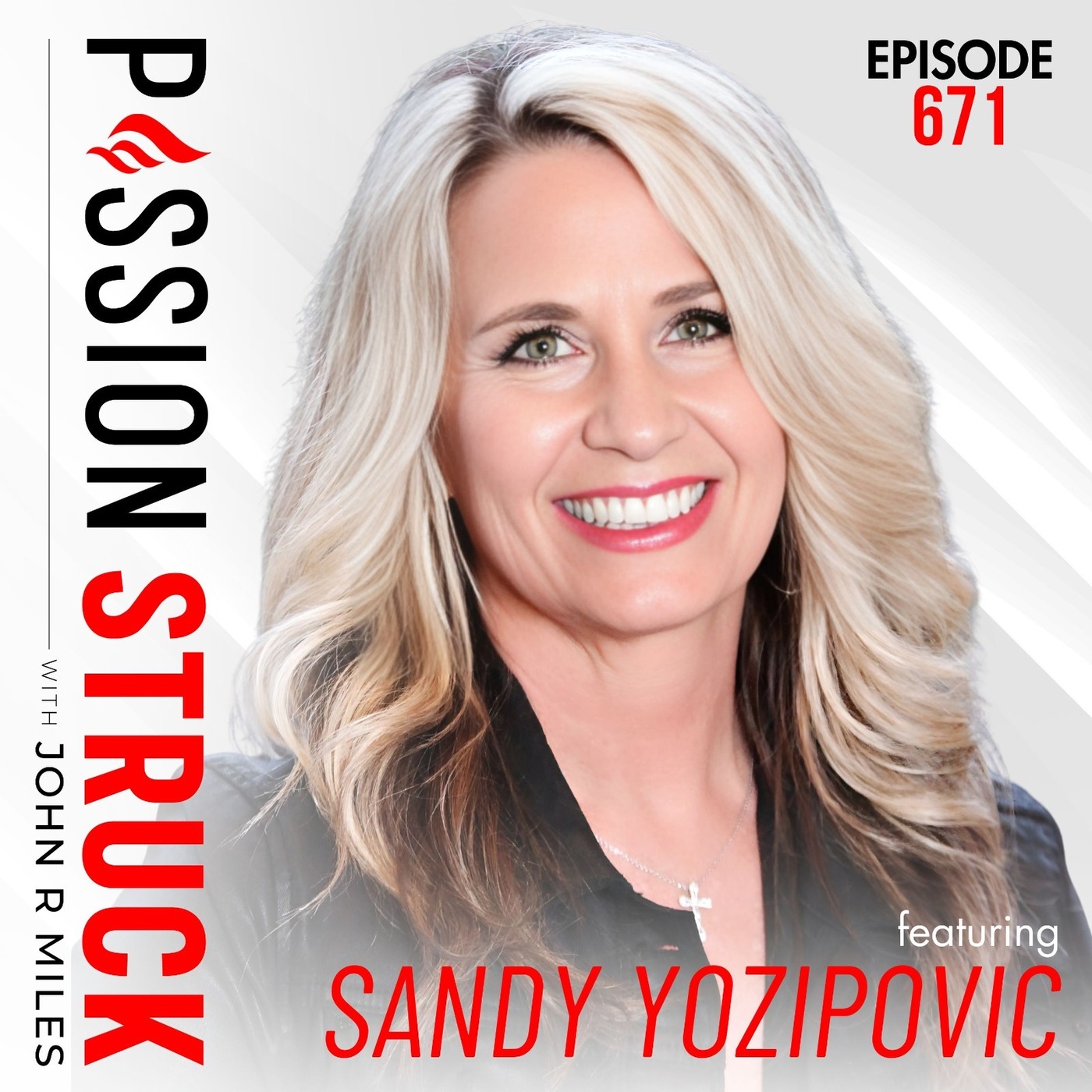
Passion Struck with John R. Miles
Sandy Yozipovic on Surviving Paralysis, Beating Stage 4 Cancer, and Choosing Faith Over Fear | EP 671
00:52:46
Loading summary
Transcript38 lines
- [00:01]
A
Audible's romance collection has something to satisfy every side of you when it comes to what kind of romance you're into. You don't have to choose just one fancy a dalliance with a duke or maybe a steamy billionaire. You could find a book boyfriend in the city and another one tearing it up on the hockey field. And if nothing on this earth satisfies, you can always find love in another realm. Discover modern rom coms from authors like Lily Chu and Ali Hazelwood, the latest romantasy series from Sarah J. Maas and Rebecca Yarros, plus Regency favorites like Bridgerton and Outlander, and of course, all the really steamy stuff. Your first great love story is free when you sign up for a free 30 day trial at audible.comWondery that's audible.comWondery.
- [00:44]
B
Coming up next on Passion Struck.
- [00:46]
A
I learned early on that fear only exists in the absence of faith. I was faith filled and I'm grateful for that. It really was. When I made my alignment, when that life support system came in, I realized that, okay, Lord, whatever you've got for me, I will endure and persevere for however long it takes. And that alignment happens. It doesn't even have to be in the severest case as mine. It could be you have those experiences with something through a divorce or a separation or losing a child at birth. I've seen so many friends and how they've overcome such complex emotions, such deep, heart stricken emotions that their faith has carried them through.
- [01:28]
B
So welcome to Passion Struck. I'm your host, John Miles. This is the show where we explore the art of human flourishing and what it truly means to live like it matters. Each week I sit down with change makers, creators, scientists and everyday heroes to decode the human experience and uncover the tools that help us lead with meaning, heal what hurts, and pursue the fullest expression of of who we're capable of becoming. Whether you're designing your future, developing as a leader, or seeking deeper alignment in your life, this show is your invitation to grow with purpose and act with intention. Because the secret to a life of deep purpose, connection and impact is choosing to live like you matter. Hey friends. Episode 671 of Passion Struck is here and I'm so glad you've joined us. Whether you've been listening for a while or where, this is your very first episode. Welcome. Over a third of you come back week after week, which tells me Passion Struck is a global movement. Together we're passing the ripple of mattering farther than ever before. If this show has ever helped you see yourself more clearly or take one step toward growth. Here's how you can help it grow. Share this episode with someone who needs it. Leave a five star rating or review on Apple or Spotify. It's the best way to help new listeners discover these life changing conversations. Today we're continuing the final week of our Decoding Humanity series, the Stories that Shape and Save Us. Earlier this week you heard my conversation with Joel Beasley, host of the Modern CTO podcast about how to turn unconventional beginnings into extraordinary outcomes. Today we take that theme even deeper into the kind of story that changes how you see life itself. My guest today is Sandy Yazipovic, entrepreneur, humanitarian, wife, mother, and three time medical miracle. By her early 20s, Sandy was paralyzed by Guillain Barre Syndrome. Later she battled Lyme disease. And then came the fight of her Life, a stage 4 colon cancer diagnosis with near zero odds of survival. Yet today, she's not just surviving, she's throwing thriving A living testament to resilience, faith, and the unbreakable human spirit. In this conversation, we explore what it takes to find faith when fear is overwhelming, how resilience is forged in the darkest nights of the soul, why health, healing and business success share the same core principles, and how Sandy defied the odds to build a thriving family and career while championing hope for others. You can download the companion workbook and journaling prompts for this episode@theignitedlife.net our substack. And don't forget, you can watch the full video conversation and past episodes on the passion struck YouTube channel at John R. Miles. Now let's step into this extraordinary story of survival and strength with Sandy Yazipovic. Thank you for choosing passionstruck and choosing me to be your host and guide on your journey to creating an intentional life. Now let that journey begin. Foreign I am absolutely thrilled today to have Sandy Yazipovic on Passion Struck. Welcome Sandy. How are you?
- [04:43]
A
I'm doing great, thank you John. It's an honor to be on your podcast with you today.
- [04:48]
B
It's an honor to have you as well. I lost my sister to pancreatic cancer last year and so I'm trying to highlight cancer survival stories as much as I can and so we will get into that later as a tease. But Sandy, you have worn so many hats. Entrepreneur, cancer survivor, as I just mentioned, humanitarian. If you had to introduce yourself in one sentence today, what would it be?
- [05:15]
A
Oh boy. I believe that God just has put me in certain situations that need to be addressed or exposed. I believe I'm just a champion for what's right. That's what I've learned throughout my entire journey in my life. And be the one that's out front, that's educating people on what options there are in life because most people don't know, especially when it comes to illness or disease or anything, even money. And so I've been able to learn a variety of things throughout my journey. But I guess that's not one sentence. But the best way to describe it is just I'm an overcomer.
- [05:55]
B
I think that's a good word. I would have used survivor, but overcomer is a good one too. So I want to talk to you about your origins etc. So you grew up in Canada.
- [06:05]
A
Yep.
- [06:05]
B
And I understand when you were in your early 20s you ended up moving to the United States. What drew you here and what was life like in those early years?
- [06:14]
A
I didn't move here till 1997. So I was 37 when I moved to the US and my husband and I had already gotten had been in our company. We'd been with Primerica Financial Services for gosh at that time, about 25 years. And we decided to move to Scottsdale, Arizona for better weather. So it was we needed to get out of the cold because I at age of 21, I had been diagnosed with Guillain Barre syndrome and I was left a quadriplegic for almost a year. I was nine months bedridden, four and a half months completely motor skilled of a six month old baby. And the rest was like recovery. It was necessary for us to move to the US just so we could be that. My three neurologists and they said you probably need to be in constant weather.
- [07:03]
B
Well that is what I wanted to dive deeper into before that diagnosis and I want to get into it. What did you envision your perfect future looking like?
- [07:15]
A
Well, you know what, it's funny because I was a dreamer. I always say that in school I didn't really pay attention unless it struck me. It just was one of those, I'm one of those daydreamers and there had to be more to life. And I always say that I graduated with a PhD, a public high school diploma, but then I ended up gaining a master's and overcoming the odds. And so I was living my dream. I was working with a live theater company with Stuff Stage West. I'd gotten a job in Calgary, Alberta where I was living at the time. And I moved to the big city after living on a farm my whole life. So I wanted to do something bigger and Better. And I was working with live theater around all these Hollywood movie stars and stuff. And then something happened where I just had gotten like a common cold and that infection steadied in my spine. I was flown home within 10 days and like 10 days later I was already lost the ability to blink, the ability to because swallow. And then all of the extremities, my hands and my feet went first and then the rest of my body. So I was paralyzed from half my face and the rest of my body. And so that was where I was faced with what the heck. And I was diagnosed probably for the first nine months with acute multiple sclerosis. So not a good prognosis at the age of 21 it. There was not much hope back then. And in fact I was placed in a hospital in Regina, Saskatchewan, which is two and a half hours drive away from our farm. And so I had no family with me. I was just left there because they didn't know what to do with me. So I discharged myself out of the hospital three times against my parents wishes. But I, it just, I found it depressing for me and I really believe the battle is won or lost in the mind. And I knew that wasn't a great environment for me and I had to just protect what I had aligned with my faith with God. And I said, okay, I will be your poster child of hope for the Ms. Society, whatever you want me to do, Lord, I am yours. And the paralysis had stopped in the 24 hour period. I was going fast. And with this paralysis it paralyzes all the muscles in the body so your heart and your lungs are muscles. And I didn't realize at the time at 21 who's thinking about life and death situation at that age. And it stopped right there. So I had about a foot of where the paralysis did not hit. That's where it stopped. And then it stayed like that for another four months. And so in that I call that purgatory. It's like you're in limbo, you can't do anything. You don't know where this is going to. Is this it? For the rest of my life. And then eventually it just started to get better and I recovered fully, which is still, they didn't diagnose me. The new diagnosis of Guillain Barre syndrome came nine and a half months later. And then they said okay, because you're regaining your ability to talk again, you swallow again. We don't think this is Ms. I'm like. But they, there's really nothing to determine that. It really Was just watching see this play out. But it was a mind bender for that year and then fully recovered. I was engaged to someone else at the time. I was engaged to be married. And the gentleman that I was engaged to at the time said this was harder on him than it was on me. And I went, okay, Lord. That was my other sign. I don't need to be going down that path. This sucks. But. And I just came out and said, this is ridiculous. I didn't even know that I was. Had been vaccine injured because before I went down to Palm Springs at Stage West Theater, you have to take these vaccines right in this to be in the States. And so with my job and that's where I had the vaccine injury was probably just a normal flu shot. MMR is usually the cause and it doesn't necessarily trigger it right away. It can sit dormant for years.
- [11:09]
B
I just want to go back because you just went through that pretty quickly. But you're 21 at the time. I understand you're driving a convertible. Life seems to be like. It's amazing. You'd never really been sick before, if I understand it correctly. And all of a sudden you start getting a headache. Yeah. And you'd never really had a severe headache. I get migraines, so I know what they're like. But for someone who hasn't, you go to the doctor who just tells you it's probably just a headache. Don't worry about it. Take Advil, whatever. Like when did you realize that this wasn't just a headache and this was something far worse than that? Did that occur to you before the paralysis started to happen?
- [11:51]
A
That's a great question. Because I had. We'd been working overtime to set up this live theater. We had a deadline to do before the grand opening night. So we're working 18, 20 hour days. We live on four hours sleep. And so we weren't getting the right nutrition, we weren't getting the right sleep. But I had gotten. I kept saying, I have these head pains. And my boss and his wife kept saying, well, I'll give you an aspirin or Tylenol, take one of these. And every time I took one, it got worse, which is actually what happens. It will. You can't introduce anything into the body in the chemistry when this viral takeover is happening. And so I take in a couple of Tylenol and it just was more extreme. So they actually flew me back to Calgary. Because you're not going to get treated. I'm not covered in insurance in the state. So fly back Well, I flew back on that plane. I have never been. When we started descending is when I thought my head was going to explode. I couldn't take the pain. And I was by myself on the plane, you know, just in my own going, oh Lord, when is this going to stop? It was way worse than a headache. It was, it's something. I thought my brain was going to burst. And when I landed, went straight to emergency. And the doctors there were doing tests and I was becoming weaker, but the signs hadn't shown yet in the extremities. That didn't happen till another day or two. But they gave me muscle relaxants. They said, well, you look good, everything seems good, you're cognitive, you've got. We're going to give you some muscle relaxants. You muscle strain. I'm like, that was probably the worst thing that they could have given me because the next day I couldn't even move my legs to get out of bed. I couldn't stand up. I went to help my sister wash the dishes and the plate went right through my. It just broke, fell through my hands. I'm like, I couldn't feel it. I started to not be able to feel things and then all the tingling. And so by the time I ended up, my sister threw me in a car and we went to back home to Swift Current, Saskatchewan. That's about a five and a half hour drive. Halfway I stopped at a restaurant to get something to eat. I realized I couldn't taste anything and I couldn't swallow. If I tried to eat more than like a pea size, I would start to choke and it just tastes like cardboard. And I'm like, what is going on? And then I lost the ability to see and it was double vision and my eye wouldn't blink. So it was constantly open. So I was freaking everybody out and they're like, what is wrong? I said, I have no idea. And that's when they sent me to Regina for the specialist. Another the day later and said the doctor there said, okay, we haven't seen anything like this, but I believe you have Ms. On. And one neurologist did say, but we, it could be a long shot, might be Guillain Barre syndrome. Well, there's nothing you could find in 1983, 1984 on Guillain Barre syndrome. Nothing on that disease.
- [14:45]
B
And for someone who's not familiar with the syndrome, can you give a little bit more information? Yeah, I wasn't really that familiar with it until I started preparing for this.
- [14:55]
A
Guillain Barre syndrome is basically it Works like Ms. With multiple sclerosis. The main insulation around the nerve endings is it strips over time, it slowly goes away. So think of it like the lightning strikes the electricity pole, which is your spine, and with ms, you gradually lose that ability of all your neurological abilities. With Guillain Barre syndrome, it's stripped immediately, and then whatever grows back is what you're left with. So you'll see a lot of Guillain Barre patients that they still can't move their left arm. They have walked with the limbs. They can't feel like my after now. I wasn't cured in a year. It took a couple of years of rehabilitation and I had many Charley horses. Like, I'd be driving in a car with a friend, and all of a sudden my legs would give out and they were in extreme pain. So somebody would have to massage my leg to keep the BL flow moving because my muscles were spazzing so bad. It attacks all the muscles, and your nerve endings control all those muscles. So you know when the lightning hits it and it's down, you don't realize how many muscles it takes just to stand up, sit down and stand up. But sit down is hard because you have to balance. So I have an appreciate. So I am a freak about exercise because I think, boy, that goes a long way, especially when you're fighting any type of illness to get back in the game, get back up. And I was one of those. The doctor would say, okay, we're going to do this physio today. And then I try to do more. Even though I'm in my hospital bed, I'd be doing whatever I could to just keep going. I didn't like sitting still.
- [16:33]
B
Well, when I think about this, at 21, 22, most people think they're invincible. You're at the start of this life, you think the whole world's your oyster, and you've got this incredible life to. To live. And then all of a sudden you face what I think 99 of the listeners would say is one of their greatest fears. Yeah, is all of a sudden you're paraplegic. You can't use your five senses, you can't move your. I even heard you say on another interview that at one point your parents were there, they brought a priest in. You must have been thinking, they think I'm gonna die. Like, this is it, my life is over.
- [17:23]
A
And nobody said those words, but you knew when they brought the whole family and the priest from the hospital. And then. And everybody's looking at you and you're when you have both sets of grandparents come and your parents, you're like, what is going on here? Nobody said the words, but there's brought in. Then they brought in the life support system and they said this is just for precaution because we don't know how quickly this paralysis is going to continue to move. But we're concerned about your heart and your lungs. And that's when I realized, oh, this is really not good. This sucks.
- [17:58]
B
I hope you're finding inspiration in my conversation with Sandy Yazipovic. We'll return shortly after a quick break from our sponsors. Thank you for sponsoring supporting those who support the show. You're listening to Passion Struck on the Passion Struck network. Welcome back to my conversation with Sandy Yazipovic. So you mentioned that you give God a ton of credit for getting you through this. But I have to imagine in moments like that you must have had to wrestle with your faith. It must have been many times because you can't talk verbally but in your mind you're probably thinking, God, why are you doing this to me? Why is this test happening? What was going on?
- [18:41]
A
It is a battlefield of the mind because when you're paralyzed and you lose your all your senses with Guillain Barre or ms, you slowly I the cognitive ability, your brain goes into overdrive. It's almost like a self defense mechanism. The rest of the extremities are gone. The other abilities you don't have, but your brain, no, you have to understand. I went with for four and a half months with zero sleep. So your mind is the only thing you can control. And it can be get very dark very fast. There was times I'd be laying, I go, okay, this sucks. I have no family anywhere near me. Two and a half hour drive, I'm by myself. I have no friends, I have nobody coming to visit me. It was, it was dire. Some days it got very dark. And so I, I'm thinking ways that I could, this is terrible, but I was thinking of ways that I could commit suicide. Because maybe if I roll myself off the bed and I land on the pillow face down because you think about it, I can't roll over, but I'm gonna, then I could suffocate. That would be a way. And I'm thinking like, well, how am I to get, how am I gonna get pushed off the edge? Like it was, it was. And then the nurses would come in and they do you need anything? Here's a call button. Press that button. And it would make me so angry that the Nurse would say, just press that button if you need anything. I'm screaming, I need help. I can't do anything. And I'm like, I can't believe you just did that. But I started making it a game that little things that they like. My grandmother would send over some cookies through a friend, and I get the cookies, and the nurse would come in, oh, this is from your grandma wanted to give you some cookies. She made some. I'm like, well, how am I going to eat those? I can't. So these little things that people just couldn't grasp that I couldn't do or didn't have the ability anymore, it became a motivator. It became a challenge. And I started looking at everything is, I'm going to push that button. I'm going to roll myself off that bed. And I did. I put. When I was gaining stronger, it's like, I never realized how competitive I was until I had Guillain Barre syndrome. Because you really are competing with yourself. You're competing with being able to overcome the bad stuff and say, well, I got to look at what's good. I still have half my face. I still have. They say it. It's not getting any worse. That means it must be getting better. So it really became. And I'm like that to this day. I do not see anything as bad. I see it's something that there's always a way through it, over and around it, that you can overcome any obstacle. It's just, you've got to set yourself up in the mind. And to keep myself in check at that year, in 1983, was the first time that TV was 24 hours. Okay, so we. So I became. I started using my mind for watching everything I could to soak up all the information. So even soap operas were my daily life because that's all I could do with my time. I started counting all the gold specks in all the ceilings. Now, of course, you can't count. It's impossible. But my challenge was to count as many as I could for as long as I could, because then I could get by two hours of pass, three hours. So it became a challenge to get through the next 24 hours. It just. And then I became a human TV guide. I knew exactly. I realized that my mind was starting to memorize channels, dates, TVs, like shows. It was amazing how the mind, when you train it to overcome, you really can accomplish anything if you put your mind to it honestly. That is through the grace of God, through all the glory goes to God. Because he allowed me to persevere and endure that. That was probably the worst time, especially at that age to overcome. I know I never take it for granted. Never take it for granted.
- [22:49]
B
Sandy, those are some of the darkest days anyone could possibly imagine. But if there's a listener out here who's going through their own dark period right now, what would be your advice for them? Like how do you pull yourself through it when it just seems like you were that all you wanted to do was end it all. Which is a decision that is so hard for any of us to make. But when you're faced with the pain that you were in, the life that you were living, which at that point you thought you might not have any life at all, that's where your head goes. So how do you pull yourself out of that?
- [23:27]
A
I learned early on that fear only exists in the absence of faith. I was faith filled and I'm grateful for that really was when I made my alignment, when that life support system came in and I realized that okay Lord, whatever you've got for me, I will endure and persevere for however long it takes. And that alignment happens. It doesn't even have to be in the severest case as mine. It could be you have those experiences with something through a divorce or a separation or losing a child at birth. I've seen so many friends and how they've overcome such a complex emotions, such deep heart stricken emotions that their faith has carried them through. I don't look at fear is always false evidence appearing real and I always knew that God had better plans and bigger plans for me. I didn't know what they were. I was hoping it was really okay, there's gotta be something better and I really did. I told my parents that I will be the poster child for the Ms. Society like in a wheelchair. What do I got to do? That's not really what I wanted to do but I was willing and I think if you're willing you talk yourself into being in the dark place but you can definitely pull yourself out and that everything has to do with faith. I think without it, without hope, you are lost, it's not going to be good but you've just got to. It's in there. Sometimes it takes the ultimate battle for you to realize I can't do this alone. I need to draw from somewhere and that's where it's sticking, you know, in the scripture finally and you starting to the words just dump or the scriptures just jump out at you and it becomes a part of you. The holy Spirit works in different ways to everybody, but I think for me, it was for anyone who's going through it. Just never give up. You can't give up. There's something better out there. I don't know what that is. I don't know what God has in plan in store for you. But as long as you overcome and you set your mindset into overdrive to overcome, you will accomplish your goal.
- [25:36]
B
Sandy, as I have talked to people who've gone through, whether it's something like this cancer, which we're going to talk about, or another illness, or it could be just another dark phase in your life. I found it when I went through my divorce. Relationships seem to change, and to me, it's always surprising who ends up showing up, who you think is going to show up and doesn't, and who quietly disappeared. Did you find the same thing happen?
- [26:04]
A
Oh, very much. After I recovered from Guillain Barre syndrome, I was different than my friends. I wasn't going out. And remember, we were 21. I'm 22 now. When I moved back to the big city, almost 23. And I'm like, they're still in their partying days. They're still like, I've got to be very careful. Don't drink. I don't do it. I was a good girl, and I just. We just grew apart. We're still friends today, but it's a very different friendship than when we were growing up. I don't like to say I outgrew them. I. I want to say I was on a different path completely. And so that's when I met my husband and our first dad. I didn't want to tell anybody that what I. What I'd gone through because of my paralysis and my fiance, he said it was harder on him, and that was over. So I was very guarded. I became very guarded in my. In how I thought, who. The people I hung around. I started to become a reader, a ferocious reader on the power of positive thinking. Right. Think and grow rich, these kinds of things. And just to stay on this wavelength. And I met my husband, and one of the first dates we were at, he took me to a movie. And he's standing on my feet. He's standing on my foot. And I didn't feel it. I couldn't feel my feet. And all of a sudden, he looks down, he goes, oh, my gosh, why didn't you say anything? I'm like, oh, here it goes. I said, well, I can't feel my feet. So he's like, it became A joke to see how much I could get away with without anybody, really, that I had considered damaged. Good. He asked me to marry him. After three months, I'm like, okay, whoa, slow down, turbo. Because I'd already been told by the neurologist, three neurologists, that I would never be able to have kids. I'd have to have a desk job the rest of my life. And when you hear these from the specialists, what I've learned is that has to go in one ear and out the other ear because they don't know what God's plans are for you. And so I came back. I had no money after being not working for a year and a half. And I started waitressing and singing in a rock band on the weekends for extra money because I had to pay my parents back for my missed rent, my car payment, And I was doing double shifts. Probably the worst thing you could be doing after Guillain Barre syndrome. But I found out I was very good with people and waitressing. My passion was music. My passion was going to sing. And I had a member of a rock band in Canada. My friends had taken me out, but they asked my mom permission to take me out to the bar to see the top band in Saskatchewan. They were called the Northern Pints. And my girlfriends asked my mom, can we take Sandy out for the weekend? She goes, well, she's got her two canes. I went from a wheelchair to a walker to two canes. So I'm feeling great because I'm not very good on my canes. I don't have the balance yet, so I really don't move. But I remember going to see this top band, this rock band, and all the girls leave me at the table when the band starts playing and they're all on the dance floor. Of course, I can't do that. I'm with my canes. I'm sitting in my chair, and I'm just bopping my head, doing this the whole time. So it was so funny because the band members notice that everybody else is up. And I'm just sitting there. Now I hide my canes under the table. Well, the lead singer, his name was Merlbrook, came over, leaned down to say, why aren't you getting up and dancing with your friends? And then he hit one of my canes and he tripped on it when he was bending over. And I'm like, I'm so sorry. He goes, I am so sorry. I said, don't worry about it. It's okay. I don't want anybody to know. So Shh. So then after that, my friends then stood me up against the railing with my two canes and. And stood on either side of me. So, you know, about to get. But that. But I will tell you, Merle Brett said something to me and he came to visit me one of my next. I was in the hospital three different times. And he drove from Saskatoon before he had a show, drove to Regina. And he told me he was rehearsing, writing a song. And he told me, Sandy, he goes, if you want to sing, if that's your passion, that's your love, go sing. Nobody says you can't do that. God has more in life for you. God has more in store for you. And then you drive back and do. And I'd be sitting there going, I can't believe the lead singer of the top band in Canada just told me to go. So that's why I went for an audition when I moved back. And then my husband and I had a rock band for the last 22 years. I did that. I was singing in a rock band till I was seven and a half months pregnant singing Like a Virgin. And I went, okay, I have a shelf life with this. I'm not going to do this anymore.
- [30:29]
B
And anyway, so your husband traded a hockey stick for a guitar or.
- [30:33]
A
When I quit the band, after I was started having babies, when I realized we could have babies, I'm like, okay, well, I'm going to be a mom. But I was doing that for extra money. And then when I quit the band, all my friends and people, family were saying, can you sing at this wedding? Can you. This I need. I didn't play an instrument, so I'm like, okay, honey, you play guitar. We're going to learn to harmonize. And so we did, and it just grew. And then we were in some talent show in Vegas through Primerica, and they asked us if we would do a song, a couple of songs. And from there we ended up having a band for. We played with the house band in Vegas and we were together for 20 some years. 20 since 1999. Yeah.
- [31:13]
B
Looking back, just to be told by a doctor, you're never going to have a normal life. You're never going to have children. My sister in law has a rare muscular issue and she was also told that she would never have kids, never have a normal life. And she and my brother ended up adopting two kids. And then she gets pregnant. And not only does she get pregnant, but for some reason, perhaps the hormones or something that naturally occurred, it gave her more strength than she ever had. She felt the best she had ever had in her life isn't that she went on to have two more kids and defied the odds. But I think you're wisdom that you said earlier on is when someone tells you this, don't accept it as a self fulfilling prophecy. You have the ability, your mind can do amazing things, your faith can do amazing things, God can do amazing things. If you put your trust that there are possibilities beyond it. And I think that's the message you're trying to bring.
- [32:19]
A
Yes, exactly it. And I hear stories all the time, just like your sister in law because they told me I would never be able to have children. And then I ended up having two healthy, normal children. So I'm like, okay, this is incredible. It's like when I got diagnosed with cancer. Do you want to move me to move on to that?
- [32:39]
B
Well, I was going to go into this, so it's been like 18 months now. I went and got a colonoscopy and I'm a veteran so I do it at the va. It's probably different than people who go to a normal clinic, but in the VA they kind of walk you into this room that's got 10 people in it. You're all sitting five feet away from each other. They take you into the procedure individually, but then you come out and you're in this big room and I'm sitting there and the doctor hasn't come back yet to tell me, you know, how my test was. But the gentleman next to me, and I can hear this as if it's like him standing right in front of me, he says, I have some unfortunate news for you. We found a mastering the test and it's, we suspect that you have stage three colon cancer. And I'm just sitting there next to this going, oh my God, I can't believe they didn't take him out of the room to share this information. What am I going to hear? But you are told. Sandy, I'm sorry to tell you this, but you have colon cancer. And not only do you have colon cancer, you have stage four colon cancer, which is a diagnosis that would take the wind out of anyone's sail. How in the world did you react? This is like 15 years, 16 years. You've overcome this one battle. You're now married, you now have kids. You must have been thinking, what in the world, God, why are you putting me through this again?
- [34:05]
A
That's exactly what I said. In between the Guillain Barre syndrome and having the kids and running a business, I'm an entrepreneur. Entrepreneur. My husband and I have 45 agencies across Canada in the U.S. so we're working our business. But I also loved to work out exercise. So I was competing. I think it was the body for life, I think was back in the 90s that I was a part of. I boxed for many years just with a trainer and then started taekwondo with the kids and realized that I really had a gift with boxing and taekwondo and started competing in tournaments. But I knew one tournament that I won in LA, I was 39. I was the oldest competitor in that tournament and my family's there, my kids are there and I just felt off. I felt I was tired. Normally after a chance or when you're like woo. And I'm like, I'm physically exhausted. I'm like, okay, I'm really excited, but I'm so tired. And then I started noticing that I had a hard time going to the bathroom and then there was blood. So I went to my doctor, was with the males. I went to the mail and my doctor there at that time said, well, Sandy, you're 39, you're in the best shape of your life. You look great, you look healthy. It must be just hemorrhoids. And I'm like, I've had two kids. I know what that is. And every woman knows what that is and what that feels like. I said, I don't think so. But because of my age and because I was looked healthy, she didn't do any further tests. So when I finally kept going. So that was now. May I go now till August, September and now my husband. I had a lot of blood that day and I was literally down to juicing everything because I couldn't eat anything. I'd have extreme abdominal pains. So my husband says we're going right now and we're going to see the doctor. Well, we called the mail and they said, don't bring her here, bring her straight to emergency. And so we're like, emergency? Why am I going to emergency? Well, that ended up being that day. They did my test, it was early in the morning. I did my test and they said, get this, I was stage three. But they couldn't put the scope any further. When they did the colonoscopy, they couldn't get the scope in. And they said, we found a mass, but we think it's contained, but we need to like have you over the weekend just cleaning. You have to do that. I call it go quickly, not go lightly, but whatever that serum is that you have to drink. And. And by the time I went in on Tuesday, it was September 11, 2001, which was 9 11. I'm at the mail at 5:00am, I'm getting prepped. They're ready to do the surgery at 6. And the first plane flew into the Trade center not for 9 11. And they put a blood alert on all the hospitals. So now all the surgeries are stopped. My son and my husband are in the waiting room going, where are all the doctors going? They said, well, they've canceled all the surgeries. And Marcos, oh, that's not good. That's not good because you don't know when you're going to be rescheduled. And I'm in dire straits. My surgeon, God bless him, Dr. Jacques Capel, he's retired since and he said something nudged him. He grabbed his team and he said, I think we need to do this surgery today. Something's telling me I need to do this today. We can't put her off. I'm already under. And I'm telling you that was the best decision he could have made for my life. Because I woke up and my parents weren't there. They were supposed to come to watch the kids. My parents were driving down. My brother in law was in the air to come. His plane had to land in Minneapolis, so he couldn't go. He's stranded there. So my father in law had to go pick him up from Canada. My parents can't get car cross the border till they open the border. So we had nobody in to watch our kids. And that's when the doctor, when I woke up, the doctor Mark said to me, he goes, okay honey. He goes, I'm just going to tell you. The surgery was done. They got everything they could. But your tumor was doubling in size every 24, 48 hours. Your stage four. So I was three on Friday. But that's how fast it had gone from May until September. But I'm a believer now. You have to be your own advocate. You know your body. And I knew I was exhausted. I knew I had issues. Even though I looked healthy from the outside, it was not my body. I was dying on the inside. And that's exactly the best way to describe it because I was so in that surgery. They had to remove. The damage had been done. They had to remove 14 inches of my intestine. They had to rebuild my rectum, remove two thirds of that. It had gone through the intestinal into the ovaries. I had a spot on my liver, but that ended up just being calcium and then through the lymphatics it was in 65% of my lymph nodes in that whole area. The battle was on. Because if you got a aggressive cancer like that, it's like, what do we do next? So the standard is, when you're diagnosed with that, the surgery come in, you two need some time to process this. I'll give you a minute. And I said, no, what's the next step? And he's like, I go, what's the next step? Let's go. What do we do? Time is of the essence. I don't have time to waste or what are we doing here? Well, we need to wait six weeks before we can do any chemo. Radiation after the surgery. But it's going to be six months. And I'm just telling you the odds are 30% chance of survival, 99% chance it'll be back its first year. Like, we don't believe we can. This might not be long term. You probably need to get your affairs in order. Do you need a moment? I go, why would I waste time? I don't need a moment. What are we doing? What can I do in the meantime? So in the meantime, we'd already gotten through our company. Our founder of the company, Art Williams, had arranged for me to get an appointment at Sloan Kettering. Mark and I were on the first flight back to when the flights finally started flying after 9 11. We were heading to New York to Sloan Kettering for a second opinion. Well, that was when I broke down and cried. I will tell you. That was when I broke down and cried because I'm pretty tough, because I can handle a lot. And that one got me bending because the surgeon sat there, I gotta share this with you. In between going to Sloan Kettering, I had two weeks and I'm in the hospital. My husband is going, there's got to be another way. I don't believe that we're in the 21st century. There's got to be another way. So he talked to a trainer at our gym, my boxing trainer, and said, you go see this naturopath, this doctor over here, go see him. So Mark, while I'm in the hospital, he went to see this naturopath. This doctor teaches him how you get cancer. The foods we eat can be toxic to our body. Well, I was on the body for likes of all the Diet Coke, all the protein fillers and protein bars where I had way too much protein for my blood type in my system. It actually sped up my cancer by 15 years. So I was poisoning myself with my nutrition. That I thought I was in the healthy zone, I was not. It was all processed junk. And so that was my first lesson on nutrition. So Mark kicks me out of the hospital. We go see, he goes, that doctor can't help. But this new doctor who's outside the box thinker, he just graduated, he's got opening up his practice. And that night, on Friday night, I get out of the hospital in the mail. On Friday night, we go see Dr. Dino Prado and we walk into the boardroom and he's at the air park and he's in an office sharing complex. His father had an office there. He's a doctor of psychology, had an office there. And so Dr. Dino was using the boardroom to see patients. And the waiting room is filled with people sitting there getting IVs with IV poles in just regular chairs. I'm like, first of all, what doctor only sees you after 6:00 clock at night? Because his practice wasn't open until Monday. I'm going Friday when I get out of the hospital. So. So Mark dragged me over there uncut all the way up my body. And I end up walking in the boardroom and there's Dr. Dino Prado, 26 years old. And I said to my husband, okay, Doogie, how's it going to save me now? This can't be true. And then I recognized Dino. He was working out at the gym the entire four years that he was going to college. We were working out and we'd see each other and say hi to each other. So we knew who we were, each other. We didn't know anything about each other. And all I know is he said, come see me on Monday. I'm going to be your. What you have is really bad. Said he goes, I'm going to be honest. He goes, I don't know if I can help, but he said, if you're 100% coachable to what I ask you to do, you've got a shot. And I went, I've got a shot. Well, I've been told I haven't had many shots before in my life. And then you tell me I got a shot, I'm going with that shot. So I believe what helped me is I'm a believer in you've got to do whatever it takes to stack the odds in your favor. And what made sense to me is when you oxygenate the blood and you clean out the blood and you high dose vitamin C IVs is a great combination for rebuilding that immune system while you're detoxing the blood I believe I was stacking the odds in my favors. I stopped going to the mail after four months. I changed my diet. I was literally there every five hours to seven hours a day at Dino's clinic. But I want to tell you, when I went to Sloan Kettering. So now I'm getting my third opinion because I've already been to dino, doing my IVs. I'm already up to 130,000 milligrams of liquid vitamin C in my IVs a day. I go to Sloan Kettering. And the guy there. Every Sloan Kettering has a floor for every body part. So my husband says, I was on the butthole floor. Colorectal kids. We get there, and the doctor, God bless him, but he just sat there. And Mark said, well, we've got five questions to ask you. We asked about nutrition, number one, and what do you do to rebuild the immune system? And what number three by number three? We didn't even get number three out. And the doctor says, who have you been talking to? And we both stopped. We looked at each other like he was bothered by it, that we were asked, this is the head of Sloan Kettering for the colon department, and he's the specialist the founder put me in front of. And I'm like, okay. So he got a little hostile. And Mark said. He goes, a naturopath. You're talking. They're quackery. Oh, they're just going to take your money. Nutrition has nothing to do with it. And I'm like, nutrition is why I'm in this place right now talking to you. And he says, well, let me see your scar. Well, I had already been putting a wool shammy with castor oil and a kidney pad twice a day. So Dr. Dino told me to do to heal that scar, and that castor oil will seek into the innards so that it'll start the healing process. I lay down on the table, my scar is already flesh colored. You could not tell I had a zipper, but you could barely see it. It was flesh colored already. And he says he's looking, and he goes, oh. He goes, wow. So when was your surgery? Four or five months ago. I go, two and a half weeks. And he went, what? And that's when I knew I was sticking with Dr. Prado because they'd never seen that turnaround for that type of surgery. And I've been with Dr. Prado ever since. I'm an advocate for health. I'm an advocate for medical freedom. I'm an advocate for doctors in the medical field. God Bless them and God love them. But they only know what they've been taught and what they've been told to know. And you've got to find someone who thinks outside the box. You have to believe medical freedom is here. It's now after Covid. The COVID situation, or sham, whatever you want to call it, I saw it for what it was. I warned everybody to not take those Covid shots because I've already been vaccine injured. When you see the Guillain Barre syndrome is in the top 10 side effects, why would you want to put that in your body? That's a lot.
- [46:04]
B
Well, thank you so much for sharing your story. It's just eye opening. If there was one thing you wanted to leave the listeners with like one takeaway that you want to make sure they hear, what would it be?
- [46:19]
A
There's a cure for cancer and there is definitely life after cancer, even autoimmune disease. The Indita Medical center is where I was treated and I have been with Dr. Prada. He was 26 years old. I was already an entrepreneur and in business and I realized that doctors are great at doctoring and Dr. Dino's creator, he's a scientist.
- [46:41]
B
It's been decades since this treatment. So you had basically close to zero odds that you were going to survive. 20, 20 plus years later you're here talking to the audience.
- [46:52]
A
I still meet with patients every week. I'm not an employee of Envita Medical Center. I believe I'm there to help assist the sick, to help stack the odds in their favor for their complete healing. And I've seen miracles from autoimmune immune disease with Lyme disease. I've the Lyme infections because the Lyme disease is what sped up my cancer as well. So you Guillain Barre, Lyme cancer and Vita Medical center has saved five of my own close family members. My father, my sister, my niece, my sister in law and myself. Just because it's not mainstream, just because it's not popular does not mean it doesn't work. The medical system is built to make money. There's no money in a cure. And I Learned that in 2001 this was a big business and now I'm up against big pharma. And so when I realized, I said, well, so these treatments, these high dose vitamin C, when you combine it with oxy bars, you're stacking the odds of. They've known about this since the 1930s. The scientist was given a Nobel peace prize. Why don't these hospitals do it? If it's curing People if it's giving them that shot and that hope. But here's how insurance controlled everything. Insurance won't cover it. So what we did is at in Beta during COVID is they hired a physicist. I spent millions of dollars. The guy spent two and a half years building 6,000 CPT billable codes. So we launched the first ever innovative integrative healthcare plan last year with that covers every doctor you have to get out of the network. Think of not the matrix. This is every doctor you can go see. Do you want to go to Mayo Sloan Kettle? It's covered. But also indeed a medical center which is deemed as centers of excellence because they have a 35 times greater outcomes with stage 4 patients than every other cancer center in North America. This is huge. The world is changing. Now that RFK Jr. Is in there. The world is going to become better in the health care space. I've been working with legislation in the state of Arizona. I'm working now with DC for all states to now have. We're going after Medicare because when Medicare changes their verbiage and their laws, the rest of the insurance companies follow. And so we're working on changing the verbiage that in that these billable codes that in beta has prepared Harry over they will be able to cover these so people will not have to pay for their care. That works. That's natural. Advanced technology that can heal them. They're curing stage 4 pancreatic cancer, stage 4 lung cancer brain in 8 weeks, 12 weeks. This is unheard of in the 2.0. Think of it as a 2.0 medical model. That's our conventional traditional. We need that. We need our surgeons, we need our emergency. We need our paramedics. We need all them. But you need a 3.0 for the internal, for the nutrition guide for the advanced technology. You're not administering chemo as a poison. You're not just taking radiation. You can do a targeting, you can do more of it. Rebuild your natural killer cells naturally. And that's like a army going after this little baby. So it's it. You can really stack the odds in your favor if you're in that 3.0 model. So that's my mission now is God has moved me. I really believe I'm just a professional patient that has a story to tell that I can relate to. Most people when they're in that tunnel, when they're in the grind of dealing with that disease in the body. But you can reset the immune system 100% of the time. You can reset we just got to get our minds out of the 2.0 system and be open to 3.0. And that's what I'm working to change in the US for sure and eventually globally. God has it in my heart, this is global. So I'm going with that.
- [50:45]
B
Well, Sandy, it was such an honor to have you on the show today. Thank you so much for being vulnerable with your story and sharing this with our audience.
- [50:53]
A
Thank you, John. I appreciate it. I know I talk a lot. I hope they can follow what I share, but this really is good to help get the word out. There is hope out there. And never give up. Never give up looking for it.
- [51:04]
B
That's a wrap on today's conversation with Sandy Yazipovic. And what an extraordinary way to close out our Decoding humanity series. Here are three takeaways that I hope you carry forward this week. Resilience isn't built in the absence of hardship. It's forged in the fire of it. Faith and courage are not feelings. They're daily choices, even when fear is loud. And your story, no matter how painful, can become a source of healing for others. Over the past four weeks, we've explored what it really means to be human. Our brains and emotions, our hidden wounds, our moral choices, our need for belonging. Sandy's story reminds us that even in our most vulnerable moments, we have the power to rise. Next week we begin a brand new series, the forces we cannot see. Every day, invisible forces shape what we notice, the choices we make and the lives we build. In this four week series, we'll explore those poles from doubt to luck, from ethics to culture, and uncover how to work with them, not against them, to live more intentionally. We'll kick off with Dr. Brennan Spiegel about his new book, how gravity shapes your body, steadies the mind and guides our health. We'll explore how gravity influences everything from posture to mood and how building gravity, resilience may be the key to better health. I think about our psychology and what do we do as humans? We are trying to find patterns in chaos. We are surrounded by entropy, by a world that's trying to pull us apart both physically, emotionally and in many other domains. And what we do as humans is we make sense of the world, the physical input in our bodies which is the. That's part of what this new book is about. Emotional inputs and how do we create a coherent narrative in our mind's eye that allows us to find patterns that allow us to survive and thrive. And behavioral economics is a set of tools to do that efficiently. But psychologically, that's what we're doing and that's what AI is starting to teach us in terms of how we go about doing that. If today's conversation moved you, pay the fee, share this episode with a friend who needs to hear it, and if you haven't yet, leave a five star rating or review on Apple or Spotify. It's the best way to help more people find the show. Until next time, Notice the forces that are pulling you. Lead with intention and as always, live life. Passion struck.