← Passion Struck with John R. Miles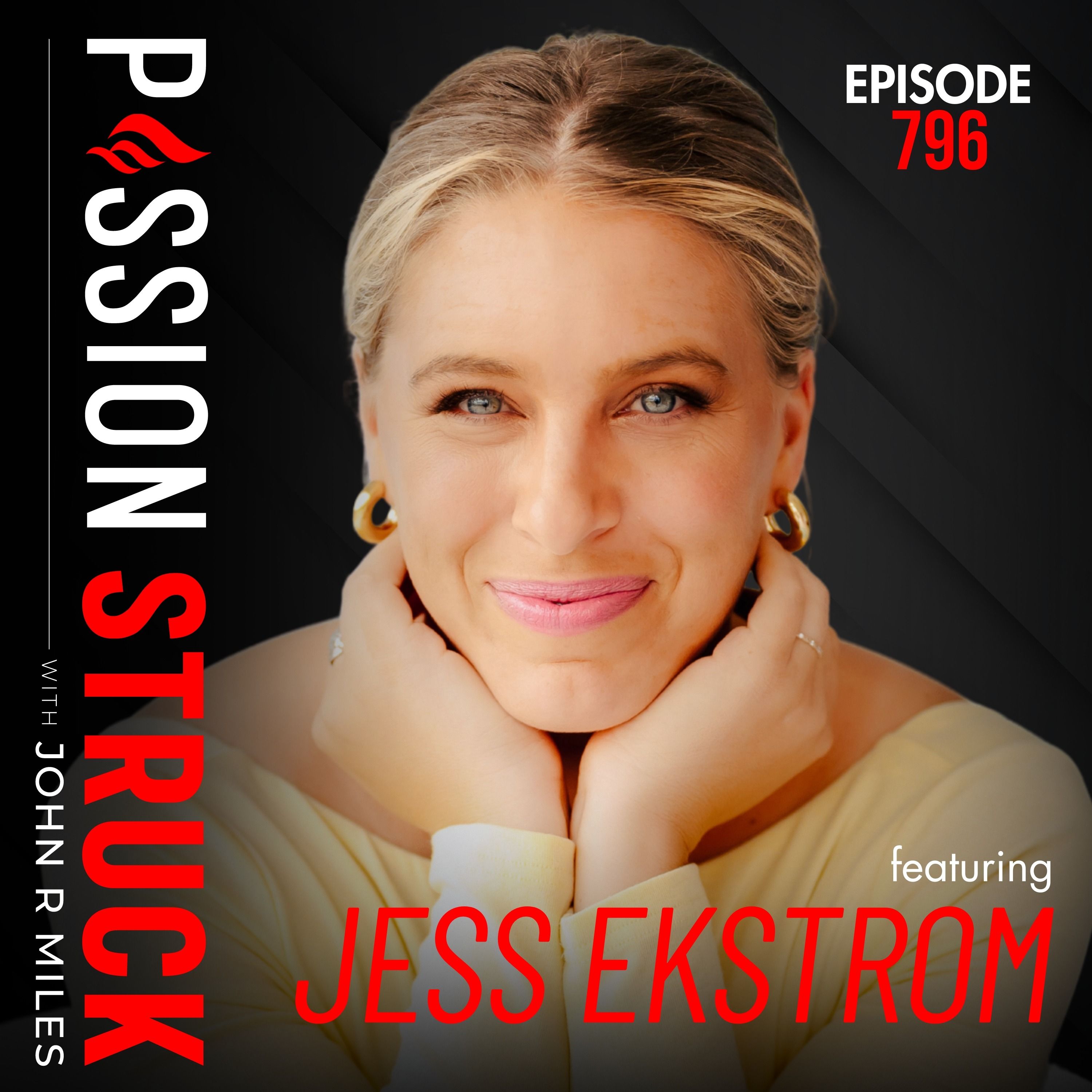
Passion Struck with John R. Miles
Stop Waiting to Feel Happy: The Mindset Shift Every Ambitious Person Needs | Jess Ekstrom - EP 796
00:54:43
Success isn't supposed to leave you feeling empty. In this conversation, Jess Ekstrom explains why ambitious people often fall into the "Arrival Trap" and how to build a meaningful life without postponing happiness until the next achievement.
Loading summary
Transcript83 lines
- [00:00]
Odoo Narrator
Running a business shouldn't feel like surviving a software group project. One app for accounting, another for inventory, another for sales, and somehow none of them talk to each other. That's where Odoo comes in. An all in one business management software that brings every part of your business together, from sales and accounting to inventory and marketing, all in one powerful platform. No messy integrations, no bouncing between tabs, and best of all, no spreadsheets. Stop managing software and start managing your business with one unified system. Try for free today@odoo.com that's O D
- [00:36]
John Miles
O O.com coming up next on Passion Struck.
- [00:40]
Jess Ekstrom
There was this interesting study at Vanderbilt that looked at dopamine. Dopamine is honestly the feeling that we're all chasing. It's the feel good hormone, that happiness chemical that we get when we call a friend or eat a good piece of cake or something, and we're looking for that feeling. And this study at Vanderbilt thought that we got that dopamine hit at the result when we get the raise when we hit a certain number promotion. But this study showed that we were wrong. We actually it studied our brains. And we get that hit of dopamine in anticipation of the results, not the result itself.
- [01:17]
John Miles
Welcome to Passion Struck. I'm your host, John Miles. This is the show where we explore the art of human flourishing and what it truly means to live like it matters. Each week, I sit down with change makers, creators, scientists, and everyday heroes to decode the human experience and uncover the tools that help us lead with meaning, heal what hurts, and pursue the fullest expression of who we're capable of becoming. Whether you're designing your future, developing as a leader, or seeking deeper alignment in your life, this show is your invitation to grow with purpose and act with intention. Because the secret to a life of deep purpose, connection and impact is choosing to live like you matter. Hey, it's your friend, John. And welcome Back to episode 796 of
- [02:10]
Podcast Host (John Miles)
the Passion Struck podcast.
- [02:12]
John Miles
I want to ask you a question. Have you ever achieved something you worked incredibly hard for only to discover that the feeling didn't last nearly as long as you thought it would? Maybe it was a promotion, launching a business, publishing a book, reaching a financial goal. For a moment, it felt incredible. And then your attention quietly shifted to the next mountain. If you've ever wondered why that happened, today's conversation is for you. Because I think many of us have been taught to believe that purpose is something we discover somewhere out there in the future. What if purpose isn't waiting to be found what if it's something we create? That's the question we're exploring this week as we continue our series on how humans become fully alive. Over the past three weeks, we've explored why. Why flourishing begins with presence, while lasting change requires us to rewire familiar patterns of thinking and how the environments around us quietly shape who we're becoming. Today, we reach another turning point. Because flourishing doesn't stop with personal growth, it naturally expands into contribution. And contribution begins when we stop asking, how can I become more successful? And start asking how can I create something that genuinely improves another person's life? Today's guest, Jess Ekstrom, has spent her career wrestling with exactly that question. Jess is a best selling author, entrepreneur, founder of Headbands of Hope and Mic Drop Workshop and one of today's most thoughtful voices on ambition and purpose. In this conversation, she challenges the idea that purpose is a destination for and offers a far more liberating perspective. One that has stayed with me ever
- [04:00]
Podcast Host (John Miles)
since we recorded this interview.
- [04:02]
John Miles
You'll learn why the arrival mindset keeps so many high achievers from enjoying the lives they're building, how contribution reshapes our relationship with success, and why purpose is often created through small, consistent acts of service rather than one defining moment. I think this conversation will change the way you think about ambition. More importantly, I think it will change the way you think about your own life. So let's dive in. Here's my conversation with Jess Zeakstrom. Thank you for choosing passionstruck and choosing me to be your host and guide on your journey to creating an intentional life that matters. Now let that journey begin.
- [04:42]
Podcast Host (John Miles)
I am absolutely thrilled today to welcome Jess Ekstrom on passionstruck. Jess, how are you today?
- [04:48]
Jess Ekstrom
I'm good, John. Thanks for having me.
- [04:51]
Podcast Host (John Miles)
I am so excited to have you. You are such a phenomenal keynote speaker. Your TED talk is incredible and I am so excited to talk about your new book, Making It Without Losing It. What an amazing title.
- [05:06]
Jess Ekstrom
We are all losing it in some way, shape or form. So maybe that means we can all make it too.
- [05:13]
Podcast Host (John Miles)
Jess, I know we all have defining moments and they come in many shapes and forms. Some of them are highlights, some of them are lowlights. I understand you had a defining moment years ago that involved a tiara. I was hoping you might educate us on that story.
- [05:30]
Jess Ekstrom
Oh man, John, this one cuts deep. I was doing an internship for the Make a Wish foundation and I was doing a lot of behind the scenes work. Interns are notorious for doing the busy things. I was doing exactly that. I was organizing supply Closets, filling coffee for people, cold, calling people for donations, and getting hung up on. But it was truly the first time in my life where I realized it wasn't about what I was doing, because I was so clearly connected to why I was doing it. Every single thing I did, no matter how boring or tedious it might have seemed on paper, I could connect the dots. I could draw a straight line to helping make a wish come true for a kid. And so it was towards the end of this internship, my boss decided she was going to give me a little bit more responsibility to round out my summer before I went back to school at NC State. And she assigned me a wish child. And I got to be the coordinator of her wish and really make her wish come together. I was reading her file. Her name's Renee. She's four years old. She wanted to go to Disney, but specifically, she wanted to go to Disney to meet Sleeping Beauty. And I started planning her wish, calling the parks, making sure Sleeping Beauty could be there for all of her meals. And then about a week before she was scheduled to go to Disney, she had some symptoms flare up, wasn't feeling well. They sent her to the hospital, had done some scans, and realized that there was something they had missed in their previous scans, and her cancer had started to return. And they said that she was not going to be in good enough condition the following week to fly or drive to Disney, and they had to cancel her wish. And I remember being in the office that day and just thinking, this can't be the story, because we have experiences in our life that we can't control. We can't control the weather, we can't control our flight. But our stories are things that we can control. It's how we react, respond, what we do with our experiences. And so I couldn't make her better. I couldn't get her to Disney World, but maybe I could rewrite the story. So I went on to Google, looked up local costume shops in Charlotte, North Carolina, where we were, and then a few hours later, arrived on her doorstep with a tiara dressed as Sleeping Beauty and spent the whole day with her. Yeah, it's. It makes me emotional every time I talk about it, but spent the whole day with her and her family as Sleeping Beauty in character and tried to make her wish come true that day. And years later, I can pinpoint that as the biggest before and after moment of my life.
- [08:24]
Podcast Host (John Miles)
And that's an incredible story. When my kids were young, each of them, for a prolonged period of time, went into character. My son for almost two years was Peter Pan. Every single day. We created this Peter Pan custom costume for him and we had to make three or four of them because he would not take it off even.
- [08:47]
Jess Ekstrom
I love that you all just embraced it too. Didn't try to change him. My daughter is that way, right? My three year old is that way with Elsa from Frozen. She is all in. And you just gotta ride it out. Let kids become who they are.
- [09:00]
Podcast Host (John Miles)
My daughter wanted to be Dorothy. She had that classic.
- [09:04]
Jess Ekstrom
An old soul. I love that.
- [09:05]
Odoo Narrator
Yeah.
- [09:06]
Podcast Host (John Miles)
Yes. I love it. I have a North Carolina State story for you.
- [09:11]
Jess Ekstrom
Do you really? My wolf pack.
- [09:14]
Podcast Host (John Miles)
It's ancillary, but Red Hat was located on the campus of NC State. So I was a senior executive at Lowe's and I get this call that Red Hat wants me to be their cio. So I go and I do this whole interview and my ego got the best of me because at that time I was interviewing for these big Fortune 50 CIO jobs and I'm like, why would I go to this puny startup company and I'm meeting the CEO. I ended up not taking the job because I didn't think it was a big enough job for me. And fast forward two, three years later. My first cousin is a freshman at Duke and his roommate is the CEO's son. So I happen to be up there visiting and I run into the CEO again and he goes, you are such an idiot. I'm like, well, I love the company, I love this, et cetera. But I just didn't think that this was the career job for me. He goes, I was hiring you to be my replacement because. Because my daughter had a health crisis and I knew I was leaving and I needed someplace to park you. So it wasn't obvious that you were going to be my successor. And all the color of my whole body just vanished. And I look back now and it changed everything for me. Because sometimes you have to look beyond what you're initially walking into and see the opportunity beyond it. I wish he would have shared that with me at the time. I ended up going on to becoming a CIO at Dell and everything turned out great. But in retrospect, that that would have obviously been the better career choice.
- [11:00]
Jess Ekstrom
It's making me think, John, I appreciate you saying that. I just gave a commencement address last Friday at my high school and I was thinking about, how cool is that? It was very cool. It was one of the favorite speaking opportunity I've ever had. But one of the points that I tried to make was that there are multiple winning scenarios for your career. And a lot of them you don't even know exist yet. They haven't even a role that you're going to have a whole career in maybe hasn't even been invented or created yet. And I think so many times we can tell ourselves there's a right and a wrong. There's the job. I should have had the job, the company I was supposed to start. And instead it's like, make any decision, the right decision. Of course, being cio, going to CEO of Red Hat would have been a great decision, but also maybe wouldn't have done this podcast. Maybe there's so many other things that wouldn't have happened. And so I used to just have so much guilt and hindsight of, well, would it have been better if I had done this or that? I'm like, I'm just going to make any decision. I make the right decision.
- [12:15]
Podcast Host (John Miles)
And I love that.
- [12:16]
John Miles
And you can't look back.
- [12:18]
Jess Ekstrom
Although I would have loved to have you in Raleigh, let's just say that
- [12:22]
Podcast Host (John Miles)
I would love to been there. The more time I have great city in rtp, the better. I love it. And yeah, it's very cool place. And I love living in North Carolina because you got the Four Seasons, but you also got the mountains and you got the beach not too far away.
- [12:37]
Jess Ekstrom
Got a lot of college sports. Right now the hurricanes are on a. It's going really well. It's a fun place to live.
- [12:44]
Podcast Host (John Miles)
Absolutely.
- [12:46]
John Miles
Well, let's talk about the book. Jess, you open up the book with
- [12:49]
Podcast Host (John Miles)
this idea that Smash is better than cash.
- [12:55]
Jess Ekstrom
Words I didn't think were going to come out of your mouth today.
- [13:00]
Podcast Host (John Miles)
The important thing here is I focus a lot on this show about so many of us are focused on achievement and we realize that when we achieve the things we thought we always wanted to, the emotional payoff isn't what we expected. And that's really what's behind this whole phrase. Can you go into how you came up with it?
- [13:18]
Jess Ekstrom
Yes, please let me give context. We can get people's minds out of the gutter. My journey in this, as far as early as I can remember was a piggy bank. And we've. I think every single one of us probably had a piggy bank or familiar with it. And I remember the thrill I would get from finding quarters in the couch or doing lemonade stands and. And hearing that clink into that piggy bank. And then I remember one day I tried to fit a quarter in and it wouldn't fit. And so now I say My piggy bank was ready to ipo. I was like, we're ready to smash it. And smashing the piggy bank, counting the change, I think it over a year it got to maybe $12 and my mom let me get all my coins, put them in plastic bags. We went to the dollar store to cash out. And on the way home from the dollar store and I had my things that I bought. I just kept thinking the smash was better than the cash doing getting to the point was better than the outcome was better than the point. And it was just the first taste of that when I was a kid, of maybe I enjoyed the process rather than more than the results. And then that just became more and more apparent as I started two multimillion dollar companies before the age I was 30. I kept thinking that, well, this next thing is going to be the thing that makes me feel successful or makes me feel fulfilled. And then a tale as old as time. We move, we extend the progress bar. We move the goalpost. And so this book, Making It Without Losing it really started from this idea of can ambition towards the future and fulfillment in the present exists at the same time. Because we usually believe that success and burnout are a package deal. Success has to be hard. You have to run yourself into the ground. You have to be a little bit burnt or crazy in order to make it work. And my answer is no. We can do both at once. But if we keep thinking that the next thing on our to do list or achievement or milestone is going to fill some need or fill some gap, then it's this endless cycle that never stops.
- [15:39]
Podcast Host (John Miles)
I love this topic because it's one that, that I've had now two conversations with Arthur Brooks about. And it's something that he is really fixated on because it's a trap of so many people and you call it the arrival trap. How do you define that? Because I love the concept.
- [15:59]
Jess Ekstrom
The arrival trap is a mindset that our success is around the corner, that we have to arrive somewhere in order to feel the thing that we want to feel. And there was this interesting study at Vanderbilt that looked at dopamine. Dopamine is honestly the feeling that we're all chasing. It's the feel good hormone, that happiness chemical that we get when we call a friend or eat a good piece of cake or something and were looking for that feeling. And the study at Vanderbilt thought that we got that dopamine hit at the result when we get the raise when we hit a certain number promotion. But this study showed that we're Wrong. Actually, it studied our brains, and we get that hit of dopamine in anticipation of the results, not the result itself. And so this arrival trap is this belief that we all have that I like to call it the Once I, then I. We've all said that to ourselves. Well, once I can just get through this month, then I can finally relax. Once I can make this amount of money, then I'll finally feel safe. Once I can live in this neighborhood, then I fill in the blank here. And once I, then I trains us to delay joy and fulfillment to the thing around the corner. And we all know that it never truly feels the way we want it to feel. And so instead of having this arrival trap, have the arrived mindset realize that I can still be ambitious towards the future and content with where I am. The thing that I think we all, as ambitious people, which I have to believe, if you're listening to Passion Struck, you're probably an ambitious person. We will always have a gap between where we're standing now and where we want to go. That's just the nature of ambition to have goals and dreams and things that we haven't accomplished yet. But the thing is that we have two different ways that we can look at that gap. That gap can be disappointing, it can be discouraging. It can be, oh, look at what I haven't accomplished yet. It can feel like an absence, a net loss between where you're at and where you want to go, which is where a lot of us live and where I lived for a while. Or the other way we can look at that ambition gap is excitement, curiosity, just like we were talking about this endless winning scenario. Maybe I work at Red Hat, maybe I work here. There's. I wonder how the chips are going to fall. I wonder what it would look like if I did this. And it's more of a sandbox, a playground, an experimental phase. So making it without losing it. What I've been trying to do with myself is see this gap between where I'm at now, where I want to go, not as a discouraging absence, but as an exciting opportunity.
- [18:51]
Podcast Host (John Miles)
One of the things I talk about, Jess, a lot, and I'm going to bridge this to what you were just talking about, is that so many people today, I think, feel something is absolutely missing in their lives. And a lot of them can't put their finger on it because they're like, I'm doing everything that I think I should be doing to feel like I belong, yet I don't. How much do you attribute that arrival trap to more and more people feeling like they don't matter.
- [19:26]
Jess Ekstrom
That's such a good point, and I'm really glad you've said that. I think a lot of people are like, is this it? Is this? Am I where I'm at now? Am I supposed to be here? Because when you think about it, our brains were trained to know where we fall. We went to school. We know, okay, I've made it through first grade. I'm. It's good enough to go to second grade. Here's how I'm doing. The teacher gives you a score, and you go through life in these early formative years with a scale and with a knowing of, I'm good enough, I can advance, and here's how I'm being graded. And then you go into life, no one's giving you a grade. You're not sure if this is where you're supposed to be. And you're like, what's the wi fi password? Everyone feels like they know what they're doing, yet I'm still here. And so I would say that this arrival trap can be one of two things. A mindset of a hamster wheel where you're chasing what's next and not realizing that you're in it right now. This is what it is. You get your dopamine in the process, not at the result. But it can also be another thing that I find a lot that I'm curious. John, you speak at a lot of companies and do a lot of speaking like me, and I find it's more of a. A purpose trap where people believe. This might be controversial, what I'm about to say, but I think that finding your purpose is terrible advice because it makes people believe that there is something out there that is their purpose that they don't know yet. There's a secret, there's a role, a job, a company that they just haven't found yet. When instead I see so many people that have the ability to create purpose in their role or their job, whatever it is, right now at this very moment. And so I think sometimes they're either, this isn't my purpose, I need to go find it instead of looking at, like, how do I create it in this moment? And when I speak at companies, I go through the process of changing our mindset from I'm selling blank product to I'm serving blank person. Because when you're just focused on selling a product, it can feel very purposeless. But if you can connect, here's my job, here's my roles, here are the tasks that I do every day to a human on the other end of it. Then it changes from I'm selling blank to I'm serving blank. So I think that missing feeling that we have could be the hamster wheel, but it can also be this notion of that purpose is found when truly I think purpose is built. I don't know how you feel about that.
- [22:26]
John Miles
We'll be right back with more of my conversation with Jess. If today's discussion is resonating with you, I want to invite you to continue it beyond the podcast. Every episode in our flourishing series includes a companion workbook filled with reflection, questions, journal prompts, and practical exercises to help you turn these conversations into meaningful change. I also publish weekly companion essays inside my substack, the Ignited Life, where we explore these ideas in even greater depth. And as many of you know, I've also been working on my next book, the Mattering Effect, which will be released this October. While Passion Struck explored intentional living, the Mattering Effect asks a deeper what happens when people feel invisible in their lives. Throughout this year, I'll be sharing exclusive behind the scenes insights, research and early ideas from the book with the Ignited Life community. You can access this week's workbook, subscribe to the Ignited Life, and learn more about the Mattering Effect using the links in today's show. Notes Now a quick break for our sponsors. Thank you for supporting those who support the show.
- [23:38]
Guest or Commentator
Foreign.
- [23:43]
John Miles
You're listening to Passion Struck right here on the Passion Struck Network. Now let's get back to my conversation with Jess Ekstrom.
- [23:50]
Podcast Host (John Miles)
There's this interview that I did, Jess, a number of years ago, and I always refer to it because there was a moment and I was talking to this gentleman, Andreas Widmere. And Andreas is the head of the business school at I think it's a Catholic University in D.C. and he was 18, 19 years old, grew up in Switzerland, and had no idea what to do with his life. So on a whim, he applies for the Swiss Guard, doesn't think he has a chance. Before long he's a Swiss Guard at the Vatican. And before long after that, Pope John Paul II is his personal mentor and he told me that he would be sitting there with the Pope and even though he has all these obligations, all these commitments, he felt like the world evaporated when he was with His Holiness and it was just the two of them in presence. And he would always tell Andreas that each one of us has a set of superpowers that we're born with and our purpose in Life is to figure out how do you align those superpowers with a problem that you see that the world needs solving? Because he said that your inherent gift to this world is using your gifts that are inherent to you to solve a problem bigger than you. And so to me, that's what our purpose wayfinding mission is. How do you take your super abilities that only you possess and use them to serve humanity? And to me, once you do that and you go down that path, because I think passion and purpose are two different things. It's. You become so aligned with that goal, you feel so alive inside that you're willing to pursue it with all that you have because it makes you feel truly alive inside. And that's when you reach a state of becoming passion struck is the terminology that I like to use. But if you're constantly just sitting there searching for purpose, Purpose, I think you need to go about it a different way. I think you need to figure out what is the problem that you're called to solve. How can you solve it uniquely? And then who are you supposed to be helping? And I think when those things align, that's when it comes together.
- [26:18]
Jess Ekstrom
It reminds me. So before I was at Make Wish, I interned in Disney World, and I was a PhotoPass photographer. But some of my friends were custodians. And I remember having this moment where I talked to two custodians. One of them absolutely hated their job, and the other person loved it. And they had the same role, same job description, same tasks. And the one who was not happy in their job was like, I have a college degree. I am picking up trash from people. I am scraping gum off of the benches. What am I doing with my life? And then the other custodian, who, again, same role, same job description, loved his job. He was like, I get to be in the moments where people are walking into the park looking for directions. I get to tell them what my favorite rides are. I get to create magical moments and hand out a fast pass to someone who it's their first time. I get to make sure that people have the best experience by making sure the streets are clean. And so it's this notion of switching the I have to to I get tos. And exactly what you were saying, John, about using your talents and the things that make you unique in the moment that you're at. Of course, maybe you wanted to be sitting in Cinderella's castle rather than being on the streets and picking up gum. But if you're. If that's your role is picking up Gum. Then how can I use what I know and what I'm good at, which is helping people, talking to people, creating magic moments and applying it into this role? And so I think we have our assigned work, which are the tasks and things that are in our job description. Yeah, but then we have meaningful work. And meaningful work is exactly what you're talking about. That passion struck of what are the things that I'm good at that I know that I can, that are innate within me that I can apply to this role right now?
- [28:36]
Podcast Host (John Miles)
Jess, one of your titles of your chapters is Thoughts are the Original Fake News, which I think is brilliant. And I was interviewing John Gordon yesterday and we were talking about his new book which is about positive habits. And one of the habits in there reminded me of this chapter. And he was saying that basically you need to talk to yourself, but don't listen to yourself was his advice. Because oftentimes we are the biggest visionary arsonist to the very dreams we want to create. Great. Because we end up creating these loops where our negative thoughts become our reality. Because what we think becomes who we become. And I think that's what this whole chapter is really about.
- [29:23]
Jess Ekstrom
Totally. I think the stat is 80% of our thoughts are actually recycled instead of. And when we hear something over and over again, it's like marketing. It's how you start to believe it to be true. You see the same commercial or hear the same ad 12 times and you're like, maybe I do need a lawnmower. When you live in an apartment, you're like, maybe I do. And so I remember the perfect example of this for me was I was in fourth grade. There was apparently just one day in fourth grade where you learned fractions. And if you missed that day of school, then good luck the rest of your life. Because there was just one day where we learned fractions. And I wasn't in school that day. And when I came to school, the teacher was popcorn, calling people up to the board, giving them a fraction equation to do. And I got up to the board and I just didn't know what to do because I wasn't in class. She's what's 1/4 of 100? Or something like that? And I just froze. And I just remember thinking to myself, I'm not good at math, I am not good with numbers. I can't do this. And that belief, John, stayed with me.
- [30:36]
Podcast Host (John Miles)
Yeah.
- [30:37]
Jess Ekstrom
My whole life. And here I am running a business making self deprecating jokes about myself in finance meetings like, oh, I'll leave it to you guys, I can't read a spreadsheet. I don't know. One plus one equals two. And it was this thought that I literally know the date and time and place that it originated, that I said to myself for so many years and mistook it for truth. And so finally I was like, well, what if this is just repetition, not truth? Because I have a successful company, I must have some ounce of math that's good in that we haven't lost our money yet. There's gotta be something in here in evidence as to why that's not true. And so I almost just challenge people of, like, the thoughts that are holding you back. Can you find the origin story? Can you find the moment where it was created? And then ask yourself, is this thought serving me anymore? Is it. Has it just been so repetitive and redundant that I believe it to be true and take a moment to flip it on its side, find evidence as to why it's not? Because that I had to do that for myself,
- [31:54]
John Miles
really.
- [31:55]
Podcast Host (John Miles)
That's at the core of anyone who's ever gone through cognitive, behavioral therapy, cognitive processing therapy, and that's. That is the core essence of what that therapy is all about. Same with prolonged exposure therapy. It's getting to that one incident that you had that has caused.
- [32:13]
Jess Ekstrom
I'm just picturing myself going to therapy about fractions. I'm like, there's probably much better use cases for it. But it's. Yeah, totally get that.
- [32:24]
Podcast Host (John Miles)
I've been doing a lot of solo episodes on this idea of the scorecard. And most of us, I wouldn't say most, a lot of us have this scorecard that we keep in our minds. And so much of what's on that scorecard, at least for me, was external things that I thought were going to matter in the end. And it has been a series of steps that I've had to take myself through over a number of years, which has started to allow me to shift that scorecard to something else. But I think this whole concept of the scorecard really aligns to what you discuss in the book, where you talk about rewiring motivation internally instead of externally. Why do you think so many people are chasing that external scorecard? Because they're really looking for this source of identity that they're really struggling to find.
- [33:29]
Jess Ekstrom
It started, I think it's human nature. We're built to belong. We want to be liked by other people. Back in cavemen era, we were more likely to survive if we were part of a group. If we were accepted, we had more access to Food, water, and shelter. But now, in 2026, that part of a group is so quantifiable with social media, we're basically walking around with what feels like a number above our head of how well or not well we feel like we belong. So if we're living in a world that constantly quantifies our belongingness, then of course our motivation is going to default to extrinsic. Of course we're going to do things based on how they look and not how they feel. It's just a part of our human nature and survival. Which is why the work that I do at companies is around changing that inner wiring of extrinsic motivation to intrinsic motivation. Because countless studies show that if we can be intrinsically motivated, it's obviously longer lasting, more engagement. We're happier at work, but it's not so easy to just be like, love what you do, and just hearts and flowers everywhere. It requires us to really understand the cause and effect. When I show up to work and do these things, although they might not be exciting, this human somewhere out in the world is better for it. I was giving this talk at Kraft Hinds, and this woman came up to me and was like, I really want to believe you. I really want to picking up what you're putting down. But sometimes I look at myself in the mirror before I head to work and I say, it's just ketchup. It's just ketchup. What am I doing here? And what was funny to me in that moment was I was like, oh, to her, what she's selling is ketchup. To me, what I'm getting is the only way my daughter eats vegetables. She takes her broccoli. She takes her ketchup with a small side of broccoli. And. And it's something that brings our table together, brings our family together. But she wasn't seeing that because she was in the, you know, marketing or finance of something that maybe she's not seeing the other side of. And it reminded me, I told her the example. Maybe you've read this book, John? Did you read Spark Joy by Marie Kondo? It. Oh, yeah, yeah. It took the world by storm in the 2020 when everyone was cleaning out their closets. And for any listener who hasn't read it, the concept was you hold a item close to your chest and ask yourself, does it spark joy? And if the answer is yes, then you keep that item. If the answer is no, then you donate or dispose of it. But then there was this part of the book where it was like, well, what about a hammer? What about a stapler? Something that's. It doesn't really spark joy, but I need it. And a lot of times that's how our work feels. It doesn't really spark joy, but I gotta pay the bills. And what the book said was, just take a moment and ask yourself, what has this hammer done that does spark joy? This hammer is how I was able to build my daughter's dresser. This stapler, stapled the papers that I could buy my first house. And so sometimes in our life and our work and our moments, I call them lookout points, we just have to take a second and be able to connect the dots between the mundane and the extraordinary. Because a lot of times the mundane can feel exactly that way. It's just ketchup. It's just this, it's just that. And how do you connect that? It's just ketchup or it's just a staple, something meaningful behind it that requires work and effort. But that's where intrinsic motivation comes from. It's work and effort.
- [37:40]
Podcast Host (John Miles)
Thank God we had a hammer. This weekend I was out walking the dogs and I came back home and my wife was like, you are not going to believe what happened. I'm sitting here and then all of a sudden I hear this huge, gigantic crash.
- [37:55]
Jess Ekstrom
No.
- [37:55]
Podcast Host (John Miles)
And her whole side of her walk in closet collapsed.
- [38:00]
Jess Ekstrom
Oh.
- [38:00]
Podcast Host (John Miles)
From the weight of the clothes. So luckily we had a hammer, so we could.
- [38:04]
Jess Ekstrom
So you were the hero with the hammer. That had a lot of meaning then.
- [38:08]
Podcast Host (John Miles)
And drill and screwdriver, but yes, yes.
- [38:11]
Jess Ekstrom
Yeah. So many. And again, things you don't think about until you need it that have meaning.
- [38:18]
Podcast Host (John Miles)
Long time ago, I was fortunate to have one of my mentors on the podcast. She was my physics teacher in college, and man, was she wrong. Rough on us. And in a good way, because she always felt so many people have these dreams they want to pursue, but then they let themselves get in the way of them. And she is a phenomenal story because she was the first female graduate from the Naval Academy who became an astronaut. And it became one of her key speeches that she gives.
- [38:54]
John Miles
You have a chapter that's a little
- [38:56]
Podcast Host (John Miles)
bit different, but along the same lines, it's chasing their dream won't get you yours. And it reminded me of a conversation that I had with Marshall Goldsmith. We were talking about the earned life, and he was talking about, the earned life is earned by when you align your values with your aspirations and your ambitions, not someone else's. And I remember when I was starting this podcast, I was Looking at other famous podcasters and what they were doing. And I realized about six months in that I was chasing their dream, but I wasn't chasing mine. And when I shifted everything to my alignment, what I was really trying to do, who I was trying to serve, the popularity of my show started to hockey stick. So I love this concept and I was hoping you could talk about why so many people accidentally build lives that they optimize for approval instead of alignment to who they are and their core values.
- [39:56]
Jess Ekstrom
I love hearing that about your show, John. I had the same situation when I started speaking. I was watching videos of Mel Robbins. I was like, I guess I need to wear a blazer now. And just so many things that I felt like I needed to step into a role instead of saying, well, what does this look like for me? And I think one of the reasons why we do that, which has been a theme on this episode, is we have a front row seat to everyone's highlight reel. We are constantly looking at and binging the good without knowing how anyone got there. And I think there's a fine line between inspiration and comparison. Comparison is looking at, let's just say, someone in our world, a speaking opportunity. I used to. If someone else was on a stage that I felt like I wanted to be on, it would mean I was less. I didn't get it. I'm not good enough. They are better than me. I was taking someone else's win as my loss, an absence of my own. That's comparison. But inspiration is taking someone else's win as evidence that it's possible for you to. So I had to take a. It was a long time and admittedly, I still get caught in this a lot. Being in any line of work, it's easy to of am I chasing this because I saw someone else do it, or am I chasing this because it's something that I truly want? So I developed this test in making it without losing it. We can do it right now on this podcast. It's called the Purpose Test. And I want everyone who's listening to think about something specific that they're chasing right now. Maybe it's you're building a podcast. You have a goal with that. Maybe you're vying for a promotion at work or. Or building a house, whatever it might be. What is the thing that is just in the forefront of your mind daily that you're chasing? Next step is to right now imagine that you got it, it's yours. You got the email, you got the letter, you got the call. It's yours. But then the final step, you have to remain anonymous. No one can know it's. You can't call your spouse, you can't post about it on social, you can't put it anywhere, you can't say on LinkedIn, I'm pleased announce that you have to remain anonymous. Now, my question to everyone is, would you still do it? Is the thing that you're chasing worth it enough to you that you get no credit, no applause and no acknowledgement? And if the answer is yes, then go for it full speed. If the answer is no, which that's happened to me many times, either change the goal or change your relationship to it, because that's when we do something based on how it looks versus how it feels. That's when we can step back years from now and say, what am I doing? I don't even want this. Why am I trying to get verified on TikTok? What's this? You could just take a step back. So run that purpose test and see how you do.
- [43:30]
Podcast Host (John Miles)
Jess I was having a fascinating conversation a couple weeks ago with Nick Ortner. I'm not sure if you know who that is, but he's really big in the eft tapping world. And he was telling me this story about his friend Tony Robbins, and it's the second time I've heard someone who's close to Tony tell a story about him that not many people know. And Nick lives very close to Sandy Hook up in Connecticut. And after that terrible incident happened, Tony wanted to go up there and to do something for the parents, but he called the school and the community and said, I don't want anyone to know I'm here. I don't want any fanfare from this. This isn't about me. This is about your suffering. I'm just trying to bring my expertise to the situation and hope that I can offer some comfort to the people who, who were impacted by this. And I happened to also interview Jane Marie Chen, and she had created an organization that creates incubators for third world countries that can't afford these to save children. And her organization was running out of money and Tony Robbins heard about it and said, I don't want any credit for this. I don't want anyone to know about doing it, but I will give you however much money you need to keep this important thing going in the world. And now he's playing a bigger role in it. But it just showed me that there are people like him who are out there and obviously people know who he is. He's out there very, very openly. But it's also interesting that he's got this whole purpose side of him where he's called to do things and he doesn't need nor want the validation that comes from it. And I just thought that was really great to hear about Tony.
- [45:18]
Jess Ekstrom
It's great to hear and not surprised based on. I've never met him, but I've heard amazing things. There's this story that I like to tell that's relevant to this. Have you ever been to Sagrada Familia in Spain?
- [45:31]
Podcast Host (John Miles)
I used to live in Spain, but no, I've never been.
- [45:33]
Jess Ekstrom
Oh, okay. So I'm fascinated by the story of how it was built. The architect that was tasked to design it, his name's Anthony Gowdy. And when he turned in the blueprint to the builders, everyone laughed at him. They were like, this is impossible. The things that have, that are needed to build this haven't even been invented yet. He was like, yeah, I know. And they said, well wait, this is never going to be completed in your lifetime. This is going to take hundreds of years. He said, yeah, yeah, I'm aware of that. And it just is this perfect example of someone starting a project that they knew they wouldn't be around for the ribbon cutting. They knew that they wouldn't be around for the applause. And so why would someone start something that they wouldn't, they knew that they wouldn't get the recognition for is because completion wasn't his goal, contribution was. And so most the best things in our life don't have finish lines, raising kids. I'm a mom of a three and a one year old, building a culture, having friendships, marriage, relationships. The best things don't have finish lines. And so if we are constantly have that arrival trap of we need the finish line to know how we're doing or something, success is around the corner. Then I think we're missing the great things. We're missing what it feels like to just be able to contribute to something. I don't think of my life as a race to be won, but a relay to participate in how it's not my finish line of crossing. It's like how fast, how much progress can I go? Not to beat my competitor, but to better set up the person behind me that I'm going to hand the baton to. And for me, that's for women, that's the thing that I'm focused on in this moment in lifetime of my career is helping women get paid more, get more speaking opportunities and. But it's that Sagrada Familia is one I always come back to. It's like, what are we building beyond our lifetime?
- [47:55]
Podcast Host (John Miles)
I'm going to have to send you a sub stack post that I wrote on this very topic because I said, if you look at the Great Wall of China, you look at the pyramids, you look at other artifacts, these creators knew in their lifetime these things wouldn't be done, and yet they poured all them themselves into it because they were creating a foundation for the future generation.
- [48:16]
Jess Ekstrom
And I think, please send it to me. Yes, I feel the same way. I think about my goals now as not New Year's resolution, but hundred year goals. What is going to matter in my daughter's old age when I'm not around?
- [48:33]
Podcast Host (John Miles)
I would definitely do that. Jess, There's a chapter that I loved about what if this is the good part? Because I think so many of us are living the good life, but we're struggling to realize we're already inside the life that we once hoped for and don't even realize it because we're not staying present enough in it to realize we already have so much of what we've already always craved. Can you speak to that a little bit more?
- [49:01]
Jess Ekstrom
This really hit me in the face with parenting. Like I said, I have a three year old and a one year old and first it was the sleepless nights, I just need to get through this. Then it was bottles. I'm like, I as soon as they can eat solid foods, then it's going to be easier. Oh, they're crawling. Once they can walk, then I'll be so much more productive. And then I realize they can walk in different directions. I'm like, there goes that. And with parenting, I realized that I was constantly thinking about the next milestone and not the one that we were in. And I had turned my life. And ambitious people do this all the time. You turn your present into a waiting room for your future. And that's exactly what I was doing. And then I would find myself scrolling on my phone of these pictures of them where I'm like, I was sitting here waiting for now when I could have been there. And I think if we just recognize that no achievement is going to cure our ambition, no milestone is going to be big enough, good enough, great enough to say, check, I've completed life, then all we have is this very moment and the problems, the annoyances, all of it is just a part of it. And I used to think that certain problems or certain things would go away by making, I don't know, certain changes, especially when I sold my first company, Headbands of Hope, I thought that was going to just solve all my problems. That's every entrepreneur's dream, is to eventually make it successful enough to where I don't know if it's every entrepreneur's dream, but it was mine to get acquired. And then I realized, oh, I still have problems, still have other things that I need to do. And so now I just, I don't make a change that thinking it's going to solve all my problems. I make a change when I want new problems that I'm excited to solve. And so I think I just stop putting so much weight on singular outcomes, singular milestones, singular accomplishments to cure or achieve everything that I want. And realize this is all we have, so we might as well live it.
- [51:25]
Podcast Host (John Miles)
Jess I want to close by telling the audience that I think the deepest contribution of making it without losing it is that it reframes motivation. And you're not telling people to stop thriving or abandoning ambition or rejecting achievement. What you're trying to argue for is ambition without self abandonment, success without emotional erosion, motivation without burnout. And my big takeaway was you don't have to choose between building a meaningful future and fully inhabiting your present life. And I think that's why this book is going to resonate to so many people. And if you could, where can people find out more about you, this book and everything else that you're doing?
- [52:07]
Jess Ekstrom
Oh well one, thank you for that sentiment. You should have wrote the book. That was great. I'm like I need to write that down what you just said. You can buy making it without losing it anywhere books are sold. I am a lover of local so if you have a local bookstore, definitely reach out to them. You can find me on LinkedIn. Jess Extrom and then I also send out hype text a word of encouragement every Monday at 11am Eastern. That's my favorite thing that I do is just a nugget quote, quote question for your week. So if you want that, you can text me the word hype to 704-228-9495. And that's actually me on the other end. So let me know what you thought of the episode and I'll reply.
- [52:49]
Podcast Host (John Miles)
Awesome. Jess was so phenomenal to have you here today. Thank you so much for joining us.
- [52:54]
Jess Ekstrom
Thanks John.
- [52:55]
John Miles
Jess reminded me of something I think many of us quietly forget. Purpose isn't something waiting for us somewhere in the future. It's something we create through the choices we make today, through the people we encourage the problems we decide are worth solving and the ways we use our gifts in service of something larger than ourselves. Flourishing doesn't happen because we finally arrive at some perfect destination. It grows every time our lives become a source of hope, possibility, or encouragement for someone else. If this conversation challenged the way you think about purpose or ambition, I hope you'll share it with someone who who could benefit from hearing it. Those personal recommendations are still the most powerful way these conversations reach new people. And if you'd like to continue exploring these ideas, make sure you're following Passion
- [53:40]
Podcast Host (John Miles)
Struck on Apple podcasts or Spotify.
- [53:42]
John Miles
You can also watch the full video conversations on our YouTube channels. And don't forget to download this week's companion workbook and join me on the Ignited Life on Substack, where we continue these conversations long after each episode ends. On Thursday, I'll be joined by Guy Kawasaki. While many people know Guy as Apple's former chief evangelist and one of Silicon Valley's legendary entrepreneurs, our conversation quickly becomes
- [54:08]
Podcast Host (John Miles)
something much more personal.
- [54:10]
John Miles
We explore privacy, technology, human dignity, and why protecting our autonomy has never mattered more. By the end of our discussion, Guy leaves us with a deceptively simple question. What does it actually mean to leave the world better than you found it? I think you'll find it one of the most thought provoking conversations we've had all year long. I can't wait to share it with you.
- [54:31]
Guest or Commentator
I can't tell you that I can name any investment bankers or private equity people who I think have left the world a better place. So I think that's how you measure a person. Did they make the world a better place as opposed to a richer place? As opposed to having their names on buildings? As opposed to the largest crypto account? I rank people by how much you made the world a better place.
- [54:57]
John Miles
Until then, remember, the life that contributes the most isn't always the one that achieves the most. It's the one that leaves the people it touches better than it found them. Go out there and live life. Passion struck.