← Passion Struck with John R. Miles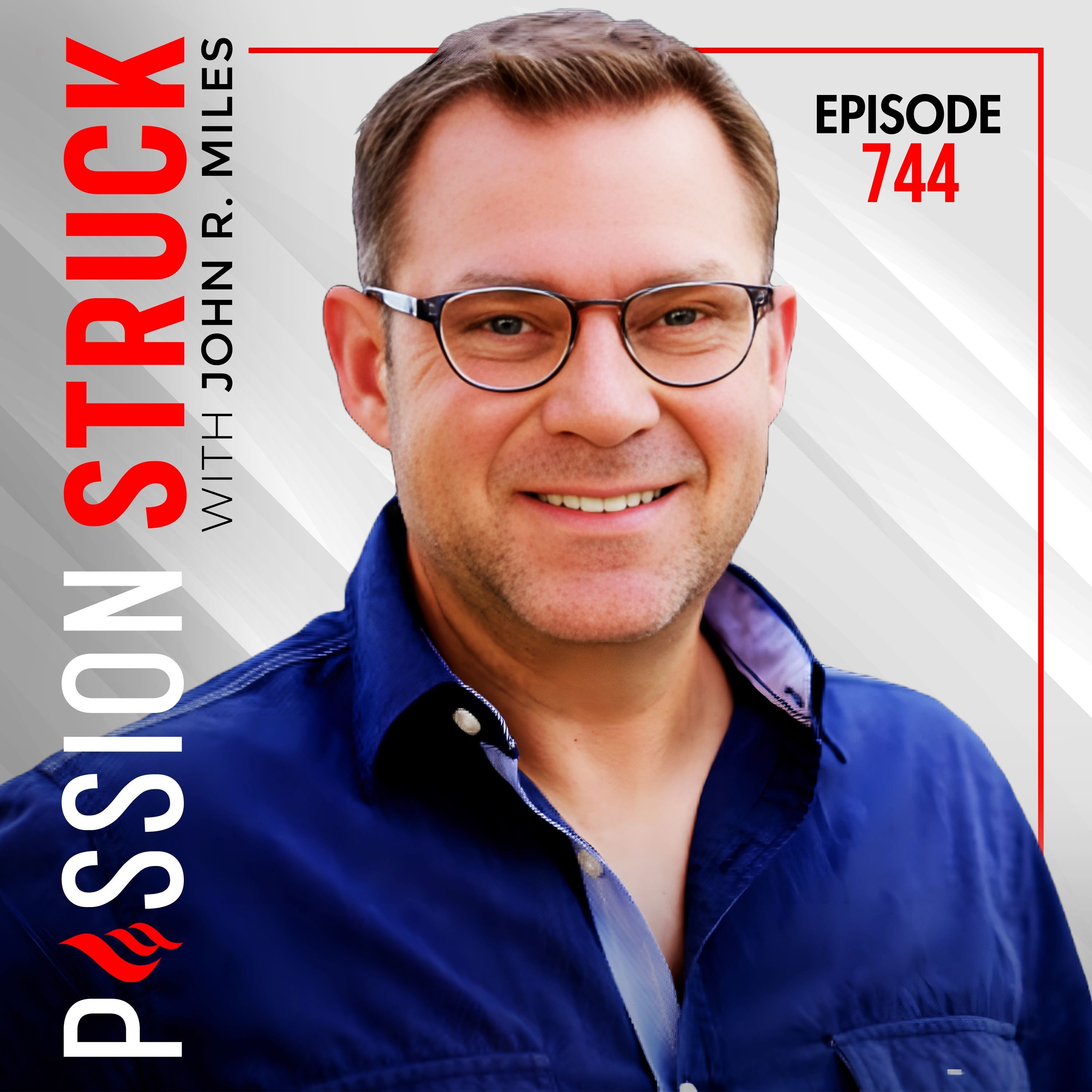
Passion Struck with John R. Miles
The Cost of Stagnation: Is Your Safe Bet Killing Your Future? | John R. Miles EP 744
00:25:49
Loading summary
Transcript9 lines
- [00:01]
Progressive Insurance Announcer
Every day as a small business owner feels like solving a puzzle. One moment you're cruising along, and the next there's a shipping snag that has you scrambling. But here's a surprise you will like with Progressive Small business owners save 13% on their commercial auto insurance when they pay in full. So go ahead, surprise yourself. Get a quote in as little as 8 minutes@progressivecommercial.com Progressive Casualty Insurance Company and affiliates discounts not available in all states or situations.
- [00:30]
Bleacher Report Announcer
The Bleacher Report app is your destination for sports right now. The NBA is heating up, March Madness is here, and MLB is almost back. Every day there's a new headline, a new highlight, a new moment you've got to see for yourself. That's why I stay locked in with the Bleacher Report app. For me, it's about staying connected to my sports. I can follow the teams I care about, get real time scores, breaking news and highlights all in one place. Download the Bleacher Report app today so you never miss a moment.
- [01:00]
John Miles
Coming up next on Passion Struck, we talk a lot about the risk of change, the risk of leaving the job, the risk of ending the relationship, the risk of reinventing yourself when everyone else expects you to stay the same. But we rarely talk about the other side of that ledger. We rarely calculate the interest accruing on the life you've outgrown. There's a specific kind of exhaustion that doesn't come from working too hard. It comes from performing a version of yourself that no longer exists. It's a quiet form of self abandonment that most people call stability. But Henry David Thoreau called quiet desperation. Here's the hard truth. The life you've built can start to cost you yourself. Today we're looking at the hidden price tag of staying put. We're moving from the discomfort of the gap to the urgency of the cost. Because the biggest risk isn't the change ahead. It's the slow erosion of staying exactly where you are. Stay with me. Today we count the cost. Welcome to Passion Struck. I'm your host, John Miles. This is the show where we explore the art of human flourishing and what it truly means to live like it matters. Each week I sit down with change makers, creators, scientists, and everyday heroes to decode the human experience and uncover the tools that help us lead with meaning, heal what hurts, and pursue the fullest expression of who we're capable of becoming. Whether you're designing your future, developing as a leader, or seeking deeper alignment in your life, this show is your invitation to grow with purpose and act with intention. Because the secret to a life of deep purpose, connection and impact is choosing to live like you matter. Hey friends, and welcome Back to episode 744 of Passion Struck. If you're joining us for the first time, you've stepped into the middle of a special series called Life beyond the Script. Last week, in my solo episode, we defined the identity gap, that disorienting space between who you were and who you're becoming. But today we're adding a layer of urgency. Earlier this week, I had two conversations that underscored just how quickly the world around us is changing. On Tuesday, I spoke with Dr. Robert Wachter about how artificial intelligence is transforming healthcare. Not someday, but right now. And yesterday I sat down with real estate powerhouse behind Bianca d' Alessio to discuss what it takes to reinvent yourself in high stakes environments where standing still is not an option. Different fields, different challenges, same underlying reality. The scripts that once felt stable are shifting beneath our feet. And when the world changes faster than our identity does, staying the same stops being safe. For years in my corporate life, I stayed in roles that were objectively perfect. I had the titles that influenced the security. But every day I remained in a script that didn't fit. I was paying what I now call a mattering tax. I was trading my locus of knowing, my internal compass, for the comfort of a familiar routine. I told myself I was being responsible, but I didn't realize I was slowly disappearing. This is the central theme of my new book, the Mattering Effect, which is now available for pre order. So many of us feel like we don't matter not because we lack value, but because we're operating inside systems and roles that have quietly value engineered our presence out of the room. Reclaiming your worth doesn't start with achievement. It starts with recognizing that staying in an outdated version of yourself isn't safe. It's expensive. In this episode, we'll unpack the thorough reframe what quiet desperation looks like in the 2026 workplace. I'll go into visible failure versus emotional flatness, why the perfect life is often most the dangerous one. I'll discuss the mechanics of self abandonment, how we slowly trade our vitality for external approval. And lastly, I'll diagnose the tipping point, how to know when the cost of staying has officially exceeded the risk of leaving. Grab a notebook, because this one might hit close to home. Let's begin. Thank you for choosing Passion Struck and choosing me to be your host and guide on your journey to creating a life that matters. Now, let that journey begin. So I want to start off today by talking about the architecture of the safe bet. In the high stakes world of professional gambling, everyone is searching for an edge. The edge is that sliver of statistical advantage that separates a professional from a hobbyist, a winner from a casualty. But for most of us, especially those of us operating in the high pressure corridors of the modern workplace, the edge we seek isn't found at a blackjack table. It's found in the concept of the safe bet. The safe bet is the ultimate psychological siren song. It promises the two things the human ego craves. Security and profit. It draws us in with the intoxicating idea of predictable success. We tell ourselves that if we follow the established script, if we stay within the lines of the ego container we've built, we are making a calculation that minimizes risk and guarantees a payout of stability and status. Yet this sense of certainty is almost always a psychological trap. Whether you are betting on a heavy favorite in the super bowl or betting your next 10 years on a soul crushing job because it offers a safe pension, the mechanics of the illusion are the same. We are wired to crave sure things. But history, science, and the lived experience of the identity gap tell us that the only true certainty is, is that risk cannot be fully removed. It can only be hidden. Humans are biologically and evolutionarily hardwired to predict the unpredictable. From our ancestors tracking weather patterns, to modern analysts tracking market volatility, our brains treat uncertainty as a threat. Neurobiologically, uncertainty triggers the amygdala, the brain's fear center, generating a state of discomfort that we are desperate to resolve. The lure of a safe bet appeals to us because it appears to remove this biological friction. Cognitive scientists note that our brains are energy misers. We favor what is known because the known requires less processing power. This is the same reason we choose familiar routes to work or buy products with the most reviews. In the context of our lives, the safe bet is the shortcut to a perceived win. We choose the banker or the lock because we want the reward without the anxiety of the gamble. And the belief in a safe bet is reinforced by several powerful cognitive distortions that act as the load bearing walls of our ego containers. First, there's the illusion of control. This is perhaps the most dangerous bias for high achievers. It is the belief that our knowledge, skill, or past experience can overcome the inherent randomness of a system. But many systems, markets, industries, even organizations are shaped by forces that no individual can control. The second is confirmation bias. Once we decide Something is safe. Our brain collects evidence to support that belief and ignores everything else. We celebrate the executive who stayed for 40 years and retired comfortably. But we rarely hear from the thousands who stayed and paid the mattering tax of quiet desperation. And third, the availability heuristic. We judge probability based on what we can easily remember. The headline about the person who won big on a sure thing sticks in our mind. The silent majority who lost never becomes a story. So the safe bet starts to feel safer than it actually is. And industries know this. In sports betting, they talk about locks and sure things. In the corporate world, we use different words. Things like stable, career path, gold standard role, or safe harbor. Different language, but the same psychological promise, because they all revolve around no risk. But casinos make their money on the house edge. The slow grind of probability over time. And life has its own house edge. It's called misalignment. If the script doesn't fit who you are, the costs accumulate quietly until it doesn't feel quiet at all. At the core of every bet lies the cold, hard reality of probability. This is where the illusion of the safe bet is hits a brick wall. Whether it's a dice roll, a stock market fluctuation, or a career pivot, outcomes follow the rules of statistics, not our gut feelings. The gambler's fallacy is the mistaken belief that the past results make future results more likely. If red comes up five times in a row on the roulette wheel, the amateur better believes black is due. In our lives. We often think that because we've had a winning streak in our current role, the next five years are guaranteed to be stable. But each spin of the universe is independent. The red of your past success does not guarantee the black of your future. Security statisticians refer to the small sample fallacy, the error of believing that a short streak of wins represents the overall probability. High achievers often fall into this trap. We have a few years of wins in the ego container, and we assume the container is indestructible. We ignore the larger sample size of human history, which shows that systems, industries and identities are in a constant state of flux. The pursuit of the safe bet has consequences. When we prioritize safety over alignment, growth slows, exploration stops. And when the safe bet stops delivering fulfillment, our instinct isn't to change, it's to double down, to stay longer, to try harder, to wait for the next promotion, to fix what the last one didn't. This is how people end up trapped in lives that look successful from the outside and feel empty from the inside because eventually something breaks. Layoffs happen. Industries shift, bodies age. Priorities change. When your identity is anchored to predictability, disruption doesn't just hurt, it disorients. You don't just lose a role, you lose your coordinates. History is full of sure things that collapsed overnight. In 2016, Leicester City was a 5,000 to one underdog to win the Premier League. Betting against them was considered the safest wager imaginable. They won. In 2008, global markets were built on the assumption that housing prices could only rise. They didn't. Black Swan events don't just break predictions, they expose the illusion that safety was never guaranteed. If truly safe bets existed, casinos would be empty and major corporations would never fail. Uncertainty, though, isn't the exception, it's the baseline. The myth of the safe bet is the foundation of the ego container. We build our lives around perceived certainties because we fear what happens when the script cracks. But the greatest danger isn't the risk of change, it's the safety that slowly cost you your soul. And in the next section, we'll explore what happens when that container finally starts to fracture. When the cost of staying becomes impossible to ignore. Before we step into Thoreau's modern translation and what quiet desperation looks like in 2026, I want to pause for just a moment. One of the core ideas behind this Life beyond the Script series is that life unfolds in chapters, and most of us rarely stop to notice which chapter we're actually in or who we're quietly becoming as the next one begins. If this conversation is stirring something in you, I've created companion reflections and guided prompts for each episode over@theignitedlife.net a space designed to help you examine your life with intention and decide what comes next on purpose, not by default. And thank you to our sponsors. Their support makes these honest, soul level conversations possible and helps passion struck reach more people who need them. Have you ever looked up at the clock and realized it's noon and you've had nothing but coffee? That was me recently. The morning just vanished. Meetings, emails, everything. And suddenly I was starving and completely off track. That's why I've been keeping HU Black Edition on hand. On days when I'm sprinting out the door, I grab a ready to drink bottle. It's a complete meal with 35 grams of protein, 27 essential vitamins and minerals, no artificial sweeteners, and it actually keeps me full for hours and it's under five bucks. Then when I'm home and want something more customizable, I use the Black Edition powder. Blend it with ice, add fruit or nut butter. Same complete nutrition, just a different vibe. Honestly, this combo has become my insurance policy against chaotic days. Limited time offer get heal today with my exclusive offer of 15% off online with my code passion@huel.com passion new customers only. Thank you to Huell for partnering and supporting our show.
- [15:14]
Bleacher Report Announcer
The Bleacher Report app is your destination for sports right now. The NBA is heating up, March Madness is here, and MLB is almost back. Every day there's a new headline, a new highlight, a new moment you've got to see for yourself. That's why I stay locked in with the Bleacher Report app. For me, it's about staying connected to my spirit. I can follow the teams I care about, get real time scores, breaking news and highlights all in one place. Download the Bleacher Report app today so you never miss a moment.
- [15:45]
Progressive Insurance Announcer
Every day as a small business owner feels like solving a puzzle. One moment you're cruising along, and the next there's a shipping snag that has you scrambling. But here's a surprise you will like with progressive Small business owners save 13% on their commercial auto insurance when they pay in full savings. So go ahead, surprise yourself. Get a quote in as little as 8 minutes@progressivecommercial.com Progressive Casualty Insurance Company and affiliates discounts not available in all states or situations.
- [16:15]
John Miles
You're listening to Passion Struck right here on the Passion Struck Network. Thanks for sticking with me through that. Now let's look at how the safe bet actually shows up in everyday life. The Anatomy of Modern Quiet Desperation Henry David Thoreau famously wrote that the mass of men lead lives of quiet desperation. When he retreated to a tiny cabin at Walden Pond, he wasn't escaping society, he was auditing it. Biologically, spiritually, existentially. He realized many people weren't actually living their lives. They were being lived by their tools, their debts, and their reputations. In the 19th century, that desperation came from physical toil and narrow horizons. In the modern world, it's high definition and high functioning. It doesn't look like collapse. It looks like success. I recently spoke with Ken Lazotte about his book Walden for Hire, and he said something that perfectly captures our moment. We are at attention to everything notifications, metrics, stakeholders, everything except the experience of being fully Alive. In the 2026 workplace, quiet desperation isn't a sudden crash. It's a slow leak of vitality. And it shows up in three distinct ways. First, it shows up as the golden handcuffs we stay in careers that drain our spirit because the container is too comfortable to break. This is the ultimate safe bet fallacy. You trade aliveness for predictability, passion for a direct deposit. Thoreau believed we should live in each season as it passes. But when you're locked in golden handcuffs, there are no seasons, there's only climate controlled winter. You hold your breath for retirement, for someday, for the moment life will finally begin. But life is already happening and it's happening without you. The second way it shows up is through the performance tax. There is an enormous mental cost to pretending you still care about a script you've already outgrown. This is the bandwidth you burn, maintaining a version of yourself that no longer exists. You're at attention to the role, but absent from the person. You've abandoned your internal locus of knowing for an external locus of showing. From the outside you're succeeding, but inside the colors have muted. Winds don't land, moments don't register. You move from task to task without ever tasting the fruit. You aren't living your life, you're performing it. And that leads us to the third way it shows up. The mask of competence. This is the most painful form of modern desperation. Being highly valued for what you do while being fundamentally unseen for who you are. You become a ghost in your own success, managed by a reputation rather than led by a soul. Thoreau warned against spending the best years of life earning a freedom you will only taste later. Today we do something subtler we value, engineer our own significance right out of our lives. We build identities so successful we no longer know who we are without them. The mask stops being something you wear. It becomes something you fear removing. And the cost of this desperation isn't just burnout, it's disorientation. You start to believe the mask is your face. You stop trusting your own signals and you forget what aliveness even feels like. This is the identity gap that I talked about last week in its most dangerous form. The distance between the life you are living and the life that is actually yours. As Ken Lazott reminded me, the goal isn't simply to be productive, it's to be present, to breathe the air, to drink the drink, to taste the fruit. When you stay who you've been simply because it's safe, you stop tasting life altogether. You walk through the woods but don't see the trees. You sit in the meeting but don't feel the impact. You move through your days like a highly competent ghost. You aren't leading a life, you're managing a script. And every script has a tipping point. The moment when the cost of staying finally exceeds the risk of leaving. So let's talk about how to recognize that point and how to calculate the true cost of staying. It's easy to dismiss a bad week or or a stressful quarter. We tell ourselves we're just paying our dues, or that this is just what high level leadership requires. But there is a difference between being busy and being absent. You don't measure it in dollars, you measure it in depletion. This is what I call the mattering tax, the hidden price you pay every day to remain who you've been. If you want to know whether you've reached the tipping point, ask yourself three questions. Question 1 what is left for the private self? Think about your typical Wednesday. You give your best ideas to clients, your highest patience to stakeholders, your full self to patients. You're at attention, focused to metrics and deadlines by the time you close your laptop or pull into your driveway. What is left? If maintaining your public version, the locus of showing, leaves you with zero bandwidth for the people you love or the things that make you feel alive, you are paying a mattering tax. You are over leveraged. You are spending your life essence to fund a reputation while leaving your locus of knowing bankrupt. And if there's nothing left for the private version of you, then the cost of staying has already exceeded the profit. And this leads to the second question. Is your success curdling? Resentment is the soul's alarm system. It signals a boundary that has been crossed too many times for too long. So ask yourself, do you feel a growing bitterness toward the very success you once wanted when you sit in that meeting or look at that bonus. Is the dominant emotion gratitude? Or is it entrapment? If you resent the golden handcuffs, it's not because you are ungrateful. It's because the container has become too small for who you are now. Henry David Thoreau believed we should embody our lives, not perform them. Resentment is what happens when your role no longer fits your reality and your deeper self refuses to stay quiet about it. And this leads us to the third and final question. When was the last time you tasted the fruit? This may be the most important question. When was the last time you felt genuine awe, curiosity, or aliveness about your own future? Not relief, not stability, not things are fine actual anticipation. If you look ahead at the next five years of your current script and all you feel is endurance, you are approaching the tipping point. Aliveness is not a luxury. It is a compass. And when winds don't land when moments don't register, when everything starts to feel flat, it means you are no longer inhabiting your life. You are maintaining it. You have become a ghost inside your own success. If these questions leave you feeling cold, numb or strangely exposed, you have likely reached the tipping point. Yes, the identity gap, the uncertainty of who you might become can feel terrifying. But the cost of the status quo is already compounding. We saw this last week in Carrington Smith's story. She tried for nearly a decade to stay inside the Beauty and Athlete script, long after it had shattered. The cost for Carrington wasn't just unhappiness. It was disorientation, a complete loss of her coordinates. She described feeling like a monster, not because she was broken, but because she was trying to force a trauma survivor's soul back into an identity built for a child. The moment she realized that staying might cost her her life was the moment she finally chose to leave. Moving beyond the script isn't reckless. It's a refusal to keep paying a price you can no longer afford. At some point, the question stops being, what if I fail? And becomes, what will it cost me if I don't change? This is the moment when comfort stops feeling safe and starts feeling like confinement. Not because you suddenly become brave, but because staying the same has become unbearable. And once you see that, you can't unsee it. Choosing to move forward doesn't mean you suddenly have everything figured out. It means you are willing to live inside the in between, between who you've been and who you're becoming. We often assume the goal of life is to feel whole, polished and consistent at all times. But as Thoreau's audit reminds us, real growth rarely happens in neat chapters. It happens in the messy middle, when the old structure no longer fits and the new one hasn't fully formed. The discomfort you feel right now may not be failure. It may be construction. If you feel like a competent ghost performing an outdated role, if success feels heavier than it should, if something inside you keeps whispering that there must be more, listen to that signal. It isn't weakness. It's evidence that your life is expanding beyond the container that once held it. You don't need to have the blueprint yet. You only need the courage to stop pretending the old one still works. I want to leave you with one final thought this week. If you remain exactly who you are today for the next five years, what will be left of the person you were meant to become? And just as important, what will the future version of you wish you had the courage to begin right now, write it down, acknowledge the cost, and then give yourself permission to let the old script go. Because the identity gap is where the Passion Struck life is forged. It's where you stop being a character in someone else's play and start becoming the architect of your own existence. If you're in the middle of a transition right now, remember you aren't lost, you are becoming Next on Passion Struck, we take this conversation from the internal landscape of the soul to our most intimate biological connections. I'm joined by Dr. Justin Garcia, executive Director of the Kinsey Institute and the author of the Intimate Animal. We dive deep into why our biological need for touching closeness is being challenged by modern technology and how the matter in crisis is impacting our modern relationships. It's a powerful look at the science of connection that you don't want to miss.
- [27:41]
Dr. Justin Garcia
We know that from studies of FMRI brain scan of people who are recently romantically in love and people who are passionately in love. It is a very much parallel to addiction in the brain and in fact romantic rejection studies of people who have gone through breakups. The brain looks remarkably like someone going through with drug withdrawal, particularly cocaine withdrawal, which helps explain why breakups can feel so intense and emotionally, physically. It's why people feel physical pain with breakups that I'm always a little cautious of calling it an addiction. But it is very parallel to addiction and in part because we're so used to addictions being negative and love is a positively balanced one for the most part.
- [28:21]
John Miles
If this episode resonated with you, share it with someone who might be quietly counting the cost of staying, leave a five star rating or review on Apple Pieces, podcasts or Spotify. It helps these conversations reach people who need them most. And if you want to go deeper, explore the companion reflections and guides for this series@theignitedlife.net until next time. Remember, you may not control everything that happens to you, but you can choose how you respond, how you grow, and who you become because of it. I'm John Miles and you've been passion struck.
- [29:05]
Progressive Insurance Announcer
As a small business owner. Sometimes it feels like no matter how much planning you do, there's always surprises like an urgent, expensive repair. But here's a surprise you will like with progressive Small business owners save 13% on their commercial auto insurance when they pay in full. So enjoy a surprise for once. Get a quote in as little as 8 minutes@progressivecommercial.com Progressive Casualty Insurance Company and affiliates discounts not available in all states or situations.