← Passion Struck with John R. Miles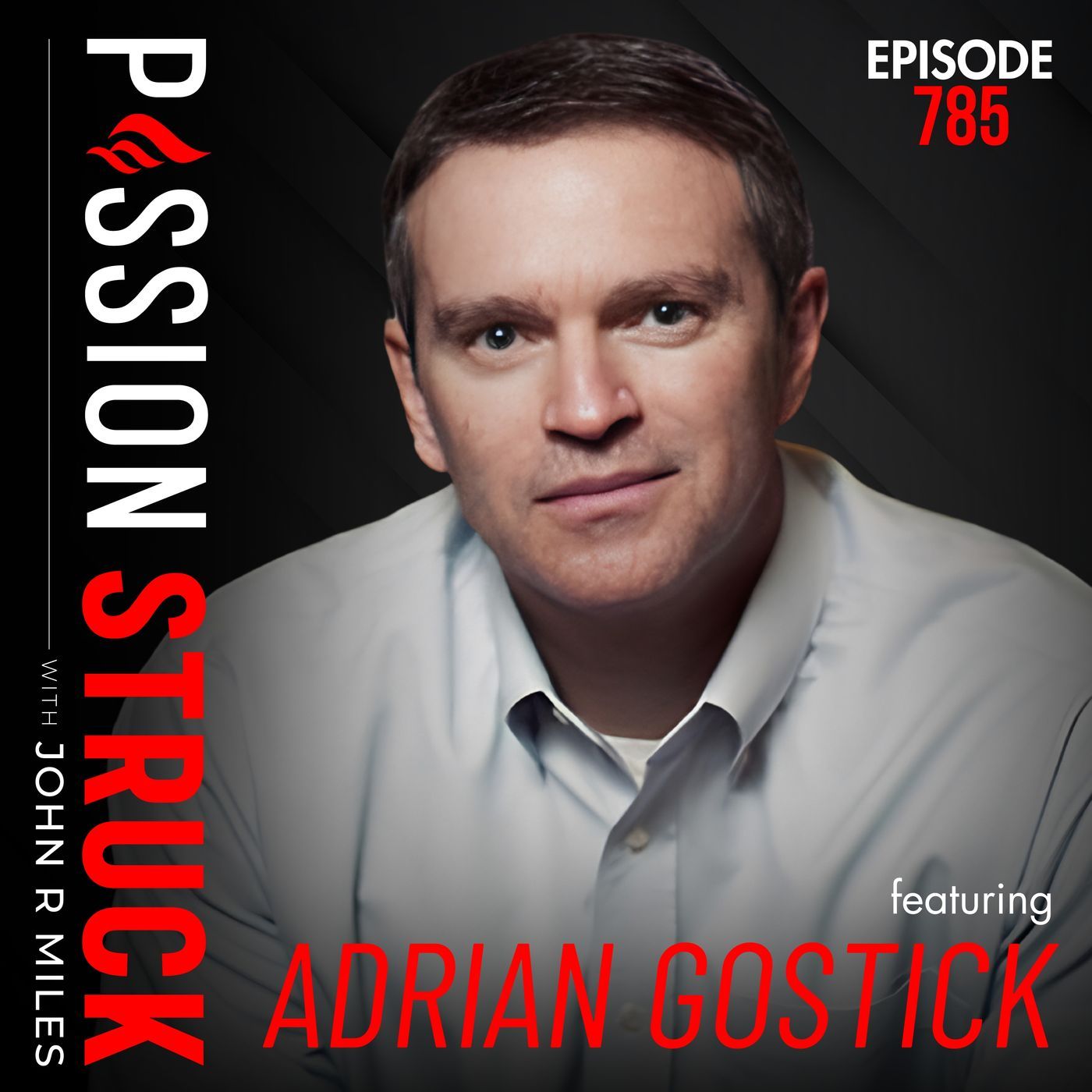
Passion Struck with John R. Miles
Why Great Leaders Make People Feel Like They Matter | Adrian Gostick - EP 785
00:56:52
In this episode of Passion Struck, John R. Miles sits down with bestselling author, workplace culture expert, and leadership researcher Adrian Gostick to explore one of the most overlooked forces shaping organizations today: the gratitude gap—the disconnect between how appreciated leaders believe their people feel.
Loading summary
Transcript80 lines
- [00:00]
Lady Luck
Hey everybody, Lady Luck here and we're celebrating America's 250th birthday. Now all summer long I'm going to be celebrating by playing on spinquest.com which is an American owned social casino. It obviously features over a thousand slot games and live blackjack, live craps, live bubble craps. Head on over to spinquest.com get yourself a $30 coin pack for just 10 bucks.
- [00:25]
SpinQuest Announcer
Spin Quest is a free to play social casino void where prohibited. Visit spinquest.com for more details. Overwhelmed?
- [00:32]
Adrian Gostic
That was me with diabetes. Hey, I'm Jabron. Between teaching and coaching, managing diabetes felt like an extra job. With the Freestyle Libre 3 CGM, I get real time glucose readings and have the insights to make informed decisions. My life feels lighter now. Learn more@freestylelibre us. The views expressed should not be used
- [00:52]
John Miles
for medical diagnosis or treatment as a substitute for professional medical advice.
- [00:55]
Adrian Gostic
Individual circumstances may vary. For prescription only. Safety info found @freestyleibre us.
- [01:02]
Lowe's Announcer
You can never have too many tools. Shop Dewalt deals at Lowe's. Get a free select Dewalt 20 volt max power tool when you buy a select 20 volt max 5amp hour battery kit. Plus get a free additional Dewalt 20 volt max 8amp hour battery when you buy a Dewalt 10 inch 20 volt max dual bevel compounded miter saw. Our best lineup is here at Lowe's ballot through 624 wall supplies. Last selection varies by location.
- [01:31]
John Miles
Coming up next on Passion Struck.
- [01:33]
Adrian Gostic
We're all living right now in these uncertain world and you can't take that away from people. You can't make the world the simple, easy to understand place anymore. We're living in Vuca, right? Volatility, uncertainty, complexity, ambiguity. That's our borderline place right now. That's the baseline. And so with that though, you don't have to amp things up. You don't have to create more pressure. I was in one big Fortune 500 big brand and one of the employees told me, he says, working here, he says they have this description that a gun is placed in your back when you start and the trigger is pulled. If you stop sprinting, the bullet will get you.
- [02:11]
John Miles
Welcome to Passion Struck. I'm your host, John Miles. This is the show where we explore the art of human flourishing and what it truly means to live like it matters. Each week I sit down with change makers, creators, scientists and everyday heroes to decode the human experience and uncover the tools that help us lead with meaning, heal what hurts, and pursue the fullest expression of who we're capable of becoming. Whether you're designing your future, developing as a leader, or seeking deeper alignment in your life, this show is your invitation to grow with purpose and act with intention. Because the secret to a life of deep purpose, connection and impact is choosing to live like you matter. Hello friends, and welcome Back to episode 785 of Passion Struck. I want you to think about the best leader you've ever worked for. What made them unforgettable? It probably wasn't their title. It wasn't the strategy they created. It wasn't even the results they achieved. It was the way they made people feel. Maybe they noticed your effort when no one else did. Maybe they challenged you to grow. Maybe they made you feel like your contribution genuinely mattered. In our last episode on Tuesday, Spencer west challenged us to stop living according to identities shaped by other people's expectations and instead embrace who we truly are. Today, we're taking the next step because once we begin showing up as our authentic selves, we all want the same to be part of places where that authenticity is recognized, appreciated, and allowed to flourish. My guest today is Adrian Gostic. Adrian is one of the world's foremost authorities on leadership, workplace culture, and employee engagement. He's the best selling co author of the Carrot Principle, all in leading with gratitude and anxiety at work. For decades, he studied what separates organizations where people simply work from organizations where people truly thrive. What I love about Adrian's work is that it consistently comes back to something profoundly human. Recognition, Gratitude. Purpose. Empathy. Not as soft skills, but as the very foundation of extraordinary leadership. In today's conversation, Adrian and I explore why so many leaders unintentionally create cultures of fear, why appreciation is one of the most underutilized tools in leadership, how empathy has become an essential competency in today's workplace, and why the simple act of helping people feel seen can transform not only performance, but lives. If this month's Connection Crisis series has taught us anything, it's that people don't flourish because they're managed well. They flourish because they know they matter. Before we dive in, if you if today's episode resonates with you, please share it with a leader, colleague, or someone who's made a difference in your own life. And if you haven't already, leaving a rating or review on Apple Podcasts or Spotify helps us continue bringing these conversations to millions of people around the world. You can also download today's companion workbook and reflection guide completely free@theignitedlife.net and don't forget to check out our channels on YouTube. Now let's dive in with Adrian Gostic. Thank you for choosing passionstruck and choosing me to be your host and guide on your journey to creating an intentional life that matters. Now let that journey begin.
- [05:41]
SpinQuest Weekend Promo Announcer
Forget whatever plans you have this weekend because you're staying at home and playing on spinquest and there's never been a better time to sign up than right now. New users get $30 coin packs for just $10. All the table games you love with hundreds of slot games and real cash prizes. That's its spirit. Spinquest.com S P I N Q U-E-T.com
- [06:03]
SpinQuest Announcer
Spinquest is a free to play social casino void where prohibited. Visit spinquest.com for more details.
- [06:12]
Sherwin Williams Announcer
Shop the Sherwin Williams Fourth of July Sale and get 30% off paints and stains June 26 through July 6. Whether you're refreshing your interior or exterior, we've got the colors to bring your vision to life and and with delivery, getting everything to your door is easier than ever. Shop online to have it delivered or visit your neighborhood Sherwin Williams store. Click the banner to learn more. Retail sales only some exclusions apply. See Store for details. Delivery available on qualifying orders.
- [06:40]
SimplePractice Announcer
If you're a therapist listening, you already know your work doesn't magically end when the session does. There's scheduling, notes, billing, insurance, follow ups, all of the admin that happens before and after the work you actually care about the that's where SimplePractice comes in. SimplePractice is an all in one EHR built specifically for therapists with HIPAA compliant tools and high trust certification. No juggling systems or cutting corners just to keep things moving. Scheduling, documentation, billing, insurance, client communication, even automated appointment reminders. It all lives in one place. And if you're starting or growing a practice, SimplePractice also offers a credentialing service that helps simplify insurance enrollment, which can be a huge lift. Right now, SimplePractice is celebrating mental Health Provider Day with an exclusive Offer. Up to 70% off for one year. Yes, up to 70% off for one Year. But hurry. Offer ends May 15th at simplepractice.com simplepractice.com.
- [07:45]
John Miles
I am absolutely thrilled and honored today to welcome Adriam Gostic to passion struck Adrian. What an honor to finally get to meet you.
- [07:53]
Adrian Gostic
Oh John, thank you so much. I appreciate the interest in my work. Thank you so much.
- [07:58]
John Miles
Well, I want to start here. You have spent decades studying recognition and engagement and I have to say during the time when I was in Fortune 500 companies. Your books were something I really looked to help me understand what was going on and how to treat employees less like cogs and more like humans. And you have surveyed, as I understand it, not just hundreds of thousands of employees, but like millions of employees. When you zoom out across all the data, the most surprising thing, leaders consistently get wrong about their people.
- [08:32]
Adrian Gostic
Well, thanks, John. And just so we have survey partners who help us with this. You don't want me doing the data analysis, but we've got some wonderful PhDs who do this, and they get really excited, and they call you up and they say, we found something statistically significant, which is about as excited as they ever get. So be all right. There's hundreds and hundreds of thousands of people in the databases that we've gathered over the years. And just looking from a high level, sometimes I'll have reporters who call and they'll say, I want the freshest data. I want what people are thinking today. And you know what? It's the same as we were thinking 10 years ago and 20 years ago. We humans want places to work where somebody listens to us, where we feel like we have a mission and we understand the future direction of the organization, and somebody recognizes us for the value that we add. They're very simple, very foundational things we're all looking for in our places of work. And, yeah, there are some new things that are emerging in the last few years that we haven't really seen before. We want a leader who's a little bit more empathetic. Well, five years ago, 10 years ago, we didn't even worry about that. Covid changed a lot of things. So now empathy is expected in a leader. I write a column every month in Forbes, and I never would have talked about empathy 10 years ago. Today, if you don't have it, the rest doesn't matter. So there are some new things we're seeing in the data, but there are some traditional leadership values that we have to put in place. As you're looking for. We're looking for an organization that will flourish and ourselves to flourish.
- [10:08]
John Miles
Yeah, I really loved my time at Lowe's. And one of the things that was a really monumental thing that we did on a monthly basis is the CEO would lead this event where we would recognize employees for their service. And at Lowe's, at that period of time, there were a lot of people who had been with them for decades, and everyone wanted to get, eventually the Rolex Watch. But I read about a moment in your career where there was an Employee named Pat, who was recognized for the first time in 30 years. And it really changed how you saw leadership. What did that moment unlock? That data alone never could.
- [10:49]
Adrian Gostic
That's one I don't talk about much. Boy, you've done your research. Good for you. So this was something like you. I spent time in Fortune 500 companies and some middle level companies. I was a vice president at a large financial institution. So I ran investor relations company, corporate communications, public affairs teams that were doing different things. And one of the employees worked in employee communication. So basically she did the newsletter, had done it for 30 years. And at some point I brought her into my office and I said, pat, this newsletter is old, it's dated. I said, look, another time, USA Today was still pretty hot when we were reading standard newspapers. Look at this. I said, emulate something like a USA Today. Find some people in the. Around the seven states or eight, nine. Eight states we had at that point we were keep growing as correspondence that make this hip and happening. And so she did, she redesigned it, found a designer, found a network of correspondence and really did a great job. And I said, okay, wonderful. That's her job. She should be doing that. And one of my employees, Jenny Schumann, came in and she said, adrian, she says, you need to recognize Pat. Like, well, no, I don't. This is. We pay her, I don't know, every two weeks she gets that paycheck. That's what her recognition is. And she goes, no, you're a knucklehead. Do you need a recognize her? But another week went by and I didn't. So finally Jenny brought in a little cup with candy in it, and she'd wrapped it up and put a nice little bow on top. And she says, adrian, give her this in staff meeting. We're about to walk into staff meeting. So we go into my staff meeting and before we get rolling, I just say, hey, before we get going, everybody, Pat has done a great job redesigning this newsletter. I tell everybody what she'd done. I said, I hold it up, I said, isn't this great? And I look over and Pat's got tears streaming down her face. And she told me afterwards, she says, adrian, I've worked for the bank for 30 years. Nobody has ever done that before. Well, and I wouldn't have done it if I didn't have an employee who actually said, hey, pay attention to the value your people are bringing. And it was just one of those moments that made me realize there's something to this. I was driven by very different things than the People who work for me. Pat was never going to be, nor did she want to be promoted to senior leadership. Didn't have stock options, didn't have all the things that some of us in higher levels were motivated by. She just wanted to know that she was making a difference and then jump ahead. I think it was about a year ago. So I'm at a conference, I'm giving a speech and it's a 70,000 person organization, it's a huge organization. The CEOs in the front row sitting next to the head of hr. And afterwards the head of HR comes up and she goes, thanks so much. She says, maybe the CEO will tell me now that I've done a good job at this conference. And so here's a chro probably making a seven figure salary that just wanted a little approbation from her boss, the CEO. So we all want this, we all want to know that our work is valued and that we're making a difference. And as leaders we just tend to forget this, especially as we move up the ladder.
- [13:54]
John Miles
Adrian, it's been really ironic for me. I haven't been out in the corporate workforce now for six or seven years as like you, I went on to do my own thing and write books, et cetera. And over the past two months I have gotten over a dozen inbounds requesting that I interview to be the chief human resource officer. And some of these are gigantic. Yeah, 50 billion plus companies. And I say to the recruiters, my, my whole background was in operations and technology. I, I know nothing about being a chief human resources officer. And they said yes, but you know a lot about mattering. And most companies are trying to create cultures of significance. And when I was in a lot of the companies where I worked and I saw this in both large companies like Dell and medium sized companies and even startups, so many of them operate in fear based cultures.
- [14:54]
Adrian Gostic
Yeah.
- [14:55]
John Miles
And I think the leadership doesn't even realize it because sometimes they're so out of touch with what's happening in the rank and file. What have you found are some of the subtle signals that create fear?
- [15:08]
Adrian Gostic
That's such a great question John, because if you and I surveyed a hundred managers, I don't think any one of them would think I operate in a fear based manner. Nobody does. And yet when we've done our research, typically about a third of managers are seen as operating in a fear based way. And now it's not like it's the old days, they're smoking a stogie going down the, you know, yelling at everybody. Those days are thankfully gone. But they manage in fear based ways, in very subtle ways. Sometimes they'll say, look, John, we got to get this project out. I can't guarantee it's everybody's job if we don't hit these deadlines. They just so fear in very subtle ways, very different ways. And sometimes it's just the vibe you get. You know, your manager isn't calm, your manager isn't in control, and people smell it on you if you're not calm and collected. And so I think that idea of fear comes in very different forms today. And yet as leaders, we have to be very aware of it. The vibe we send is spreading like a perfume within the organization. We wrote a book called all in, which is about culture. And some leaders don't feel they have a culture. No, that's something the HR worries about. That's something the corporate world worries about. No, every team has a culture. And even in really bad places, as you say, there's companies that have fear based cultures. You can still have these oases, right? Like you created at Lowe's. You have this little oases. That is an amazing culture. And every company I've ever gone in, I love to meet the managers who are making a difference. This probably been about 10 years ago now, but I was in Norton Healthcare, which is in Louisville, Kentucky, and it was, it's a great healthcare system. But the CEO introduced me to a guy who had taken food service in their Audubon Hospital, that's their heart Hospital. From 1% nationally customer service to the 99th percentile. So it doesn't mean 1% people gave him positive marks, but no, they were in the lowest percentile and they took it to the highest percentile. Like you did in your two years at Lowe's. He did that within a year. And it was remarkable. And so I asked, what did you do differently? And he says, oh, no, it wasn't me, it was my people. And I said, well, did you fire everybody? He said, no, they're on the same team, basically. And I said, well, you must have done something different. His name is Mike Julson, this manager. And he said, well, we started with the basics, right? We started recognizing people for just showing up, for smiling at customers, for new menu ideas. And then my team started raising the bar. They started becoming healers themselves. This is a heart hospital. So my team started making rounds, teaching people about heart safety and eating better and proper nutrition. He says, we became healers and not just people slopping food on the plate. And he says we became part of the healing process as important as nurses or doctors. That's what we felt. Well, that happens when you're not operating in a fear based. You're operating in a purpose based environment.
- [18:16]
John Miles
I'm not sure if you've ever met Claude Silver, who's Claude works for Gary Vaynerchuk. And she has been his right hand person now for over a decade. And she used to be on the advertising side. And she was about ready to leave the company. And Gary says, like he often does, what can I do to retain you? And she said, I really want to work more with people and change the dynamics and the culture of the company. And he said, well, I've been pondering this idea. I think we need to go away from a chief human resources officer and we need a chief heart officer. She became, I think, the world's first chief heart officer. And when I was talking to her, what she was telling me is that we look so myopically at people. Oftentimes you don't even think about what they've done beyond their job. But she said one of the things that she brought in to VaynerMedia was instead of just seeing the employees within the work environment, she was trying to gauge what's their bigger aspirations, what are their passions outside of work, what's going on with their families, and how do you help their management see more of the person instead of just this myopic version. Do you think that's something more leaders should concentrate on?
- [19:36]
Adrian Gostic
Not at all. No, of course. Yeah, absolutely. John, that's awesome. I love that idea. And for us, it's get to know their stories. Right? And I'm sure you did this as a leader. You go leaders that come in and say, hey, how's your kid? Didn't he have a softball game last night? Well, you're gonna walk through fire for somebody like that versus yeah, John, I know you. I know something about you, but I can't put my finger on it. No. Great leaders get to know their people. In fact, Chester Elton and I, my co author and I, we had a podcast called the Culture Works. We were just interviewing a chro. I think it was yesterday, the day before, 6,000 employees. And she says, no, I'm not head of HR, she says, I'm head of people and culture. She says, because I don't do human resources, I do people. And everybody's got a story. Everybody needs to be led differently. And we're creating a culture here. And I think that's probably one reason why companies are looking for you as a chro is that you're not approaching this from the same old standpoint. You're approaching this from a very human standpoint. In fact, this head of HR who's head of people and culture had a marketing background, she says, and that's how I approach dealing with all these initiatives we're launching with for people. Says you gotta market it. You've gotta come from different angles. You've got to, because everybody is different. So if there's a big aha from all these people we've researched and the reason that engagement levels don't really increase in most companies is because we try to do this as a overall strategy. This is our engagement strategy. The problem is we're all very different. How you are motivated versus how I'm motivated is going to be very different. And great leaders understand that. And it takes more work, it takes more time, but it really is powerful when you get to know the stories behind your people and realize that, well, John, he's trying to move up in the organization. He wants exposure to senior leadership levels. Adrian, he's more about creativity and working autonomously. And so I'm going to give him things to stretch and grow there. And we're all very different. You get to know your people in that way, then they really will walk through fire for you.
- [21:47]
John Miles
Before we continue, thank you for supporting. Passion Struck One theme has echoed through every conversation in the Connection Crisis series. People don't simply want success, they want significance. Whether we're talking about families, friendships, leadership or organizations, the deepest human need isn't achievement, it's knowing we matter. That's exactly what I explore in my upcoming book, the Mattering Effect. Why do so many successful people still feel unseen? Why does recognition transform performance far more than incentives? And how can each of us become someone who helps others recognize their own significance? If you'd like to go deeper, every episode includes a free companion workbook with practical exercises and reflection prompts available@theignitedlife.net now a quick break for our sponsors. Thank you for supporting those who support the show.
- [22:41]
SpinQuest Weekend Promo Announcer
Forget whatever plans you have this weekend because you're staying at home and playing on spinquest. And there's never been a better time to sign up than right now. New users get $30 coin packs for just $10. All the table games you love, with hundreds of slot games and real cash Prizes. That's@Spinquest.com Sports
- [23:03]
SpinQuest Announcer
Spinquest is a free to play social casino void where prohibited. Visit spendquest.com for more details. I'm Jake Stauch, co founder and CEO of Serval. We built Servl to automate the IT work that slows companies down. Onboarding password resets, access to applications. My laptop stopped working. While employees wait for help, their real work is put on hold. IT desperately wants to automate this work, and that's why they need Serval. You just tell Serval what you want to automate in plain English and it's built. No drag and drop workflows, no expensive consultants. Employees get unblocked and IT teams go from drowning in tickets to building what actually matters. With Cerbal, it becomes the AI engine powering the entire company. This is a new way to run it. We guarantee you'll automate 50% of all tickets and we'll prove it to you in a free four week pilot. Go to cervel.com tickets that's S E-R-V-A L.com tickets.
- [24:13]
John Miles
Hey friends. A few years ago, I attended a retreat with about 100 fellow veterans. What struck me wasn't just the camaraderie. It was the conversations. Nearly 90% of the veterans there talked about how psilocybin had become an important part of their healing journey. They shared stories about finding greater clarity, reconnecting with loved ones, and finally feeling like they were moving forward after years of feeling stuck. Since then, I've interviewed neuroscientists, psychiatrists and researchers studying psychedelics, and it's become clear why there's so much excitement around this field. Emerging research suggests psilocybin may help promote new neural pathways in the brain, which is why many people report improvements in focus, creativity, mood and connection. That's why I appreciate what Schedule 35 is doing. They're bringing a thoughtful, science backed approach to psilocybin with precisely dosed products, educational resources, and beginner friendly guidance designed to help people understand exactly what they're taking and why. Get 15% off all orders with code PASSIONSTRUCK at Schedule 35 copies. That's 15% off at Schedule 35CO and use code Passionstruck. You're listening to Passionstruck right here on the Passion Struck Network. Now let's get back to the conversation. When I was interviewing for roles, one of the questions that you always get is, what is your leadership style? Yeah, and I think the canned answer for so many years was, I'm a servant leader and that's what I learned in the military. But when they would ask me that question, I always would answer, I'm a situational leader and I would get these really weird looks. What do you mean situational? And I would say just like what you're saying, every single person is different and you're dealing with different situations all the time. So in each case you have to tailor your response to the person and what motivates them and also to the scenario that's playing out. I don't think a one size fits all leadership approach works in any scenario, but I would get the weirdest.
- [26:24]
Adrian Gostic
Yeah, what does he have no values? Does he just blow in the wind and it's like, no, because you do have your values. Knowing you, you're not going to lie, you're not going to cheat, you're not going to do anything unethical. So there are certain values that you have and what you expect. But as you say, people are very different. You're going to have your values that you stick to your leadership brand. But then you may need to be a lot more soft with somebody than you normally would be. It was a great example. We, we made friends with a basketball coach. He coached. It was high school level, but they were a travel team in the. In South Orange, New Jersey, where I did my grad school. It's a tough part of town on these kids who are. They've been raised in a kind of a tough area. And we went to watch one of his games and he called one kid out over who's a three point threat, and the kid was bricking everything. He was not doing well. He brings him over, he says, hey, it's okay. Tommy pats him on the back, sits him down and says, go sit down for a few minutes. You're back in. Keep shooting, you'll get it. And then a few minutes later, one of his tall kids up front, he brings him over and he just starts screaming at him and it's like, what the heck? And we asked him afterwards, couldn't help notice that you didn't have the same approach. And he says, oh yeah. He says that my center, he says he's got a thick head. He says, you gotta yell at him. And he says, and that'll charge him up. You watched how he was the second half. He was fighting, he was going for every rebound. He says, you have to challenge him like that. He says, if I did that with that first kid, he'd be a basket case for a week. I wouldn't even be able to talk to him. He probably wouldn't show up for practice tomorrow. We're all different, right? Bring it into the workplace. There's some people that are Going to need to be treated in a little different way, and it's okay. I love that idea of situational leadership. Ken Blanchard taught us all those years ago. You're bringing it to the modern world.
- [28:10]
John Miles
Good for you, Adrian. In one of your most recent books, Leading with Gratitude, you've identified what you call the gratitude gap. And this is something. We've been talking about this from the onset, in many ways, with recognizing employees. But I think there is still a major disconnect that you brought out in the book between what leaders think they're doing and what employees feel. Why is that gap so persistent?
- [28:40]
Adrian Gostic
And the way we came to this gap, we were, Chester and I, our mentor is Marshall Goldsmith.
- [28:45]
John Miles
Mine, too.
- [28:46]
Adrian Gostic
Oh, that's.
- [28:47]
John Miles
Yeah, he blurred my last book. Yes. Love, Marshall.
- [28:52]
Adrian Gostic
Yeah. And so I was just on a call with him earlier this week, and Marshall tells it like it is. And he'll tell you when he'll. You, you're kind of rambling about something. He'll say, adrian, stop. He says, raise your hand to this. And he says, I no longer believed it, and he'll just push you. Well, we're sitting around one day, Chester and Marshall and I talking, and we said, hey, his great book what got you here won't get you there. We said, look, one of the things that we think you should add in is gratitude. That's one thing that's missing. And he says, well, let's write a book about it. And he was only able to write the Ford because he was contractually obligated to write something else. But he said, as we were sitting around, he said, it's funny, the farther people move up the corporate ladder, the more they forget these human things that people need like gratitude. He says, I don't know the percentage, but I would guess most of the people that I have coached over my career, and they're usually CEOs at Marshall's level, he says, just don't get this stuff. And they think they do, Right. They think they're really good because now and then they may slap somebody on the back and say, good job. What does that mean? So we identified. Look, there's this gap out there. Again, we come back to the data, what we find in our research. All these almost a million people now, about 10% are managers or above. And of those, about two thirds, I think it's somewhere in the neighborhood of 67% of managers say they are above average at appreciating the great work of their people. So I'll put to you, John, as what percent of employees, do you think agree with that statement that their manager is above average at appreciating them?
- [30:23]
John Miles
I would say 10% or less.
- [30:25]
Adrian Gostic
You're even more cynical. It was somewhere in the neighborhood of 23%. So we have 23. So a quarter of people say, being generous say, my manager is actually above average. Doesn't mean they're great. They're just above average. And 67% of managers. So you have this 44% perception gap. You could drive a Mack truck through that.
- [30:44]
Sherwin Williams Announcer
Right.
- [30:44]
Adrian Gostic
We're not as good as we think we are about this. And yet in Leading with Gratitude, we showed the data that says, look, get this right. Not just good, but get it great, and you're going to see higher levels of employee engagement, customer satisfaction. It trickles down to all the things you're looking for in your lives.
- [31:03]
John Miles
I have two things to say about Marshall Goldsmith. So the first is one of the times I interviewed him. We get done the whole interview, and he goes, john, I need you to stick around for about five to 10 minutes. And I'm like, what is this all about? Then he goes through and he says, you did a really great job interviewing, but are a couple things that you're doing that you don't realize you're doing that you need to stop doing?
- [31:27]
Adrian Gostic
Yeah. And let me guess. The and but. Or that's usually one he picks on people.
- [31:34]
John Miles
It wasn't the and. It was the but. So that was one. So after that, I went to improv class to get better at not doing it. But he also told me that I didn't challenge him as much as I should have. I took him too literal, and he wanted me to push back on him more. And the other thing I have to say is I almost think his book the Earned Life, is better than what got you here, where you want to go. I love that book.
- [32:02]
Adrian Gostic
It's a great book. That was actually the book that he couldn't write, Leading Gratitude with us because he was working on the earned life and he was under contract. But you're right, it's a great book, and it's one of his legacy books, because Marshall is now, I think, 77. He's saying, look, this is what you want to leave as a leader and. And coming back to Marshall challenging you. That's what great coaches do. And he's a great coach. That in our lives, if you don't have somebody on your team that challenges you like that, you don't have a mentor, you don't have a boss, somebody who will tell you, the emperor has no clothes. Go find them today.
- [32:37]
John Miles
Yeah. Adrian, do you think the real issue with leaders is that they aren't expressing gratitude or do you think it's they're actually not seeing their people deeply enough?
- [32:51]
Adrian Gostic
Yeah, I think there's two parts to gratitude, and I think you're right there. It's. And I would say it's yes and right. The improv idea, it's yes. We're not seeing the value that's being created around us as leaders. That is. And it's because we just get so busy. It's not. We're bad people. Time is the number one problem that when managers say, look, I just don't have time for those or leaders. Number one is time. And the point is you make time for things that are important. This really is. Secondly, sometimes we don't know what to say or what to do, so we end up doing nothing, which is worse than trying and even maybe missing. So, yeah, the first part is this idea of not seeing the value because we're too busy. Or the second is this idea of not knowing really how to express our appreciation in a meaningful way. And most of the time, as that chro of the 70,000 person company, Gee, I just wish my manager would say thanks. But in a specific way. Right. It's not, hey, John, good work. Boy, you sure do good work. You sure look busy around here. That's not meaningful to anybody. But hey, John, thanks for staying late last night getting those invoices out. We're a small team and you took ownership. That's one of our core values around here. And you showed that in spades. Yeah. Sorry if you had to miss something at home. Hopefully we won't ask you to do that that much, but thank you for that ownership. Well, makes a. Makes a huge difference. Those are just words, but you're seeing me, you're seeing the value that I am creating. That makes a big difference.
- [34:23]
John Miles
I think what you're saying there be between seeing someone and expressing it is so important. And one of my favorite leaders I ever worked with was this gentleman, Steve Salagi, who, when I was at Lowe's, I met him when he was sick, SVP over all the distribution centers which had a big job of 30,000 people. And then he eventually became the EVP of supply chain. I just marveled at him. We would go into these distribution centers that are about a million and a half square foot.
- [34:53]
Adrian Gostic
Yeah.
- [34:54]
John Miles
And it's not like he knew one person. He knew every. He not only knew them, I would just watch and wonder he'd start talking to them about their wives and their kids, like how he would talk to him about their sick parents or other things going on. And I can't tell you how many times I would see employees just burst into tears telling them his life, their life stories. And what I really marveled at is when he had this group, they were trying to make extremely profound changes because his boss they had brought in from Walmart and he was trying to revolutionize the whole supply chain system. And so Steve was asking these employees to do things that were way out of their comfort zones. And yet because of how he treated them, they trusted him and then they would do it. I contrast that with another worker, another supervisor from Lowe's, who spent most of her time in the office. She managed up, wanted nothing to do with walking the halls or meeting anyone, felt that was her subordinates job. And in that case, when new initiatives came down, employees didn't want to do anything. And I just bring this up because I think those are two extreme situations that kind of illustrate what you're talking about.
- [36:16]
Adrian Gostic
I love those. What great examples. What we've found in our research is that the managers who have the highest levels of trust with their teams and as you say, people will take on extra work for them, they'll do whatever kind of change initiatives they want, spend about 75% of their time not managing up, not even with their peers, but with their teams, helping remove obstacles, asking how things are going, et cetera. And I have a good, I'm pretty good friends with a CEO in Canada and I won't mention his company, but they've got thousands of employees. And he called me up not long ago. He says, I have just discovered three magic words that have changed the way I lead. I was like, oh my gosh, what are these? And he goes, how are you? I said, I was like, come on. He says, well, let me tell you the story. He says, he says, I'm walking through the halls and he'd been a pretty new CEO there, so he doesn't know everybody that well. But see, I saw somebody that I'd interacted with a few times and she was sitting by herself and seemed contemplative and says, I went over and I said, mary, everything okay? Yeah, I'm fine. Yeah. So he keeps going because he's got to get to his next meeting. But he says, I just stopped. I went back and I said, how are you? And again, like you're saying she just broke down and just said, she's my favorite Aunt has just been diagnosed with cancer and went through this very tough situation. And he says, look, go home. Go home. Go figure. Go be with your family. It's okay. It's a tough day. And anyway, she comes into my office later in the day and says, hey, just want to thank you for caring today. That meant a lot. I didn't end up going. We've been talking and we're going to meet up on the weekend. And he says, but I just wanted to thank you so much. And he says, who'd have thought? How are you? But meaning it. And she knew that he. She knew I meant it. I wanted to find out. I didn't care about being late to my meeting. I wanted to be there for one of my people. Well, again, that's. It's simple, right? But it's that idea of empathy we talked about earlier. It has to be there now. And CEO discovers that. But I love your two kind of counter examples that people know when you care and don't, and you can't fake your way through it if you're not really that kind of person. Maybe leadership is not the right avenue for you. There are other ways to make a buck in this world. If you're going to be a leader, care about your people, that's paramount.
- [38:32]
John Miles
Today I'm going to take the story you just told and give you another Steve Solagi story. I, when I met Steve, would ask that question, how are you? And he would always say, and he had this huge smile. He's a big guy, used to play Division 1 football. Outstanding. And I was on a plane one time sitting next to him, and I said, every time I ever ask you this question, it's either outstanding or best day ever. And John, he goes, I have to tell you something. He goes, when I was earlier in my career, people would ask me that question and I would say, what a lot of people do, I'm okay. I've had better days. This and that. And he goes, I realized when I was saying that not only did that influence my mental state, but that was the energy I was putting out into the work environment. And he said he caught himself doing this and actually talked to a coach about it. And the coach said, when someone does that, put a power word out there. And he said, when I started doing that, it changed everything. It changed how people approached me. It changed how people felt after I interacted with them, change my whole energy level. So I took what he told me and that's what I have ended up doing ever since. And it is Such a profound difference when you use a power word or an affirmation of how you want the day to be going instead of regardless of how you feel.
- [40:00]
Adrian Gostic
There's an old Bernstein Bears book that teaching your kids how to say please and thank you. And the kids just started, oh, fine, please and thank you for everything. Right? And until finally after a few days, it just became more natural. They were teasing at first, but then it just became, and that is so much human nature, you're right, is that we have to put out as much as we can. We have to be honest with people. We have to have our inner circle of people. We can say, yeah, I am actually having a tough day and we all need that. We can't just fake our way through it. But for most of the world, yeah, putting out positivity will eventually come back to us and we'll start believing it ourselves. And Chester, my co authors, he asked him, how you doing? He says, ah, if it was any better, it wouldn't be fair. And yet I know he goes through hard things. Like all of us, by the time we've reached our age, we're all going through something. And so you have to understand that. But you're right. Put out positivity, it's. It's bread upon the waters. It'll come back to you.
- [41:00]
John Miles
Well, one thing I've realized is that poorly delivered recognition actually does more harm than good. And it led me to this question. Do you think there's a big difference between recognizing someone's output, meaning the results of their work, versus recognizing who they are?
- [41:18]
Adrian Gostic
That's a great question. It flashes back. I don't think I mentioned when you talked about Lowe's service awards, five, 10 years. People sometimes can say, oh, that's silly. But to me, that is the thank you for the thousand things you've done over the years that nobody ever said thank you for. That's, look, it's five years or it's 10 years or whatever it is, and saying, john, thank you so much for all that you have given that we've never said thank you for. Right, and in a little way, that's maybe what you're asking too, because we're such an achievement driven world. And what's the next thing you're going to do, John? Well, you do bring value. Even what we may call the Steady Eddies, they're just showing up. They just get the work done every day. There's a lot of value to an organization in people who are rocks, who are just there for you. Even though they're not blowing the doors off with new initiatives or new ideas. No, they come, they do their work, and that's important, too. So I think you're right, is that we are recognizing who somebody is, their innate value that they bring, as well as there's also those above and beyond moments. And so what we do is we praise effort and we reward results. So praising effort, somebody is doing what we're expecting them to do. That's wonderful. Praise them for it. It's not a bad thing to tell them, thank you for what we may expect of you. But when somebody really does go above and beyond and they're stretching themselves and they're adding to the organization, then reward that moment. A lot of managers get that mixed up. They reward effort, so everybody gets the same rewards. Because I don't like to single people out or they praise results. Hey, we finally got the big result. We finally got the safety level we're looking for. We finally got the level of sales we're looking for. Way to go. Let's get back to work. Let's work twice as hard now. No, no, you pause, praise, effort. But when you have a result, take a moment, celebrate it. Make people, whether it's individuals or team, feel good. And there's places for both. When you win the super bowl, the team celebrates, but there's still an mvp. There's places for individual recognition and team celebrations. They're different things. Don't get those mixed up. Because people need to know that they're singled out, and teams need to celebrate together.
- [43:45]
John Miles
When I was at Lowe's and I was trying to turn around this organization, obviously there's people that you see who need to remain on the bus. And there's unfortunately, seats that need to be replaced. Well, I replaced one of these seats with a gentleman from outside the company. And we think of recognition as giving something to someone. I think of recognition as Marshall having enough care for me that he was willing to spend a few moments to try to make me a better interviewer, a better person. And so in this case of this gentleman, he was one of our shift commanders in the Operation Command Center. And I remember we had given him the strategy. We'd given him a whole bunch of tools. And I was having a discussion with him one day that I bumped into him. He starts going, well, how do you want me to do this? How do you want me to do that? And I said to him, you're on a 24 by 7 watch, and you rotate between day shifts and night shifts. So there's no way, given how many employees I have, that I can be here to micromanage what you're doing. And so what I really need you to do and all the leaders to do is to take the vision that we're giving you and to use, you know, your leadership experience. And this was a gentleman who at the time was probably 50 to make the best course corrections that you think will change the needle. And I will never forget this, Adrian, because he looked at me and he said, in over two decades, you were the first leader who has ever given me permission to do what you just did. And it really blew me away. And as I started to talk to the other leaders who had been long term employees, none of them were given that ability to really lead in the way that they thought would bring the best results. And I think it's something that's so prevalent in so many environments that so many leaders dictate the results instead of it being like a Green Beret set of troops who are 2,000 miles away. And General McChrystal.
- [46:00]
Adrian Gostic
Yeah.
- [46:00]
John Miles
In no way can micromanage what they're doing, but he can give them the intent of what he wants them to accomplish. Do you see that as well?
- [46:09]
Adrian Gostic
It's a great comment. Yeah. Wise man once said, teach people good principles that get out of their way. Right. And then that's the idea. What you're talking about here is that how many managers still micromanage versus giving people the parameters. I did some work with WD40, which is a company. A lot of people don't know that, but they make tons of things. And if you haven't interviewed Gary RIDGE, the ex CEO, you should. And one of the things the WD40 says, Look, we don't have mistakes. We have learning opportunities. And as I interviewed some of the employees before I gave a presentation there, one of them said, look, we can make any mistake once here. If you keep making a mistake, well then you're the problem. But we can make any mistake once. Which I thought was really terrific. And that's kind of what you're saying is, look, you may make mistakes, it's okay. I'm setting the parameters we're going to correct if that does happen. But go make mistakes. In fact, at WD40 headquarters in San Diego, going up the stairs to the second level, there are all these plaques on the wall and they're just different formulas. And WD40, of course, stands for water displacement, 40th formula. Right. 39. Formulas failed. And Gary says, no, they weren't failures. We just Learned each time that we got it right. And that's what we embraced around here, is learning. And you're not going to be perfect. Don't worry about that. But do learn from your mistakes and teach us, what have you learned? And Gary would say, look, when something bad happens around here, we get excited. It's like, hey, what can we learn instead of who can we point the finger at? And that's the kind of culture you created there, which is just terrific.
- [47:41]
John Miles
I don't think people realize all the uses of WD41 that I didn't even realize until a handyman was helping me build an outside shower. Was. Now that you've got all these nice shower fixtures out here, sinks, other thing, anything that's metal, every month, spray it with WD40 because it will stop it from rusting.
- [48:03]
Adrian Gostic
Oh, yeah. It'll clean rust, too, off your grill or whatever.
- [48:07]
John Miles
Yeah, it's amazing, and it is an amazing product. Well, we've talked a lot about gratitude. I want to talk about workplace anxiety because you've written another book on this. We started the conversation out by talking about fear. What's the correlation between cultures of fear and anxiety?
- [48:24]
Adrian Gostic
Yeah. As we were writing, the book's called Anxiety at Work. And we started testing out the ideas before the book came out. And I would have people come up and they go, don't talk about anxiety. Don't use that word. We call it. We do the positive. Talk about resilience. And I said, okay, but this is what people are feeling. And as we mentioned earlier, even if you're not really working for a manager who is. Who's yelling and being micromanaging all these things, there's a lot of fear in environments right now, period. No matter how caring and loving and wonderful your boss is, we are afraid. Look at the political environment. Look at the economic environment we're in. Look at the. We could go on and on. Every company I go into right now says, we're going through a lot of change, Adrian. Yeah, everybody is. It used to be you could go do something for the government and they would say, we're the only people who aren't changing. They're changing. Everybody is going through transformation and change right now. And you think of the place in your life where you have the least control. Well, it's work. You need the paycheck to pay your mortgage and your car loan. You need that paycheck. And yet there's not a lot of communication about what's happening. There's not a lot of. There's just A tremendous amount of uncertainty. So the point is we have to, as much as we can, bring that anxiety level down. I was doing some work with Microsoft, one of their wonderful leaders there. As I interviewed his team, they said Lutz is really good at making us feel like we're going into the dark together. Right? We're holding hands. We're, we're not going to get lost. Nobody is going to get wander off into the darkness here. We're all working on this together. And that's the idea is like, how do you make people feel like, look, we don't have all the answers, but I'm going to tell you everything I know as soon as I do know it. I'm going to be clear with you. I'm going to talk about this not just once a year, not big strategy meeting. No, we're going to talk about this every week. Hey, something new. And we're going to, we're going to brainstorm. And especially you are going to be involved and decisions that affect your job. Now, you may not have the final say, but you're going to have a voice and we're going to listen to each other. There's a tremendous difference in anxiety levels in a place where you work like that's like, they get you involved and gives you as much communication as they can and a place where it's a need to know basis. And John, you're never going to really need to know anything. Just do what you need to do, right?
- [50:50]
John Miles
When I think of anxiety, I think of it in the way that you're describing it. In my first book, I wrote a chapter called the Anxiety Optimizer. And what I was focusing on more in that chapter was a flow state. That oftentimes as a leader, one of our responsibilities is how do we help our organization get into the flow state? How do we reduce the conditions that allow them to have the optimum amount of anxiety? And I remember I was working on this chapter and I ended up talking to a race car driver because they're at Lowe's, there's a whole right around it. And this gentleman was talking about his rookie year and he kept crashing out. And he says to me, at first I was trying to be too cautious and I would wreck, and then I was too aggressive and then I would wreck. And then I realized that I had to be on the edge without going over the edge. And I'm like, that's it. How do you reach that point? So how do you think leaders can help their employees have environments like that where they can practice optimal anxiety?
- [52:03]
Adrian Gostic
That's such a great question and such a great image, too, of being on the edge without going over. Because we're all living right now in these uncertain world. And you can't take that away from people. You can't make the world the simple, easy to understand place anymore. We're living in Vuca, right? Volatility, uncertainty, complexity, ambiguity. That's our borderline place right now. That's the baseline. And so with that, though, you don't have to amp things up. You don't have to create more pressure. I was in one big Fortune 500 big brand, and one of the employees told me, says, working here, he says, they have this description that a gun is placed in your back when you start and the trigger is pulled. If you stop sprinting, the bullet will get you. He says, that's the environment here. We're all worried. And it did. It just burned people out. And tremendously talented people that I've met in many other companies who said, oh, yeah, I used to work there. It was great. I learned a lot, but I could only handle a year or two years. There's no point in that. There's no point in creating excess anxiety like that. So what leaders can do, in fact, 70% of the stress that, or I think the stat is that 70% of people say their manager is their number one cause of stress in the workplace. So not deadlines, not customers. It's their manager. Well, we don't need to be that. We can be their ally. We can help them when bubbles are created of work. We can help shuffle things a little bit. We can. It's that, how are you? We can be there for people. We don't have to be a therapist, but we can bring anxiety levels down as much as we can. We can't eliminate it. But as you said, you can live right on that knife's edge. A little bit of okay, I'm okay. I know I'm busy. I know there's a lot, but I feel like I'm able to do this. We straddle between too aggressive and too relaxed.
- [53:58]
John Miles
I know in Leading With Gratitude that you covered Charles Duhigg, who's one of my favorite authors. I've had Charles on the podcast a couple times, but I want to go to his newer work, Super Communicator. When you think of Super Communicators, how much does that play into the anxiety that we fear feel in work? And also the gratitude that we can. We can give our employees? Because I think there's a Huge link to his work and both your books.
- [54:29]
Adrian Gostic
Well, the thing with communication, it's. Everybody knows it's important, and nobody thinks they're as good as they should be. So I was doing a session with Michigan Medicine. It's the University of Michigan's medicine system. And so it was with surgeons. So I have 30 surgeons in the room. It's just kind of a more intimate setting. And we were working for half a day, and I'm doing lots of different exercises with them around building culture, leadership. And we had a section on communication, right. Where it falls apart. And I had them work together, brainstorming where it falls apart, what they can do, et cetera. And I went up to the. To the organizer and I said, oh, my gosh, now they've been engaged all day. I said, but now it's. They're leaning in, they're arguing with each other, they're talking. And he says, oh, yeah, this is where surgeons are at their worst with communicating. Right. Well, they're not alone. Surgeons may be some of the worst at it sometimes, but we all can do better here. So one of the great leaders we interviewed for our book, all in a woman named Doria Camarazza, who runs American Express's call centers. And it was like you described with Your great leader, 3,000 people in her call center. We walked through the halls with her, and people are. She knew everybody, every single person and their backstories. And it was remarkable. And yet she said, look, just last week, we had to let a couple of people go, but I went to their desks, I sat with them. I talked about why it wasn't trickle down. She's two or three levels above these people. But she talked about how we're changing and this is no longer a needed function and this. And she says, I just explained everything. I answered their questions. I was there for them in the toughest times. I was there in the good times for people, and that's what you have to do. One of the things that Doria does so her and her team. So I don't know, she has eight or nine senior leaders on her executive team. And we sat in a conference room with them. We said, what are you doing to make people feel good about working here? Recognition and valuing them. We just started writing stuff on those 3M flip chart things that we filled up pages and pages with all the things they were doing from a positive standpoint. Well, that's what communication is. It's five positives for every tough coaching moment. Right? It's five positives to every negative. And they were doing that in spades. And because of that, their employee turnover was in the single digits, unheard of in a call center. They don't pay any higher wages than anybody else. And I think it's 10 years in a row now of J.D. power and Associates, top for customer satisfaction and for a call center. There's a lot of power in communication when we commit to being clear, open, transparent as we can be and making it very human. There's a lot that goes into that, of course, but those are the foundational elements.
- [57:11]
John Miles
Adrian, as we wrap up, if a leader is listening to today's discussion and they've been unintentionally overlooking their people or maybe even family members, what's one shift that they can immediately do that would have an outsized impact?
- [57:26]
Adrian Gostic
It's an interesting question because there are some low hanging fruit. When we go into an organization we say, look, just start doing these things, you're going to see a spike. And those simple things are make sure that people have a voice, listen to people, it's a no brainer. But we just get so busy we don't do it. The second is make sure people understand your vision for the future. As one employee told me recently, she said, if I know my manager is looking to the horizon, I can keep my head down working. But if they're not, then I'm constantly looking up, worrying. And so the idea is let people know, this is our vision, this is how we're dealing with competitors, et cetera. And you don't do it once or twice a year. You do it every week. You're letting people know. I've, I'm, my hand is on the steering wheel here. I'm in, I'm focusing on the future. Here's what I'm seeing. Keep talking to me. So give people a voice, give them a vision of the future. Well, that aligns with your mission and your purpose, etc. And the last, as we've talked a lot about, is recognize their every step forward is a chance to develop people, to let them know how much you appreciate them. Every conversation is a chance for appreciation. So one thing we found in our data, in the best workplaces, there's a much higher preponderance of thank yous in a strategic manner. It's not just thank you, it's thank you for this. Simple things, those are simple things that will help now bringing it back to our home lives. Same. Are you listening to your loved ones? Are you giving them a voice? Are you telling them where. What's my vision for our family and where we can go and what our values are? And are you appreciating them at every step forward that you're going forward? That's one of the things that I'll hear after I've spoken or worked with somebody. They said, this is good at work, but, boy, I'm using it at home. And that's really made a difference.
- [59:18]
John Miles
I don't think people realize they're the chief design officer of the culture of their home.
- [59:23]
Adrian Gostic
Yeah.
- [59:25]
John Miles
Adrian, it was such an honor to have you today. You have a podcast, you have lots of books. Where's the best place for people to go to learn more about you and your work?
- [59:33]
Adrian Gostic
Well, Adrian Gostic.com is where you can find me. And like you mentioned, pick up any of our. Our books. We've got all in anxiety at Work, leading with gratitude. There's lots out there to get started. But thank you so much, John, for having me on the show. It's been a really great discussion. You have challenged me, and I'll tell Marshall you did a great job.
- [59:54]
John Miles
Adrian, thank you so much.
- [59:56]
Adrian Gostic
Hey, thank you.
- [59:57]
John Miles
That brings us to the end of today's conversation with Adrian Gostic. There's one idea I'd like you to carry forward. It's this. People rarely do their best work because they're managed well. They do their best work because they feel valued. Throughout the Connection Crisis series, we've explored relationships, attachment, identity, belonging, and leadership. Each conversation has pointed us toward the same truth. Connection begins the moment another human being genuinely sees us, whether at home, at work, or in our communities. Recognition isn't simply a leadership skill. It's an act of humanity. When people know they matter, they bring more of themselves into the world. And that's where flourishing begins. Next week, we begin an entirely new chapter here on Passion Struck. Our new series is called How Humans Become Fully Alive. Over the coming weeks, we'll explore what it truly means not just to survive, but to awaken, grow, cultivate meaningful lives, contribute our gifts, and intentionally become the people we're capable of becoming. We'll be joined by remarkable guests, including Suzanne Giesman, Nick Ortner, John Gordon, Dana Susskind, Lydie Klotz, Guy Kawasaki, Jess Ekstrom, Sean Brosnan, Ivan Young, and many others. As we examine the science, psychology, and practices that help people flourish, we begin that journey with Whitney Otto. Whitney has spent years studying the science of flow, the remarkable state where our attention becomes fully absorbed, our sense of self quiet, and we experience our highest levels of presence. Creativity and performance. Together we'll explore why flourishing begins with presence, how distraction has become one of the greatest barriers to living fully alive, and what each of us can do to experience more moments of deep engagement in our everyday lives. If you've been with us throughout the connection crisis, I hope you'll continue this journey with us. Because understanding why we're disconnected is only the first step. Learning how to flourish is where transformation truly begins.
- [61:58]
Sherwin Williams Announcer
You know, anything that we practice, we get better at. So if we are practicing criticizing ourselves, looking for that part of ourselves we don't like, wishing a part of ourselves were different or all of ourselves were different, we are practicing wanting to be different, want and not liking ourselves and thinking we need to fix ourselves. And that practice can follow us into other areas of our lives, right?
- [62:26]
John Miles
If today's conversation resonated with you, please share it with someone who leads others, or someone who simply needs the reminder that every person wants to know they matter. You can find today's companion workbook and additional resources at the Ignited Life and until next time, remember this connection helps us heal, but flourishing is what allows us to heal, to become fully alive. I'm John Miles and you've been passion struck.
- [63:02]
Lady Luck
Hey everybody, Lady Luck here and we're celebrating America's 250th birthday. Now all summer long I'm going to be celebrating by playing on spinquest.com which is an American owned social casino. It obviously features over a thousand slot games and live blackjack, live craps, live bubble craps. Head on over to spinquest.com get yourself a $30 coin pack for just 10 bucks.
- [63:27]
SpinQuest Announcer
Spin Quest is a free to play social casino boy. And where prohibited. Visit spinquest.com for more details.
- [63:34]
John Miles
Hey friends, A few years ago I attended a retreat with about 100 fellow veterans. What struck me wasn't just the camaraderie, it was the conversations. Nearly 90% of the veterans there talked about how psilocybin had become an important part of their healing journey. They shared stories about finding greater clarity, reconnecting with loved ones, and finally feeling like they were moving forward after years of feeling stuck. Since then, I've interviewed neuroscientists, psychiatrists and researchers studying psychedelics, and it's become clear why there's so much excitement around this field. Emerging research suggests psilocybin may help promote new neural pathways in the brain, which is why many people report improvements in focus, creativity, mood and connection. That's why I appreciate what Schedule 35 is doing. They're bringing a thoughtful science backed approach to psilocybin with precisely dosed products, educational resources, and beginner friendly guidance designed to help people understand exactly what they're taking and why. Get 15% off all orders with code PASSIONSTRUCK at schedule 35 co. That's 15% off at schedule 35 co. And use code Passionstruck.