← Passion Struck with John R. Miles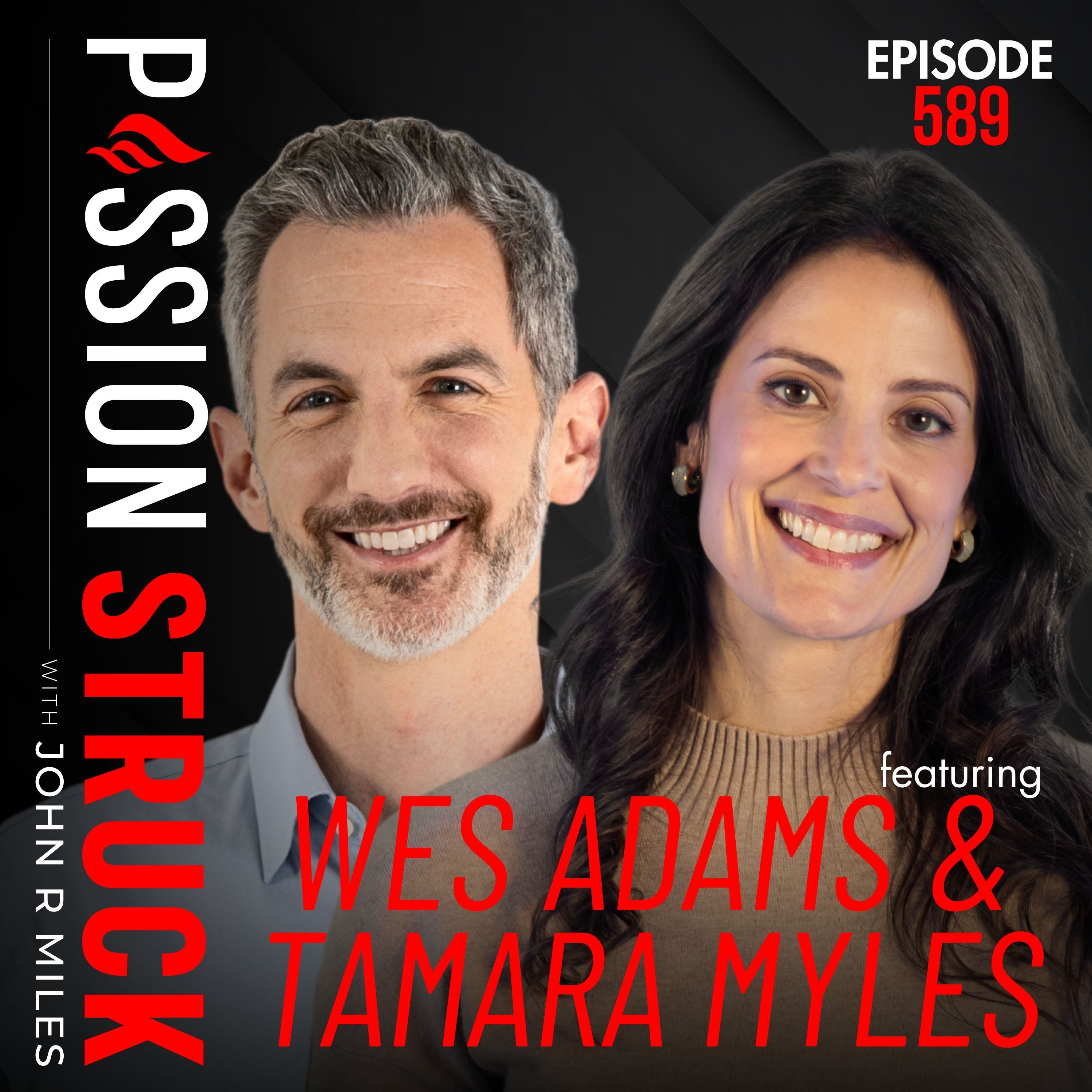
Passion Struck with John R. Miles
Wes Adams and Tamara Myles on How to Create Meaningful Work | EP 589
01:01:14
In this powerful episode, John R. Miles is joined by Wes Adams and Tamara Myles, co-authors of Meaningful Work, to explore the essential ingredients behind truly engaging and fulfilling work.
Loading summary
Transcript96 lines
- [00:00]
T-Mobile Representative
If you love your phone but not your carrier, just switch to T Mobile. You can keep your phone, keep your number and we'll help pay it off up to $800 per line. You can also use our savings calculator to compare our plans and streaming benefits against Verizon and AT&T. So switch and keep your phone, keep your number and keep more of your moolah. @t mobile.com up to 4 lines via virtual prepaid card.
- [00:22]
T-Mobile Terms and Conditions Voice
Allow 15 days qualifying unlock device, credit service port in 90 plus days with device into eligible carrier and timely redemption required card has no cash access and expires in six months.
- [00:33]
John R. Miles
As a loyal listener of this show, you're always challenging yourself to grow, to be better, to keep learning. And Southern New Hampshire University can help. Southern New Hampshire University offers over 200 career focused degree programs online. Plus, Southern New Hampshire University has some of the lowest online tuition rates in the United States. So balancing school, work and life actually feels achievable and affordable too. Find your degree at snhu. Edu Passion. That's snhu. Edu Passion.
- [01:11]
Podcast Host
Coming up next on Passion Struck.
- [01:13]
Tamara Miles
One of the big misconceptions that we see all the time is that, oh, we'll make work meaningful by making it really fun. So let's have happy hours and free snacks and kombucha on tap and a ping pong table and that's all gonna be meaningful. And while those things are great and fun is good because it can help us build relationships. Meaning is much deeper, right? Meaning is really about having those relationships, that sense of belonging, understanding how the work that you do really matters, and then having growth and development opportunities and a leader who believes in you.
- [01:51]
John R. Miles
Welcome to Passion Struck. Hi, I'm your host, John R. Miles, and on the show we decipher the secrets, tips and guidance of the world's most inspiring people and turn their wisdom into practical advice for you and those around you. Our mission is to help you unlock the power of intentionality so that you can become the best version of yourself. If you're new to the show, I offer advice and answer listener questions on Fridays. We have long form interviews the rest of the week with guests ranging from from astronauts to authors, CEOs, creators, innovators, scientists, military leaders, visionaries and athletes. Now let's go out there and become Passion Struck. Hey, Passion Struck fam. Welcome to episode 589. Whether you're a longtime listener or joining us for the first time, I am so grateful to have you here. Passion Struck is more than just a podcast It's a movement dedicated to unlocking human potential, intentional living, and making what truly matters matter most. Before we dive in, let's take a moment to reflect on the incredible conversations we had last week. On Tuesday, we explored the power of behavior design and how to become indistractable with best selling author Nir Eyal. On Thursday, Annmarie Anderson, an Emmy Award winning ESPN broadcaster, joined us to talk about embracing audacity, dismantling doubt and taking bold risks. And then on Friday, we sat down with Olympic gold medalist Vincent Zhou, diving into his journey of resilience, leadership and the mental game behind elite competition. If you missed any of these episodes, I highly recommend going back to listen. Now. Let me ask you this. What if the missing piece in your career isn't a promotion, a new title, or even more success? What if the real key to fulfillment is something deeper? Something that's tied to impact, purpose and connection? That's exactly what we're exploring today with two extraordinary guests, Wes Adams and Tamara Miles. They are the authors of the new book Meaningful A Proven Path to Making an Impact, Creating Community and Finding Fulfillment in Work and Life, and they've spent their careers studying what separates people who feel deeply engaged in their work with those who feel stuck, drained and unfulfilled. In today's conversation, we dive into the hidden drivers of meaningful work that go beyond salary and status, why leaders have an outsized influence on whether employees thrive or disengage. We discuss how to define success in a way that prioritizes purpose over productivity. And we go into practical, research backed strategies to transform your workplace into a space of belonging, impact and fulfillment. This episode is for anyone seeking to make a greater impact in their work, whether you're leading a team, building a business, or simply trying to find more purpose in your day to day life. And for those of you who want to dive even deeper, check out our episode Starter packs at either Spotify or passionstruck.com starterpacks with over 580 episodes with curated playlists on topics like leadership, purpose, emotional health and mental resilience to help you find the inspiration that resonates most with you. And don't forget to sign up for my Live intentionally newsletter@passionstruck.com for exclusive insights, challenges, tools and strategies to help you put today's lesson into action. And if you're watching on YouTube, be sure to hit subscribe so you never miss an episode. Now let's dive in to what truly makes work meaningful. How to create a culture of impact, how to and what it means to lead with intention. Here's my conversation with Wes Adams and Tamara Miles. Thank you for choosing Passion Struck and choosing me to be your host and guide on your journey to creating an intentional life. Now let that journey begin. Hey Passion Struck fam. The perfect vacation includes a lot of adventure and even more R and R. And let me tell you, Texas has it all. Whether you're wanting to experience the natural beauty of an iconic state park or relax on the beautiful beaches of the coastline, the Lone Star State welcomes you to enjoy the unique experiences you can only find in Texas. When hunger strikes, savor some world famous barbecue or treat yourself to exceptional fine dining across the state. No matter your craving, it's waiting for you in Texas. There's always a dance floor or live music venue just ready to be discovered. The nightlife in Texas is always an exciting time. And what's a trip to Texas without taking in the vibrant art scene or horseback riding across sprawling ranches to bring out your inner cowboy? Texas isn't just a destination, it's a one of a kind experience and it's calling you. So let's pack our bags and get going. Visit traveltexas.com and start planning your trip today. Let's Texas as you set your resolutions for 2025, why not make learning a new language part of that journey? Imagine saying Tribien and actually knowing what you're talking about. With Rosetta Stone, you can enrich your life with language and culture like never before. With courses in 25 languages including Spanish, French and German, Rosetta Stone helps you unlock new places, connections and experiences. I've been using Rosetta Stone to brush up on my Spanish and the progress has been amazing. My goal for 2025 is to confidently hold conversations and I know Rosetta Stone will help me get there. Start the new year off with a resolution you can reach today. Passion Struck listeners can take advantage of Rosetta Stone's lifetime membership. For 50% off, visit rosettastone.com Passionstruck that's 50% off unlimited access to 25 language courses for the rest of your life at rosettastone.com Passionruck Today.
- [07:50]
Podcast Host
Learning is a.
- [07:51]
John R. Miles
Lifelong journey and helping kids develop confidence in school sets them up for success in all areas of life. That's where IXL comes in. IXL is a personalized learning program designed to help kids master math, language arts, science and social studies all at their own pace. Whether they need to catch up, keep up or get ahead, IXL adapts to their learning style and one hour of tutoring costs more than an entire month of ixl, making it the smarter, stress free way to support their education. No pressure, no frustration, just real progress. It's even used by 96 of the top 100 school districts in the United States. Watching a kid build confidence in learning is so powerful. IXL turns struggles into wins by reinforcing concepts and making learning engaging and fun. Make an impact on your child's learning. Get IXL now. Passion struck listeners get 20% off at IXL.com passionstruck visit IXL.com passionstruck today.
- [08:57]
Podcast Host
I am so thrilled today to have Wes Adams and Tamara Miles on Passion Struck. Welcome Wes and Tamara.
- [09:05]
Wes Adams
Thanks.
- [09:06]
Tamara Miles
Thank you for having us.
- [09:08]
Podcast Host
Well, today we are discussing your brand new book titled Meaningful Work how to Ignite Passion and Performance in Every Employee. I love the title given the name of my podcast is Passion Struck. And my last book, I also use the word ignite passion in it. But I wanted to ask you, why did you specifically use the word ignite in the title?
- [09:32]
Tamara Miles
There's something magical that happens when we experience work as meaningful. When we feel like what we're doing really matters and like we matter and that our growth matters in the organization, it ignites this fire inside of us that makes us feel unstoppable. We bring the best of ourselves to what we're doing. And so we thought ignite was a really fitting word to describe what happens when work is meaningful.
- [10:03]
Podcast Host
I love it. I have this thing I've been using for 25 plus years now called the Deliberate Action process. And I'm going to get into this whole discussion further on in the interview, but I developed this before Agile methodology was even a thing. And it's very similar to what the founders of the Agile Manifesto built out. But one of the six steps I have in this process is ignite. And I often get questioned by people, why would you put a step in here called ignite? And it comes down to is you have to have the intrinsic motivation to power through whatever it is you want to do or to have your employees motivated to do whatever they're going to do. So you need to ignite that inner flame within them or else they're not going to take action. Or they'll take it, but they won't take ownership of it. So that's why to me this whole word ignite is so powerful and people don't understand just how powerful it can be. Not sure if you have any thoughts on that, Wes.
- [11:08]
Wes Adams
I love that and I think it really speaks to something that we're Going to talk about a bit more in this interview, which is the fact that moments of meaning can happen in every job, every day if we are able to think about it the right way or we have a leader who's helping us think about it the right way. And I would say those moments of meaning can be like sparks that ignite this passion that we're talking about and ignite performance. So I love that. And I'm also really excited to talk about a little bit more about your framework because we talk about Agile methodology in the book and how it was a really successful way to connect software developers with their customers, with the people that were impacted by their work, and create more meaning for them by giving them more of a sense of contribution.
- [11:54]
Podcast Host
We could touch on it right now. I was going to ask about it later on in the book, but I introduced Agile methodology into Lowe's when I took over software development. And I did it at the time and I had some experience before joining Lowe's using Agile, but we were typically a waterfall shop while I was there. But I remember I was having this discussion with a friend of mine, Scott Butterfield, who was the senior vice president over corporate strategy, and he said to me as I was talking to leaders, as I was taking over this role, and he goes, you guys in IT are absolutely incredible at developing solutions that are obsolete by the time we get to the, to the customers. And I really sat with that because he was right. We, by the time we went through the gating process, which we had won awards for, and everything else, our solutions in many cases weren't timely. So I ended up picking this guy named Ron Lutz, who at the time was probably the biggest critic that there was of it in the business. And he was running assortments in the store and he needed this solution to handle like a billion dollars worth of resets that he had to do. And if he would have done it the typical way would have probably taken him three years. So I introduced him to Agile and I have to say, at first he was very skeptical, especially about his own role and having to show up for the, the Sprints and the Scrum meetings every single day. But when he started to see the progression that we were making as a result of the Scrums, and when we got the minimal viable product out in six months, something that would have normally taken us a couple years, he went from being the biggest critic to the biggest advocate and cheerleader that I had in the whole company. And it changed everything from that point forward. That was one of the most impactful experience I had of using Agile. But I worry today that it's lost some of its wonders because people misuse it or use it in ways today that it was never intended to be used. But it's a great framework for what, if it's used correctly, what it's meant to accomplish.
- [14:13]
Wes Adams
Thank you for sharing that. And I think that really resonates with one of the examples that we talk about in the book. Just to frame that, where our book is focused on meaning at work and how leaders help people find meaning at work. And we focused on that for a couple of reasons. One, because meaning is the upstream factor that drives all of the outcomes that we want. Individually, we get higher job satisfaction, well being, we're more engaged and productive. We even take those feelings home with us. And at the organizational level, people are more productive, they show greater innovation and creativity and we can actually track increased bottom line revenue to more meaning at work as well. And so it's really a win for folks. And also there's this idea that to have meaningful work you need to work in a helping profession or at a nonprofit, as a nurse, as a doctor, or something like that. And those are all wonderful things. And having social impact is great, and we're huge proponents of that. And meaning can happen in every job, every day. These moments that are meaningful to us across three main sources of meaning, which are community, contribution and challenge. And community is the belief that you matter to other people in your organization, that you can show up authentically there and belong. Contribution is this belief that your work matters to others, that what you're doing is having a positive impact on other folks and challenges. The opportunity to learn and grow and improve your capabilities, work towards your full potential and to take them out of order a little bit. I think what you're talking about with Agile and how we talk about it in the book is around contribution. And specifically it can feel pretty meaningless when you spend two years developing a piece of software and then you have to shelve it when it comes out because it's obsolete or it's not helpful. And so Agile coming in and replacing that model was really powerful. Both to get software out faster, that was more effective. But specifically we tell this story of someone who was a software developer at a trucking company and essentially sat in a back office, was using a waterfall process and was an order taker. Basically like somebody was telling him what to build for the truck tracking software and fleet management software, and he was building it and then just never saw what happened to it. After he shipped it and he, this guy hated his job. He couldn't see why it mattered. It just felt meaningless to him. And then someone came in, switched to an agile process. And as part of that, one of the first things that they did was take him out into the field and have him do user interviews with truckers, with people who were managing the fleet so that he understood why his work mattered. And all of a sudden, just understanding the impact of his work had a huge effect. It was much more meaningful to him and really changed his perspective on things.
- [17:08]
Tamara Miles
It ignited, ignited.
- [17:10]
Wes Adams
It ignited his passion and performance. Absolutely.
- [17:14]
Podcast Host
So I have a great story of this. I started out my career in consulting and I worked for Anderson Consulting and Booz Allen. And one of the projects that I won was with the strike fighter community, Top Gun, and we were developing Strike Fighter online. And so I brought in a couple subject matter experts which were ex fighter pilots onto the team. But for all the main development leads who were working on the project and the business analyst, we actually took them to Oceana or other bases so they could interact with actual pilots. And many of them actually got rides in the aircraft so that they could understand the human factor that was involved in the systems that they were going to build. And I'm going to direct this question at you, Tamara. So I mentioned that conversation with Scott Butterfield where he was putting the blame on it. The other portion of the conversation I didn't tell you is I told Scott that although I see where he is going with what he is saying, I said a big problem that I am seeing is I'm analyzing the whole portfolio of projects we're doing, which were about a billion and a half dollars worth of projects, is that the business kept looking at technology to be the savior and they were neglecting the human factor that was involved and not worrying enough about the change factor that was occurring. So my question to you tomorrow is why do so many leaders overlook meaning as a performance driver? And what's the cost of that blind spot?
- [18:57]
Tamara Miles
That's so true because meaning is seen very often as something a little esoteric. Or leaders, the leaders we work with and interview and hear from, they know that meaning is important, but they don't really yet understand how to make work meaningful and how to drive those moments of significance and fulfillment in the moments that matter. And so I think it's easy for us to overlook something that we don't fully understand. And so I think that's a big reason it's not fully understanding what makes up meaning and how to Bring that to every job. Not just helping professions or social impact work, but how can every job bring these moments of meaning? And Ed Diener, who was a big leading research in positive psychology, had a very seminal paper on happiness where he talked about how it's the frequency, not the intensity of moments of happiness, like everyday moments. And we find that it's very similar at work with meaning. It's about the frequency, not necessarily the intensity of moments, everyday moments that are infused with meaning. And so I think that when we focus exclusively on productivity, engagement, retention, and all those metrics that are very important, it's easy to just not be as intentional and deliberate as we want. We're just putting out fires and reacting to problems. When we go upstream and focus on creating those moments of meaning and making work meaningful, all those outcomes that leaders care about improve. Right. Because meaning is a leading indicator of all those outcomes.
- [20:51]
Podcast Host
So for the audience who's listening tomorrow just brought up Ed Diener. Unfortunately, Ed Diener has passed, but his work is so inspirational. And if you're looking to learn more about this area of study, I would highly encourage you to go back and listen to my interviews with Shige Oishi, Cassie Holmes and Lori Santos as examples. Probably also Hal Hirschfield and their studies here and Jamel Zaki as well. So I want to turn this to you, West. So part of my experience in technology had to do with data centers. And when I got to Lowe's, I've inherited IT operations. And I remember two weeks into the job, I'm asked by the corporate head of HR to come into our office. And I thought she wanted to talk to me about the leaders in my group, which was a little bit part of it, but more she wanted to talk to me about the fact that out of 310,000 employees, my group had been scored on the most recent engagement survey as the worst performing in the entire company. And so what I was dealing with was not only IT operational people, but people who were in the data centers who were remote from the rest of the group. And as I've built these things, and a lot of times they have to be geographically separate, you have this issue, and you refer to this in the book when you're talking about data centers of the people feeling isolated, which they can be, because in the modern data center, you want to make them as lights out as possible. So we always wanted to put as few of people as we could to have them perform. And it's difficult when you're based in Charlotte, North Carolina, and they're in one of your data centers is in San Antonio, like ours was at Lowe's, to be able to be there all the time. So how, when companies are dealing with situations like this, does a leader recognize when their organization is starving for meaning before it reaches a breaking point like the IT Operations group had when I inherited it?
- [23:03]
Wes Adams
I think this is such a relevant question to something that many organizations are facing today, which is this challenge with building connection and building relationships. Because not only are there folks who are working, like you said, in data centers that are remote, but so many of us are working in remote or hybrid jobs and not interacting with other folks or collaborating in person with other folks every day. And there's this well documented crisis of loneliness or epidemic of loneliness in the US and that's especially being felt at work. And this really speaks to the first C of meaningful work community. That's really about feeling like you belong in your organization, that you can show up as yourself, that you matter to other people who you work with. And when you're remote like that or isolated, it can be very hard to feel like you matter to other people and you're more than just a cog in the wheel. Dr. Vivek Murthy, who is the former Surgeon General of the US wrote a book on this and talks pretty extensively on this issue. And how we've seen leaders do this, meaning driven leaders do this successfully, is have to be much more intentional about how you're building connection across an organization. You can't just assume that it's going to happen as part of the day to day work. You have to build in these moments of connection. And one of the practices that Dr. Murthy talks about in his book that we found various versions of in the organizations we studied, he calls the inside scoop. And that's setting time five or ten minutes at the beginning of every weekly team meeting and asking someone to bring in or show a photo or an object that has personal significance to them and talk about it for a few minutes. And maybe a picture of me on my, my surfing vacation in Costa Rica. Or it may be a memento that my grandmother gave me that I keep on my desk and that is a, an intentionally designed way to help highlight people's individual selves and their authentic selves. And what he found was that after he started doing this that people were connecting much more on an authentic level and that was contributing to collaboration across the organization. People were happier, they were more engaged, they were staying longer. And so this really aligns with the research that we've done on meaning at work and is something that leaders intentionally have to plan in which isn't something that 20 years ago we had to think about.
- [25:45]
T-Mobile Representative
AT T Mobile we'll give you four free 5G phones and four lines for only $25 per line per month with eligible trade ins. And no, it's not a contest test. It's every day for a limited time. Everyone's a winner on America's largest 5G network.
- [25:58]
T-Mobile Terms and Conditions Voice
Minimum of 4 lines for 25 per line per month with auto pay discount using debit or bank account $5 more per line without autopay up to 830 off each phone via 24 monthly bill credit plus taxes, fees and 10 device connection charge for well qualified customers. Contact us before canceling entire account to continue build credits or credit stop and balance on required finance agreement to bill credits and if you pay off devices early ct mobile.com Are you still quoting.
- [26:17]
T-Mobile Representative
30 year old movies? Have you said cool beans in the past 90 days? Do you think Discover isn't widely accept? If this sounds like you, you're stuck in the past. Discover is accepted at 99 of places that take credit cards nationwide and every time you make a purchase with your card, you automatically earn cash back. Welcome to the Now It Pays to Discover. Learn more at discover.com credit card based on the February 2024 Nelson Report okay.
- [26:45]
Podcast Host
So Tamara, I'm going to take what Wes just said and turn this over to you. Wes was just talking about meaningful work. And in the book you define meaningful work as work that provides community, helps contribute to something that matters, and challenges us to learn and grow the three Cs that Wes has brought up. Now, a couple times I want to ask you this question differently. If you had to define meaningful work in just one sentence without using those three words, how would you do it?
- [27:16]
Tamara Miles
I would say meaningful work is work that provides more than a paycheck. How's that? Is that tight enough?
- [27:24]
Podcast Host
I think that's part of it, but I'm going to give you a hypothetical scenario to maybe describe it, since we've been talking about Lowe's, which is a Fortune 50 company. Imagine you're consulting for a Fortune 50 company as I know you're a consultant. And these companies have all the right structures in place. Typically they have strong revenue, great benefits, cutting edge innovation. But in so many of them, the employees report just as my group did, feeling disconnected and uninspired. If you're walking in the door and the CEO hired you to come in, where would you start in diagnosing the.
- [28:01]
Tamara Miles
Problem, a few different things, right. I think most of the discovery that we do starts with just one on one interviews, asking people about their experiences there and people at different levels. And you hear so many rich stories and examples when you just ask people. Right. People love being asked about their experience. And so that's one way discovery interviews. Another way is observation. Right. Do some observing of like how are meetings being run and what processes are in place. And then another thing that we do is audits of processes like onboarding and exiting employees to see how well are you doing these things, how are you building meaning into these things. A really surprising finding from our research, which was the first time in any research on meaningful work that this came up, is that beginnings matter. That the sense of meaning that employees get from a job starts even before the job itself. It starts during the hiring and the onboarding process. And those first impressions carry a lot of weight because they influence how meaningful that job is going to feel for the lifetime of that job, of that employee's career with the organization. So those are some of the ways we would talk to people, we would observe things and then we would audit processes.
- [29:28]
Podcast Host
Okay, I'm Wes, I'm going to turn this over to you with another real life scenario from my life. So I end up leaving Lowe's and I take a job at Dell as initially the CIO over their consumer business. And I'm in that role for about two months, have primarily interviewed with their team, etc and then the president that I'm working for, who's leading this, gets fired and Michael decides to combine small medium business with the consumer business. To give you like the size of this is about a $35 billion entity now that I'm becoming, I think the CIO over. And so I reach out to the president who's now over this entity, who I've never met before, happens to live in Singapore at the time. And I approach him that I'm really excited to be joining your team. I can't wait to have this responsibility. And he says, I need to stop you right there he goes, my, the person over the consumer business hired you. I did not hire you. So you need to prove your worth to me. And this is after I've already moved my family, I've already moved my life there. And he says, you're going to have to come out here to Singapore and meet with my whole leadership team. And if we decide at that point that you are the right fit, then we will continue. If not, we won't. So I want you to think about that scenario that happened to me and what are companies getting wrong about crucial moments like that if they want to keep people invested and what should they be doing instead?
- [31:13]
Wes Adams
That sounds like a really tough situation. I'm curious to know actually how it went. Did you go over to Singapore and did you pass the test?
- [31:22]
Podcast Host
I went over to Singapore. I somehow passed the test. And believe me, it was not easy because they were very high performing team that had been working together for years. And after this, after I was successful at doing it, they ended up giving me the large enterprise portion of the business, the public portion of the business, the services portion of the business and corporate development. It, it ended up going okay. But I, from that moment forward never felt like I had trust that had been built from the beginning, if that's a way to think about it. Because I would have thought if you have a person who I did had literally gone through eight rounds of interviews to even get to the point where I was hired to tell and to have to go through that amount of due diligence only to be told that you were going to have to go through it again was really a letdown for me of someone trusting in my capabilities, abilities that I was bringing to bear, so to speak.
- [32:24]
Wes Adams
I think that's really challenging. And if I were in your position, I would have felt like a tool or a cog rather than a person who was respected for having gone through everything that you went through to get where you are. The reality is in business things change like that and we have to adapt. And there's a way to lead people through those things that's more productive and potentially more meaningful. And then there are, it sounds like what maybe happened to you, ways to do it that are less productive. As Tamara said, early experiences with an organization, especially during the recruiting and onboarding, which can be the first three to six months, are very influential in the lifetime of your, your time within an organization. They set the tone for what you expect in an organization. And I think in that moment it would have been nice for that leader to pull you aside and say, hey, I know this is a tough situation and you moved your family and you've been through all of this and I'm going to have to ask you to take another step. And that would have been a nice recognition of your humanity and what you had been through. And that person would have acknowledged that they saw you as a real person. I think there's another element here, and it's one we haven't talked about yet that's the challenge portion of meaning at work. And challenge is about those opportunities to learn and grow. And we often think about that as having high expectations of people and pushing them and giving them stretch opportunities. And what we found is that is true. And it needs to be accompanied by support from leadership. So we want high expectations and high support. Right. And so I think in that case as well, instead of putting you on the defensive and saying, you know what, you have to prove this to me, it could have simply been framed in a slightly different way. I want to give you the opportunity to take this bigger job, this bigger role. I'd like to see you get there. And here's what I need to see to support you in doing that. And I'm going to give you a little bit of help along the way if you need it.
- [34:30]
Podcast Host
It's a difficult situation on all counts. And what this leader didn't account for, even on top of this, was the other things that were happening in my life. The fact that my kids were having trouble adjusting. The fact that we had bought a house only to realize that it had been termite infested and now we had to do a $250,000 remodel that insurance wouldn't cover.
- [34:54]
Wes Adams
Oh, my gosh.
- [34:56]
Podcast Host
I think what ends up happening a lot of times when we talk about this meaning at work is that we end up treating, and I'm guilty of this, too, we end up treating people as a sole entity of their work life. And often it's even worse than that. We see them in the role that they're in, but we don't recognize all the things that they've done before they were in that role that might be able to contribute to other things of higher potential. And I, as I took over that IT Operations group, and fast forward two years later, it went from the worst performing in employee engagement to the second highest performing in the entire company. And I'm actually writing a book right now on how I did it. The thing that was most important, I thought, was that I had to be authentic in how I was meeting the employees, which meant that I couldn't get up in front of them and give a speech and expect them to do their jobs. They didn't know me. I had no credibility with with them. So for the first three to four months as I was assimilating into this job, I kept my family back in Atlanta, where we were before. And I would go in at all times of the day to the data center, to the operations command center, to other people, because it was a 24x7 operation. And at first the employees weren't really opening up to me. But over time, when they realized I had a vested interest in them and I was learning about them, their families, what their passions were outside of work, they started leaning in more. And then once I got their trust, they started to tell me what was really going on. And that was they had no idea how the jobs they were doing impact impacted the bottom line of the company, the customer in the store, all these things. And so by gaining their trust, I was able to get to from their perspective what was causing them to be disengaged in the first place. So long winded there. But I want to go back to authenticity. How do leaders balance being real with their teams while maintaining authority and respect while at the same time bringing this authenticity into it? I'll let you guys pick who gets it.
- [37:27]
Tamara Miles
I'll answer this one. And I want to say, I wish we could have interviewed you for our qualitative study because you are such a meaning driven leader and you were doing all the practices that we uncovered and embracing authenticity is a big part of that. One of the most powerful questions we asked in our study was it was a yes or no question, a Likert scale. So they had to answer from 1 to 5. My leader knows what's happening in my life outside of work. And so the people who answered 4 or 5, so yes agree highly agree with this statement. They were much more likely to find their work meaningful to, to feel like they had strong relationships and a strong sense of community at work. And it's about genuinely wanting to know what's happening in your team's life outside of work. Do you know their spouse's name? Do you know that you know what their kids do sports or what their hobbies are or what they did over the weekend? And these are simple things that really matter, that make people be able to show up authentically, to be able to bring different parts of their lives to work and to the conversation. And what you seems like you did a practice that we call everyday storytelling, which is making this a part of how you show up every day. And so it could be behind you on your home office having pictures of your K or little symbols or the books you love that can spark conversation. But it could also be what Wes talked about earlier, this inside scoop. So inviting people to bring in parts of themselves into work and ask questions and foster connections in that way. You asked a good question about, like, how do you balance like authenticity with respect? And the true authenticity is about being able to bring parts of your life that are important to you to work. It doesn't mean you're forcing people to. There are parts that people might not want to bring, but it's inviting them to do that. But it requires vulnerability from a leader to lead that and bring parts of themselves as well. So if I show up at work and I talk about my kids and my son's wrestling match over the weekend, it allows other people to do that as well. We work with a leader who schedules time on her calendar to go watch her kids play sports like during the week. And she will say out of office, so and so's lacrosse game. And that's a great tone for others to say, okay, that's allowed as long as the job is getting done. And of course it depends on the culture. But that's another way that we call everyday storytelling, like sending signals of what's allowed. And Brene Brown, what's that quote that she has Wes about authenticity and discerning.
- [40:21]
Wes Adams
Between ability without boundaries isn't vulnerability, it's just working your shit out with other people.
- [40:27]
Tamara Miles
Right? So that's how you thread the line with the respect. It's not about coming to work and like working out your personal issues. It's about sharing parts of your identity and allowing others to do that too.
- [40:41]
Wes Adams
Is it something that moves a relationship forward?
- [40:44]
Podcast Host
So let's talk about what you were just describing right there. Tamara, one of the people that you reference in this book I'm personally a fan of. I'm a big peloton biker and one of my favorite one of one riders that they have is Tunde Sunday.
- [41:02]
Wes Adams
So great.
- [41:03]
Podcast Host
And what I love about Hyundai is the deep sense of connection that comes about in these sessions. So how can leaders in traditionally non inspiring industries like manufacturing, finance, private equity, etc, replicate that 10 day type of ability to create a deep sense of connection with people in industries that are hard maybe to connect with and inspire.
- [41:33]
Wes Adams
We had such an amazing time interviewing Tunde and she just brings an incredible energy to every conversation that she's in. So I totally feel that. And I think this is a part of contribution. So when we talk about contribution, people often think about social impact, right? This idea of making the world a better place or working at a nonprofit or whatever. And what we found was that contribution can come just as much from understanding how you're impacting your colleagues or those around you as it can from changing the world. So you can get a really incredible sense of meaning just from hearing from someone that they appreciate the work that you're doing that you're doing a good job. And I think what Tunde does so well in her classes and that we talk about in the book is she really encourages the people that are riding. She's pushing you pretty hard. Like her classes are hard and you're sore afterwards. And she's. You've got this. You've already pushed through this really hard piece of the workout, and you can do this. I see you. I know you're working hard, and I appreciate what you're doing. Right. And we work with tons of businesses in manufacturing, in the service industry, and financial services. And this idea of positive feedback is so powerful in all cases. And it's something that leaders are typically underutilized. Right. This idea of saying thank you. There was a recent Gallup and Work Human study that came out that showed that one thank you once a week from a manager was enough to cut disengagement and burnout in half, which is crazy. One thank you once a week was enough to cut it in half. And that same survey showed that more than 60% of people didn't feel like they were acknowledged enough for their work. And so just remembering to appreciate people for the work that they're doing, to acknowledge it, to say thank you, and especially to be specific about what they're doing that you appreciate if you can focus on the specific behavior, how it impacted you or a client or the business in general, and you know how you saw that person using a strength to do it, that's an incredibly powerful way to create meaning. That's very easy for us to do at any time during the day if we take, you know, 30 seconds.
- [43:57]
Podcast Host
Wes, what you just said is really important because most recognition often feels forced or transactional. And this, the stuff that I got was. And it's typically surface level. But I think what separates, check the box, recognition from meaningful recognition is going that extra step that actually makes employees feel valued. Meaning like you were just talking about the effort that was involved in order to bring the outcome that ended up happening, rather than just recognizing the outcome, recognizing their ingenuity for how they approach the task, for going above and beyond, for being able to get others to join the team to help them with it. All those things are what people realize, that their leader is really seeing them and valuing what they are doing differently to bring success.
- [44:50]
Wes Adams
And that's also 100%. And it also benefits the organization. Because if I tell you what I appreciated specifically about what you did, you know what to do more of you're going to lean into that behavior because, you know, it's appreciated. And that is going to create more positive outcomes at the team and the business level as well. So it's a huge leverage point.
- [45:13]
Tamara Miles
And the beautiful thing about that, too, is that this practice of positive feedback and expressing gratitude and recognition not only increases our sense of contribution, which is great and very important, but research finds that when we express appreciation, gratitude, positive feedback to each other, the strength of our connection increases by 55%. So that's a great way to increase community and belonging and build relationships as well. We've all gotten genuine feedback, positive feedback, and hopefully right in our lives, either personally or professional, professionally. And it just feels so great to be seen, to be noticed. It's all about making the invisible visible. These little things we do every day, or the hard work that we put into this, or the thoughtfulness or the creativity that we brought to this, that feels invisible. But when somebody sees, sees it and recognizes it and makes it visible, and that's so important.
- [46:21]
Wes Adams
And I just want to say one more thing about this, because this is one of the things I get really excited about, is gratitude and positive feedback. And Tamara and I both have a positive psychology background, and gratitude is one of the most researched practices in that field. And when you express gratitude, you don't just give the other person a boost, you actually get a boost also. So giving positive feedback, giving gratitude, actually benefits us when we do it as well. And there's research that shows that a third, an unconnected third party who happens to witness me giving Tamara a thank you or gratitude also gets a lift. Right. It's a contagious, positive intervention that can happen, really, anytime. I'll stop nerding out, but that's something I get really excited about.
- [47:09]
Podcast Host
Well, since you guys both studied positive psychology at University of Pennsylvania, you would come across the research that so many of their researchers have done. That challenge is one of the most crucial things for creating meaning. And yet a lot of leaders think that if they make the work easier for their employees, it's going to increase engagement. But positive psychology tells us differently. Can you explain why and how leaders can strike the right balance?
- [47:39]
Tamara Miles
So if you think about maybe one of the most positive experience, most meaningful experiences of your career. So I invite listeners and you to think about what has been one of the most meaningful experiences of your career. And when we asked this question to thousands of people, a lot of what we heard was these experiences of things that were really hard that they didn't feel like they were ready for, that they had to learn on the go. But they had somebody who believed in them and support supported them. And so this directly connects to positive psychology research on meaning in life. Meaningful life is different from a happy life. They're both important and complementary. But you can think of happiness like a sugar rush and meaning as more of a nutritious and well balanced meal. Right? And so challenge is a huge part of that because we're wired to learn and grow and try to reach our full potential. And that's where challenges come in. So much of burnout and disengagement is due to a phenomenon that's called bore out. And that's when we are not learning, we're not growing on the job, or just doing the same thing over and over again. We're bored, we're not growing, we completely disengage. We check out. On the other hand, when we are working really hard but experiencing our own growth and development, we don't burn out, we burn in. We get that passion ignites and we want to keep going. We want to keep mastering and learning new skills. And so challenge is a really critical part of meaningful work.
- [49:26]
Podcast Host
Tamara, I think what you just explained with happiness and meaning are two very important things. I was really blown away in my recent discussion with Shige Oishi when I started really going into his work on psychological richness. How important that equation can be into enabling those two other factors. Because when you bring in creativity exploration into it, it really gives that sense of awe in some cases to the other two dimensions.
- [49:56]
Tamara Miles
His work is amazing and he worked closely with Ed Diener, who we talked about earlier. And the idea of psychological richness is all about being openness to experience and novelty and curiosity, which relates so closely to what we found is the challenge of meaningful work. This idea of being open to experiences, of learning to try new things. One of the most meaningful experiences of my career that I still think about and talk about happened over 20 years ago when I was a really young and new advertising executive and the owner or the leader of the organization. So she was like three levels above me. She threw me into a situation to pitch a client. I was accompanying her to the meeting and she had a personal issue and she couldn't go. And she sent me a loan. And I was freaking out, thinking, no, I don't think, like, why don't we reschedule? She's, you're ready. You got this. Go, I believe in you. When I was like, okay. And I went and I did it and it was uncomfortable, but I did a really great job. She believed in me. That gave me a boost. And it was leaning into that experience of being the openness to new experiences, the novelty, the curiosity, the learning, the fast learning that happened. And I think that Oishi's psychological richness and challenge have a lot of overlap. We obviously haven't looked, we haven't researched that overlap or done any studies. But I think that psychological richness kind of lives in this, in the challenge seat of meaningful work.
- [51:33]
Podcast Host
Thank you for that, Tamara. I'm going to introduce another topic that you bring about, which is Microsoft in the book. And I'm going to talk about my personal experience there. As I was leaving, I was asked by Steve Ballmer to interview to become their cio. And I remember, similar to the process that I went through at Dell, I had to go through all these rounds of interviews, which to me seems ridiculous when you got the CEO wanting to recruit you. But it was very helpful for me because after I got through probably the third round, I realized I had absolutely no desire to go at Microsoft, to.
- [52:11]
Wes Adams
Microsoft at the time.
- [52:13]
Podcast Host
And the last interview that I had before I walked out the door was with a gentleman named Satya Nadella, who told me, almost begged me, that I think about taking the job because he saw a pathway that Microsoft could restore itself to greatness. And I think Satya has used a lot of Carol Dweck's work as he's implemented this new environment. But think about him coming from where he was. He was an insider, so he knew some of the things that were broken. But still, as you're approaching this and what to fix, what do you think might have been some of the biggest misconceptions that he or other leaders might have had about creating meaningful work? And what's the most surprising truth that you guys have uncovered about these misconceptions?
- [53:07]
Tamara Miles
One of the big misconceptions that we see all the time is that, oh, we'll make work meaningful by making it really fun. So let's have happy hours and free snacks and kombucha on tap and a ping pong table. And that's all going to be really meaningful. And while those things are great and free dry cleaning and all of that are great and great benefits and conveniences. And fun is good because it can help us build relationships. Meaning is much deeper, right? Meaning is really about having those relationships, that sense of belonging, understanding how the work that you do really matters and then having growth and development opportunities and a leader who believes in you. And so I think Satya might have easily come in and Said, let's kind of embrace this whole like free lunch and ping pong tables and all of that. So. So that's one misconception. And we're really happy that he didn't go that way and that he focused on growth, mindset and the, the model coach care and other leadership practices he implemented. And I think another misconception is this idea, which we've talked about a couple times, that meaningful work is about the work that you do specifically, and so that it's only reserved for some professions. And what we find is that meaningful work is about how we experience the work that we do no matter what that job is. And so those are a couple ways that he could have gone wrong. Wes, what else?
- [54:43]
Wes Adams
I think you really covered it. I think this idea of the story you're telling yourself about the work that you're doing, which is something that we craft on our own, but also leaders of organizations help both by telling their own stories about what makes work meaningful for them, and also about connecting us with the outcomes of our work and challenges and that sort of thing. But yeah, I think that recognition that people chose the job that they're in for a reason. Right. Sometimes we take a job because we need to make money, right? But oftentimes we choose a particular job, we have a choice of how we make that money. And so we gravitate in a certain direction for a particular reason. And understanding that asking the people in your company, what is it about your job that excites you? What makes you proud? What's one of the most meaningful moments that you've had in the last couple of months? We have a tool that we talk about in the book and is on our website called the Moments that Matter Canvas. And that's a really easy and powerful way to identify what's already going well, what matters to this person, and how can you give them more moments like that? How can you lean into what's already going well to the thing that already appeals to them about this job and give them more of those moments so that you block all of these benefits that we've been talking about.
- [56:12]
Podcast Host
When I was reading your book, that's one of the things that I loved the most was that framework where you ask, when exactly did this happen? What was the context of the story? What happened leading up to it? Who did you interact with? What did you do leading up to the moment? What did you learn from the moment? Etc? And I think it's a really good matrix that people should buy the book just for that matrix. In Their organization.
- [56:39]
Wes Adams
I think what's so funny about that, when we teach that or when we're doing that in workshops with folks of the companies that we consult with, so often people come back and they say, oh, when somebody that works for me does well, like, that makes me happy. Right? And we always push them towards a specific moment. Can you tell me a story about a specific time? What was the thing that happened? Where were you? Who was it? Because one of the things that we know about meaning in general is that reflection is a really powerful way to amplify it. If we take a moment to think about these things, which is so hard when we're all very busy, we're rushing from one meeting to the next. Right? I'm guilty of this all the time. Taking that moment to step back and say, hey, what did I do today? Or what did I do this week that was actually meaningful to me? And reflecting on that, sharing it with another person is such a powerful tool.
- [57:32]
Podcast Host
So I'm going to end our interview today with this question that I'm going to give to each of you. Your book really highlights the impact of moments of meaning, brief but powerful interactions that shape how we perceive our work. And I'm sure you didn't get here overnight. You got here because you each felt this yourself. So could you share a personal moment from your own career that solidified your belief in your research?
- [58:02]
Tamara Miles
Yeah, I think for me, recently, so I teach. I'm a professor at bc and I teach at Boston College, and I teach graduate students there about leadership. And a recent moment of meaning that I experienced was gratitude emails from students at the end of the semester telling me specifically how they are applying the things they've learned in class and how that's making them better leaders. I think when you hear firsthand, when you get that we talked about positive feedback, but when you hear about the impact of your efforts and your work and how you're making a difference and creating ripples, that's really powerful for me. And it reinforces that, you know, the research and the work that we do can really change lives. I think it can really ripple out and has the power to increase happiness, not just for us, but for the lives that we touch.
- [59:07]
Wes Adams
I think for me, the first thing that sprung to mind was. So I. Earlier in my career, I worked in hospitality and open restaurants and nightclubs and event space in different parts of the country. And we opened a restaurant in Austin, a Mexican restaurant. And we decided that as a promotional tool, we would throw a big Cinco de Mayo block Party. And at the time, I had somebody who was relatively junior working on my team, and I pulled her in. Her name was Alexis Landman. To this project. To do this for the first time, we were putting together essentially, like, this huge block party. We had to get city permits. We had to go back because I.
- [59:47]
Podcast Host
Think I might have been there.
- [59:48]
Wes Adams
Oh, really?
- [59:49]
Tamara Miles
Oh, my God.
- [59:50]
Wes Adams
It was. I would have been 08 or 09. It went on for 10 years. Yeah. So love it. So much fun. Like, it was such a great experience, but it was a massive amount of work the first year. And I was like, we're going to do this. We're going to get it done in three months. And she said to me a couple of times, no way this is going to happen. Like, it's too complicated. There are too many things that have to happen. The city's not going to approve it or whatever. And so she very reluctantly went along with all of the things that I asked her to do to help with this. And we did end up pulling it off. The first year. It was pretty successful. And I ended up leaving the company shortly thereafter, and I came back the next year for the Cinco de Mayo event. And she had taken it over, and it was bigger, it was better. It was like thousands of people had come to downtown Austin for this thing when it eventually was like 10 years that this thing ran and was very successful. But I was just so proud of her for, you know, something she didn't think she could do, she didn't think was going to work out. And a year later, she had taken on this project. She had added her own flair to it, and it was bigger and better. And she went on to become a very successful marketing director of a hospitality group in Austin and is still there. And that just. I love helping people or seeing people that I work with reach their potential like that. So that's something that's really meaningful to me. I hope you had fun at the Cinco de Mayo party.
- [61:17]
Podcast Host
Absolutely. That's one of the things I miss the most about Austin.
- [61:22]
Wes Adams
We'll see if we can revive it. We'll have a reunion next year.
- [61:25]
Podcast Host
I have to tell you, one of my favorite episodes I think I've done on the show was with Will Guidera.
- [61:33]
Tamara Miles
His book is a amazing.
- [61:34]
Podcast Host
It is. But when I interviewed him, the bear had just come out. And so I said, have you watched this show? And he hadn't yet. I'm like, I think they used your book as the backdrop for the whole series that they're doing. It's this mindset of excellence of that hospitality that he brings up in the as his differentiator. And it turns out it was so.
- [61:59]
Tamara Miles
Oh, really?
- [62:00]
Wes Adams
Because he's a consultant on the show. Yeah, right.
- [62:03]
Podcast Host
Well, he is now. He wasn't then, I can tell you that.
- [62:07]
Tamara Miles
Well, the episode seven, I think on season two, the episode called Forks, I don't know if you remember specifically. I remember it because it was all about meaningful work. It was all they're polishing the forks and they're polished, like doing kind of a half assed job. But then the person in charge says every day here is like the freaking Super Bowl. People waited months like it matters that the fork is clean. And it goes into this whole like connecting to the impact of what they're doing and it ignites that passion and performance. It's amazing.
- [62:41]
Podcast Host
I don't know if you've seen that movie, the Six, Triple eight, but that type of moment happened in that movie too, because they're opening up some of these letters trying to figure out where they should go. And some dog tags come out and one of the woman just throws him in this bin with other dog tags. And this other woman who had lost someone in the war says, you can't treat people like that. These are humans that sacrifice themselves for us. We need to treat them with dignity. That's the whole reason we're doing everything that we're doing. Moments like that are such important pieces.
- [63:15]
Tamara Miles
So important.
- [63:17]
Podcast Host
Well, last thing I wanted to ask is where's the best place that listeners can go to learn more about the two of you?
- [63:23]
Wes Adams
You can go to our website, which is make workmeaningful.com and you can find the book there. You can also find some of the resources that we've talked about, the Moments that Matter, Canvas and some other things. And you can also find us on LinkedIn.
- [63:39]
Podcast Host
Tamara and Wes, it was such an honor having you on the show. Congratulations on the new book. I hope it gets into a ton of leaders hands.
- [63:47]
Wes Adams
Thank you so much for having us.
- [63:49]
Tamara Miles
Great conversation.
- [63:50]
Wes Adams
Really enjoyed it.
- [63:51]
John R. Miles
And that's a wrap. What an insightful and inspiring conversation with Wes Adams and Tamara Miles. Today's episode gave us a deeper understanding of what makes work truly meaningful, not just for individuals, but for entire organizations. We explored how leaders can create environments where employees don't just work, but thrive, and why fulfillment comes from a sense of community, contribution and challenge. As we close, I encourage you to reflect on your own work experience. Do you feel like your contributions truly matter? Are you working in an environment that fosters meaning and growth. If not, what small steps can you take today to shift toward work that aligns with your values and purpose? If Wes and Tamara's insights resonated with you, please take a moment to leave us a five star rating and review. Your feedback helps grow the passion struck movement and allows us to bring you more powerful conversations like this one. And if you know someone who could benefit from today's episode, please share it with them. You never know how a single share can impact someone's life. For more resources from today's discussion, head over to passionstruck.com where you'll find show notes, links and additional insights to help you apply what you've learned. And if you want to go even deeper, make sure to watch the video version of this episode on my John R. Miles YouTube channel. While you're there, hit subscribe and join our growing community. Coming up next, I'm joined by none other than Donald Miller, the best selling author of Build a Story Brand and a master of helping people clarify their message, grow their business and build a personal brand that truly connects. Donald's insights have transformed the way entrepreneurs, executives and creatives communicate their value. And in our conversation we're diving into how you can apply these principles to your own life and career. So make sure you're subscribed and ready for another game changing discussion.
- [65:36]
Donald Miller
I think too many people try to create something that is really broad and when they create something that is really broad and hits the most number of people, what they find is they're actually not communicating to anybody because it's just not specific enough. If I said to you I have a great podcast for human beings, do you have any idea what that podcast is about?
- [65:57]
Wes Adams
You really don't.
- [65:58]
Donald Miller
But if I said I have a podcast for human beings who collect Matchbox cars, okay, I actually might listen. I don't collect Matchbox cars, but I'm fascinated by you guys who do this.
- [66:09]
John R. Miles
And remember, the fee for the show is simple. If you found value in today's episode, share it with someone who needs to hear it. And most importantly, take what you've learned and put it into action. Because knowledge alone doesn't create change, but action does. Until next time, live life. Passion struck.
- [66:32]
Podcast Host
Foreign.
- [66:38]
Wes Adams
Businesses rely on Spectrum business for the fastest, most reliable Internet starting at $40 a month when bundled and backed by the Spectrum commitment, get Internet speeds to fit your business needs starting at 500Mbps bundle with TV, phone and mobile for more savings, level up your speed for a three year price guarantee, find a bundle that is made for your business@spectrum.com business restrictions apply. Services not available in all areas.
- [67:09]
Podcast Host
If your small business has a problem.
- [67:12]
Tamara Miles
You could say, just my luck.
- [67:14]
Podcast Host
But you should say, like a good.
- [67:16]
Tamara Miles
Neighbor, State Farm is there, and we'll.
- [67:18]
Podcast Host
Help get you back in business. Like a good neighbor, State Farm is there.