← Passion Struck with John R. Miles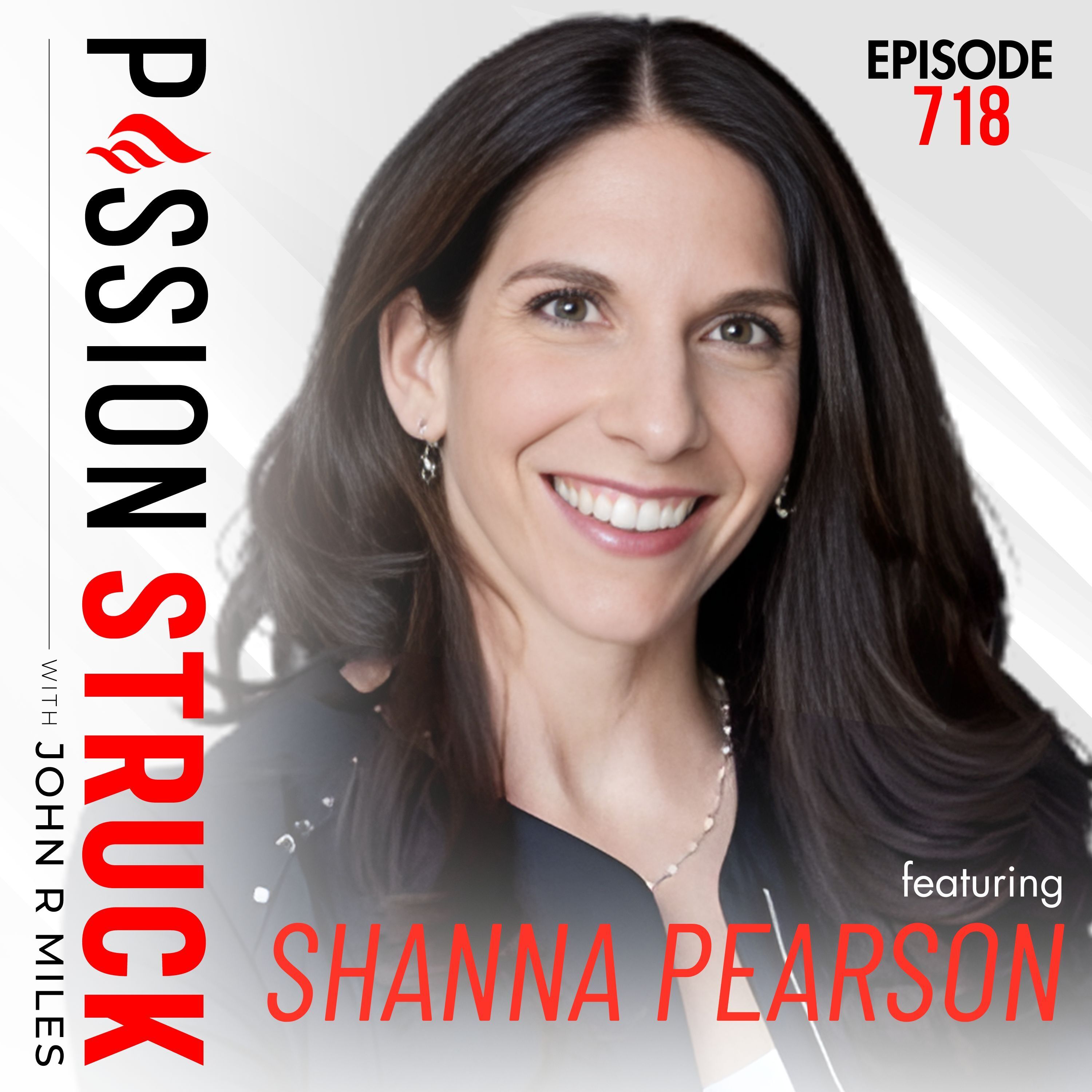
Passion Struck with John R. Miles
Why Adult ADHD in Women Often Goes Undiagnosed | Shanna Pearson - EP 718
01:02:33
Loading summary
Transcript112 lines
- [00:00]
John Miles
Coming up next on Passion Struck.
- [00:02]
Shanna Pearson
It bothers me when people refer to ADHD as a superpower. It really does because there's nothing about ADHD that makes life easier. And it's difficult to manage ADHD on so many levels, like in your relationships, career, personal health, name it. And so when people are like, oh, it's a superpower, you should be able to do like all of these things so much. You've got this and you don't. And you know that life is really hard and you know that you're struggling and you know you're working a hundred times harder than every single human and longer than anyone. There's no superpower. And so then you just feel like there's something else that's wrong with you because you can't even use your superpower. You don't even know where it is. Like, where's the superpower part of this?
- [00:45]
Podcast Narrator
Welcome to Passion Struck. I'm your host, John Miles. This is the show where we explore the art of human flourishing and what it truly means to live like it matters. Each week I sit down with change makers, creators, scientists and everyday heroes to decode the human experience and uncover the tools that help us lead with meaning, heal what hurts, and pursue the fullest expression of who we're capable of becoming. Whether you're designing your future, developing as a leader, or seeking deeper alignment in your life, this show is your invitation to grow with purpose and act with intention. Because the secret to a life of deep purpose, connection and impact is choosing to live like you matter. Hey, friends, and welcome Back to episode 718 of Passionstruck. We're continuing our series the Meaning Makers, an exploration of how meaning is built, sustained and sometimes eroded across a life. Last Thursday with Alex Emis, we examined the winner's curse, the paradox where success under uncertainty often reflects overestimation rather than skill. We saw how intelligent, capable people make costly choices when systems reward escalation, confidence and momentum while obscuring long term cost. Today, we take that insight inward because the same dynamics that distort markets also shape identity. When people spend years trying to succeed inside systems misaligned with how their minds actually work, the cost accumulates internally as exhaustion, self doubt, emotional overload, and a growing sense of invisibility. My guest today is Shanna Pearson. Shanna is the founder of Expert ADHD Coaching, the largest one on one ADHD coaching practice in the world, and author of the new book Invisible ADHD. With more than 450,000 coaching sessions delivered, her work combines neuroscience, lived experience, and a deep understanding of how meaning fractures when effort goes unseen. Shana's story begins with ADHD she didn't realize she had, and a question many people carry quietly for years. Why can't I just the millions of people age ADHD expresses itself through overwhelm, emotional intensity, difficulty sustaining focus, and chronic self doubt. Research suggests that up to 75% of women with ADHD go undiagnosed, often receiving labels that never quite explain their lived experience. Today's conversation centers on mattering what happens when your internal reality is finally named accurately, and how meaning begins to return when you can learn to work with your mind instead of pushing against it. In today's conversation, we explore why ADHD presents differently in women, how years of misunderstanding shape identity and self trust, what sustaining support looks like beyond medication alone, and how doing less with intention restores clarity and momentum. Before we begin, a quick note. This episode connects closely with the work I'm doing around Inherent Worth visibility, which reminds us that significance exists before performance ever enters the picture. You can learn more@umatterluma.com and if this conversation resonates, please share it with someone who might need it or leave a five star review on Apple Podcasts or Spotify. It helps these conversations reach the people.
- [04:17]
John Miles
Who are looking for them.
- [04:18]
Podcast Narrator
Now let's continue the Meaning Makers with Shanna Pearson. Thank you for choosing Passion Struck and choosing me for your host and guide on your journey to creating an intentional life.
- [04:28]
John Miles
Now let that journey begin. I am absolutely thrilled today to welcome Shauna Pearson to Passion Struck. Welcome Shauna. How are you today?
- [04:40]
Shanna Pearson
I am doing fantastic. Thanks John. How are you?
- [04:44]
John Miles
Well, I'm a little bit jealous because you live in one of my favorite places I've ever lived, San Diego. I think the only place I liked more than that was the time I spent in Sydney, Australia, which to me is very similar to San Diego in many ways.
- [04:57]
Shanna Pearson
That's really funny you say that we had a choice, we could have gone anywhere, but it ended up being boiled down to two places and one was San Diego and the other one was Sydney. My husband wanted to go to Sydney.
- [05:10]
John Miles
Man, it was a fun time. The thing I love about the Australians is they work extremely hard, but they play just as hard as they work, which was totally really fun. Getting to explore all parts of that country.
- [05:24]
Shanna Pearson
Wow, that's. I want to go. That's one place I have never been that I'm dying to go to.
- [05:29]
John Miles
I want to start out talking to you about your book. So you have a new book that you must Be absolutely thrilled about Invisible adhd. It's right behind you. For those who are watching this, what does it feel to have this book come out in the world?
- [05:47]
Shanna Pearson
Honestly, it feels like a huge relief, which is interesting because it's been very difficult to write a book. So the process has been very stressful. But the reason. The reason I wrote this book, they came to me. I did not want to write a book. I never had intended to write a book. But we have. My coaching company is quite large, and we're out there and I think people know what we do. And then the publisher, McMillan, they came to me and asked if I would write this book, and they would. And they asked if I would write it for women. And I said, why? We work with men and women equally and why would we want to just close it off to women? And they just said they wanted it for women. Maybe because there's not a tremendous amount out there specifically for women. But the reason I said yes to the offer to write this book was over the past many years, there's a lot of people that come to us asking for help and desperately needing help. And I feel like when they finally reach out to a coaching company like ours, they. There's a lot of pain in their life. You know what I mean? There's a lot that has to happen behind the scenes for them to actually look into it and then press the button and then get on the call. And there's so much. And so there's just so many people in so much pain, and there's so many people who we speak to that cannot participate in our coaching program for a lot of different reasons. And often it's affordability. But there's other reasons as well. It could just be timing and when I read their forms and then they can't do it, and then they write these emails of how much they need it and how much they wish they could. For me, it's honestly heartbreaking. It really is. Because the whole reason I do this is just to help people. And then to think that there's so many people that want it, that just can't have it is distressing. When they asked me to write this book, it was an instant. I just want everything that we do. I want all of our tools, I want all of the magic and all of the how we do what we do in a very accessible place and just give it away. People have to buy a book, but just put it out there. I'm not going to do this where it's one tool and then I'M going to write a second book and then a third book and. No, just put it out there. I want people to have these tools so badly. I know that they're going to work. And so now that the book is done, I'm. I feel this anticipation for an excitement for what's going to happen for people when they actually read it. And then when they actually start implementing some of the things that are in here, I'm excited.
- [08:16]
John Miles
Well, congratulations. I know just what it takes. I published my first one February of 2024. In the process of selecting a publisher right now for the next non fiction book, which is. Wow. So at least that part is behind me.
- [08:31]
Shanna Pearson
Okay, good. That's huge. That's the biggest.
- [08:33]
John Miles
And then I actually have a children's book coming out later this year that really focuses on the topic of mattering. It's called you Matter Lima. And I love that. I thought that was 10 times harder than writing a non fiction book because you have to whittle down your writing to and realize how to intersect it with the illustrations, which having never written one before, was more difficult than I ever thought it was going to be.
- [09:03]
Shanna Pearson
Yeah.
- [09:03]
John Miles
Well, I decided once I figured it out, I'll just write all 10 books in the series. So that's what I did.
- [09:09]
Shanna Pearson
Oh my goodness. Good for you. That's amazing. That's amazing. I'm like, okay, I've written this book. There's. I will there. There will likely never be another book written by me and will I will never be able to go through this process again. It took forever and it's just like what you're talking about with matching illustrations. For people with adhd, every single symptom is connected to every other symptom. There's no, you can't pull, pull them apart and be like, you know, your time management is separate from organization or separate from impulsivity because they're all related. So breaking them into chapters was next to impossible. Like, how do you separate these ideas when they're all the same thing? But anyway, yeah, I understand.
- [09:55]
John Miles
Well, speaking of children, when my son was young, he was diagnosed with ADHD and he had what you typically would think of adhd. He was extremely hyperactive, like a lot of boys are. I think in some ways he's grown out of it as he's gotten older. But in the introduction of the book you write, most people associate ADHD with hyperactivity, but for many women, a lot of the hyperactivity is internal and therefore totally invisible. So I want to follow that quote up with the fact that you've called ADHD a hidden epidemic, why are so many women in particular living with ADHD invisibly?
- [10:41]
Shanna Pearson
Oh, because there's a lot of reasons and I think it's really important for everyone to understand this. Women. ADHD presents itself in women like what was said at the beginning of the book. It's a hyperactivity internally and, and so it's really nonstop ruminating, catastrophizing, daydreaming, and really just being everywhere else in your mind except for quote unquote where you're supposed to be. And when you're like that for your whole life, because when you have adhd, you're born with it, it's not something you develop. So when you're like that for your whole life, you're struggling in so many areas, you struggle in relationships because you know it's hard to be present with other people when you're internally non stop in your brain, in your school life, it's hard to pay att in class because you tend to be paying attention on everything else that's a lot more engaging and exciting. And in your career it's the same thing. You really want to do well, you really want to pay attention to things. And you do. You pay attention to certain things, but not everything. And it affects us in our careers. And so when you're going through your life like this and you don't know why that's the big piece is you don't know what's going on. You don't know you have adhd. You believe that there's something wrong with you and, and you believe that and you don't know what it is. And you're like on a different frequency, is everyone around you at the same times? Right. So you're missing things. People are like talking over there and you're like hearing it over here. I don't know if that makes sense, but I hope it does. You don't feel great about yourself and you start to worry. So then we go to our doctor and we tell or a specialist and we'll tell them what's going on with us. And the immediate response is usually to give a woman a self assessment for anxiety or depression. And so when we answer the questions on those self assessments, it shows up that we have anxiety or depression when we don't because the symptoms are so overlapping, almost all of the symptoms overlap and we're not automatically given an assessment for adhd. And so that's a big deal. So now we're being misdiagnosed A lot of millions of women with ADHD have been diagnosed or misdiagnosed with depression, and it's just missed because our symptoms are not as focused on executive function and organization, because some of us are extremely well organized. It's not the same kind of symptoms. And so it gets missed. It gets missed a lot.
- [13:19]
John Miles
So it was interesting as I was going through your story. You and I, very different stories, very different upbringings, but we had one thing in common. We both felt essentially invisible. And you write in the book, no one even knew what was going on with me. Not my teachers, not my parents, not even me. In my case, I felt invisible because when I was five years old, I mean, I've told this story many times on the podcast, but I got pushed from behind, plane tag, got thrown through a basement window and had a pretty severe traumatic brain injury. And everything changed. I had a speech impediment. All of a sudden, vision got impacted. I had cognitive issues. So I shrunk inside myself because I just felt different. Kids were treating me different, and so I became the shell of who I was before until I was able to break out of it. Can you take us back to those early years when ADHD was shaping your life before anyone recognized it?
- [14:22]
Shanna Pearson
That would be so difficult. It was. I feel like in my early years, I was number one. I was silent. I have kids, and when my daughter was in kindergarten, there was a girl in her class who had something called selective mutism. And I guess that's like a newish term from 2011 or 2012, but I had that. I never spoke a word for years when I was outside of my home, and I felt like there was just something so off with me. And I never. I just didn't fit in with girls or with boys. And I was always at a different speed. I was always past wherever they were, if that makes any sense. They were talking about something, and I was always like a year ahead of them, even though I wasn't right, even though I was actually way behind them. And it's just. I just wanted to hide. And I did. I just tried to blend into the walls and not say a word and not get found out. For what? I have no idea. But it was like that for years. It was like that for years. I was. It was like I was embarrassed to be seen. Those were my early years with adhd. You know what? I don't want to be quoted on this, but it's like being in a different univers as a human, and you're in this universe with these other beings, and you don't belong there and you don't want to get found out.
- [15:46]
John Miles
Well, I have a daughter who's got a sensory processing disorder and. Which is different than adhd, but in some ways, the two kind of go hand in hand. I would think they do overlap cases.
- [15:57]
Shanna Pearson
Yeah.
- [15:57]
Podcast Narrator
But she just.
- [15:59]
John Miles
Seeing how much harder she has had to work to keep up with her classmates and how she has learned to overcome, but it takes her so much more effort. It's interesting to see how we end up compensating and then overcoming the difficulties we had. You've yourself, Shauna, described yourself as the poster child for extreme adhd. Was there a moment that finally led you to your diagnosis?
- [16:28]
Shanna Pearson
There was. And I wanted to say one thing about your daughter. Is it okay? Because what I've noticed.
- [16:34]
John Miles
Yeah, for sure.
- [16:35]
Podcast Narrator
Yeah.
- [16:35]
Shanna Pearson
What I've noticed after working with as many people, because I've learned a lot running my company because we have a coaching company and it's only for adults who have adhd. So we always see the after. We don't work with kids. We see what happens with people after living with ADHD for this long. And one thing I can tell you for sure is that there is a huge difference with people who had a harder time in school compared to people that had. That just flew by and got A's in their sleep. And the difference is, like, remarkable. The people that had to work really hard, in general, at least in my world, where people are coming in their 30s, 40s, 50s, the people that had to work really hard tend to be doing a little bit better or a lot better in their careers. They tend to just. And it's like that having that work ethic. And the people that flew by are the ones that are. Are still trying to fly by and aren't able to anymore. They can't get away with just being. Just having things coming easily for them. And I think it's the same. Honestly, I think it's the same. I had to work so much harder than everyone. I knew everyone. And I was so angry about it when I was a teenager and when I was in college, but I. I think I'm doing a lot better than a lot of those people that. That had it much easier. Now, like, at the end of the day, I know I am. And so I guess I'm grateful in. In some way. I guess that happened for a reason, because it definitely taught me how to do things and get things done and go for it. Yeah. So I just want you to Know, like for your daughter. I don't know how old she is, but there's definitely a light at the end.
- [18:17]
John Miles
Well, she's senior in college and she went on to uf.
- [18:21]
Shanna Pearson
There you go.
- [18:21]
John Miles
She's done really well for herself and.
- [18:23]
Shanna Pearson
She will continue to, because once college ends, like, that's when the real fun begins. Right, so you're trying to hold on to a job. Yeah, no, she's gonna do fantastic.
- [18:35]
Podcast Narrator
So can you take us back to.
- [18:36]
John Miles
What finally led to your diagnosis?
- [18:39]
Shanna Pearson
A catastrophic event that. That happened in my life is what actually sent me to get a diagnosis. My life in my 30s was extremely tumultuous, dramatic, but not in a good way. And I was just like, when is this going to end? When is this going to end? When is this going to become easier? And I was moving a lot. I was literally changing cities at least every year. I was changing boyfriends about every year as well, and nothing felt good. And in one of my relationships, something happened that was just where you go to bed thinking you're one person and you wake up in a completely different reality. I don't know if that's ever happened to you, but that happened to me.
- [19:24]
John Miles
And yeah, I've experienced that before.
- [19:28]
Shanna Pearson
So my life just got turned upside down in the worst way possible. And my whole identity just went, who am I? What? That was not me. And I had to move back to my parents house where they were in a different city as I was. And when I was in that city, I was talking to a friend who was also back in his house visiting his parents. Not for the same reasons I was, but he was also in between. He was like in between jobs and. And I was talking to him about what had happened because I needed some help. His dad happened to be. His dad is a psychiatrist. And so that was just lucky that I happened to be at his house telling him everything that was going on. His dad was overhearing us and literally just asked me straight up, have you ever been diagnosed with adhd? And I was just like, what? In my experience that. That was something that kids had, in my experience, because I used to. I had a job where I was working with kids and there was the teachers that were like, this one needs this medication, this one needs that medication. I'm like, okay. But he asked me about that by myself, and I was like, what? And. But it wasn't so off when I heard him say it. So I went with him to his clinic and he had a woman diagnose me, but she misdiagnosed me with depression because my symptoms were for sure. When I did the self assessment, my life was really rock bottom at that point and I for sure presented as depressed. She diagnosed me with depression, put me on antidepressants. Those actually made me depressed. So then he, he, I asked him if there was anything else. Is there. I don't think this is it. Is there something else? Like, can you send me somewhere else? And so he did. He sent me to a, an ADHD specialist who literally spent like a total of seven or eight hours with me over two days and dove right into my history. Like all of my. He wanted my report cards from kindergarten. He wanted my whole job history, my relationship history, everything. And he was just like, you are. I have. He literally said, I've never met anyone like you. You are the poster child for the most extreme ADHD possible. And that was it. And when he told me why it was just like that made sense. That made sense. That made it all made sense. I was like, wow, that's it. Wow. I didn't even know that was something adults had. Which was. Sounds really silly to say that right now, but yeah, that's what happened. So I'm grateful.
- [21:51]
Podcast Narrator
Before we continue, I want to pause on something important. Listening to a conversation about ADHD is one thing. Recognizing how often effort has been mistaken for failure is another. Many people spend years trying to fix themselves when what they actually need is a more accurate understanding of how they work and permission to build support around that truth. That's where reflection matters. Inside the Ignited Life. Each episode in the Meaning Maker series is paired with a guided prompt and integration tools designed to help you translate insight into alignment without urgency or self judgment. You can join us@theignitedlife.net now a quick break for our sponsors. Thank you for supporting those who support the show. You're listening to Passion Struck on the passionstruck network. Now back to my conversation with Shanna Pearson.
- [22:44]
John Miles
I remember when I was working at Lowe's, there was an executive director who worked for me and had been employed at Lowe's for a while and he had a lackluster reputation. Moments that he shined, there were moments that he flatlined. And I noticed when he was working with for me directly, that was the reputation I had before he came to work for me and I had seen a little bit of it. But at the time that he worked with me, he was really sharp, he was really on point. I didn't really see that roller coaster that other people had seen. But then that's cool. One of my Peers happened to go into his office and happened to see on his desk that he had a prescription bottle on it that was a prescription for Adderall.
- [23:33]
Shanna Pearson
Okay.
- [23:33]
John Miles
I remember this peer then telling a number of the other peer group, there were five of us, that this guy was taking Adderall and they started to joke about it and then he got labeled. Why do you think that happens and what are your thoughts on that?
- [23:52]
Shanna Pearson
Why do I think that people joke about it?
- [23:56]
Podcast Narrator
I mean, because to me, ADHD has.
- [23:58]
John Miles
Been around now as a major diagnosis for decades.
- [24:02]
Shanna Pearson
Yeah.
- [24:03]
John Miles
It's not like this is something new, etc, and this probably happened at this point maybe 12, 13 years ago.
- [24:10]
Shanna Pearson
Okay.
- [24:11]
John Miles
But it still seems like it gets stereotyped.
- [24:14]
Shanna Pearson
It does. And there's still stigma. We have men who don't want their wives to know. In our company, this is all hush. They're, they come for coaching and we can't because we love involving family members. I feel like it's extremely helpful to have whoever you're living with join your coaching sessions at least every four, five, six weeks, please, so we can all be on the same page and everybody knows what's going on and they can help support. But there are a lot of people that just don't want anyone to know at all. And I think it's just, I don't know why people would laugh at that. It's like laughing at somebody who has an inhaler on their desk. And it's just, except for the fact that ADHD was associated with children like what we were talking about before, and maybe that's what they were laughing at is like always like a big kid, because we hear that a lot. But the fact is that a lot of people just don't want people to think that there's anything wrong with them. And so if there's a prescription on your desk at work, it's. For some people it would be a sign of weakness. There's something wrong with me. I was born with a deficit. I need to take something to help fix it, which obviously to me is completely ridiculous because every single one of us is missing something on some level in some area of life. There's not a single human who isn't. And so I still think that. But people like, especially people who really need to wear that mask and, and look like a leader, especially people in very high up positions, they don't want to be found out because then people will blame this part of their life on, they'll just, well, we can't trust you. You're not reliable. You're not this, you're not that. So I think that's. I think it's awful that people would laugh at that. But obviously people are people and they do awful things. But it's just as far as we go, as far as the people who have any ADHD or anything know that there is no human on the planet that's not lacking something that you have. There just isn't. And so you need to know that deeply, regardless of whether you're taking medication for whatever you need or not. At the end of the day, we're all in the same boat.
- [26:34]
John Miles
So I want to change this scenario to the parents who are listening. So maybe they have a child who's got. Maybe they haven't been diagnosed yet, or maybe they know, but they're still struggling with it. So I'm sure they're asking their kids questions like you got asked. Why can't you just pay attention? Why can't you just finish? Why can't you stop interrupting? Why can't you get better grades? What do you recommend for those parents? And what is the damage that's done when those types of questions are continually asked?
- [27:06]
Shanna Pearson
The first part of my book, as I think, was why can't you just. I grew up with why can't you? Just. In my head forever, probably until I left for university. And the fact is, your child does not know why. They can't just. They don't know and they would like to know, but they don't. So it doesn't make sense to ask them. We need to know as adults that they can't just period. And when you have. If you're raising a kid and it's in your mind because you know you're able to remember certain things and you can put stuff away and you can remember your work or homework or whatever, why can't your kid just. If you suspect your child has ADHD or any kind of learning difference, they just can't just. And there's methods and tools and systems that will help them to be able to do these things for sure. But until they've got those locked down, now you know why, or you might know why. Now they can't just. And so now it's up for you as a parent to be able to help them and. And possibly turn it around and ask yourself, why can't I just help my kid be able to do this in a different way than I do it? Because their brain is wired differently. They need to do things in a different way. So I feel like it's really helpful for parents who tend to say why can't you just a lot to just start being like well why can't I just. And no, but it's really important because a child raised underneath and I was. And probably a lot maybe you were too raised inside of. Why can't you just knocks your self esteem so severely and you can't recover from that. You can't. You can go to therapy for decades and you can do all the personal development you want but your self esteem is going to be hurt for the rest of your life. So we have to do everything as parents to really help our kids see what they can do and what they can do extremely well so that they want to do even better.
- [29:18]
John Miles
Yeah. So for that same parent or maybe someone who suspects someone that they're working with at their job has ADHD for that person who has it, how does it affect their confidence in their relationships? You just talked a little bit about this, about how it ends up shaping you if those questions are asked.
- [29:39]
Podcast Narrator
But what does it really do for.
- [29:40]
John Miles
Your self confidence and your ability to connect with other people?
- [29:44]
Shanna Pearson
I feel like the number one thing that affects us in terms of our relationships is growing up and spending your entire childhood and possibly young adulthood feeling misunderstood by everyone. Because like I was saying at the beginning, we literally do exist on a different frequency. And I think anyone with ADHD is going to attest to this. We're in a different place whether we're up here or down here. We're never like this with people. And so when you always feel misunderstood, you become number one. Obviously it hurts your self esteem but you become quite reactive. And I don't know if your son is like this, but we're always like this trigger constantly and you over explain and you overreact and because you're just being miss. If anybody doesn't understand one thing, you feel like they're just not understanding all of it and they're not understanding you and you're not now they don't like you anymore and just it goes so deep. And so we tend to people with ADHD have a tougher time in relationships because of I just because of this underlying belief that no one's going to really understand me, no one understands me. Sometimes I don't understand me. And so it's really hard to be completely connected to another person when you feel like they're never going to understand you. And so fights become bigger, arguments become more frequent and it's hard. It's hard. That's why it bothers Me, when people refer to ADHD as a superpower, it really does, because there's nothing about ADHD that makes life easier. And it's difficult to manage ADHD on so many levels, like in your relationships, career, personal health, name it. And so when people are like, oh, it's a superpower, you should be able to do, like, all of these things so much. You've got this and you don't. And you know that life is really hard, and you know that you're struggling, and you know you're working a hundred times harder than every single human and longer than anyone. There's no superpower. And so then you just feel like there's something else that's wrong with you because you can't even use your superpower. You don't even know where it is. Like, where's the superpower part of this?
- [31:59]
John Miles
So one of the things that you explore in chapter six, you write that ADHD brains often unconsciously create drama. And I had this interview a couple years ago with my friend, Dr. Scott Lyons. He wrote this book, Addicted to Drama. Yeah, why do ADHD brains create this drama? And how does it show up?
- [32:22]
Shanna Pearson
So it's really interesting because not a lot of people talk about this, the need for drama and the love for drama and adhd. And it is definitely one of the symptoms, especially for women, but also for men. The reason is very simple. If you think about how, you know, how newspapers work, right? Like the. If it bleeds, it leads, right? And so anything that's, like, high intensity and interesting and engaging is going to grab our attention. It's going to grab your attention whether you have ADHD or not. And drama is engaging. Drama is exciting even when it's negative drama, even when it's, like, constantly bad and, like, travesties happening in my love life and in my job, and I got fired again, and can you believe it? And all of this stuff that people are, like, walking around. It's like every single time you see them, you're like, okay, what happened this time? Drama kind of follows them around because they're somewhat unconsciously not attracted in a good way, but it's almost like a magnet. Like they're just drawn to it because of the stimulus. It's engaging, it's exciting, it keeps us engaged, it turns on our brain, and it helps us feel balanced on some level, even though it can be, and it usually is negative. So it's really important to. If you. If this is, like, something that. That you tend to fall into, it's just really good to know. And then you can start to realize, okay, we love stimulus. We love the quote unquote dopamine hits. And always being like on. Because when you know people who are in like this drama state, they're on, right? They're not, they're not like half asleep when they're telling you about it. They're usually like angry or excited. There's like a high emotion that goes along with it. And so if it's you and you do this or someone who does there, there are ways to re, I would say to replace the negative drama and the negative stimulus for things that are more positive. And you have to do that intentionally. But if you intentionally replace it and we do this with our clients every single week, this is like one of the big things we do. Because we can't just have an empty space. Cause if you have an empty space in your life, you're going to fill it with something and usually it's not a great thing that you'll fill it with. So we intentionally create it with something positive. So you have that positive mental and emotional engagement instead of the typical drama that you tend to follow or that tends to follow you. And so slowly. It's not that slowly, actually. It would usually only takes a few months, not a few years, a few months. You'll start to see that as you're intentionally putting positive stimulus into your life, it starts to take over the negative.
- [35:12]
John Miles
I've always pondered this question. You hear a lot of people say that modern life and digital evolution is just making us more adhd. This is just a natural coping skill that we have. Do you think it's that or do you think it's just spotlighting patterns that have been there that we weren't recognizing before?
- [35:37]
Shanna Pearson
Yes and yes. So yes, the amount of non stop information and content and engagement that we have access to is mind blowing. The fact that you can't even watch the final credits on a movie at home, you can't watch them. You just watch this whole movie and as the credits are going down and you're in the beginning, it's showing you the next movie. You can't even come down off the one movie you were watching before. You're like going into the next movie and then click now to watch now and then it's just non stop. And so it is creating, it's not creating adhd. So I need to say that very clearly. It is not because we're born with adhd, our brains naturally have lower levels of dopamine. Whether it's because we have less or because. Whether it's because less is absorbed or we don't know, but we have less dopamine, period. Now, that's adhd. But the fact is that a lot of people have ADHD symptoms just because we are habitually wiring ourselves right now to need constant engagement and stimulus. And so when there's, like, a moment of quiet, we don't know what to do. Something's missing, something's missing. And so, like, we look for something, and it's usually, again, not a good thing. It's another movie or another game or another relationship or another drug or whatever you want to fill it with. We're looking for something because we are now being wired to constantly. There's this constant noise, and when the volume is down, it's not comfortable for a lot of us. So it's not adhd. But it is definitely that need for more stimulus.
- [37:25]
John Miles
I want to go back to talking about Adderall and other medications, because in chapter four, you go into this and you say, pills don't teach skills. But I want to just do a personal story on this. A while back, I dated a woman who had been taking Adderall since she was probably in middle school, and she had reached a point where her doses kept going up and up and up. But when I was dating her, she told me that she couldn't function without being on the drugs. And that really always scared me, because to me, a drug is exactly that. It's almost taking a depression drug. But to really treat the depression, you have to develop skills to master it. I would think the same thing is true with adhd. So why do skills matter so much?
- [38:17]
Shanna Pearson
Oh, wow. Yeah. Yeah.
- [38:19]
John Miles
And what's your recommendation? What do you coach people on?
- [38:22]
Shanna Pearson
Okay, this is a huge topic. And skills are everything because, number one, if. Okay, so number one, medication. Let's talk about that. The medication that tends to be prescribed for people with ADHD are stimulants, which is great because it allows your brain to have more dopamine, which is what it needs. Okay, so that's a good thing. However, the stimulus will help you focus on. So the ADHD medications, they help you focus, and they do help you stay focused. However, and this is so important, they do not help you focus or stay focused on the right things. So we have thousands of adults who have ADHD that are taking their ADHD medication and come to us for coaching, because you can very easily be taking your meds and be on your social media feed for seven hours straight without even getting up to Grab a snack because you're just so hyper focused in whatever you're doing and you go to bed the next night and you've done absolutely nothing. So it doesn't mean that you're going to be productive and like great at your job or great in school. It just helps you stay focused. It's like putting blinders on, which can be very helpful if you know what to focus on and if you know how to design your track to getting from point A to point B. And so the skills are a totally different category. And I believe you need skills more than anything. And. And if you're taking medication, that's awesome. However, you also need the skills to go with it because just staying focused for some people might be all they need. But for most people, you need to know what you're focusing on. You need to know about your priorities. And in order to know about your priorities, you need to know what you ultimately want. You need to know how to follow through and go from point A to point B without stopping and getting derailed and going on to something else, which a lot of us do. You need to learn how to communicate in ways that you're matching people rather than always being off and always being misunderstood or getting into arguments. You need to be able to manage your moods because people who have ADHD tend to have a difficult time regulating their emotions. These are all things you need to learn how to do that the medications don't teach you. It doesn't come with this like little duolingo thing. And this is how you manage your adhd. One day it does. All they do is they help you focus. That's it. They don't help you focus on what you need to be focused on and they don't tell you how to do what you need to be doing. So it's two completely separate categories. I think the medications can be very helpful. I'm not against medication at all, but they are definitely not all you need. Especially like we had a couple years ago or no, not a couple, probably three or four years ago. We started getting a deluge of people coming to us because there was a shortage of Adderall or like a lot of the ADHD medications. And so they just couldn't even get them. That's going to happen. And in terms of what happened to your girlfriend, where she had to keep going, she had to keep increasing her dosage, she probably wasn't learning any skills. I'm guessing she wasn't learning. Tell me if I'm wrong, but I'm guessing She wasn't actually learning how to manage her ADHD in other ways. So she just had to keep relying. She had to stay reliant on the medication and up and up. And that's not good. You don't want to super high levels of amphetamines.
- [41:53]
John Miles
Well, and also when you do try to break free from it, there's withdrawal just like anything else. Especially if you've been on it for decades.
- [42:01]
Shanna Pearson
Yeah, if you've been on it for decades and you've been on a high dose, yes. However, if you've never been on ADHD medication and you're wondering about it, I think it's never a bad idea to try because you can go off it without any problem if you start on a small dose. And it might be exactly what you need to just help you get started in terms of focus. And then obviously there's ways that there's our coaching program and there's a lot of other things out there that can help you do what you need to do. But the smaller doses might be all you need and they are very easy to get off of. So I wouldn't want people to be dissuaded from trying something that can help them. As long as it's done in moderation.
- [42:43]
John Miles
Yes.
- [42:45]
Podcast Narrator
So at the beginning of the interview.
- [42:46]
John Miles
You mentioned that you were pursued by your publisher and it wasn't necessarily something you wanted to write, but if you were going to write it, you wanted to pour your soul into it. So one of the things I thought was most helpful about the book, and we've spent some time right now giving the audience an understanding of ADHD. But you have over 100 different strategies that are rooted in your decades of coaching. And some of these are emotional regulation tools, some of these are reducing overwhelm skills, some of them are dealing with reframing negative self talk. But I wanted to go through a couple of these that caught my eye.
- [43:28]
Shanna Pearson
So let's do it.
- [43:30]
John Miles
Was the importance of managing your time to manage your life. So why is it so important for people with ADHD to learn how to align tasks with their circadian rhythms?
- [43:42]
Shanna Pearson
Oh, wow. Because it's such a big deal. Because we are mood based, period, end of story. So a neurotypical person could feel horrible and have an easier time still doing whatever needs to be done. All right, I don't feel like it. I don't want to do this. I. Whatever. But I have this thing on my to do list and I have to get it done. So I always want to drug through it. A person with ADHD will basically not be able to do that. Most of us will not be able to. And so it's that much harder, harder to get things done when we're not quote unquote in the mood to do it. And so we all have a natural circadian rhythm like we really do. And it could be opposite of you and I could have completely opposite rhythms, but we all have our own. And I think that everyone's exhausted by 3pm that's what I think. But it turns out that some people like that's their second window. It's exactly at like between 2:30 and 3. They're just like ready to go again back to work. And so you have to go with how you feel in terms of managing your time because you're going to have things that you have to do regardless of what kind of job you have or even if you have a job. There's things you have to do. And so it's important to, I would really say it's important to work with your brain and know when are you more, like when is your brain more energized and when do you normally feel good? Naturally do your harder tasks at that time. Just do them. And then when you're normally turned off and it's almost impossible to get anything done, you'll notice that it's usually at a certain time of day or there's like a few hour window, whatever it is, that's when you schedule your easier tasks. And this one switch, because it's a big switch John because a lot of people, let's say if you're a morning person, a lot of people tend to spend those like that time doing the most meaning meaningless things and they're just like scrolling through their phone, reading the news or they're just like drinking their coffee. But it's like that's their most engaged, their brain is at its most engaged peak time. And so they could be doing something a lot more productive that would save them about three hours later on in the day when they really don't want to. And matching your tasks with your circadian rhythm. I think it in my experience with all of our clients and it's a game changer, like it really is. And it's very simple.
- [46:09]
John Miles
I think it's good for anyone. And that's exactly what I do. Like, like all my writing, my deep thinking, if I'm writing a book, try to start as early as I can in the morning. So if I'm really in book writing mode, I'm in front of the computer at 6 o' clock in the morning and then I'll take brilliant like two, three hours into the day and I put a lot of my answering emails, administrative stuff in the back half of the day.
- [46:34]
Shanna Pearson
See, you're living proof. How many books have you written, like, and you got like the 10, what you were talking about before, like the A10 series and of the kids, of the children's books, when those are going to be coming out, that's exactly what you need to do. Most people think they need to do things at a certain time or based on how other people do them, but you don't. You, if you have a brain that's wired in any way differently or just your. However you are wired, that's where you, that's where you're going to be most effective. That's where you're going to be more productive.
- [47:03]
John Miles
Yeah. And since I brought up that gentleman I worked with at Lowe's, I was talking about, like people thought he was on a roller coaster ride, which really to me is one of the things you focus on is how do you stay on track and follow through. What are some of the best hacks for people with adhd for consistency?
- [47:23]
Shanna Pearson
For consistency or for following through?
- [47:25]
John Miles
Well, I think it's a little bit of both because to me, following through, if you're not doing it consistently, people pick it up, right? People notice.
- [47:37]
Shanna Pearson
People do notice. And more importantly is you notice when, as soon as you notice that you're off track, especially if you're used to being off track a lot, you'll tend to fall down the track. Like, you'll just tend to just jump off of it. And there's the physical management strategies and then there's the mental management strategies. I think a lot of us forget to ask why we do what we do. I think so many of us, especially today, when the volume is so high and there's so much coming at us from every possible direction, we tend to, even when we don't, if we don't have adhd, we tend to be in reaction mode a lot and we're just like falling into things and following what's pulling us down here or down this track or down that track. And we don't actually intend to be on that track. And so I think it's extremely important for us to remember just to ask why we're doing what we're doing and why it's a priority for us. So when you're talking about consistency and following through, what do I need to follow through on and why and lock yourself into that. Because when we live 247 in reaction mode, which I believe is like most of the human race at this point, it's really easy to forget. And I think a lot of us do. And we have these moments, this like, minute where we're on, we see a meme and it reminds us to be grateful and to remember and to count our blessings. And it's just like in our brain and then out of our brain in one second. So write down. If you actually have something that you want to follow through on, write down why and write it down and make it so that it's visible and that you have it in front of you. So somewhere. And I don't mean create a vision board or anything like that, just write down your why and go a little bit deeper and try to find out, like, really why. Because it's usually not about looking better or making more money. It really isn't. Even though that tends to be a lot of people's immediate whys, it always goes deeper. And when you're more emotionally, like I was saying before, we're very emotion and mood based. When you're emotionally attached to what you want to follow through on and it's pulling you, you will stay engaged. You won't jump off that track nearly as easily as if it's just something that you're reacting to for no reason. So you have to go, why? You have to remind yourself and your brain why, what's important. And that's going to get you to be much more emotionally attached. And that's everything when it comes to adhd. And then there's practical things you can do if you're working on something and it's been two hours and you're losing track, or you just went down a rabbit hole on the Internet and get off your butt and have. Do a physical state change, which I'm a huge believer in. Physical state changes because as when you. We have like our physical. Our mental and emotional. It's like everything is a state. And the easiest. If you're feeling bad, you can't just tell yourself to feel better, Right? But if you're doing something with your right hand, you can tell yourself to do it with your left hand. Okay? So the easiest state for us to change is our physical state, not our mental state, but our physical state affects our mental state. Like they're all, it's all. It's all attached. So the best way to get back on track if you're getting off track honestly, is just to change your physical State whether that means like getting up and like putting on some music and just like going for a walk or whether it means this is so bad. But some of our clients have fallen in love with this, which is a physical state change doesn't mean exercise necessarily. It just means doing something physically to wake up your brain. And so that sucking on a breath mint like a really strong one and then drinking an ice cold glass of water. I don't know why, but this really, it is invigorating times 10. There's different ways that people can like wake themselves up and get more into their body and that helps them get back on track very quickly. Like sitting at your computer and going on another website is not going to help. But a physical state change will. Being much more emotionally attached to the why behind what you're doing that will.
- [51:59]
John Miles
I'm just curious, how have you managed to stay off social media while building the world's largest ADHD coaching practice?
- [52:08]
Shanna Pearson
Isn't that crazy? People don't understand. I don't really understand it either. I don't like social media just because I like it. I like it for some reasons. I love that you can get back in touch with people that you haven't spoken to In 40 years, that kind of thing. But what it does to my brain is not fun. And so for me I feel like social media would has to be something in like teeny little micro doses, right. And 10 minutes at a time here or there. But that's very hard for people. So I think ADHD and social, it's like social media is not like kryptonite for an ADHD and you have to be very careful. So I have managed to stay off of it the way a child manages to not eat chopped liver. It's just avoid it fun. It's not fun for me. I just, I'm very self aware and I think you probably are too. So like I noticed that when social media was like a thing at the beginning, like way back now I'm totally dating myself, but I was on it a lot and I never felt good after an hour on it or two hours on it. I would just feel tired. I felt tired and I never felt good about myself. So I think it's really good for things. Like I think podcasts are amazing. If you're learning something that's not to me that's awesome because you can listen to that in your car. You can listen to that while you're doing something in it and you're actually growing. But most social media doesn't Help us grow. And that's the social media I don't really involve myself in.
- [53:45]
John Miles
And one of the things I try to get people to do on this podcast is to implement what you listen on the show. And I think a lot of people listen to podcasts, and they don't do anything. So we actually started a substack, and we're, like, going overboard. We're writing, like, accompanying substack posts for these episodes, but in them, we're putting complete workbooks so they can.
- [54:07]
Shanna Pearson
Oh, my gosh.
- [54:09]
John Miles
So we go through and we highlight the different strategies we talk about. And since I've read the book, we also put some of the information from the book into the workbooks as well to get people if.
- [54:22]
Podcast Narrator
To take that step, because what's the.
- [54:24]
John Miles
Point of wasting your time if you're not going to implement what you're hearing?
- [54:28]
Shanna Pearson
So I love that so much. I love that so much. You've read my book. You probably know how many times I say in my book, don't just read about this, do it. And I say that in different ways at least 10 or 15 different times throughout this book. Don't just read about a strategy. Implement it. Try it. Do it. This might sound easy. This might sound obvious. Please try it in your life, like right now. I will wait for you. I actually say that in my book because we already have information. Nobody is lacking information. It's doing it that makes the difference. It's the only thing that we need to be doing differently is actually implementing any of the information that we're given. So I love that you do that, John. That's so cool. That's amazing. To start a movement. Every podcast should do that. That's a grow.
- [55:19]
John Miles
You know who. Who told me to start doing it was my friend Terry. I'm not sure if you know who Terry is. If you don't, man, you got to get on her podcast. She's great.
- [55:28]
Shanna Pearson
Okay.
- [55:29]
John Miles
But she does it on her show, too. So listener, if you like my show. Yeah, her big thing is boundaries, but she talks a lot about a lot more than that.
- [55:40]
Shanna Pearson
But, wow, that's huge, especially for people with adhd.
- [55:44]
Podcast Narrator
Terry, if you're listening, I'm giving you.
- [55:46]
John Miles
Some free promo today.
- [55:47]
Podcast Narrator
But.
- [55:50]
John Miles
So, Shawna, if a listener is dealing with ADHD and they just wanted to implement one starting point from the book today, what would you recommend?
- [56:03]
Shanna Pearson
Do less, do less.
- [56:06]
John Miles
Not more.
- [56:07]
Shanna Pearson
Do less at a time by doing less at a time. And this is like a rule that you would have to live by. Not just like a. An Idea by doing less all at once, you will end up doing more. That is a fact. I feel like we've proven that since I started my coaching program. We have this part of our program called One Focus. And every single week a client gets one focus. It's like a one thing that they need to do. And it's usually something that's two or three minutes a day. Everyone fights us about this. You like, these are high level people. We have doctors who are clients. We have like CEOs of gigantic companies. They're like, you're not giving me one thing to do. Are you joking? What am I paying for? But at the end of the session, they get one action that they have to implement. It is remarkable how this compounds because every week they're getting one every week. So after two months they've already gotten eight and they're doing it every single day. And after three months is 12. And so you don't realize it, but think. Thinking about only doing that one thing at a time allows your brain to totally absorb whatever it is that you need to be doing. And rather than trying to do 13 things all at one time and your brain absorbs none of it and then you have to keep repeating it and doing it again and correcting it and doing it again and again and it takes forever. This is just like the one thing that I would love for people to start thinking about and then start doing is doing less at a time and believing and trusting that it will allow you to do a lot more and it'll alleviate tons of overwhelm which tends to paralyze people and make us not able to do anything.
- [57:50]
John Miles
That's the. One of the biggest secrets I try to tell people about, not only on this podcast, but in my book as well, is that it's the micro actions. It's the micro consistency of doing small things in a repeated fashion that's going to get you to change quicker than anything else in your life.
- [58:09]
Shanna Pearson
That's exactly it.
- [58:10]
John Miles
Micro choices that you make.
- [58:12]
Shanna Pearson
That's exactly right. So the microchoice what you're saying, that's what we call the one focus. That's it. And that's what we do. Like this book is chock full of all of that. And not only are we telling you to do one small thing, we're telling you what to do. Here's a small thing that you're gonna do this and every single. You just do it. Just do one. If there's like a hundred things in this book or in any other book that you might be reading. Just do one. Don't think that you need to do all of it because that won't work. Just do one and you'll see how quickly things actually change for you in your real life. I feel like a lot of us don't trust that. We think that we have to do everything all at the same time. And it has to be more and more. And that's why there's. People are struggling so much because they're not living up to their potential. They're doing less. They feel like they're always behind and it's extremely stressful.
- [59:04]
John Miles
Well, absolutely. And I love how you end the book because I think this is something that's true whether we're talking about ADHD or anything. You want to improve in your life, you're limitless. When you learn to work with your brain, not against it. That's such an important message.
- [59:21]
Shanna Pearson
It is. We really are. I'm learning that every single client that comes into our program teaches me what's possible. And we have so many people who swear on their life that nothing will ever help them, and then something does help them and then this helps them or we help and we help them, and it's not that difficult. So I promise that when you know what to do for the way that your brain is wired, your life will start to fall into place and things will start to get easier. But you have to learn. You have to figure out, like, what do I need to do to work with my brain? And that's it. I think we're all designed a little bit differently and just own that.
- [60:01]
John Miles
Absolutely. Well, Shauna, it was such a joy to have you today. Congratulations on your book and thank you again for giving us the honor of coming on Passion struck.
- [60:10]
Shanna Pearson
Thanks, Sean. It was really fun to be here. I'm really glad we got to have this conversation. Thank you.
- [60:15]
Podcast Narrator
That brings us to a close of today's conversation with Shauna Pearson. What stayed with me the most is how powerfully understanding reshapes identity. When patterns finally have a name, effort softens. When systems adapt to the person rather than the person contorting to the system, meaning becomes livable again. Shana shows that alignment restores trust and that self worth grows when we stop asking ourselves to perform correctly and start allowing ourselves to function honestly. As we continue the meaning makers, this conversation carries us forward in an important way. Alex Ima showed us how success under certainty creates hidden costs. Shana Pearson helped us see how those costs surface internally when people override themselves for years. And on Thursday we move to where many of those patterns first take shape. The Family system. I'll be joined by Dr. Robin Kozlowitz, clinical psychologist and parenting expert. Our conversation centers on post traumatic parenting and we discuss how boundaries, self worth and mattering are formed early and how families can build cultures of emotional safety. Regardless of the past, not only will.
- [61:25]
Shanna Pearson
Your damage not damage your kids, but your damage can be the catalyst for you to break the cycle.
- [61:32]
John Miles
Right?
- [61:32]
Shanna Pearson
Your damage can actually make you into a better parent. You're not flawed in some ways, you're uniquely qualified to parent because you know what your values are.
- [61:42]
Podcast Narrator
If today's episode resonated with you, I'd love for you to share it with a friend or a family member. Also, please leave a five star review on Apple Podcasts or Spotify and let us know what stood out most. Want to go deeper? Visit theignitedlife.net for workbooks and curated insights from this episode. Check out our YouTube channels at JohnR Miles and Passion Struck clips for the full video and highlights. And remember to explain. Explore. Start mattering.com for intention driven apparel that reminds you daily you matter. Live like it as we continue the Meaning Makers, remember, significance grows where understanding replaces strain. I'm John Miles and you've been Passion Struck.