← Passion Struck with John R. Miles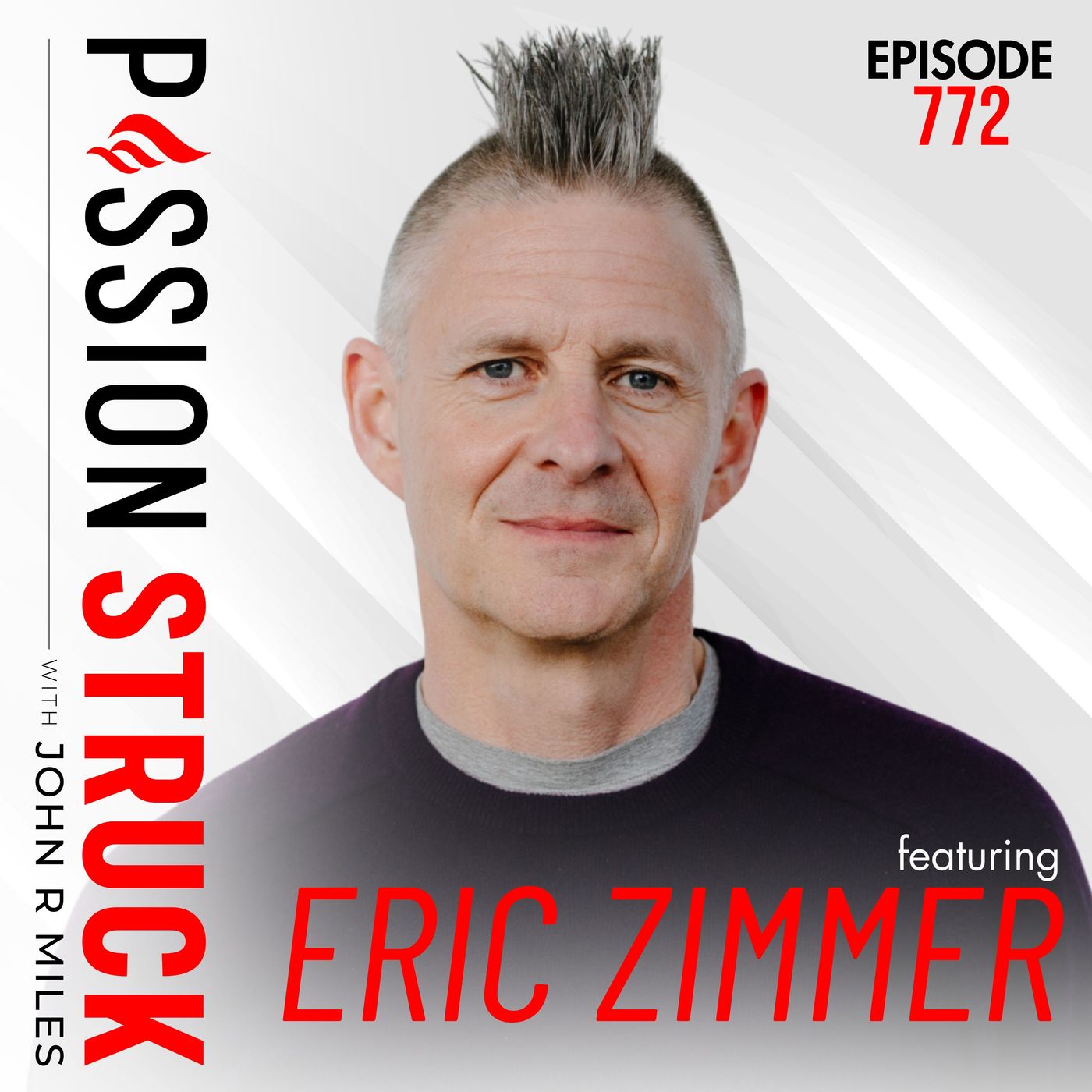
Passion Struck with John R. Miles
Why Lasting Change Happens One Small Choice at a Time | Eric Zimmer - EP 772
01:02:35
In this episode of Passion Struck, John R. Miles sits down with Eric Zimmer, behavioral coach, author, and host of the award-winning podcast The One You Feed, to discuss why so many people struggle to maintain consistent habits, the hidden...
Loading summary
Transcript172 lines
- [00:00]
Eric Zimmer
Neighbor game.
- [00:01]
TikTok Advertiser
Oo.
- [00:02]
Liberty Mutual Advertiser 1
And Doug, there's nowhere I wouldn't go to help someone customize and save on car insurance with Liberty Mutual. Even if it means sitting front row at a comedy show.
- [00:12]
Liberty Mutual Advertiser 2
Hey everyone, check out this guy and his bird. What is this your first date?
- [00:15]
Liberty Mutual Advertiser 3
Oh no.
- [00:16]
Liberty Mutual Advertiser 4
We help people customize and save on car insurance with Liberty Mutual.
- [00:19]
Liberty Mutual Advertiser 3
Together we're married. Me to a human, him to a bird.
- [00:22]
Liberty Mutual Advertiser 2
Yeah, the bird looks out of your league.
- [00:24]
Liberty Mutual Advertiser 4
Anyways, get a quote@libertymutual.com or with your local agent.
- [00:27]
Liberty Mutual Advertiser 5
Liberty, Liberty, Liberty, Liberty.
- [00:31]
TikTok Advertiser
Wanna be a star? No problem. Anyone can shine on TikTok. Post your first video today. Real life, real story, real you download TikTok and get started.
- [00:47]
Liberty Mutual Advertiser 1
And Doug, there's nowhere I wouldn't go to help someone customize and save on car insurance with Liberty Mutual. Even if it means sitting front row at a comedy show.
- [00:57]
Liberty Mutual Advertiser 2
Hey everyone, check this guy and his bird. What is this your first date?
- [01:01]
Liberty Mutual Advertiser 3
Oh no.
- [01:01]
Liberty Mutual Advertiser 4
We help people customize and save on car insurance with Liberty Mutual Together we're married.
- [01:06]
Liberty Mutual Advertiser 3
Me to a human, him to a bird.
- [01:07]
Liberty Mutual Advertiser 2
Yeah, the bird looks out of your league.
- [01:09]
Liberty Mutual Advertiser 4
Anyways, get a quote@libertymutual.com or with your local agent.
- [01:12]
Liberty Mutual Advertiser 5
Liberty. Liberty. Liberty. Liberty.
- [01:15]
John Miles
Coming up next on Passion Struck.
- [01:18]
Eric Zimmer
And so how do we live in uncertainty? And so I think the message I would have given my 28 year old self and I would give my son also is to a certain degree is how do you relax into being where you are? How do you learn to trust in your ability to navigate? How do you learn to say, okay, I will figure this out. I have skills, I have strengths, I have internal resolve. I will be okay and I will figure it out. That's what I think it would be really valuable to cultivate. I think it's worth cultivating.
- [01:53]
John Miles
Welcome to Passion Struck. I'm your host, John Miles. This is the show where we explore the art of human flourishing and what it truly means to live like it matters. Each week I sit down with change makers, creators, scientists and everyday heroes to decode the human experience and uncover the tools that help us lead with meaning, heal what hurts, and pursue the fullest expression of who we're capable of becoming. Whether you're designing your future, developing as a leader, or seeking deeper alignment in your life, this show is your invitation to grow with purpose and act with intention. Because the secret to a life of deep purpose, connection and impact is choosing to live like you matter. Hey, friends. Welcome Back to episode 772 of Passion Struck. Today we're entering the final week of
- [02:47]
John Miles (Interviewer)
of our May series called Forged in Adversity.
- [02:50]
John Miles
And over the course of this month we've explored what it means to endure hardship, recover from pain, transform adversity into growth, and ultimately turn our struggles into something that contributes to the lives of others. In case you missed it, last Tuesday I sat down with Amy Purdy, one of the most inspiring adaptive athletes in the world whose journey after losing both legs bacterial meningitis became a powerful conversation about resilience, reinvention, and how adversity can become a catalyst for both meaning and purpose. Then last Thursday I spoke with Blake Mycosky, the entrepreneur behind TOMS and the Global One for One movement, about the hidden emotional cost of achievement, burnout, mental health, and why external success can never fully heal the feeling of never being enough. And in many ways, those conversations lead directly into today's episode. Because once we begin rebuilding our lives, another question naturally emerges. How do we actually sustain change once life moves forward again? Because most people don't struggle with insight, they struggle with consistency. They know what matters. They know what needs to change. They know the habits, relationships, thought patterns or behaviors that are quietly holding them back. The real challenge is learning how to create meaningful transformations in a way that lasts. And honestly, that's why I wanted to bring back my friend Eric Zimmer onto the show. Eric is the host of the acclaimed podcast the One youe Feed, Someone I deeply respect and one of the most thoughtful voices I know when it comes to behavioral change, self awareness and personal growth. In today's conversation, we discuss his powerful new book, How a Little Becomes a Lot, which explores why lasting transformation rarely happens through dramatic reinvention and almost always happens through small, repeated choices over time. What I appreciated most about our conversation is that Eric doesn't approach change from the perspective of optimization, culture or self improvement performance. He approaches it from the perspective of being human. We talk about why so many people abandon change in the long middle after
- [04:58]
John Miles (Interviewer)
they initial excitement fades.
- [05:00]
John Miles
We explore self compassion, rebuilding trust with yourself after setbacks, learning how to stay present in uncertainty, and why tiny daily behaviors quietly shape the trajectory of our lives far more than dramatic moments ever do. There's also a deeper emotional layer to this conversation that I think many listeners will connect with, because underneath habits and behavior, change is often a much more personal question. Can I learn to become someone who believes I'm capable of change without constantly
- [05:29]
John Miles (Interviewer)
attacking myself in the process?
- [05:31]
John Miles
Eric speaks about that with remarkable honesty. Before we dive in, one quick note. If this show has ever made a difference in your life, please share it with someone who may need it, Leave a rating or review on Apple Podcasts or Spotify, and subscribe on YouTube for full conversations and weekly clips. Lastly, and if you want the workbook that goes along with this episode, please subscribe to my substack@theignitedlife.net now let's dive into this conversation with Eric Zimmer. Thank you for choosing passionstruck and choosing me to be your host and guide on your journey to creating an intentional life that matters. Now let that journey begin.
- [06:08]
Eric Zimmer
Hate cleaning, Hate scrubbing.
- [06:11]
TikTok Advertiser
Hate dishwashing. Bro, we got you millions of videos about smart cleaning hacks will make your chores feel like a breeze. Download TikTok and check it out.
- [06:25]
Liberty Mutual Advertiser 1
And Doug, there's nowhere I wouldn't go to help someone customize and save on car insurance with Liberty Mutual. Even if it means sitting front row at a comedy show.
- [06:35]
Liberty Mutual Advertiser 2
Hey everyone, check out this guy and his bird. What is this, your first date?
- [06:38]
Liberty Mutual Advertiser 4
Oh, no, we help people customize and save on car insurance with Liberty Mutual together.
- [06:42]
Liberty Mutual Advertiser 3
We're married. Me to a human, him to a bird.
- [06:45]
Liberty Mutual Advertiser 2
Yeah, the bird looks out of your league.
- [06:47]
Liberty Mutual Advertiser 4
Anyways, get a quote@libertymutual.com or with your local agent.
- [06:50]
Liberty Mutual Advertiser 5
Liberty. Liberty. Liberty. Liberty.
- [06:54]
TikTok Advertiser
You know what they say. Early bird gets the ultimate vacation home. Book early and save over $120 with VRBO because early gets you closer to the action, whether it's waves lapping at the shore or snoozing in a hammock that overlooks. Well, whatever you want it to so you can all enjoy the payoff come summer with Vrbo's early booking deals. Rise and shine. Average savings $141. Select homes only.
- [07:28]
John Miles (Interviewer)
I am so excited today to welcome back my friend and one of the best podcast hosts there is out there, Eric Zimmer. Welcome back, Eric.
- [07:36]
Eric Zimmer
Hey, John, thank you so much for having me on. I'm really happy to be here and I always love to talk with you.
- [07:41]
John Miles (Interviewer)
Since I mentioned your podcast, why don't we just start there? Because if people, people are not familiar with the one you feed, it's definitely a top recommendation for me. And you've been doing it now for a decade, right?
- [07:54]
Eric Zimmer
Longer than that. 12 years. Which is insane to me. I've never done anything for 12 years. I guess I've been breathing for longer than 12 years, but for a career or a work type situation, that is unprecedented.
- [08:09]
John Miles (Interviewer)
Man, I can't believe we're at five years now and it's just to think about doing it for Another seven years with how much effort there is to doing a podcast that people don't realize is.
- [08:23]
John Miles
It's a lot of work.
- [08:24]
Eric Zimmer
Yeah. Luckily, it seems to be the right fit for me in many ways. Right. I still. There are things you do anything for 12 years. There's parts of it I think you get tired of. But I still, when we hit record and I'm in a conversation with someone like you that I enjoy and respect, I'm just always happy in that space. I just always love that part of it. And so that's what keeps it going.
- [08:50]
John Miles (Interviewer)
Last time, for the listeners who might have tuned in to our last episode, which was actually, it's about 200 episodes from when this one will air, but it's really only been about 18, 19 months. I'd encourage you to go back to episode 569 if you want to pick up our last conversation. But since then, you have written this amazing new book which came out at the end of March. It's called How a Little Becomes a Lot. And it's all about the art of small changes and how they create a meaningful life. And you and I are both huge fans of behavior science. And I remember I was interviewing. I'm not sure if you've ever had her on your show, Michelle Seeger from University of Michigan.
- [09:37]
Eric Zimmer
Sure, I've had Michelle on a couple times, and I actually think I quote her in the book at one point. So, yes, Michelle's amazing.
- [09:44]
John Miles (Interviewer)
She gets so excited when she talks about her work. And I remember she was talking about microchoices. John, if you don't remember, if you
- [09:52]
John Miles
don't remember anything else, remember microchoices.
- [09:56]
John Miles (Interviewer)
And this whole concept of microchoices and your concept that a little by little, a little becomes a lot are very tied to each other.
- [10:08]
John Miles
Why do you believe that?
- [10:09]
John Miles (Interviewer)
It's these little things like you both bring up that really drive how change works.
- [10:16]
Eric Zimmer
I think if we look at just people who change in any meaningful and lasting way, you just see that it is a series of things repeated again and again. So on one hand, it's entirely obvious. That's how it happens. Right. A little bit. And little means different things for different people, but that you keep doing what you can do. And over time, you're like, wow, look at what that became. Look at what that did in my life. So it's a very obvious factor in change. The reason that I choose to talk about it is that in my experience of working with, I've had hundreds of coaching clients around the world. I've led thousands of people through workshops. I've been in recovery for 30 years. As I watched and paid attention, I noticed that most people reject this as an actual approach. And so I wanted to really talk about, here's why it works, how it works.
- [11:23]
John Miles (Interviewer)
So why do you think it is that so many people reject this as an approach? Because to me, makes a whole lot of sense. If you think about your own life and for those who are listening and you want to make a change. When we try to go big bang, like 95% of the time, the Big Bang collapses after a period of time, which is exactly why New Year's resolutions fail for so many people. But we think that doing these little things is going to be so difficult to maintain the exact opposite. Why do you think there's such a big gap?
- [12:07]
Eric Zimmer
Well, there are challenges to a little by little approach, and a couple of them are, in the beginning, you may not see results as fast as a Big Bang approach. And then the second is there's a well known thing when people are trying to hit goals, which is often referred to as the long middle. You start out with a lot of enthusiasm. If you're trying to hit an actual goal, there's often a lot of enthusiasm right at the end. But in between, things can get kind of dry. And so one of the things with a little by little approach is how do I maintain that desire and drive in the middle? And that largely comes down to seeing and feeling success each time you do the thing that you want to do. Because there is a good feeling inside of us when we say we're going to do something, we do it. There is an internal good feeling. It's subtle. We often don't pay any attention to it. But one of the things that I try and do is every single time I do the thing that I said I was going to do, I try and have a little internal good job. And I noticed, oh, that felt good. I did it. Okay. That's part of how we combat that long middle.
- [13:38]
John Miles (Interviewer)
I remember interviewing Robin Sharma and we talked about that middle finger phase a lot in the interview. And it's something that I know for myself. Throughout many arcs of my life, I have stumbled because I think that's exactly where our intrinsic motivation tends to fail when we start hitting setbacks and things like that. What have you found enables you, when you hit moments like that, to be able to persevere and push forward?
- [14:10]
Eric Zimmer
Yeah, I have a little framework in the book. It's a little interlude and it's about how do we handle getting off Track. Because if we're trying to make some sort of change that again is lasting, there are going to be times that we do that really well and there are going to be times that we don't do it so well. There are going to be times that life gets in the way. And a big problem is that for a lot of us, particularly the sort of people that read a book like this or people that hire someone like me to be a coach, is they've tried to make changes a lot of times and it hasn't worked. So there's this internal belief that I can't really do it. So what happens is we're going along, things are going well, and then life gets in the way. Let's say your kids get sick or work gets really intense for a little while, or you go on vacation, whatever it is, and your routine kind of falls apart. What happens then for many people is we start to go. See, I knew I couldn't do it. I know. I just, I'm the kind of person that doesn't stick with anything. And that of course becomes a self perpetuating problem. Because motivation goes up when we feel good about ourselves and our chances of success and it goes down when we feel bad about ourselves and our chances of success. So that moment of how we respond to setbacks is really important. So I have a framework in the book that I could walk you through if you. If we want to continue to go down this. Yeah, let's do it. Okay. I just call it Renew. It's like everybody comes up with fancy little acronyms for their little process. Right. So I'm no different. Renew. The R stands for recognize. It's normal to get off track. It just happens. It happens to everyone that's trying to do anything long term. The second is to embrace your. Why go back to like, why was I doing this in the first place? Because often that starts to get lost. N stands for neutralize the emotional drama. This is the important one. Right. They're all important, but this one in particular. Don't make it mean anything other than I was doing this thing. Now I'm not doing it, I'm going to get back to doing it. That's about as much story as we need. We do not need all the bad stories we tell ourselves. The E stands for extract the lesson. There might be a reason we got off track. So let's take the vacation one. Again, I see this all the time. People are doing really well with some behavior they're trying to do. They go on vacation the Routine changes, everything comes off the rails and then when they get back, they have a hard time re engaging. So that's a lesson. The lesson for me is if I go on vacation and I decide for a week, I'm not. I don't care about any of that stuff. If I work out, great, I'll do it. Maybe if I eat like crap, I'm probably going to all fine. But when I get home, I need to now reset back into doing this thing instead of coasting in. And the next thing I know, it just fades away. So we need to extract the lesson and then the last piece is just to walk forward with action. Just do some version of the thing as soon as you can do it. Get some. Get back into it in some way, some momentum. So if I try and be a daily meditator, and over the years, there's times where I'm incredibly consistent with that. And there are times that it's spottier. And so often if it gets spottier and I fall off for a little while, the thought of coming back and meditating for 20 or 30 minutes just feels overwhelming to me. And so I'll go, you know what, for the first week back, I'll just do five minutes. Let me just get back into it, let me get the consistency going and then I can build.
- [18:23]
John Miles (Interviewer)
For me, meditation has always been difficult. When I'm in a stationary position, I find that I need to do something that's fluid. So the thing that works the best for me that I do every day is I go out first thing in the morning, very early in the morning. I love it pitch dark. And for the first 20, 25 minutes, I use that period of my walk to meditate and just.
- [18:48]
Eric Zimmer
Yeah.
- [18:48]
John Miles (Interviewer)
Allow myself to feel the presence because it kind of sets up the way I want to live out that day. And for me, that works because when I start getting off track for my meditation, I start zoning in again on my five senses and.
- [19:04]
Eric Zimmer
Yes.
- [19:06]
John Miles (Interviewer)
And start using that to. To get myself back into the zone.
- [19:10]
Eric Zimmer
Yeah, I think everybody has to find what works for them for sure. And for a lot of people, sitting meditation is not the right thing. And for. And there's a lot of different ways to, quote, unquote, meditate. I. For years, I started trying to meditate a long time ago. Yeah. And I lived in Columbus, Ohio, and there was no Internet, so all I had were books and some weird guy who taught TM in. In Columbus, Ohio, in the late 80s. Right. And I just, I kept reading these books and they just kept talking about Breath meditation. And they also talked about meditating like 30 minutes to an hour a day. And that was way too long for me because when I sat down, it was just like. It was like a pandemonium in my mind. Not a good kind either. Just was. It's like my brain was like, I've been waiting for you to sit down because I've got a lot we need to talk about. So that was really hard. And breath meditation is not my thing. Finally, over time, I decided I would meditate for a much shorter period of time. But I also discovered sound meditation. I discovered going out and just sitting on a bench and just paying attention to the sounds. And all of a sudden I was like, oh, I see why people like this. I see why this can be soothing. I see why this can be calming. And now I can do breath meditation. But it's because I found another way in. And so I think your point is a really important one, is we have to experiment to find the things that work for us. And same thing in the with, like my book, if you're the kind of person that can do the big Bang change, go ahead and do it. Nothing is the right answer for everyone. Yeah.
- [21:07]
John Miles
Before we continue, I want to thank all of you who continue supporting Passion Struck and sharing these conversations with others. One of the biggest themes in today's conversation is that transformation rarely happens through massive breakthroughs. More often, it happens through small, repeated choices that slowly reshape how we think, act, and live. That idea connects deeply to the work I explore in my upcoming book, the Mattering Effect. And it's also why we create companion workbooks and weekly reflections through the Ignited Life newsletter. If you want tools to help you apply these conversations more intentionally in your own life, you can Explore everything@theignitedlife.net Now a quick break for our sponsors. Thank you for supporting those who support the show.
- [21:52]
Liberty Mutual Advertiser 1
And Doug, there's nowhere I wouldn't go to help someone customize and save on car insurance with Liberty Mutual. Even if it means sitting front row at a comedy show.
- [22:02]
Liberty Mutual Advertiser 2
Hey, everyone, check out this guy and his bird. What is this your first date?
- [22:05]
Liberty Mutual Advertiser 3
Oh, no.
- [22:06]
Liberty Mutual Advertiser 4
We help people customize and save on car insurance with Liberty Mutual together.
- [22:09]
Liberty Mutual Advertiser 3
We're married. Me to a human, him to a bird.
- [22:12]
Liberty Mutual Advertiser 2
Yeah, the bird looks out of your league.
- [22:14]
Liberty Mutual Advertiser 4
Anyways, get a'@libertymutual.com or with your local agent.
- [22:17]
Liberty Mutual Advertiser 5
Liberty, Liberty. Liberty. Liberty.
- [22:21]
Eric Zimmer
With VRBoCare, help is always ready before,
- [22:25]
Liberty Mutual Advertiser 3
during, and after your stay. We've planned for the plot twists, so
- [22:29]
Eric Zimmer
support is always available. Because a great trip starts with peace of mind.
- [22:37]
Liberty Mutual Advertiser 1
And, Doug, there's nowhere I wouldn't go to help someone customize and save on car insurance with Liberty Mutual, even if it means sitting front row at a comedy show.
- [22:47]
Liberty Mutual Advertiser 2
Hey, everyone, check out this guy and his bird. What is this, your first date?
- [22:51]
Liberty Mutual Advertiser 3
Oh, no.
- [22:51]
Liberty Mutual Advertiser 4
We help people customize and save on car insurance with Liberty Mutual together.
- [22:55]
Liberty Mutual Advertiser 3
We're married. Me to a human, him to a bird.
- [22:57]
Liberty Mutual Advertiser 2
Yeah, the bird looks out of your league.
- [22:59]
Liberty Mutual Advertiser 4
Anyways, get a'@libertymutual.com or with your local agent.
- [23:02]
Liberty Mutual Advertiser 5
Liberty. Liberty. Liberty. Liberty.
- [23:09]
TikTok Advertiser
Foreign.
- [23:12]
John Miles
You're listening to Passion Struck right here on the Passion Struck Network. Now back to my conversation with Eric Zimmer.
- [23:19]
John Miles (Interviewer)
Something that you just said about the sound meditation is true for me, too. My. My favorite time of day is daybreak. 35, 40 minutes before the sun comes up. Because the world just starts becoming alive and you start hearing all the creatures do their thing. To me, it's just a magical time to experience.
- [23:40]
Eric Zimmer
Yes, I wish I got up. Well, let me say that differently. There are aspects of getting up even earlier, like you do, that I enjoy. And it doesn't seem to be my chronotype exactly.
- [23:51]
John Miles (Interviewer)
So,
- [23:55]
John Miles
Eric, I want to go to
- [23:57]
John Miles (Interviewer)
chapter six in the book. One of my favorite things that I like to talk about is something I wrote in my first book, Passion Struck, which is becoming a perspective harnesser. And I think so many of us live in this world where we don't see the world as it is, we see it as we are, which is really what that chapter to me captured. And part of the way I rationalize this is so many of us, especially in the Western world, tend to live our lives as either or. And we have these huge extremes. And to me, a lot of this gets into both and thinking. But how does this idea of perspective show up in everyday life that a lot of people don't understand?
- [24:48]
Eric Zimmer
I think our natural reaction is that when we look at any situation, we just assume we're seeing the truth of that situation. Yeah. And that is rarely true. Or it's partially true is the better way to say it. And I think if I could imbue one skill, if I gift one skill to people, if they want to live a more calm and equanimous life, is this one is. Just because I'm thinking it or just because it appears that way doesn't mean that it is true. We are meaning making creatures. People have referred to humans as meaning making machines. It is simply something you cannot turn off. It happens automatically. We we, we find ourselves in a situation and we, we create a story around what it means. It happens instantaneously and transparently. So learning to go, okay, there might be other ways to see this is one of the best skills in life. I give an example in the book that I think is a useful one for this sort of thing. Imagine you've just moved into a new neighborhood. You just moved, but you're a little nervous about it. You're like, well, God, is this the right neighborhood? We just bought a house. I don't know for sure. Maybe you're like, well, God, a lot of the neighbors houses are nicer than mine. Am I in the right place? You just normal anxiety that you would have moving into a new place. And you walk out one morning, you go outside, you see your neighbor and you wave and they don't wave back. A lot of us are going to instantaneously have some version of, oh, a, what a jerk, and B, maybe I better call the movers, because I knew it. I knew I wasn't going to get along with my neighbors here, and all of a sudden I'm spinning. But if we ask ourselves, okay, what am I making this mean? Is such a powerful question because we catch it in the act. I go, oh, I'm making my neighbor not waving back mean that they don't like me and I'm not going to fit in here. Well, what else could it mean? Is the next question that I encourage people to use. And what else could it mean? It could mean that they didn't see me. It could mean they waved before I saw them. Yeah. It could mean that they're having a really difficult morning and they're just zoned out. It could mean a lot of things and I don't know which. I simply do not know which of those are true. And then the final question is also really critical. Which meaning is most useful to me? A meaning where I go, well, I don't know what happened, I don't know why they didn't wave. Is a much more useful meaning for my ability to integrate into this neighborhood and build the community that I want than the meaning that says that person's a jerk and I don't fit here because all of a sudden now you've created a story that is going to shape the way you see all the experiences where you live. Another example I give or that I think about with this a lot is after writing a book, there were days that I would write and it was just brutally painful and nothing got accomplished at all, or what got accomplished was just. I would look at it like, that is terrible writing. So my brain could say, see, you're not a writer. You knew you weren't good enough to do this. You have all these amazing writers on your show. You're not one of them. So that's one meaning. Another meaning I could give is you just had an off day. Everybody has off days, right? You just keep putting in the work and something good's going to come out of it. Which of those is true? I don't know. But we can clearly see which one is useful, right? The one that says, oh, you just had an off day, keep working, is much more likely to lead me to a good book than the other. So, yeah, I think this is imminently practical. And we deal with it all of the time in life. Yeah.
- [29:16]
John Miles (Interviewer)
And I can't tell you how many drafts of chapters I end up throwing out.
- [29:21]
Eric Zimmer
Yeah, boy, I don't know about you. I have not. The writing of this book brought up self doubt. I have not faced in decades. My just feeling like I can't do it. And luckily the only thing I can say is the luck part for me is that I've talked to enough people who have written great books to know that everyone feels that way part of the time. Even great writers that I.5 New York Times bestsellers. I'll talk to them and they're like, I just, I don't think I could do it this time. This book I'm just, what I'm writing is just crap. It's not any good. And they're right that at the stage it's at, it's not great. But there are a lot of stages it goes through and then you get to the end. And for me, I'm like, wow, what I, what I wrote, I feel great about. I feel like it's really good. But if you had pinged me any more any minute in that process and been like, how's the writing? I probably would have been like, not good enough. That was a big lesson for me too. Just in recognizing the way something unfolds. And it goes back to what we talked about before with little by little, any one day of writing was inconsequential, but added together over and over, suddenly, wow, here's this thing. There's this book, right? And that's little by little, I did that. I wrote the book 30 minutes at a time. I would sit down and say, okay, what? I would sit down and set a timer. 30 minutes, right? And when the timer was. Went off, I could reset the timer and just keep going. Or I could stop and go do something else. That was the. It was the only way I could get myself to do it because it was so hard. It was so hard. And so I might be. It might be Monday and I'm like, okay, I have all Monday afternoon carved out for writing. But if I thought about sitting down and writing all afternoon, I would feel so overwhelmed. But I could usually talk myself into 30 minutes or sometimes talk myself into five minutes, which then turned into 30 minutes. Yeah.
- [31:35]
John Miles (Interviewer)
I've recently been trying to get a hold of Angela Duckworth basically to try to get her permission to include parts of her interview in this new book. And it's been impossible to get in touch with her. And where I'm going with this is her assistant said, well, she's in a writing dungeon and she's working on her next dungeon. If you ask my wife, that's what she would say. She hates when I work on books because if I get in the flow state, which takes me a little bit to get into as I'm writing, but if I am there, man, I. Hours can go by and to me it feels like it's five minutes. It's crazy. Well, when you were talking about these best selling authors, one that you and I both know is Susan Cain and you were lucky enough to even be on our podcast. When I think of her book Quiet, which sold something like 20 million plus copies. Having to follow that up with another book that then outperforms the first one. Or I think of James Clear if he would ever write a second book.
- [32:42]
Eric Zimmer
Yeah.
- [32:42]
John Miles (Interviewer)
The amount of pressure that you would put yourself put on yourself to try to duplicate the past performance has got to be just immense, I'm sure.
- [32:53]
Eric Zimmer
Yeah, I would imagine it is. I'm sure Susan's second book did not sell nearly as well as her first book. Her second book is outstanding. I actually prefer it as a book. I love it. And if I had to guess, there's no way it sold like Quiet did. I don't think it's possible. Quiet was on the New York Times bestseller list for most of my adult life. It feels like.
- [33:19]
John Miles (Interviewer)
Well, I think one thing she does exceptionally well is Susan does a ton of research before she does anything. And I think she internalizes a lot of it. So she is very good at picking out cultural moments where big things people are feeling that aren't being explored. And at least for me, Quiet was a wake up call because I was this introvert in Fortune 500 companies in a very extroverted world. And I kept wondering when I got home why I was so freaking exhausted all the time. And her book kind of showed me that because you're putting on a complete mask that's different than what your whole biology is. And I think that's what her books do, is they're very introspective.
- [34:09]
Eric Zimmer
Yeah.
- [34:09]
John Miles (Interviewer)
Helping people see a side of them they don't see. And same thing with our big feelings.
- [34:14]
Eric Zimmer
Yes. 100%. Yep.
- [34:18]
John Miles (Interviewer)
Well, one of the things that I found when I was going through that process is I wasn't very kind to myself at times. And one of the things that you talk about in the book is our need to becoming a friend to ourself.
- [34:33]
Eric Zimmer
Yeah.
- [34:34]
John Miles (Interviewer)
What does that actually look like from your perspective, beyond just being nice to yourself?
- [34:41]
Eric Zimmer
I think I say in the book that I think self compassion, which is a term Kristen Neff, the. I don't know if she coined it, but she's the one who's associated with it at University of Texas researcher and professor. I think that self compassion is the midpoint between self acceptance and self improvement. Right. We are all faced at any given time with this. I want to do better. I want what I do to be good. I. I'm striving. And yet we also. I think it's important that we allow ourselves to be who we are.
- [35:17]
Liberty Mutual Advertiser 1
And Doug, there's nowhere I wouldn't go to help someone customize and save on car insurance with Liberty Mutual. Even if it means sitting front row at a comedy show.
- [35:27]
Liberty Mutual Advertiser 2
Hey, everyone. Check out this guy and his bird. What is this, your first date?
- [35:30]
Liberty Mutual Advertiser 3
Oh, no.
- [35:31]
Liberty Mutual Advertiser 4
We help people customize and save on car insurance with Liberty Mutual together.
- [35:34]
Liberty Mutual Advertiser 3
We're married. Me to a human, him to a bird.
- [35:37]
Liberty Mutual Advertiser 2
Yeah, the bird looks out of your league.
- [35:38]
Liberty Mutual Advertiser 4
Anyways, get a quote@libertymutual.com or with your local agent.
- [35:42]
Liberty Mutual Advertiser 5
Liberty. Liberty. Liberty. Liberty.
- [35:47]
Lowe's Advertiser
Pros Save more on the materials you need to get the job done inside and out at Lowe's. Right now, get 10% off in stock Trex Naturals decking now available in more styles. Plus get 15% off select custom entry, interior and storm doors. Then we'll deliver it all straight to your job site. To help keep your jobs moving, get the brand's pros, Lowe's Trust, priced right and ready when you need them. Our best lineup is here at Lowe's, valid through 527, while supplies last selection varies by location.
- [36:17]
Liberty Mutual Advertiser 1
And Doug, there's nowhere I wouldn't go to help someone customize and save on car insurance with Liberty Mutual. Even if it means sitting front row at a comedy show.
- [36:27]
Liberty Mutual Advertiser 2
Hey, everyone, check out this guy and his bird. What is this, your first date?
- [36:30]
Liberty Mutual Advertiser 3
Oh, no.
- [36:31]
Liberty Mutual Advertiser 4
We help people customize and save on car insurance with Liberty Mutual together.
- [36:34]
Liberty Mutual Advertiser 3
We're married. Me to a human, him to a bird.
- [36:37]
Liberty Mutual Advertiser 2
Yeah, the bird looks out of your league.
- [36:39]
Liberty Mutual Advertiser 4
Anyways, get a'@libertymutual.com or with your local agent.
- [36:42]
Liberty Mutual Advertiser 5
Liberty, Liberty, Liberty, Liberty.
- [36:45]
Eric Zimmer
There's a tension there. And so I'm trying to find self compassion is finding that middle place. I think what it looks like in practice is beginning to recognize the ways in which I am not kind to myself. I am not a friend to myself. I am not on my own side. And then thinking about, what would it look like to be a friend to myself in these moments? And then practicing it about 20,000 times over the years. What I can say today, for me is that I don't have a really harsh internal critic anymore. That doesn't mean that I can't be critical, but I do it in a different way. So I was perfectly capable of looking at what I was writing and going, that's not good, without saying, that's not good, you idiot. What's wrong with you? Why can't you do better? And that. I think that just happened from lots and lots of reps, right? I was a homeless heroin addict 30 years ago. And addicts carry an enormous amount of shame. It's part of what drives the whole addiction engine. So for me to go from that incredibly harsh inner voice that just said the worst things to myself to a place that doesn't happen anymore feels like really significant to me. And so again, for me, it's about the tone in which I talk to myself. I use an example in the book of two students. You've got Bobby and you've got Sally. And Bobby is in class one day and his teacher says, bobby, what's four plus three? And Bobby says, eight. And his teacher says, bobby, you are an idiot. What is the matter with you? We've covered this 10 times. Are you never going to learn it? You might as well. I would rule out college because you're probably not going to get out of grade school. Bobby's gonna struggle with math. Sally, on the other hand, has a different teacher. And that teacher says, sally, what's four plus three? Sally says, eight. The teacher does not go, good job, Sally, you did great. The teacher says, sally, no, four plus three is seven. And here's why. Let me explain it to you. And you know what? Why don't you. If you Want to stop by after class? I'll spend a couple extra minutes with you and I know you can do this. Sally is going to learn math. It's not that we're not being holding ourselves accountable to some standard. It's the way it's done. And so for me, besides the biggest upgrade I've ever given myself, besides burning my life to the ground with drugs, was to learn this, to be kinder to myself. And it's also really important in change, because when we are in that, you idiot, you sucked, you piece of shit. Whatever it is, we're not learning. And that's what change is. Change is a learning process. We have to be able to go, okay, I was trying to do this or not do that, and I did or didn't do it. And so why? What happened? What got in the way? What could I do different? What. All that is how we learn to change. But when we're caught up in all the shame and internal recrimination, we just don't learn. So it's incredibly valuable and it takes a lot of reps. It just takes a lot of, oh, there, I'm doing it again. What would I. Okay, what would be a way to respond to myself like I would respond to a friend? And. And it takes a while for that to. You start to feel it, but it can be done.
- [40:40]
John Miles (Interviewer)
Eric, I didn't want to rehash your whole journey because we went through that in detail in the first episode. So that's something people can go back and listen to. But something I did want to talk about is I have two kids. My older one is about to turn 28 in May, which I'm dumbfounded about.
- [40:59]
Eric Zimmer
That's amazing. My oldest one is going to turn 28 in May.
- [41:03]
John Miles (Interviewer)
Well, isn't it crazy how fast life.
- [41:05]
Eric Zimmer
Oh, it's preposterous. Yeah, it's just. It doesn't make any sense.
- [41:11]
John Miles (Interviewer)
Well, he is very interested in a career in music and he also has a degree in business. But I think a ton of kids this age, yours is probably telling you the same thing, is it feels really out of whack right now because of all the digital disruptions that are hitting them.
- [41:32]
Eric Zimmer
Yeah.
- [41:32]
John Miles (Interviewer)
But I was hoping you might go back to your 28 year old self, the one who somehow got into one of the first Internet companies. And when you think about change and how you embrace that or how you need to think about life, like what advice do you give to kids that are this age? Or I should say adults that are this age.
- [41:55]
Eric Zimmer
The first would be I recognized this on a walk with my son about a year ago and I was like, for the first time since he's been born, I feel like I have no idea exactly how to advise him moving forward. Yeah, it's not that in the past I would have been like, I know what you should do and here's what. But I would be like, I have a way of thinking through this. I have some general principles I might give. Here's how I would think about it. And a year ago I was like, effort. If I know what on earth is the world going to look like in three years for you? So what I would say to a, to my 28 year old self would not be anything like, here's what I think you should do to be relevant in the world, in the career world moving forward. I think I would talk more about. Life seems very uncertain right now, more uncertain than it has seemed. And the rate of change is really insane. So uncertainty, I believe now, is a fundamental state of being human. It always has been, but it's, it's more pronounced right now. So the question becomes, how do you live in uncertainty? Because we do not like it as people. It is a, it is not enjoyable. And so how do we live in uncertainty? And so I think the message I would have given my 28 year old self and I would give my son also is to a certain degree is how do you relax into being where you are? How do you learn to trust in your ability to navigate? How do you learn to say, okay, I will figure this out? I have the. I have this, I have skills, I have strengths, I have internal resolve. I will be okay and I will figure it out. That's what I think it's worth cultivating. Now I look at my mother entered hospice recently and I would say it's the same thing. How do you learn to be where, right where you are, what stage you're in life? We don't know. Are you a week away? Are you a year away from passing? What do you do with that uncertainty? And how do you trust in mom? How do you trust in your ability to navigate this? So I think that would be what I would tell my 28 year old is, it's okay, settle in, we don't know what's coming. That's okay, you will figure it out. You don't have to solve it right now. And don't let uncertainty about the future steal all the joy and pleasure and enjoyment of what's here right now, because that's what we do. And so I Think I would give myself the same advice.
- [44:41]
Guest or Listener
Right.
- [44:42]
Eric Zimmer
I teach myself the same thing. I. I keep having to learn that, but it is one of the most powerful things for me is that I do. I just say to myself, you'll figure this out. You know how to navigate. I believe in you. I trust in your ability. Yes. We don't know what's coming. It feels insane. But I know who I am.
- [45:04]
John Miles (Interviewer)
Yeah. As you were talking about that, for some reason my mind went to Garth Brooks. And I'm thinking about the music video where the Challenger accident is playing in the background. And sometimes, would you really want to know the future because you would live your life completely differently.
- [45:22]
Eric Zimmer
Exactly. And the future is almost always some version of the Buddhist saying that I use all the time. The 10,000 joys and the 10,000 sorrows. Every life has those.
- [45:35]
John Miles
Yeah.
- [45:35]
Eric Zimmer
Often both are happening at the same time. Right. Right now, I'm in the middle of a book launch. It's a great season. It's really fun. There's a lot of joy. My mom just entered hospice. One of my best friend's sons died a month ago in a skiing accident. Like the 10,000 joys and the 10,000 sorrows, another friend is battling cancer. Right. It's all. It's both. It's here. And so how do we live in the midst of that in a way that is useful, skillful, and makes us just better able to enjoy our lives, but also better able to help other people?
- [46:15]
John Miles (Interviewer)
One of the things, Eric, I wanted to make sure we covered was the third part of your book. And you move into something that you call the gift of being. What does the gift of being mean for a listener in practical terms?
- [46:32]
Eric Zimmer
Well, the reason that I end the book, there's a three part structure which is beginning, becoming, and being. And the reason I end up with, back at the end with being is that idea we talked about earlier. Not everything in life should be changed. And we don't want to be in a position of relating to life through only the lens of change. And that is me. If I'm not careful, one of my best qualities is that I am like, we can make this better. We can improve this. We can fix this. We can solve this. It's part of who I am, and I'm really good at it. And like most things in our life, our greatest strength can often then turn around and become our greatest weakness. And so for me, the greatest weakness version of that is that I'm not content with where I'm at and how things are. Yeah. And I want to be, because I think that's really important. So we talk about this idea of presence as the way to do that. How can I move out of always future seeking into being more present? You gave one of the best examples of it that I know to do when you talked about the walking meditation. Because our senses are the portal to now, right? That's how we become present. It's through our senses. And so by just going, what am I seeing? What am I feeling? What am I hearing? What can I touch? What can I taste? What can I. That brings us here. And practicing that is really important. I give an example in the book, and it's still true. Today I will show up somewhere lovely. Let's say I'm. We're headed off to a beach vacation. And all day I'm like, once I get to the beach, I just got to get to the beach. Once I get there, then I'll relax. Then I'll. And I get there and I. We check in the hotel and I step out and I look and it's just gorgeous. And I'm like, oh, that's so good. And then about five seconds later, my brain goes, I wonder how much a house would cost to buy so I could live here all the time. Or why do I live in Ohio when I could live by the beach? Gone. A whole ocean ruined. So then for me, it's the catching. Oh, there it is again. That mind come back. What am I seeing? Where are the waves sound like? How does the air feel? Brings me back. And we can train this ability to be more present. When I am much more disciplined about my meditation and spiritual practice, I am just more present. The last three months, I've been focused on book launch to the exclusion of most other things. I've just been like, okay, this is a season. And for this season, this thing is going to be the number one focus, which means that other things get less focus. And I can tell you it's harder for me to be present right now because there's so much going on and I'm so focused on the book and how's it going to do. And this is. I'm gonna. I'm downshifting kind of as we speak. And I will go back to, all right, how do I be more in my life as it is? So, yeah, that's why I end the book that way. Because if I'm not careful, change is the only lens I see the world through.
- [50:06]
John Miles (Interviewer)
So I wanted to go into this state of being because one of the. The things especially When I'm in the dungeon of writing a book, and that stress is I tend to not be as present as I should be with those who are. Who are most meaningful in my life. And I wanted to go back to your renew formula. So I think so many of us are drifting away from connection more and more. So if you want to renew those connections in your life, how do you renew that state of being? Using your formula? What would be the steps?
- [50:48]
Eric Zimmer
Sure. Well, first I would recognize it's normal to get off track. It's normal that we are. Get distracted by the world and the things in the world and our responsibilities and whatever else it is that distracts us and pulls us away from what we think is most important. So I would recognize that. Then I would go back to the why. Why does that matter to me? Let me feel it again. Why is being present to my wife important to me? What matters about that? Re. And then I would again neutralize the emotional drama. I would get away from the, oh, God, I keep screwing this up. I'm not a good husband. I'm whatever it is, whatever the stories we start to tell, tell ourselves. Or another one for me, with this is I. Why have I not been in better contact with my family over the last 10 years? I just get lost in the regret. So I try and neutralize that. Embrace the lesson. What's the lesson here? Oh, the lesson is that when I become singularly focused on one thing, everything else recedes and I don't even see it. So maybe how do I structure things so that I see them? So I'll give you an example. In my own life, there are certain people in my life that I feel like I should be checking in with nearly daily because of the challenges they're facing. I will. I will not remember to do that. So I have an alarm on my phone that goes off that reminds me to do it. Because it's not that I don't care about them, it's that I get going with what's happening. Nothing else exists to me. Except, here's what I got to do now. Here's what I got to do next. This is what I got to do next. The rest of the world disappears. So I have to. I have to make. I have to have ways. So embracing the lesson from renew is that I need to give myself. I have to structure it. Maybe if it's in I'm a deep writing season, I'm going to make sure that two nights a week, my wife and I actually go out to dinner, and I'm gonna consciously not talk about the book or I'm gonna bring 10 questions that I pull off the Internet. That would be good discussion points that generate conversation. And we're gonna do that because if I don't, all I'm gonna do is talk about the book. Right. Because I'm obsessed. Let's extract the lesson and then walk forward with action. Right. Okay, you know what? Right this very second, I'm going to walk into the other room and I'm going to have a say to my wife. I'm. You're so valuable to me. You're so important to me. Sometimes I know when I'm writing, I get a little distracted, but I want to make a commitment to you that to stay more connected. So that's how I would embrace that. Now, if we wanted to apply that to a different kind of presence, we would just do the same thing. What's the lesson? Oh, the lesson is that I am not present at all. So what I need to do is do two more five minute walks where I do my little senses practice, or I need to. I have a concept in the book called still points, which are these little moments that happen throughout the day that are triggered by something. So we built an app to do this. It'll just go off randomly. You say, I want it to go off how many times a day? Five times a day. And I want to display a message so randomly. My phone goes off five times a day. When it does, I look down, it says, how? Ground yourself in your senses. And I just pause for a second. I go, all right, what are five things I can hear right now? And I listen. I do. So now I'm doing that four or five times a day for 30 seconds, and I'm now able to be more present. So that's. That was a great question, John. Actually, that was a really good question. Like, how do we take that framework and put it in?
- [54:43]
John Miles (Interviewer)
Well, I think you, you did a great job explaining it. And Eric, I wanted to. As we get close to closing, we've talked a lot about many different topics from the book today. But when I think about the arc of what we went through, we talked about the importance of small actions. We talked about self awareness, self compassion, kind of forgiveness renewal. As someone goes through this whole framework that's in the book, what's the first real shift that, that a listener would notice if they started applying this in their life?
- [55:22]
Eric Zimmer
Well, that's a difficult question, because what people are going to come to the book that they're trying to change could Be very different things. What I would hope that. What if you're trying to change a behavior? What I would hope one of the first shifts would be is that you are having success at whatever it is you're trying to do or you're having more success. That would be one little shift that I would think. But the shift that we're aiming at ultimately is one where we are able to make and keep promises to ourselves and we begin to trust ourselves more. Yeah, the book starts out. The first half of the book, I would say is a manual for how you change. Here are the mechanics of it. And then the second half of the book are more mindsets that help you change and that are also valuable just in the way you live. Self, compassion, presence. And I think people are going to come into this book one of two ways. One might be I have something very specific behaviorally that I want to change and I talk about it in the book. I call them habits of behavior and habits of thought. And if it's a behavioral thing, then the shift is going to be you're starting to do the thing you want to do more or the thing you don't want to do less. I don't want to say completely because often it takes time to figure it out. And on the habits of thought I think it. That's a slow one, right? That's the problem with that one. And it's why when I talk in the book, I say little by little, I mean something specific. Low resistance actions done consistently in the same or low resistance actions done consistently over time in the same direction. Low resistance just means you can get yourself to do it consistently over time is obvious. In the same direction is important because part of the problem that we face today, and you and I are part of the problem in a way is that there is so much information on how to what to change. Right. I put out two episodes a week. I just keep. You just keep getting it. If we went on Instagram right now, if you have a feed like mine, you will come across 15 different things. You should. You could change in the first hour. I should start cold plunging. I should start meditating. I need to be doing morning pages. I need to be time boxing. I need to be listing out my values. I need to be doing a gratitude listed list. Just goes on and on. And part what happens for a lot of us is we're like, okay, great, I'm gonna do that. And we start doing it and nothing big changes. And we go, that doesn't work. I did gratitude for three Days. And my life is not totally different. That isn't valuable. And so we give it up and we go, what's the next Cold plunges? Let's do that. And so part of it, particularly with the way we think, is to recognize there's no shortcut there. Rewiring embedded thought patterns. The good news is it's absolutely possible. The bad news is it's going to take some time. So learning to stay with something long enough for it to do with do to have an effect is also part of the little by little idea is we have to be a little more patient. We have to start to really see through the marketing promises that we are inundated with that are like one I see a lot now is 20 years of therapy in one hour. And I'm like, what a crock of horseshit. That's not how it works. It's not that there are not more effective and less effective ways to do something. I'm not saying that. And it's not even that method might not be very effective. It might be, but it's not going to live up to that promise. And as long as we continue to be seduced by those promises, which we are. I am. I know it's all nonsense and yet I see it and I'm like, maybe that is exactly what I need to do. Maybe if I just took L Theanine, I'd never be sad again. So I think that's. I think the shift is in that, that we start recognizing that change does take time and we do need to be patient with ourselves and with the process. I don't know if that was an answer, John. That was a lot of running all over the place, but hopefully there was something in there for people that was useful.
- [60:14]
John Miles
Well, for the listener.
- [60:15]
John Miles (Interviewer)
What I really valued from Eric's book is you couple your own story. You bring in a lot of the science from people that you've interviewed on the podcast, which is something I love to do in my own books. And then I loved how you brought in things like the ancient farmer story and the perspective chapter and other stories to highlight the point, the points. So I found this to be a really profound book that will help a ton of people. And I do love the framework that you put together because so many books I read will have a simple idea, but they don't really go into how do you put that idea really into practice in a big way. And I thought your book did a good job of talking about the premises and then showing you how to implement it. So it's not just a book that sits on the table, but it's something that people actually take out and apply again and again, which to me is what makes a long tail book, which I think this one will become.
- [61:18]
Eric Zimmer
Thank you so much. Yeah. There are so many exercises at the end of the book. Normally put them. End of chapter exercises, they're there. And I'm like, nobody does those. I'm just going to put them in the back so you can read it as a book and then dive into the exercises you want. But there is a lot in there because I think, like you, I'm a big believer that knowledge is great, but it's the application of the knowledge, it's the living of it that makes it actually matter.
- [61:45]
John Miles (Interviewer)
You probably know who Rory Vaden is, and I was talking to Rory one time, he goes, people don't pay for information, they pay for the application of the information.
- [61:53]
Eric Zimmer
Yeah.
- [61:54]
John Miles (Interviewer)
And I think there's so much truth to that. But it's so uncanny to me how many people listen to my podcast and we put out a guide for every single episode that people could use as a workbook to put the episode into practice in their life. And we track these downloads and it. I am still waiting for the day that ratio starts to close.
- [62:18]
Eric Zimmer
Yeah, I don't think it will in general. I think there is something to. I've thought about this a lot because I've been like, well, if you're not applying the ideas in my podcast, why, what's the value? And I do believe that we would all do well. And I'm the same way to continue to shift the ratio of consumption to application or creation or even deep reflection, like, from where we are to more of that. Because if I listen to a podcast and I spend five minutes after just writing down what was the one thing for me that mattered most, and then spend another five minutes coming up with that and then just writing it down a little bit. Well, how does that apply in my life? Even that makes a big difference. But there's also something I think, that people get out of shows like yours and like mine, that is also really valuable, which is they feel encouraged. They feel often in my show, they feel comforted, they feel seen, they feel heard, and they have hope. And so that's valuable in and of itself, even if there's not a ton of application. And that's like walking into a beautiful banquet and only eating off the appetizer table. It's valuable. The appetizers are really valuable. And there's a lot more to be done there. And yeah, I always encourage and it's why I always encourage people to try and do some of it. And it's why I, I do coaching work or I do these workshops or I have a community of practice where people can join where we all together are going. This month is what we are doing. This month is all about values. And every week I'm going to give you a different short practice that you can do. Like how do we do these things? Yeah. Is so important.
- [64:16]
John Miles (Interviewer)
Absolutely. Eric, always such an honor to have you on the show. Huge fan of you and your work. Where can people learn the Most about you?
- [64:25]
Eric Zimmer
Oneyou feed.net o n e y o u f e dashed.net you can find there. You can find the book, you can find the podcast, you can find how to book me for speaking or workshops. You can find the community. It's all there. Oneyoufeed.net awesome.
- [64:43]
John Miles (Interviewer)
Eric, thank you again for joining us and congrats again on this incredible new book.
- [64:49]
Eric Zimmer
Thank you so much, John. It's always a pleasure to talk to you. You're one of the best at this. So thank you. I was really happy to get to do this.
- [64:56]
John Miles
That brings us to the end of today's conversation. And honestly, what stayed with me most is this. So many people believe transformation should be dramatic. They think change arrives through some singular breakthrough moment that permanently alters everything overnight. But real change is usually much quieter than that. It happens through repeated choices, repeated awareness, repeated moments of returning. Returning after setbacks, returning after self doubt, returning after life inevitably knocks us off course. And one of the things I appreciated most about Eric's perspective is that he removes shame from the process of growth. He reminds us that falling off track is not failure. It's part of being human. And what matters is learning how to return without turning every setback into evidence that we are incapable of change. I also think this conversation speaks to something much larger happening culturally right now. Many people are exhausted from trying to completely reinvent themselves every few months. New systems, new routines, new identities, new forms of optimization. But sustainable transformation is often less about becoming someone entirely different and more about learning how to consistently move in the direction of the person you already want to become. Little by little, choice by choice, moment by moment. And maybe that's the deeper invitation inside this conversation to build enough self trust to keep returning to what matters. And next up in our Forged and Adversity series, I'll be joined by Walter Green for a powerful conversation about legacy, service, and how adversity can ripple outward into the lives we impact because sometimes the deepest meaning we create from suffering comes through with what we choose to give forward.
- [66:36]
Guest or Listener
What if the whole world woke up this morning and said, I am going to reach out to at least one person or all those that are really important to me and be very specific with them. I just want you to know, John, how much you matter to me. When you did that and that suggestion and that support was a really tough time in my life and I'll never forget what impact it had on my life. And you're thinking to yourself, I don't remember it. You can't believe how many moments of mattering in people's lives. The people who put provided it had no knowledge of it.
- [67:18]
John Miles
If today's episode resonated with you, share it with someone who may need it. Leave a five star rating or review on Apple Podcasts or Spotify and Explore more@theignitedlife.net until next time. Remember, transformation rarely happens all at once. More often it happens through the small choices quietly shape who we become. I'm John Miles and you've been passion struck.
- [67:53]
Liberty Mutual Advertiser 1
And Doug, there's nowhere I wouldn't go to help someone customize and save on car insurance with Liberty Mutual. Even if it means sitting front row at a comedy show.
- [68:03]
Liberty Mutual Advertiser 2
Hey everyone, check out this guy and his bird. What is this, your first date?
- [68:06]
Liberty Mutual Advertiser 3
Oh no, no.
- [68:07]
Liberty Mutual Advertiser 4
We help people customize and save on car insurance with Liberty Mutual together.
- [68:10]
Liberty Mutual Advertiser 3
We're married. Me to a human, him to a bird.
- [68:13]
Liberty Mutual Advertiser 2
Yeah, the bird looks out of your league.
- [68:15]
Liberty Mutual Advertiser 4
Anyways, get a quote@libertymutual.com or with your local agent.
- [68:18]
Liberty Mutual Advertiser 5
Liberty Liberty Liberty Liberty
- [68:23]
Lowe's Advertiser
During Memorial Day at Lowe's Shop household must haves for less save $80 on a char broil performance series 4 burner grill to chef up something special plus get up to 445 off select major appliances to keep things fresh. Our best lineup is here at Lowe's. Lowe's we help you save valid through 527 while supplies last selection varies by location. See Lowes.com for details.
- [68:46]
TikTok Advertiser
Visit your nearby Lowe's
- [68:51]
Eric Zimmer
Premier hosts on VRBO deliver quality vacation rental stays with fast responses and clear instructions.
- [68:56]
TikTok Advertiser
Oh, I had a question. Our host replied soon.
- [68:59]
Eric Zimmer
Super quick premier move.
- [69:00]
TikTok Advertiser
Wish I had a premier group chat. They won't even write me back.
- [69:03]
Eric Zimmer
Book a top rated stay with a premier host. If you know, give herbo.