Podcast
People Helping People
Hosted by Adam Morris · EN
Inspiring greater social change in the world.
26episodes
Episodes
Newest firstAll episodes
3-16 Impact Storytelling
Jul 700:20:54Tap to summarizeWhat if the most powerful fundraising tool you have isn't your data? It could be a single five-second moment.Great missions don't always speak for themselves. Social entrepreneurs are often sitting on compelling, real-world stories (the very reason they started their work) but struggle to translate that into messaging that actually moves people. Adam breaks down why that gap exists and what to do about it.Drawing on Matthew Dicks' Storyworthy and Donald Miller's Building a StoryBrand, Adam walks through a practical framework for finding the emotional core of any story: a five-second moment of transformation. Once you know that moment, you know where your story ends and where it needs to begin. From there, it's about knowing your audience and placing them at the center of the journey, not yourself.The conversation also gets into the unglamorous, everyday work of building a story practice: brain dumps, voice notes, and logging small moments before they disappear. And for organizations working with vulnerable populations, Adam addresses the ethics of capturing others' stories, including consent, anonymization, and fair compensation. Real-world examples from Hot Chicken Takeover and Goodwill illustrate what it looks like when impact is woven into the business model rather than bolted on as an afterthought.Episode in a glance00:00 The Power of Impact Storytelling02:34 The five-second moment of transformation (Matthew Dicks)03:31 Know your audience before you craft your story04:04 The classroom example: one story, three different audiences07:19 Placing your customer as the hero (Donald Miller)10:08 Frameworks for Effective Storytelling11:34 "Homework for Life" and capturing stories daily12:36 Adam's brain dump system for social media content15:42 Ethical storytelling with vulnerable populations17:26 Hot Chicken Takeover: lead with product, not mission18:32 Goodwill as a model for impact woven into the business20:10 Ethical Storytelling and PracticeResources MentionedStoryworthy by Matthew Dicks Building a StoryBrand by Donald Miller
Transcribe →Why We Buy, and Why It Matters with David Gaines
Jun 3000:25:46Tap to summarizeWhat if every purchase you make is actually a vote for the kind of world you want to live in?Most of us have heard the phrase "vote with your dollar," but David Gaines has spent years figuring out what that actually looks like in practice. Building on the foundation of his first book, Radical Business, David returns to dig into the consumer side of the equation with his upcoming release, Why We Buy and Why It Matters. The premise starts with a reframe: consumerism isn't the villain we've made it out to be. At its core, it's a celebration of humanity's interdependence, and reclaiming that idea might be one of the most powerful things we can do right now.David walks through what it means to become a conscious consumer without requiring a higher income bracket or a complete lifestyle overhaul. The entry point is simpler than most people expect: slow down, peek behind the curtain, and find one brand whose values align with yours. Become a super fan. Then bring three to five people along for the ride. That's not idealism, he argues, it's how movements actually start.The conversation also zooms out to the bigger picture, touching on the death of an extractive economy, the rise of an equitable one, and why David genuinely believes the next generation is positioned to make that shift happen faster than we think. With Why We Buy dropping November 10th, right between election day and Black Friday, the timing is anything but accidental.Episode in a glance02:14 What Radical Business set out to do07:28 What conscious capitalism actually means11:08 Redefining consumerism as fundamentally human16:17 David's personal 30-day conscious consumption challenge21:02 The Future of Conscious ConsumerismAbout David GainesDavid Gaines is the founder and chief visionary of La Terza Coffee, a Cincinnati-based artisan roastery built on direct relationships with coffee producers around the world. A longtime social entrepreneur and former chair of the Social Enterprise Alliance, David is also a conscious business coach and the author of Radical Business: The Roots of Your Work and How It Can Change the World. He's currently finishing his second book, Why We Buy and Why It Matters, exploring how consumer choices can drive real change.→ LinkedIn: https://www.linkedin.com/in/daviddgaines/→ Website: https://www.davidgaines.com/→ La Terza Coffee: https://laterzacoffee.com/
Transcribe →Radical Business with David Gaines
Jun 2300:25:32Tap to summarizeWhat if "doing good" in business isn't a checkbox, but seven different relationships you're already part of, whether you realize it or not?About This EpisodeDavid didn't set out to become a coffee guy. He started as a business coach who got pulled into La Terza Coffee because his friend, a coffee expert with zero interest in the business side, needed help running the company he'd built. What David found was a business already wired for impact, built on relationships with coffee producers around the world and questions most companies never ask, like what actually counts as a living wage versus fair trade.That question became an obsession. David started digging into what "good" really means for a business, and the answer turned out to be messier than he expected. A trip to a coffee farm in Honduras, watching a woman sort coffee cherries with what he can only describe as joy, gave him the framework he'd been missing: treat people the way you want to be treated. Not as a slogan, but as a lens for every relationship a business touches.From that single idea, David built out what he calls the Seven Seeds, covering the supply chain, your team, your customers, your community, your competitors, the environment, and yourself. In this conversation, he walks through where each seed came from, why the team culture seed might be the one with the deepest impact, and why self care is often the hardest and most overlooked piece of the whole puzzle. It sets the stage for part two, where David turns the lens around and asks what it means to be a conscious consumer.Episode in a glance00:56 How David ended up running La Terza Coffee05:34 Fair trade vs. living wage12:06 Introducing the Seven Seeds framework19:30 Advice for social entrepreneurs just getting started23:22 Teaser: the next book on conscious consumerismAbout David GainesDavid Gaines is the founder and chief visionary of La Terza Coffee, a Cincinnati-based artisan roastery built on direct relationships with coffee producers around the world. A longtime social entrepreneur and former chair of the Social Enterprise Alliance, David is also a conscious business coach and the author of Radical Business: The Roots of Your Work and How It Can Change the World. He's currently finishing his second book, Why We Buy and Why It Matters, exploring how consumer choices can drive real change.→ LinkedIn: https://www.linkedin.com/in/daviddgaines/→ Website: https://www.davidgaines.com→ La Terza Coffee: https://laterzacoffee.com/
Transcribe →Engaging Social Media For Impact Founders
Jun 1600:15:25Tap to summarizeWhat if the reason social media feels pointless for your business has nothing to do with your content and everything to do with how you're using it?About This EpisodeMost early stage founders treat social media like a megaphone. They post, nobody responds, and they quietly give up. I've been there, and I'll be honest about it. I spent a year in speaking classes to get better on video, then avoided posting for another eight months. What finally broke the cycle was a simple commitment: one minute reel, every day, for 100 days.This is a candid, practical breakdown of what actually works for impact founders who are just getting started on social media. Not viral hooks or follower growth hacks, but the real stuff: finding a content rhythm that doesn't drain you, using a weekly brain dump to never run out of ideas, and understanding that the most valuable thing social media can do early on is start conversations, not broadcast messages.I also share the workflow I stumbled into, recording video, pulling the transcript, and using AI to draft LinkedIn posts that still sound like me.The piece most people skip entirely is engaging with others, and I'd argue this is actually the whole point. Commenting on posts, replying to people in your space, and showing up consistently in other people's conversations is how you build real connections and do customer learning at the same time.Think of it less like a bullhorn at a party and more like actually talking to the people there.Episode in a glance00:00 Why social media feels hard for impact founders and what actually helps01:30 The 100 day reel challenge that broke the barrier02:19 Social media as a conversation tool, not a megaphone04:44 How to find your voice and stop running out of ideas07:13 The weekly brain dump and the Storyworthy method08:19 Why engaging with others is the most important thing you can do10:53 How to use social media as a research and learning tool12:41 Stop treating social media like a party with a bullhorn14:00 How I can help you get started and find your footingTrying to get your social media off the ground or figure out what to test next in your business? I'm currently working with early stage impact founders and would love to connect. Drop me a line at adam@peoplehelpingpeople.world to start a conversation.
Transcribe →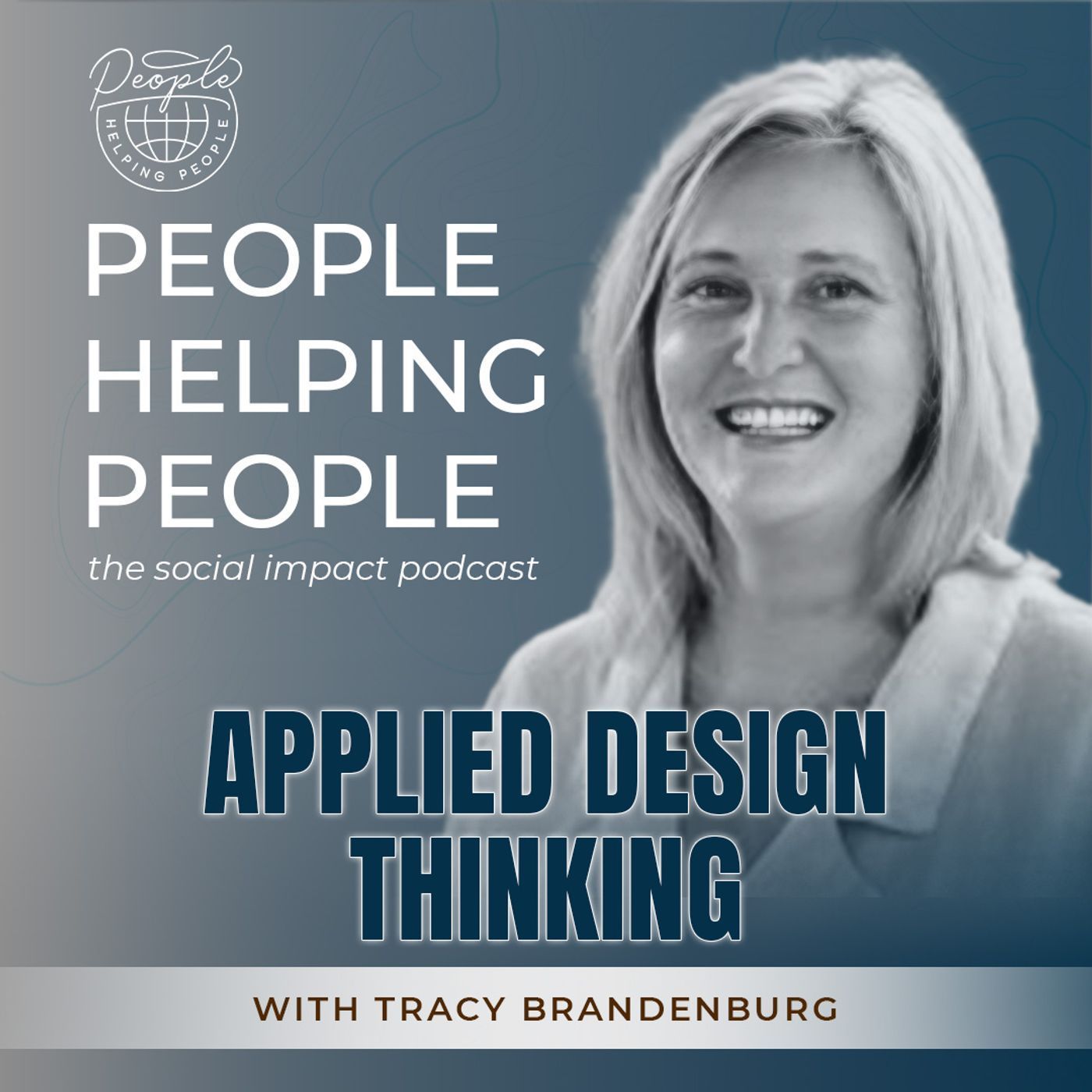
Applied Design Thinking with Tracy Brandenburg
Jun 900:29:29Tap to summarizeWhat if the reason your idea isn't working isn't the idea itself, but the questions you're asking before you build it?About This EpisodeTracy Brandenburg has taught design thinking at Stanford's d.school, built three programs at Cornell, and helped student entrepreneurs go from "I already know the answer" to actually talking to real humans and learning something.Tracy unpacks what design thinking really means, where it comes from, and why it might be the most practical tool a social entrepreneur can have.Tracy started as a cultural anthropologist, showed up at Stanford not knowing why she was there, and ended up running design thinking workshops on her living room floor with popsicle sticks and craft supplies. From there it grew into JetBlue airport fieldwork, Cornell university programs, and now work with student entrepreneurs at Denison University's Red Labs.The conversation covers the full arc of the design thinking process, from building empathy and asking better questions to prototyping, pivoting, and integrating what you learn. Tracy is honest about what students consistently struggle with: getting out of the classroom to talk to strangers, and letting go of an idea when the feedback tells them to.There's also a genuinely fun tangent about designing your life the same way you'd design a product, and what a pirate surf camp in Costa Rica has to do with finding your calling.Episode in a glance00:00 Introduction to Design Thinking and Its Impact01:30 How an anthropologist ended up at Stanford's d.school03:26 Empathy as the foundation of design thinking05:44 From living room workshops to university programs08:35 Getting students to talk to strangers and what actually helps12:30 Applying design thinking with student entrepreneurs at Denison15:15 Why pivoting is the hardest skill to teach17:34 Designing your life like a prototype 221:54 Reimagining the Rust Belt with design thinking24:20 What Tracy wants to build next in social innovationAbout the GuestTracy Brandenburg is a design thinking trainer, anthropologist, and social innovator who has taught at Stanford's d.school, pioneered three design thinking programs at Cornell, and currently leads design thinking work at Denison University's Red Labs. She is also the founder of Reimagining the Rust Belt, a social innovation project in her hometown of Middletown, Ohio.Connect with Tracy and her work:→ tracydesign.rocks→ LinkedIn
Transcribe →Lessons from the Social Impact Mastermind
May 1200:21:07Tap to summarizeWhat does it actually take to build a social enterprise when you still have a day job, a family, and a world that won't slow down?Three years in, the Social Impact Mastermind has become one of Adam Morris's favorite things he does. The idea was simple: bring social entrepreneurs together at a similar stage in their journey, create a space where they can be honest about what they're struggling with, and let the group do what groups do best. Support each other.This recap covers the four themes that kept coming up this year: revenue, social media, scope creep, and balance. The revenue conversation gets refreshingly real, from a founder who paid $100 to practice discovery calls on userinterviews.com before ever approaching a real decision maker, to the mindset shift that turns sales from something uncomfortable into something genuinely collaborative. There's also a honest look at how the nonprofit funding landscape has changed and where to start looking when the grants dry up.On social media, the big unlock was simple: stop waiting until you have the perfect post and just start showing up. Scope creep and balance round out the conversation, with Adam sharing why a weekly review habit and protecting your personal time are not nice-to-haves, they are the whole game when you are building something meaningful on the side.Episode in a glance00:00 The Social Impact Mastermind and how it started03:14 Theme one: finding revenue and reframing sales as discovery08:45 Theme two: why consistency beats perfection on social media13:25 Theme three: avoiding scope creep with a weekly review practice17:11 Theme four: protecting your time and energy as a busy entrepreneurCurious about joining the next Social Impact Mastermind? Reach out to Adam directly to find out when the next cohort kicks off.
Transcribe →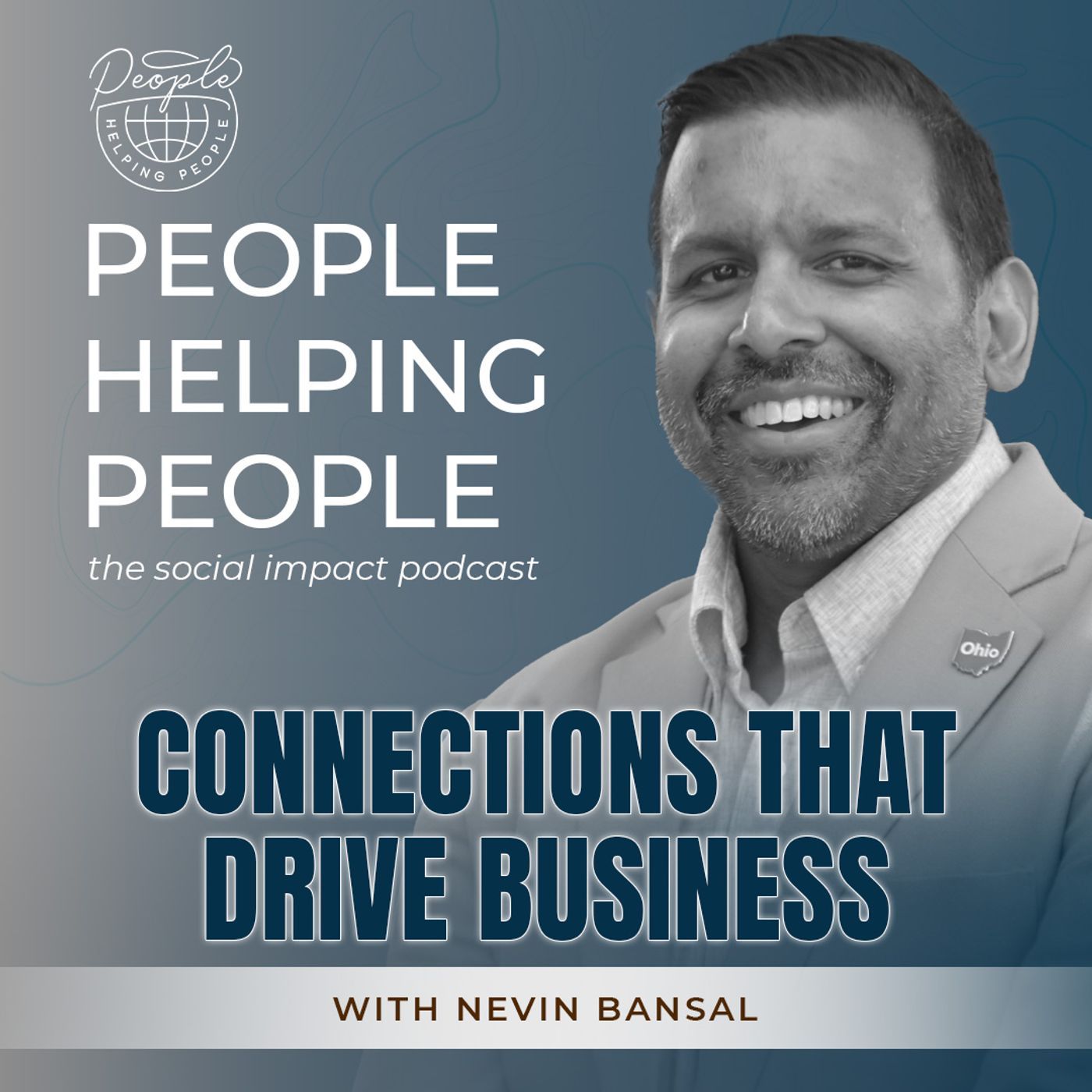
Connections That Drive Business with Nevin Bansal
May 500:29:44Tap to summarizeHow can a small business owner find the time to change their community when they are barely finding the time to finish payroll?Small businesses are the soul of our local economy, yet many founders struggle to find a way to give back while juggling the daily chaos of running a company. Nevin Bansal saw this gap firsthand. Coming from a corporate background with endless resources, he realized that small business owners often want to volunteer but lack a clear roadmap to get started.Small Biz Cares was born from the idea that giving back should not be a luxury for the big players; it should be part of every company's DNA. By moving away from stuffy networking events and toward shared "sweat equity" experiences—like sorting toys for the holidays or making no-sew blankets—founders are building deeper, values-based relationships that actually strengthen their local network. It turns out that when you lead with service, the business growth follows naturally. This is a journey about moving beyond just surviving to finding a purpose statement that inspires both goodness and greatness in others.Episode in a glance00:00 The origin and birth of Small Biz Cares02:56 Launching the first community service events05:20 Pivoting impact and storytelling during the pandemic07:40 Advice for new owners on getting involved09:53 Marketing your business through community service14:37 The Power of Shared Experiences20:53 How community leadership changes your perspectiveAbout Nevin BansalNevin Bansal is the Executive Director of Small Biz Cares and the founder of Outreach Promos. With over 14 years of experience running his own business, he is a passionate advocate for small business community engagement. He focuses on helping founders align their professional goals with meaningful local impact through volunteering, fundraising, and storytelling.Connect with Nevin Bansal and his work→ Visit the Small Biz Cares website: smallbizcares.org→ Connect with Nevin on LinkedIn: Nevin Bansal
Transcribe →
GiveBackHack In Action - Launching Social Impact
Apr 2800:24:00Tap to summarizeCan you actually build a meaningful business in a weekend and have it still be running years later?Social entrepreneurship can feel lonely, overwhelming, and undefined, especially when you care deeply about a cause but have no idea how to turn that passion into a functioning business. That's exactly the gap GiveBackHack was designed to fill.Adam Morris pulls back the curtain on the Columbus, Ohio-based organization that gave him his own entrepreneurial start, sharing how a weekend hackathon format rooted in applied design thinking has launched real businesses tackling real community problems. The secret isn't building a finished product. It's getting the right people in a room, surfacing your assumptions, and then actually going out to test them by talking to real people.Adam walks through the stories of participants like Karen, whose research on Black caregivers became the foundation of her nonprofit Pair to Care; Leah, an AmeriCorps volunteer who discovered that a crumpled piece of paper with outdated resource phone numbers was failing the people she served; and Wesley, the rapid-prototyping tech wizard who embodies the "scrappy and fast" philosophy that separates learning entrepreneurs from stuck ones.Along the way, Adam reflects on his own journey launching Wild Tiger Tees, a screen-printing business that employed youth experiencing homelessness at the Star House, and what it taught him about what entrepreneurship actually feels like from the inside.At its core, this episode is about something bigger than business. It's about building authentic human connections, slowing down in an AI-accelerated world, and creating spaces where people feel genuinely heard. GiveBackHack, it turns out, is less a startup event and more a community transformation engine.Episode in a glance00:00 What is GiveBackHack and why Adam cares deeply about it02:42 How GiveBackHack was founded and why it broke from the traditional startup weekend model04:28 Design thinking explained: testing assumptions before building solutions08:30 Karen and Pair to Care: turning research into a social enterprise10:27 Wild Tiger Tees: Adam's own GiveBackHack origin story12:31 Wesley's scrappy prototyping approach and what it teaches us14:03 Leah and Hunger Helper: learning from people experiencing the problem firsthand16:59 The Impact of Rapid Change in Technology19:15 What the best social entrepreneurs have in commonInterested in launching a social enterprise? Reach out to Adam or join his social impact mastermind group for entrepreneurs at the early stages of building something meaningful.
Transcribe →
Confidence Lab with Rachyl and Lachandra
Apr 2100:30:17Tap to summarizeWhat if the thing standing between you and the impact you want to make isn't a lack of resources, but a lack of confidence?Confidence is one of those words that sounds simple but hits differently when you're an entrepreneur trying to do something meaningful in the world. Adam Morris sits down with Rachyl Kershaw of Greater Columbus Consulting and Lachandra Baker of LBB Edutainment to dig into why so many purpose-driven people hold themselves back, and what they're doing about it through the Confidence Lab.Two powerhouses who somehow never crossed paths despite moving in the same Columbus circles for years, Rachyl and Lachandra bring complementary energy to a shared mission: helping people show up as their full, authentic selves, whether they're in a boardroom, building a nonprofit, or somewhere in between.The conversation gets real fast. Lachandra talks about the emotional exhaustion that drives people to the Confidence Lab, the feeling of constantly trying to find your sea legs in a world that keeps shifting. Rachyl shares her own journey from a sharp-elbowed early career version of confidence to the healthier, more grounded kind she now teaches, rooted in knowing your value rather than defending it.They also tackle something particularly relevant for social entrepreneurs: the discomfort of selling, speaking up, and delegating when you're used to carrying everything yourself.Their message: You don't have to do it all, and you don't have to do it alone. The Confidence Collective they've built is living proof of that, a group of brilliant leaders pooling their strengths and going after opportunities together.Episode in a glance00:00 Why confidence is harder in practice than it sounds01:05 Rachyl's background and why she left corporate life02:43 Lachandra's 35 years in people-first work05:04 How the Confidence Lab idea was born and the gap it was designed to fill08:31 What participants took away from last year's event10:50 Why the Confidence Lab naturally became a women-centered space16:21 The power of delegating, partnering, and not doing it all yourself19:41 Rachyl's personal story: from defensive confidence to the real thing25:19 How leaders can create psychological safety so others speak up too28:35 How to find the Confidence Lab and get involvedAbout the GuestsRachyl Kershaw is the founder of Greater Columbus Consulting, bringing decades of corporate and technology experience to help social enterprises and conscious capitalists build stronger, more impactful businesses.Connect with Rachyl and her work: → LinkedIn Lachandra Baker is the founder of LBB Edutainment, with 35 years of experience in employee engagement, company culture, and diversity, equity, and inclusion. She is a speaker, culture strategist, and champion for bringing full humanity into every workplace.Connect with Lachandra and her work: → LinkedIn The Confidence Lab Summit is Monday, May 4th, noon to 4pm at Rev1 at the Peninsula. Grab your tickets and learn more at confidencelab.org.
Transcribe →
Emotional Wellbeing for Social Entrepreneurs
Apr 1400:26:51Tap to summarizeHow can you expect to change the world if you are constantly running on an empty tank?Social impact work is inherently heavy, but lately, that weight feels even more intense for many founders. Between massive federal funding cuts, the rapid acceleration of AI, and a general sense of global uncertainty, change-makers are finding themselves at the brink of burnout. It is a rational response to an irrational world, but it creates a dangerous paradox: the people most committed to helping others are often the ones neglecting themselves the most.Prioritizing your own mental health isn’t a retreat from the mission; it is a prerequisite for it. Just like the oxygen mask analogy on an airplane, you have to be grounded and healthy to hold space for the challenges others are facing. Whether it is through morning journals, finding space to recharge, or reconnecting with nature, these self-care pillars provide the resilience needed to stay in the game. Real change happens when we move out of isolation and back into community, sharing our vulnerabilities authentically and remembering that we do not have to solve the entire puzzle alone.Episode in a glance00:00 The Importance of Emotional Well-Being01:53 The impact of recent federal funding cuts04:56 Navigating AI anxiety and rapid change08:54 Why your well-being is a core business metric14:15 Moving from a downward spiral to a grounded state17:13 Five pillars for maintaining daily resilience19:59 Finding community in social impact masterminds24:33 Prioritizing Well-Being for Greater ImpactAre you feeling the weight of the work? Adam is here to support social entrepreneurs through the messy middle of building an impact venture. If you are feeling burnt out or just need a non-judgmental space to talk through your strategy, reach out for a conversation today. Don't forget that you are part of something bigger than yourself!
Transcribe →