← Personal Injury Mastermind w/ Chris Dreyer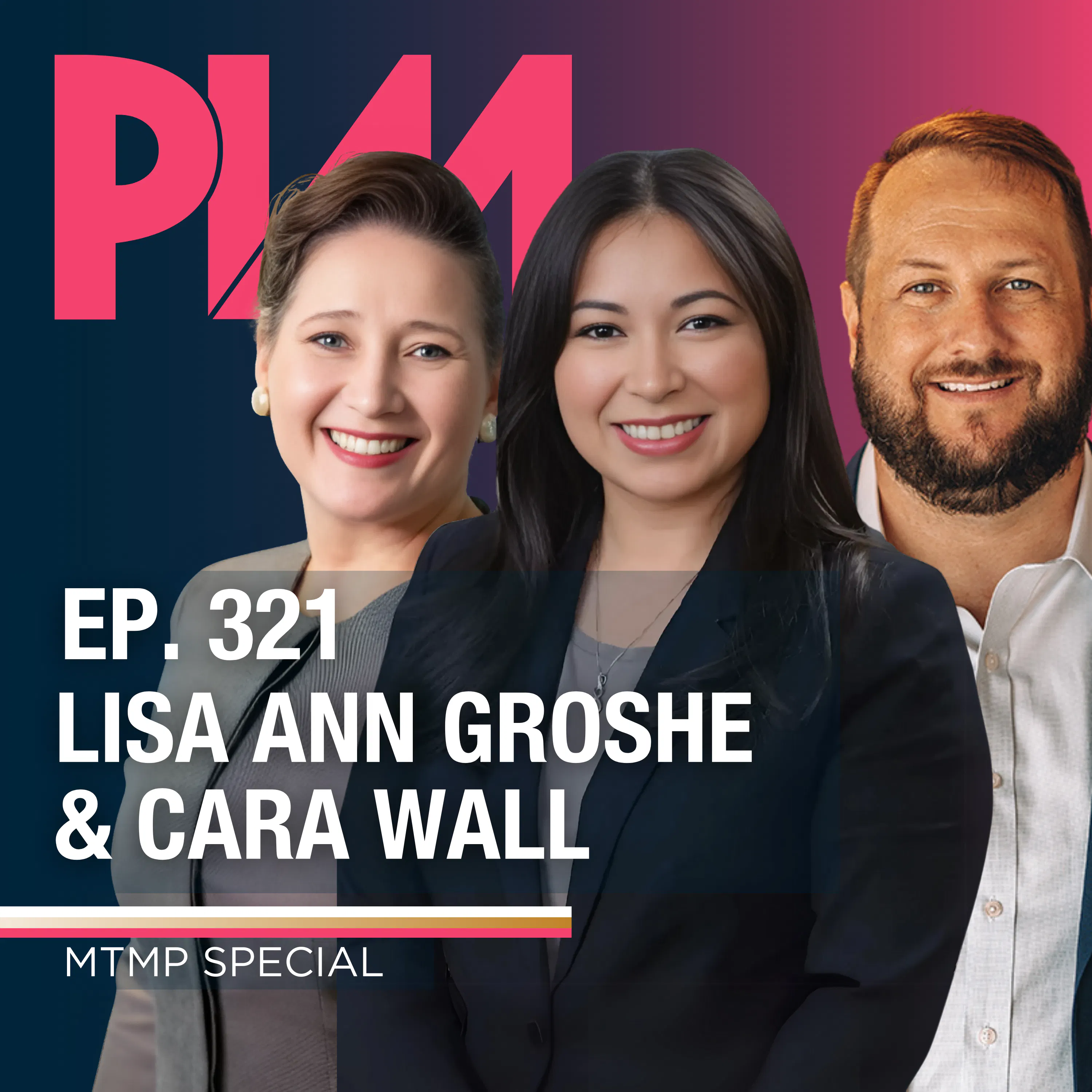
Personal Injury Mastermind w/ Chris Dreyer
321. Litigation-Level AI (Without the Risk): How Smart Firms Are Getting Ahead Now w/ Lisa Gorshe and Carasusana Wall
00:24:52
Loading summary
Transcript32 lines
- [00:01]
Lisa Gor
AI is everywhere. It's writing social media posts and helping us pick the next binge worthy Netflix show. You're even listening to an AI generated voice right now. But for personal injury and mass tort lawyers, AI has the potential to go way deeper. This is not about the next shiny tool. It's about scaling your firm, sharpening your edge, and delivering better results for your clients, all without sacrificing your time or your team's sanity.
- [00:34]
Chris Dreyer
As you just heard, AI isn't coming. It's already here. The smartest law firms aren't fighting it. They're learning how to make it work for them. And the top litigators like Lisa Ann Garsh and Care Wall are proving it can do more than summarize documents. It can reshape your firm. Lisa brings 25 years of mass tour firepower. Kara's the tech savvy partner, rethinking how PI cases are built together. They're leading the AI conversation at Mass towards made Perfect in Las Vegas. I caught up with them while at mtmp and they're showing us how to make it practical, ethical, and profitable. This is Personal injury Mastermind. I'm Chris Dreyer, founder and CEO of Rankings IO, and this one's essential. Let's go.
- [01:12]
Kara Wall
So I love it for depositions or cross exams. If I know there's a question or a point I want to reach, but I'm struggling with how to phrase my leading question just right, I'll say I'll create a prompt that's like, here's what I want to get at ways to ask this question. My name's Kara Wall. If you see it in writing, it's Kara Susannah. But that's far too long for anybody to remember, and I split my practice between mass torts and catastrophic personal injury.
- [01:37]
Chris Dreyer
Kara Wall is partner at zolenkrans. She's part of a new generation of attorneys who grew up in tech, and she's using it to level up her litigation game. She's smart, scrappy, and exactly the kind of lawyer you want in your corner.
- [01:49]
Lisa Gor
We use some AI to automate some of our processes within our office to make our employees more efficient. If I have a brief and I need a table of contents or a table of authorities, the AI that's in the system will automate those pieces. That's low hanging fruit.
- [02:11]
Chris Dreyer
Lisa is the managing attorney at Johnson Becker. She remembers practicing law when floppy disks were cutting edge. And today she's leading a top firm in the AI era with sharp instincts and even sharper strategy.
- [02:23]
Lisa Gor
I will upload into publicly available sources ChatGPT, Adobe articles that I want summarized that I don't know, do I want to spend an hour reading the 20 pages or get the summary to get the high points and then have it linked to those main points and be like, oh yeah, this is worth my time to take an hour to read and digest this. Or is that overview good enough? We have used AI with services that are able to promise us siloing of our data to give us some chronologies in specific instances. And that's one of the pieces that our firm is starting to invest. Investigate more how can we harness AI in mass torts to put chronologies together?
- [03:22]
Chris Dreyer
I gotta admit, I am using ChatGPT and Claude almost every day where me and my wife can't figure out what we want to watch as for a movie like on Netflix or whatever. And we're like okay, let's, let's put in some prompts and let's see what suggesting they're like, oh that's, that's what we want, right? And then we'll talk about it. And then also, you know, I'll see like a long YouTube video that's like an hour long. I'm like, okay, can you just summarize this for me and give me like the top 10 points? I'm doing some of those things myself. It enhances our time, our abilities. It just gives us more time back and, and resources. So. So Kara, what, what about you?
- [03:59]
Kara Wall
I actually use in the firm side of things a lot of the same uses that Lisa was talking about. The first four way we really made into it was on the medical technology side. So by about two and a half, three years now, we've been using various services to help us summarize, organize and get to the heart of our clients medical records. So it's absolutely necessary in the mass tort because of volume clients. But on my single event side for the nursing homes, those are patients who had an extensive medical history, an extensive treatment history. So it's not unusual to have 17,000, 20,000 pages, especially now that we have EMR records. Right. And so we've had to use programs to help us get to the heart of what we're looking for. And I'm starting to use a new system that actually integrates both the chronology aspect. That's the big one entirely in our Office is using AI for the chronologies. Same thing using the ChatGPT, the clause, all of those systems. There's a program that kind of is an aggregator of different LLMs called duplexity. And we use it a lot for just quick questions on the medical side. So I work with medical consultants for big picture questions. But if I just need to know what a process is or what is this procedure, I love being able to plug it in there and just getting a quick overview of it. So the. One of my associates and I, we started referring to the program as Lexi. Well, just go ask Lexi like she's our coworker when we need questions for things. And then on the mass tort side, I'm involved in litigation that's got about 20,000 or so file cases and it does not have a mandatory census. But we want to know, you know, what are, what's the census? What does the data land look like for the all file cases? So we've actually employed an AI service there that can pull the information out of the medical records for the data points we requested and put it into a format that matches the the manual database we had created years before. So it's helping us get our arms around a large set of data that would be just impossible to do manually. And quite frankly, firms who are responsible for it don't have the manpower often to do that work. Lisa's very familiar. The other part is when you're doing doc review and discovery, AI really helps to get to concepts and surface those hot documents and get to the heart of the story. And so that's something she's especially. We have less conversations actually about what tool is best for this litigation and what, what, what are we like here and there. So kind of a wide range of uses.
- [06:25]
Chris Dreyer
Yeah, so. So you gave me a nice pass here. So. So Lisa, let's continue on that side of the coin.
- [06:31]
Lisa Gor
I love the new platforms and what is out there that brings us beyond technology assisted research and gets us to being able to find groups of documents within litigation that are thematic and that are called together that might sprout off another sub theme that the technology is finding. Once we have whatever that main topic is, it will find read that is the next most common that relates those documents that we may not have thought about to start to go down that avenue. As well as some of the technology in sources allows you to pinpoint and find out. And this is a little bit of automation with the AI.
- [07:33]
Kara Wall
But.
- [07:33]
Lisa Gor
But if you put in a particular character or employee and find out who are they communicating to versus who are they getting communications from, that can be very telling. Where you think the hierarchy is one way, but then you don't see that in reality, because their emails aren't going to ABC, they're always going to XYZ.
- [07:59]
Kara Wall
They their answer?
- [08:01]
Chris Dreyer
Yeah, when I'm using these different LLMs, for example, chat GPT is like, like I call it my lazy approach. It's like the, the shortest prompt and it like somehow uses my brain and knows what I want or I'll just upload a picture and it will, you know, summarize it really nicely. But if I try to do that on Claude, it's just a big fail, right? But I feel like sometimes Claude, if I spend a little bit more time with the prompt, the, the abilities that it has is far superior than ChatGPT. I remember recently I was asking a question about addressable market and Claude created an algorithm to analyze these different things and like ChatGPT was very top level, you know, so you know, how are you guys using like, like really utilizing and entering the prompts? Are you just feeding the data and Excel sheets? Are you taking pictures? Like, like tell me about the usage and let's start with Kara.
- [08:59]
Kara Wall
So my approach to the programs is actually kind of thinking of each LLM as an employee or co worker, right? So each one has its own skill set that it's good at and you have to explain a task to people in different ways depending on their abilities. So the prompt that I might make for ChatGPT might be something I might give to like an entry level or an assistant in my office who just need kind of very basic, very high level work versus something like cloud or Deep seq. It might be something like my associate who I need a deep dive in and I give very different instructions to. And so when I'm going for the more detailed. If I'm trying to create something with a very directed result from the prompts, I think about the kind of instructions I would give an employee. What's the scope, you know, what output am I looking for, what approach do I want and have it taken? And that's how I build out those prompts to try to get as close to the end result that I'm looking for.
- [09:53]
Chris Dreyer
I am probably going to steal that and probably name my different LLMs because that's how I think about it. The thing that's frustrating for me is when I don't delete the, or archive the history, it's like biases everything. So I was joking with my team and I was like, look, not everything that I enter is oh, that's a great idea Chat GPT. But like, like, like please challenge me. Like let's Give it a Persona to challenge and scrutinize my information. So you know Lisa, what do you see? Like you know, are you. Do you have like a similar methodology of using, you know, naming and the different skill sets? How do you go about in, in approaching which LLM you're going to use?
- [10:37]
Lisa Gor
Not thought of naming but now that Kara said that I want to steal that and use a different name the different sources that are out there. But I will look at what is. I'm very intentional and I don't use as many sources as Kara does because I'm still old and I'm still afraid and very worried about my clients privacy. And so I will look at what is it that I absolutely need and what's. What can I put into there with the barest of minimum client sensitive data to get me on, on my jumping off point. And so I will weigh what, what is it that I need to put into the system to get my answer. Our office, I was going to say next week is going to be in a sandbox for one of the sources that's out there. I've gone into the sandbox myself but I'm opening up to the rest of our firm to go into that sandbox to learn the tools to determine on a wide level is this going to be advance the ball for us so that we can all work a little, little smarter and not as hard to shave off. Sometimes we're being more effective.
- [12:06]
Chris Dreyer
Perplexity is like excellent because it cites everything and it doesn't like just garble everything together and kind of here's the sources. But good luck on trying to determine which is which. You know, like I want to sticking with you, Lisa, you know, you got a ton of trial experience. What about on the trial side? Have you seen trial attorneys at the firm go as far as here's everything about the case chat GPT as much as you can anonymize, you know, and keep it confidential. What's my, you know, what's the defense tactics? What's. Is it that advanced? Like does it. Can it craft a, a narrative? Look, I'm not a trial attorney. I think there's different tactics and approaches to cases. You know, does, does it go that far? Does it have that ability?
- [12:57]
Lisa Gor
I'll be honest, I don't believe it's. I and I'm the skeptic when it comes to that. I don't know if it's there yet. I think you can use it to target a question or frame an argument to help you with that piece and maybe determine during a trial between, between two different docs you may want to use and which one is going to present better based on the answers that have been given to date during a person's testimony. But I don't know. AI cannot replace a human's gut and intuition. And so much at trial is your gut instincts where you're going to go. And I don't think AI is there yet to be able to help. When you're in that split decision making process, can it help you prepare your opening argument or closing statements?
- [14:00]
Kara Wall
Yes.
- [14:01]
Lisa Gor
But during the trial, there's too much thinking on it, just on your toes. And that's, that's really what your client is paying for, is that knowledge and experience and being able to use your gut and your emotions.
- [14:22]
Chris Dreyer
Hey, folks, Chris Dreyer here. Last year at pimcon, we set the tone. This year we're setting the standard. We're heading Back to the Five Star Phoenician Resort in Scottsdale, Arizona, October 5th through 8th to take your personal injury firm from good to goat again. Pimcon isn't just another legal conference. It's a high impact experience built specifically for personal injury attorneys who want to scale smarter, connect deeper and get real results. No fluff, no filler, just proven and actionable strategies from brilliant attorneys that actually move the needle. General mission gets you the goods. Full access to all speaker sessions, entertainment and network with some of the most respected names in plaintiff law. VIP goes even further with luxury accommodations included and exclusive offerings. A white glove, concierge and more. Fair warning, VIP is very limited and they'll go fast. Ticket prices go up as tiers sell out. So now's the time to lock in your spot. Get your tickets at PIMCON. That's P I M C O N.org or visit the links in the show notes. The strongest firm show up at pencon. The rest they wonder what happened. Let's go from good to goat together. See you this fall in Scottsdale.
- [15:33]
Kara Wall
So I, I echo a lot of that. So I've actually got four trials between May 12 and the end of July. And I'm with Lisa. The on your feet, actual lawyering abilities part of it, it will never replace where it really is. A fundamentally helpful tool is breaking through your writer's block and breaking out of the own box that you're thinking together. Keep you fit. So I love it for depositions or cross exams if I know there's a question or a point I want to reach, but I'm struggling with how to phrase my Leading question just right. I'll say I'll create a prompt that's like, here's what I want to get at ways to ask this question. And then I can Frankenstein from the options given to me what I ultimately want to ask. It's good for crafting questions and then it's also great for, for helping with metaphors and analogies. We do that constantly as our openings and our closings and when you're dealing with experts. So often our, the metaphors and analogies we come with are always limited by our own experience with the world. Right. That's how we see things. That's when we frame it. And the AI is really good at breaking past that and getting input that you would never occur to because, you know, I don't watch nascar. I wouldn't have thought about a racing analogy or something. But it could be exactly what I need in the moment. So I really love that for challenging my thinking and getting me out of where I might be stuck in something.
- [16:59]
Chris Dreyer
You know, it's funny, I give, I give my prompts, Personas so, and like, like how this individual would analyze or, or a particular thing. So like I'll use like say Carmack which was the CTO at Meta and he's been, he's, he's an engineer so he uses like first principles and everything is super logical and then I'll use somebody else else when I want like a creative and then if I'm having fun I'll maybe have Samuel L. Jackson give me some, some feedback and just depending on my mood. But yeah, so super interesting. I also, I want to send a follow up question you to carry you first and then Lisa. So talk to me about like your entries. Okay. So I am, I'm getting there to the point where it's almost scary where I'm like talking into the phone and it's like, it's almost like super, it's like a super weird feeling when you get the back and forth, especially if you get the audio reading it back to you. But I'm wondering just how you're, how you're entering into the LLMs. Are you, is it mostly text based prompts? Are you speaking into it? Talk to me about like the entries.
- [18:04]
Kara Wall
Yeah, it is, I would say overwhelmingly text based based prompts for me unless I'm uploading something I want analyzed. Then I'll upload documents occasionally a picture. Oftentimes it is, it is an article or a piece of writing on the Internet. But usually it's me. It might be my control Freak nature that I like want to be able to say exactly what I want. And so I'm entering a text.
- [18:28]
Chris Dreyer
Yeah, that's great. And then sometimes, you know, if you don't delete the history and you use those prompts, those other individuals, it's like, oh, wait, I, that's. I need to shut that off and, and change things.
- [18:39]
Lisa Gor
I am almost exclusive with texting and typing it all in. What is my query to control what it is unless it's something personal for myself. If I'm doing something that's personal, that I just want something off the cuff or I'm just using like the Google or Microsoft copilot, the AI in that because it's, it's just general. Then I might do an audio question. But it is always I, I am very intentional with how I'm crafting the prompt.
- [19:17]
Chris Dreyer
So I. This has been a really fun conversation. I can see like the uses in the legal space, how it enhances your capabilities and enhances capacity. So, you know, know, I guess, you know, one final question for each of you is like, where, where do you see this going for the future and adoption for the legal space? And I'll start with you, Lisa.
- [19:40]
Lisa Gor
For me, I don't think AI is going to go away. It's going to continue to grow. But it is, it's a tool within the toolbox. It's never going to replace a lawyer. It might replace pieces of what a staff member can do for you in order to support you and make you a better lawyer, but it's not going to replace lawyers out there.
- [20:10]
Kara Wall
I agree and I think that's one of the philosophies at least, and I really share, at the heart of it is there will always be a need for lawyers. You just can't tell a robot what to take over the case. I really think of it as akin to the change from books to electronic case law in terms of it being a tool that if you don't adapt and develop and at least be able to understand it, you're going to be doing a disservice to your clients because you won't be, you won't be lawyering at your best ability. But making the switch from a book to electronic case law doesn't take out thinking it didn't do the work for you. It made it easier to access things. But ultimately the human oversight and intelligence is still there.
- [20:49]
Chris Dreyer
Big thanks to Lisa Gor and Carol Wall for pulling back the curtain on how AI is really being used in mass torts and what it means for the future of the legal practice. Whether you're managing 20,000 files or writing your next opening statement, the message is clear. AI isn't replacing lawyers, but it's giving you the edge. If you got value from today's episode, do me a favor. Share with a colleague, leave a review and make sure you're subscribed. This is Personal Injury Mastermind. I'm Chris Dreyer. Catch you next time.