← Personal Injury Mastermind w/ Chris Dreyer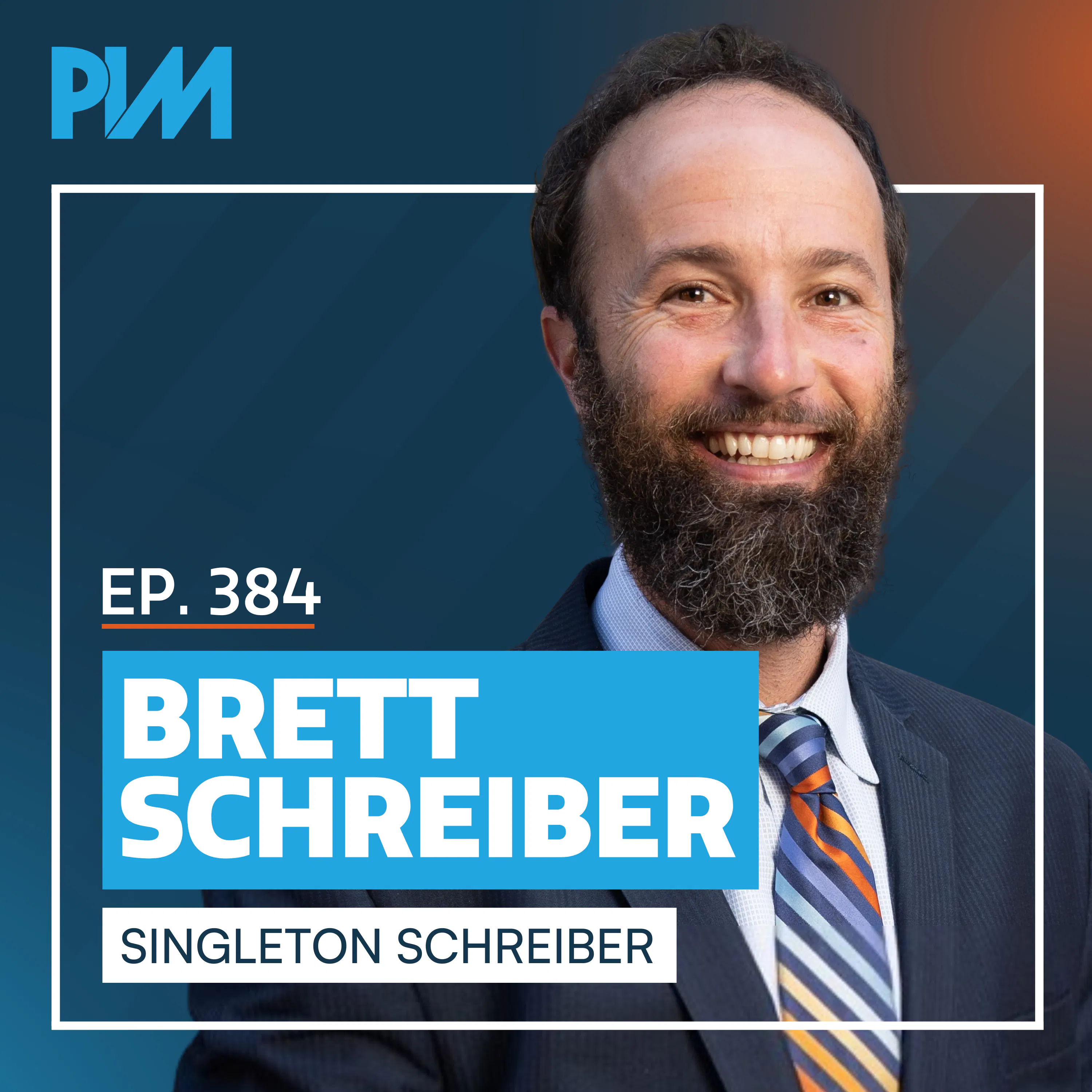
Personal Injury Mastermind w/ Chris Dreyer
384. The Real Reason PI Firms Lose Control as They Scale w/ Brett Schreiber
00:39:34
Why systems, not ads or effort, decide who scales with control
Loading summary
Transcript31 lines
- [00:02]
A
Learn legal marketing and intake from the masters of personal injury. PIMCON 2026 October 4th through 7th at Scottsdale, Arizona. Get your tickets today pimcon.org that's P I M C O N dot O R G. You do not build a nine figure personal injury firm just by getting better at ads or hiring harder working lawyers. You build it by designing systems that make good decisions inevitable at volume. This episode shows you exactly what that looks like. This is Personal Injury Mastermind. Powered by Rankings IO I'm Chris Schreier. In just four years, Brett Schreiber, founder of Singleton. Schreiber scaled his firm from 40 people to more than 475 across seven states. Brett shares what breaks when firms grow fast and what has to be built before scale becomes sustainable. Let's get into it. Hey guys, I'm really excited. I got Brett Schreiber on the call today. Uh, Brett, welcome to the show.
- [00:58]
B
Thanks for having me.
- [00:59]
A
You know, I was joking with you. You've been on a bit of a heater lately. So we gotta, we gotta start it off with a win. Let's talk about that mammoth Tesla case. You know, how did you get it start to finish? Like, tell me about that.
- [01:12]
B
Sure. I think the best way to talk about Tesla is actually a story of two drinks. There are two important drinks, one alcoholic, one. Not that that really allowed that whole thing to happen. The first is I am sitting in old San Juan a year ago last May, and I'm down there for a conference and my wife and I go to lunch and I have some zoom call with a couple of guys about a Tesla case and proceed to go into this restaurant that looks like, you know, Ernest Hemingway would be, you know, walking out of the back of the bar. So I have one mojito with my wife and then she's like, I think I'm going to have a second because I'm going to go back to the pool and take a nap. I was like, I'll join you. They're pouring them like gasoline. So then I get on this call with these guys and they start telling me about this Tesla case they have. And, and because I've been working these cases for a number of years, needless to say, it's a combination of the mojito and the facts. I'm all in, right? So I tell these guys, let's go. Two lawyers out of Florida I hadn't met before. I like the case. It's one of the first third party cases that, you know, had the potential to be going to trial against Tesla, they had so far been undefeated. And I say I'm in. Problem was I took over the case from other lawyers on the liability side. And when I read the Dropbox on my flight back to Miami the next day, I realized that there had been two liability depositions taken in two and a half years and expert reports were due in six weeks. So that was a little bit, a little bit of heartburn. And then flash forward, we get the case, we get all in. I know we'll unpack this further, but the other drink that changed the course of the case was actually a large Venti hot chocolate that was drank by my Russian hacker. And as he proceeded to actually pull the data off of the autopilot chip off of out of Starbucks about six months later, after Tesla had denied for the better part of two and a half years that they had any data or any information about how the crash occurred. So between the mojitos and the Venti hot chocolate, I think those are really the two impetus that ultimately helped to translate to a 320 some odd million dollar verdict sometime later.
- [03:17]
A
Wild, wild. When I hear these numbers and Brett, I think you knew this, but I'm not an attorney so I'm going to let you speak to your peers on the show. Did you do big data? Did you do a bunch of focus groups? Where did that number come from? How did it accrue that much value? Like what are some of the components of that?
- [03:36]
B
Sure, the answer is yes and yes to all of the above. Right? So I've been handling a number of these Tesla autopilot failure cases across the country for, you know, several years now. This was the first one at least of the cases I had that we were able to get to TR trial. And it was very obvious to us that the way juries looked at these cases was very different from the first two cases that Tesla had won. Those are what we would consider first party cases where the driver of the Tesla on autopilot crashed and then brought suit. Well, that triggers, as we know as trial lawyers, this notion of defensive attribution, right? The arms crossed looking down. I'd never use that. I'd never turn on that crazy technology. This case was different. This was a 22 year old girl and her 26 year old boyfriend who were minding their damn business. They were parked lawfully at the end of a street in Key Largo, the end of a T intersection. They were parked on the other side in a place you're allowed to park. They had gone fishing. They Were cleaning up and were going to be heading home, you know, within a few minutes when Tesla on autopilot blows through the intersection, blows through the stop sign, blows through everything and plows into them at 70 miles an hour. And so we renew from focus groups both in this case as well as in other cases, that this was very triggering for people, this idea. Because it's, it's one thing to be like, I'd never use that technology. It's another thing to be like, I'd never park lawfully at the end of a street and be minding my business outside my car. Of course you would. Right. So suddenly everyone can envision themselves in that scenario. And it triggers this mad Maxian Terminator, the machines are taking over thing in people. And so that's what we knew was kind of the backdrop. Had done both community surveys, some kind of big data analysis within the veneer of Miami. I'm a San Diego based lawyer, I have offices throughout the country, but I don't have a presence in South Florida. But was asked to do this because of subject matter expertise that I just have in autonomous vehicles and systems and all of this stuff. And we went ahead and both knew qualitatively and quantitatively that this case was different. Tesla wasn't looking at it that way. You know, they ultimately made some overtures to, to settle the case and offered some generational life changing money to my clients. But to them it was critical that this story get told. And so we were able to tell it. And I think from a valuation standpoint it was really interesting. I asked for about $100 million in compensatories, so about $50 million for the wrongful death case and about $50 million for the injury case. They gave me 127. They went 25 million over my ask on compensatories. I've had jurors go over my ask. I mean, nine times out of ten they give me less than I ask for. And that's fine, right? That's, that's kind of what you expect. But what was interesting here in Florida you have a limitation in terms of punitive damages. So I couldn't ask for more than three times the compensatory. So I asked for 100 and about a little less than 100. And then I think it was 250 or so in compensatory is what they. Punitives, excuse me. And they ultimately gave me 200 in punitives and 100 and whatever it was 27, 29 in compensatories. And that's because clearly they got it right, that that was the biggest driver. And into that point, I think it was interesting because we focus group these cases across the country and Elon Musk and Tesla played very differently post doge, post election than he had in those same focus groups six months or nine months before.
- [07:22]
A
Interesting.
- [07:23]
B
Especially in Miami. He plays differently in Miami, in la, in Vegas than he does in other, even in San Diego or San Francisco. My next case was set to try in Oakland. I was actually supposed to be starting trial on Monday in Oakland, but after Miami, Tesla didn't want to go for round two. And so we've resolved that case. But all that is to say there's a lot of people who a year ago would say he's a genius, he's an innovator, he's the world's richest man. They suddenly started looking at it and going, he's an asshole. He's taking things away. He's a destructive force rather than a positive force. And that's not to say he still didn't have his fanboys and fangirls out there. But they were much fewer and farther between post doge than they were pre election.
- [08:15]
A
Interesting. Interesting. And yeah, you can't help but go to X. It's very. There's a lot of opinions. Right. And much more facing on him versus just the businessman in the past. I kind of want to set the tone here, so, and correct me if I'm wrong, I think you've went from like 40 people like three or four years ago to close to 500. You might be over 500 now. When I did it, I think I pegged you at like 475. So we got to unpack this. Like you got that referral and that's a mammoth case. But even before that you're on this massive, you know, increase in growth of the company. And where does it come from? Is it the niching and the expertise in these, this autonomous vehicles? Is it like help me understand the attraction side of the business?
- [09:01]
B
Understood. So yes, your numbers were right. When Jerry Singleton and I got together and started this firm four and a half years ago, I ported over a team of eight. He had 30 something that were working on fires and mass tour. It has a handful of temporary employees who are working on another kind of project based thing. But we officially, when we started had 46 employees. I just had to give a little promotional video thing for an upcoming AAJ conference that's coming to San Diego yesterday. And I'm reading the little script that they gave Me. And I said, with over 120 attorneys and 450 staff, I go, we have 120 attorneys. When the hell did that happen? And Singleton and I look at each other like, who hired all these people? And that's inclusive of, of counsel. But like, my, my core crew is closer to a hundred. But all that's to say, yes, we have 10 X'd in under five years. And I would say that, you know, part of it has been recognizing, I've always said my success in life and in law is often defined by the fact that I have a very clear and consistent understanding of my own limitations. And I had a friend of mine who sold her tech company for a kabillion dollars, right, right before I started mine. So she started as a small group and ran it up, and then big, giant tech company came in and offered her hundreds and hundreds of millions of dollars and she exited with, you know, multi generational wealth. And it was interesting because I was just starting ours. And I said, I said to her, I said, what, looking back, like, what were the things that you think you did that helped you to get to where you got to, you know, 10 years later? And her comment, which was very prescient and very valuable to me, was she said that around 50 to 60 ish people was this fulcrum point where she had to bring in a full C suite. She had to bring in the COO and the CFO and the CIO and every goddamn C under the sun, right? To ensure that there were people who were singularly focused on making sure that the trains ran on time. And I think most lawyers, whether plaintiff or defense, are terrible at that. And we had just brought over a couple of partners to run our mass tort operation. They had come from big law and they were old law school buddies with, with my partner Jerry. And they had left one of the big law firms and a guy who had been the former coo, I think it was Lewis Brisboy, or some other giant ass defense firm, had gone out and created a fractional C suite firm for lawyers. Now, they had only worked with defense firms. We were the first plaintiff firm that they had ever worked with, and they thought our business model was insane. They're like, wait a second, wait a second. You run a business this way? Like, they thought we were pirates, right? But they helped us. And then they do these evaluations and look in the mirror, get on the scale, right? Pick your metaphor. But they would do that and force us to kind of look at what we were doing. And their comment Was, look, we're really good at turning B's into A's, right? If you're a D minus, there's nothing we could do for you. But if you're a C plus or a B minus, like, we'll take you up a couple of grades. So we brought that group in and then that ultimately helped us to then find and source the full time people when we grew out of the fractional. But I think that the lesson there is that we're a service industry and if people use the type of kind of ruthless efficiencies and process improvement that you see in manufacturing industries and in other industries and applied it to what we do, you see a lot more successful law firms, right? And again, I'm not smarter than anybody else, but I'll tell you what I am is I'm less greedy, constantly reinvesting, right? I pay these people a ton of money to do all of this, but it's so that. Cause it's not what I'm good at. I mean, bro, I was year one, month two, I'm at home on a weekend helping to revise an employee handbook and I'm literally googling the labor code provisions. I'm like, who am I? I don't even know what this stuff means, right? Know what your limitations are? Bring in the people who do it. Because again, if I was making widgets and so I'd bring in somebody and they'd be like, yo, if you move that conveyor belt 4 inches closer to that sorter bin, you're going to make 11 more widgets an hour. And you'd be like, well, let's move it. I mean, we should have moved it yesterday. We don't take that type of ruthless analysis of our own process, of how we work, of why we work, of how we do it in service industries. And we've done that consistently. And I think that is probably one of the singular most important pieces to our growth.
- [13:34]
A
I have a C suite now, finally, after 13 years. Right, finally. I should have done it in the past, right. Earlier because if it helped me explode through some, some breakpoints, the cfo, et cetera. But these employees, I mean, we're talking minimum 200 grand up to seven figures easy in some scenarios, you know. So like, do you like, how do you think about that? Like you're, you're a seven figure firm listening maybe at the five or six million dollars mark to go try to fill the C suite. What's the plan?
- [14:04]
B
Start fractional. Start with companies that offer a fractional piece that was the folks that we use. And there's more of them out there, right? We started five years ago, but now I'm starting to see when I go to some of these legal tech and conferences and things, there are people who are starting to recognize the importance of this. Okay, so the curse of our industry, I believe, is the infusion of private equity money. Because I believe that hedge funds kill everything that they touch. That said, that's just me. Yeah, I don't begrudge capitalism, but I do begrudge it the way it's destroyed industries like healthcare and airlines, real estate and a lot of other things. All that to be said, one of the blessings of that is they will scrutinize the business. And so I think what we're seeing in terms of some of those, those fractional C suite type companies and consultants coming in is more a consequence of private equity money because people want to prep themselves to do it again. I have no interest in that. I don't take money f those guys, as far as I'm concerned. But there is something to be said about their process, about how they look at the functions of a law firm, right? They run it like it's, you know, a spreadsheet. I don't run my law firm like it is a spreadsheet, but I certainly look at spreadsheets, you know what I mean? Like, you got to strike the balance. So that would be one of the things that I think people who are maybe at that, you know, you're making a million bucks or generating a million bucks, you got a million in revenue, you can afford a $10,000 consult or maybe even a $30,000 consult for several months to have one of these firms come in and interview your people, right? One of the things that we implemented four years ago is stay interviews. Why the hell are we waiting to find out what's fucked up about our business at the exit interview? Why aren't we asking our people, why do you stay? It's simple, but you just have to be intentional about it, right? And so setting up stay interviews, what's working for you, what's not? And they're going to be more honest in an anonymous setting run by some third party than they are with you or with me, right? And kind of creating these, we do these climate surveys, right, that are fully Anonymous and these 360 reviews. And we built in all of these things as we have grown and scaled because we want to maintain that kind of sense of, of that startup vibe, right? Because you get to a certain point Once you cross The Rubicon of 200 or so people, you can't know them all.
- [16:35]
A
Dunbar's number.
- [16:36]
B
I don't, I, I don't, I don't know. I introduce myself to people all the time. I meet them at the car. I'm like, hi, I'm Brett. What do you do? I can tell you about what, 100 to 150 people within this organization, who they are and what they do after that. Your guess is as good as mine. But I trust the people who run up to me and have the systems in place to ensure that we are getting the best of. And really the big key, after you get those processes and those systems in place, the next step is putting the right butts in the right seats and figuring that piece out. And that is probably where we are, I don't want to say struggling, but where we're constantly working to improve upon is getting the right butts in the right seats. Because that you can have an A plus employee, but if they're not in the right seat, working on the right thing, focusing on their superpower, you're not going to get the best out of them.
- [17:26]
A
So far, that was fantastic. Part of that, the stay interviews, that's amazing. I mean we do exit interviews. We never thought about a stay interview. We do those employee surveys, but those don't really have the same effect as a one on one conversation. It makes me think of that Jack Daly conversation. He's like, why do people throw these amazing going away parties? When people leave a business, why not throw an amazing welcome party? Like you don't want to incentivize the behavior to leave. Like I want a party to leave.
- [17:52]
B
100%. 100%.
- [18:02]
A
You have a couple unique C suite roles, right? You got the chief client officer. Tell me about maybe some of these out of the box roles that are a little less common, right.
- [18:11]
B
And so along with the chief client officer, right, we brought in someone who, who is our, basically our customer service experience manage manager, right? Someone from outside. She didn't come from a legal background, right. But her entire job is to focus and look at our client experience from cradle to grave and how we can make it better. Right. I have an entire team of client support or client services, I think we recently rebranded them, but they are there to just be a constant touch point for clients, right. We have all the tech and I've got all the, you know, the text updates and the letter updates and all of that. But I have a team who all they do is call clients for 40 hours a week. So that way we're insure everybody. We're probably at any given time, I think probably 16, 18,000 clients firm wide. Everyone gets a touch every three weeks no matter what.
- [18:59]
A
So is that different than the case manager? Did you segment that responsibility?
- [19:02]
B
Yes, because the case manager is going to be offering you more case updates and, you know, follow ups. And whether it's in a mass tort case or a single event PI case. How's your treatment? How's your family? We need these documents, your depositions coming up. Here's the latest, which again comes from the paralegals, it comes from the lawyers. We have all of that. This is a separate unit. They literally will be calling people and say like, hey, I see that Bob had a shoulder surgery last week. How'd that go? Right? The husband of the plaintiff. Oh, I saw muffins. The cat had to go to the vet. How is she? Right, because here's one thing you and I both know, Chris. You know what no one has ever complained about is that their lawyer calls them too much. And so having people do that. I have a social worker. I have a social work team, full time social workers who all they. Because here's what we know. It doesn't matter what the thing is. It could be a PI case, it could be a natural disaster, a fire, environmental devastation station, you name it. But here is the common thread amongst all of these folks that we represent doing this stuff. They all have various forms of financial insecurity, housing insecurity, food insecurity, or medical insecurity. Who trades in the currency of that day in and day out? 365 social workers. You ever filled out a Social Security disability application? I have. It's hard. And I'm smart. I'm the form guy, right? Like at my house, if my wife gets a form, she's like, fill that shit out. Like, that's what you do, bro. A Social Security disability appeal form. I can't understand it. You know who can? A social worker. That's what they do all day, every day. And then not only are they great outward facing for my clients, they're also great inward facing. We have this resiliency group that we have that, that meets online because I got, you know, I'm hybrid, I'm remote, I'm all over the place. 200 people show up sometimes to meet with our social work team. They talk about breath work, they talk about transference. They talk about the transference of trauma, about setting up boundaries, how to deal with burnout. They listen to Ted talks They do little meditations. We do all of that because again, that's what they do. So that's the in service piece. That's the inward facing piece. Because when you spend day in and day out talking to people, communicating with people who have gone through the most horrible thing ever, it wears on you, especially if you have, you know, you don't have a ton of training to deal with it. We throw people who don't have a lot of experience in creating healthy boundaries and dealing with transference and dealing with, you know, vicarious trauma. We throw them into these roles and then expect them to thrive. And some will. But why don't we give them the tools and the resources to be better at it? Especially when they're an entry level employee who's maybe 24 years old and they're, you know, getting paid 25 bucks an hour, right? Why not give them that support? And from the social work side, I mean, they're, they're beating down the door to work here because I pay them more and I support them, right? Because most social workers are vastly underpaid and vastly overworked. And so to tell them, and they're all like, wait, you mean I could have applied at a law firm? That's a thing. It's a thing here, and I hope it becomes a trend. So far, I'm the only law firm I've ever heard of that actually did this. But I hope others who hear it, whether it's through this or through other talks, that we do implement this because it makes for better service, makes for better client, you know, more client focus, and it helps your people as well.
- [22:22]
A
It completely flips the narrative that's so negative about PI attorneys, right? It's completely turns it on its head. And just before we move on, because I definitely, while I have you, I want to talk about the trial side, but before we move on, what I'm hearing in my head is the go giver and the impact from just a referral and word of mouth components. So how does this translate into future cases? I mean, we talking 30, 40% or higher of cases you're receiving from referrals because, you know, they're talking like, oh my gosh, they treated me amazing, dude.
- [22:53]
B
That's the entire model. The other piece, other than the operational systems improvements, process improvement, and constantly looking to make those improvements, right? There is never going to be a time. It's funny, I've done this, I've done talks like this in various settings, and I got off the stage at one of these things And I had talked about some of our business stuff, and this guy comes up to me. He's like, man, you guys are killing it. It's unbelievable. You've figured it out. I said, bro, I said, if I wake up one morning and I'm like, oh, nailed it. Like, that's the day we begin to die. Yes, Right. And so that will never be words that you will ever hear from me. We are constantly looking to improve and make it better. But the other piece, in addition, that has made all of this work is as we have expanded to new states, it's typically been some unnatural disaster, whether it's utility, caused wildfire, environmental contamination, something that brings us in that we tend to do at scale. And then when you provide that service, everything grows organically, right? Lahaina is the perfect example. I have 2200 clients in Maui from the. From the fires over there. But my single event practice just grows organically because 2200 people are like, these guys are it, right? They care. They've taken care of us. They're communicative. They're on it. And so when their brother, their uncle, their neighbor, their nephew or their friend gets into a car wreck, has a slip and fall, has the neutral bullet blow up in their face or a bad event, you know, with a. With a medical provider, they're like, call my lawyer. And then when you get into these communities and you invest in those communities, too, right? Our model is not to just show up and throw up a bunch of ads, and we're here and we're big. Hire us. You know, there are some firms who do that nationally. More power to them. Not my model. Right. Cause I also find that my referral game continues to be as strong as ever in the markets we come into. Because we come into it and we do those investments, we support those communities. We did a whole thing in northern New Mexico. And I'm 99% sure you won't find this on any of my marketing. Right? Because here's the thing. There's charity and there's marketing. All right? You're going to do a backpack drive, and then you're going to run videos and run it through your social media. Call it what it is, it's marketing. It's not charity. Okay? It's charitable marketing, but it's still marketing. But there was a whole problem in northern New Mexico, and a lot of the poor regions, they didn't have WI fi. They didn't have access to it. So we worked with local community groups and put up a lot of money to help give access to these more remote areas so that they have Internet coverage. Why? Because it's the right thing to do. Right? And I don't market about it. I don't advertise. I'm sure my name was put on something that these groups who did it, you know, generously sponsored by. But that's not why I did it. But I will tell you the goodwill that that has created in those communities, you can't buy it. It was like what we did in Maui when we came out there. My one of my local lawyers who we brought on her family owned the fun center. It's adjacent to the ocean center there, the aquarium. And what we started doing early on, and it's where you go, it's a bumper boats and mini golf and stuff. Every Wednesday for three or four hours, we would just open it up for free and just say, hey, come, there's pizza, there's water, there's cookies, there's food. You know, there's a couple lawyers over here if you want to talk to us, but come and do this right? And these are people who are living 10 deep in an apartment or in a shelter or whatever. Just get a break from the stress. Let your kids run around and have fun and be free, you know. And did we sign cases as a result? Of course we did.
- [26:33]
A
Right.
- [26:34]
B
I'm not going to suggest that we, we didn't. But the amount of like handshakes and hugs and appreciation we got for doing it was the primary. And then the cases and the signups were secondary. But people know that when you lead with that, when you lead with that sense of gratitude, that sense of investment, it all pays for itself. It's paradigmatic of kind of the approach of the business. You reinvest in your people. You do some of these maybe slightly out of the box things that are focused on service, that are focused on being client centered, that are focused on your people, the money and all the rest of that shit follows.
- [27:12]
A
I got to tell you from, you know, my side, the marketing side, and I know the go giver is, you know, you give without expecting anything return. Right? The go to market strategy from a natural organic strategy versus going to spend millions upon millions on the boards TV distribution, that's not going to get a return for three to five years. It's really interesting and I think that's fantastic. So you're also known through being through and through litigators, right? So I want to talk about that side. Like how are you finding the good trial lawyers? How are you nurturing them, developing them. You talked about your culture, maybe the employees are referring, and you're kind of getting these natural through or referrals of employees. But how are you approaching the trial side and talent?
- [27:53]
B
Yeah, so the trial side of talent is twofold. One is developing from within. Right. But you first have to have a good bench. And so one of the things that we have seen is maybe we're a victim of our own success in this regard. We have found this idea that people have said, I have all this trouble finding good people. That has actually not been our problem. I have a list of people who are knocking down the door anytime we post positions. So we've been blessed as far as that that's concerned to have access to a lot of talent when it comes to the trial lawyer talent, first you need to build a bench. Right. And so we, we had some of those folks, whether it was on our mass tort side when just brought in this incredible woman, Sarah Williams, who's running our operation now in. In Birmingham. Danielle Mason, who came from a couple large firms, was involved in a number of the huge talc trials and. And other things. She runs Hair Relaxer. Incredible trial lawyer, came from a couple large firms in the South. They came to us. Right. They. That's, I think, one of the things that' special about this. I don't have to do a lot of recruiting. Right. People tend to want. They reach out. You know, they see what we're doing. They see that in addition to having these successful single event PI and mass for fire practices, that we also have other areas that we do just for impact. Right. And people see that and they want to be a part of that. And so it kind of draws them in. And so we have, you know, now as we're getting there, we have a number of just assassins at different parts of the country. We had a few folks who came over. Singleton's an old federal defender. A couple of his old buddies were old death penalty lawyers and tried everything under the sun on the criminal side, but have hundreds of trials and have great experience and they're great teachers. And then we've really been very intentional now of teaching up and training up people. And so Washington is our latest example. The U.S. attorney, the appointed U.S. attorney for Washington was appointed under Biden. She was thanked and excused on January 20th. Some administrations will allow, you know, the prior administration's US attorneys to stay around and others not. And this one is of that ilk. But like I said, talk about someone with tremendous. It's been trying, you know, really complex, really difficult cases, you know, prosecuting cases, you know, in the criminal setting, but they're building cases. And so Vanessa just recently came over along with a couple of the folks that she. Her kind of senior folks that are now propping up our Washington operation. And these are people who understand the apprentice nature of our industry. They have to get that. They have to be beyond me, and they have to be about we. And we've been fortunate to bring those people in and then have infrastructure. Thanks to my ops team, right? My. My COO is a former Marine colonel. He oversaw JAG offices throughout Eastern Europe, North Africa, and the Middle East. He ran thousands of lawyers and military professionals, you know, all throughout the world. He is also all about training. So we have built out, you know, training protocols. We have a lot of internal things like that that are getting people up on their feet, that are. That are. Some of it's, you know, more didactic and engaging. We have an entire, like, education portal that. That they go on to. It's like Singleton Schreiber University or something. I don't know what we call it, but people can go on and get that training. Constantly pushing our people to get out in the community. And then more than anything is just try cases, right? You know, we. At least California. Just the California PI team, I think that, I don't know, six, eight, nine trials so far this year, and just getting people the reps and encouraging that, right? And letting them know that if they take a swing and it doesn't work out, we got them, right? Giving people the freedom and the support to sometimes take a case that on the one hand, you know, on the other, no, if they come to me and they're like, hey, so they offered us 100, but it's really worth 250, you know, we're 25,000 into the case, like, but, you know, the client's not perfect. I'm gonna go. Go try that. Son of a bitch. Like, go. You have carte blanche to go take a swing. I would rather you do that than settle it cheap. And that's something we're trying to change in the mass tort world, right? That's one of the ways we pissed off a lot of people in mass tort who I think deserve to be pissed off, which is we opt out, right? They come at us with these settlement matrices, and they're like, oh, if you go to the X and the Y, therefore, this case is worth $100,000. We're like, no, it's worth 5 million. And we'll opt out and run cases and parallel state court tracks and go try them. And we've been doing a lot of that. Now, that pisses off the mass tort leadership because they all care about common fund fees and a percentage of people that buy in. But all that's to say, it's also a great opportunity to get my lawyers, reps on really good cases that deserve to be tried because that is the ultimate best outcome for the client. That's what I tell them. I said, listen, you could spend anything. I don't even know when people spend. Probably if it's over 50 grand, I like to know about it on expert costs and things. But I said, other than that, if it's at least 50 grand, I said, as long as it is in the best interest of the client and in the best interest of the firm, the answer is always going to be yes. Right now I trust but verify, you know, and my accounting team keeps an eye on those things, right? You can't, you know, you got 400 people running around, you know, dropping that kind of money. It could get a little unwieldy. But my point in that is to say we have systems in place to check it. But people know that they are supported to go and take a swing when a swing needs to be taken. And it doesn't matter if we're in California, if we're in Alabama, if we're in Washington, you know, or Maui. They know that they have that support here. And you know, the blessing and the curse of, of having such a huge overhead and doing all that is my people go and take a swing on and lose 50,000 bucks or 100,000 bucks trying a case. It's not even a rounding error to us anymore. So, you know, go do it. It's going to make us all better.
- [33:48]
A
Fantastic. The thing I love the most, it's the client first, like even opting out, it's the client. They're not a widget on the. In the whole docket, a number commoditized.
- [33:57]
B
All you need to know about mass tort world is that there are lawyers who get up in front of others. In fact, when I was in old San Juan drinking that mojito which led to the Tesla case, it was because I was at a mass tort conference, right? Because all these guys go down there because they don't want to pay federal income tax, which also makes me want to vomit in my mouth. What I always like to say is one of the most patriotic things I do is pay taxes. So all that is to say, though, that they get up and they don't even talk about their client, they talk about their inventory. And everyone's like, I'm looking around, I'm like, what? Your inventory? And everyone's cool with this. Everyone's like, oh, yeah, it's just. That's an inventory settlement. No, no, they're not an inventory. They're human beings who probably had the singular worst thing that has ever happened to them in their life. And you're referring to them as inventory. It's gross. And so that's the piece. Right. That's where I think that system is so broken. That's why. Because it's so attorney driven and so not client driven. And we're trying to change it. We're changing it on a macro level, we're changing on a micro level. It's going to take time. Right. And we've pissed a lot of people off in that world as a result of some of the moves we've made. But you know what? It's a world where the status quo does need to be upset. It needs to be disrupted. And we're doing our part.
- [35:21]
A
The mission makes sense to me. I mean, I love it from my perspective, but I also see how you could piss off a lot of the, the leadership. But thanks for your candor. I love it. Brett. This has been a ton of fun for our audience that has a case and maybe you can go over like where your jurisdictions and kind of specializations, what's the best way they can get in touch with you?
- [35:41]
B
Sure. So yeah, we are, like I said, primarily a mass tort fire PI firm, although we have an active civil rights practice. And now with the addition of the U.S. attorneys in Washington are just. We are getting hit constantly with false claims cases as well. And these guys and gals have been doing that for decades. But we are, like I said, California, New Mexico, Washington, Hawaii, Mississippi and Alabama based. Although we have cases in probably 10 other states. You know, our website is probably the easiest place, you know, is singletonshreiber.com and listen, reach out, right? Reach out to me, reach out to anybody on our team. We've got, like I said, a lot of great people who are just doing a lot of great work. And it's not just that you don't just need to call me to refer a case. You got questions about this stuff. You got a question about a wildfire case, you got questions about a civil rights case? What do I do? Hey, Tesla. There was a Tesla car that crashed in my car accident in my red car, blue car. How do I get the data? Just call me. And I spend hours a week, you know, sharing that kind of information. Again, it's instilled and ingrained in the DNA, in the cellular level of what this firm and the lawyers who work within it stand for. We fundamentally believe in the rising tide. We are very much three musketeers. And so if there's anything that we can do to help our fellow brothers and sisters in arms, we are here to serve.
- [37:05]
A
If you're building a firm for the next stage and want a partner who understands what it actually takes to grow, you can learn more at Rankings IO. Thanks for listening to Personal Injury Mastermind.