← Personal Injury Mastermind w/ Chris Dreyer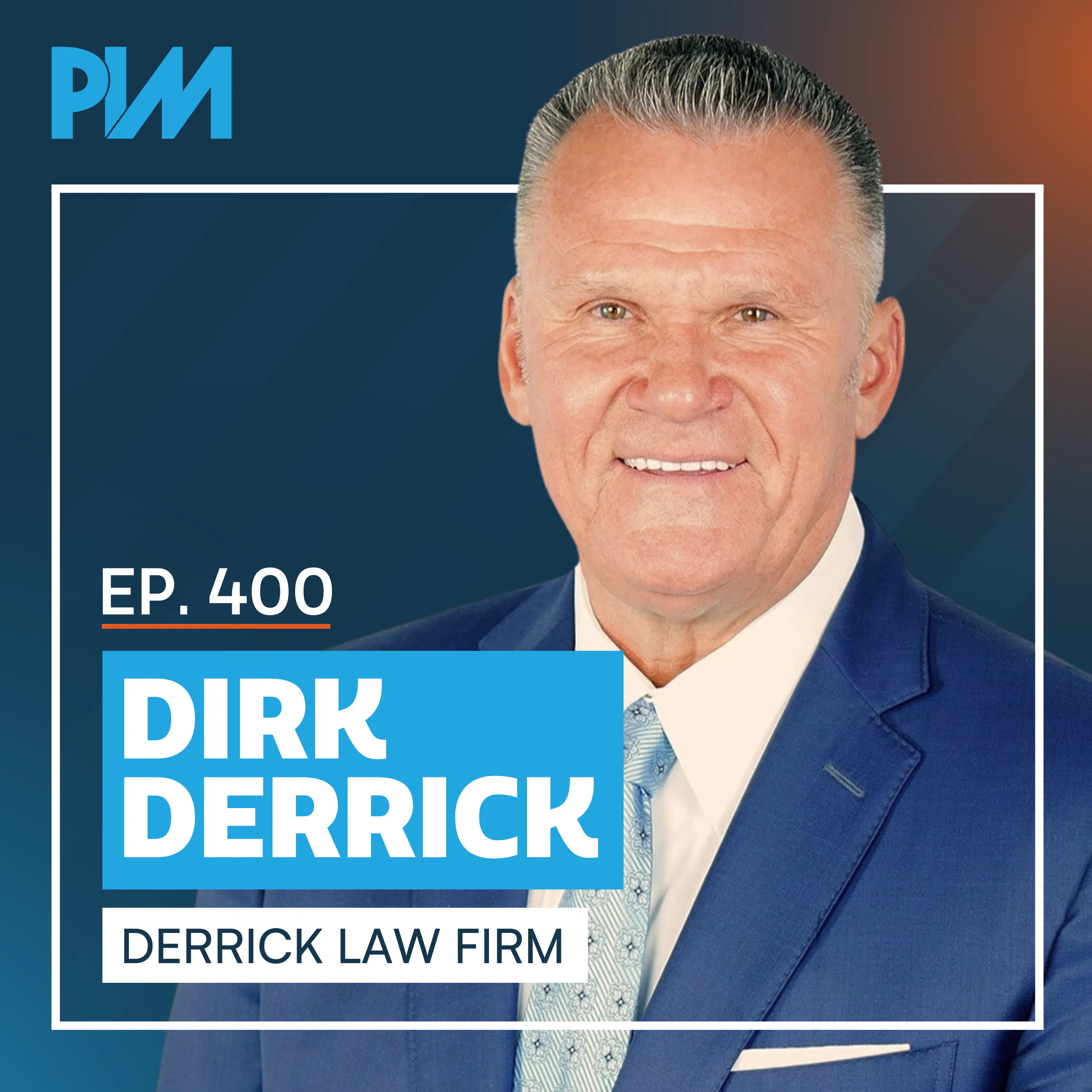
Personal Injury Mastermind w/ Chris Dreyer
400. The Focus Group ROI: Turning 6-Figure Cases into 7-Figure Settlements w/ Dirk Derrick
00:32:47
How to Settle Faster and Force Higher Payouts
Loading summary
Transcript54 lines
- [00:00]
A
I don't like people having leverage on me. And it bothers me for the insurance industry to have leverage on me and my client.
- [00:07]
B
For decades, insurance companies have held all the cards. They have the time, the money and the data. They tell you what a case is worth and if you don't like it, then you can come and fight them in court.
- [00:16]
A
It put me in a position where I felt like they had the leverage of time, money, uncertainty and the stigma of filing a lawsuit and just beat my client over the head with it. You cannot make money if you have to go try 80 cases and finance 80 cases.
- [00:32]
B
But what if you could flip that leverage? What if you walk to the negotiation table with better data than the insurance company? Dirk Derrick built a machine to do exactly that. By using high volume focus groups and AI to uncover the undeniable truth of
- [00:45]
A
the case value, we've increased 150%. By knowing the value and by leveraging the assets we obtain during these focus groups with the insurance company and getting paid.
- [01:00]
B
Welcome to the 400th episode of Personal Injury Mastermind. I'm Chris Dreyer, founder and CEO of Rankings IO, the elite performance marketing agency for personal injury law firms. For 400 shows, our mission has been the exact same. To help you maximize every single element of your practice so you can attract more clients and scale your firm. Because when we share what works, when we lift each other up and learn from the best, you build an unstoppable business. And that puts you in the strongest possible position to take on the real adversary, the giant insurance companies. They have the deep pockets and seamless data, but we're here to arm you with the strategies to level the playing field, fight for the injured, and win. Our guest today, Dirk Derrick of the Derrick law firm, is doing exactly that. He changed the trajectory of his practice when he flipped the script on the insurance companies. He leveraged his six in house courtrooms to create an AI driven focus group that has adjusters settling faster and for higher case values. I can't wait for you to hear more about this. Let's get into it.
- [01:57]
A
Before I had this system, I was in, in the same boat with a lot of people. It's like I can't go determine the real value on all these cases by trying them. So you build a business model around what they will pay you voluntarily, but it's not the real value of what the case is, it's not what the client wants, and it's really allowing the insurance company to take advantage of your client and your firm. I'll Tell you this before I use appraisers. We're getting 40 cents on the dollar, what we're getting now on average case.
- [02:30]
C
Unreal. That's amazing. Congrats.
- [02:32]
A
We've increased 150% by knowing the value and by leveraging the assets we obtained during these focus groups with the insurance company and getting paid.
- [02:43]
C
I kind of want to jump right in and talk about, you know, about focus groups, and we're gonna talk about big data. But can you share just a little bit of your history with the focus groups? Just to open.
- [02:54]
A
Open it up? Yeah. I was like most people for the first 30 years. I practiced a sole practitioner for 25 years in 91, after coming outta law school, became a partner of the firm and then went out my own, hung a shingle. And because I'm competitive, I don't like people having leverage on me. And it bothers me, and it bothers me for the insurance industry to have leverage on me and my client. I found it very frustrating because it was, we don't pay you blank dollars. This is what our computer says it's worth. If you don't like it, take us to court. And if you're a sole practitioner, a small firm, or any firm, I can't go try 80 cases this year. And it put me in a position where I felt like they had the leverage of time, money, uncertainty, and the stigma of filing a lawsuit and just beat my client over the head with it and beat me over the head with, you cannot make money, Dirk, if you have to go try 80 cases and finance 80 cases or a hundred cases. And the leverage on me bothered me. And, you know, we would focus group big cases back then. We have a big case. You go focus group, spend $40,000, $50,000, go rent some rooms at the convention center, and always got good stuff. But we couldn't do it in all our cases. And I was building an office in started in 17, and I decided to put a courtroom in it because the last big focus group I did was the first time I actually interviewed the people. Of course, we videotaped all the deliberation, and I sent it to the other side and got good value for that case, faster for my client. And I thought, dang, that would be great if I had that leverage, the leverage of truth in the eyes of the jury for all of my cases. So we built a courtroom. We started doing it, kind of, you know, went into it a little by little, and it just kept being such good stuff that we now have six courtrooms across South Carolina. We did it for ourselves for first four years and we started doing it for attorneys in South Carolina and now we're doing it nationwide. And it is a model that flips the leverage of uncertainty. We know better about our case better than the insurance company. It flipped the leverage of time. It empowers our lawyers to build a better case. It empowers our client. You know, you have a pretty good sized case. You have a case that is a seven figure case and they offer your client a million five. They don't put a million in their pocket and they look at you and say, is that a good offer? I said, no, I think it's a $4 million case. Well, can you guarantee them I'll get $4 million? I said, no. Well, what are you basing that on? Well, we just think that, you know, these damages, but I can put a million dollars in my pocket now and. Well, yeah, but we want to go further. And it's hard to get people to bite off on that and give you the power to keep pushing it if you don't have anything to show them. You never know what a jury's going to do. How many times we say, I never know what a jury's going to do. So I wanted to erase that. So we started doing focus groups and we made it part of our process. So in our firm, if there's a permanent injury or reckless conduct of any type can be a statutory violation. I don't care how small it is, or contested liability. If they don't pay us all the money, we're going to focus group the case and see what the jury says. Escape what I call the insurance matrix. We all live in a world where we value cases based on what insurance companies will voluntarily pay you. Other than the, the ultimate trial lawyers who take, you know, they handle a few cases, they take them to court, but you can't do that with a high volume practice. So we started doing it and it just took off. I mean, it's, we've been blessed. But what it's done for our clients in return, what it's done for our team is just kind of unbelievable. I didn't know there was a model that allowed us to do it, but it just blew up.
- [06:48]
B
Most PI firms treat focus groups as a luxury. They look at the cost of renting out hotel rooms and paying participants and burning days of prep and decide that focus groups are only for those rare eight figure unicorns. But Dirk realized that to truly beat the insurance companies at their own game, he had to turn focus groups into his firm's standard operating procedure. You might be asking, if you're going to run at this volume, how do you actually find enough people to consistently fill those jury seats week after week? According to Dirk, it's not as hard as you might think.
- [07:16]
A
We do social media. We've I think had right at 25,000 people sign up, but we've used social media. Bring them in. We use different social media, so different age groups, but we will get demographically correct juries from whatever county, whatever state we're in. If out of state attorneys hire us, we drop marketing in the county they want to pull the jury from. And we can usually get them within a week or two, have 50 or 100 people, depending on how many people they want to talk to.
- [07:45]
C
Let me give you a hypothetical. Let's say Deepa Squally, right in Kansas City, pretty big firm. Let's say they got a big case and they wanted to use your guys services. So would you guys help them source and find the participants for the focus groups and kind of orchestrate that as part of your process?
- [08:00]
B
How does that process work?
- [08:02]
A
Yeah, they call us, we talk, find out what the case is about, find out how many jurors they want to talk to and listen to. And I'm a big believer in focus groups and getting them in a room deliberating and also adding virtual people to add some big data on the backside of it. So on big cases we'll have 12 people live, but we'll have 100. 150 people virtual hear the same arguments. We get people to sign up, we pay them $25 an hour, whether you're in house or virtual. And somebody hires us from Kansas City, we'd find out how many they want. If they have a courtroom in their office, they can present there. We'll get people to show up at their courtroom in Kansas City. If they don't have a courtroom, we'll host a live jury in South Carolina, usually in Myrtle beach, because it's the melting pot. We advertise in Myrtle beach for people who have spent any time in Kansas City. And we get half the jury may be from people who have spent there. Everybody moves here now. So we'll do some localized advertising for that and we'll advertise in Kansas City for the virtual people we present it. They can, the attorneys can sit in Kansas City or they can fly here, but they can sit in Kansas City, they can present it. We have a huge LED wall in our Myrtle beach office. We're going to Present to the live jury. The zoom virtual will see it at the same time, after the presentation, we get everybody's personal opinion as a jury of one, the live people and the virtual. And then we divide the live people into two juries, videotape everything they talk about and they say. And then we squeeze the virtual people, ask them additional questions, have them ask the lawyers to get what's on their mind, which I really like for them to ask questions because it shows you what they're thinking. And then when the live jurors have deliberated and reached opinions, we'll squeeze them locally. The live focus group is the best mechanism to find the rabbit holes that the bad jurors are going to drag the good jurors and the middle jurors down. I mean, they will identify themselves, and you can say, oh, that's our mind. We want one of these on a jury, because they don't tell you everything. Every rabbit hole that they don't try to drag the middle jurors and the good drawers down on this particular case, because they throw things against the wall until they can drag people. And when we started watching that, it shocked me at first. I always built cases based on plaintiff's pleadings. The answer, you know, he gets what we got to prove. He goes, what? We got to beat them on their defenses. If we have better evidence than them on these two things, we're going to win this case. And then you start listening to people, and it's like, lord, they decide cases on things that we just have never thought of. And a lot of times it's defense jurors going outside the record and pulling them down rabbit holes. So you better be able to identify them, close them off with evidence, or close them off with a good juror saying, that's outside what we can consider. We're not doing any illegal verdict. We're not going to consider that. But they're the best to train you on what the rabbit holes are. I like the virtual. I just like more numbers when I'm trying to validate a value. But get a lot of stuff in virtual. We'll ask them a question, and they will all hundred, 150, answer that question in the chat box. So, I mean, in 30 seconds, I got 150 opinions about whatever I've asked them. So just real neat on how you collect a lot of data fast. We then take that data, we transcribe everything that's set in our office with AI. We create a AI report that 25 pages long that really just gets everything that was said everything that an attorney may want moving forward, as well as the values and chances of winning and. And also determine who the good jurors for this particular type of case is and who the bad jurors are for this particular case and have found that they can be different. I mean, you can have a juror that is great for this case and terrible for this case. That particular juror, great for liability and awful for damages. We've got some jurors that people have been afraid to put on a jury that if you got a good liability case and their law and order, they actually may give you a lot more money than the typical plaintiff that we've been putting on. It's been interesting finding out the details for jurors.
- [12:31]
C
There's so many things popping around from what you just told me. You know, I immediately was thinking of that old school movie, 12 Angry Men. Classic, great movie. And then I've heard you call the focus group participants appraisers. It's a different type of framing, I guess, because they're appraising. The situation is, take me the reasoning behind that name.
- [12:52]
A
But we have a podcast, the Appraisers Podcast, that if you're a plaintiff's attorney, you can call. It's closed just for plaintiff's lawyers. My whole thing is, and all our lawyers go get all the facts, get the facts, appraise it with the only appraisers that matter, and that's the jury, that's the community, and then leverage what you learn. They are the appraisers. They determine the value of your case. Our thing is getting real value faster. I think if you ask victims what's the real value, they won't know what a jury would give them. And that's what we're trying to tell them. We're trying to tell them if we pick the best possible jury that we can from our data and we present it the way they have told us, they want to hear it. The real value of this case is in this range. It has nothing to do with what an insurance company will voluntarily pay you at any step in the process. But I think before I had this system, I was in. In the same boat with a lot of people. It's like, you know, I can't go determine the real value on all these cases by trying them. So you build a business model around what they will pay you voluntarily. But it's not the real value of what the case is. It's not what the client wants. And it's really allowing the insurance company to take advantage of your client and in your firm. I'll tell you this before I use appraisers. We're getting 40 cents on the dollar, what we're getting now on average case.
- [14:23]
C
Unreal. That's amazing. Congrats.
- [14:25]
A
We've increased 150% by knowing the value and by leveraging the assets we obtained during these focus groups with the insurance company and getting paid.
- [14:37]
C
I want to talk to you about the data extraction. Right. You've worked with 19,000, 20,000 plus people. You've got, you know, case decisions from over 10,000 participants.
- [14:48]
B
Talk to me about the work with
- [14:49]
C
the data scientists to kind of to make the most out of all this information you're collecting.
- [14:53]
A
That stuff excites me. I am a data guy because what I've seen it do for us, getting the big data from all of them. We when people sign up to serve with us, they give us data points. They give us demographics, life experiences and beliefs, largely about the civil justice system that goes in the database. Then they come in and they serve. And we transcribe what the lawyers say. We Transcribe what the PowerPoints say. That goes in the database. We grade the jurors, pro plaintiff and pro defense, a numerical number that goes in the database. The two verdicts go in the database. And what each individual juror decided gives in the database. And until AI came, we were running it through domo, through machine learning that we could filter down and see in this particular type of case, Here goes the 15 data points that they gave us that made a statistical significance and whether they're going to be a plaintiff juror or a defense juror. If they answered the question number eight positively, they were three times more likely to be a bad juror. If they answered question 102 yes, they were three times more likely to be a good juror. So when you have that and you know which data points make a difference in a particular type of case, and we do it the type of case, but we also do it liability actuals and punitives within that because they will have different grades of the different issues in the case. We know what jury we want or who we want to strike. So we were able to do machine learning, break it down. If we could strike the bottom four jurors, because we let anybody serve, we let insurance adjusters serve defense lawyers. I don't care. You can serve the worse, the better. But if we know if we strike the bottom one third, what the value goes up, what percentage does it go up? If we get these bad people off the jury. So that's what we've been doing with machine learning. And now we're training large language model on our big data set to where we can talk to it and get the same stuff out immediately.
- [17:10]
C
Put my marketing hat back on. Has the data said, okay, hey, we need to go hunt for these cases. We need to go fish for these cases. These are the cases, you know, from the extraction and all this information. Has it helped on the, the front end side as well?
- [17:25]
A
It has helped identifying cases when they call in. We now know he goes, the 40 things that add value for this type of case and the 20 things that kill this type of case. So we can see it when it comes in the door when we start investigations to see, you know, how many of those points we have in the case. But we haven't gotten to a point where we're marketing specifically from that data. As a marketing guy, I know what you're thinking. You're thinking, what's your top value cases? And go after that bunch of people.
- [18:02]
B
In personal injury, small information gaps turn into big disadvantages. That's why we publish the Personal Injury Mastermind newsletter. Each week it breaks down what's really
- [18:11]
C
changing in personal injury.
- [18:12]
B
The market, the technology, and the strategies top firms are using to stay ahead. It's thoughtful, practical, and written for people who take growth seriously. Subscribe at Newsletter Rankings IO. Think about this from a business perspective. We constantly talk about cash flow acceleration by testing cases early and sending that focus group footage straight to the fence. Dirk isn't just creating case values. He's drastically reducing the time the file sits on the desk. Less time on desk means lower operational costs and faster capital that can be reinvested in marketing and talent. It's the ultimate win win. The client gets a faster, better resolution and the firm gets the fuel to scale and dominate their market.
- [18:54]
C
Let me talk to you about another. You mentioned it earlier, but I kind of wanted to dig into it. You said you've presented these focus group footage to the, to the other side, the opposing party. Is that a common thing now that, hey, that you tried it and it was like, oh, it was really impactful and now it's just, hey, it's as common. You just share it because maybe it raises those values and their offers.
- [19:16]
A
Oh, yeah. I mean that's, that's the thing we kind of, kind of tripped into. I mean, I really wasn't expecting that outcome when we started doing focus groups. When I started, I wanted to find out about the case, how to Build a best case, and it gives you that. But then we started getting such good stuff. And it was early on. We had a case client hadn't finished treating. It was a dui. We had a bunch of coverage, and we focused it just to see what the focus group would say about value before we even had the actuals worked up. And it was more than all the policy. And I said, hey, send it to the insurance company. Send it to the liability in the U. I am. And make a demand for all the coverage. And they paid it within 30 days. And I said, dang, this is a weight. Something we have not used focus groups for. But if I can speed up every one of my cases 25% to 40% by getting the facts, that's good for business and it's good for our clients. Because our clients, every one of them, if they got a $10,000 case or $10,000,000 case, every one of them wants the real value as fast as possible. They want to be treated with respect, and they want a relationship with a lawyer. Those four things or what clients want, this thing has given us the ability to meet those things and to speed up the process.
- [20:38]
C
I love that. Speeding up the time on debt. I mean, cash acceleration for PI Attorneys is everything, right? It gives you the capital to go advertise more or hire better talent or spend it on the expert witnesses and all the things. So it's so valuable that you found that realization?
- [20:55]
A
Well, it's revenue goes up, time on desk goes down, so cost goes down. You create better trial lawyers. They're constantly standing up, presenting both sides to a jury. And your client knows you're working for them. I mean, your client knows that we're up here at night presenting cases to show them what the value of their case is or what the validity of their claim is.
- [21:15]
C
Do they ever come in and sit and watch? They.
- [21:18]
A
Well, they don't. They don't usually come and sit and watch because some of these jurors can be harsh, right? And be real harsh. But what will happen is we share with them, we get the results. And lawyers say, well, I didn't get real good results. I said, if you presented the best possible case in the plaintiff, the best possible case for the defense, whatever the truth is, you got good results as long as you presented it right. I don't care. I want to know the truth now. I don't want to know the truth when I walk out of a courtroom two years from now. So we'll share it. I mean, there's some clients that it sets their expectations. We don't have to be the bad guy anymore. Telling our clients we don't think a jury's going to give that to you. We just show them what they did, leverage it with our lawyers by if we focus it and the people tell us, well we want to see A, B, C and D. You didn't show us a, B, C and D. Well, we know we can't trust this value because there's still things out there that exist they want to see. So let's go get it. And then we with the insurance company, they say it's worth two times the policy limits. We just do a Tiger river letter and send it and send the results to them. I know some lawyers say don't show the other side. I mean we do pre lit, pre mediation and pretrial. We're not giving them our pre trial when we're fine tuning the arguments. But our clients want the real value as fast as possible. And if I can show them what's going to happen to them in court and they don't lose money, we get paid faster. Most of the time we get paid faster. It is very, very difficult for us to get a good case to court because by the time we have a high value good case, they don't see what 250 or 300 people think about this case. So that missing link as far as what a jury's going to do with it has kind of been erased. So it helps on those cases to show them what a jury is going to do.
- [23:07]
C
Let me ask you, and you kind of mentioned a little bit of it on the operationalizing this. You know, you said you had some attorneys. I get on the show, they'll say hey, we gotta, we got a pre lit team. They're very good at that. It has to go to lit. It goes to the lit team or you know, the case committee review to see if it goes to lit. Right. Other firms I've had are the full cycle. You work that case up from the very get go and you don't get full value. You're taking it to court. You know, rock and roll start to finish, right. No handoff, you know, you know the ins and outs. Cause you worked it from the very beginning. How does this play into the pre lit versus the lit and kind of how you're structuring your team and how you see this work best implementing it. If you're an attorney, listen, it's like, hey, I want to do this. Like how do they think about implementing this?
- [23:58]
A
I did a Pre lit thing for about two years and didn't like it. And that's just me. I felt like again, our clients want real value, faster respect and relationship with a lawyer. And I want to give them a relationship with a lawyer. So the relationship with a lawyer in South Carolina and for the long view, long range view of building a firm, I want those people to know a lawyer early on, trust a lawyer early on and send cases to us for the rest of their lives. I mean I just, I believe in that. I believe it comes back around. I think we settled a $7 million case couple months ago that we represented a woman on a $25,000 policy. And then it came back around, something else came up because we treated her right, she knew her lawyer, she trusted her lawyer and there's a lot of time when we do them pre lit. Those small cases never got a chance to build a relationship. That's just me. People disagree with me, that's just what I believe. They, I like the relationships.
- [24:58]
C
Does that mean your case selection on the front end, maybe you won't take just the minimum bumps and bruises. Does that mean maybe you refer those out or you still take those two, still take them. Love it.
- [25:09]
A
Everybody who gets hurt wants real value faster. You know, if somebody calls us, they haven't been to a doctor, not going to a doctor, we can't add value, we'll tell them that. But I've just had a hard time calling out small claims so somebody can say, you know, Dirk helps you if you make a bunch of money, but you don't make him any money, he's going to send you down the road and form a relationship with another law firm. And I just, that just goes against what I believe.
- [25:35]
C
I personally love hearing that. I also just think nowadays, you know, if you're gonna market at all, you need those reviews. You gotta get a decent number of clients or else you're gonna be struggling at least on the LSA and the, the Google and now the GEOLM front, you know, if you don't have those reviews. So I love every bit of that.
- [25:53]
A
That's right. And the review. And I tell their terms if we don't make money on this and if we have to cut our fee on the small, cut it. I mean just treat them right, that five star reviews worth some money and that person doing a video testimony is worth money. And just treating people the way you want your grandmama treated, you know, it comes back.
- [26:13]
C
Let me ask you another question. This is another one just popped in the brain, right? You Got these mock trials, and you're doing this, and have you seen those younger associates or the new guy? Like, holy shit, this guy's pretty good in the courtroom.
- [26:24]
A
Right?
- [26:24]
C
And maybe see him get those reps under their belt, and you're like, oh, did they really come alive with this type of setup?
- [26:31]
A
You can kind of see who can talk to the jury and who can't. You know, in today's world, there's not enough cases tried for somebody to get experience in the courtroom, or at least in South Carolina it's not. And you can't try a case every three years and expect you don't become a trial lawyer. But if you do a focus group every month and you argue the plaintiff side and then you argue the defense side, and then we ask the jury, who do you think hired us? And they don't know. And they grade the attorneys when we. It's in house. I get them to grade the plaintiff's attorney and the defense attorney, even if they're the same person, as far as relatability and believability and being enthused about representing his client. Just so the attorneys get reps on presenting the case, no matter what case they're presenting. So it's good for them. They get a lot of reps. Yeah.
- [27:23]
C
Nobody wants that. That F grade or that one out of 10. Right. So that makes you competitive, too.
- [27:28]
A
Oh, yeah. They check the grades. Now we got a couple of lawyers that call my focus group data manager and say, hey, hey, what's my average now? What's my average now? So they. They watched the grades.
- [27:41]
C
That's perfect. That's amazing, Derek. This has been incredibly valuable also. You know, let's talk about this before we close it out. You've got the appraisers podcast. You mentioned it earlier. You know, talk to me a little bit about that as well. I'd love to tell our audience about your podcast.
- [27:55]
A
Yeah. If they go to the darrettlawfirm.com look for appraiser's podcast, they'd send an email to Nicole. She'll do a little research on them and give them access to come in and listen. And it's just attorneys, both in house and outside attorneys who came in focused a case, why they wanted to focus it, what stage it was in, what they learned about the case, what they learned about the jury that may have surprised them, and then how they leveraged that truth to help their client. And it's just case studies. And we do some big cases and also have made some of my in House lawyers do some small cases, just everyday thing that some lawyers are trying around the country that you see every day and how juries reacted to certain issues.
- [28:40]
C
Fantastic. Keep em well oiled and trained. Dirk this has been amazing for audience listening. How can they get in touch with you if they had any questions about the pod? They have more questions about the focus groups or maybe wanna refer a case to your firm. How can they get in touch with you?
- [28:54]
A
They can email me@dirk DerekLawFirm.com My Sales 843-421-11257 if somebody's interested in focus groups, I'll give them a free one. I believe in this stuff so much that they pay for the focus group jury. I'll do it for free. They can see what kind of value they can receive. I really honest to God get so excited about what it's done for our practice and for our clients that I hope it spreads. And we're helping lawyers in South Carolina, we helping some attorneys across the country. But I think the data is better than anything that the insurance company has to go against us. I know it. On a particular case I got better data than they have and I'm interested in spreading this thing out. Doing focus groups around the country, increasing the data set to include all 50 states so that it will help any attorney in the country to go against the insurance industry.
- [29:53]
C
Fantastic. Dirk, thank you so much for coming on the show.
- [29:55]
A
Uh huh. Thank you.
- [29:59]
B
What an incredible way to hit episode number 400. Huge thanks to Dirk Derrick for showing us how to build a machine that actually beats the insurance matrix. Dirk relies on proof over promises to get results and that's exactly how we operate at Rankings IO. If you're tired of the guessing with your marketing budget and want an elite performance marketing agency that actually drives high value PI cases to your firm, head over to Rankings IO. Thank you to everyone has rode with us for over 400 episodes. I'm Chris Strider and I'll catch you next time on Personal Injured Mastermind. For our next 400 episodes.