← Personal Injury Mastermind w/ Chris Dreyer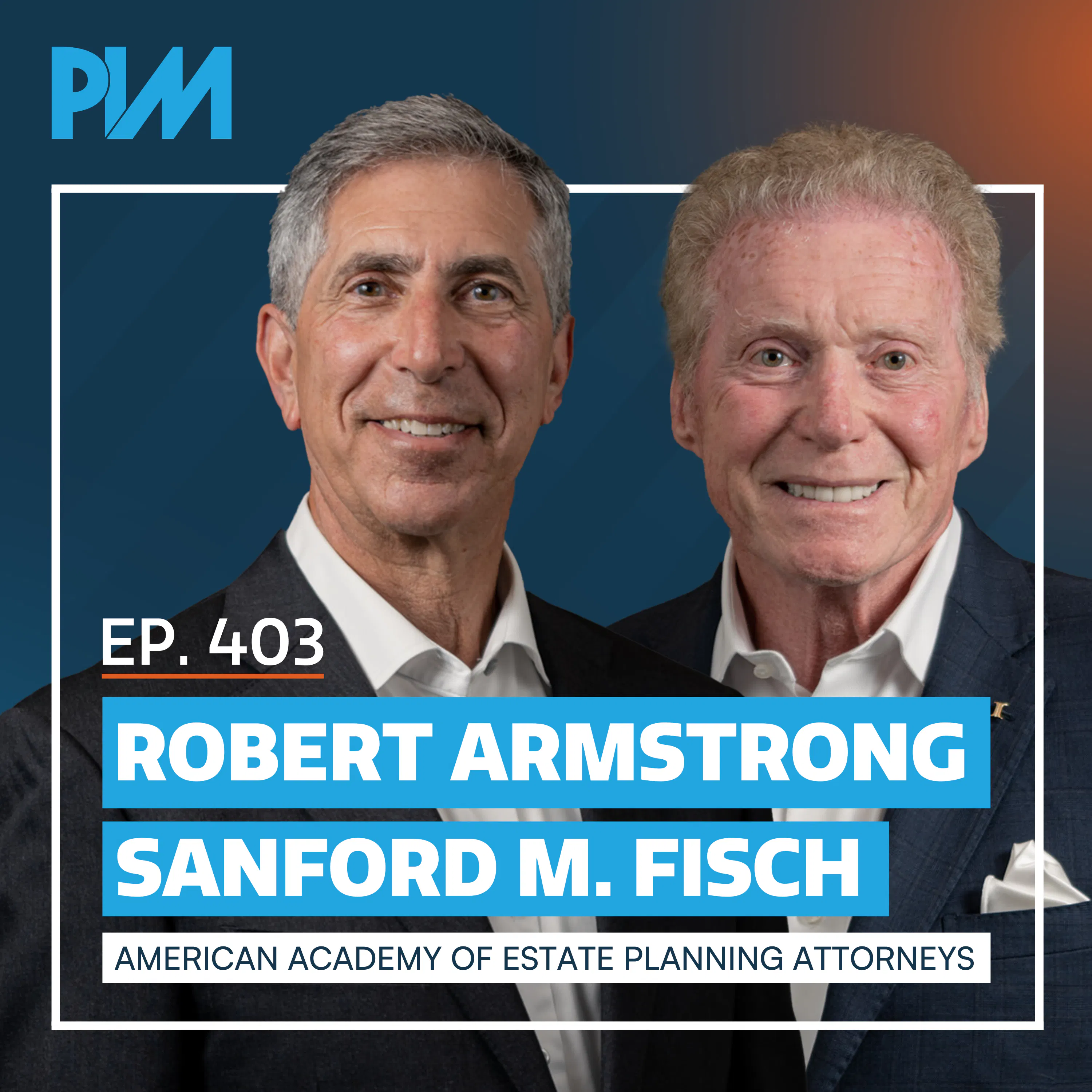
Personal Injury Mastermind w/ Chris Dreyer
403. The Enterprise Law Firm: Future-Proofing With Recurring Revenue w/ Sanford Fisch & Robert Armstrong
00:23:40
Stop the monthly churn and step off the PI cash-flow rollercoaster. Sanford Fisch and Robert Armstrong reveal how adding wealth management and estate planning builds a recurring revenue machine and future-proofs your practice.
Loading summary
Transcript24 lines
- [00:00]
A
As all of your listeners know, at the end of every month, you have to start over again, go out there and market for new clients and do all of that.
- [00:09]
B
You fight tooth and nail for a massive settlement. You win, the client is thrilled, but then that's it. The relationship ends, you're back to zero, hunting for the next case that will pay the bills and grow the business. But what if there's a way to keep having a relationship with your clients even after the case is over?
- [00:23]
A
All that we're doing is adding an ancillary business to the whole operation. It gives us something called recurring revenue, which the most important thing that you can do in the practice of law.
- [00:36]
B
The cash cycle is one of the biggest pain points in personal injury. But our guests today share an interesting idea that could let you step off that cash flow rollercoaster and into a predictable recurring revenue machine. This is Personal Injury Mastermind. I'm Chris dreier, founder and CEO of Rankings IO, the elite performance marketing agency for personal injury law firms. Today we're speaking with Sanford Fish and Robert Armstrong from the American Academy of Estate Planning Attorneys. We talk about the enterprise law firm model and how strategically adding wealth management services for your clients can future proof your practice. Let's get into it.
- [01:12]
C
The thing that we recognized was that as we helped attorneys build their law firm businesses in estate planning, we realized that those same clients had other needs. And one of the overwhelming needs that we kept seeing was wealth management, because we got to see their assets, we got to see how they were managed, how money was made, and how money was often lost. And so we recognize we have an opportunity to extend into another realm, and that's the wealth management. And we have great partners that helped us understand the industry, helped train us, and then ultimately manage the money. So it's looking at what else do your clients need? And then the foundation of it all, as in most businesses, is what's the relationship that you have with your clients? And our members have great relationships with their law firm clients.
- [02:11]
A
In the innovation that we created, Chris, was for the American Academy Wealth. We're not advertising to the public that we're offering wealth management. Everything is related to the legal work that the lawyers are doing. And then we have a process where we take them through in a five meeting system. And one of the meetings is we talk about how they hold title to their assets. And that's where the wealth management conversation comes in. So if people are thinking, oh my God, I'm not going to be out there competing with all the financial advisors in the world trying to get clients. No, that's not our game at all. The lawyers already have the clients. All that we're doing is adding an ancillary business, in this case wealth management, to the whole operation. And that does a couple of things for the lawyers. It gives them something called recurring revenue, which is the most important thing that you can do in the practice of law. Because as all of your listeners know, at the end of every month, you have to start over again, go out there and market for new clients and do all of that. With wealth management as a part of the legal services, they can get money every single month, recurring every single month, every quarter, whatever. So it's a wonderful sort of addition to practicing estate planning law.
- [03:31]
B
What do you mean by wealth management? That's a big category, right? Does that mean, you know, lowering your tax liability from, you know, invested in solar? Is it, you know, overfunded whole life insurance and plans for your executive compensation? Is it your 401k stuff like. Like that's a big category. So what do you mean by introducing this into the practice?
- [03:53]
A
And, well, job number one is you have to get licensed. And so this, the license that's required for the kind of planning that we do is a Series 65, a federal license, and that allows us to offer wealth management to our clients. And it would include not only insurance, you have to be insurance, license, life insurance, and all of that, which is an integral part of estate planning anyway. And then on the investment side, we have a money manager that the clients are given their assets to, and this wealth manager then manages it all. And the lawyer is kind of the quarterback between the money manager and the clients. And it works out really well because when we first started the academy, we had a byword which was we're in the relationship business. And so whatever technical things happen, we always go back to that original commitment to be in the relationship business. And so what we found over the years, that clients had no idea what to do with their money, how to invest it. And the lawyers, in the old days, you should just put down three business cards in front of the clients and said, we don't do that kind of work. Call one of these people. Well, what we saw was the devastating effect of financial advisors giving wrong advice, especially in the estate planning context. So we decided we could do a better job. And in fact, we have. And that's the new business we created a couple of years ago.
- [05:24]
B
You work incredibly hard to get your clients a great settlement, but handing them a massive check and sending on their way leaves them exposed to bad financial advice. It also leaves a lot of recurring revenue on the table. You've already done the heavy lifting by earning their trust. The broader question is how to define the lifetime value of a client. To find out if this is opportunity to actually make sense for a typical PI firm, I had Robert and Sanford break down exactly how this applies to an everyday caseload. So talk to me about the application of this. Right. So, and I'm trying to put myself in the, the PI attorney shoes, right? Like I've got, you know, I guess the standard minimum policy, you know, is that someone that would be introduced to wealth management, maybe there's an hourly billing component that's not just the percentage. I have no idea. Or is it more? Hey, those a class, those A tier commercial accidents, they get a million plus, they get or you know, six figures. They actually have capital to manage as opposed to maybe a minimum policy. Like how do you make that distinction or is it to everyone?
- [06:26]
C
Well, so when we talk about the wealth management as a part of overall estate planning, what we do is we have marketing systems that the academy members use to bring in clients. Those clients first become clients of the law firm so that we have proper estate plan done for them. When you go to, I'll kind of go parallel with a PI firm. Every PI firm, they have clients, it is a natural question. After they receive the settlement or even before they get the settlement, do they have an estate plan? Right now, 70% of Americans still don't have an estate plan. The number may have come down a little bit, but that has been the traditional number. So that service, if that law firm had another division again, the attorneys, the paralegals, then they would do the estate plan. Then when their settlement comes in, that's one of the assets now in our firms, they're dealing with what I'll call our overwhelmingly mom and pop clients. Those who have assets of a home and then anywhere from let's say 500,000 to 2 million of investable assets, regardless of the amount of investable assets they have, they are exposed to this system that we've got where their assets will be examined to see, well, what are they invested in? And we have a very, very limited investment option. And that's because we want a middle of the road, not a high risk, not CDs in a bank, something that's going to get approximately 8, 9, 10% over the long haul. And we're in it for the long haul of investment. So we have one philosophy. We're not picking stocks and bonds. We're going right down the middle of the road. We have a fund manager called DFA, Dimensional Fund Advisors. They've been around for 40 years now. They manage $900 billion. We know them well and we do our training at one of their world class facilities, either Charlotte or Austin. So that's the system that we've got. And the amount somebody has is irrelevant. We want to make sure that we make it easy for them to implement at the time of someone's demise. Because that's where the trouble can start. When you're invested at Fidelity Vanguard, you name any of the big places. When someone dies and we're going to implement the estate plan, they have to start calling. You have to start going through the bureaucracy. What we offer is one phone call and we've got you. That's it. And that's very appealing to all of the clients. Now if I parallel over to the PI people again, it's not going to be for everybody. It's got to be that entrepreneurial PI attorney who hears what we're saying and going, huh, that's interesting. The other great thing is this isn't fantasy. We've been around for over 30 years. American Academy of Estate plant here I think is a 33rd, 34th year. You want to check us out, Go look at our member list. Call any member, call anybody, ask them what they think then. American Academy wealth. We're entered our third year. At this point we're closing in on a billion dollars under management. And we're just getting started. So these are proven systems with training programs that you get when you're a member. So anyway, as an entrepreneur you can see that we talk about this and here Robert and I, why would we, you know, as people always say, how come you guys aren't retired? Well, we like doing what we're doing and the excitement of this next phase where we created what we, as Robert said, the enterprise law firm model. And we're watching people grow businesses and having great success and most importantly, helping all the families that are their clients. Long way around the block, but there you have it.
- [10:20]
B
I want to go a couple scenarios here. I've got a book behind me on niching, right. Does it dilute your, your value, your positioning? Because hey, I'm not an expert in PI. I'm now PI and estate planning. Or does it feed the whole ecosystem? And using the word ecosystem is which I love the word and you know, powering the flywheel, so to speak. Or do you see, hey, we set up your estate plan now they get in an auto accident, boom, I got a case because I already got a relationship with a lawyer. Like, that's my lawyer. Right. As opposed to PI Attorney. They're advertising and, you know, trying to build a brand. But. But people don't expect to be hurt. Right? So maybe you can capture or create some demand as opposed to just capturing it as the point of an incident. What's your thoughts on both of those? The positioning and kind of the synergy between the two?
- [11:10]
C
I see two different scenarios that all come together. The idea of, okay, I'm a PI Attorney, won't this dilute? Well, one could look at it that way. Or they could say, we decided because we know our clients and we care about our clients, we wanted to make sure they had these things covered. So we have decided to create and get expertise here. And the way we did that was by joining the American Academy of Estate Planning Attorneys. That gives people instant credibility because of our longevity. And so now they're following the system and continuing to learn and grow. I don't think that's ever looked down upon. Yes, there'll be a story that's developed by every PI attorney who decides to expand their enterprise. And that's the key. It has to be authentic. It has to be a story. Here's why I did this, and when the why I did this is authentic and clear, credibility goes up, it doesn't go down. There's no thought of dilution because I brought on new expertise, I've gained more expertise. Now they don't have to wait for clients. They've already got PI clients. I mean, we're marketing experts, as you are. The first thing we're going to do is go back to every PI client you've ever had. We've already got a database of, I don't know, hundreds, thousands. Let's go back and explain with the same story, we've expanded. Here's why people are going to come in. They trusted you, you got them money, you have a relationship with them. So right off the bat, you've already got a built in market that you can market to. Before we even decide to go to the public with estate planning, which you may never even need to do. So there's going to be somebody listening because I know you've got a big audience. Someone's going to say, hmm, this is interesting. And again, the other thing I want to mention, the Academy has a limited number of territories. That's the other thing we hadn't mentioned. We don't have thousands of members. We have 150 law firms around the country and we give them a territory. So they're the only one in that territory. Yes, there are some multi member territories in large cities, but we give them a territory. That way you've got no academy competitor. That is what has created the culture in the academy that is like a big sorority fraternity. These are brothers and sisters that are just rooting and pulling for each other. And it's a big, happy, successful organization of members. There you go.
- [13:58]
B
Before we go further, Sanford brings up a name that every law firm owner needs to know. Michael Gerber. If you haven't read Michael Gerber's classic book the E Myth Revisited, the core premise is this. Most businesses are started by technicians. In our world that means people who actually do the great work, like litigating cases and practicing law, but who don't necessarily know how to build a machine that runs without them. Gerber coined the famous phrase about the difference between working in your business and working on your business. A tier how applying that exact mindset is the key to breaking out of the daily PI grind and building an enterprise.
- [14:32]
C
We mentioned Gerber and I'm sure it struck you because the idea that has never left us and many other people have picked up on Gerber's famous discussion of the difference between working on the business and working in the business. And we've taken that a long way. And now attorneys, of course that work with us, they understand how important it is. As I'm sure you promote to attorneys you work with, they have to have time to be out of the trenches working on that business, strategizing and making sure that they're thinking about how is this business going to operate long term in the future, mid range and then short term. So the working on the business was a concept that we just loved.
- [15:16]
B
I think a lot about, you know, I can't help on the marketing side and the non attorney side I think of like her Mosi and he talks about in his new book the money Models books, continuity offers after the mean, you know. And I think a lot of the clients that we work with or many of the clients they know the downside of PI is the cash acceleration cycles. Right. It's awful for PI and that first, you know, Death Valley that first year to get, you know, the case inventory flipping, you know, every 12 to 18 months is really challenging. What else encompasses the enterprise law firm? Right. We've talked about systems, we've talked about ecosystem, the wealth management, thinking about longevity versus short term orientation. We're working on the business versus in the business. You know, what haven't we explored in regards to this enterprise mindset?
- [16:07]
A
Well, the enterprise mindset really just acknowledges the fact that there is a limitation in the regular practice of law. By the end of the month, things are over. You've got to start again. You never, you're constantly marketing, constantly out in the marketplace. When we saw the natural synergy between estate planning, law and wealth management, and wealth management can include insurance and investments and all of that, that it was a natural to bring them together, and we frankly thought, why hasn't this been done before? Because they are so, you know, so related. And when we first broached it to our members, there was instant acceptance. They saw that artificial intelligence is coming down, down the road. There's people that are going to lose their jobs. They say that artificial intelligence is the destroyer of businesses that are based on rules. Well, there's no business better to demonstrate being based on rules than the practice of law. So if people don't kind of future proof their practices, they're going to be swept away, I think, by the rapidly evolving artificial intelligence world that's coming very, very fast. And so by having us focus on relationships and now, we can expand our offerings from not just the law, but also into wealth management. It gives us a stronger position in the community because people are not, you know, throwing away their financial advisors on a, on a regular basis. Once they have a relationship with somebody, they're sticking with them. So it allows you to have a kind of a consistent earning potential.
- [17:47]
B
I like it. And you can redeploy those dollars and continue to build the machine power. The flywheel, like you said, you know, you got the traditional funnel, so to speak, where it, you do all this marketing, it comes in and it goes out the bottom and that's it versus the, the flywheel, which would be, you know, the wealth management side going back into it. This has been very intriguing. I am quite confident that one of our audience members listening is going to reach out and it's, hey, they've got a database of 50,000 past clients and maybe there's an opportunity here. Sanford, Robert, any final comments? And then what's the best way to get in touch with both of you?
- [18:25]
C
You know, the final comment that I want to make is that it's always, it's been fun for Robert and I, this being the most recent book that we had that we talked to people like you, talked to others who were reaching audiences that we really didn't talk to before. And what we're always looking for is someone who is entrepreneurial, is curious, and that they're ready to do something that's both in their best interest and the best interest of their clients. And that's something that we just continually talk about with our members because it is, as Robert said about the relationship and we have a very high trust relationship, not with just our members, but our members have with their clients. That's why some subsequent services that are offered, why would the clients are like, wow, this is great. One call and they can take care of multiple things for me. So that's my final comment and then I'll mention if you want to reach us. AAEPA.com, stands for the American Academy of Estate Planning Attorneys. AAEPA.com there's information there about how to get any of the books, how to talk to anybody about what does membership look like, where is there an open territory? And that would be the next step.
- [19:46]
A
Yeah. And that book is published by Forbes and it's out now. And the enterprise law firm model kind of lays it all out as to all of the steps in order to integrate wealth management into your legal practice. So it'd be interesting to see what the reaction is of your audience to this new kind of concept of a way to expand your practice and, and still remain a lawyer.
- [20:13]
B
Love it. Fantastic. Gentlemen, thank you so much for coming on the show.
- [20:17]
A
Thank you.
- [20:18]
C
It was a pleasure. Thank you very much. It was great to meet you.
- [20:23]
B
A massive thank you to Robert Fish and Robert Armstrong for coming on the show and sharing a completely different way to look at the life cycle for a personal injury client. The enterprise law firm model isn't just about adding services. It's about building a predictable scalable business that outlasts the cash flow roller coaster. At rankings, we specialize in smoothing out that roller coaster. We help elite personal injury firms build a lead generation machine that provides that consistent high value cases you need to stop the monthly churn and start scaling with confidence. If you're ready for proof of our promises, head on over to Rankings IO today. I'm Chris Dreyer and this has been Personal Injury Mastermind. Keep building, keep growing and I'll catch you next time.
- [21:01]
A
Sam.