← Personal Injury Mastermind w/ Chris Dreyer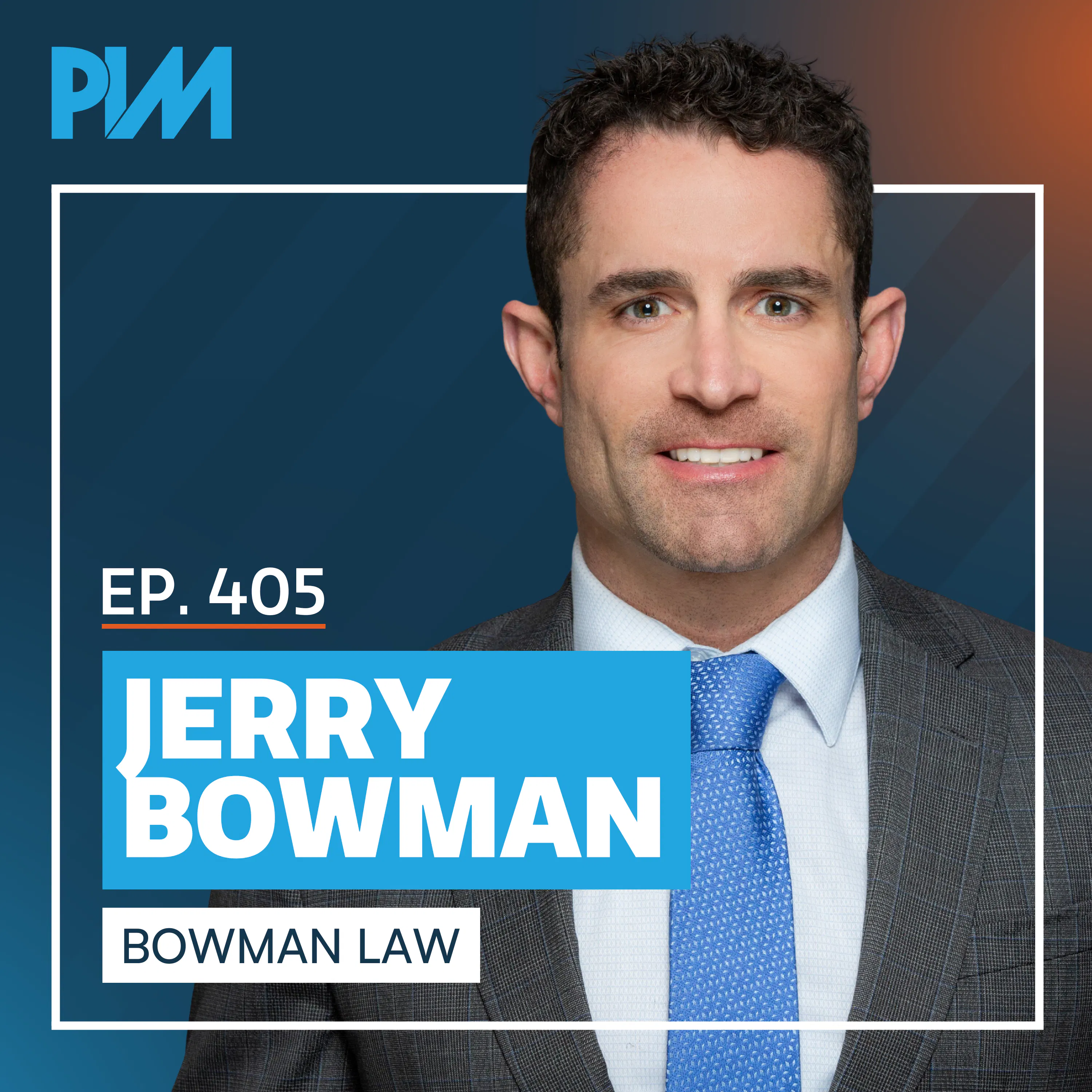
Personal Injury Mastermind w/ Chris Dreyer
405. How to Build a 5-Star Reputation and Automate Your Law Firm with AI with Jerry Bowman
00:26:43
Building a 1,000-Review Pipeline and Out-Servicing the Mega-Firms
Loading summary
Transcript28 lines
- [00:01]
A
I realized that a lot of these larger firms were spending an incredible amount of money on advertising and marketing. And I didn't have the bandwidth to do anything near what they were doing.
- [00:12]
B
When you're going up against mega firms dropping millions on billboards and TV spots, how do you compete? You don't outspend them, you out service them. Jerry Bowman realized this back in 2012.
- [00:23]
A
I focus heavily online reputation because that's the way that I saw the world going. You know, smart consumers are doing their research about what they're buying buying and who they're hiring.
- [00:34]
B
Today, your reviews are the ultimate currency. But generating over a thousand five star reviews doesn't happen by accident.
- [00:39]
A
It was one client at a time, one case at a time, one relationship at a time. The growth was slow, it was intentional, it was hard to earn.
- [00:47]
B
If you look at Jerry's Google reviews right now, you will see over 500 reviews and a five star rating.
- [00:52]
A
The reviews certainly help because they help us with the local service ads. They put us in a position where it could be top three on the maps and we take advantage of that.
- [01:00]
B
That social proof helps him dominate local search without spending a fortune, leaving the mega firms wondering where their marketing share went. This is Personal Injury Mastermind. I'm Chris Dreyer, founder and CEO of Rankings IO, the elite performance marketing agency for personal injury law firms. Today we're sitting down with Jerry Bowman, founder of Bowman Law, a premier personal injury firm out of Colorado. Jerry has spent the last 12 years building an absolute review engine by leaning into technology, community impact, and an untouchable client experience. Let's get into it. I want to bring up, you were recognized by the Colorado Supreme Court for your practice's commitment to pro bono work. And I think every lawyer that has to give 50 hours of pro bono work, I'm not exactly sure per year, but you know, you've been doing this for almost 10 years. And talk to me about the pro bono work side.
- [01:51]
A
I've actually been doing this for now, 13 years as a practice. You know, to me it's important, you know, that the general public and talking about the community, we have to make sure that they understand that there's people here to help them in situations they find themselves in. You know, the civil justice system is one of the most powerful safety mechanisms we have in our country. And in personal injury, it's not because it just pays people money, but because it punishes businesses, it changes behavior, and it holds those accountable who don't want to accept responsibility for what they are doing. And the pro bono side of things, I think that, that that's something that most attorneys don't focus on because obviously they have, you know, work, they have business, they have things that they have to do and to get away and to represent people who are still deserving of representation. But maybe in a different area of law, I think it's helpful and it's great because these people don't have any other resource. And so, you know, there's times when I go to court for a client just because I want to help them avoid having to travel for two hours to get in and take care of something. And yes, that also includes sometimes taking care of, you know, citations. And it's a pain, but it's helpful for some of these people. So we look at pro bono work as an opportunity to, to invest in a community and help people who otherwise don't have that representation.
- [03:13]
B
We're 300 plus episodes in on the pod, and I've never really talked about this and dove into this. So specifically, some things that, yeah, you see a lot of PI attorneys, they'll do the toys for tots and the turkey giveaways and the backpacks and the stuff that I would say, you know, that that's phenomenal. Those are all goodwill, those, those are good causes. But I always thought like, well, what about pro bono? Like, how does that fit in? I imagine getting a review after you just took somebody's case for free and how important those reviews are. Like, has it created a pipeline of itself doing that work?
- [03:44]
A
Yeah, it has. You know, the people that we help out in, in different areas of law, they, they keep our contact information and they are always trying to explore ways to help because they didn't pay for the legal representation that they were afforded. And so, you know, having, having the ability to help people in that regards, it's about helping people, but also it does allow us to generate more, more clients in the personal injury world. You know, most people that start their own firm, they don't have a roadmap to becoming a lawyer or a business owner. And I didn't come from a family of lawyers. I didn't really have any built in mentors. A lot of what I learned, I learned the hard way, you know, and along the way, people open doors for me. And so having the ability to help people when they need it, you know, it does transfer over to this idea of personal injury when someone does need a representation. So, yeah, it exists to kind of close that gap. You know, pro bono work. And when I take a case for Free or donate time to kind of a community project. I'm helping someone access a system that would otherwise be closed to them. It's about experience and being able to help people in that regards. And, you know, having a footprint in the community is very important to our firm.
- [04:57]
B
One of the things that caught my eye when I was doing the research for this is not only do you have the five star rating on Google, and you've got exceptional rating there. 5 star is very hard to maintain. Right. But you have 94 reviews on Yelp that are five star, which is definitely an outlier. So, you know, talk to me about that customer service, like your process for capturing reviews and specifically Yelp. Like. Like, how are you getting Yelp reviews?
- [05:25]
A
Yeah, this is a good question. It hasn't been easy. When I started the firm in 2012, I realized that a lot of these larger firms were spending an incredible amount of money on advertising and marketing. And I didn't have the bandwidth to do anything near what they were doing. But they were primarily investing in SEO at the time, and that was back in 2012. And so when I entered the legal arena, I didn't have the ability to pay someone for, you know, that work. And so I handled it myself. I learned SEO. I started drafting different articles that I posted as as blogs. I put all the website pages together, and it wasn't a great job, but it was good. And I focused heavily on online reputation because that's the way that I saw the world going. And, you know, smart consumers are doing their research about what they're buying and who they're hiring. And nowadays it's so much easier to simply look on your phone and see what other people are saying about a law firm or some other entity that you're thinking about bringing on. And so I focused on that early on. And so if you look at the reviews, you'll see that a lot of them started back in 2012, 13, 14 years ago. And from there, it was a matter of making sure that clients received the best representation. And sometimes that involved us actually cutting our fee or waiving costs or things that would put them in a position where they recognize the inherent value that we brought to the case. And I've created these systems with my firm where client communication is primary. That's the most important thing. Making sure that clients hear from us, making sure that we know the status of their case. And along that continuum, there's this kind of relationship that builds. And at the end of the case, one of the things that we focus on is Making sure that they had a great experience. Most clients that we settle cases for are thrilled with the outcomes. The other ones, you know, some of them are happy with it. You know, maybe they expected more or they didn't understand the fact that there's limits in Colorado. But we explain all that. And when they're happy, when they're satisfied, we tend to send them, you know, a thank you card. Sometimes we'll include, you know, a gift card in there to Starbucks or something like that, and there'll be a QR code on what we send them. And so they can scan it and it goes directly to Google, and you ask about Yelp. Yelp hack in 2012 was. It seemed to be the leader for reviews, but Yelp ended up being somewhat of a closed community. And that was one of the problems with Yelp, I think, is, is that what they expected was for people to pretty much live on the Yelp platform. And for you to get reviews, it actually requires someone to have a community on Yelp to be able to have your review posted. And so I would send people links to Yelp and ask them to leave reviews. I would ask them to send, you know, copy it and paste it to Google. But that created problems, too, because when. When you send someone a link, the algorithm for Yelp identifies that as potential issues or someone fraudulently putting information out there. And so they were taking them down. And if you look on Yelp, if you go all the way down, you'll see this unrecommended folder. It's very small at the bottom of Yelp, and it says these reviews are unrecommended. It's a strange, strange thing to do. But these are reviews from people that actually had great success stories with us, and yet there's over a hundred of them that were put into that folder because of the algorithm, because I sent someone a link instead of them living on Yelp and, you know, having the community on Yelp that I discussed, and that created issues, because our reviews at one point went from like 170 or 180 down to like 80 or 70. And while we still have probably the most amount of reviews of any law firm in Colorado, we're not seeing as much traction from Yelp primarily. I think what we're seeing is Google, you know, a lot of. A lot of people contacting us from Google. But the reviews certainly help because they help us with the local service ads. They put us in a position where it can be top three on the maps, and we take advantage of that.
- [09:11]
B
You get an office check in, it might be more likely to stick versus or you know, how you can add your Facebook profile and it shows who the Yelpers are and who've left many reviews and those might stick and there's all these games and I, I don't quite understand Yelp's reasoning or logic to do what they do.
- [09:29]
A
No, I don't either. And what's funny is I talked about how I focused on reviews in 2012, 2013 and thereafter. After a few years, I saw that any firm that was either entering the market or firms that existed but didn't really have an online presence outside their website, they also started focusing on reviews. Some of these larger firms that have 20, 30 attorneys, I mean they can churn out, you know, dozens of reviews per day if they choose to do so. Not all of them are positive reviews. And so I've seen some of these larger firms, you know, start down a path where they have a lot of reviews and then starts to go negative. Some of these firms can simply just start over, you know, start a new Google my business page and have new reviews from, from scratch and then just throw some money at local service ads. With the new business on Google,
- [10:23]
B
Jerry figured out early that doing the unscalable work like pro bono cases fuels that scalable engine of organic five star reviews. You can have the best lead generation and review machine in the world, but if your internal systems collapse when you start to scale, those five star reviews will quickly turn into one star nightmares. To protect his firm's reputation and to avoid staff burnout, Jerry had to get into the weeds, elevate his team and start using technology as leverage. Let's dig in just a little bit further on the attraction side. I think a lot of our audience PI attorneys, they, you could be the best attorney in the world, but if you don't get pipeline. So you talked about pro bono and how that kind of the go giver the reviews, doing your own SEO, any other thing that you want to add to, just like how you think about attracting cases.
- [11:08]
A
When I bought my partner out in 2020, when Covid hit, I focused heavily on the systems. In the early years we were working off the Dropbox and it was basically just an Excel spreadsheet that we monitored our communications and different things that were happening with the case. And that works when you're small, but it collapses when you start to scale. And so three years ago we transitioned to file line and we didn't just implement it, we spent years kind of building it out properly, including the workflows and the data tracking, litigation management, reporting, customization, it was a big under haul. And the first employee that we actually hired 1312 years ago, Cameron, he spent a lot of time doing that. And so I wanted to make sure that he understood his role. And last year we made him coo. And so he had been focusing now on the growth of the firm. And that's something that I'm proud of. It's not just the growth in revenue, it's kind of the growth in people as well. And when you build slowly and intentionally, the people who grow with you become foundational in terms of the culture of the firm. And now Cameron oversees operations, metrics, hr, vendor relations. He's sort of the structural backbone so attorneys can focus on cases and actually getting value for their clients. And so nowadays it's more about me making a conscious investment into my staff, making sure that we have everything that we need there. And our marketing efforts are working because calls are increasing, leads are increasing, litigation cases have multiplied. And I think that with that we're getting a lot of cases from the Google reviews, from the Yelp, from the online footprint. You know, I've done a lot of work with the blogs and making sure that everything's consistent and that Google recognizes the quality of the information that's being presented. I like to do it in a way that's not just publicizing myself and not trying to push for people to hire me, but more so about educating, you know, the curious public, making sure that they have information. But with growth certainly amplifies a lot. It amplifies your strengthness and your weaknesses. And if your systems aren't in place, if they're not solid, then scaling will reveal that quickly. And so first thing that we did was focus on the systems, you know, the file line. And then it was not just about how do we get more cases, but how do we handle more cases without losing the quality, without upsetting, you know, the client. Because really growth is dangerous if it's careless. And so that's where AI kind of came into things. And it's not just a gimmick, it's something that we use as a tool. You know, demand drafting, internal messaging, workflow optimization. AI to me has become a reality for all law firms. And a lot of firms grow by stacking files on people's desks. You know, more cases, more pressure, more burnout, more mistakes. But that's not sustainable. It's not fair to clients either. And so I started looking at technology as leverage. I started to look at how we can better manage cases, you know, with the workflows, better document cases, calendaring. And really what's happening is that we have this, the repetitive, low value, time consuming tasks being automated. And that's important because in personal injury cases, as you know, you know, there's an enormous amount of administrative tasks, of cognitive overhead, of dealing with thousands of pages of records and requests. And historically, lawyers and paralegals would spend hundreds of hours organizing, summarizing, extracting information. But that's expensive, it's slow, and it burns people out. And so AI changed everything. So to answer your question, we have invested kind of heavily into AI to see what we can do to maximize efficiency and make sure that our operation is economical.
- [14:47]
B
That's amazing. Completely agree on. AI uses leverage to basically exponentially enhance someone's ability for their capacity and all the things. Is there any that you mind sharing? Like specifically like, hey, this is. Maybe, maybe it's Claude, maybe it's chatgpt, maybe it's something legal specific.
- [15:05]
A
Yeah. So the problem with Chat GPT is it's that open network and so it's not private information. I know that you could put some codes in and make it more private, but that's a concern of mine is making sure that my client's information is protected. You know, their privacy is still contained in house. And so there's some AI platforms out there that do different aspects of cases. So just recently I met with Supio and Eve and both of them have similar products. They focus on litigation, but also pre litigation in the sense that you could just plug in information and through kind of examples that you provide, they will draft your demand for you. That's kind of the most elementary basic form of AI that you see now. Even up, they were pioneers in the game a couple years ago, they were really doing well. And then filevine introduced demands by filevine, which was similar to Even Up. The reason that Supio and Eve are a little bit different from filevine and from Even up is that the litigation aspect of both those apps are really important. Basically, when you have a case in litigation, you plug that case into Eve or Supio and they do a lot of the legwork. They can Start preparing your 26 A1 disclosures, they can start preparing discovery requests, deposition questions, and then when you get to the point of actually doing a deposition, they can help in terms of creating cross examination questions and things like that. Superio. And you know, both of them have been pretty powerful exhibitors and I haven't quite decided on which one I'm going to go with yet, so stay tuned on that. But both of them are in the wheelhouse. We've used Honor for the last year. HONA is a communication tool for clients. The thing I love most about HONA is that once we change the phase of a case in filevine, it then sends an automatic email and or text message to the client notifying them that their face has changed. And in that notification, once they click it, it goes to a FAQ page where there's a lot of questions and corresponding answers, as well as a 7, 8 minute video about the status of their case, about where they are and what they can expect. That eliminates a lot of the communications back and forth because clients no longer wondering where is my case at right now. They have all that information at their fingertips and they can access it simply by clicking a link. That prevents the back and forth that we're used to. It eliminates some of those communications, which is helpful because it allows us to focus more on the case. And so, yeah, HONA has been helpful in that regard. We use some different apps on our website right now. We just recently moved to Juvo. Juvo is a lead generator and a communication tool on the website. Prior to using Juvo, we are using Smith AI, which was primarily based on, well, it was AI robots communicating with potential clients. The difference between Joovo and Smith AI is that Joovo has actual live people communicating with potential clients. They could send, you know, correspondences, they can send the new case paperwork to have them sign it. It can chase leads. We've only had GUO for the last few months, but it appears to be a much better system than Smith AI. I'm not saying that Smith AI is not helpful. It was great for the two years that we use it and it may be great for some people who are out there, but we have been more interested in Joovo. So yeah, those are some different AI tools that we've been using. I try to stay away from ChatGPT and I try to impress upon my staff that they should stay away from it because of the privacy issue. But there's a lot of different tools out there nowadays.
- [18:25]
B
Thank you for the explanation. Familiar with all of them that you mentioned. Had many of them on the show and I'd like to hear how you're using them. I guess one of the things, how does that change the team? The old school? I don't want to call them old school, but traditional law firms, it's like you got a case Manager, they're handling 100 to 200 pre lit cases. How does the operational team look like when you're tech enabling these individuals? How does it change the staffing?
- [18:54]
A
Well, you think about how AI operates. It improves internal culture. You know, when you remove repetitive work, people are happier. Paralegals aren't buried in data entry, attorneys aren't drowning in document review. Staff can focus on meaningful work that reduces turnover, it improves morale, it improves outcomes, and it makes a form the law firm more resilient. So what I see is that not only are is my staff utilizing AI to move cases along, but they're doing so in a way that makes the cases far more efficient. Communication is better with the clients. And so I already have a rule that basically attorneys and paralegals are required to reach out to clients at least once per month via phone and by email, just to memorialize the conversation. But AI helps with that. It sends the correspondences for you, the emails for you. And so the legwork that's involved in sending, you know, 200 clients an email asking for a status update or their prognosis is time consuming. And this eliminates a lot of that. No matter how advanced technology becomes, one thing won't change. It's that we have to have a system in place, which I've talked about. And the staff has to be invested into the strategies that the law firm kind of employs. And my staff is on board with that. You know, we use technology to become better humans in our practice and not less. And to be faster without being careless, to be efficient without being impersonal, and really to scale up on a level where we can focus on growth while still providing top notch representation.
- [20:30]
B
I love that approach. I think that's clearly represents your, your review ratings and the experience of your customers too. I also liked, you know, that hey, instead of going out and recruiting super expensive, you know, C level, it's like, hey, I'm nurturing my employees to have these opportunities as opposed to the rapid like hey, let's bring them in and kind of roll the dice and hope they fit in with the culture.
- [20:55]
A
Absolutely, 100%. I think one of the things that I've enjoyed about growth at the firm has been that I've had the ability to stop being a practicing lawyer who owned a firm and start becoming more of a business owner who practices law. I have now the opportunity because I have Cameron as my coo. He's handling the day to day operational aspects of it, the communications with different parties, helping with marketing, scheduling, volunteer events. You mentioned volunteer events or pro bono work earlier. A couple of Fridays ago I had 13 members of my staff go to a nearby elementary school and build 72 bicycles that we purchased for the students and then we taught them how to ride bikes. It was freezing outside, but it was still a rewarding experience. But that's kind of thing that I get to see now is that it's not just about me sitting here wondering how I'm going to get my next client. It's about making sure that my staff has sufficient, you know, caseloads and that these caseloads are with quality cases. And by building it that way I've seen staff morale be, you know, improve and see how we can actually scale the business and continue to grow. And now there's five attorneys, seven paralegals, and there's a very good likelihood that I'm bringing on another attorney within the next quarter.
- [22:10]
B
That's fantastic. Jerry. This has been amazing for our audience listening that that has questions about the, our conversation that wants to maybe refer a case to you in Colorado. Any questions? All. What's the best way to get in touch with you?
- [22:22]
A
Oh, you can email me at Bowman My last name B O W m a n PI help.com co PI help colorado personal injury help. They can also call me. You know, I'm an open book and I make myself available. If someone wants to text me, they can text me. And I, I'm happy to provide my cell phone Number, office number 720-863-6904 and my cell is 616-889-5369. We're not the type of attorneys who are on billboards. I don't have any commercials. We have clients and over 12 years, you know, we've generated over a thousand five star reviews on the various sites. I said before some of them are in unrecommended folders, some of them have taken down. But you know, this all didn't happen overnight. It was one client at a time, one case at a time, one relationship at a time. The growth was slow, it was intentional and it was hard to earn. And we put that much into our cases in terms of making sure that the clients are getting maximum representation, maximum compensation.
- [23:20]
B
Terry, thank you so much for coming on the show.
- [23:23]
A
Thank you Chris. Foreign.
- [23:29]
B
Careless. I absolutely love that line from Jerry. He leverages AI to keep communication flawless, elevates his people from within, dedicates real time to community through pro bono work. Through these efforts he has built a highly profitable firm that runs like a well oiled machine. It's a good reminder that you don't always need to outspin the competition, you can out service them. And if you're ready to stop raising attention and start owning your market through dominant search presence and an undeniable five star reputation, head on over to Rankings IO to see how we can help you generate leads you need to win. Thanks for listening to Personal Injury Mastermind. We'll catch you next time.