← Personal Injury Mastermind w/ Chris Dreyer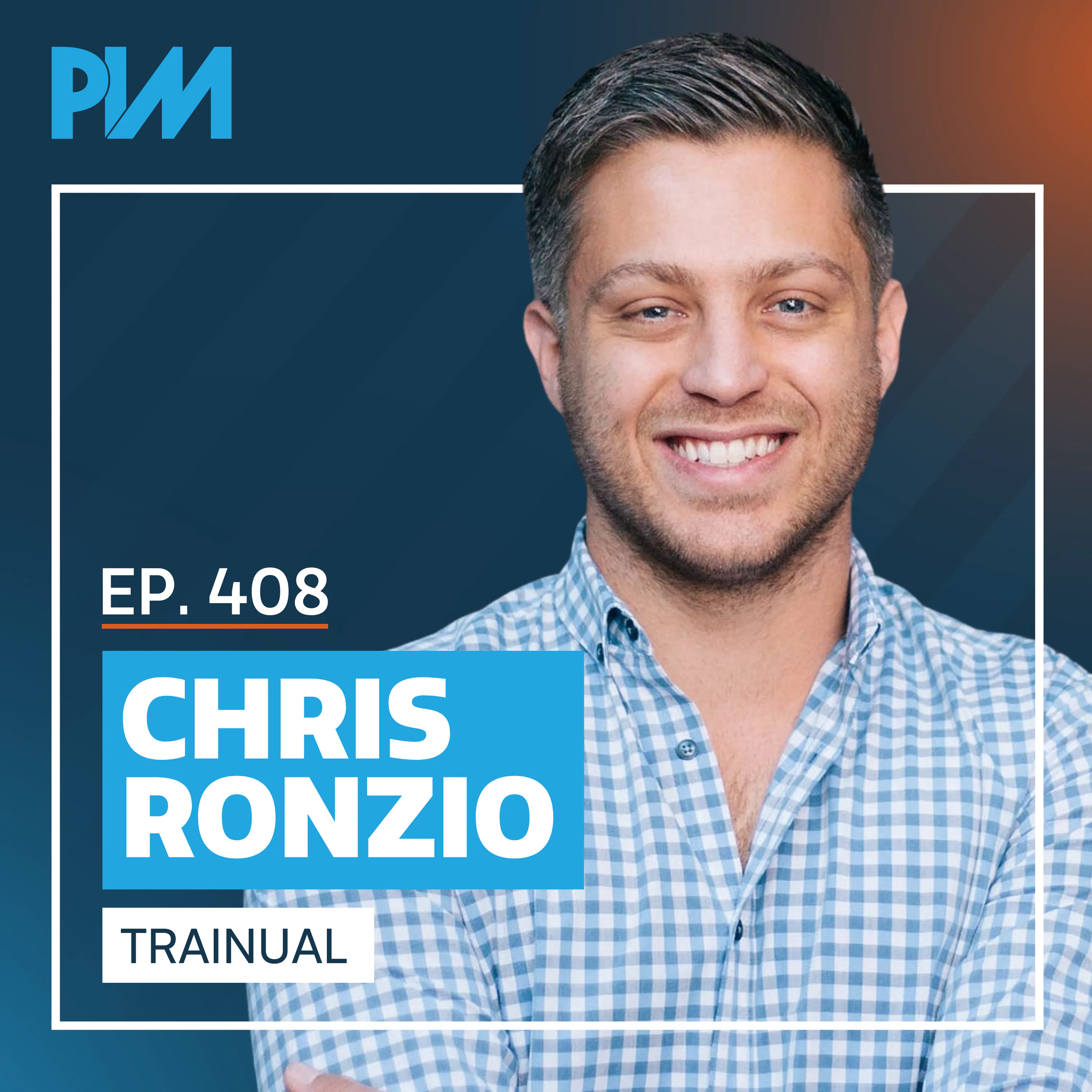
Personal Injury Mastermind w/ Chris Dreyer
408. Operational Excellence: How to Document, Delegate, and Dominate w/ Chris Ronzio
00:29:13
How to Get Your Entire Team Executing the Same Playbook
Loading summary
Transcript77 lines
- [00:02]
Chris Dreyer
Learn legal marketing and intake from the Masters of personal injury. PIMCON 2026, October 4th through 7th at Scottsdale, Arizona. Get your tickets today, PIMCON.org that's P I M C O N. O R G.
- [00:20]
Chris Renzio
If you just come into a business and you have to learn through osmosis, you don't know if that's going to be a month, two months, six months before you've seen all the different variances.
- [00:30]
Chris Dreyer
When it comes to scaling your law firm, you can't rely on tribal knowledge. You need a system. You need accountability. You need a way to guarantee excellence across the board.
- [00:41]
Chris Renzio
The training is an actual intentional experience, right? Like when you want to train someone how to do something, you have to think, what is the sequence I want to take them through so that they understand this, that they can prove they do it, and that I, as a manager, have some accountability that they've signed off on this.
- [00:57]
Chris Dreyer
If you've read the E myth, which if you haven't, you've got to get after it.
- [01:00]
Podcast Host / Interviewer
You got to go read this book.
- [01:02]
Chris Dreyer
Once you've read the E myth, then you realize you need to document everything. But how do you actually get your team to follow the processes without consistently looking over their shoulders?
- [01:11]
Chris Renzio
When you come into something and it says, here's 100% of what you need to know to do your job well, and you've got 10 days to do it, that's profit straight to the bottom line.
- [01:20]
Chris Dreyer
Getting your team to speed up as quickly and completely as possible is one of the best ways to increase your efficiency and grow your business. And today we're going to get a glimpse at one way to help ensure that your team is all executing the exact same game plan without you having to call every single play.
- [01:36]
Chris Renzio
Our mission statement is to get people up to speed, keep them up to date, so that they're productive and aligned and empowered.
- [01:45]
Chris Dreyer
This is personal injury Mastermind. I'm Chris Dreyer, founder and CEO of Rankings IO, the elite performance marketing agency for personal injury law firms. Today I'm joined by Chris Renzio, founder and CEO of Tranule, a platform designed to systemize your operations onboard your team faster and hold everyone accountable. We dig into why dumping files into a Google Drive isn't enough, the power of video sops, and how to actually get your team to adopt your processes. Let's get into it.
- [02:13]
Podcast Host / Interviewer
Give me the big picture overview of Tranial. I've got a lot of super granular questions because I'm a nerd like that on the op side. Before we like, dig in and the applications for PI firms. But, like, give me the overview. What's Trainual? Who's it for? Talk to me about it.
- [02:28]
Chris Renzio
Yeah. The biggest macro overview is Trainual is to optimize your business or your firm so that it runs exactly like you want it to. And if I go a click deeper, it's, what is the way that I want to design this firm to run? What are our policies, our rules, our best practices, our processes, or SOPs, whatever you call them? What is everything that you wish everybody just innately knew so that they could be more autonomous and do their job? What are your expectations so that they know if they're doing a great job? And it's just a place to manage all of that.
- [02:59]
Podcast Host / Interviewer
When you're doing your outbound, you, like, outbound with the E Myth, and you just put like, PS Train. Oh, my gosh. That.
- [03:05]
Chris Renzio
So that was our first ad, believe it or not. And Michael.
- [03:08]
Podcast Host / Interviewer
No way.
- [03:08]
Chris Renzio
Yeah. And so it was me holding up the E Myth and saying, if you've read the E Myth, then you realize you need a franchise prototype for your business. And the E myth doesn't describe how to do that. It just says, you need one. Go to Trainual. And funny enough, we became friends with Michael E. Gerber. He wrote the forward to my book. And so it's. They go together for sure. Peanut butter and jelly.
- [03:27]
Podcast Host / Interviewer
That's awesome. That's awesome. A lot of the PI firms listening, right? They got. They have their CRM, right. Lead docket, you know, Salesforce, they have their case management platform. Could be filevine. You know, there's a number of them. Where does this fit in in terms of the tech stack? This is in addition to, you know, why wouldn't they just use a case management platform to hold their SOPs and their knowledge base?
- [03:51]
Chris Renzio
Sure. So those systems are where you do the work. Trainual is where you learn how to do the work and where you manage how the work is done. And so I think that's the distinction we've always had is that there's the how tos and there's the TO dos, and your TO dos happen in Salesforce or filevine or what, whatever systems that you use. But the how tos happen in Trainual. It's where you as a business get to decide how do we want things to run. And it's where you train all your new people as they get started. It's where you manage change as you roll out new software systems. And it's the place where people can go and ask their questions instead of their manager.
- [04:22]
Podcast Host / Interviewer
So I've got notion for my knowledge base. But like one of the things that I like about Trainual, the name Trainual is like you've got the LMS component in there, the learning management systems. Like I guess one thing is to have your SOPs, right? But it's also getting people to use them, getting people to go through this process. Like what are some of the things specifically that Train Yield does to address this? Like I'll give you an example for myself. We went, we researched, we use HubSpot CRM and we, we found an LMS that integrated with HubSpot and we went and signed up and we created all these beautiful courses and, and we just couldn't get adoption right, as opposed to like the hands on application based training. So what's some things that Train Yield does and maybe it's not Train Yield,
- [05:04]
Chris Dreyer
maybe it's like hey, it's better leadership.
- [05:06]
Podcast Host / Interviewer
Like, like how do you get them to adopt and to use the systems that you've built in there?
- [05:12]
Chris Renzio
Well, it does have to be part of your culture. We can come back to that. But I would say for the system itself, whether it's notion or some other place that you're dumping knowledge versus something like Trainual, the biggest difference is going to be accountability. So the name Trainual came from training and a manual. The manuals place you dump the knowledge. The training is an actual intentional experience, right? Like when you want to train someone how to do something, you have to think what is the sequence I want to take them through so that they understand this, that they can prove they do it and that I as a manager have some accountability, that they've signed off on this. And so the biggest difference is that accountability, it's that you as a manager can see from 0 to 100%. Where are they in the training? Which version have they seen? Is there an E signature in place? Is there a time and date stamp? And then we've got all these proactive tools built into our system so that it's prompting you when things look inconsistent or when things are out of date or when things haven't been looked at in a while and it's asking you to update it so with a couple clicks you can use the AI tools and get it back to where it's supposed to be. And so the difference again with just a place to dump things is it gets chaotic, it gets stale, you don't know if people are looking at it, whereas a system like ours is actually pushing out to them and saying, hey, you haven't accepted and approved and seen the latest version. And I, as your manager, need to know that you're up to speed on the business.
- [06:30]
Podcast Host / Interviewer
I love that. It reminded me of the. The Domino's Pizza tracker, like, the percentage of, like, where it's out.
- [06:38]
Chris Renzio
Yeah, yeah.
- [06:39]
Podcast Host / Interviewer
And then I guess you could see like, oh, hey, Bob hasn't done anything like looking to send him some notifications to get in there.
- [06:47]
Chris Renzio
We have things like, you know, the streaks and the leaderboards. And, you know, our mission statement is to get people up to speed, keep them up to date so that they're productive and aligned and empowered. And so in the system, it's all about, are my people at 100% on everything they're supposed to know? And the things that they're supposed to know are attached to their role and responsibilities in the business. And so everyone's got a position, everyone's got a set of responsibilities, and then you attach the knowledge to each of those responsibilities. It's a pretty simple setup.
- [07:16]
Podcast Host / Interviewer
I love that. You know, you've looked at thousands of growing companies. You have very deeply entrenched in the PI space.
- [07:23]
Chris Renzio
Yeah.
- [07:24]
Podcast Host / Interviewer
A lot of adopters there. Like, what are you seeing of the successful PI firms? What are they doing in terms of the SOPs and their processes and how they're utilizing the tool effectively?
- [07:35]
Chris Renzio
I think the difference is their businesses are more turnkey. You know, they can bring someone in from the outside or someone that's remote or someone from know particular role, and they just get up to speed so quickly because you know exactly what's expected of you. Whereas if you just come into a business and you have to learn through osmosis, you don't know if that's going to be a month, two months, six months before you've seen all the different variances. And when you come into something and it says, here's a hundred percent of what you need to know to do your job well, and you've got 10 days to do it, that's profit and straight to the bottom line because those people can just start doing the job instead of, you know, just. They're still shadowing. I don't know. They're not. They're not great yet. They're not there yet. It's very intentional.
- [08:17]
Podcast Host / Interviewer
Talk to me about the specific processes that you want to document. And we joked, you know, the E Myth. You read a book like that and it's like, okay, I'm going to document everything. I'm checklist manifesto in this, like. And.
- [08:28]
Chris Renzio
Yeah.
- [08:29]
Podcast Host / Interviewer
And Then you end up with a thousand sops, as opposed to maybe the Pareto principal 8020. What are some of the big heavy hitters that every business should have documented?
- [08:38]
Chris Renzio
All right, so first I talk about your company's playbook. And I tried to simplify it with the four P's, really simple. So you've got the profile of your firm, you've got the people that work there, you've got your policies and then your processes. And so we try to hit those four buckets in that order. And so first, a profile is, okay, who are we and what are we all about? This is your differentiation, your brand, the services that you offer that maybe another firm doesn't offer. This is, you know, what is your style? Who's your ideal customer? It's your story of why you exist, why you started. And so those are the orientation basics that you mentioned. Because a hundred percent of people that start at the firm need to know that material. So that's their foundation. Then you go to the next P, which is people. It's what is the org structure here? Who are all of my coworkers? Who reports to who, like in an org chart, how are the teams or departments or locations organized? And then who does what? What are their roles and responsibilities? What are their backgrounds, their bios, their contact? This is again very basic. Every business needs to do this. And then you get into the more granular things, the policies. There can be something like a handbook that applies to every single person. There can be policies that are state specific, role specific, part time versus full time, remote contract versus in house. Those are policies and rules for how you have to run the business. Some of them are legal and compliance related, and some of them are just the ways you want to run the firm. And then you get into benefits and things like that. Again, that touches a lot of people. So that's like your, your 80, 20 already. And then when you get into processes, you look, you zoom out and say, what are the things that everyone here has to do? Does everyone answer the phone? Do we have a way that we need to do that? Do we have SLAs in terms of how we communicate? Do we reply to emails within this amount of time? Do we get back to each other on slack or teams within this amount of time? Those are things that everyone needs to know. And then you look at the biggest groups within your business, like do you have a bunch of attorneys or do you have a bunch of paralegals, or do you have a lot of people in a certain position? What Are the things that they're all doing that overlaps with each other that you want to make sure are done consistently. And so absolutely 80, 20 is the way to attack this. It's not document everything. It's document everything that's being done by multiple people so that we're consistent in how we do things.
- [10:49]
Podcast Host / Interviewer
Love that answer. The other issue I've had, and I guess this is like a therapy session too, and I'd love to hear all your opinions on this is like, you know, you get all these SOPs and then they like somebody makes a modification or, or you need them updated after a period of time. Like, you know, is there change logs, like version control? Like how do you go about the ownership of I guess the different size of the companies? Like a big company probably has somebody dedicated to this, but like let's say a PI attorney listening, that's maybe they got 15, 20 employees. They, they want to take it to the next level. They're, they're trying to get to that eight figure or mid seven figures. Like yeah, like who's owning this?
- [11:30]
Chris Renzio
So when it comes to the whole account, usually you've got someone in the business that's championing operations or consistency or systems and processes and so whoever that person is might oversee the account. But then when it comes to individual SOPs or processes, and we can talk about those in detail, there's a bunch of different kinds of SOPs. But when it comes to a single SOP, you've got an owner, someone that's tagged to it that says this is the person that not necessarily does this thing, but is responsible and accountable for this thing happening consistently in the firm. And whoever that owner is, that's the one that's going to get alerted when anything changes, when someone has a suggestion, when someone makes a change so that they own that thing. And then you can set up time based ownership. Like if something gets stale, I want to be notified. If somebody flags something, I want to be notified. Your person that's going through the training says wait, this feels off, I get notified. And so the whole system is based on that continuous improvement, but it goes to the owner of the process, not the owner of the firm. And so it's really about crowdsourcing this because one person cannot know how everything
- [12:35]
Podcast Host / Interviewer
is done with Train yield, does it integrate? Like, you know, it'd be nice to have your SOPs and processes in Salesforce and in Filevine. Does it integrate directly into that or is it copy paste? Like how do you go about that?
- [12:51]
Chris Renzio
So it integrates with all of your HR and payroll systems to sync your people data, with all of your file management systems to pull in files or be able to access knowledge that's somewhere else. With tools like Salesforce for search, if you're trying to connect it as a source that you can use our AI search to connect to and then with specific like case management tools. We are in early talks trying to figure out how to put widgets on those dashboards that show you if you've got new training. But what people are doing today is just linking to important things there that then fire someone back into trainual.
- [13:28]
Chris Dreyer
Evenup is a specialized proactive AI built for personal injury law firms. Personal injury is in their DNA. Visit evenuplaw.com to learn more. When it comes to processes, you can't just set it and forget it. If your SOPs are buried in a random folder from three years ago, they are actively hurting your business. Processes change software updates and your team adapts. If there's no clear ownership to keep these documents alive, you're not building an asset, you're just creating a digital clutter. Let's get back to Chris and dig into how to actually build these SOPs
- [14:07]
Podcast Host / Interviewer
so your team will use them. Let's circle back. You caught my attention with the different types of SOPs. So yeah, what do you mean by that? You know, expand on that for me.
- [14:17]
Chris Renzio
Okay, so first people hear SOP and they think, okay, long boring document, you know.
- [14:23]
Podcast Host / Interviewer
Right.
- [14:23]
Chris Renzio
And how do I even start? And what is it supposed to include? And so that is maybe how SOPs were done a decade ago, two decades ago, not anymore. You know, today an SOP can be a checklist, it can be a flowchart, it can be a video, it can be a blurb of text, it can be fun, animated kind of stuff. It can really be any of those styles. And so we built a way for you to create or embed or soak in any documents, any content that exists, whether it's a video you've already shot on YouTube or loom or somewhere else, or a checklist you want to build and train you all, or a file that you've got in a PDF. It's really just about centralizing it all in one place and saying this goes to this particular role in the business. Because then again, the AI agent can access all of that. People can ask questions about it, they can be assigned it, we track that, they've seen it, but you're centralizing it all to their role and responsibilities in the business. And then when it comes to actually building an sop, I have a really simple kind of framework that I use where first it's the responsibility name, it's what is this thing? Then it's who owns this like we just talked about, it's how frequently is this thing done in my business, in my firm? Is this every day? Is this Fridays at 9am? Is this every time the phone rings? Like that's your frequency? Next is how long should this take if it's done well? So is this a 10 minute task or is it an all day project? A lot of people delegate and do not set an expectation and then you get upset when something took four hours that you thought was a ten minute task. Right. And so you have to define that in the sop. The next thing is why is this important? What is the context of like why we do this? Who relies on this being done? Right? And then you get into the steps, step one, step two, step three. And I think people mess up in that metadata, they leave those questions out and that's where all the management problems come from.
- [16:18]
Podcast Host / Interviewer
Well, the big takeaway for me is the how long this should take. We don't do that currently in our SOPs. Super smart. I guess for me one of the things, the game changers, and I'm sure it's for many, is the loom video. Just shooting a quick video was really helpful and I find, I don't know if it's the, the adhd, the the what, but the, the super long documented processes. I can't practically do them versus the, the image or even the audio or are just a different medium.
- [16:47]
Chris Renzio
You know what's coming that I'm so excited about. So the reason that text has been easier to maintain in the past is if you shoot a bunch of videos, it's really hard to go back and make those minor tweaks to your videos. And then you end up with a ton of outdated loom videos and you kind of give up on the whole process. Whereas if you had text, you just search the system and say find and replace every instance of this. Boom, it's all done. And so we're finally getting to a place with AI where we can insert variable changes into videos that'll be coming out this year in Trainual, where you can have a recorded video in Trainual and say, oh, actually we don't use that software anymore, we changed it to this one. Or actually anytime I mention this person's name, change it to this one and it'll go back through your videos and make all those changes. And so we're, it's, it's a pretty cool time right now.
- [17:35]
Podcast Host / Interviewer
That's fantastic. And you're exactly right. And then it's kind of a pain in the butt to rerecord a video, especially if it's a lengthy one.
- [17:41]
Chris Renzio
Yeah, always keep them short. If you are doing videos, try to keep them like two or three minutes max because then if you do have to replace something, it's just that one, not a 30 minute cinematic experience.
- [17:51]
Podcast Host / Interviewer
So we've got the, the processes and the onboarding, the systems things. Let's go to the LMS specific. How are you determining and I like the gamification stuff that you have but how are you determining like if a person should proceed to the next level or if they have the specifically on the learning management system? Because I think, you know, Google Docs and Notion is like here, hold your repository of information, just hold this information. But I think what's intriguing about Train you'll are these other components, the notifications, the push notifications, the gamification. Like talk to me about the LMS side.
- [18:26]
Chris Renzio
Yeah, so what we did is we set up every role in the business has different responsibilities or competencies so that you can build out not just maybe today's positions but all of the future positions that your people may be after. And then you can start to document here's what I would expect from this position. And then if you have that knowledge internally, you can put it in there and you can start assigning it to people and track their progress toward their next role. Or if you don't have it in there, you can purchase any number of external courses and just bring them into Trainual. And so if you want to, you know, purchase some public speaking course or some management 101 or anything that's pre existing, you can buy it and just plug that course into Trainual and say it's attached to this position. So the LMS component, you know, historically has been very big organization. Only big enterprises have like a talent development department and put time into building this stuff and now it's really democratized it for anyone to say we want to have a learning track, a system here for up leveling for you know, investing in our people. I can get content anywhere on the Internet or I can build it myself or I can build it with AI and I can say what do I want everyone to know or what do I want this person to know as they're making advancements in their career.
- [19:42]
Podcast Host / Interviewer
Sometimes when I get a new piece of software, right. Everybody has these Great client success teams.
- [19:47]
Chris Dreyer
Right.
- [19:48]
Podcast Host / Interviewer
To help. But like sometimes I get it and it's like overwhelming. Where do I start? You know like for example, a lot of the PI attorneys that we work with, a lot of the listeners are traction EOS based business. They're using that business operating system. Do you have like, oh, here's the template for an L10 meeting. Here's the template for a quarterly rocks meeting. Do you have existing templates that you can call in to help with that creation process?
- [20:14]
Chris Renzio
Yeah, absolutely. So we've got about 500 templates just pre built in our library. But we're seeing more and more that people are just using the AI creation tools in our system to build those. And so you know, you can with a few prompts say show me what an L10 meeting looks like for a law firm with this many people attending the meeting and it, it will create you something more specific than some template that someone made five years ago for an EOS L10. And so it's really easy to just say what you want documented and it creates it. But yeah, we'll be at the EOS conference and we're big in that ecosystem as well.
- [20:50]
Podcast Host / Interviewer
What other tools features do we not touch on? Right. We hit the SOPs onboarding. I like the organizational stuff. I'll tell you this personally I. And again I could just consolidate into tranial but I use ping board for my org chart.
- [21:05]
Chris Renzio
Oh man.
- [21:06]
Podcast Host / Interviewer
Yeah, I'm on there every day. Like literally before we jumped on this, James Helm, our buddy. Oh yeah, makes fun of me. Like I look at the org chart almost every day. Yeah. It's like this is what I do.
- [21:19]
Chris Renzio
That's an interesting hobby.
- [21:21]
Chris Dreyer
Well for me it's our people is
- [21:24]
Podcast Host / Interviewer
still because I'm like not as tech enabled. Right. And a lot of the leverage is based upon human capacity. So it's like when I see it from a visual perspective I can see how the workflows.
- [21:36]
Chris Renzio
Yeah.
- [21:36]
Podcast Host / Interviewer
And it helps, helps me there. But yeah, bit obsessive.
- [21:40]
Chris Renzio
Fun. Fun story about ping board. I know their CEO too. And they started as a, an app to page people when you got to the office. That's why it's a ping board. It was like an iPad that you ping someone up from their whatever level to come get you. But yeah, we, I think it's a, that's a cool software. It's been a while since I've used it but we saw a lot of people just didn't have a simple org chart. And beyond the org chart they didn't have a way to attach it to all of the things someone did in the organization. And so that's the grid we built is we again link to whatever payroll you have. We build out that directory, we build out the org chart. And it has, if you click on any person, all of their responsibilities and you click on one of those responsibilities and it has the documentation of how you do that thing. And so it becomes really easy to fill in for people if they're not there because it's all in one place. And if you already have an org chart, you just turn that off. In Trainville, I would say the things that we didn't get to delegation is something I care a ton about because that's a huge reason you create training is to delegate something to someone else. Either you're going to be out, you know, you're on vacation, you're on leave, or you're moving up in your role and taking on new challenges and you need someone to take over your old tasks. And so we built a system where for every responsibility you can go through and rank what is your level of skill, how passionate are you about that thing? How career aligned is that with your own trajectory? And then you and your manager can have that discussion and say, is this something I should be doing? Or should we drag and drop this responsibility to someone else's plate? And if you move it, then it moves all the training associated with that thing to that next person and then you can even build out roles that don't exist. So maybe you're dragging and dropping responsibilities from four people's plate and you're creating this new position in the business and you've got a way to. As soon as that person starts, their training's already there for them. That's something I like a lot.
- [23:32]
Podcast Host / Interviewer
It certainly feels a lot more actionable than just a simple NPS or whatever they're called eps. The Employee Net Promoter.
- [23:41]
Chris Renzio
Oh yeah.
- [23:42]
Podcast Host / Interviewer
With those generic questions more specific to the individual.
- [23:45]
Chris Renzio
Totally.
- [23:46]
Podcast Host / Interviewer
Me and the Google Docs people, we got the Notion people, we got the Google Docs people, right? Hey, good, good for us. At least have some of these processes right. You know, back in the day or 10 years ago, I used Basecamp, right? And you had this import, right? And you could import into the platform. Like what's the migration into the platform? Like say all these folders, all these documents in Notion Google, like what's it like to migrate over into Train Ultra?
- [24:12]
Chris Renzio
So we have a implementation team that everybody that starts gets their first three or four weeks of a one to one someone to hold your hand through that process. Migrate your existing materials. Hook up connectors, if we have them, to things like Notion and Google Docs and pull in content. Hook up connectors to file management systems if you've got a Dropbox or drive or something like that. That is a big part of getting started is saying let us suck in all your existing knowledge so that it's there and then let's figure out who needs to know what you know. Does every employee have access to your whole Google Drive? Probably not, but in train ul you can distinguish, you know, this role or this department or this level of management needs to know these things. And so yeah, it's the first piece is just taking what you have and getting it into our system and then it's building from there. But if you've got Google Docs or something to start with, you're in a better place because day one, you've got searchable, useful utility inside of Trainual and you don't have to create from scratch.
- [25:11]
Podcast Host / Interviewer
Love that. Have you seen, you know, the PI trial attorneys? Have you seen anybody make, you know, a training like how to become a better trial attorney? Like, what have you seen in the space? Some cool applications that come to mind.
- [25:22]
Chris Renzio
Yeah. And actually so we have this share feature. So I know in some of the masterminds people will create Trainual content. And I'm sure you've been in a group before where it's like, hey, does anybody have a way you do this? You can just click a public share link, share it to someone else, and if they have a Trainual account, it'll duplicate that and copy it into their own account.
- [25:39]
Podcast Host / Interviewer
Very cool.
- [25:40]
Chris Renzio
And so it's a really easy way to share SOPs and to just help in the community.
- [25:45]
Podcast Host / Interviewer
Love that. Chris. This has been amazing for the PI attorney listening that wants to take it to the next level. First, go read the book. E Myth Shout out to Gerber. You read the book, you're gonna want to start documenting the process. I think everybody goes through that period of time where they pick up the book and it's like, oh, I gotta, I gotta make a change. Chris, what's the best way to get in touch? Learn more about trainual.
- [26:06]
Chris Renzio
Just trainual.com t r a I n u a l.com like a training manual or you can find me on LinkedIn. Just ChrisRonzio and yeah, we'd love to help optimize your business so it can be whatever you've imagined it to be.
- [26:22]
Podcast Host / Interviewer
Amazing, Chris, thanks for coming on the show.
- [26:25]
Chris Dreyer
A massive thanks to Chris Ronzier for coming on the show and laying out exactly how to build a high performance firm through accountability and rock solid training. Look, getting your operations dialed in and your team executing at a high level is how you build capacity. But once that machine is built, you need to feed it. If your firm is ready to scale and you have the systems in place to handle a surge of high value cases, you need a marketing partner who plays to win. At Rankings IO, we are the elite performance marketing agency for personal injury law firms. We don't just talk a big game, we deliver. If you're ready to dominate your market and partner with a team that is as competitive as you are, head on over to Rankings IO and let's get to work. I'm Chris Dreyer. Thanks for listening to Personal Injury Mastermind. We'll catch you next time.