← Personal Injury Mastermind w/ Chris Dreyer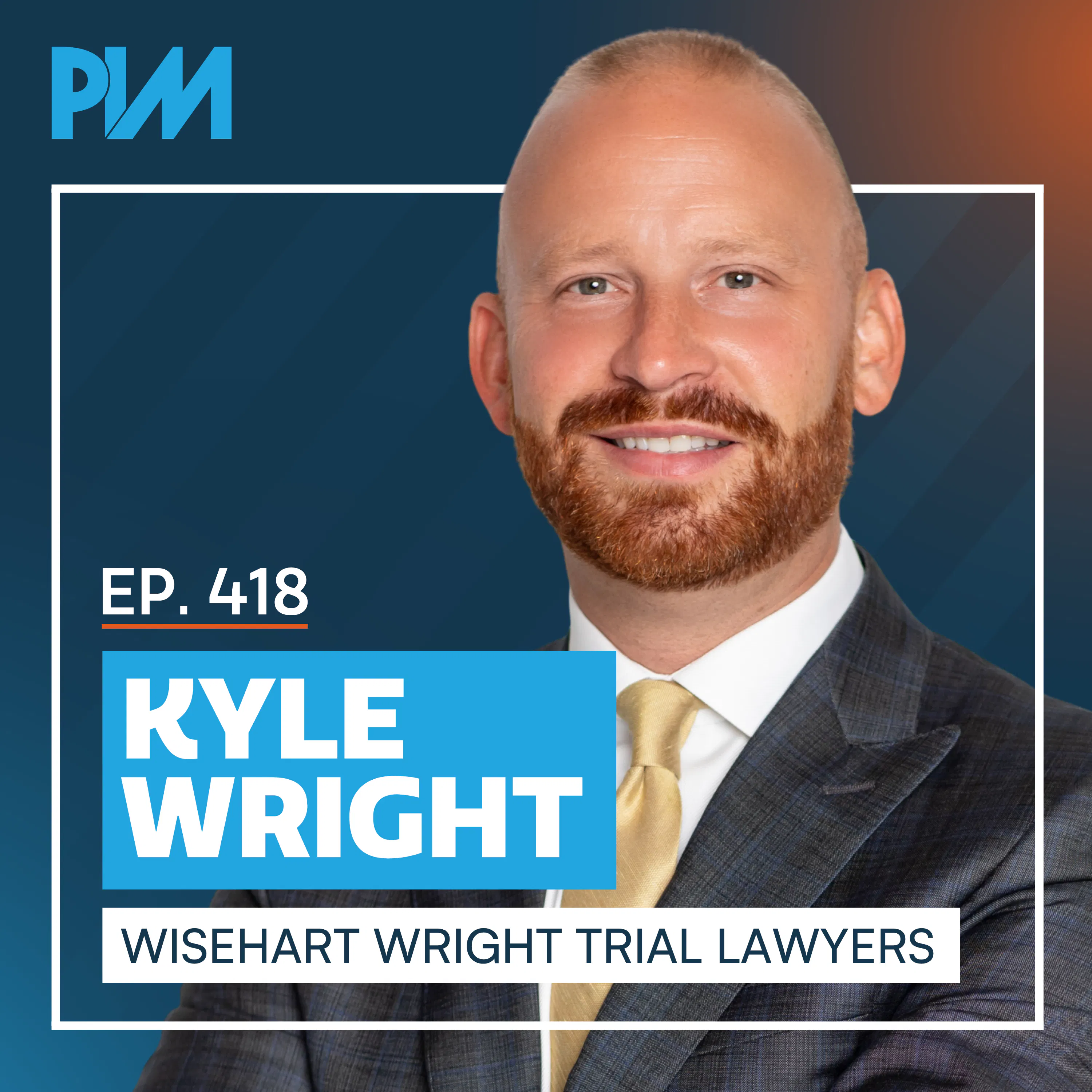
Personal Injury Mastermind w/ Chris Dreyer
418. It's Time to Audit: Plugging Intake Leaks to Fuel Massive Growth w/ Kyle Wright
00:21:24
Listen as Kyle Wright breaks down the grueling but necessary work of exposing his firm's leaks and building a machine ready to dominate the market.
Loading summary
Transcript29 lines
- [00:03]
A
Growth is deliberate.
- [00:04]
B
We've shot from the hip for so long and it can only get you so far. Eventually, if you're growing, you need to harness that data and just start running a business.
- [00:16]
A
At some point, shooting from the hip stops working and you have to get serious about your operations. But fixing your systems means you have to be willing to look at the ugly truths hiding inside your firm.
- [00:26]
B
We lost about a half a dozen leads in January. Between the time that our reception answers the call and waiting to get connected to our intake person that it just hung up, waiting.
- [00:42]
A
We all have areas in our businesses that need to improve. But sometimes it can be hard to face the problems head on and do what needs to be done.
- [00:49]
B
I knew that I reached a point where I needed to figure out how to put better systems and processes in place. When should I be hiring another associate?
- [00:59]
A
Today we're talking with somebody who has literally done the work. He lifted the hood on his firm, brought in outside eyes, and is making the hard pivots to scales practice. And here's the thing, if he can do it, you can do it too. This is Personal Injury Mastermind. I'm Chris Dreyer, founder and CEO of Rankings IO, the elite performance marketing agency for personal injury law firms. Rankings get you cases. Today I'm speaking with Kyle Wright from Weishart Wright Trial Lawyers in Ohio. We talk about the brutal reality of intake audits, establishing a firm cadence with EOs and taking calculated risk with your marketing channels. Let's get into it. Talk to me how intakes evolved, how you think about intake. Do you, you know, have a closers club for the commercial case that comes in? Like, how do you think about intake?
- [01:51]
B
That's wow. So intake, right is at this moment is my biggest pain point. I thought that we were really good. Like I thought that we were doing great there. I felt that way because I really trusted my staff. I trust my lawyers. I think they're good closers. And I see the leads coming and going and I just learned, in fact, I got connected to Dan Define who works with you. He connected me with a young whiz kid. I mean, just an absolute, just incredibly smart guy that has done a full intake audit. And we're going through the process. He's actually at our office right now. It's a 19 year old kid, probably one of the smartest human beings I've ever met. Two days ago, they listened to all 800 intake calls that we had in January. Firmwide developed an AI to listen to all 800 intakes. Give us the Total breakdown. And let me know where all of our leak was. And what they focused on was the leads that we missed. And I got a report of the leads that we missed and I reviewed that yesterday. So it's like, it's really fresh.
- [03:14]
A
Did you get the Pepto, The Tums?
- [03:18]
B
The pain. The pain is still, it's still really fresh and it's an open wound. So I was honestly shocked. So the feelings were. I'm really excited because there's so much more opportunity than I realized without having an audit. And I was also disappointed too. I really was. We weren't monitoring our LSAs. They just weren't being audited in the way that honestly they should be and found some waste there. That's concerning. So we're going to make some immediate changes there. And I found that our reception takes a call and they transfer it to our intake person. If our intake dedicated intake person isn't available, it goes to one of the case managers or one of the attorneys. We lost about a half a dozen leads in January. Between the time that our reception answers the call and waiting to get connected to our intake person or one of our case managers, they just hung up, waiting. You know, so that was, that was brutal. That was brutal to hear that. We had the transcripts and I knew kind of the quality of some of those leads and they just hung up. And you know, if they hang up, it's not being measured. And so I never even, I didn't know that those losses were occurring literally until yesterday afternoon. So it's, it's really fresh.
- [04:59]
A
You know, I, there's so much here. You know, once you dig into the data, your wanted conversion rate, you know, trying to be 90 plus percent minimum. And I think for audience listening, one of the things that I've found is, you know, if you have around 800 leads, I like about 100 to 100 and an intake specialist for every 100, 150. So if you're at 800, you could be at, you know, 4 to 5 if you go, you know, on that 150 range. So then basically they have more capacity because, you know, we want our lawyers at 80, 90% capacity or riders or other people. But like intake, you, you want somebody available to answer the phone because of
- [05:39]
B
that, that reason, absolutely no doubt about it. And you know, the more that I, I think about it, the more that, you know, I, I almost want just a. Someone with sales experience to be in that role. I really do.
- [05:55]
A
Yeah, I think it's so important. Well, it sounds like you're on it. You got a, a good, you got an audit going, you're making the changes. And I think it's important for our audience. You know, you identify the biggest constraint and you, you're, you're attacking it. Right. And you're fixing that constraint and then you're gonna go find the next constraint.
- [06:12]
B
Absolutely. I mean that's the one thing I would say is that I think I'm clearly guilty of it. But you know, we just go along day to day word kind of caught up in the minutia and you need to doing an audit of your intakes. Oh my gosh. That's like probably one of the most valuable exercises I've gone through and last several years. I mean, I couldn't believe the amount of just leak that we had.
- [06:42]
A
That's great. Well, fixing a leak and a lot more revenue. You know, plugging a leak, a lot more revenue in your future. Finding a massive leak in your intake is painful. Fixing it is how you capture immediate revenue. But here's the reality. If you don't have a framework to maintain those fixes, your team is going to slide right back into their old habits in six months. Kyle realized that outgrowing the chaos managed, he couldn't just manage the day to day anymore. He needed a proven operating system to hold everyone accountable. Let's get into how he brought in Eos and Fireproof to keep his newly tightened machine running at full speed. You know, you mentioned you opened the door. Fireproof performance. You know, I've had Mike on, I've had John Nal on, but I gotta tell you, like I don't know much about what they do. I mean, do you have a regular weekly cadence? Do you. They just set in your quarterly rot, like how does the program work?
- [07:32]
B
So I'll take you through why I decided I needed to reach out, that I needed help. I just felt like my practice. So there wasn't a playbook for growing my practice within my own firm. It just didn't have. Historically we didn't have this huge personal injury practice and it wasn't growing at the rate that it is now. So I wasn't like learning from a playbook that was already here. So I was just really learning on the job. And I knew that I reached a point where I needed to figure out how to put better systems and processes in place. When should I be hiring another associate? You know, do I need an intake staff person? When? Why? What are the value? Like I need to talk to people, I need some resources and I need to be able to ask these questions and get it figured out. So that's when I finally reached out to Fireproof. And so we're in the Fireproof group and it's like a. We have an accountability coach. So we have a weekly meeting. So I have 8:30 to 10:00am slot. Every Friday, my leadership group meets with Fireproof's accountability coach. And you know there's a, a playbook, right, that, that they use and I can't remember the book, but they, they use a, like a proven business methodology. And we've learned it and we've put it in place and we've established a cadence. We're gathering data that we've never gathered before and we're sharing resources, we're setting tasks. We set a task and then we have to be accountable for that task. Everybody on my team. So our leadership group is myself, my wife, she manages our office. She does hr. She was doing the marketing and then we hired the marketing specialist. I have my cfo, she's involved, she's in Florida. And then the leader of my paralegal team. So that's our weekly team meeting. We address pain points, we address wins, we identify issues, we come up with game plans, and all of the issues are tasked for follow up. And we have a weekly like accountability meeting to make sure that we're, we're hammering out these tasks. And what's crazy about it is that it's actually really simple. Right? Like the process is simple, but if you don't have that established like regular cadence to really follow through on these tasks, they're gonna fall through the cracks. The way that we've moved our business forward in the past, I would say two years by being basically just held accountable, identifying tasks and working on each of them as a team. I mean, we've just moved forward like it at a clip that we'd never had before. It's been insane. So I'm a huge proponent of it. It's helped me tremendously. It's helped me delegate more. That was a problem for me for a long time. I've seen the value in that. I've seen the value of adding key players and key seats. So that's what we're doing. You gotta, you gotta. You do a quarterly and you do an annual session. I doubled down. I ended up doing the mastermind group. That's in addition to the weekly accountability coach. So we're pretty ingrained right now in the Fireproof process. It's been really helpful.
- [10:54]
A
Yeah, I read that first traction. I'VE read Mike's fireproof book and you know, so our agency, we've been an EOS agency for a while and I highly recommend it too. I think, I think the simplicity is what makes it so great versus, like scaling up and, and Vern Harnish is scaling up. It's just so complicated and like, you know, there. Some of the complexity is nice, some of the exercises, but I think just that consistency, accountability the EOS provides, I think is so strong.
- [11:22]
B
It is. I convinced my partners to do it. And our criminal defense team, they just start, you know, they filled their cup in the local market. They're so busy and, you know, they have some really good opportunities. And my partner's in his 60s and you know, for him to. He has his mind made up on a lot of things, but, you know, I give him a lot of credit. He started to do his own Fireproof meetings and they've been moving forward faster than I've ever seen. It's amazing.
- [11:53]
A
Even up is a specialized proactive AI built for personal injury law firms. Personal injury is in their DNA. Visit evenuplaw.com to learn more. Operations in a tight weekly cadence. That's how you build a high performance engine. Marketing is the fuel. But pouring expensive fuel into a leaky engine, it's just setting cash on fire. When you tighten up your operations and lock down your intake, you earn the right to take bigger swings with your marketing budget. But as Kyle found out, learning exactly where to spend those dollars and where not to spend them can come with some expensive lessons. Let's get into his marketing channel mix and how knowing his ideal client completely shifted his advertising strategy. Television, radio boards, social, digital. Like, how do you think about this big picture, some of these channels.
- [12:47]
B
Yeah. So I know where my cases are coming from right now. Currently, it's Google organic. Right now is the highest percentage of my cases. That's a good thing. But, you know, I know that we need to pay attention to the other areas. Second highest is attorney referrals. So cases that are close to lit or it's a complex case. I have a lot of attorneys that I work with that refer cases for us to litigate. That's what we like to do. That's where I'm at. I've got an associate that's dedicated that just solely helps me with all my lit and we can really dig in. So I enjoy that. But, you know, at the end of the year, we look at the data, we do a snapshot, and we double down on where things are working and Ultimately, I think there's an element of, like, you have to take some risk, right? So, like, if you haven't done radio or if you haven't done television or if you haven't done billboards, there isn't any data in house to support whether that's the right investment or not. So the only way to do it is to. To try. And your chances of hitting the first time you do it is probably pretty low. But if you want to take the next step in marketing, you have to take that risk. You've got to invest, you've got to pay attention to it and be willing to pivot if it isn't working. One of the biggest mistakes I learned early on was I bought into the idea that, you know, you needed to be on television, right. And he wanted to do. So I did some radio ads, big local news network. It was like a. I had like a $75,000 budget for six months, which was at that point three, four years ago was an insane amount of money in my marketing budget. It was huge. But I wanted to explore it. Well, I got, in six months, I got one lead that we could directly, like, attribute to television commercials. And it was. It was a nothing. And so I realized if you're going to get into that game, like, you better be ready to at least budget a million bucks for a year and be ready to wait it out. Like, that's the long game. Same with, with billboards. It's more of a branding piece than anything. I don't, I just, I don't feel like for a while you're just not going to get direct calls from it.
- [15:19]
A
Yeah, I hear. I've heard Morgan and say things like, hey, he doesn't even break even till like, year three. So that's some conviction on, on the board, especially at those spins.
- [15:30]
B
Absolutely. I was so, you know, I. Right now, I did. At the end of the year, I was like, all right, I have profit, so let's figure out how to reinvest in marketing. We're going to reinvest our team, and we're going to reinvest in marketing. So at the end of the year, I talked to some people, some consultants, and then we just, we divided up how to, like, spend down basically for 2026 to just reinvest. I look at the marketing dollars I spent at the end of 2025, and I'm going to just really consider that as like a 2026 investment, because it was year end, right? Like, literally days before the end of the year. And so this Year. The, the new thing we did was radio and we chose 92.3 the fan in Cleveland. That's Cleveland Sports radio. It's the largest sports radio in northern Ohio. I liked it because it seemed to match up with who our clients are. We have a large statewide workers compensation practice. They're injured workers and frankly they're, you know, like men between 35 and 60. So that's who's hiring us, 35 to 60 year old men. That's our largest demographic. So I talked to some people and I thought about it. Well, where are those people going? You know, there's a lot of guys are interested in sports radio. I am too. So that's where we went. And so I bought it like the largest ad that they had available on 92. 3 the Fan to start the year. And frankly, I've been really pleased with that. It's kind of exciting.
- [17:03]
A
That is exciting. And that, that's, that's great that you know your icp, your customer so well that it helps you pinpoint and be selective on your marketing as opposed to the spray and pray. It's like, hey, this is where my audience congregates. Let me get an ad there.
- [17:19]
B
Exactly. We've shot from the hip for so long and it can only get you so far. Eventually, you know, if you're growing, you need to harness that data and you know, just start running a business. It's more than just being a lawyer. I've had to learn that recently. And so, you know, I'm, I'm a little bit more focused there than I've ever been.
- [17:40]
A
For audience that, that has a case in Ohio that wants to, that wants to reach out, has questions about the pod, you know, what's the best way to get in touch with you?
- [17:48]
B
Yeah, absolutely. So my email, Kyle W. Attorneys.com My cell phone, 419-366-7392. Always happy to talk to, you know, like minded people. Anybody that wants to work on a case in Ohio, always happy to jump in and even brainstorm cases, whatever it is, you know, I think it's really important to just communicate with people and help people wherever you can.
- [18:13]
A
Fantastic. Kyle, thank you so much for coming on the show.
- [18:16]
B
Yeah, I appreciate it, Chris. Take care.
- [18:22]
A
Kyle's story is the perfect reminder that you can't shoot from the hip forever. Real growth means having the guts to look at the ugly truths hiding inside your business, like a massive leak in your intake process and actually doing the work to fix them. But once you patch those leaks and lock in your operations. Your machine is ready to scale. And that's when you need the right fuel. At Rankings, we partner with elite personal injury firms who have their house in order and are ready to dominate. We don't guess with your marketing. For us, it's proof over promises, and excellent is the standard. If you're ready to stop shooting for the hip and take over your market, head over to Rankings IO. I'm Chris Dreyer. Thanks for listening to Personal Injury Mastermind. We'll see you next time.