← Personal Injury Mastermind w/ Chris Dreyer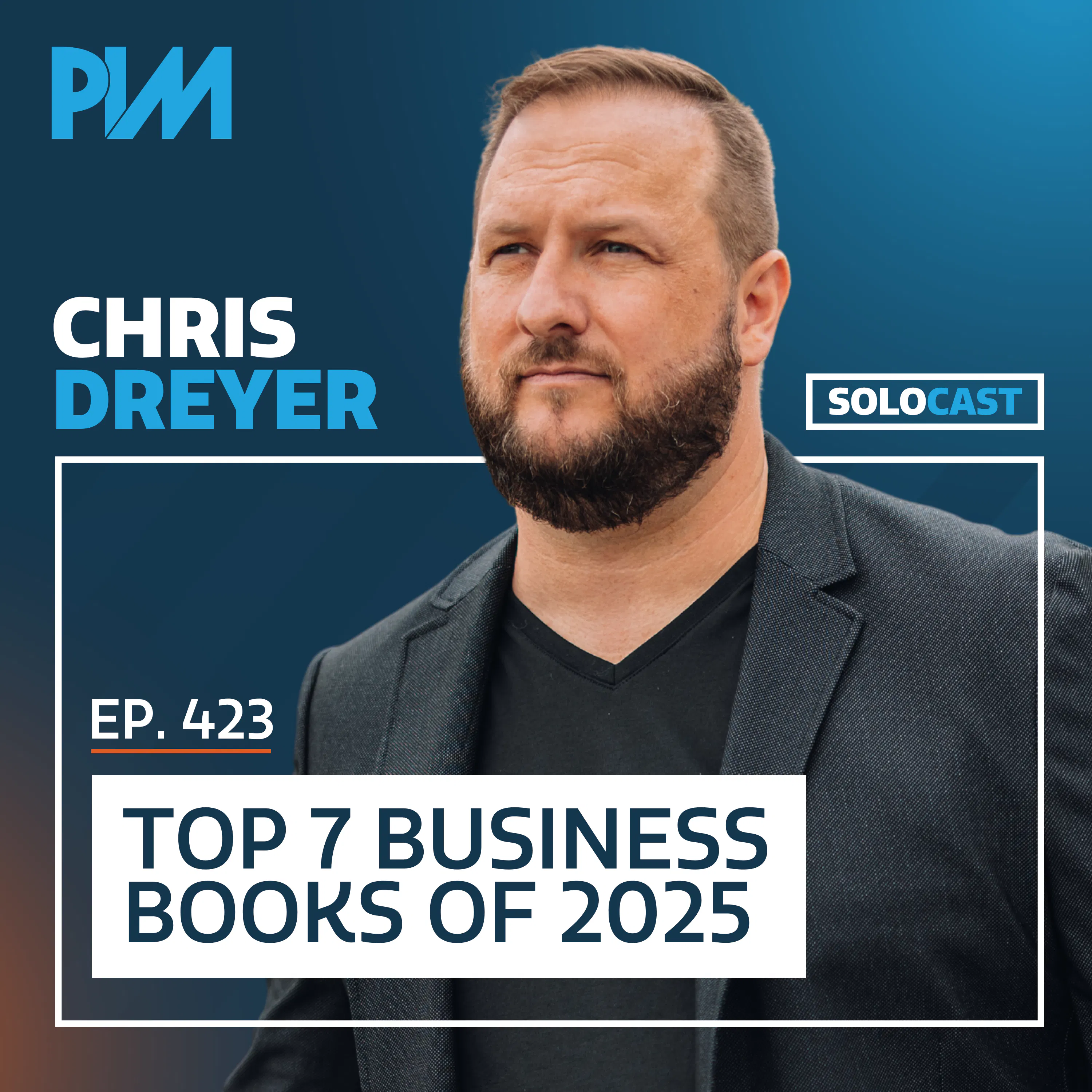
Personal Injury Mastermind w/ Chris Dreyer
423. The 7 Books Every PI Law Firm Owner Must Read
00:16:52
Chris Dreyer reads over 100 business books a year so you don't have to. Here are his top 7 picks to help you fix your bottlenecks and scale your personal injury practice.
Loading summary
Transcript1 lines
- [00:03]
A
Hey, guys. One of the habits that I've been doing for a long time now, at least 10, 15 years, is during my morning routine, I wake up 4:45. And during my commute, I listen to a business podcast or an audiobook every single day. And because of that, I'm consuming a lot of content. I probably 50 to 120 business books a year, and it's painful to switch from business books. I've tried to do the little the novel thing and occasionally read one or two novels, but really it's just business books. And, and here's the truth, a lot of them are great, but some of them are just a complete waste of time. So today I'm going to try to save you some time and share seven of my favorite books that I've read last year. These are the kind of books that I hope will instruct and inspire you to take your leadership to the next level. This is Personal Injury Mastermind. I'm Chris dreier, founder and CEO of Rankings IO, the elite performance marketing agency for personal injury law firms. Usually I'm interviewing guests, but today it's just you and me for another solo cast. Like I said at the top, we're going through my top seven reads from last year, 2025. But more importantly, I'm going to break down how these apply directly to your personal injury firm. So let's get into it. Number one, the Effective Executive by Peter Drucker. Look, this is an old book and a lot of people have recommended it. But in general, I'm just saying, for myself, I don't love books that weren't written by a business owner. So these professors and this and that, that study individuals, they don't have the application. It's like someone studying to be a good shooter and then telling you how to shoot hoops. But I made an exception because this individual has studied Jack Welch, GE and Procter and Gamble. And I read the book. So really the core ideas is focus on contribution, not activity. Do a few things exceptionally well. Time is the scarcest resource and manage it ruthlessly. So one of the things that I do every Friday is I have what should I keep doing, what should I start doing, and what should I stop doing? So every Friday, I look what's on my calendar, I see what meetings I had, what tasks I did, and I'm really ruthlessly evaluating my time spent to make sure it's most effective. The other takeaway is strengths matter more than weaknesses. So many people try to fix the weakest areas and where it could be A scenario where it's a signal to that you need a different who to solve those weaknesses and just focus on your strengths and continually improve. When you think about this in sports, it makes a lot more sense. You know, Dennis Rodman wasn't the best three point shooter. So he didn't spend all of his time, because that was a weakness, trying to become a better three point shooter. He focused on how he can contribute to the team. He focused on rebounding and the defensive capability. So in business it's the same thing. If you are good at, you know, trials, then find someone that's good at marketing and intake and you don't have to be the best at everything. And this is a scenario where I think the effective executive gets it right. You got to ruthlessly cut things that you aren't good at or find who's or other individuals to expand your capabilities. That's my takeaway. That's book number one. Book number two, My Life and Work by Henry Ford. I have read this several times over the years. I think there's so many lessons into it. It's a long book. The thing that I always think about is it's very common to think about the assembly line and the amount of production, the amount of vehicles that he shipped. And I think about some of the things that I have to do from a deliverable perspective for my clients or, or maybe UPI firms that are listening think about the number of cases, it is insignificant into the amount that this guy shipped. And there's something to be said about him standardizing processes and the assembly line methodology. I read Fireproof just like many of you did Mike Morse's book. And I immediately like, okay, I gotta go set up pods. These cross functional units, right, that manage their own P and L. When I tried that myself, I didn't have as much success. I like these top down teams because it forces specialization, it improves efficiency. There's some downsides on communication, but I found for me teams have always worked better. So that's the, that's one of the things I think about. The other thing that I think about is the iron triangle. Have you ever seen that where you can, you can get two sides of the triangle but you can't get all three. You can get good and fast, but you can't get cheap. You can get, you know, cheap and fast, but you can't get good. I think Henry Ford is the exception here where he had good, fast and cheap. So he kind of broke the mold. He also talks a lot about how he took care of his employees and, and how he paid them and, and had an immense amount of loyalty later in the game and some of the tips he shared some of those similar things with Sam Walton and how they pay their staff and how it contributed to their growth. Excellent, excellent book. One of the best books I've ever read. Number three, Seven Powers by Hamilton Helmer. This is a book I don't want my competitors to read. I think this is the one of the top books of all time in terms of strategy. And the core idea is there's really seven forms of power. And the first rule of power is scale economies. The second is network effects. The third is counter positioning. Fourth is switching costs. Fifth is branding. Sixth is cornered resource. And the seventh is process power. I'm just going to give you a quick takeaway in my interpretation of these. When I think about it, for a scale economies for a personal injury law firm, I think about buying in quantity, buying in bulk. So if you go to an outdoor company and you do a 12 month agreement and you spend more, they'll add additional remnant inventory posters and you get these things just because you're a big spender. I know of one client in their state, they get a 40% discount because they're the biggest media spender in their state on all their buys. That is scale economies. The second is network effects. Network effects for me is this podcast, right? It's the amount of listeners, it's the community I'm building. But for you, for personal injury law firms, it's the past clients and nurturing those individuals for systemic referrals. The longer you're in business, the more people know you, the more people that had an experience with you, it's systemic referrals. The third is counter positioning. I think this is a market by market scenario. But if you see in your jurisdiction someone's really being goofy and that's how they're owning their advertising. Like maybe you take a serious stance. If you see someone is doing a local nil deal and they're the local support of this team, maybe you take their rival. I'll give you an example. I'm in St. Louis and I always see people love the Cardinals. Well, I'm a local here. A big portion of the population are Chicago Cubs fans. What if someone's like, hey, I'm a cubby, you know, Cardinals, go take a hike, right? And took that stance. You wouldn't be right for the Cardinals fans, but you would be right for the Cubs fans. They would love that. Switching costs. Switching costs. For me, you want to make it painful for people to leave. The biggest application for a PI firm that I see is how you're retaining your employees. And it really matters if you're the type of employee and if you're a pre lit versus lit. But the biggest component here is applying a phantom equity plan with the vesting period or some portion of equity that makes it painful for your top litigators to leave and just take cases away from you. I think it's essential for the top litigating businesses. That's just my opinion. Branding so every sales conversation is a conversation based upon trust. Branding creates trust from its distribution from your messaging. So it's a huge benefit. We see how it's impacted Nike and Apple and these other entities. The sixth power is cornered resource. I think of this like an exclusive access scenario. That's what they mean by cornering a resource. Well, Justia has a premium listing. There's only one on the page. There's premium inventory for TV spots where you can own or billboards on the highway. On the right hand reads of an interstate celebrity endorsements. They can't endorse more than one individual. That's why you see, you know Patrick Mahomes endorsing State Farm. He's not going to also endorse Progressive. So I see an opportunity there for PI firms. Process power. I'm not going to talk about this too much. Processes are important. You need to become process dependent, not people dependent. And, and look at things that improve your speed overall that will create more value. So cash acceleration cycles, time on desk intake processes. Speed is power. Evenup is a specialized proactive AI built for personal injury law firms. Personal injury is in their DNA. Visit evenuplaw.com to learn more. Foreign book number four amp it up by Frank Slootman. This is one of those books where I just kind of want to just get pumped up. I'm going to set those B hag goals. I just want to take it to the next level. It's on the the, the same level as the grant cardone 10x and I know a lot of people don't love Grant Cardone but I, I just. It gets me jacked up. Frank's talking about speed as an underrated advantage. Mean every one of these guys talk about speed raising your standards aggressively. Leaders set the tempo. Fast decisions create momentum. The other thing too is he talks about speed of decisions where complexity kills execution. So you want to simplify things. You want to fire underperforming staff. This is a book to set your goals to Take them to the next level to just keep you, just like it says. If you want to be amped up, go turn on Frank. Book number five, the Almanac by Naval Ravikant. You guys have heard me talk about this many times. I read this book at least once, if not twice or three times every single year. Let me repeat this book number five, the Almanac by Naval Ravikant. One of its core lessons. In the book, there are many lessons, but one of them talks about leverage being capital, code, collaboration and content. So capital goes with the seven powers. It's scale economies. Code has to do with AI and software and enhancing your capabilities from a leverage perspective. So not being so labor dependent, content has to do with distribution. I talk about this podcast where I'm giving an. Essentially a keynote presentation at almost any event that happens in the legal space this year. Probably actually more double, triple the size of any of them. From my desk right here. There's distribution and leverage through content and then collaboration. That's the labor component. The more bodies you have to do things, the more leverage you have. Obviously there's some strategies here in terms of pricing arbitrage, whether you're hiring from the Midwest, the West coast or the east coast, or if you're doing nearshore, also paraprofessionals. There's all these different strategies that goes into this. But Naval teaches leverage and then once you've learned this lesson, you see it in everything that you do. Number six, the 38 letters from J.D. rockefeller. This is another book that I read all the time. This is where he wrote letters to his son. I think about it from a father perspective of myself and my son Gray, and how I want to teach him to hunt, not necessarily to hunt animals, to hunt for himself and be able to solve problems and be a capable human. He talks about cost efficiency is a moral duty, like always measuring your costs, making sure you eliminate leakage. He also talks about scale economies and scale creates power. Talks about controlling the competition and basically bringing everything in house. Vertical integration creates power. That's where he built pipelines and he thought in longer periods of time. It's just a great book. Number six, that's the 38 letters from J.D. rockefeller. Number seven, the science of Scaling. Benjamin Hardy. This is a recommendation by James Helm. He sent it to me. I knocked it out. This is another one of those books on the same level of Amp it up, where when you're, when you're reading it, you just get jacked up like you're ready to go crush it. This is the type of book before your annual planning, before you do an in person thing, you want to listen to number seven the Science of Scaling by Benjamin Hardy. So growth is an identity shift. It's not just a size increase. You need to be thinking about your constraints. Don't think about them from a negative perspective. Your constraints force better systems. When you have a bottleneck for throughput and you go solve that, that forces you to be better. So it also talks about simplicity enables scale, complexity, blocks it. You've heard simple scales, complex fails and scaling requires intentional removal, not addition. This has a lot of coral areas with Elon Musk's algorithm where you cut so deep that you have to add things back, but to continue to take it to the next level and to set higher goals and then to think bigger, I think this is an excellent book. So there you have it, my top seven books from last year. To help you scale your mindset, your operations and your firm look. You can spend hours digging through book recommendations, or you can just grab these seven to get to work. We'll have everything listed in the show notes for you. As always, if you're getting value out of these solo casts, we'll put a link in the show notes. Shoot me a DM and let me know which of these books you're diving into first. Or let me know if there's a book I missed that I need to check out for my morning routine. For more resources on how to dominate your market, visit Rankings IO. I'm Chris Dreyer and this is Personal Injury Mastermind. I'll see you next time.