Loading summary
Transcript4 lines
- [00:06]
A
It's now competing with the NHS as being the biggest religion in the country. My view is that net zero is the greatest act of self harm ever imposed on this country in terms of the financial impact. It's destroying industries like steel, like the automotive industry, like the chemicals industry and oil and gas. And the reality is that that's destroying tens of thousands of jobs, hundreds of thousands of jobs, and that's impacting hugely on communities. Maybe there's a smarter way of doing things.
- [00:40]
B
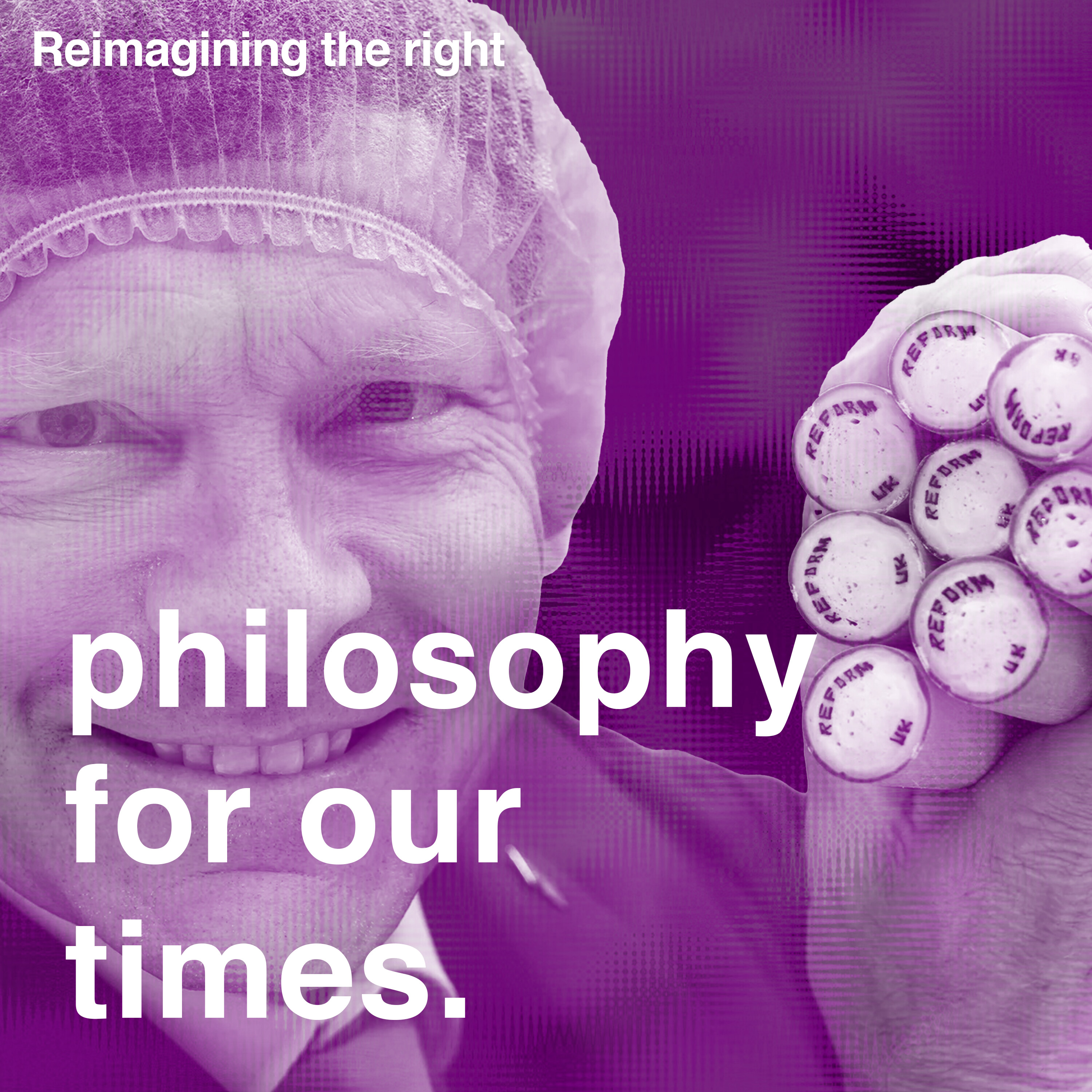
Hello and welcome to Philosophy For Our Times, bringing you the world's leading thinkers on today's biggest ideas. It's Daniel here and today I'm bringing you a talk by Richard Tice on the rise of the Reform Party and its mixing of left and right wing policies. Tice is deputy leader of the Reform Party, having spent most of his career as a businessman and donor of the Conservatives. In this talk recorded at our how the Light Gets in festival in May last year, he explores reform's seemingly contradictory political philosophy, mixing traditionally right wing ideas, like reducing taxation on business, with left wing ideas like public ownership of essential industries. Tice is undoubtedly a divisive figure within British politics. But in the spirit of free discussion, I hope you get something from this episode, whatever that may be. So, without further ado, here is Richard Theiss on reimagining the right.
- [01:47]
A
Good evening. Thank you very much, everybody. What an amazing evening it is. The sun shines on the righteous everyone here, and thank you for filling the tent. I was a bit nervous that there would be no one in this session, but anyway, look, so it's. And that's the joy of democracy, isn't it? It's absolutely fantastic that we can talk about things and everyone has a range of views. Wouldn't it be boring if everybody was the same? If we all thought the same, life would be very dull indeed. And in a sense that's what's happening at the moment. Democracy is saying, hang on the two main parties, the traditional way of doing things in the uk, maybe it hasn't quite worked. And so you've got new ideas emerging, new parties. And I think actually that whatever your view, whether it's on the left, in the middle, on the right for a different place, maybe that's a good thing, that we're allowed to talk about different things in different ways and then ultimately it's the voters that decide. So in a sense, who am I? How have we got to the point of where we are, where a new party's emerged from sort of nowhere and is suddenly leading in the national polls or first equal, whatever polls you want to read. And actually, at the latest elections, we secured, I think we got more well over two and a half times the number of votes of the government that was just elected just 10 months ago. And I guess the answer to that is, well, if the two main parties that have historically been in charge for the last hundred years, if they were doing a good job, there would be no need for a new competitor to emerge. Whether it's. Whether it's reform on one side of the debate or whether it's the Lib Dems growing on another side of the debate, whether it's the Greens growing and another side of the debate, I think that's all pretty healthy, I really do. And look at the moment, we've got momentum, we've got success. But I come back to that simple thing. There would be no need for anybody else if the two main parties, Labour and Conservatives, if they had delivered, if they had made people's lives better off, whether that's more money in your pocket at the end of the week, end of the month, or whether actually the public services work, whether the health system works, whether the education system works, whether the roads work, or whether they're full of potholes and much, much more. And bluntly, too many people essentially feel at the moment that actually the place doesn't work. And look, I'm 60, so I've been around, but actually, if you look back at the 1980s, the 1990s, almost every year, with a couple of exceptions, the economy grew at 2 and a half to 3 and a half percent every single year. If it grew at less than 2%, people said, got a bit anxious, less than 1%, people say that's a moral recession. And here we've got to the stage where if the economy grows at half a percent, people break out the champagne and say, oh, thank God for that. That's not growth, it's barely a round of drinks, frankly. And if you then divide the cake, if the economy's not growing, treat it like a cake, you've got one size cake, but if you divide that by ever more people, we've all got a bit less of the cake. And I think that's what's going on at the moment, that actually everybody is feeling a bit less well off. And in a sense, whether it's money in your pocket or whether it's the quality of life. And so I think that's the reason why people are looking elsewhere. And that's why both the Tories and Labour are in electoral terms are in serious trouble. I mean, the Labour government, they got a landslide, but I think most will probably accept, given they only got about 33 and a bit percent of the vote, it was probably a sort of loveless landslide. It was just a. Had enough of the Tories. We're done with them, out with them, let's try someone else. And 10 months later they're polling at 22, 23, so they haven't exactly excited the electorate. As for the Tories. Oh, go away. As for the Tories, well, they. I'm going to be a bit harsh. It's lovely to see you there. We're time for questions later. It's good to have a bit of humor in politics because it is a serious business. I'm now calling the Tories a minor party, our party of mines. Or maybe it's so. And look, I mean politics is. It's a tough game, but I just fundamentally come back to this key point. We've got to make the place work. And you know, the UK economy is, is flatlining. Yes, it's grown a little bit in Q1, but many of you will have run businesses, grown businesses, taken risk. There's two key things at the moment which is going seriously wrong in the uk. First of all, for too many people, work doesn't pay. So guess what? People don't work. And so you've got to make work pay. When I hear the tragic story of people ending up being sort of conflicted, do I work for 16 hours a week and claim benefits for the balance of a 40 hour week or do I go and work for 40 hours a week? If that's a discussion, you've got the structure of the tax system wrong. Fundamentally, work is a good thing and we have to encourage work. And if you can work, you should work. There's no such thing as a free lunch, you know, it just is the reality. And so we've got to make work pay and to create prosperity, you've got to make risk taking pay. I've got a sort of a. I'm a business guy, so I've got a pretty sort of business like view of things. And if risk taking doesn't pay, why would you expect someone to risk their own money to go through all the hard work of coming up with ideas, trying to sell stuff, trying to employ lots of people and take the risk? The honest answer is you won't. And that's what's happening at the moment. There's a serious crisis where for too many people, work doesn't Pay. And for too many entrepreneurs, small business owners, tradespeople, risk taking doesn't pay. When I talk to the boss of a plumbing business who employed 15 plumbers in the Cotswolds, it's now just too much hard work, too much paperwork, can't be bothered, he's down to two, you know, something's going badly wrong. And I think that's where we're at. And that's in a sense everything we focus on and our sort of direction of travel with our economic policies. That's what we're trying to do. We're trying to make work pay and we're trying to make risk taking pay. So that's why our key economic policy was to lift the starting point to which anybody pays any income tax to £20,000 from 12 and a half. That's why small businesses shouldn't pay any tax, let's say for example, until you're earning profits of 100 grand because that means you can employ another one person or two people. VAT threshold maybe instead of having the threshold at, I think it's now 90,000, lift it to 150,000. If people say to me, I'm not going to lift my turnover above this level because it's too much like hard work, the paperwork's a pain in the backside, then you know, you're not getting the best out of, out of hard working folk. And so I just think the UK is, the economy is at best, at best spluttering along. You say, okay, so lots of people say, well it's all your fault, Tice, it's all your fault, it's all Brexit. We want to rejoin the eu. So, okay, so let's just have a look, shall we? How's it going in the EU folks? Right, is Germany growing at 2.53%? No, they're in recession. Is France growing at 2.53%? No, they're flatlining on recession. So maybe it's not a good idea to handcuff yourself back to something that is failing. Ireland growing. Ireland is growing. And why is Ireland growing, madam? Because it's got a low corporation tax rate primarily of 12.5%. So actually risk taking in Ireland absolutely does pay. So, you know, and that's why whatever you think of him, the one good thing George Osborne did was to reduce the direction of travel of corporation tax from 28 to 24 to 19, heading towards 17%. And then Sunak in his infinite madness turned it back towards 25%. So look, these are the critical things that I Think sort of underlines our economic philosophy. And just talking to someone previously was saying well yeah, but how do we pigeonhole you? Are you right wing? What are you? And I said well actually maybe we're a bit of each. Maybe we just want things to work, maybe we just want people to get better off. So on certain things our policies are to the left of Starmer. So on critical utilities where there's no competition whether it's in your water or the gas transmission networks or actually a strategically important asset like British Steel, maybe they can't produce 15% private equity style returns. Maybe you shouldn't have a Chinese billionaire owning the electricity transmission network under London and on the whole of the southeast of England, God knows what software bugs and things have been put in there to turn it off at the most inconvenient moment. I don't know, I just don't think that's strategically very smart. And then you say okay, so yeah, but they're not taking out any dividends. Yeah, look at page 120 of the Accounts and you see actually they're taking all the money out the back door through high interest on shareholder loans. I understand this stuff. This is what's going on. Look at Thames Water, biggest water company in the country. It's effectively bankrupt and yet they're trying to cobble together private Equity deals with U.S. equity firms who want 15% returns on their money. Forget it, it's bust. Great deal for the taxpayer. Buy it for a pound from the receiver, that's a good deal. And then invest in it long term water companies is a very long term business. The gas transmission network of transmitting all the gas around our country. That's a strategically important thing. Maybe long term patient capital. So maybe you could have a new way of doing things in a sense, new ideas from a new party. Maybe you could have a joint venture. Some of you in business will have done partnerships. JVs, maybe you could have ease of mass. 50% public ownership, 50% owned by long term patient capital British pension funds on behalf of British pensioners. But here's the key. You need smart private sector managers to run the thing to make sure that you're delivering. Now that's to the left of the Labour party's position. So I just think it's common sense and you can deliver returns of 6,7% long term. If you can deliver that as a long term average, that's what pension funds want and you might have a good year as a company in which case the public benefits alongside the private the ownership. And if you have a bad year, we all take it on the chin. This is different, it's new. Am I saying you can do it overnight? No, but at the very least, we should be prepared to consider these things. I happen to think that British steel is a strategically important asset. Six years ago, I said, don't sell it to the Chinese. The Tories ignored our splendid advice, sold it to the Chinese, and we've ended up in a right pickle. A right pickle. Blast furnaces produce the strongest steel. They are essential. If we let those close, they would be the only G20 nation, I think, with no ability to make primary strongest steel. So there's a different way of doing things, and I think that's sort of what we stand for. And then also we talk about difficult issues that previously you weren't allowed to talk about, and it's really difficult to talk about. And our good friends over here don't want me to talk about it, that's fine. So if you want to talk about something like what's the right level of immigration, that works for essentially both sides. Because for immigration to work, well, it's got to work for. For the person coming into a nation, but it's also got to work for the host nation. If it only works for one side, it's not a good deal. And that's my view of things. Smart immigration, great thing, highly skilled, highly qualified, insensible numbers where people can integrate work and speak the language. We're all up for that. I think that's a reasonable position to have, and that's our sort of view. But obviously, until recently, we weren't allowed to talk about this stuff. And, you know, sometimes it's. It's pretty difficult. But hey, we're sort of. That's who we are. And then the other big difficult thing to talk about is, is anything to do with the climate. Anyway, I've coined a new phrase. Slogans always work in threes. So I've coined next stupid zero. And whether you like it or not, it is capturing the attention and it sort of does what it says on the tin. Look, I grew up in the countryside. I'm a conservationist. My constituency is Boston's Skegness. It's got huge, wonderful, incredibly productive agricultural farmland. My constituents don't want that farmland covered with tens of thousands of acres of solar panels. And equally, they don't want their constituency blighted with three rows, three lines of ugly pylons 50 to 80 meters high, destroying their property values. I don't think that's an Unreasonable position. And what we're saying is we all care about the environment, but it's not good for our environment if you cover it with solar panels and pylons. Some people think you can stop climate change. Well, can you really stop the three components of climate change? Can you stop the power of the sun? Can you stop the power of volcanoes? Can you stop the power of sea level rise? Right, if you think you are, you can. Good luck to you. My position is maybe we'd be smarter. You know, the climate's changed for millions of years, it will change for the next millions of years. Maybe we should adapt to climate change than think you can stop it. Maybe that would be a much smarter, better use of our money and our assets. And I know a lot, this is sort of, it's now competing with the NHS as being the biggest religion in the country. My view is that net zero is the greatest act of self harm ever imposed on this country in terms of the financial impact. It's destroying industries like steel, like the automotive industry, like the chemicals industry and oil and gas. And the reality is that that's destroying tens of thousands of jobs, hundreds of thousands of jobs, and that's impacting hugely on communities. Maybe there's a smarter way of doing things. So these are difficult issues to discuss with a mainstream media that wants to sort of smear and label, but that's what we're doing at the moment, the moment people are listening and people like what they hear. They like what they hear because the two main parties haven't delivered. That's the bottom line. And fundamentally competition is a good thing. I believe in free markets, but they've got to be sensibly, smartly regulated. And I just think that's what's gotten wrong, went wrong with the utilities. They, they weren't smartly regulated. And so decent ordinary working folk have ended up bluntly being shafted by a failure of regulation, by overtaxation and by rapacious private equity groups that think very short term, whereas actually in government you've got to think long term. So those of you who read the Financial Times, you might have read this morning that we've sort of talking about oil and gas. I mean, oil and gas is like energy, I call it the energy treasure under our feet. And cheap energy is the key driver to businesses being competitive and to create a growing economy. If you look at all the fast growing economies around the world, most of them, if not all of them, have got cheap energy. So if we know it works, guess What? In the 80s and 90s we were exporting energy, oil and gas and we were getting richer. We know it works. Maybe we should continue to extract it like almost every other developed nation that's got energy treasure under its feet. But maybe the state should have a stake in it. So maybe the state could earn, let's say, 20% of gas fields or oil fields as part of the deal. That way you're aligning the taxpayers interest with those who are trying to create the value. That way you sort of get the best of both worlds. Smart private sector people and the taxpayer benefiting as well. These are different ways of doing things. And someone says, oh, that sounds terribly like nationalization. We'll have dreadful British Rail sandwiches like sort of 30 years ago. But actually, I just come back to this simple point. You've got to be prepared to try new things. Here's the difference, though. In the world of business, when you try something, you make an investment, you then monitor it, manage it. None of us are perfect. You'll get some things right, you'll get some things wrong. When you get it wrong, don't cover it up, tweak it, adapt it, learn from it and try not to make the same mistake again. That's the route to being successful in business and I think that's the route to being successful when you manage things. Now, we're now in charge of 10 councils. So, yes, we've gone from being a party of noise and some might say, protest and talk. Now we've actually got to perform and deliver. Yeah, sure, I'm not afraid of that. Scrutiny is a good thing. So I was in Lincoln on Wednesday night, a couple of nights ago, we've got 44 councillors there and they're starting to lift the lid on stuff. And already there are finding huge areas where actually there's a combination of complacency. We've always done it this way. It's someone else's money, don't worry about it. No, this is taxpayers cash. And I suspect most people are saying, hang on, I'm paying ever more council tax bills and the services are getting worse. What's going on? Where's the money going? Well, that's what we're going to find out and I'm absolutely certain that we're going to find huge savings. So that doesn't mean. That doesn't mean you have to cut services. Maybe it means you could provide the service in a better, more productive, more efficient way, ideally for a bit less money. You don't have that ambition. You've got absolutely no chance and that's what we're trying to do. And so, I mean, we've already pressed the pause button on a 20 million pound capital project that doesn't need doing in one council. Why on earth would you do that? Why would you spend 20 million quid on something that actually might be a nice to have? Big shiny new building? Is it necessary when there's no cash around? No. So we press the pause button. Is it wise to create an 11 year IT contract? It's hard enough to know where it is going to be in about six months, let alone 11 years. So we pressed the pause on that, we said, no, no, go back, start again, might be two years, it might be three years. I'm sure some of you running businesses, you've got IT contracts, I bet none of you have an 11 year IT contract or a 20 year highways contract to fill in potholes, right? Where's the ability at the end of the day, if you don't perform, you get a couple of yellow cards and then you get the red card, you're fired. But if you've got someone on a 20 year contract, very hard to fire them. So these are the areas where we think we can make a difference and we're sort of saying, look, if we can run these councils well, and the numbers are big, I mean the numbers are the cumulative, the cumulative turnover, spending power of those 10 councils is £12 billion. Serious money. So if we can make a bit of a saving in that, if we can save 3, 4, 5%, that's saving hundreds of millions of pounds every year. And we've got very smart councillors in some of the key portfolio positions. So that's what we're going to try and do. And as I say, we'll get much more right than we get wrong. But that's our ambition. And I've just got a sort of a strong view that if you don't try, you've got no chance. It must be worth. If things are not working, then you've got to say, okay, how else can we do this? Some people might say you've got to have more taxes and that the state knows best and trust them. Well, taxes are at a seven year high. State spending, sorry, 70 year high. State spending is at a 70 year high. The national debt is at a post war high. And that brings me on to this point about spending. Last year, until March 25, the country spent 152 billion pounds more than it earned. Impossible to know what that means. I'll tell you what that means. That's five grand extra debt piled on your house of debt by the state. In one year, in the last month of April, the state has borrowed £20 billion. That's another 650, 700 quid of debt piled on the value of your house. This can't go on forever, folks. We're going to run out of cash. If you run out of cash at home, you go bankrupt. You run out of cash at work, your business goes into receivership. If we run out of cash as a nation, if the bond markets say we're done, we're not lending you the money, then we've got serious problems, right? We are heading towards serious problems and there is a proper wake up call coming and we're just calling it out as it is and we just tell you the numbers. You think about it, for the next four years, if the state piles another five grand on the value of your house of debt every single year, that's 20 grand. Average house value to 62, 80,000. How long is this going to go on? At some point you go bust. So we've got some serious challenges and we've got to do things in a different way. We've got to cut out wasteful spending, we've got to make work pay. And work's a great thing, it's good for the family, it's a great example to one's children. And I think if it's good for the family and the family gets better off, then actually it's good for your local community. And actually we want all our communities to be better off, better managed. And if all our communities are better off, then in a sense our country's better off. Family, community, country, that's sort of, that's who we are, that's what we stand for, that's what we believe in. And I think I just come back to this point. In a democracy, competition is a good thing. New ideas is a good thing of all sorts. And this great festival, it's a bedrock of new ideas, great ideas, mad ideas. But if you're not prepared to discuss them, then you've got no chance, you won't make progress. And I think that's in a sense what we're trying to do. We're trying to make progress, we think we can do things better and that's sort of who we are. And at the moment people are saying, yep, I'll give you a go, but I'm very clear eyed about it. If we screw up, we mess up running those councils, then voters will be pretty unforgiving. There's no rest in this game. And so we've got, you know, our ambition is we want to do well with these councils. We want to tell people about the wins, be honest about where we've tried something and it hasn't worked. Then you've got elections in Wales and Scotland next year. Here's the thing. In Scotland, we've come from nowhere. All of a sudden we're polling second with a very small team. There's a by election for an MSP seat because sadly, the previous elected member passed away. So there's a by election for the Holyrood election and, you know, we're sort of polling second to the snp, Labour's in third. You think, how does that happen? What's our slogan in Scotland? Drill. Scotland drill. You might not like it, but I tell you what, it's oil and gas that created the wealth in Scotland. Aberdeen, Absolute epicentre of global expertise for energy and the prosperity, the jobs, the wealth of that created and maybe actually the good Scottish people, and I'm sure there are some in the room are saying, well, this is worth a look. Thank you very much.
- [29:03]
B
Thank you for listening to philosophy for our times. What do you think? Are we approaching the end of the traditional Labour Conservative two party system in the uk? Is the rise of reform a result of the strength of their policies or merely the weakness of its opposition? And what do you think of Tice's suggestion that we should be focusing on adapting to climate change rather than slowing it down? You can get in touch through the email address in the show notes or by leaving a comment on the platform of your choice. And if you'd like to hear more, please like and subscribe and head over to our website, IEI TV for thousands more debates, talks and interviews from the world's leading thinkers. Bye.