Podcast
Philosophy For Our Times
Hosted by IAI · EN
Philosophy for our Times is a free philosophy podcast bringing you the latest talks and debates from the world’s leading thinkers. We host weekly episodes on today’s biggest ideas in news, society, culture, politics, science and arts. Subscribe today to never miss an episode.
562episodes
Episodes
Newest firstAll episodes
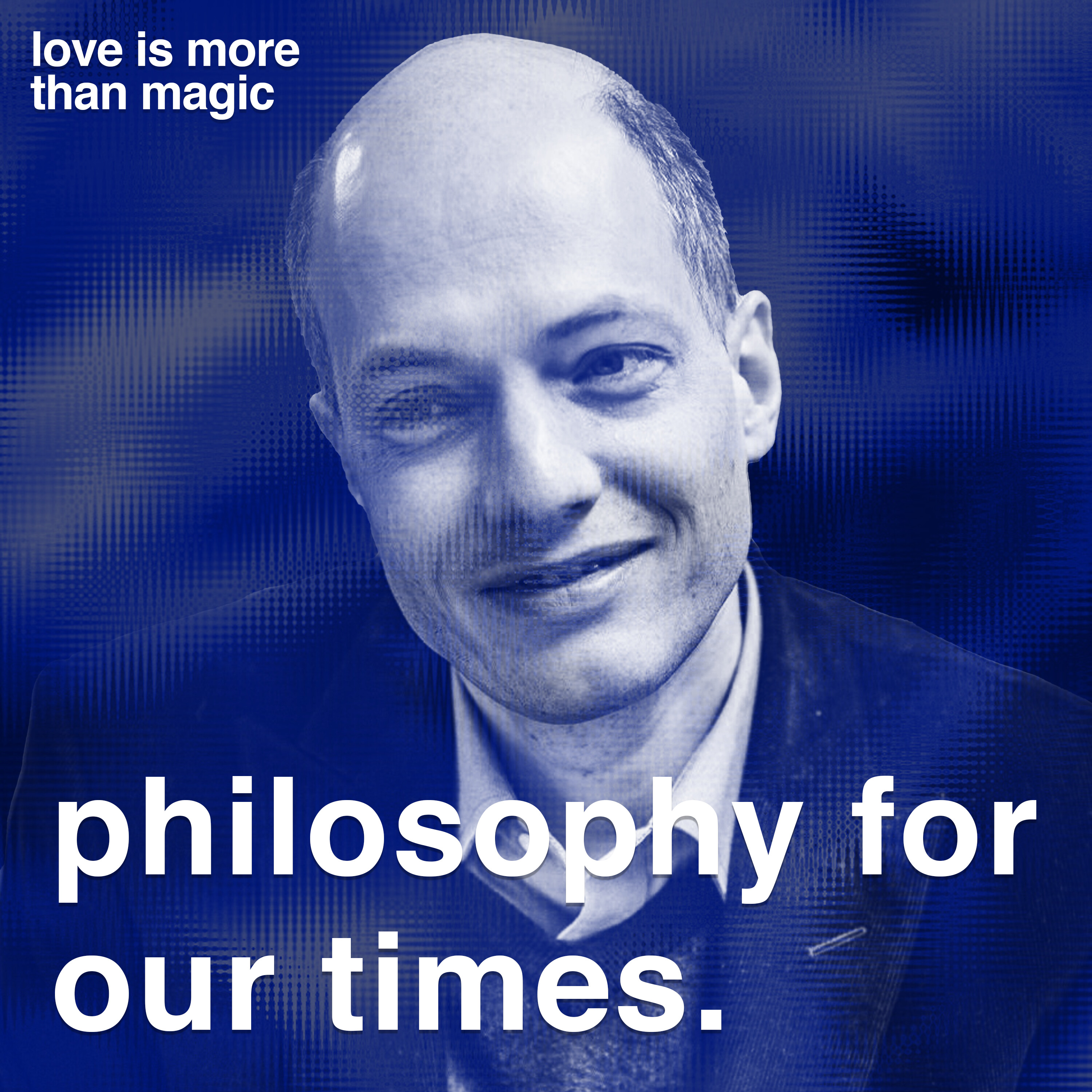
Love is more than magic | Alain de Botton
Yesterday00:35:10Summary readyWhat do voyeurs want? What can the Greeks teach us about love? Why do we pursue those who we now are going to hurt us?Despite our longing for lasting connection, love often falters on the rocks of misunderstanding and unmet expectations. Philosopher and founder of The School of Life, Alain de Botton, explores how romantic ideals mislead us and why emotional maturity, not chemistry, holds the key to enduring intimacy. Drawing on philosophy and psychology, he examines how our childhood shapes desire and how love, far from being a mystical or ethereal force, is a demanding skill we must patiently and consciously learn."One of our most consistently illuminating writers on contemporary culture." — John GrayAlain de Botton is the bestselling philosopher redefining how we understand love, work, and meaning in the modern world. He first rose to prominence with Essays in Love, a novel-philosophy hybrid that became an international bestseller. He has since authored several bestselling works that blend literary elegance, psychological insight, and philosophical depth.Don't hesitate to email us at podcast@iai.tv with your thoughts or questions on the episode!To witness such talks live buy tickets for our upcoming festival: https://howthelightgetsin.org/festivals/And visit our website for many more articles, videos, and podcasts like this one: https://iai.tv/You can find everything we referenced here: https://linktr.ee/philosophyforourtimesSee Privacy Policy at https://art19.com/privacy and California Privacy Notice at https://art19.com/privacy#do-not-sell-my-info.
Summary
In the name of reason | Steve Fuller, Miriam Schoenfield, Dan Sperber
1w ago00:40:19Summary readyIs the future one where we accept tribalism and conflict as inherent in the human condition, where moral and scientific beliefs based on reason are badges, shaped by class, nation, ethnicity and culture? Or is reason more important than ever, not as a route to truth, but as a means to test the effectiveness and consequences of a given outlook? And can we reclaim reason as a method for resisting the crowd rather than following it?Reason was supposedly the great liberator – an Enlightenment gift that freed us from blind adherence to tradition and the authority of church and state. But today, many now contend this is a comforting myth. For as Benjamin Franklin put it, reason merely helps us “make a reason for everything one already has a mind to do.” Furthermore, studies confirm people with more developed reasoning skills are more susceptible to groupthink and polarization, not less. For the more rational we are, the better we are at justifying what we already believe – especially when it aligns with our social circle. Dan Sperber is a distinguished anthropologist and philosopher who is the author of several critically-acclaimed books, including The Enigma of Reason. Steve Fuller is a professor of sociology at the University of Warwick. He is the author of dozens of books, including Post-truth: Knowledge as a Power Game. Miriam Schoenfield is a leading epistemologist, Associate Professor of Philosophy at the University of Texas at Austin, and award-winning essayist. Jack Symes is a public philosopher and writer. He is the producer of The Panpsycast Philosophy Podcast and editor of the Bloomsbury series Talking about Philosophy. He is currently Teacher and Researcher at Durham University, UK.Don't hesitate to email us at podcast@iai.tv with your thoughts or questions on the episode!To witness such talks live buy tickets for our upcoming festival: https://howthelightgetsin.org/festivals/And visit our website for many more articles, videos, and podcasts like this one: https://iai.tv/You can find everything we referenced here: https://linktr.ee/philosophyforourtimesSee Privacy Policy at https://art19.com/privacy and California Privacy Notice at https://art19.com/privacy#do-not-sell-my-info.
Summary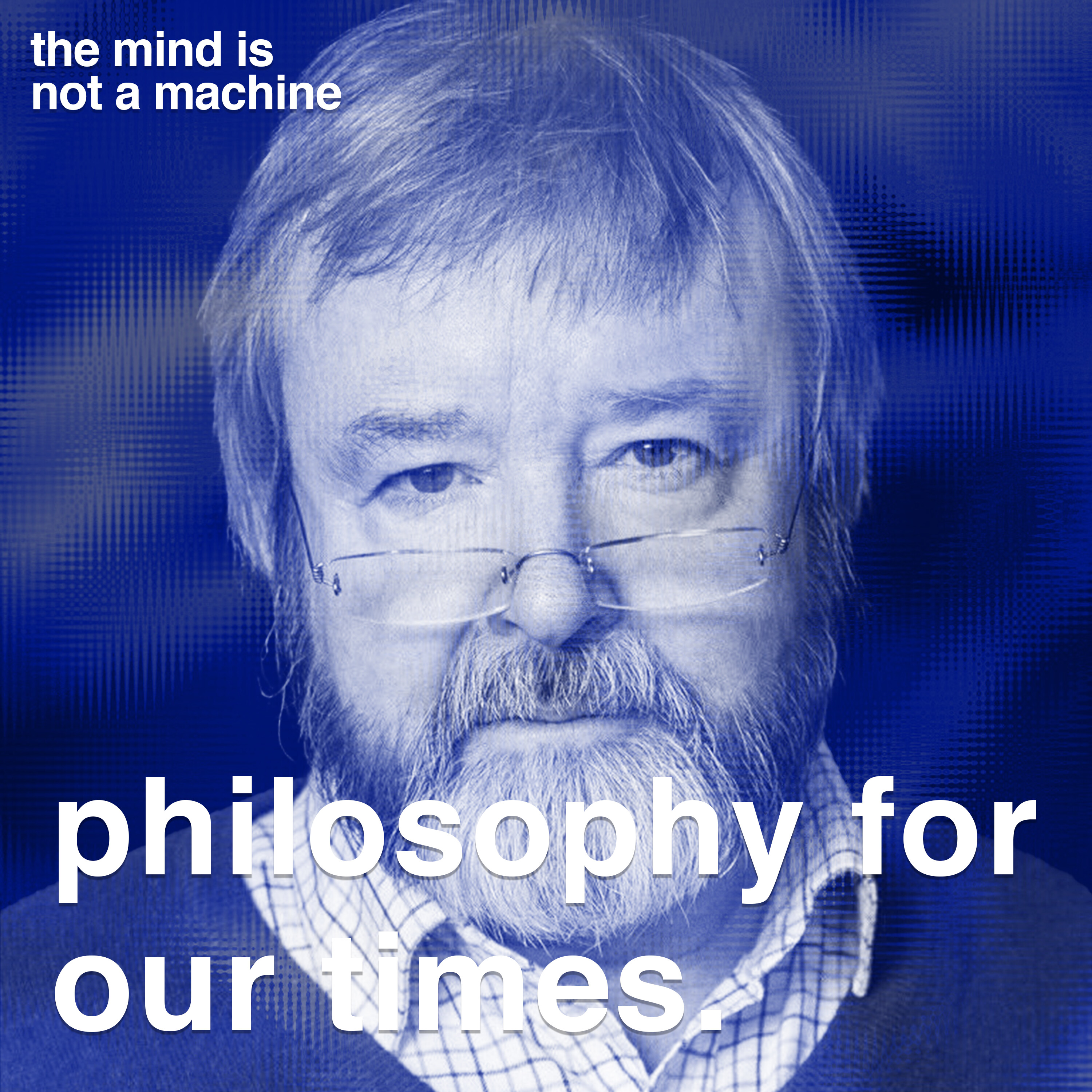
The mind is not a machine | Iain McGilchrist
2w ago00:21:45Summary readyFor most scientists, the mind is little more than a machine. With the rise of AI, some now claim that computers may themselves become conscious. For acclaimed neuroscientist, psychiatrist, and philosopher Iain McGilchrist, this is a profound mistake. The attempt to explain the mind in purely mechanistic terms reflects the flawed assumptions of materialism and reductionism – both symptoms of a civilisation dangerously dominated by left-hemisphere thinking. To understand mind and matter, he argues, we need to restore the right hemisphere to its rightful primacy and move beyond materialism.Iain McGilchrist is a distinguished British neuroscientist, psychiatrist and philosopher. A former Fellow of All Souls College, Oxford, Iain McGilchrist also worked as a consulting psychiatrist, and is known for his influential work on the relationship between the structure of our brains, human cultures and our understanding of the world.Oliver Adelson is Philosophy Desk Lead at the Institute of Art and Ideas. He is also Head of Speaker Booking for the IAI's HowTheLightGetsIn Festival.Don't hesitate to email us at podcast@iai.tv with your thoughts or questions on the episode!To witness such talks live buy tickets for our upcoming festival: https://howthelightgetsin.org/festivals/And visit our website for many more articles, videos, and podcasts like this one: https://iai.tv/You can find everything we referenced here: https://linktr.ee/philosophyforourtimesSee Privacy Policy at https://art19.com/privacy and California Privacy Notice at https://art19.com/privacy#do-not-sell-my-info.
Summary
Anxiety and the soul's itch | Sarah Wilson
3w ago00:26:25Summary readyIs anxiety something to be embraced, rather than fixed? Why are more and more of us feeling the 'soul's itch'? How we can start living more meaningfully?Anxiety is often understood as a problem to fix. But Sarah Wilson argues that it can be a vital signal - a "soul's itch" calling us to deeper attunement with our moral purpose. In this talk, Sarah describes how technological acceleration, neoliberal society and disconnection from nature can cause us to miss these signs, and how we can live more defiantly and meaningfully.Sarah Wilson is multi-New York Times bestselling author, social philosopher and philanthropist. She edited Cosmopolitan Australia at 29 and founded the global I Quit Sugar movement.Don't hesitate to email us at podcast@iai.tv with your thoughts or questions on the episode!To witness such talks live buy tickets for our upcoming festival: https://howthelightgetsin.org/festivals/And visit our website for many more articles, videos, and podcasts like this one: https://iai.tv/You can find everything we referenced here: https://linktr.ee/philosophyforourtimesSee Privacy Policy at https://art19.com/privacy and California Privacy Notice at https://art19.com/privacy#do-not-sell-my-info.
Summary
Truth, beauty and other misconceptions | Lisa Randall
4w ago00:22:54Summary readyIs beauty a reliable indicator of scientific truth? Or is it merely a distraction?Some of the best scientists throughout history have equated beauty with truth. But is this a mistake? Join pioneering physicist Lisa Randall to discuss the allure and dangers of equating beautiful advances with scientific achievement. Specifically, the talk will cover the subjective nature of beauty, and instances where beauty succeeded and where it failed, bringing in notions of symmetry and symmetry breaking.One of the most daring theoretical physicists alive today, Lisa Randall is the Frank B. Baird, Jr. Professor of Science at Harvard University. Randall's books Warped Passages and Knocking on Heaven's Door have both been on the New York Times 100 notable books listsSee Privacy Policy at https://art19.com/privacy and California Privacy Notice at https://art19.com/privacy#do-not-sell-my-info.
Summary
The world after liberalism | Maurice Glasman & Sohrab Amari
Jun 3000:32:46Summary readyIs this the end of liberalism, or just another temporary crisis? If it is the end, what will follow it? And where did it all go wrong?Since the end of WWII, the Western world has been governed by liberal principles. But as faith in liberalism fades, many are asking: what deeper vision should guide our societies going forward? Join Blue Labour founder Maurice Glasman and author of Tyranny Inc., Sohrab Ahmari, as they diagnose the roots of the current crisis and explore possibilities for what lies beyond the faltering liberal world order. Both Glasman and Ahmari's diverging visions call for ideas and morality to lead politics, not the other way around. Don't hesitate to email us at podcast@iai.tv with your thoughts or questions on the episode!To witness such talks live buy tickets for our upcoming festival: https://howthelightgetsin.org/festivals/And visit our website for many more articles, videos, and podcasts like this one: https://iai.tv/You can find everything we referenced here: https://linktr.ee/philosophyforourtimesSee Privacy Policy at https://art19.com/privacy and California Privacy Notice at https://art19.com/privacy#do-not-sell-my-info.
Summary
Why artists shouldn't fear AI | Jaron Lanier
Jun 2300:30:25Summary readyWhat does originality mean in the age of AI? Why should artists resist the temptation to fear AI? What role will human creativity play in the future we're building?Jaron Lanier, a visionary computer scientist, artist, composer, futurist, and writer, discusses his latest artistic ventures and the importance of originality in art. Lanier shares insights into how technology intersects with creativity, the challenges of maintaining authenticity in a digital age, and the evolving role of the artist in shaping the future. Don’t miss this opportunity to hear from one of the most forward-thinking minds of our time as he reflects on the future of art and innovation.Don't hesitate to email us at podcast@iai.tv with your thoughts or questions on the episode!To witness such talks live buy tickets for our upcoming festival: https://howthelightgetsin.org/festivals/And visit our website for many more articles, videos, and podcasts like this one: https://iai.tv/You can find everything we referenced here: https://linktr.ee/philosophyforourtimesSee Privacy Policy at https://art19.com/privacy and California Privacy Notice at https://art19.com/privacy#do-not-sell-my-info.
Summary
Copying consciousness: the future of mind uploading | Anders Sandberg
Jun 1600:37:00Summary readyWhat makes you 'you'? If scientists made a digital replica of your mind, would this new 'you' be conscious? And what does this all mean for what it means to exist?Whole-brain emulation (often called “mind uploading” in science fiction) refers to the possible future ability to scan a human brain in such detail that a digital replica could be created, capable of functioning, and perhaps even experiencing the world, like the original. While we are far away from this now (the current record is a fruit fly) an increasing number of neuroscientists and entrepreneurs are betting that we may be closer than most think. What is happening in the world of computational neuroscience, and will the world be ready for it?Don't hesitate to email us at podcast@iai.tv with your thoughts or questions on the episode!To witness such talks live buy tickets for our upcoming festival: https://howthelightgetsin.org/festivals/And visit our website for many more articles, videos, and podcasts like this one: https://iai.tv/You can find everything we referenced here: https://linktr.ee/philosophyforourtimesSee Privacy Policy at https://art19.com/privacy and California Privacy Notice at https://art19.com/privacy#do-not-sell-my-info.
Summary
The return of idealism | James Tartaglia
Jun 900:28:24Summary readyIs materialism mistaken in its understanding of consciousness? How can dividing experience into the phenomenal and the transcendent provide a new angle from which to view consciousness? Have you ever wondered what philosophical jazz sounds like?The world's greatest minds have struggled over the question of consciousness for centuries. Idealism, the idea that reality is the product of the mind, was a popular idea in the 19th century. But over the last hundred years, materialism became the dominant metaphysics. With faith in materialism starting to wane, philosopher James Tartaglia breaks down the consciousness misconceptions and discusses why he believes that idealism is making a comeback. Don't hesitate to email us at podcast@iai.tv with your thoughts or questions on the episode!To witness such talks live buy tickets for our upcoming festival: https://howthelightgetsin.org/festivals/And visit our website for many more articles, videos, and podcasts like this one: https://iai.tv/You can find everything we referenced here: https://linktr.ee/philosophyforourtimesSee Privacy Policy at https://art19.com/privacy and California Privacy Notice at https://art19.com/privacy#do-not-sell-my-info.
Summary
Reimagining the right | Richard Tice
Jun 200:29:44Summary readyIs this the end of Britain's two-party system? How has Reform brought together seemingly contradictory left- and right-wing ideas? Why do they think that we should get used to climate change instead of trying to fix it?The world has seemingly grown tired of liberal ideas, and the populist right is in the ascendant. They are winning elections, leading polls, and gaining political influence everywhere from the US to Italy, Argentina, France, Germany, and the UK. Join the next most powerful man in Reform UK after Nigel Farage, Deputy Leader Richard Tice, as he argues that the renewal of right-wing thinking and common-sense ideas will continue to reshape and transform global politics for the next century. Don't hesitate to email us at podcast@iai.tv with your thoughts or questions on the episode!To witness such debates live buy tickets for our upcoming festival: https://howthelightgetsin.org/festivals/And visit our website for many more articles, videos, and podcasts like this one: https://iai.tv/You can find everything we referenced here: https://linktr.ee/philosophyforourtimesSee Privacy Policy at https://art19.com/privacy and California Privacy Notice at https://art19.com/privacy#do-not-sell-my-info.
Summary