
Podcast
PhilosophyPodcasts.Org
Hosted by August Baker · EN
interviews with leading scholars
14episodes
Episodes
Newest firstAll episodes

Splendid things. Canceled lives.
Jun 2300:54:48Tap to summarizeThe Splendid things we planned: A family portrait Canceled lives: My father, my scandal, and me Blake Bailey https://www.skyhorsepublishing.com/9781510771215/the-splendid-things-we-planned/ https://www.skyhorsepublishing.com/9781510783317/canceled-lives/
Transcribe →
The Melville Effect with Joseph Allen Boone.
Jun 1100:56:46Tap to summarizeThe Melville Effect: A Literary Afterlife across the Arts. Joseph Allen Boone Columbia University Press 2026 https://cup.columbia.edu/book/the-melville-effect/9780231222198/
Transcribe →
John Lurz trips the Barthes fantastic.
Jun 600:54:51Tap to summarizeProf. John Lurz (Tufts University) The Barthes Fantastic: Literature, Criticism, and the Practice of Language University of Chicago Press https://press.uchicago.edu/ucp/books/book/chicago/B/bo246540373.html
Transcribe →
Walter Benjamin
May 800:58:19Tap to summarizePeter E. Gordon Walter Benjamin: The Pearl Diver. https://yalebooks.yale.edu/book/9780300289459/walter-benjamin/
Transcribe →
Wilderness and the American mind
Feb 1700:53:39Tap to summarizeRoderick Frazier Nash Wilderness and the American Mind https://yalebooks.yale.edu/book/9780300190380/wilderness-and-the-american-mind/
Transcribe →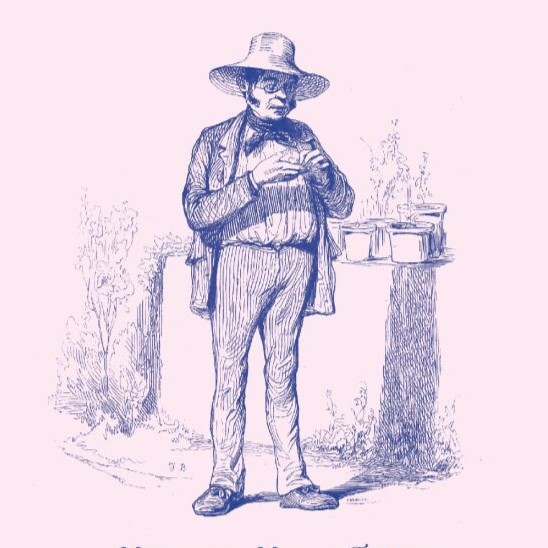
The character sketch as philosophy. Katie Ebner-Landy.
Jan 800:53:44Tap to summarizeKatie Ebner-Landy The Character Sketch as Philosophy: Manners, Mores, Types https://www.hup.harvard.edu/books/9780674294127
Transcribe →
Susan Stewart's Clarendon Lectures: Poetry's Nature
Sep 2300:35:28Tap to summarizeSusan Stewart Poetry's Nature
Transcribe →
Marcel Proust with Stanford professor Joshua Landy. Time, memories, literature.
Aug 2200:48:26Tap to summarizeJoshua Landy (Stanford University) Proust: A very short introduction
Transcribe →
Caleb Smith. Distraction and discipline.
Jul 3000:49:47Tap to summarizeCaleb Smith Thoreau's axe: Distraction and discipline in American culture Today, we're driven to distraction, our attention overwhelmed by the many demands upon it—most of which emanate from our beeping and blinking digital devices. This may seem like a decidedly twenty-first-century problem, but, as Caleb Smith shows in this elegantly written, meditative work, distraction was also a serious concern in American culture two centuries ago. In Thoreau's Axe, Smith explores the strange, beautiful archives of the nineteenth-century attention revival—from a Protestant minister's warning against frivolous thoughts to Thoreau's reflections on wakefulness at Walden Pond. Smith examines how Americans came to embrace attention, mindfulness, and other ways of being "spiritual but not religious," and how older Christian ideas about temptation and spiritual devotion endure in our modern ideas about distraction and attention. Smith explains that nineteenth-century worries over attention developed in response to what were seen as the damaging mental effects of new technologies and economic systems. A "wandering mind," once diagnosed, was in need of therapy or rehabilitation. Modeling his text after nineteenth-century books of devotion, Smith offers close readings of twenty-eight short passages about attention. Considering social reformers who designed moral training for the masses, religious leaders who organized Christian revivals, and spiritual seekers like Thoreau who experimented with regimens of simplified living and transcendental mysticism, Smith shows how disciplines of attention became the spiritual exercises of a distracted age.
Transcribe →
Henry David Thoreau
Jun 16, 202500:51:00Tap to summarizeHenry David Thoreau A Very Short Introduction Lawrence Buell The first concise account of Thoreau's life, thought, work, and impact in more than half a century Builds upon the explosion of new scholarship on Thoreau during the decade of the bicentennial of his birth Treats Thoreau's two most famous and influential works - Walden and "Civil Disobedience" - both as an interdependent pair and as a window into the evolution of his thought and writing as a whole
Transcribe →