
Podcast
PHONOGRAPHY: Writing In Sound
Hosted by Ryan Scammell · EN
Think This American Life. Think Radio Lab. Phonography is a collection of stories that tries to blur the lines between literature and news, memoir and music.
10episodes
Episodes
Newest firstAll episodes
The Horologist
Sep 17, 201700:03:19Tap to summarizeA man obsessed with time builds a house that's a giant clock.
Transcribe →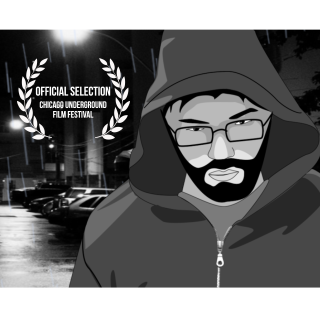
IMMUNE!
Dec 10, 201500:04:48Tap to summarizeFinally you can watch the entirety of "IMMUNE!" now released in all 4 parts (plus a prologue) at: www.immunethefilm.com Part fiction, part narrative, part superhero origin story (kinda), part personal narrative, part graphic novel, the film takes a deep look at the reasons we all might want to believe in superheroes, and the dangerous places we end up as we get lost in the world of fantasy. "a unique take on film as self portrait"Official Selection of the Chicago Underground Film Festival.
Transcribe →
BeepBall
Oct 30, 201200:08:27Tap to summarizeBlind people playing baseball? Yeah. That's right. All you need is a ball that beeps. (photo credit: "baseball" by theseanster93 via flickr creative commons)
Transcribe →
Go Do by Jonsi
Sep 2, 201100:03:09Tap to summarizeAs a small change of pace from the rest of the podcast, here's a short music video I put together made entirely out of letters. The video was created for a two-week run at the Edinburgh Fringe Festival as part of a live show I was doing alongside comedian and performance artist Ryan Good. Initially the video was meant to serve as a background element to a movement piece, but we ended up liking the video so much that we all but abandoned all on-stage movement during the projection. The song in the video is Jonsi's "Go Do." Some of you may recognize Jonsi as the lead singer of the Icelandic band Sigur Ros. If you like the song (somehow after well over 100 listens, I'm still not tired of it) you can buy it here. Or it's worth checking out Jonsi's website directly, where you can watch the official "Go Do" video, or live footage from his "Go" Tour which includes animated projections that are way more impressive than anything I can do.
Transcribe →
Door Belle
Aug 25, 201100:04:38Tap to summarizeThe alternate title for this was going to be the Isaac Hayes-esque "Girl, I Wanna Get You In My Belly Button T-Shirt Hole" but the mp3 title field wouldn't fit it. But now that you know that, I mean, c'mon, aren't you curious....?
Transcribe →Beneath the Surface (ENHANCED)
Apr 2, 200900:37:46Tap to summarizeBecause this is a much longer piece than I normally produce, and because in writing it, it naturally broke down into seven distinct parts, I wanted to give the listener the option of listening to the piece as a whole or to each section individually. So I created an enhanced podcast, which allows you to interact with it the same way you do a CD. You can jump forward to the next track or back to one you want to hear again. Also each track has it's own chapter title and individual artwork. The only downside is that not every portable music player can handle an enhanced podcast (sorry) so I had to make two separate ones.
Transcribe →Beneath the Surface
Mar 31, 200900:37:49Tap to summarizeThis project started because I was interested in the hundreds of towns around America that have been evacuated and then purposely flooded in order to make reservoirs. In many cases, the streets, the buildings, still exist underwater. When droughts happen, these town resurface and the people who lived in these towns often come back to see what's left of their old homes. To me, this was a very powerful image. I saw it as such a perfect example of the idea that "you can never go home again." As I started researching I kept finding all these different parallels between water and memory, between water and time, in mythology, psychology, physiology, in the great floods, and icebergs, in swimming pools, and ancient rivers. It began to feel like maybe the reason water kept appearing as a metaphor for these things, was because it spoke to a basic human connection between the two. That maybe somewhere in the nature of water itself, we could find the nature of the human mind. (((NOTE: This piece is a slight departure from my earlier work. The piece is written less as a monologue and more like a transom of ideas set to music that I've written for it. It's separated into 7 different sections, like tracks on a record, each with a different perspective on the relationship between water and memory. So to that extent it should be listened to more like a music album with narration instead of lyrics.)))
Transcribe →A Lesson in Social Confusion: Or How I Essentially Became a Street Kabuki Performer Entirely By Accident
Jan 31, 200900:03:37Tap to summarizeI mean, seriously... The piece is 3 1/2 minutes. With a title like that, do I really have to write a description to convince you to listen to it? (Non-fiction?)
Transcribe →Stories of Lost and Found #4: Through the Window and Across the Street
Jan 5, 200900:05:35Tap to summarizeRyan Scammell finds some pages from a young girls' diary (?) in the closet in his apartment building. He reads us something she had written about the deaf man who lived across the street from her and what happened when she finally tried to talk to him. (Fiction)
Transcribe →Stories of Lost and Found #2: A Phone Conversation
Dec 20, 200800:06:41Tap to summarizeWhen a woman finds the wind-chimes she made in 8th grade shop class, she calls an old friend to talk about the thing they did and why she still can't forgive herself. If you're interested, please visit the website for information about the origins of this piece.
Transcribe →