Podcast
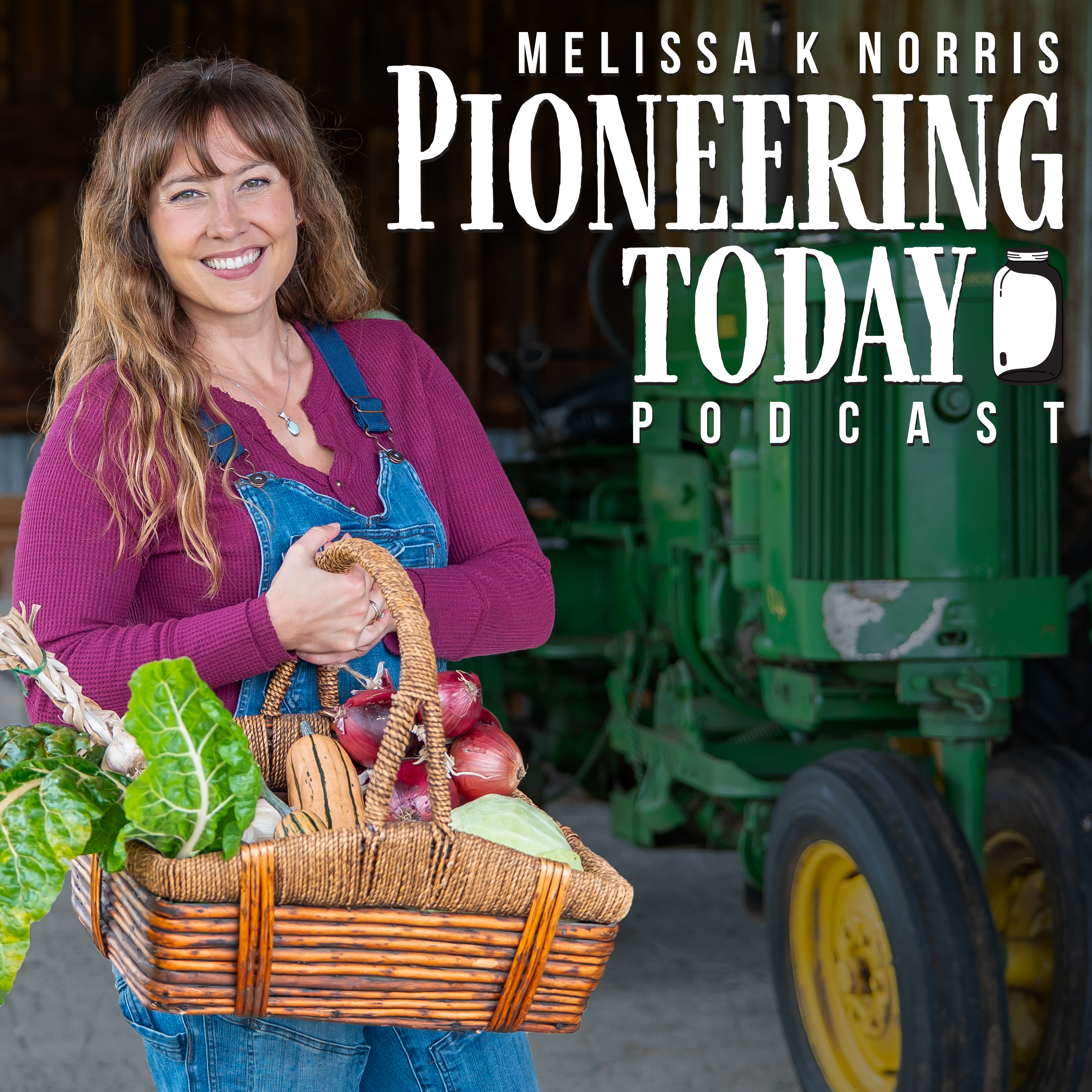
Pioneering Today Podcast - Homesteading in a Modern World
Hosted by Melissa K Norris · EN
Pioneering Today is all about getting back to basics, simple living, and self-sufficiency with old-fashioned skills and wisdom in a modern world. With heirloom gardening, canning, preserving the harvest, from scratch cooking, raising your own food, including livestock (backyard chickens, pigs, and cattle), natural medicine, herbs, DIY like soap making along with living a simple self-sufficient life, no matter where you live. Hosted by 5th generation homesteader, Melissa K. Norris, author of The Made-from-Scratch Life. This podcast brings you the conversation from MelissaKNorris.com and The Pioneering Today Academy, with Q&A's, teaching, tutorials, and always giving you practical ways and tips to live the simple and self-sufficient life.
30episodes
Episodes
Newest firstAll episodes
When God Changes the Plan: Lessons from Our Hardest Year | Episode 516
Jul 1000:50:00Tap to summarizeThe 2026 Modern Homesteading Conference is officially in the books, and in this episode I'm sharing some of my favorite moments from an unforgettable weekend. From incredible testimonies of lives changed through homesteading to behind-the-scenes stories of organizing the event, I'm reflecting on the power of learning, serving, and gathering together in person. I also share why our first-ever Cowboy Church became the most meaningful part of the weekend, the exciting news that the Modern Homesteading Conference will return in 2027, and why Katie Milhorn and I felt called to launch the new Heritage Revival Conference for women. Finally, I open up about one of the hardest seasons my family has faced over the past year, what God has been teaching me through it, and why sometimes obedience means recognizing when a season has come to an end so He can lead us into the next one. Resources Mentioned 2027 Modern Homesteading Conference Purchase tickets: https://modernhomesteading.com Use coupon code MKN15 for 15% off Adult General Admission tickets. Heritage Revival Conference Learn more and reserve your spot: https://heritagerevivalevents.com Get all the details and more at the accompanying blog post here: https://melissaknorris.com/516 This episode is brought to you by Azure Standard, my favorite source for stocking a real-food pantry. If you've been wanting to build your pantry or save money by buying in bulk, now is a great time to try them. Use coupon code Melissa15 to receive 15% off your first order of $100 or more when you have it delivered to an Azure Standard drop location. https://melissaknorris.com/azure-standard
Transcribe →How to Feed Your Family From the Garden All Summer (Without Heating Up the Kitchen) | Episode 515
Jun 1800:26:24Tap to summarizeSummer meals don't have to mean heating up the kitchen or staring into the fridge wondering what to make. In this episode, I'm sharing my favorite strategies for Summer Meal Planning, including how to let your garden write the menu, batch-cook proteins for multiple meals, use simple meal templates instead of complicated recipes, and make the most of seasonal produce before it goes to waste. Whether you're harvesting armloads of zucchini or just trying to get dinner on the table after a busy day, these practical tips will help you simplify summer cooking and enjoy the abundance of the season. 📖 Read the full blog post and get all the tips, meal ideas, and resources here: https://melissaknorris.com/podcast/summer-meal-planning-made-easy/ In this episode, you'll learn: 🌱 Why summer meal planning should look different than winter meal planning 🥒 How to let your garden and seasonal produce guide your menu 🍗 The best proteins to batch-cook for quick weeknight meals 🥗 Simple meal templates that eliminate dinnertime decision fatigue 🍕 Easy ways to use garden vegetables in salads, bowls, pizzas, and frittatas ☀️ Tips for keeping your kitchen cool during hot weather 🧺 How to reduce food waste and make the most of your harvest This podcast is sponsored by Azure Standard. If you're stocking up on pantry staples, organic ingredients, spices, pasta, grains, beans, or other homesteading essentials, Azure Standard is one of my favorite places to shop. They also now offer direct-to-home delivery in some areas, making it even easier to access quality food and supplies if getting to a drop location is difficult. First-time customers can get 15% off their first order of $100 or more (to a drop location) with coupon code "MELISSA15": https://melissaknorris.com/azure-standard #SummerMealPlanning #MealPlanning #GardenToTable #SeasonalCooking
Transcribe →16 Plants Mentioned in the Bible (And Why They Mattered) |514
Jun 1100:31:00Tap to summarizeHave you ever wondered which plants are actually mentioned in the Bible and what significance they held in biblical times? In this episode, we're taking a closer look at 16 healing plants of the Bible, including familiar names like frankincense, myrrh, hyssop, aloe, mustard, and cinnamon. We'll explore where these plants appear in Scripture, what they symbolized, and the traditional ways they were used throughout history for healing, cleansing, worship, and daily life. We'll also discuss the four ways healing is described in the Bible and why understanding the role of plants as one of God's "means" can give us a deeper appreciation for both Scripture and creation. In this episode, you'll learn: The four biblical ways healing occurs Why hyssop became a symbol of cleansing and purification The surprising medicinal remedy used for King Hezekiah How herbs were valuable enough to be tithed in biblical times The traditional uses of frankincense, myrrh, aloe, saffron, wormwood, and more Common themes among biblical plants, including digestive support, respiratory health, wound care, and worship Whether you're interested in biblical history, herbalism, homesteading, or simply understanding God's Word more deeply, this episode offers a fascinating look at the plants woven throughout Scripture. Resources Mentioned: Healing Plants of the Bible Reference Guide Free Herbal Energetics Download This episode is sponsored by Earthley. Earthley creates herbal remedies and wellness products designed to support your family's health naturally. Melissa highlights Earthley's Vitality Oil, a blend featuring black seed oil, hemp seed oil, anise seed, and rosemary to support immune health, liver function, energy, and natural detox pathways. Visit Earthley and use coupon code PIONEER10 to save 10% on your order (excluding sale items).
Transcribe →The Real Reason People Are Turning to Homesteading | Episode 513
Jun 500:38:26Tap to summarizeWhy are so many people being drawn to homesteading right now? In today's episode, I'm sharing a more personal reflection on what I've witnessed during my 15+ years teaching homesteading and traditional skills. While many people initially come to homesteading for healthier food, self-sufficiency, or preparedness, I've noticed something deeper happening beneath the surface. Again and again, people tell me they feel called by God to this lifestyle. In this episode, I share my own story of how God called me into teaching traditional skills, why I believe more people are returning to gardening, food preservation, and self-reliance, and how stewardship, community, and faith all play a role in the modern homesteading movement. In this episode, we'll discuss: • Why homesteading continues to grow • The deeper reasons people are drawn to traditional skills • Stewardship, preparedness, and biblical wisdom • Why community matters more than isolation • The story behind our local Cowboy Church • How faith and homesteading often intersect • Upcoming events and opportunities to gather together Whether you're new to homesteading or have been living this lifestyle for years, I hope this conversation encourages you to thoughtfully consider what is drawing you to these skills and how they can serve your family, community, and faith. Resources & Links: 🌱 Modern Homesteading Conference: https://modernhomesteading.com 🌱 Heritage Revival Women's Conference: https://heritagerevivalevents.com 🌱 How my mom fed our family on $100 a month podcast episode: https://melissaknorris.com/504 🌱 Grab all the details and any other links mentioned in the blog post here: https://melissaknorris.com/513 Verse of the Week: 2 Timothy 1:9
Transcribe →The Crops I Stopped Growing After 25 Years of Gardening | Episode 512
May 2900:43:22Tap to summarizeWhat are the best crops for a Pacific Northwest vegetable garden? In today's episode, I'm sharing the crops and varieties that have truly earned their place in my Pacific Northwest vegetable garden after 26 years of gardening in a cool, short-season climate. Over the years, I've become much more intentional about what I grow. I want crops that reliably produce, preserve well, and are foods we actually eat throughout the year. Some vegetables continue to thrive season after season, while others simply aren't worth the time, effort, or garden space in our northern climate. In this episode, I'm walking you through: The vegetables I plant every single year My favorite tried-and-true varieties The crops I've stopped growing and why What performs best in cool summer climates How I decide what deserves space in my garden My rule for experimenting with new varieties Whether you garden in the Pacific Northwest or another northern growing region, I hope this helps you feel more confident choosing crops that will actually thrive where you live. Resources & Links: 🌱 Full blog post: https://melissaknorris.com/512 🌱 Plated by Season Magazine: https://melissaknorris.com/homestead-foundations/ 🌱 Potato experiment video mentioned in this episode: https://melissaknorris.com/i-left-my-potatoes-in-the-ground-for-5-years-without-replanting/ Verse of the Week: John 4:10
Transcribe →How I Plan a Year's Worth of Preserving Without Getting Overwhelmed | Episode 511
May 2200:44:31Tap to summarizeEvery spring, I sit down and plan out our entire food preservation year so harvest season doesn't completely take over my life. After more than 25 years of preserving food, I've learned that the key isn't preserving everything… It's preserving the foods we actually eat in ways that work for our schedule and lifestyle. In this episode, I'm walking you through exactly how I plan our preserving season, how I avoid overwhelm during peak harvest months, and the practical system I use to decide what's worth preserving and what's not. If you've ever found yourself drowning in tomatoes in August, staring at jars you never use, or feeling burned out by canning season, this episode is for you. 💛 In This Episode 🍅 Why reactive preserving leads to stress and waste 🫙 How I do a pantry inventory every spring 📓 Why writing down your preserving goals matters 🥒 The foods I preserve most for our family 🌱 How our family's eating habits have changed over the years 🗓️ How I map out preserving season month-by-month ⏰ My "small pocket" method for preserving with a busy schedule 🫐 Which foods freeze beautifully before preserving 🥬 How I decide the best preservation method for each crop 👩🌾 Why preserving with community makes everything easier Resources Mentioned 📘 Grab the bundle from this week's podcast sponsor, Homestead Living. It includes my book, Everything Worth Preserving, Jill Winger's Old Fashioned On Purpose Planner and Carolyn Thomases book, Freeze Drying the Harvest, all for just $89.99 (including FREE shipping!): https://homesteadliving.com/seasonal-food-strategy-subscriber-offer-2026/ 🥒 Pickled Asparagus Recipe: https://melissaknorris.com/best-pickled-asparagus-easy-canning-recipe/ 🍅 Fermented Salsa Recipe: https://melissaknorris.com/fermented-salsa/ 🥒 Garlic Dill Pickles Recipe: https://melissaknorris.com/best-homemade-pickles-recipe/ 🥒 Bread and Butter Pickles Recipe: https://melissaknorris.com/pioneering-today-bread-butter-refrigerator-pickle-recipe/ 🌿 Rhubarb Strawberry Jam Recipe: https://melissaknorris.com/pioneering-today-how-to-make-strawberry-rhubarb-jam/ 🥔 Root Cellaring in the Ground Tutorial: https://melissaknorris.com/how-to-harvest-and-store-potatoes/ 🫘 Leather Britches Green Beans Tutorial: https://melissaknorris.com/leather-britches-green-beans/ Scripture Mentioned 📖 Luke 10:5-7 (AMP) You can grab all the resources and remedies mentioned in this episode here: https://melissaknorris.com/511
Transcribe →Herbs Every Family Should Have Stocked Before Summer Hits | Episode 510
May 1500:33:37Tap to summarizeSummer means more time outside… and more sunburns, bug bites, bee stings, scrapes, and itchy skin. In today's episode, I'm sharing the herbal remedies for summer that I always keep stocked in our home apothecary before we need them. These are the natural remedies I personally reach for first when it comes to: 🌿 Sunburn relief 🦟 Mosquito bites & itchy skin 🐝 Bee stings & wasp stings 🩹 Cuts, scrapes & wound healing 💜 Bruises & sore tissue We're talking about practical herbalism you can actually use in everyday life with simple remedies like lavender, aloe vera, plantain, calendula, yarrow, chamomile, arnica, and more. Thanks to Earthley for sponsoring today's podcast. Grab 10% off your order with coupon code "PIONEER10" (excluding sale items): Earthley.com RESOURCES MENTIONED: 🌞 Earthley Sun Shield: https://www.earthley.com/products/sun-shield 🦟 Earthley Pest Aside: https://www.earthley.com/products/pest-aside 🩹 Wound Healing Salve: https://melissaknorris.com/homemade-wound-healing-salve-recipe/ 🌿 Lavender Essential Oil (and roller bottles): https://melissaknorris.com/lemon-lavender-peppermint-essential-oils 📖 Verse of the Week: Matthew 13:43 You can grab all the resources and remedies mentioned in this episode here: https://melissaknorris.com/510 If this video helped you, make sure to subscribe and share it with a friend who wants to build a home apothecary and start using homemade herbal remedies. #HerbalRemedies #NaturalRemedies #HomeApothecary #MelissaKNorris #Herbalism #NaturalFirstAid #Homesteading #HerbalMedicine #SummerHerbs
Transcribe →What Most People Get Wrong About Building a From-Scratch Pantry | Episode 509
May 800:50:06Tap to summarizeAre you building a pantry that actually feeds your family, or just collecting random jars and bulk foods? In this episode, I'm sharing how to build a well-stocked pantry that supports everyday meals, long-term food storage, and from-scratch cooking without overwhelm. We're talking about the foundational pantry staples I prioritize first, how to stock foods your family actually eats, and why a practical pantry should serve you now, not just "someday." I'm also sharing: The 5 foundational pantry categories I always keep stocked How to slowly build food storage on a budget Why pantry rotation matters The difference between emergency food storage and a working pantry What to know about storing fats, grains, beans, salt, and preservation basics Important canning safety reminders for vinegar and dried beans My best tips for creating real meals from pantry staples Whether you're just starting your pantry journey or looking to make your food storage more practical, this episode will help you build a pantry that truly works for your family. Thanks to Azure Standard for sponsoring today's podcast. For first-time customers, use coupon code "MELISSA15" for 15% off your first order of $100 or more: https://melissaknorris.com/azure-standard/ Resources Mentioned: Fresh Ground Flour Resources Sourdough Resources Safe Canning Resources Pressure Canning Beans Home Apothecary & Medicinal Herbs Long-Term Food Storage Tips Verse of the Week: Job 22:25-28 If this video helped you, make sure to subscribe and share it with a friend who wants to build a healthier pantry and cook more from scratch. You can grab all the resources mentioned in this episode here: https://melissaknorris.com/509
Transcribe →If I Were Starting a Medicinal Herb Garden Today, I'd Do This First | Episode 508
Apr 2400:45:17Tap to summarizeIf you've ever wanted to start a medicinal herb garden but felt overwhelmed by where to begin, this episode is for you. In today's podcast, I'm walking you through exactly how I plan a medicinal herb garden in a simple, practical way. We're talking about which herbs to grow first, how to choose ones your family will actually use, and how to begin building a home apothecary without needing a ton of space or experience. I'm also sharing some of my favorite beginner-friendly herbs like lemon balm, chamomile, calendula, and peppermint, along with how I use them in our daily life for things like calming support, digestion, and first aid. One of the biggest shifts that helped me gain confidence with herbs was understanding why to use a certain herb, not just following a recipe. That's where herbal energetics comes in, and I've created a free herbal energetics chart to help you get started. You can grab that free chart and find all the resources mentioned in this episode here: https://melissaknorris.com/508 Whether you're planting your first herb or expanding your garden, I hope this episode gives you the clarity and confidence to take that next step. Because truly, you don't need to grow everything. You just need to start. Thanks to the sponsor of today's podcast, Earthley Wellness! Use coupon code "PIONEER10" at checkout for 10% off your order: https://earthley.com/
Transcribe →How Real Food on a Budget Actually Works (What My Mom Taught Me That No One Talks About) | Ep. 507
Apr 1700:34:38Tap to summarizeCan you really feed your family on $100 a month? In this episode, I'm pulling back the curtain on the system my mom used to feed our family well on a very small grocery budget and why it still works today. While the 1980's equivalent to $100/month is now around $300-$400/month, we can achieve this today. This isn't about couponing, deprivation, or living on rice and beans. It's about a simple, intentional way of cooking from scratch, buying in season, and preserving food your family actually eats. After sharing my mom's story, so many of you asked how it actually worked. In this episode, I break down the exact system behind it so you can begin applying it in your own kitchen right now. We're talking about how to: Lower your grocery bill without sacrificing quality Use seasonal food to your advantage Build a pantry that supports real meals Avoid waste and make every ingredient count Start creating a food system that works for your current season of life I also share what's different today compared to when I was growing up, including time constraints, the loss of generational knowledge, and how to bridge that gap with the tools we have now. If you've ever felt like feeding your family well on a budget isn't possible, this episode will show you a different way forward. This is about more than saving money. It's about building a kitchen that nourishes your family, supports your values, and gives you confidence in what's on your table. Listen now and start building your system today. For more information and any links mentioned, visit the blog post here: https://melissaknorris.com/507 📌 Don't forget: I'm hosting a FREE 5-Day Seasonal Food Preservation Workshop (April 20–24) where I'll walk you step-by-step through building your own customized plan. 👉 Sign up here: https://melissaknorris.com/five
Transcribe →