Podcast
PLANTSTRONG Podcast
Hosted by Rip Esselstyn · EN
The PLANT STRONG Podcast is for people who want real answers about food, health, and longevity—without the noise, fear, or extremes.
Maybe you’ve been diagnosed with a chronic condition and want a path forward that actually supports healing. Maybe you’re an athlete looking to fuel performance and recovery. Maybe you’re a parent trying to escape the ultra-processed food aisle and feed your family real, nourishing meals. Or maybe you’re simply tired of being confused about what “healthy” actually means.
The challenge? Eating more real food can feel overwhelming. You’ve heard warnings about protein, cost, or restriction. You’ve been told it’s complicated, boring, or socially isolating.
This podcast exists to change that.
Each week, host Rip Esselstyn sits down with leading doctors, researchers, athletes, authors, and everyday people who are proving—through lived experience and science—that eating more whole plants and moving your body consistently can deliver powerful, lasting results. We’re not interested in perfection or dogma. We’re here to be extremely practical, extremely evidence-based, and extremely encouraging.
Rip’s work began more than two decades ago, when he helped transform the health of his fellow firefighters using simple, whole foods—guided by the groundbreaking research of his father, Dr. Caldwell B. Esselstyn Jr. That experience launched a lifelong mission to help people reclaim their health through real food and active living, and ultimately led to the creation of PLANT STRONG.
Today, the podcast is an extension of that mission: cutting through misinformation, challenging cultural norms, and showing what’s possible when you fuel your body with food that actually supports it.
You’ll hear conversations about:
Preventing and reversing chronic disease
Strength, endurance, and recovery
Gut health, inflammation, and longevity
Behavior change that actually sticks
How to build habits you can sustain in real life
You’ll also hear about REAL30™—our simple, powerful framework built around consistency, not restriction:
30 days
30 minutes of movement a day
30 different whole plants each week
REAL30 is often where listeners turn inspiration into action—and it’s a recurring thread throughout the show.
This podcast isn’t about being perfect. It’s about eating real food, building real habits, and getting real results. You won’t be weak when you eat strong food.
Welcome to PLANT STRONG.
46episodes
Episodes
Newest firstAll episodes
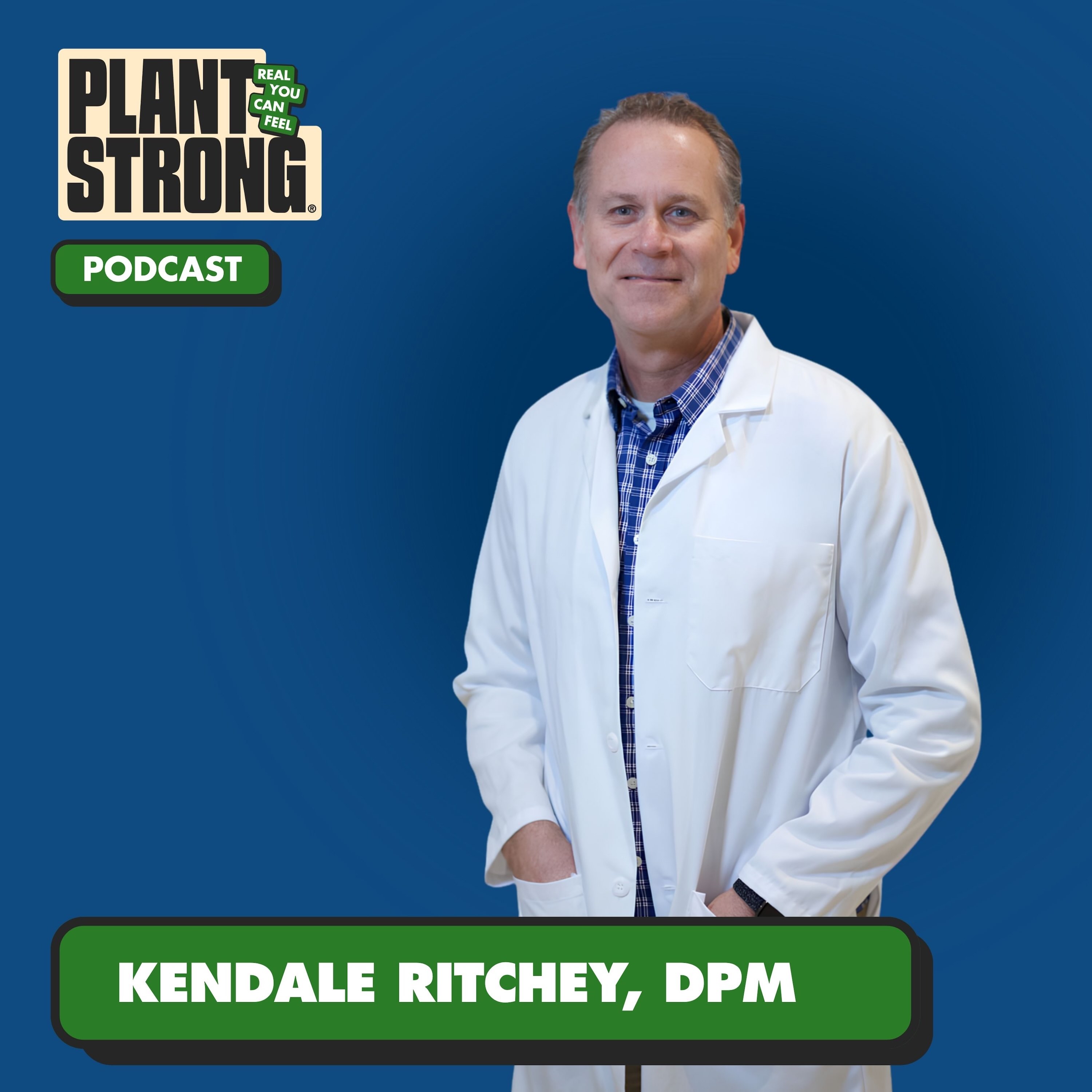
Ep. 365: Kendale Ritchey, DPM - A Podiatrist’s Own 30-Year Mystery Illness Solved with Plants — and the Devastating Effects of Diabetes on Your Feet
4d ago00:52:49Tap to summarizeDr. Kendale Ritchey is a podiatrist in Knoxville, Tennessee, a former University of Tennessee swimmer, and a self-described “recovered barbecue-aholic.”For nearly three decades, Kendale lived with recurring episodes of intense abdominal, chest, and joint pain, along with fevers and debilitating inflammation.Then, after watching Fat, Sick & Nearly Dead and Forks Over Knives with his wife Connie, Kendale decided to try a whole food, plant-based lifestyle.Within weeks, he noticed something extraordinary: the episodes were milder. Then they stopped.In this conversation, Rip and Kendale talk about his years of unexplained pain, his eventual discovery of Familial Mediterranean Fever through genetic testing, and why a plant-based lifestyle became the turning point in his health.They also discuss Kendale’s work as a podiatrist and the devastating toll of type 2 diabetes on the feet, including neuropathy, poor circulation, infections, and preventable amputations.You’ll hear:Kendale’s background as a swimmer at the University of TennesseeThe construction accident that may have triggered decades of inflammatory episodesWhat Familial Mediterranean Fever is and how he eventually discovered the diagnosisThe documentaries that changed everything for Kendale and his wife ConnieHow whole food, plant-based eating helped calm his symptomsHis 60-pound weight loss and renewed energyWhat he eats now and how he makes the lifestyle workWhy type 2 diabetes is so devastating for the feetThe connection between blood sugar, circulation, nerves, immunity, and amputationsWhy Kendale now plants seeds with his own patients about food and lifestyleWatch the episode on YouTube: https://youtu.be/pmsjP92_xH8Episode Webpage: https://www.plantstrongpodcast.com/blog/kendale-ritcheyLearn More About our 2026 Live PLANTSTRONG Events: https://plantstrongevents.com/ Let Us Help Your PLANTSTRONG JourneyLearn More About Our Corporate Wellness Program: https://liveplantstrong.com/corporate-wellness/ COMPLEMENT: Use code PLANTSTRONG for 30% off at https://lovecomplement.com/pages/plantstrong-special-offer Follow PLANTSTRONG and Rip Esselstynhttps://plantstrong.com/ https://www.facebook.com/GoPlantstrong https://www.instagram.com/goplantstrong/https://www.instagram.com/ripesselstyn/ Follow the PLANTSTRONG Podcast and Give the Show a 5-star RatingApple PodcastsSpotify
Transcribe →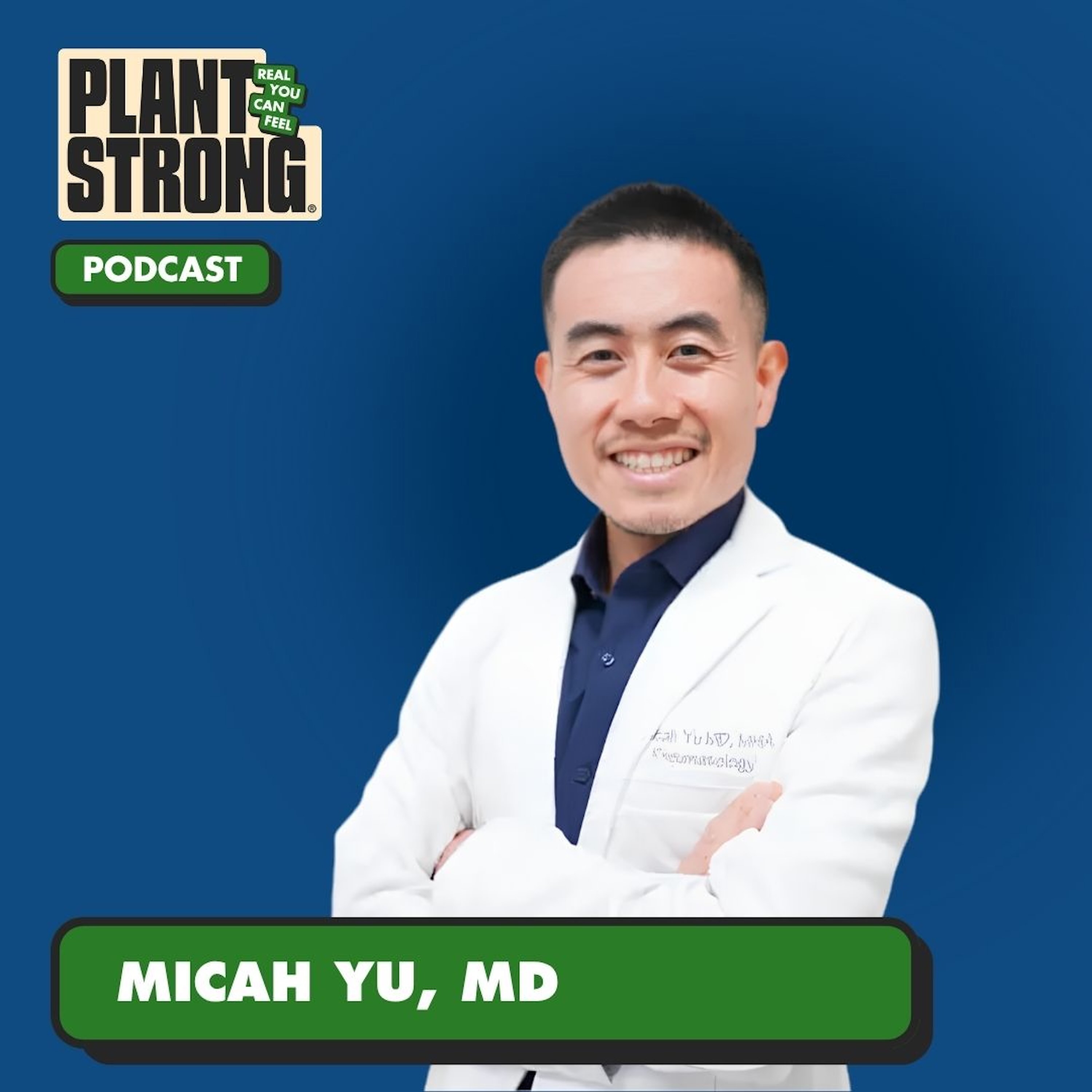
Ep. 364: Micah Yu, MD - A Doctor's Own Joint Pain Wake-Up Call and His Top Supplements to Help Your Chronic Inflammation
2w ago00:53:39Tap to summarizeAt 17, after adopting a high-protein diet filled with meat, milk, protein powder, and processed meats, Dr. Yu experienced his first gout attack. The pain was so intense that he still remembers waking up at 4:00 a.m. feeling as if someone had slammed a wooden board into his toe.But gout was only the beginning.Over the years, Dr. Yu developed recurring, mysterious inflammation throughout his body — jaw, shoulders, wrists, fingers, knees, toes, hips, ankles — along with fatigue and irritability. Even while in medical school, he struggled to find answers. Eventually, he was diagnosed with gout, pseudogout, and spondyloarthritis, an autoimmune arthritis often treated with immunosuppressive medications.But Dr. Yu had a feeling that diet was part of the story.Inspired by his wife, Dr. Melissa Mondala, as well as Forks Over Knives and Dr. Michael Greger’s How Not to Die, he decided to try a whole food, plant-based diet. Within two to three months, he noticed his joint pain beginning to disappear. At his follow-up appointment, his C-reactive protein — a key inflammation marker that had been elevated for years — had normalized.Today, Dr. Yu is a board-certified rheumatologist and integrative medicine physician who helps patients address autoimmune disease through a whole-person lens. In his practice, he looks at food, lifestyle, stress, trauma, infections, environmental exposures, supplements, and patient partnership.In this conversation, Rip and Dr. Yu discuss:Why a high-protein diet triggered gout at age 17The difference between gout, pseudogout, and autoimmune arthritisWhat CRP and ESR can reveal about inflammationWhy some autoimmune patients are told “everything looks normal” even when they feel terribleHow a whole food, plant-based diet changed Dr. Yu’s own healthWhy rheumatology patients may benefit from looking beyond medications aloneThe role of stress, trauma, infections, mold, pesticides, plastics, and environmental triggersWhy Lyme disease can be controversial and often misunderstoodDr. Yu’s top supplements for inflammation, including turmeric, algae oil, vitamin D, Boswellia, and glutathioneWhy vitamin D levels matter in autoimmune diseaseHow Dr. Yu practices medicine through patient partnershipThis episode is a hopeful reminder that inflammation is not always a life sentence — and that the body can respond powerfully when we give it the right conditions to heal.Watch on YouTubeEpisode WebpageLearn More About our 2026 Live PLANTSTRONG Events: https://plantstrongevents.com/ Let Us Help Your PLANTSTRONG JourneyLearn More About Our Corporate Wellness Program: https://liveplantstrong.com/corporate-wellness/ COMPLEMENT: Use code PLANTSTRONG for 30% off at https://lovecomplement.com/pages/plantstrong-special-offer Follow PLANTSTRONG and Rip Esselstynhttps://plantstrong.com/ https://www.facebook.com/GoPlantstrong https://www.instagram.com/goplantstrong/https://www.instagram.com/ripesselstyn/ Follow the PLANTSTRONG Podcast and Give the Show a 5-star RatingApple PodcastsSpotify
Transcribe →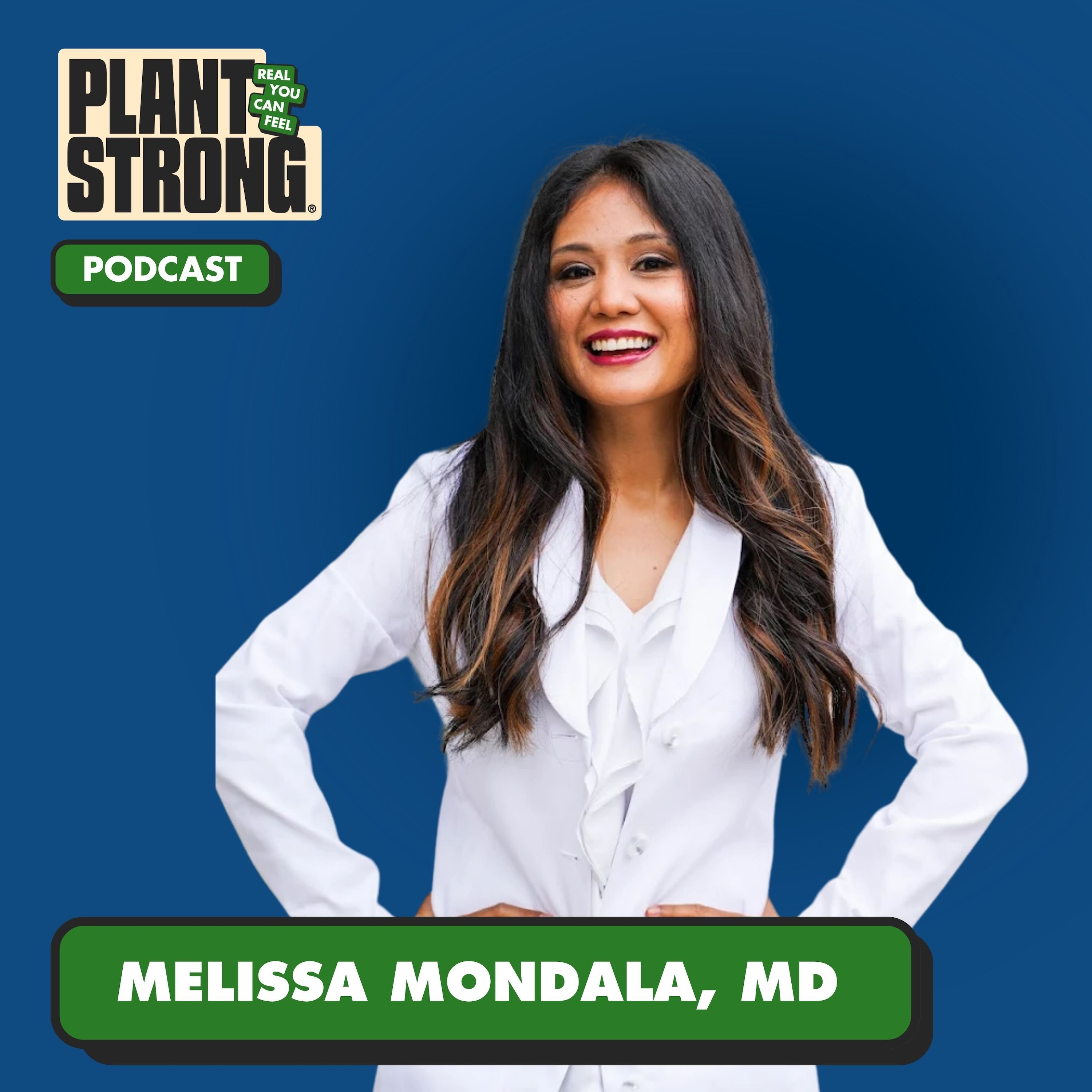
Ep. 363: Melissa Mondala, MD - Why So Many Women Feel “Off” In Midlife— and How to Feel Better
3w ago00:49:28Tap to summarizeDr. Melissa Mondala joins Rip to talk about women’s health, autoimmune disease, anxiety, perimenopause, metabolic health, hormones, and the power of whole food, plant-based lifestyle medicine.A family medicine and lifestyle medicine physician, Dr. Melissa shares her personal journey from struggling with GERD, IBS, fatigue, and serious health challenges to discovering the transformative power of plant-based nutrition during her training at Loma Linda. She also shares how meeting Dr. Caldwell Esselstyn and Ann Esselstyn helped shape the way she practices medicine today.Rip and Dr. Mondala explore why so many women feel anxious, foggy, inflamed, exhausted, or “off” — and how food, blood sugar, hormones, stress, sleep, trauma, movement, and metabolic health all connect.They also discuss coronary calcium scans, advanced lipid testing, fatty liver disease, perimenopause symptoms, plant-based protein, resistance training, hormone replacement therapy, and why lifestyle medicine is often the most powerful tool in the medical toolbox.Dr. Mondala’s message is clear: you are not broken, you are not crazy, and there is so much you can do to reclaim your health.Watch the Episode on YouTubeLearn More About our 2026 Live PLANTSTRONG Events: https://plantstrongevents.com/ Let Us Help Your PLANTSTRONG JourneyLearn More About Our Corporate Wellness Program: https://liveplantstrong.com/corporate-wellness/ COMPLEMENT: Use code PLANTSTRONG for 30% off at https://lovecomplement.com/pages/plantstrong-special-offer Follow PLANTSTRONG and Rip Esselstynhttps://plantstrong.com/ https://www.facebook.com/GoPlantstrong https://www.instagram.com/goplantstrong/https://www.instagram.com/ripesselstyn/ Follow the PLANTSTRONG Podcast and Give the Show a 5-star RatingApple PodcastsSpotify
Transcribe →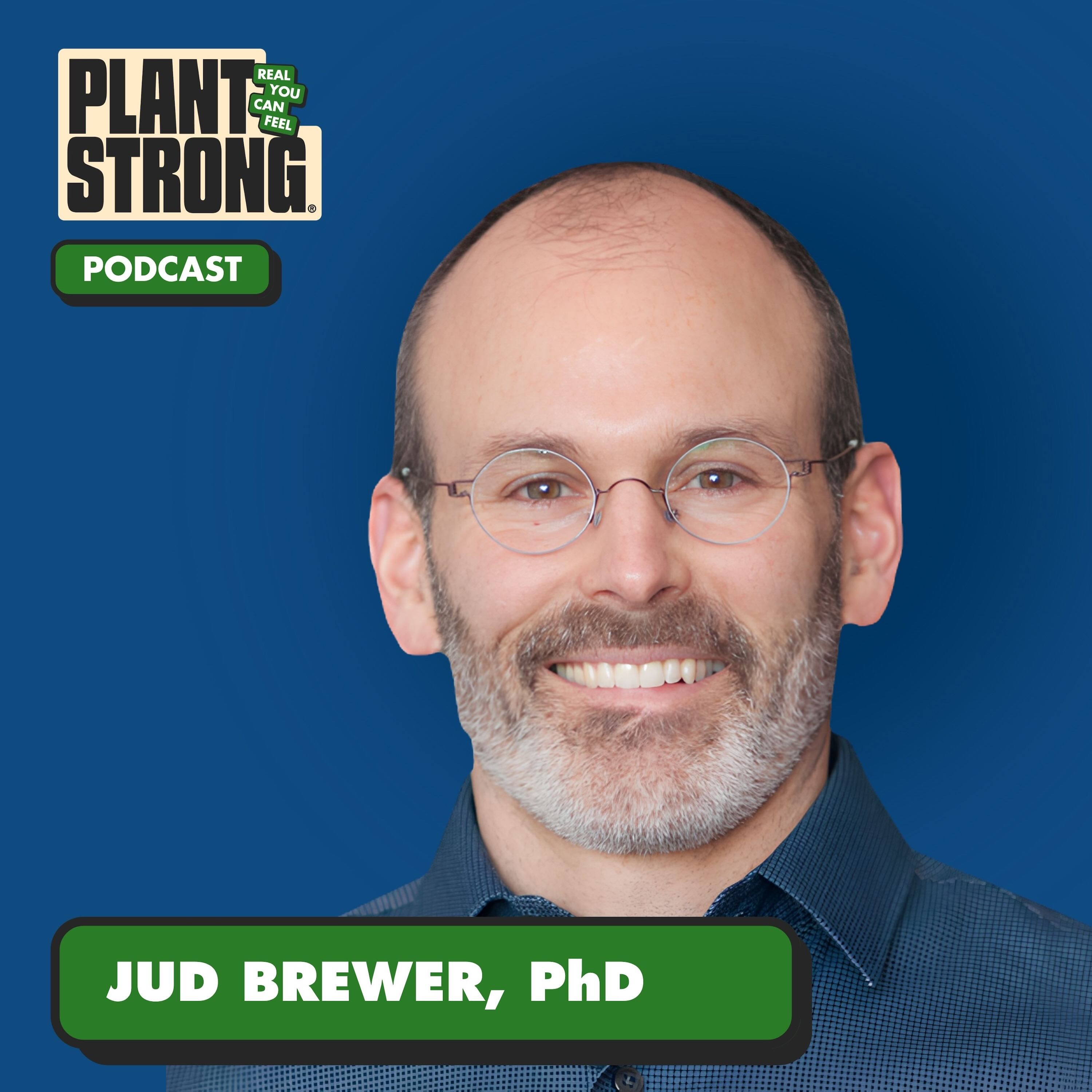
Ep. 362: Why You Eat When You’re Not Hungry — and How to Stop with Dr. Jud Brewer
4w ago00:53:38Tap to summarizeEver eat when you weren’t really hungry and wonder why willpower wasn’t enough to stop you?This week, Rip talks with Dr. Jud Brewer - neuroscientist, psychiatrist, and author of The Hunger Habit - about cravings, emotional eating, and the science behind food habits.Rip and Brewer explore the difference between true physical hunger and what researchers call “hedonic hunger” — eating driven by emotions, stress, boredom, celebration, cravings, or cues in our environment. Dr. Jud explains why ultra-processed foods are engineered to hit the “bliss point” of sugar, fat, salt, crunch, and mouthfeel, making them especially hard to resist.They also dig into why willpower is such a shaky strategy. Most diet programs rely on some version of “just don’t eat that,” but Dr. Jud explains why shame and restriction often backfire. Instead, he teaches a more effective path: awareness.By paying close attention to how overeating actually feels — and how it feels when we stop at satisfied — the brain can begin to update the reward value of those habits. In other words, we can learn, through direct experience, that certain behaviors no longer serve us.This episode is a compassionate, science-backed invitation to stop blaming yourself and start getting curious.Watch the Episode on YouTubeEpisode WebpageLearn More About our 2026 Live PLANTSTRONG Events: https://plantstrongevents.com/ Let Us Help Your PLANTSTRONG JourneyLearn More About Our Corporate Wellness Program: https://liveplantstrong.com/corporate-wellness/ COMPLEMENT: Use code PLANTSTRONG for 30% off at https://lovecomplement.com/pages/plantstrong-special-offer Follow PLANTSTRONG and Rip Esselstynhttps://plantstrong.com/ https://www.facebook.com/GoPlantstrong https://www.instagram.com/goplantstrong/https://www.instagram.com/ripesselstyn/ Follow the PLANTSTRONG Podcast and Give the Show a 5-star RatingApple PodcastsSpotify
Transcribe →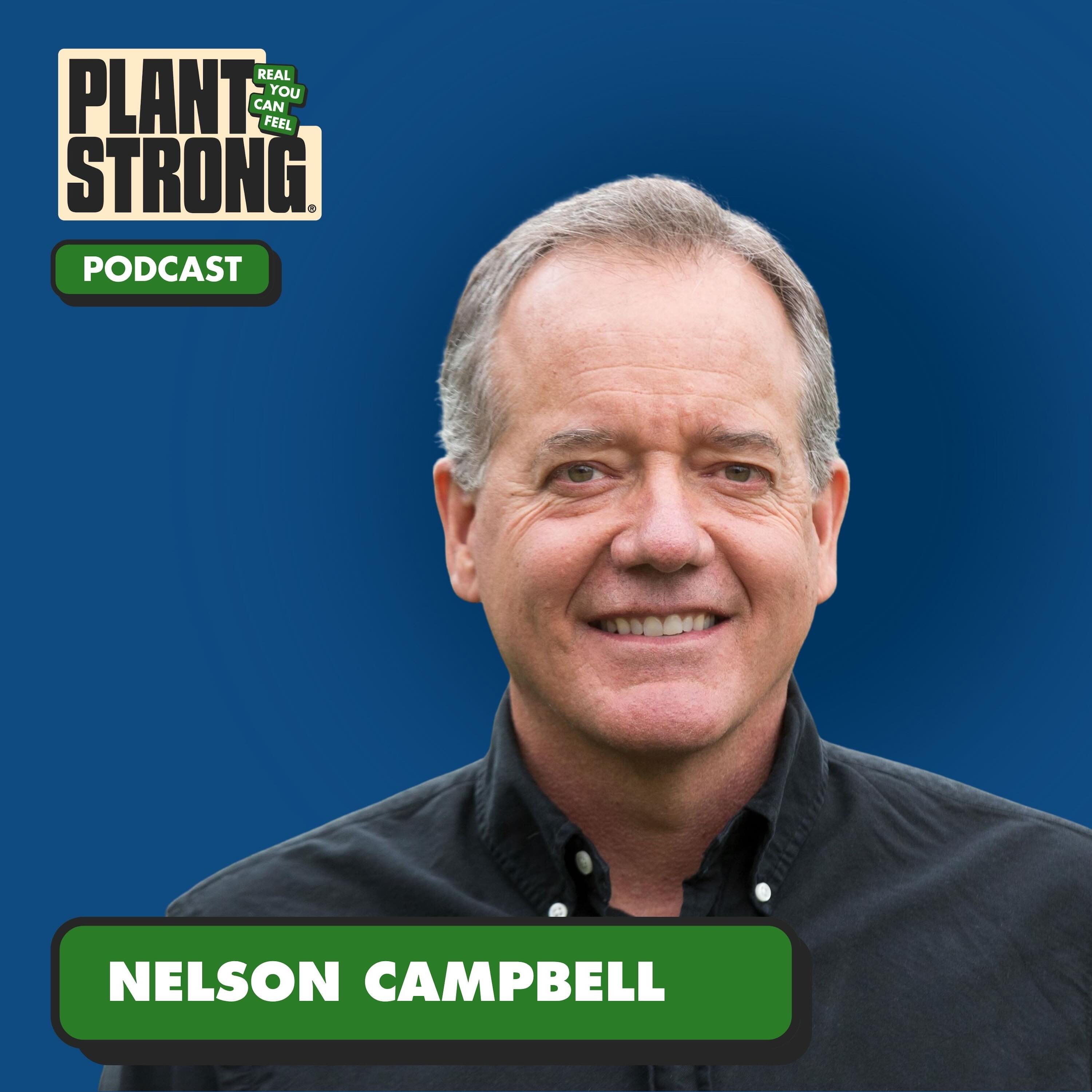
Ep. 361: The Whole Truth: Nelson Campbell on the Hidden Agendas Behind Decades of Health Misinformation—and What to Do About It
Jul 900:55:43Tap to summarizeNelson Campbell joins Rip Esselstyn for a deeply personal and powerful conversation about his new book with Dr. T. Colin Campbell, The Whole Truth: The Hidden Agendas Behind Decades of Health Misinformation—and What to Do About It.Nelson reflects on growing up as the son of one of the most influential nutrition scientists of our time and watching his father’s groundbreaking discoveries meet resistance from industry, government, academia, and the medical establishment. He and Rip also discuss the parallel journeys of the Campbell and Esselstyn families, the courage of Dr. Campbell and Dr. Caldwell Esselstyn, and what it means to carry their fathers’ work forward.This episode explores the suppression of nutrition science, the manipulation of public health messaging, the challenges facing the plant-based movement, and the urgent need for simpler, more compassionate, community-based approaches to change.Nelson also shares the story behind his documentary From Food to Freedom, the rise of PlantPure Communities and the pod network, the lessons he learned in the plant-based food business, and why he believes the future of this movement depends on grassroots connection, youth engagement, and “heart-centered wholism.”This is a conversation about truth, courage, family, frustration, hope — and what each of us can do within our own sphere of influence.Key TakeawaysThe story behind The Whole Truth and why Dr. T. Colin Campbell wanted to tell these stories nowHow nutrition science has been suppressed, distorted, and dismissedThe personal cost of challenging powerful industriesNelson’s experience with the documentary From Food to FreedomWhy the plant-based movement has stalled — and how it can grow againThe importance of simple, joyful, accessible messagingWhy community may be the most powerful force for changeWhat Nelson means by “heart-centered wholism”How to turn righteous anger into meaningful actionEpisode WebpageWatch on YouTubeLearn More About our 2026 Live PLANTSTRONG Events: https://plantstrongevents.com/ Let Us Help Your PLANTSTRONG JourneyLearn More About Our Corporate Wellness Program: https://liveplantstrong.com/corporate-wellness/ COMPLEMENT: Use code PLANTSTRONG for 30% off at https://lovecomplement.com/pages/plantstrong-special-offer Follow PLANTSTRONG and Rip Esselstynhttps://plantstrong.com/ https://www.facebook.com/GoPlantstrong https://www.instagram.com/goplantstrong/https://www.instagram.com/ripesselstyn/ Follow the PLANTSTRONG Podcast and Give the Show a 5-star RatingApple PodcastsSpotify
Transcribe →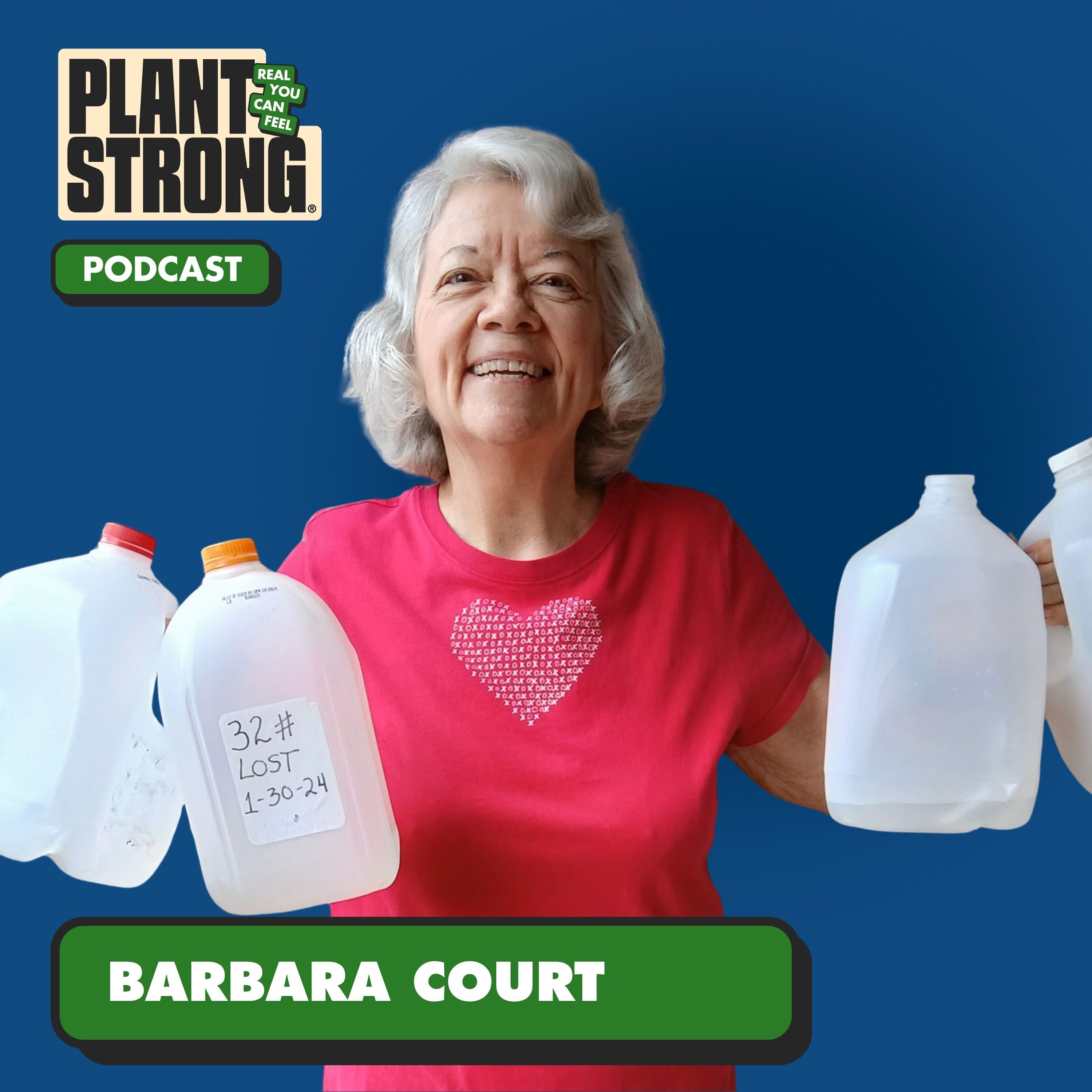
Ep. 360: Real 30, Real Food, Real Results: Meet Barbara Court - A Plant Strong Success Story
Jul 200:41:36Tap to summarizeBarbara Court is almost 75 years old, full of humor, full of heart, and living proof that it is never too late to get Plant Strong.After joining PlantStrong’s free Real30 Challenge, Barbara committed to eating 30 different whole plant-based foods each week and moving her body for 30 minutes a day. In just a few months, she lost nearly 15 pounds, brought her A1C out of the pre-diabetic range, increased her daily steps, and found a renewed sense of motivation.In this conversation, Rip and Barbara talk about weight loss, calorie density, plant diversity, arthritis, movement, simple meals, social temptations, community support, and why perseverance and humor matters more than perfection.Barbara’s message is simple and powerful: you do not have to be perfect. You just have to keep going.In this episode:How Barbara found success with the Real30 ChallengeWhy she tracks her weekly plant diversityHow she lost nearly 15 poundsWhat helped her improve her A1CWhy calorie density finally clickedHow she handles tempting foods and social eventsWhy daily movement is non-negotiableThe power of online community and encouragementWhy it is never too late to change your healthWatch on YouTubeLearn More About our 2026 Live PLANTSTRONG Events: https://plantstrongevents.com/ Let Us Help Your PLANTSTRONG JourneyLearn More About Our Corporate Wellness Program: https://liveplantstrong.com/corporate-wellness/ COMPLEMENT: Use code PLANTSTRONG for 30% off at https://lovecomplement.com/pages/plantstrong-special-offer Follow PLANTSTRONG and Rip Esselstynhttps://plantstrong.com/ https://www.facebook.com/GoPlantstrong https://www.instagram.com/goplantstrong/https://www.instagram.com/ripesselstyn/ Follow the PLANTSTRONG Podcast and Give the Show a 5-star RatingApple PodcastsSpotify
Transcribe →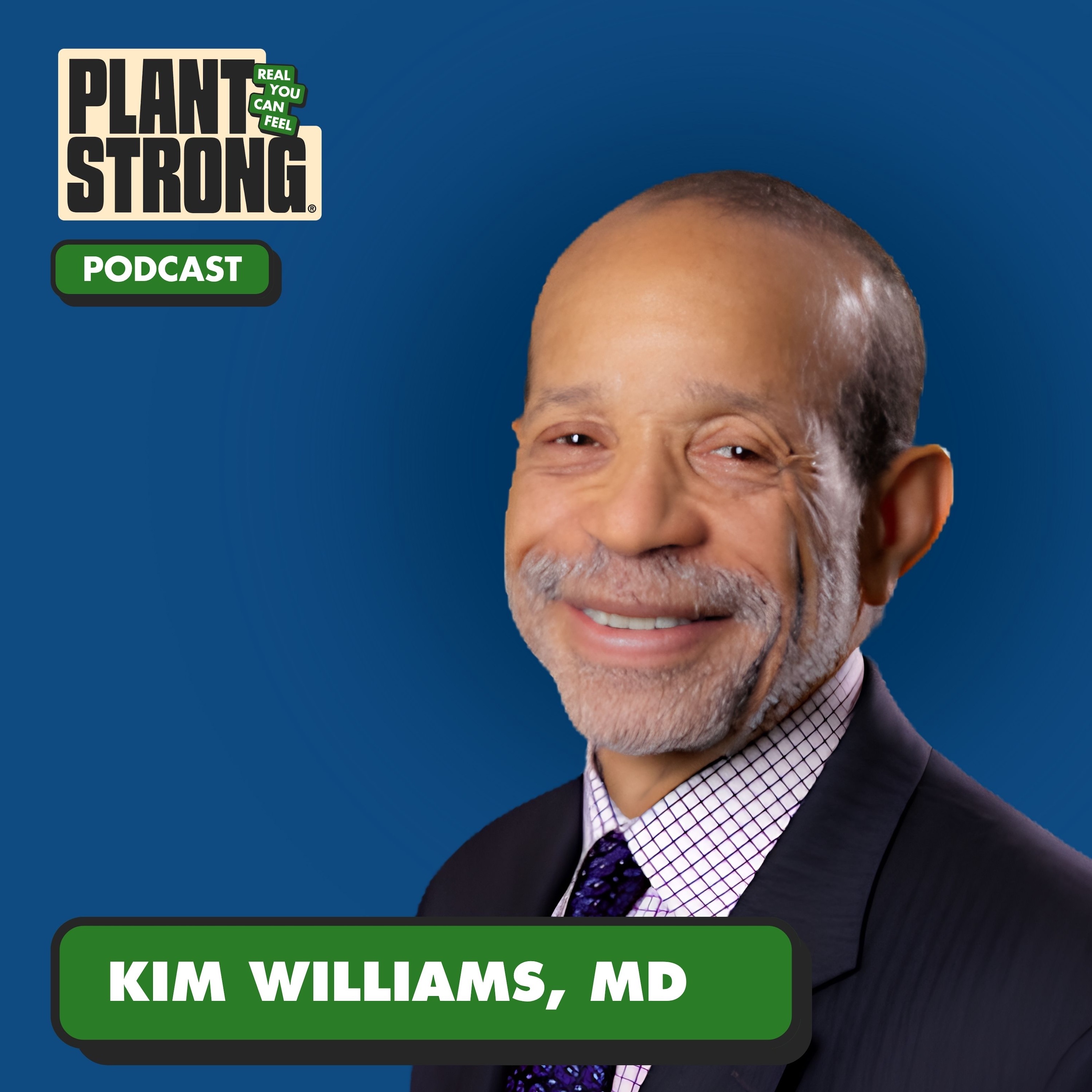
Ep. 359: Dr. Kim Williams Breaks Down the New Heart Health Guidelines (and it's Great News for Plants!)
Jun 2500:42:28Tap to summarizeThe newest AHA and ACC guidelines for treating dyslipidemia are here — and according to Dr. Kim Williams, they mark a powerful shift toward prevention, earlier testing, and whole-food, plant-based nutrition as the foundation of cardiovascular care.Rip welcomes back Dr. Kim Williams, past president of the American College of Cardiology, for a practical and deeply encouraging breakdown of what these updated cholesterol guidelines mean for everyday people.Dr. Williams explains why cardiovascular risk is no longer just about one cholesterol number. Instead, clinicians are being encouraged to look at the whole picture: LDL cholesterol, ApoB, Lp(a), inflammation, blood pressure, blood sugar, kidney function, family history, lifestyle, and coronary artery calcium when appropriate.The most exciting part for the PlantStrong community? Lifestyle optimization is now treated as the clinical foundation — and Dr. Williams is clear about what that means: a whole-food, plant-based diet built around beans, grains, nuts, seeds, fruits, vegetables, and mushrooms, along with exercise, sleep, mindfulness, strong social connections, and avoidance of tobacco, alcohol, and other harmful substances.This conversation also tackles statins, PCSK9 inhibitors, Lp(a), coronary calcium scoring, and the new philosophy of treating risk lower, earlier, and longer — always with food first, and medication when needed.Key TakeawaysThe new cholesterol guidelines emphasize lifestyle first, not lifestyle as an afterthought.Dr. Williams says a whole-food, plant-based diet should be built around beans, grains, nuts, seeds, fruits, vegetables, and mushrooms.LDL cholesterol is still important, but it is no longer the only number that matters.ApoB may give a clearer picture of risk in some people, especially those with diabetes, high triglycerides, or central obesity.Lp(a) is largely genetic and should be measured at least once in adulthood; the 2026 guideline includes updated recommendations for elevated Lp(a).Coronary artery calcium scoring can help personalize risk and guide LDL targets.Dr. Williams emphasizes that the goal is not “plants versus statins.” It is whole plant foods first, medications when needed.The overall prevention philosophy is: lower, earlier, longer.Watch the Episode on YouTube: https://youtu.be/6cD8tGpsAggLearn More About our 2026 Live PLANTSTRONG Events: https://plantstrongevents.com/ Let Us Help Your PLANTSTRONG JourneyLearn More About Our Corporate Wellness Program: https://liveplantstrong.com/corporate-wellness/ COMPLEMENT: Use code PLANTSTRONG for 30% off at https://lovecomplement.com/pages/plantstrong-special-offer Follow PLANTSTRONG and Rip Esselstynhttps://plantstrong.com/ https://www.facebook.com/GoPlantstrong https://www.instagram.com/goplantstrong/https://www.instagram.com/ripesselstyn/ Follow the PLANTSTRONG Podcast and Give the Show a 5-star RatingApple PodcastsSpotify
Transcribe →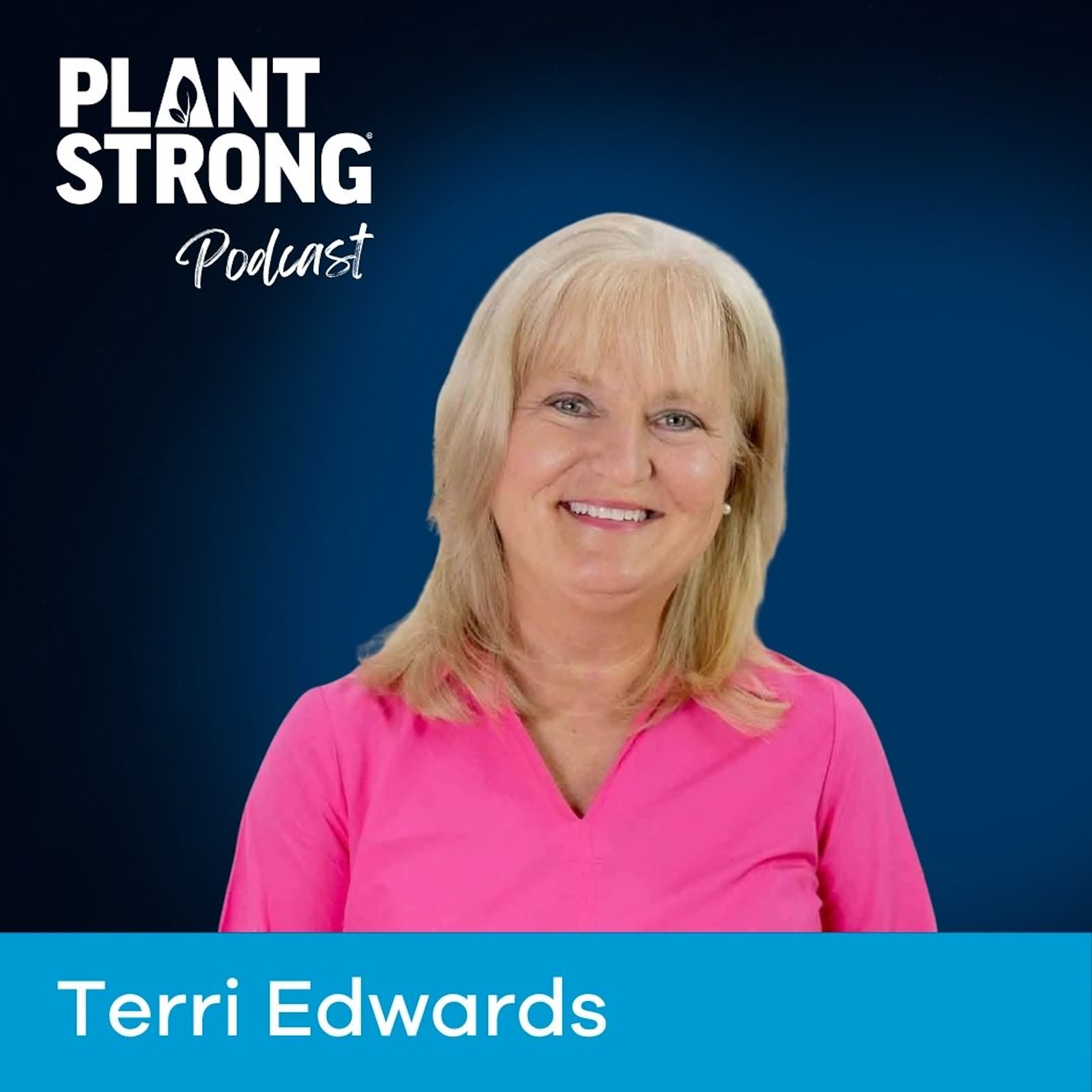
Ep. 358: How Terri Edwards Reversed Her Joint Pain, Lost 50 Pounds & Transformed Her Health with Comfort Foods
Jun 1801:04:52Tap to summarizeRip sits down with Terri Edwards — founder of EatPlant-Based.com — to talk about the recipes, habits, and simple food swaps that helped her completely transform her health.After years of struggling with joint pain, high cholesterol, insomnia, adult acne, and weight gain, Terri discovered the power of whole-food, plant-based nutrition after watching Forks Over Knives in 2013. Within weeks, she noticed major improvements in her joint pain and energy — and never looked back.Today, she teaches thousands of people how to make plant-based eating approachable, affordable, and delicious.Rip and Terri dive into:How Forks Over Knives changed Terri’s lifeWhy flavor and seasoning matter so much in plant-based cookingThe secrets to crispy tofu without oilEasy recipes for chickpea burgers, tofu egg salad & barbecue soy curlsWhy beans help you stay fuller longerHow Terri makes creamy mashed potatoes without dairyThe plant-based recipes that win over skepticsCarrot dogs, black bean brownies & sweet potato chocolate frostingSuccess stories from people who reversed major health issues with foodTips for making plant-based eating sustainable long-termIf you’ve ever felt intimidated by plant-based cooking — or just want more easy, satisfying recipe ideas — this episode is for you.Watch the Episode on YouTubeLearn More About our 2026 Live PLANTSTRONG Events: https://plantstrongevents.com/ Let Us Help Your PLANTSTRONG JourneyLearn More About Our Corporate Wellness Program: https://liveplantstrong.com/corporate-wellness/ COMPLEMENT: Use code PLANTSTRONG for 30% off at https://lovecomplement.com/pages/plantstrong-special-offer Follow PLANTSTRONG and Rip Esselstynhttps://plantstrong.com/ https://www.facebook.com/GoPlantstrong https://www.instagram.com/goplantstrong/https://www.instagram.com/ripesselstyn/ Follow the PLANTSTRONG Podcast and Give the Show a 5-star RatingApple PodcastsSpotify
Transcribe →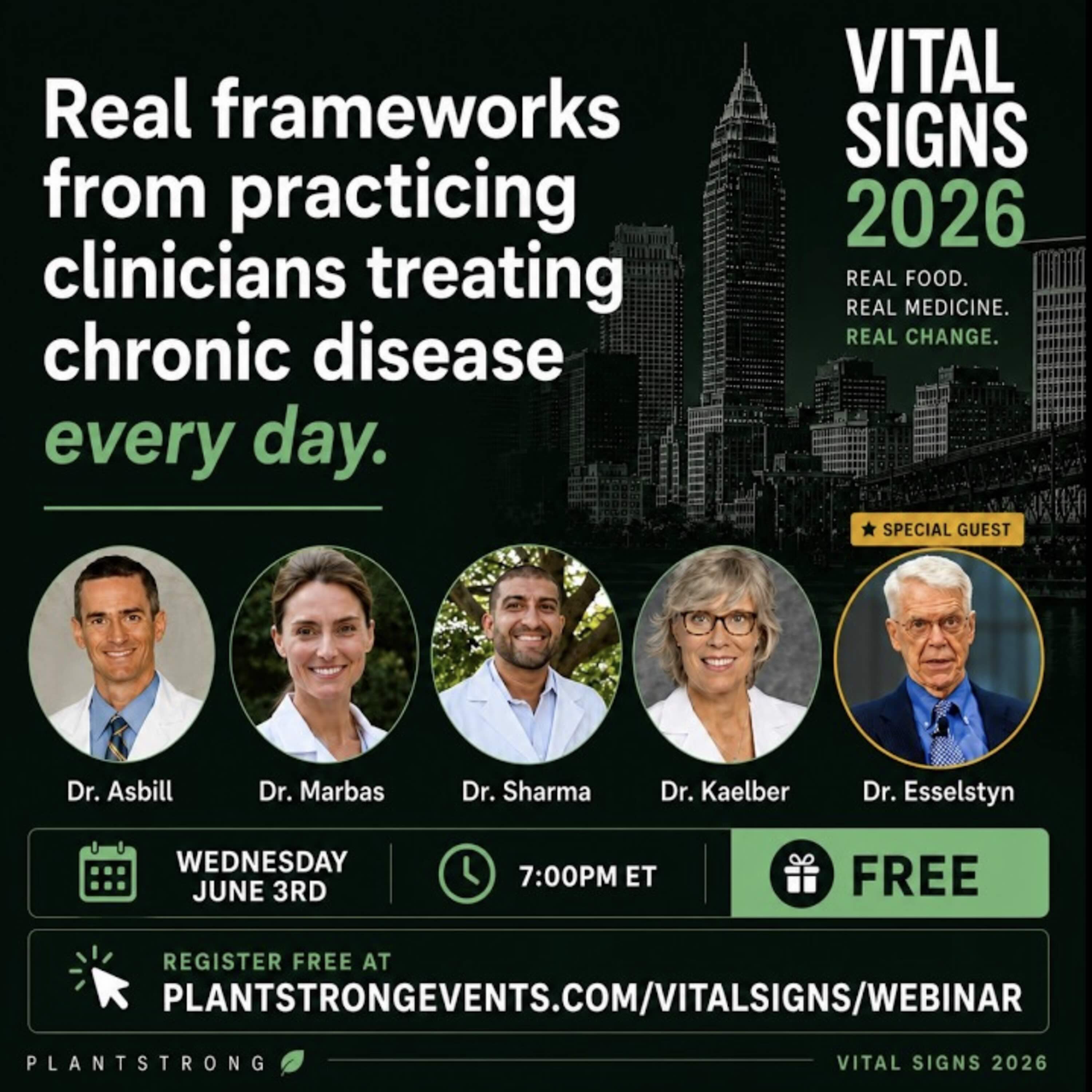
BONUS: Your Doctor Needs to Hear This — A Vital Signs Preview
Jun 1600:48:24Tap to summarizeIn this special episode, Rip shares a preview of Vital Signs: Real Food. Real Medicine. Real Change., Plant Strong’s upcoming CME-focused conference for healthcare providers who want to bring the power of whole-food, plant-based nutrition into real-world clinical care.This is not just another conference. Vital Signs is about helping doctors, nurses, dietitians, health coaches, and medical professionals build confidence in the evidence so they can walk into the exam room and talk about food with clarity, conviction, and hope.And here’s why that matters: most providers see roughly 1,000 patients a year. Each of those patients eats three meals a day. That means every provider we reach with this message has the potential to influence nearly one million meals.One million meals.That is the power of changing the confidence of one healthcare provider. That is the power of putting real food, real evidence, and real tools into the hands of the people patients already trust.In this preview, Rip begins with the gap in medical education: providers receive thousands of hours of training in diagnosing, prescribing, and managing disease, yet most are taught very little about food as a clinical tool. And yet so much of what walks through the door every day — heart disease, type 2 diabetes, hypertension, obesity, metabolic dysfunction, inflammation, fatigue, and loss of vitality — is deeply connected to diet and lifestyle.This conversation asks a better clinical question:What would change if food was treated as part of the prescription?You’ll hear from physicians who are using lifestyle medicine in real clinical settings, beginning with cardiologist Dr. Brian Asbill, who shares a powerful patient case that changed the way he practiced medicine. His story shows that food as medicine is not simply about “eating better.” It can be a therapeutic intervention that moves risk factors, restores hope, and helps patients understand that their bodies can respond.From there, Dr. Laurie Marbas, a board-certified family and lifestyle medicine physician, brings the conversation into the realities of primary care. She shares how providers can begin a food-as-medicine conversation inside a 15-minute visit, how to avoid overwhelming patients, and how one practical, specific recommendation can plant a seed for meaningful change.Next, Dr. Sunny Sharma shares what changed when he went from physician to patient after being diagnosed with a rare brain tumor. His experience deepened his empathy, strengthened his belief in prevention, and reminded him that patients are not just lab values. They are people carrying fear, stress, family responsibilities, habits, barriers, and hope.The conversation then turns to the provider side of the exam room with Dr. Kristin Kelber, a physician in Cleveland who now practices lifestyle medicine full time. Dr. Kelber speaks to provider burnout, moral distress, and the joy that can return to medicine when clinicians are equipped to help patients truly reclaim their health.Finally, Rip closes the faculty portion with a special message from his father, Dr. Caldwell B. Esselstyn Jr., whose decades of work have helped reshape what is possible in the prevention and treatment of cardiovascular disease. Dr. Esselstyn speaks directly to providers about nutrition, cardiovascular disease, patient empowerment, and the importance of helping patients become the locus of control in their own health.What you’ll hear in this episode is a compressed version of what Plant Strong is building atVital Signs 2026, taking place October 18–20 at Case Western Reserve University in Cleveland, Ohio.At the full event, providers will go deeper into cardiovascular disease, metabolic health, behavior change, patient resistance, provider burnout, implementation, whole plant-centered meals, peer exchange, and the practical tools needed to bring lifestyle medicine into real patient care.This episode is also a call to action for the Plant Strong community.So many listeners ask, “Where can I find a provider who supports my decision to use a plant-based lifestyle in pursuit of better health?”One powerful answer is this: help us reach the providers who already care for you.Share this episode with your doctor, cardiologist, nurse practitioner, dietitian, health coach, or healthcare team. Invite them into this conversation. Encourage them to attend Vital Signs.Because if we want to move the needle in healthcare, we have to help the people inside healthcare feel empowered to prescribe one of the most powerful medicines on the planet: plants.Learn more about Vital Signs:https://plantstrongevents.com/VitalSignsWatch the Conference Preview on YouTube:https://youtu.be/U42ySRuG4gw
Transcribe →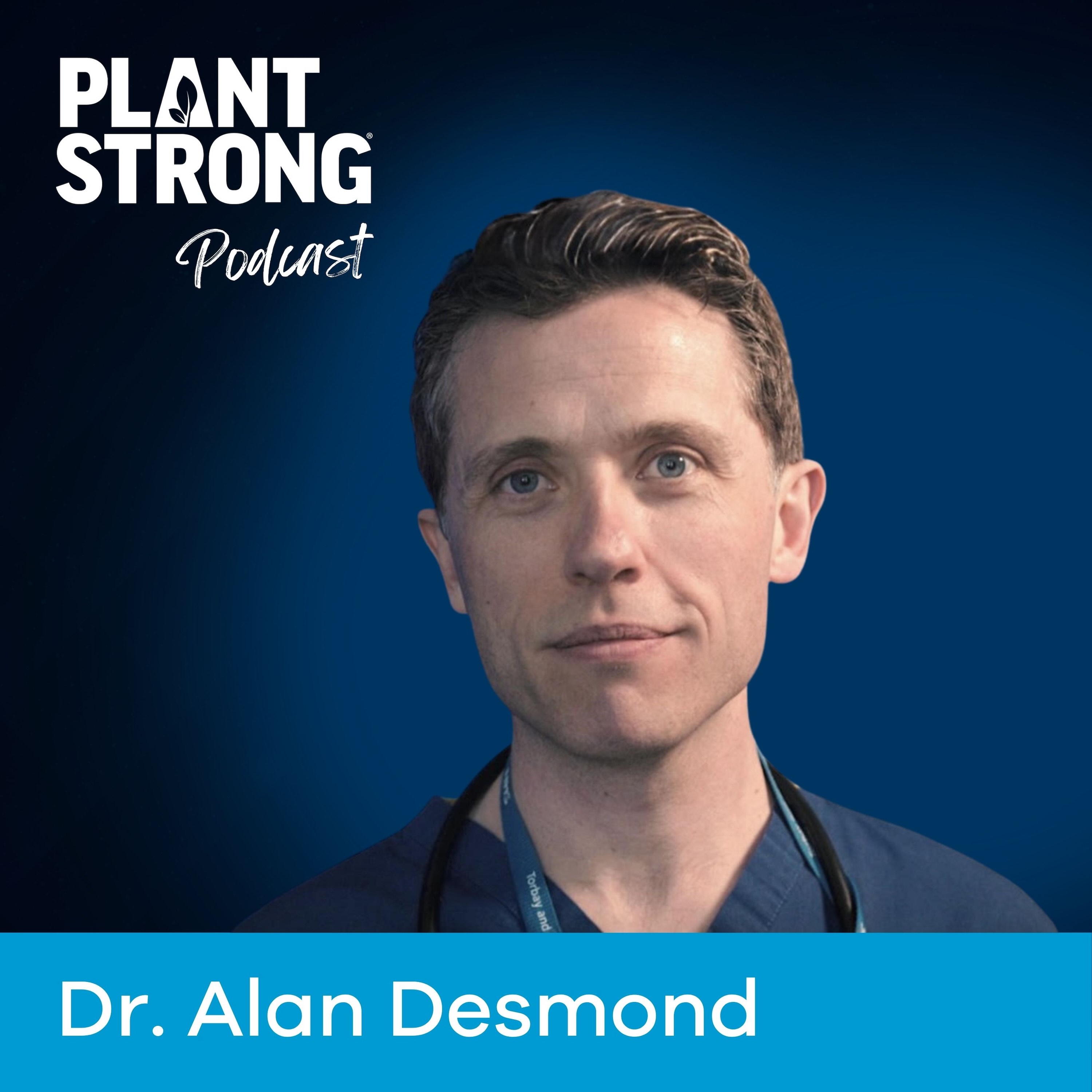
Ep. 357: What Your Doctor ISN'T Telling You About Food with Dr. Alan Desmond
Jun 1101:06:35Tap to summarizeRip welcomes back Dr. Alan Desmond, consultant gastroenterologist, lifestyle medicine advocate, and author of the new book, What Your Doctor Isn’t Telling You About Food.Dr. Desmond explains why food is one of the most important — and most neglected — conversations in modern medicine. It’s not that doctors don’t care. As Alan shares, many doctors simply receive very little practical nutrition training, leaving them without the confidence or tools to guide patients through meaningful dietary change.Alan talks about the urgent gap between lifespan and healthspan, and why so many people are living longer but spending more years with chronic illness. Alan introduces the concept of “micro-lives” — 30-minute chunks of life expectancy that can be gained or lost through daily choices — and explains how whole plant-based foods can help stack the odds in favor of longevity, vitality, and disease prevention.This conversation also tackles some of the biggest nutrition myths and blind spots, including the persistent idea that plant protein is incomplete or inferior. Alan breaks down why plant protein delivers amino acids in a far healthier package — with fiber, phytonutrients, antioxidants, and heart-supportive fats — while animal protein often comes bundled with saturated fat, dietary cholesterol, heme iron, and zero fiber.Rip and Alan also discuss why fiber deserves far more attention than protein, how processed meats like bacon are linked to colorectal cancer risk, what dietary change can mean for type 2 diabetes and inflammatory bowel disease, and why a healthy plate should be built around fruits, vegetables, whole grains, legumes, nuts, and seeds.This episode is not about shame. It’s about possibility. It’s about changing your personal food system so that the healthier choice becomes the easier choice — and letting those changes ripple outward to your family, your community, and the world.In This Episode, You’ll Learn:How little nutrition training many doctors receive — and why that mattersWhy healthspan is just as important as lifespanWhat “micro-lives” are and how daily food choices can add up over timeWhy plant protein is high-quality proteinHow a small 3% shift from animal protein to plant protein may significantly improve long-term health outcomesWhy most people overestimate their fiber intakeHow to think about building a healthy plateWhy processed meats like bacon deserve serious concernHow whole food, plant-based eating can support metabolic healthWhat Dr. Desmond has seen in patients with type 2 diabetes, inflammatory bowel disease, and gestational diabetesWhy changing your home food environment can help shift the larger food systemWatch the Episode on YouTubeLearn More About our 2026 Live PLANTSTRONG Events: https://plantstrongevents.com/ Let Us Help Your PLANTSTRONG JourneyLearn More About Our Corporate Wellness Program: https://liveplantstrong.com/corporate-wellness/ COMPLEMENT: Use code PLANTSTRONG for 30% off at https://lovecomplement.com/pages/plantstrong-special-offer Follow PLANTSTRONG and Rip Esselstynhttps://plantstrong.com/ https://www.facebook.com/GoPlantstrong https://www.instagram.com/goplantstrong/https://www.instagram.com/ripesselstyn/ Follow the PLANTSTRONG Podcast and Give the Show a 5-star RatingApple PodcastsSpotify
Transcribe →