
Podcast
Podcast Notes Playlist: Signal From The Noise: By Podcast Notes
Hosted by Podcast Notes · EN
We take notes on the best podcasts so you don't have to. Subscribe to this playlist in your podcast app to automatically get all the episodes we've taken notes for along with the notes themselves! Our awesome notes read out loud so you can listen to them instead of reading them
11episodes
Episodes
Newest firstAll episodes

PN Deep Dive: 📝 Secrets to Public Speaking Mastery, Hubervision, Peter Thiel, Exercise Science, Rich Barton - Zillow, HuberAddiction, True History of Native Americans
Apr 28, 202500:17:22Tap to summarizeGet more notes at https://podcastnotes.org Get the full notes at Podcastnotes.org Thank you for subscribing. Leave a comment or share this episode.
Transcribe →
PN Deep Dive: Japan Trip Day 1
Mar 8, 202500:19:18Tap to summarizeGet more notes at https://podcastnotes.org Thank you for subscribing. Leave a comment or share this episode.
Transcribe →
PN Deep Dive: Podcast Notes Newsletter: Feb. 24, 2024
Feb 24, 202500:20:37Tap to summarizeGet more notes at https://podcastnotes.org Thank you for subscribing. Leave a comment or share this episode.
Transcribe →
PN Deep Dive: Alain de Botton, Huberman on Hormones, Elon on Future War, Pavel Tsatsouline w/ Hubs, Dostoevsky, All-In on DOGE, How to Take Over the World, and Graham Duncan
Feb 17, 202500:37:00Tap to summarizeGet more notes at https://podcastnotes.org Thank you for subscribing. Leave a comment or share this episode.
Transcribe →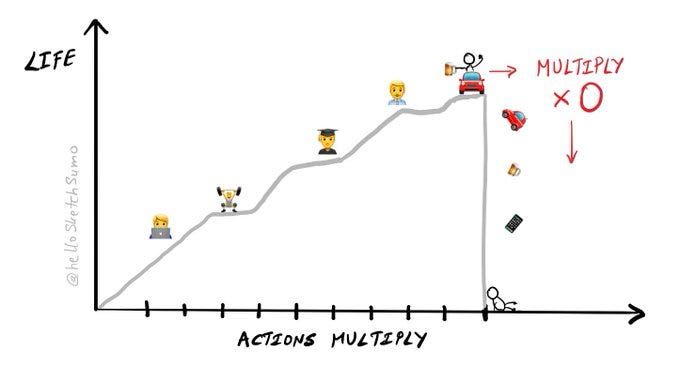
PN Deep Dive: A Guide to Mental Models: A Podcast Notes Collection
Feb 6, 202500:46:30Tap to summarizeGet more notes at https://podcastnotes.org This member’s only content is a compilation of several podcasts that will teach you about the importance of mental models and how they can help you improve your decision-making process.Get the FULL COLLECTIONKey Takeaways:* Mental Model: Direction Over Speed* If you’re pointed in the wrong direction, it doesn’t matter how fast you’re traveling* Mental Model: Availability Bias* Design your environment to the best of your availability to limit your temptation to perform unwise actions* Mental Model: Hanlon’s Razor* Don’t attribute to malice what can be attributed to stupidity. Don’t assume someone did something because they’re a bad person, assume they did it out of stupidity.* Mental Model: George Mack’s Razor* When presented with two options, choose the one that brings a greater amount of luck.* Mental Model: Zeitheimer’s* Every generation tends to assume their problems are the absolute worst – we forget about the daily struggles of our ancestors* Our generation is complaining about social media addiction – people less than a hundred years ago were dying on battlefields during world wars* Mental Model: Signal vs. Noise* This mental model is all about how to distinguish the high-intensity/useful information (the stuff that actually matters) from the noise* If a book has been around for 100 years, you can assume it’ll be around for 100 additional years (this is also known as the Lindy Effect)Defining Mental Models* A mental model is ways of taking principles from different disciplines and applying them to make better decisions* Helpful mental models:* Be careful of actions that would multiple your life by 0* Don’t take any risk that might make your life go to zero* E.g: It’s great if you exercise and don’t smoke, but if you drive drunk you could go to jail or end up deadMental Model: The Map is Not the Territory* Check out Shane’s blog post on the topic* A few examples:* A balance sheet is the map of a business, but it doesn’t fully represent the company* An employee satisfaction survey (a map) is only a glimpse of the entire terrain (everything going on within the company)* “If you become exclusive to one map, you’re less likely to identify when the terrain changes” – Shane Parrish* “There’s always an imperfect relationship between reality and the models we use to represent and understand them, but it’s necessary in order to simplify things because we can’t deal with the world in all of its complexity” – Shane Parrish* Like online dating* The “map” (someone’s profile) doesn’t match the overall person – they’ll often be completely different* The size of your email list is a map, but it doesn’t tell you about the territory* It doesn’t tell you about the open rates, the engagements, or whether people care if they receive the emails* Business targets/projections are another example* For one, they’re often pulled out of thin air* The growth target doesn’t, in fact, indicate what’s possible* “If you could 10x something, why would you be happy with 5x, and if 5x’ing something is, in fact, impossible, why would you be disappointed with 4x?” – SamMental Model: The Unforced Error* This mental model comes from Super Thinking: The Big Book of Mental Models by Gabriel Weinberg* The concept: do all you can to prepare to avoid bad outcomes* Ex: Dress well to avoid making a bad first impression* Ex: Don’t text while driving to avoid getting in a car crash* “An unforced error is the most basic way you can be wrong. Independent of all other circumstances, you done f**ked up.” – ChrisMental Model: Anti-fragility* This one originates from Nassim Taleb, author of Antifragile, and a few other classics – The Black Swan, Fooled by Randomness, and Skin in the Game* The main idea – Become someone who thrives and improves from disorder* Think of a glass cup: if you drop it on the floor (disorder), it breaks (AKA it’s fragile)* How can you do this? – There are quite a few ways:* Have multiple sources of income – this way, if you lose your job (disorder), you’ll be fine* Exercise and build strength – if you stumble and lose your balance, you’re more likely not to hurt yourself* Look for business opportunities where no matter what happens, you’ll experience an upsideMental Model: Finding Good in the Bad* This one originates from Josh Waitzkin in his first appearance on The Tim Ferriss Show* It’s very easy to get bummed out when it rains and let it affect your mood* Josh realized parents instill this in their kids by encouraging them to stay inside when it’s raining rather going out to actually enjoy the “bad” weather* So, he flipped it. Josh taught his son to look at rain and think: “Oh, look at how beautiful it is! Let’s go outside and enjoy it!”* George adds – “When everything’s going bad, I say ‘good.’ When everything’s going good, I say ‘bad.’”* When times are good, it’s quite easy to take your foot off the gas* When times are bad, it’s an opportunity to thriveMental Model: Surround Yourself With People You Admire* “I definitely find the biggest influence in my output and the way I think is who I’m around” – George Mack* Think of two versions of yourself:* In one world, you spend most of your time around a positive and motivational person (like David Goggins)* In another world, you spend most of your time around a sloth (the type of person who always has negative blinders on)* After a year, imagine these two people meet – they’ll be completely different!* High agency people actively seek out those they admire and want to emulate* Chris thinks David Perell largely fits this bill – “He’s always the dumbest person in the room in one of multiple domains and he keeps changing the domain””Mental Model: Directional Arrows of Progress* This one comes from Josh Wolfe (as discussed in these Podcast Notes). Here’s how Josh explains it:* “The half-life of technology intimacy” is a trend related to how we interact with our computers:* 50 years ago, you had a giant computer the size of multiple refrigerators sitting in the corner of a room* The way you would interact would be to flip it’s switches, and pull plugs etc.* 25 years ago – we first got personal computers* How did we interact with them? – Mainly through a keyboard and a computer mouse* 12.5 years ago – the dominant form of computers became laptops* Now it’s physically on your lap, so the computer has gotten closer to you* 6.5 years ago – the iPhone* It’s the last thing we touch at night, as well as the first thing we touch in the morning* You “swipe” it and “tap” it* The only physical barrier with the human body is a thin film of fabric in your pants* 3.5 years ago – the smartwatchGet the FULL COLLECTION Thank you for subscribing. Leave a comment or share this episode.
Transcribe →
PN Deep Dive: Huberman Lab Sleep Collection: Protocols & Science
Jan 30, 202500:40:44Tap to summarizeGet more notes at https://podcastnotes.org Podcast Notes Premium Collection: Huberman and SleepGet the FULL NOTESIntro to Sleep* Sleep cycles & Architecture: non-REM and REM play for brain domination throughout the night in 90-minute cycles – this is the standard architecture of sleep* Ratio of non-REM and REM throughout the night: the first half of the night is dominated by non-REM deep sleep; the second half of our sleep is dominated by REM sleep* Not everyone’s sleep cycles are 90 minutes: sleep architecture is fairly consistent within a person, but can be different across people* Non-REM Sleep: Non-REM deep sleep is divided into four stages, increasing in the depth of sleep: stages 1 and 2 are light stages of non-REM deep sleep; stages 3 and 4 are deep stages of non-REM deep sleep* In stages 1 and 2: the heart rate begins to drop, and brain wave activity slows down* In stages 3 and 4: the heart rate is low, cells in the cortex fire together then go silent* During non-REM deep sleep, we get autonomic restoration and regulation of heart rate and blood pressure* Hypnogogic Jerks: during stage 1 you experience mini dreams s you’re starting to drift off and can almost wake yourself up in this stage – sometimes you experience a jerk in your body as a result of loss of proprioceptive feedback* Don’t miss these notes about how Salvador Dali used the hypnogogic state to be creative (Slumber with a Key)* …Quantity, Quality, Regularity, and Timing (QQRT): The macros of sleep* Quantity: the average adult needs between 7-9 hours of sleep per night – but the reality is more complex* Quantity alone doesn’t tell the full story* …Carbs, Caffeine and THC* Carbs in AM vs. PM: research does seem to support that your body is better able to metabolize carbohydrates in the morning versus evening if you’re concerned about your blood sugar and metabolic health* Eating Before Bed: In gener…Sleep Supplements* Magnesium Threonate or Glycinate, 145mg, 30-60 minutes before sleep* Magnesium chloride can be effective for bioavailability by way of muscle relaxation* Apigenin: 50mg, 30-60 minutes before sleep* Theanine: 100-400mg, 30-60 minutes before sleep (Do NOT take Theanine if you are prone to night terrors or sleepwalking)* Inositol* Glycine: 1.5-2gPhosphatidylserine will dampen cortisol response* Check out the full Momentous Huberman sleep stack & use promo code PODCASTNOTES for 15% off at checkout!Sleep Tips* 1. Do Nothing! If you are struggling with sleep and had a bad night of sleep, do not sleep in later, do not go to bed earlier, do not increase caffeine intake, do not compensate with a nap* 2. Time rescheduling/sleep restriction therapy: if you are spending too much time in bed, your brain is not efficient; it’s like being in the gym for hours a day but spending most of the time scrolling on your phone – you’re not really getting a good workout like if you know you only have 45 minutes to workout* 3. Don’t underestimate the importance of a winddown routine: whatever you enjoy for relaxation, build it into your regimen to help you decelerate* 4. Do NOT count sheep, instead take yourself on a mental walk: counting sheep actually makes you stay awake longer; instead, get your mind off itself by going through a rudimentary walk with hyper-detail – imagine putting your shoes on, opening the door, crossing the street, imagine the signs you see, look at the flowers, etc.* 5. Remove …* Monophasic sleep: Single bout of sleep in 24 hour period* Biphasic sleep: Two bouts of sleep in 24 hour period* Polyphasic sleep: …Napping* Naps are a Double-Edged Sword: If you struggle with sleep at night, do not nap during the day in order to build up sleepiness and hopefully sleep at night* Cons of Napping: Naps remove sleep pressure (adenosine) so if you struggle with sleep, you are setting yourself up for worse sleep because you’ve removed some of the sleepiness you need* Pros of Napping: If napping does not disrupt your sleep and leaves you feeling better, go ahead and nap but be cautious of napping too late which can disrupt sleep* Are Naps Right F…* Super Charged Nap: Swig espresso right before napping + nap 20 minutes + cold water to hands and face upon waking + immediate daylight 5-10 minutes outside3 Ways Sleep is Essential for Learning:* 1: We need sleep before learning to start the initial imprint and laying the tracks; sleep before learning is critical* 2: We also need sleep after learning to cement the information in our brain* 3: We need sleep to integrate the new information with previously learned information we have stored* Exactly How Much an All-Nighter Impacts Memory: Pulling an all-nighter leads to deficits of up to 40% in making new memories* …* Symptoms of REM Sleep Deprivation: Paranoia, hallucination, aspects of psychosis (with enough time)* Bad Sleep, And Then: When sleep deprived, you’re excessively reactive and hypersensitive, particularly to reward-based activities – dopamine circuits are overactive when you are underslept* Sleep and Addiction: A lack of sleep is associated with addiction potential AND relapse if trying to abstain* REM Sleep Killers: Alcohol, THC* One Possible Mechanism for PTSD: The brain is trying to process the traumatic experience but fails, so the brain tries again the next night, and the next – until …Brain Features of REM:* (1) Electrical brain wave activity in the cortex is similar to that when you are awake;* (2) There are unique pulses from the brain stem ultimately to the occipital cortex (linked to rapid eye movements);* (3) Motor regions, visual regions, memory-related structures, and emotional-related structures of the brain all light up* (4) The dorsolateral prefrontal cortex (responsible for inhibition and planning) activity is suppressed during REM* Functions of REM sleep: (1) Creativity; (2) Emotional & mental wellness – REM sleep is overnight therapy* …* (1) Consistently rehearse the notion that you will remember your dreams and you will take control of your dreams – if you do this enough, the probability you will induce lucid dreams is high* (2) Rehearse something (like flicking a light switch on and off) over and over; Then, when this appears in your dream you can take control* …Get the FULL NOTES Thank you for subscribing. Leave a comment or share this episode.
Transcribe →
PN Deep Dive: 📝 David Deutsch, Scott Galloway, _Mike Cernovich, _Jensen Huang, 2X Huberman, and Tyler Cowen
Jan 28, 202500:11:23Tap to summarizeGet more notes at https://podcastnotes.org Time Saved This Week: 8 Hours, 53 MinutesNEW Premium NotesDavid Deutsch: Chemical Scum that Dream of Distant Quasars | TED In this TEDTalk from 2005, David Deutsch (@DavidDeutschOxf) was tasked with going out on a limb and saying something surprising. The result? A profound exploration titled Chemical Scum That Dream of Distant Quasars where he redefines humanity’s place in the universe and celebrates the limitless potential of human knowledge. Though the title might sound nerdy or even a bit intimidating, these Premium Podcast Notes break down every element of this groundbreaking TED Talk, revealing powerful principles of problem-solving that could transform how you see your role in fostering the endless growth of knowledge and shaping a better future.Scott Galloway on How Stoicism Can Benefit Young Men | Daily Stoic with Ryan HolidayScott Galloway on "Intergenerational Theft" and why Stoicism can help young men who are struggling now more than ever. Go Premium to learn why young men are struggling, how to protect the middle class, the value of being a Nation, how to be successful, truths about money and more.Mike Cernovich – Escaping Sam Altman’s Techno-Slavery | Zero Hour with James PoulosMike Cernovich discusses Sam Altman's Techno-Gnostic archetype, secular fatalism, Greco-Roman principles, consciousness, and more. This is not your average podcast and not to be missed.Upgrade to Premium to Get 3 Premium Notes Every Week, the Full Newsletter, Playable Timestamps, AI Powered Answers, Unlock 500+ Premium Posts, No Ads and MOREGo PREMIUMTop Premium Takeaways Of The WeekDavid Deutsch: Chemical Scum that Dream of Distant Quasars | TED Is Earth Special? Two Possible Theories…* Theory #1: Earth is very untypical and uniquely suited...* “Spaceship Earth” = ...* If we destroy the ...* Theory #2: Earth is typical and human beings are not ...* “The human race is just a chemical scum on a moderate-sized planet, orbiting around a very average star in the outer suburb of ...” – Stephen Hawking* Key Takeaway: “So, especially if you regard them as deep truths to form cornerstones of your world view and inform your life-decisions, they appear somewhat in ...” – David DeutschEarth is Very Not Typical: “Deep, intergalactic space is completely dark. It is so dark that if you were to look at the nearest star to you, and that star were to explode as a supernova, and you were staring directly at it at the moment when its light reached you, then ...”– David DeutschHumans are Very Special Chemical Scum: “Therefore we are chemical scum that’s different. This chemical scum has universality. Its structure contains, with ever-increasing ...” – David Deutsch* “The fact that the laws of physics permit – and even mandate – ...” – David Deutsch3 pre-requisite resources for the open-ended creation of knowledge:* Matter: the growth of knowledge is a ...* Energy: the inputs required to ...* Evidence: the laws of physics saturate the ...Resources are abundant, knowledge is scarce: If something isn’t forbidden by the ...Our Sacred Responsibility as Humans: “Species go extinct. All the time. Civilizations end. The vast majority of all species and all civilizations that have ever existed are now history. If we want to be exceptions ...” – David DeutschScott Galloway on How Stoicism Can Benefit Young Men | Daily Stoic with Ryan HolidayThe Epicenter of Today’s Problem: For the first time in the nation’s three-century history, a thirty-year-old person today is doing worse than ...* “When the majority of kids aren’t doing as ...” – Scott Galloway<a target="_blank" href="https://podcastnotes.org/the-daily-stoic/...
Transcribe →
PN Deep Dive: Peter Thiel, Marc Andreessen, Tim Cook, Huberman on Pain and Parenting, Hetty Green and Mark Zuckerberg
Jan 25, 202500:20:09Tap to summarizeGet more notes at https://podcastnotes.org Time Saved This Week: 13 Hours, 45 MinutesNEW Premium NotesPeter Thiel | Tetragrammaton with Rick Rubin Peter Thiel (@peterthiel) is an entrepreneur, investor, and philanthropist who has appeared in many Podcast Notes over the years. However, legendary producer Rick Rubin still somehow managed to peel back new layers of Peter’s life, revealing how he flipped the script from ordinary Stanford law school graduate to one of the most prominent entrepreneurs of his generation. These two titans of industry also discuss the student debt crisis, the progression of AI relative to the dot-com bubble, the current state of Silicon Valley, and much more!Marc Andreessen: It’s Morning Again In America | Uncommon Knowledge with Peter RobinsonIt’s time for another podcast episode with the chief ideologist of the Silicon Valley elite, Marc Andreessen (@pmarca)! In this episode, Marc talks about how technology and politics have changed in Silicon Valley, his shift from left to right, and how he believes innovation can solve big issues like energy, border security, and defenseTim Cook: What It Takes to Run Apple, the World’s Largest Company | Dua Lipa: At Your ServiceA wild Tim Cook appeared! The Apple CEO sat down with Dua Lipa for a rare podcast interview to answer about his daily routine, favorite national parks, and books, Apple’s climate goals, leadership philosophy, and even tackling the big question: does Apple use child labor for cobalt?Upgrade to Premium to Get 3 Premium Notes Every Week, the Full Newsletter, Playable Timestamps, AI Powered Answers, Unlock 500+ Premium Posts, No Ads and MOREGo PREMIUMTop Premium Takeaways Of The WeekPeter Thiel | Tetragrammaton with Rick Rubin Peter's Quarter Life Crisis: “I ended up at a top New York law firm. It was one of these very strange places where from the outside ....” – Peter ThielStudent Loan Nightmare: Of 1997 graduates, almost all of them paid off their debt within XX years. Of 2009 graduates, the median student after 12 years has ,,,* “If you make the colleges even partially responsible, ...” – Peter ThielYou Can Just Buy Users Instead of Ads: Paypal gave $10 to create an account, another $10 ...Competition is for Losers: Capitalism and competition are opposites...IPO's Are Awful: Taking a company public is in part a government takeover* The accountants and lawyers get...Peak Insanity to Peak Clarity: “Maybe AI is like the internet in 1999, where ...The Origin of the Name Palantir and Its Goal: Palantíri in Lord of the Rings were ...* Palantir = more security without...Contrarian: A controversial idea isn’t automatically correct, but ...Marc Andreessen: It’s Morning Again In America | Uncommon Knowledge with Peter Robinson3 Targets of DOGE:* Headcount (like, how many people work in the government)* ....* ...Afuera: Did you know? There are XXX federal agencies* “There’s a rumor going around that nobody actually knows the number of federal agencies.” – MarcAbandoned Offices: A lot of these federal buildings in D.C. are empty* Occupancy is around...* Some only work ...<a target="_blank" href="https://preview.convertkit-mail.com/click/dpheh0hzhm/aHR0cHM6Ly9wb2RjYXN0bm90ZXMub3JnL3VuY29tbW9uLWtub3dsZWRnZS13aXRoLXBldGVyLXJvYmluc29uL21hcmMtYW5kcmVlc3Nlbi1pdHMtbW9ybmluZy1hZ2Fpbi1pbi1hbWVyaWNhLXVuY29tbW9uLWtub3dsZWRnZ...
Transcribe →
PN Deep Dive: The Naval Podcast | How to Get Rich: Episodes 20-39 (Lessons in Life, Entrepreneurship, and Building Wealth from Naval Ravikant)
Jan 16, 202500:23:56Tap to summarizeGet more notes at https://podcastnotes.org Product and Media are the Leverage of the New Wealth (Listen) | Episode 21* The most important form of leverage is the idea of products which have no marginal cost of replication (aka product leverage)* You can replicate your efforts without having to involve other humans* Ex. – A podcast* Long ago, to get similar reach, you would have had to give a public lecture* 30-40 years ago – you would have had to get on TV* But today, thanks to the internet, anyone can launch a podcast* Product leverage is how fortunes will be made in the digital age – using things like code or media* Ex. of people who utilized code-based product leverage – Mark Zuckerberg, Jeff Bezos, Sergey Brin* Ex. of media-based product leverage – Joe Rogan, PewDiePie* Combining labor leverage, capital leverage, and product leverage is a magic combination for tech startups (for more on labor and capital leverage, check out these Podcast Notes)* You use the minimum, highest output labor – engineers and product developers* You add capital which you can use for marketing, advertising, and scaling* You then add lots of code, media, and content to get everything out there* Product and media leverage are permisionless – they don’t require someone else’s permission for you to use them or succeed* For labor leverage – someone has to decide to follow you* For capital leverage – someone has to give you money* But coding, writing tweets, making podcasts, YouTubing – these are permissionless* The robot revolution has already arrived – we just keep them in data centers/servers* Think – every great software developer has an army of robots working for him/her at night, while they sleep, after they’ve written the code and they’re just cranking away* Robots do web searching for you* Robots handle customer service inquiries* Over time, this will progress to autonomous vehicles/planes/trucks* Coding is a superpower because it allows you to speak the language of the robots and tell them what to doProduct Leverage is Egalitarian in its Outputs (Listen) | Episode 22* Product (both code-based and media-based) leverage is egalitarian in its outputs* Compare this to labor and capital leverage – which are much less egalitarian* In general – the more of a human element there is in providing a service, the less egalitarian it is* “It’s the nature of code and media output that the same product is accessible to everybody…The best products tend to be at the center, at the sweet spot of the middle class, rather than being targeted to the upper class.” – Naval Ravikant* For example:* Things like Netflix and Facebook – everybody can use* Compare this to Rolex watches or a Lamborghini – using/owning them is much more related to status-seeking* As the forms of leverage have gone from being labor-based and capital-based to being more product/code/media-based – “Most of the goods and services that we consume are becoming much more egalitarian in their consumption”* Things like food – rich people don’t eat better food* Technology and media products have amazing scale economies* “If you care about ethics in wealth creation, it’s better to create your wealth using code and media as leverage. Then those products are equally available to everybody as opposed to trying to create your wealth through labor or capital.” – Naval Ravikant* “If you’re wealthy today, for large classes of things, you tend to spend your money on signaling goods to show other people that you are wealthy, and you try and convert them to status as opposed to actually consuming the goods for their own sake” – Naval RavikantBusiness Models Have Their Own Leverage (Listen) | Episode 23* Some business models give you “free leverage” – Examples:* Scale economies = the more you produce of something, the cheaper it gets to make* Technology and media products have this great quality where they have zero marginal cost of reproduction* Thinks like podcasts and YouTube videos* Ex. – Joe Rogan is working no harder now than he was on podcast #1, but it’s now generating millions more* Then there are network effects businesses* A network effect is when each additional user adds value to the existing user base* Like language – The language becomes more valuable the more people who speak it* “Long-term, the entire world is probably going to end up speaking English and Chinese” – Naval Ravikant* It’s thought that the value of a network is proportional to the square of the number of nodes of the network* A network of size 10 would have a value of 100, while a network of size 100 would have a value of 10,000* “You want to be in a network effects business” – Naval Ravikant* Things like Facebook, Uber, Twitter, YouTube, Google* “You should always be thinking about how your users or customers can add value to each other because that is the ultimate form of leverage” – Naval Ravikant* When you’re picking a business model, aim to pick one where you can benefit from network effects, low marginal costs, and scale economiesAn Example: From Laborer to Real Estate Tech Company (Listen) | Episode 24* An example from the real estate business* A day laborer on a construction site, unless you’re in a skilled trade, doesn’t have specific knowledge* Even if you’re a carpenter or electrician, other people can be trained to do your job – you can probably be replaced* You don’t have much accountability – “You’re a faceless cog in the construction crew”* They don’t have much, if any, leverage* A general contractor, who someone hires to come and fix/repair their house, has a little more accountability* They’ll make more money than a day laborer, but they take more risk (if the project runs over budget, they’ll eat the loss)* The accountability gives them more potential income* They have labor leverage (people working for them)* A property developer is one level above a general contractor – these are people who go around looking for beaten-down properties which have potential and then buy them to fix them up* They can make a healthy profit by selling a building for 2-3x what they bought it for* A developer has more accountability/risk and much more specific knowledge* They have to know which neighborhoods are worth buying in, which lots are good/bad, and what makes/breaks a specific property* They have capital leverage and labor leverage* Beyond the property developer might be a famous architect/developer where just having your name on a property increases its value* Above that might be a property developer who builds entire communities* Above that – someone who funds real estate through an investment trust* Beyond that – someone (or a team of people) who understands the real estate market and the tech business (how to code/recruit developers/build a good product), and knows how to raise money from VCs* Think – something like Zillow* This team/individual would have all forms of leverage – labor (people working for him/her), code, capital (money from investors)* As you climb the chain – You layer in more knowledge which can only be gained on the job, more accountability/risk-taking, more capital, and more laborJudgment Is the Decisive Skill in an Age of Infinite Leverage (Listen) | Episode 25* First aim to get leverage, and once you have leverage – your judgment becomes the most important skill* How do you get leverage?* Get it permisionlessly – learn to code, create podcasts, become a good writer* Through permissi...
Transcribe →
PN Deep Dive: 📝Thomas Sowell, Mark Sisson on Longevity, $$$ Tips for Couples, Ibogaine, Alex Karp - Palantir, Huberlearning, Lex Snagged Zelenskyy, Crime and Punishment (Free)
Jan 13, 202500:31:02Tap to summarizeGet more notes at https://podcastnotes.org Top Premium Takeaways Of The WeekThomas Sowell on the Myths of Economic Inequality | Uncommon Knowledge with Peter Robinson (2018) Results, Not Intentions: Poor people, including African Americans in the United States, were living increasingly better lives throughout the 20th century until the government decided to help (through the welfare state)* “Despite the grand myth that black economic progress began or accelerated with the passage of the Civil Rights laws and the ‘War on Poverty’ programs of the 1960s, the fact is that the poverty rate among blacks fell from 87% in 1940 to 47% in 1960, but over the next 20 years the poverty rate among blacks fell another 18% points. This was just the continuation of a previous economic trend but at a slower rate of progress. It was not some grand deliverance.” – Thomas SowellAffirmative Action Hurts: “There’s a lot of evidence that there are black kids who have all the qualifications to be successors in college, who nevertheless ...” – Thomas Sowell* Thomas states that black students in the 75th percentile — who would have been successful at a majority of universities — were getting into ...Smart Idiots Are in Charge: “There are so many people, among the intelligentsia especially, who are...”– Thomas Sowell* Human beings have an enormous capacity to rationalize, we become ...Longevity Protocols, Fat Loss Secrets, & Anti-Aging Tips | Mark Sisson on The Genius Life with Max LugavereThe Original Primal Blueprint: * Move around a lot and do ...* Lift heavy things at ...* Sprint max-effort ...The United States of Pharma: The average baby boomer takes XX prescription drugs everyday just to get by* About 6.1% take YY+ prescription drugs per day* Can any doctor know how all of these drugs interact with each other?The 3 Defining Characteristics of Longevity: Mobility, ...Stop Run Maxxing: “Running” is not the panacea for health as it has been advertised; in fact, marathon training is ...* Running is not the best way to ...* Today, about 50% of runners get injured at ...The Fat Runner's Trap: If you go for a run as an overweight person, but have not reset your ...The skinny-fat runner physique: Runners who never learned how to ...The major benefits of walking: * Walking, either barefoot or in minimalist shoes, passively trains our ability to support and orchestrate our unique kinetic chain* Walking helps to ...* The majority of cardio exercise should be in Zone 2: the max heart rate in which you burn the most amount of fat without needing to tap glycogen stores for fuel<a target="_blank" href="https://podcastnotes.org/genius-life/longevity-protocols-fat-loss-secrets-anti-aging-tips-mark-sisson-on-the-genius-life-with-...
Transcribe →