Podcast
Politics Politics Politics
Hosted by Justin Robert Young · EN
Unbiased political analysis the way you wish still existed. Justin Robert Young isn't here to tell you what to think, he's here to tell you who is going to win and why.
www.politicspoliticspolitics.com
www.politicspoliticspolitics.com
61episodes
Episodes
Newest firstAll episodes
Donald Trump's Primetime Election Fraud Gambit. The Rise of Gray Money (with Dave Levinthal)
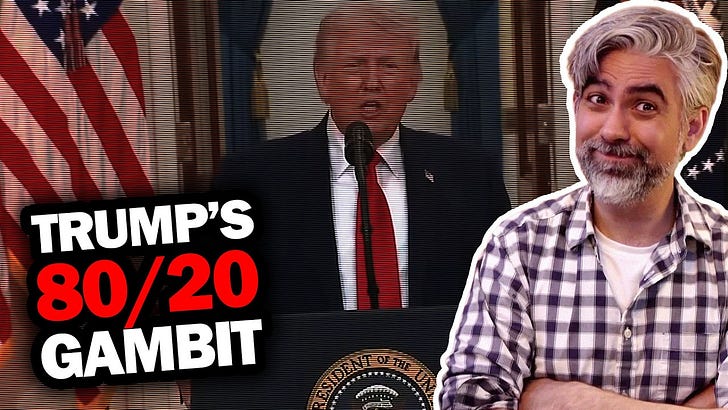
2d ago01:06:20Tap to summarizeDonald Trump is going before the nation Thursday night to make a case about election integrity. We don’t know exactly where or how many places he’s going to be shown, but we do know what the case is supposed to be. And the difference between what he says and how he says it is literally the difference between 80% of America agreeing with him and 20% of America agreeing with him.What Trump really wants to do is demonstrate that now that he’s in control of the federal government, all the things he said about the federal government are indeed true. He wants to reveal elements of the secret workings of the deep state that he was previously unable or unwilling to reveal in his first term. According to Politico, Trump is expected to declassify previously unseen intelligence during the address, and White House aides are reportedly debating exactly how far they should go. Senior staffers have prepared a version they believe is supported by the available intelligence, while others want Trump to make broader claims.Politics Politics Politics is a reader-supported publication. To receive new posts and support my work, consider becoming a free or paid subscriber.Trump also wants to pass the SAVE America Act. The current House-passed version has two major requirements: documentary proof of citizenship when somebody registers to vote in a federal election, and photo identification when that person casts a federal ballot. The Senate doesn’t currently have the votes to pass it under normal rules unless Republicans suspend the filibuster or find another way to attach it to legislation that can pass. Whether an election law provision could survive the Senate’s reconciliation rules is a different story for a different day.The biggest, juiciest kernel inside the legislation is voter ID. That’s a huge political opportunity for Republicans and a problem for elected Democrats. If Trump were to get on television and say we need voter ID, we’re going to include it in the SAVE America package going to the Senate, and the reason is simple — only citizens should be able to vote — that’s overwhelmingly popular. Democrats will say it’s voter suppression. They’ll say women who change their names could be disenfranchised because their current identification doesn’t match what’s on their birth certificates. Well, Trump could answer that by putting money in the bill to expedite any new identification and documentation necessary to comply with the SAVE America Act, especially for women who’ve taken their husband’s names.That’s the layup. Pew found in August 2025 that 83% of Americans supported requiring government-issued photo IDs to vote, including 95% of Republicans and 71% of Democrats. Pew measured the issue again in January 2026: 80% supported voter ID, with 58% strongly favoring it and another 22% somewhat favoring it. Gallup found essentially the same thing, with 84% of Americans supporting photo identification at the polls. In politics, that’s called a no-brainer layup. Put the screws to him if you’re the GOP.But guess what? He ain’t gonna. Because Trump also wants to expose what he considers the nefarious deep state, and with that comes the greatest bugaboo of his political life: the 2020 election. If Trump goes on television and says the 2020 election was manipulated by China, Democrats, Brad Raffensperger, or anybody else, he’s no longer operating within the overwhelming support of the American public. Talking about 2020 and manipulated vote counts is, at best, red meat for the base. At worst, it’s exactly what Democrats want to be talking about, because it takes Trump further away from the current moment. Sometimes you get the 80-20 layup, and sometimes you get the long, meandering “Democrats plus China plus Brad Raffensperger ruined my life.”Chapters00:00:00 - Intro00:03:38 - Trump’s Primetime Speech00:12:02 - Iran00:15:59 - Israel and Democrats00:20:20 - NYS Data Centers00:29:23 - Interview with Dave Levinthal01:03:47 - Wrap-up This is a public episode. If you'd like to discuss this with other subscribers or get access to bonus episodes, visit www.politicspoliticspolitics.com/subscribe
Transcribe →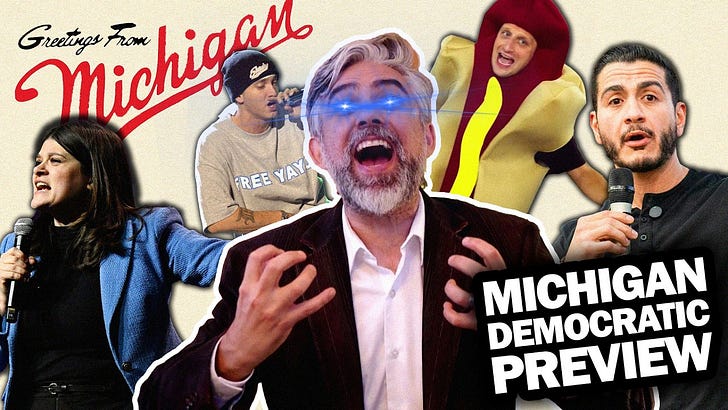
Michigan Democratic Primary Preview! The State of the Democrats Post-Platner (with Bill Scher)
4d ago01:24:45Tap to summarizeCircle August 4th on your calendar: Michigan is now the number one marquee primary matchup I’m watching. Mallory McMorrow is out of the race as of a couple of weeks ago, and what’s left is a head-to-head contest between the Democratic establishment — or at least what’s left of it — and the insurgent progressive movement. Yes, friends, it’s Haley Stevens versus Abdul El-Sayed, and it’s set to be a knockout fight.This really represents the first live test for the current Democratic Party. Can the progressive movement, with a more charismatic candidate and a high-energy, extraordinarily competent campaign, expand its coalition enough to win statewide? Or will it do what it’s done in the past — hit a ceiling when the opposition consolidates?There’s only one new clean head-to-head test: a Tavern Research survey from July 6th through July 7th of 2,211 likely Democratic primary voters. It found Haley Stevens at 42%, El-Sayed at 41%, with 17 to 18% undecided. That’s a margin-of-error race, but it’s the first time in a very long time that we’ve seen Haley Stevens up over Abdul. The same poll tested the old three-person field and found El-Sayed at 41%, Stevens at 38%, and the flagging McMorrow at five. In other words, when McMorrow disappears, the voters are forced into a binary choice, and they’re making it more on the Stevens side than the El-Sayed side. But still: tight, tight, tight, tight, tight.Politics Politics Politics is a reader-supported publication. To receive new posts and support my work, consider becoming a free or paid subscriber.Because we live in reboot culture, this is essentially — coalitionally, at least — Bernie Sanders versus Hillary Clinton for a new generation. The Stevens coalition is exactly like Hill-dogs: older voters, Black voters, traditional self-identified Democrats, non-college voters, and on the Michigan side, Metro Detroit — particularly Oakland, Macomb, and Wayne counties. What’s powering Stevens is Black voters. She’s led El-Sayed consistently in almost every poll. Meanwhile, Abdul’s coalition is younger voters, very liberal and progressive voters, college-educated voters, voters outside Metro Detroit, Democratic Socialists, Arab Americans, and Muslim organizing networks. He also has significant labor support, including the UAW endorsement, despite most UAW members being non-college educated, which would normally fall outside his coalition. A very strange world we live in.The one demographic that’s going to decide this race is women. They’re the biggest disputed demo in every poll we’ve seen. An April Glenn Gariff poll showed Stevens leading among women 29% to 17%. But in a June Mitchell poll, the exact opposite was demonstrated: El-Sayed led with women 51% to Stevens’s 35%. So as we look at the rest of the polls from now until Election Day, keep an eye on the ladies. They’re the majority of the likely Democratic primary electorate. If Stevens can consolidate older and Black women while also inheriting McMorrow’s suburban women, she can win. But if El-Sayed’s progressive and younger female support holds, his coalition may be large enough to break through.Which brings me to the latest front of this war. I don’t know if it’s being done to court women, I don’t know if it’s being done specifically on purpose, but the results are undeniable: El-Sayed and Stevens are in an out-and-out shooting match to be more cringe. For Haley Stevens, this isn’t something she has to worry about. She’s naturally gifted in this regard. She’s awkward, she has a thick Great Lakes accent, and she speaks in this clipped, emphatic manner. On one hand, she is herself. She feels less like a polished Washington candidate and more like somebody who wandered out of a Detroiters sketch. Abdul El-Sayed has the opposite problem. He’s clearly a charismatic, compassionate candidate, a strong communicator, and an aggressive counterpuncher. But if you’re running against him, your job is to make El-Sayed scare the hos. I think his campaign has found a solution: make himself toe-cringingly embarrassing. My read — and this is analysis, not something the campaign has admitted — is that cringe is a form of inoculation against being defined as scary. If you’re embarrassing, you can’t be terrifying.So who’s going to win? I’m an old-school guy. I tend to bet chalk unless I’m convinced otherwise. And while I very much believe El-Sayed has the better campaign, and I think he’s the better candidate if we’re just looking at raw talent, I’d still bet the Michigan coalition that usually wins. Haley Stevens is a suboptimal candidate, and I’ve counted her out at every step of this race. I thought McMorrow was going to win. That obviously didn’t happen. So don’t take my prediction for a whole lot. But Stevens doesn’t really have to do anything but be her cringy self to get over the line. Meanwhile, waiting on the other side, smiling like the butcher’s dog, is Mike Rogers. He nearly beat Elissa Slotkin in 2024, losing by only 18 to 20,000 votes, about 0.3%. This is supposed to be more of a blue-wave year, but Rogers is going to benefit from a fractured leftward coalition. After Stevens and El-Sayed spend weeks beating the hell out of each other, the question is whether the losing half comes home. If they don’t, Rogers benefits.Chapters00:00:00 - Intro00:03:01 - Michigan Preview00:14:58 - Update00:22:04 - Trump’s Upcoming Address00:25:40 - Reconciliation00:29:36 - Inflation00:32:37 - Interview with Bill Scher01:20:01 - Wrap-up This is a public episode. If you'd like to discuss this with other subscribers or get access to bonus episodes, visit www.politicspoliticspolitics.com/subscribe
Transcribe →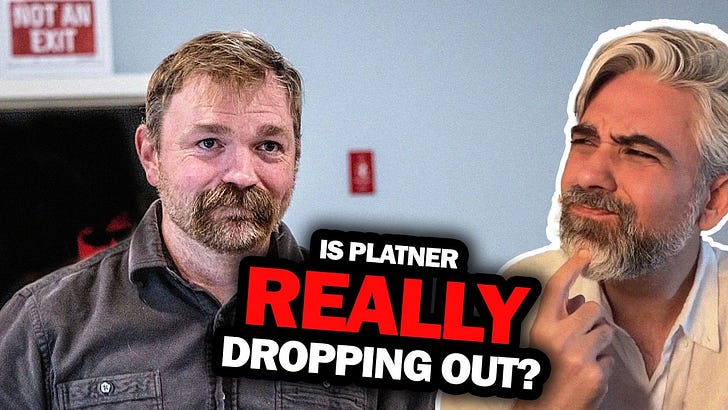
Is Platner REALLY Out? The Arizona Congressman Story You Won't Believe (with Juliegrace Brufke)
1w ago00:55:45Tap to summarizeGraham Platner is out… but is he? Last night in Maine, he released an 11-minute video that savaged the Democratic establishment and the progressive establishment. He blamed everybody but himself for why he’s suspending his campaign, saying all of his resources were taken away from him. The people who didn’t fight for him — Ro Khanna, Bernie Sanders, Hasan Piker — all wound up in the blast radius.Everybody wanted Platner to be a lot more conciliatory. He was not. He was forceful. He took what he wanted. But here’s the big question: you can’t declare bankruptcy like Michael Scott. You can’t just walk into the office and yell, “Bankruptcy.” You need to file paperwork. So even though Graham Platner suspended his campaign on Twitter, that doesn’t mean his campaign is suspended in real life.Politics Politics Politics is a reader-supported publication. To receive new posts and support my work, consider becoming a free or paid subscriber.He’s telling people he’ll suspend his campaign on Monday. By the way, Monday is when he needs to file by. If Graham Platner gets a little sleepy on Monday and forgets to file, then there’s no replacement. He’s the nominee. That’s something to keep an eye on. Now, full transparency: I don’t believe he’s going to do that. I do believe he’s going to file either then or sooner, and this will eventually blow over. But, still, with this guy, you really never know.So the question becomes: who’s running against Susan Collins? A handful of names are now in the mix, and they’ll essentially be decided at a hastily thrown together state convention sometime in the next few weeks, because Democrats need an answer by July 27th. Troy Jackson tends to be more of the favorite of the progressives. Nirav Shah, the former Maine CDC director, is in the conversation. Dan Kleban, who had initially been running against Platner before dropping out when Janet Mills got involved, is back in a big way. Jordan Wood, Paige Loud, and Shenna Bellows bring up the rear.I don’t know exactly what happens at that convention. Are they all going to debate on one stage? Are they just going to make their pitches and then have a back and forth? I do know this: if you leave it up to the supporters of those people, they’re going to start knifing each other. And if you’re a Democrat trying to take down Susan Collins, that’s the last thing you want. You don’t want this to get fractious.There’s some polling from a pro-Nirav Shah outside group showing Shah up on Collins 47-46, Collins up on Troy Jackson 48-47, and Collins tied with Shenna Bellows 47-47. I don’t know whether that’s a reputable outfit or whether those are reputable polls. What I’ll say is this: if you’re tied with Susan Collins, you’re losing. Platner, before the disaster, was running about eight to ten points ahead of Susan Collins. Now Democrats are looking at people who are tied, and Susan Collins regularly outperforms her polls by six to eight points. So if you’re tied with Susan Collins, you’re losing. Have we seen the last of Graham Platner? Man, I really don’t know.Chapters00:00 - Intro03:52 - Graham Platner09:47 - Trump’s Plane Switch12:40 - Mexico, ICE, and Dems Polling18:55 - Interview with Juliegrace Brufke52:36 - Wrap-up This is a public episode. If you'd like to discuss this with other subscribers or get access to bonus episodes, visit www.politicspoliticspolitics.com/subscribe
Transcribe →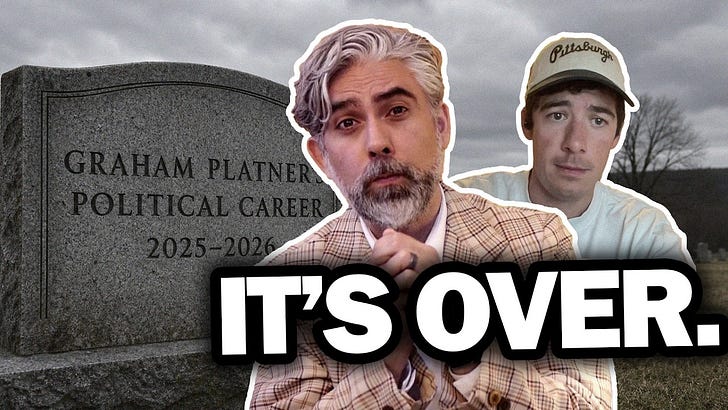
Europe's Ridiculous Divorce from America. It's Curtains for Graham Platner (with Kirk Bado)
2w ago01:02:27Tap to summarizeEuropean leaders are talking about a rupture with America — a de-Americanization of the continent driven by Donald Trump’s demands that NATO members spend more on defense, his transactional view of alliances, and even his threats to annex Greenland. I don’t blame them for being frustrated. Their citizens hate the guy, and they still have to deal with him.Trump is never going to be a weepy internationalist reminiscing about the transatlantic bond forged in blood and mud from World War II through the Cold War. He looks at every relationship as a business deal: What are you doing for me, and what am I doing for you in return? He doesn’t mind doing something for Europe if Europe does something for America, and he views this as one of our more one-sided relationships.European governments are now removing American technology from their systems, adopting European open-source software, and investing hundreds of billions of dollars in their own space firms, artificial intelligence companies, and data centers. Good luck. If Europe were capable of developing that economy under its current system, it wouldn’t be in this situation. The talent exists, but investment is too hard, regulation is too burdensome, and companies must navigate a collection of fiefdoms with their own tax bases and regulatory structures. Europe has a gigantic social safety net, and it can’t grow its way out of it.Politics Politics Politics is a reader-supported publication. To receive new posts and support my work, consider becoming a free or paid subscriber.The numbers tell the story. From the fourth quarter of 2019 through the first quarter of 2026, real GDP grew 15.2 percent in the United States and 6.4 percent in the euro area. In the first quarter of 2026, American GDP was up 2.7 percent year over year, while the euro area managed 0.3 percent. Europe has made more promises to its citizens, created a larger regulatory burden, and left itself more vulnerable to inflationary spikes. If it wants to decouple from America, it will need to start paying its own bills — including the enormous cost of providing for its own defense.Quite simply, Europe is not a serious place. Many of the leaders complaining about Trump might not even be around in 2028. By then, a President Vance could meet a NATO shaped by Nigel Farage, Marine Le Pen, and an elder stateswoman Giorgia Meloni. The political order Europe imagines itself preserving may be disappearing faster than its relationship with Washington.For lack of a better phrase, Europe needs a sugar daddy, and its binary choice is either America or China. Only one of those countries has a shared history with Europe, and it’s us. I understand that Trump is frustrating and isn’t the American president European leaders came to know and love. But he’s the best they’ve got, and the alternative is either unrealistic or worse. There is no great substitute for America, so Europe will ultimately have to take the deal we give it.Chapters00:00:00 - Intro00:03:44 - Graham Platner00:07:29 - Kirk Bado on Graham Platner and More00:35:20 - Andrew Gillum’s Arrest00:45:49 - Trump’s F-35 Push for Turkey00:48:08 - Iran Attacks00:50:08 - Europe’s Divorce from America00:59:56 - Wrap-up This is a public episode. If you'd like to discuss this with other subscribers or get access to bonus episodes, visit www.politicspoliticspolitics.com/subscribe
Transcribe →
Happy Birthday America, You Absolute Classic. The Fate of the Democratic Party (with Jeff Maurer)
2w ago01:27:25Tap to summarizeWe talk all the time about how America is a very young country, and that’s true when you compare us to Europe, Africa, and Asia, where countries are built around lineages, ethnic majorities, and religions. But not America. We’re a melting pot. We’re risk takers. It’s woven into the fabric of the United States that no matter where you are right now, tomorrow can be better than today was, and your life can be better here than it can be anywhere else in the world. You can gain here. You can lose here, too, so you’ve got to be careful and you’ve got to be vigilant. But that lesson is what moves us forward.I keep telling people that, with America, we’ve got a classic. But what does that mean? In the same way your favorite song is a classic, something you can play over and over again and it never gets old. Your favorite movie that you quote with your friends. Something that lives in your head and every time you think about it, you find a new way to think about it. Two hundred and fifty years ago, we declared independence with the idea that we could make one. We could invent our own set of rules that would not only endure, but allow humans to prosper. What we got from it was the United States Constitution. It continues to endure to this day. We argue about it, we amend it, we challenge it, and we defend it because we know it’s worth defending. It’s a classic.Politics Politics Politics is a reader-supported publication. To receive new posts and support my work, consider becoming a free or paid subscriber.While we are a young country, we are old in one regard: we are the longest continuous form of government on the planet. Everybody else comes and goes. You don’t have to when you’re sitting on a classic. I love America. I love talking about our great moments. I love talking about our bad moments. I love learning lessons from the missteps we’ve made, and I love reveling in our success. Ronald Reagan once said that you could live a hundred years in Japan and not be Japanese, or in Germany and not be German, but if you come to the United States, you can be an American. It is a spirit that beats deep within those of us who are lucky enough to have been born here and lucky enough to live at the bleeding edge of technology, culture, and finance. We have our problems, but there is no better country on the planet to identify them and fix them.So this weekend, raise a glass with your loved ones. Grill whatever you want on that grill. Look around in that humid, hot weather, whether you’re by the lake, in your backyard, sitting at your desk, or doing whatever the hell you want. I hope that either physically or in spirit, you’re with your friends and family when you say, “Happy Birthday, America.” You absolute classic.Chapters00:00:00 - Intro00:10:17 - America at 25000:17:05 - Interview with Jeff Maurer00:42:55 - AOC Endorses El-Sayed00:48:54 - SAVE America Dead?00:51:18 - OpenAI’s 5% Plan00:54:37 - Interview with Jeff Maurer, con’t01:21:47 - Wrap-up This is a public episode. If you'd like to discuss this with other subscribers or get access to bonus episodes, visit www.politicspoliticspolitics.com/subscribe
Transcribe →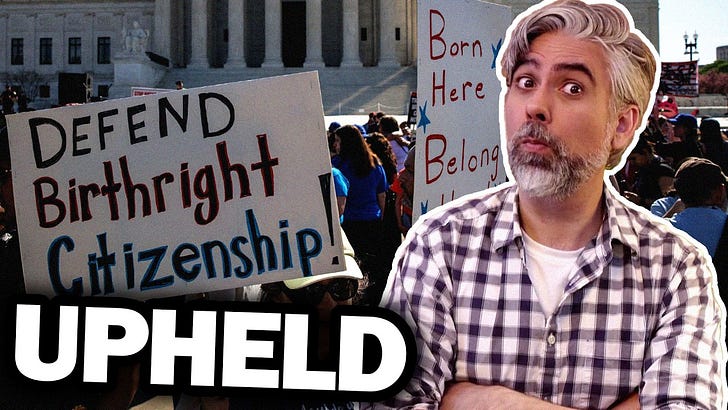
Birthright Citizenship Survives! How America's 250th Birthday Celebration is Going (with Kevin Ryan)
3w ago01:41:01Tap to summarizeThe Supreme Court wrapped up its term with three major decisions, and one surprise that turned out not to be a surprise after all. NPR briefly published a report that suggested Justice Samuel Alito was retiring, which would have handed Donald Trump another Supreme Court appointment, but that story was pulled, leaving us to wonder when that announcement might finally land.The actual rulings were significant enough on their own, though. The Court rejected Trump’s effort to end birthright citizenship for the children of undocumented immigrants and temporary visa holders, effectively settling a legal argument that immigration hawks have wanted decided for decades. They’ve argued for years that the phrase “under the jurisdiction thereof” in the Fourteenth Amendment leaves room to limit birthright citizenship. Trump finally brought that argument to the Supreme Court, and the Court disagreed. At least for now, this feels like settled law, and I’m curious to see where immigration activists go from here.Politics Politics Politics is a reader-supported publication. To receive new posts and support my work, consider becoming a free or paid subscriber.The Court also upheld Idaho and West Virginia laws banning transgender athletes from women’s and girls’ sports. The ruling says Title IX permits sex-separated teams based on biological sex, and while the liberal justices wanted a narrower constitutional review, they agreed on the Title IX question. It feels like this issue has reached a legal endpoint. It’s remarkable that Title IX has become the vehicle for defending these policies, but I don’t see much room left for this fight in the courts.The final decision struck down federal limits on coordinated spending between political parties and candidates, ruling that the caps violate the First Amendment. Republicans are understandably celebrating because the National Republican Senatorial Committee brought the case, while Democrats are warning about billionaire influence and corruption. I tend to think the real victim here is the political middleman. Most of this money was getting where it wanted to go anyway. People donate to party committees because they want those organizations directing resources into competitive races. If you’re worried about billionaire influence, I think the darker corners of campaign finance remain a much bigger issue than the official party committees.Meanwhile, the national media has finally caught up to something I’ve been talking about for weeks: gas prices keep falling even though every expert expected the opposite after the war with Iran began. I first noticed it at my local gas station in Austin, and it didn’t line up with the conventional wisdom that prices shoot up like a rocket and come down like a feather. Now that same question is being asked everywhere. National gas prices have fallen for five straight weeks, crude oil has drifted back into what I’d consider a normal range, and we’re steadily moving away from the price spike that followed the conflict. Trump is even publicly pressuring retailers to get prices down to $2.50 a gallon, although it’s pretty obvious he’d be thrilled just to get them back near $3.The diplomacy behind all of this is getting more interesting. Iran launched drones at supertankers over the weekend, the United States responded with strikes on missile sites near the Strait of Hormuz, and shipping resumed. At the same time, the Trump administration appears to be running a good cop, bad cop strategy. JD Vance has focused on keeping negotiations alive, while Marco Rubio’s trip through the Gulf helped produce an Israel-Lebanon agreement tied to a broader deal with Iran and expanded shipping options through Oman. If crude oil keeps falling despite all of that, then the question I can’t shake is the same one I’ve been asking for weeks: what exactly is Iran’s leverage? If they’re negotiating denuclearization and they can’t keep energy prices elevated, then I need somebody who understands the Iranian system better than I do to explain where the leverage actually is.Chapters00:00:00 - Intro00:03:21 - Tom Kean00:06:41 - Supreme Court Decisions00:12:17 - Iran and Gas Prices00:24:28 - Interview with Kevin Ryan00:46:57 - Colorado Primaries00:54:29 - House of Representatives00:57:46 - Interview with Kevin Ryan, con’t01:36:37 - Wrap-up This is a public episode. If you'd like to discuss this with other subscribers or get access to bonus episodes, visit www.politicspoliticspolitics.com/subscribe
Transcribe →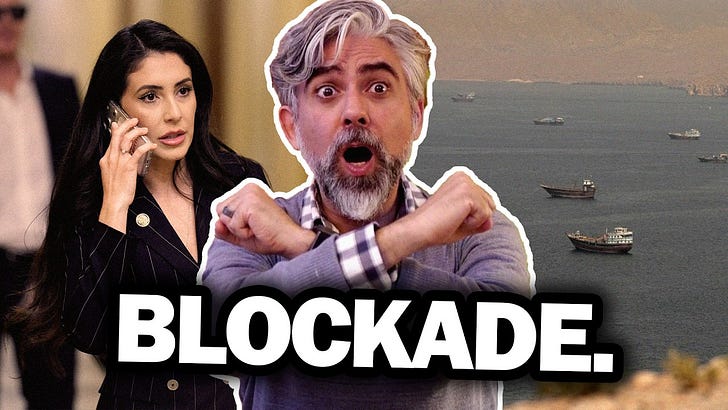
A Tale of Two Blockades! What the Hell is Going On in the UK? (with Tom Merritt)
3w ago01:10:30Tap to summarizeWhat should have been a bipartisan housing bill touting affordability has instead become a fight over the Save America Act. Representative Anna Paulina Luna is leading a House conservative blockade, freezing routine procedural votes until the Senate takes up the Trump-backed elections bill. The problem is that the Senate has no path forward. The bill doesn’t have the votes, and the Senate isn’t about to let the House dictate its agenda. In the meantime, House Republicans are unable to move other priorities, including appropriations and next week’s defense policy bill.Luna’s leverage comes from one place: Donald Trump. The president canceled the planned signing of the bipartisan housing bill, saying he would not move forward until the Save America Act passes. House Republicans believe Luna’s close relationship with Trump is what’s keeping the blockade alive. Mike Lee has also pushed Trump to hold the line, arguing that Republican voters need something to get excited about before the midterms and that the Save America Act is that issue.Politics Politics Politics is a reader-supported publication. To receive new posts and support my work, consider becoming a free or paid subscriber.The divide inside the Republican Party is becoming clearer. Luna, Lee, and the hardliners argue that if voters gave Republicans the White House and both chambers of Congress, they expect them to fight for election legislation, not immediately explain why it can’t pass. The Senate’s answer is that the bill doesn’t have sixty votes. Their view is that Republicans can either spend weeks arguing over a bill that cannot pass or move on to things they can actually accomplish.I think this has been mishandled by both Speaker Johnson and Leader Thune. Whether or not the entire Save America Act could ever get sixty votes, there are pieces of it that are broadly popular with the American public, particularly voter ID provisions. Those could have been broken out and forced into separate fights. Instead, Republicans have backed themselves into a corner where the House is frozen, the Senate has no incentive to move, and everyone is arguing over tactics instead of making progress.My expectation is that Trump ultimately signs the housing bill. This feels like walking away from the table before signing in the hope of getting something else. He wants movement on the Save America Act. I just don’t think he’s going to get it.Meanwhile, Iran's Revolutionary Guard reportedly struck the Singapore-flagged cargo ship Ever Lovely as it transited the Strait of Hormuz, raising new doubts about the U.S.-Iran memorandum of understanding and the security of commercial shipping through the waterway. No casualties were reported, but the ship was damaged and the International Maritime Organization paused evacuation efforts while reassessing security. My biggest question isn't whether the memorandum itself is good or bad. It's whether any agreement can actually be enforced if there isn't one clear center of leadership in Iran. I honestly don't know who's making the calls, and I’m not sure if anyone else really has a good idea either.Chapters00:00:00 - Intro00:02:57 - SAVE America Blockade00:11:54 - Iran00:14:16 - Asylum Ruling00:16:29 - James vs. Mamdani00:19:52 - Interview with Tom Merritt01:06:40 - Wrap-up This is a public episode. If you'd like to discuss this with other subscribers or get access to bonus episodes, visit www.politicspoliticspolitics.com/subscribe
Transcribe →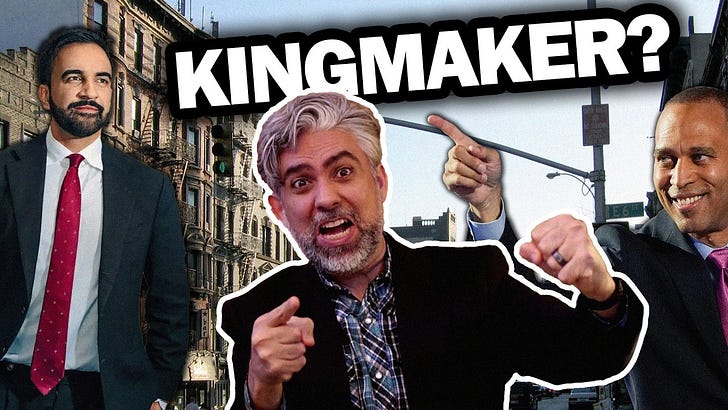
JEFFRIES vs. MAMDANI! NY-12 Heats Up the House! Digging Into the Anthropic Debacle (with Andrew Mayne)
4w ago01:48:02Tap to summarizeAll eyes are on New York. The congressional primaries happen tonight, and in a city this Democratic, many of these races will effectively decide who heads to Congress. What I’m watching is a battle between Hakeem Jeffries and Zohran Mamdani. Mamdani is flexing. We’re going to see exactly how much of a kingmaker he is in New York City. Jeffries is backing incumbents like Dan Goldman and Adriano Espaillat, the chair of the Congressional Hispanic Caucus. Mamdani is backing candidates including Brad Lander and Darlisa Avila Chevalier. The big question is whether Mamdani’s endorsements can translate into wins, especially against somebody as entrenched as Espaillat.The race that really has my attention, though, is New York’s 12th Congressional District. Jerry Nadler is retiring, and what has followed is an absolute clown car of a race. Micah Lasher would be my favorite to win, but he’s the least interesting candidate in the field. George Conway, once one of the chief architects of turning the Monica Lewinsky scandal into the political force that it became and later one of the most notable Never Trump Republicans in America, is running as a Democrat. Jack Schlossberg, John F. Kennedy’s grandson, is also in the race. And then there’s Alex Bores, a New York Assembly member who has become the main character of this contest thanks to his relationship with AI.Politics Politics Politics is a reader-supported publication. To receive new posts and support my work, consider becoming a free or paid subscriber.The polling has been all over the place. Early on, Schlossberg led thanks to the Kennedy name. More recent polling has Lasher ahead, with Bores close behind and a huge chunk of the electorate still undecided. That’s important because Bores has become the center of one of the strangest political fights I’ve ever seen. Roughly $26 million has poured into this House race because of his support for the RAISE Act, a proposal to regulate artificial intelligence at the state level.The two major companies in artificial intelligence, OpenAI and Anthropic, have very different views on how to regulate AI. A super PAC supported by OpenAI leadership in a personal capacity spent money attacking Bores, arguing that splintered state regulations would hurt the industry. Anthropic-aligned groups responded by spending even more money. Do they support the RAISE Act? Who knows. They want OpenAI’s effort to fail, and that’s what makes fight this so unusual. All of this is far less about Alex Bores and more about two AI companies using a congressional primary as a venue for a much larger argument.I know politics, and I understand the influence of super PACs. I’ve never seen a personal beef quite like this one. Anthropic hates OpenAI, and it’s not a secret. Their CEO, Dario Amodei, does not believe OpenAI’s CEO Sam Altman is trustworthy. Anthropic’s view is that it needs to out-innovate OpenAI and become the market leader. At the same time, I think the anti-Bores effort made strategic mistakes. The ads were so ham-fisted that they gave him life he otherwise would not have had. The spending has even become controversial inside OpenAI. And tonight’s the night we find out whether any of it even mattered.Chapters00:00:00 - Intro00:05:34 - Jeffries vs. Mamdani00:10:04 - NY-1200:20:50 - Update00:22:00 - Keir Starmer00:26:50 - Israel00:31:35 - Congress00:34:29 - Intro to Attention Mechanism00:38:16 - Attention Mechanism with Andrew Mayne01:43:58 - Wrap-up This is a public episode. If you'd like to discuss this with other subscribers or get access to bonus episodes, visit www.politicspoliticspolitics.com/subscribe
Transcribe →
Can Republicans Hold the House? Checking In with Midterm Primaries (with Kirk Bado)
Jun 1801:16:54Tap to summarizeRepublicans are now arguing that their aggressive mid-decade redistricting campaign could preserve their House majority even in an environment where history is usually not on their side. According to a new memo from the National Republican Congressional Committee, newly redrawn maps have reduced the number of competitive districts and forced Democrats to compete in more Republican-leaning territory. Democrats dismiss that analysis, arguing that strong special election results and voter dissatisfaction with President Trump still favor a House takeover. My gut is still that Democrats will take the House. I do think it’s going to be closer than people think, if just because we’re in an intensely polarized country.Republicans are still looking for the why. That’s what they haven’t found yet. Why am I excited? Historically, at least in the Trump administration, it has been things like immigration. But you can’t run the next election on the thing you solved in the last election. I know there are a lot of frustrated conservatives who say we should be talking about the fact that we closed the border. What have you done for me lately? That is the refrain from voters. Republicans are going to gin up the culture war, and they’re going to point at Democrats and say they’ve learned none of their lessons. Turning the keys back over to them is not going to get you anything. It’s going to get you more impeachments, more nonsense, and less of what you want. Democrats, meanwhile, will say we have an out-of-control oligarch president and we need some kind of emergency brake, so give us back control of the House.Politics Politics Politics is a reader-supported publication. To receive new posts and support my work, consider becoming a free or paid subscriber.With gas prices continuing to fall, it’s not crazy to think Republicans could find some footing. The national average fell below four dollars, according to AAA. A month ago it was around $4.50. We are looking at a collapsing gas price. We have been told throughout the history of commodities that gas shoots up like a rocket and falls like a feather. We are seeing it fall pretty quickly. If the price of a barrel returns to the levels we saw before the war, now that the memorandum of understanding has been signed and there is free flow of oil through the Strait of Hormuz, you’re going to see lower gas prices. That’s usually what people rely on, and it’s also the hedge against inflation.Cheap gas had always been the Trump administration’s hedge against tariff inflation. The argument was that while you might pay more on imports, gas would remain extraordinarily low. Obviously that promise was broken with the Iran war. Now it seems that we are at least in some phase of calm and negotiation, a controversial one. My point of view on any American activity in the Middle East—some may even say adventure in the Middle East—is that it almost always ends with America having to tell Israel no. Israel is usually very excited about having us in the region because, in general, we agree with Israel on most everything that happens in the Middle East. But they will always want us to do more, and eventually we usually have to tell them we are not going to do everything they want. That is just the way I understand the region.Is this memorandum of understanding wise? I read the text that was released yesterday. It’s a pretty big give to allow Iran to sell oil. It’s going to help the gas price, but it is a pretty big give. The carrots we are offering are big and juicy, but they are not promised up front. Everything is contingent on what happens from here. For Republicans, the best-case scenario is relative economic calm and Donald Trump being seen as a game-changing president that people might not always agree with but who is moving things forward. If we’re talking about jobs numbers and things that are forward-facing, Republicans are probably winning the argument. If we’re talking about side issues and distractions, Democrats are winning the argument. I still think it’s going to be very, very, very hard for Republicans to keep the House. But again, this is a very polarized country, and the biggest thing Republicans need is a reason to get their people excited.Chapters00:00:00 - Intro00:01:57 - Republicans and the House00:12:19 - Obama00:15:51 - Thomas Kean Jr.00:19:36 - Iran00:24:43 - Kirk Bado on Primaries01:11:10 - Wrap-up This is a public episode. If you'd like to discuss this with other subscribers or get access to bonus episodes, visit www.politicspoliticspolitics.com/subscribe
Transcribe →
A Memorandum of Misunderstanding? Anthropic vs. the US Government, Round Two (with Maria Curi)
Jun 1601:15:34Tap to summarizeThe memorandum of understanding between the United States and Iran was apparently signed over the weekend, but the text remains a mystery to most. Donald Trump says he’ll release it and even read it himself so nobody can misunderstand it. If it’s such good news, though, why not put it out right now? Israel isn’t a fan of it, nor are those who believe we’ve abandoned the Iranian people by making a deal with the IRGC. At the same time, there may be a silent majority that cares less about the politics and more about the price at the pump. And that’s what caught my attention.Since the beginning of May, with Iran closing the Strait of Hormuz, gas prices in the United States have fallen. Not by a little, but by a lot. The national average has gone from roughly $4.50 a gallon to $3.50. That happened while the strait was closed and before any memorandum of understanding was announced. The White House wasn’t bragging about it. They weren’t loudly telling Iran that the closure wasn’t working. That made me think something else was going on.Politics Politics Politics is a reader-supported publication. To receive new posts and support my work, consider becoming a free or paid subscriber.After digging through it, I’ve been able to dig up a few explanations. The most public, I’d argue, was the Strategic Petroleum Reserve. The Department of Energy released more than 53 million barrels as part of a broader international effort, bringing the reserve down to its lowest level since 1983. There were also reports that the United States was helping move oil out of the Gulf using some of the same techniques Iran has historically used to evade sanctions. American production remained high. Every hint of a peace deal pushed oil prices lower. Global demand softened. China sharply reduced its purchases on the open market. Alternative routes around Hormuz became more important. Gasoline inventories improved. All of it pushed prices down.If I rank the reasons, peace-talk optimism sits at the top. Strategic reserve releases bought time. American-supported workarounds moved real barrels. Demand destruction, especially with China stepping back, reduced pressure. Improved gasoline inventories helped. Some of the more speculative theories include sanctions waivers for Iranian oil, greater tolerance for shadow-fleet shipments, and alternate export routes making Hormuz less decisive than Iran hoped.What stands out is that there were more American incentives to get to the table than Iranian ones. The Strategic Petroleum Reserve is a temporary band-aid. Smuggling oil out of the Gulf is risky. Every day the Strait of Hormuz remained closed carried economic and military risks. That helps explain why the White House wanted a deal. Iran had incentives too, especially if China was no longer buying at previous levels, but the balance of pressure appears different than many expected.My assumption remains what it has been for weeks: there are multiple power centers inside Iran, and the biggest question is whether any deal can survive them. The Ayatollah is gone, much of Iran’s leadership structure has been shattered, and the IRGC itself appears divided between factions willing to make a deal and hardliners who want to keep fighting. The memorandum of understanding may give us a clearer picture when we finally see it. Until then, the biggest question isn’t whether a deal exists. It’s whether anyone on the Iranian side can actually enforce it.Chapters00:00:00 - Intro00:02:38 - Iran and Gas Prices00:31:47 - Update00:32:04 - UFC 250 Terrorism Plot00:37:46 - Russia-Ukraine00:39:48 - Primaries00:42:48 - Interview with Maria Curi01:11:46 - Wrap-up This is a public episode. If you'd like to discuss this with other subscribers or get access to bonus episodes, visit www.politicspoliticspolitics.com/subscribe
Transcribe →