Loading summary
Transcript55 lines
- [00:00]
A
This message comes from NPR sponsor Capella University. Interested in a quality online education. Capella is accredited by the Higher Learning Commission. A different future is closer than you think with Capella University. Learn more at capella. Edu.
- [00:21]
B
At this year's Sundance Film Festival, we watched a ton of movies and we're recommending some of the best things we saw. This includes a thrilling adventure film starring Ethan Hawke, a quiet romance with Chris Pine, and quite possibly the best documentary I will see all year. I'm Aisha Harris. Joining me today on NPR's Pop Culture Happy Hour is Culture Desk correspondent Mandalit Del Barco. Welcome back, Mandalit.
- [00:44]
C
Thank you so much.
- [00:45]
B
Great to have you. And also with us is freelance film critic and programmer Monica Castillo. Welcome back to you too, Monica.
- [00:51]
D
So glad to be here.
- [00:52]
B
Yes, it's great to have you as well. So, you know, this year was an especially momentous one for the Sundance Film Festival. It was the first without its founder, Robert Redford, who died last year. It was also the last to be held in Park City, Utah. The fest is going to relocate to Boulder, Colorado, next year. So there was definitely a sense of nostalgia amidst all of the excitement. A lot of remembrances of all the years that Sundance Film Festival has been around and in Park City now. Speaking for myself, it was also really hard to ignore that while all of this was going down, unrest in Minnesota and across the country was in full effect due to the escalated presence of Immigration and Customs Enforcement. Alex Preddy was killed by federal agents on day three of Sundance, and there was at least one protest against ICE that took place in Park City afterward. Also on top of all of this, a man was arrested for assaulting Florida Congressman Maxwell Frost at a Sundance party. And on social media, Frost said the man yelled racist slurs and said President Trump was going to deport him. So, yeah, the vibes were kind of all over the place. But as always, there were movies. I'm excited to talk about some of our faves, the ones we suggest listeners should definitely keep an eye out for as they hopefully, fingers crossed, get wider release in the coming months. So, Monica, I'm gonna start with you and your pick stars. I think a favorite of ours over here at PCHHH, Mr. Ethan Hawke. Tell us more about it.
- [02:19]
D
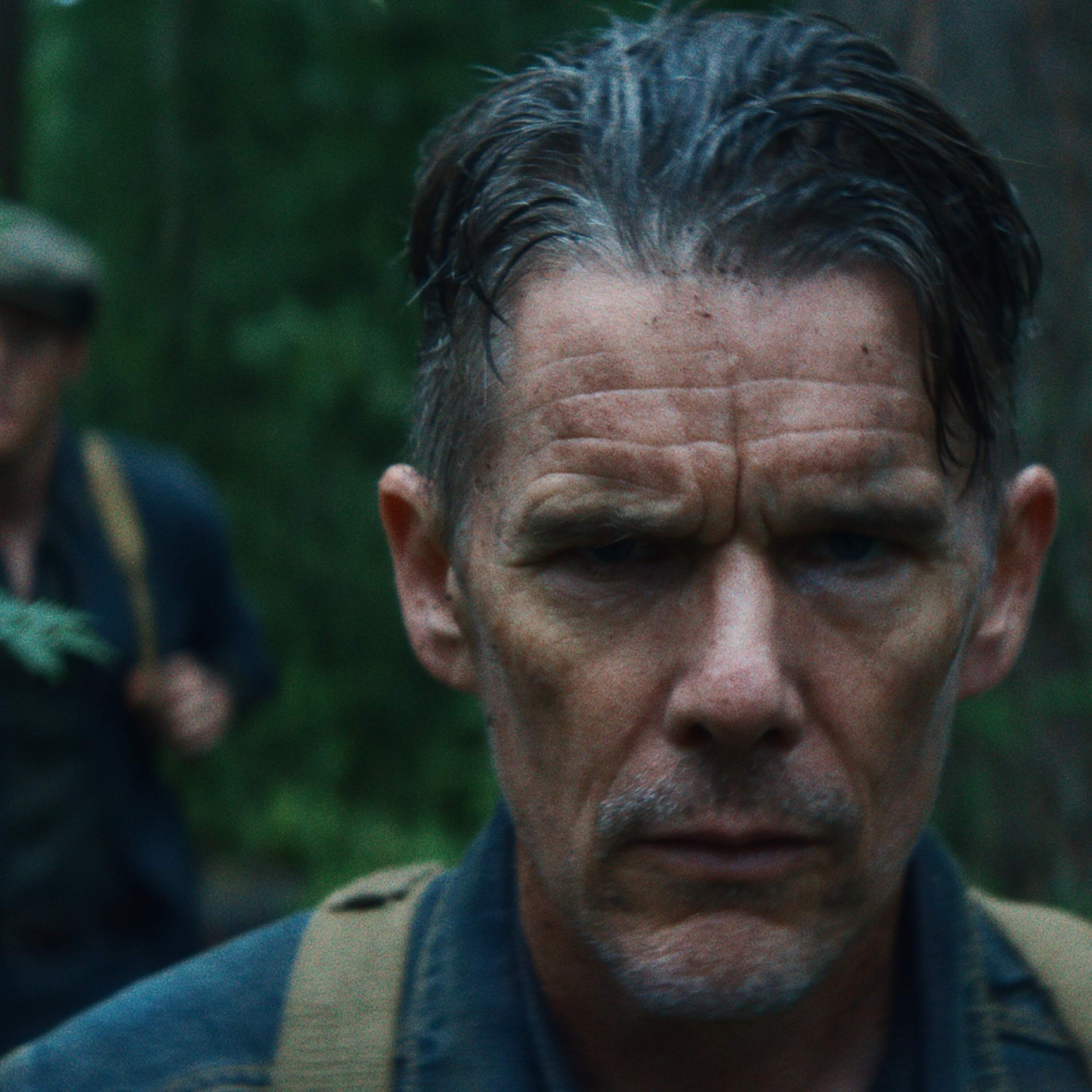
Oh, yes, and I'm so thrilled to report that Ethan Hawke has done it again. It's another great performance. So the Wait is directed by Patrick McKinley. It's his feature film and it follows Ethan Hawke as a down on his luck dad in the Great Depression. He ends up in A prison camp under the rule of a corrupt warden played by Russell Crowe. Also great performance. And he offers him the chance to get out of this prison camp early if he does this incredibly illegal, clandestine operation to steal gold for, you know, some other nefarious purposes. But of course, you know, he's weighing that against staying in the prison camp and potentially losing out on custody of his daughter or potentially Ethan Hawke's character getting out in time to rescue her, the only family that he has left. So it's a really intense journey. I've kind of compared it to the Wages of Fear and Sorcerer, but set against the backdrop of this gorgeous Pacific Northwest, kind of reminded me of last year's Sundance hit Train Dreams, where it's very beautiful, but man, is it dangerous.
- [03:27]
B
Yeah.
- [03:29]
D
So it was probably the most action packed movie I saw over there. Beautiful cinematography, beautiful acting. I also wanted to shout out Julia Jones, who plays the character of Anna, who also joins Ethan Hawke's character and the other men he joins along the quest. I was so smitten with it. I couldn't believe that it was such a thriller.
- [03:48]
B
Yeah, I got a chance to see this as well, and it is very fun. It's weird to say it's a very fun time of the movies. It feels like a throwback to older film. You said Wages of Fear, but I can also see something like Treasure of Sierra Madre, like that kind of thing where it's just like people coming together and the wilderness and the hostility of the wilderness, but also the hostility of greed and other people. You're right. The performances here are just really great. And it's so, so intense.
- [04:15]
D
It's so intense.
- [04:16]
B
Yeah, yeah, yeah.
- [04:18]
D
Man versus nature versus man.
- [04:19]
B
Yes, absolutely. Well, that is the wait. And I think Monica and I both really enjoy this mandali. I'm very curious to hear more. Your first pick here. Tell us more about it.
- [04:31]
C
Well, my pick is the Friends House is Here. It's a film about two underground artists in Tehran. They're best friends. One works in an art gallery and she leads an improv theater troupe. And her friend is a dancer who posts videos of herself dancing in front of famous monuments that are under surveillance by the regime. And the real life actresses in the film are also an improv actress and a dancer who posts on social media of herself dancing where she's not supposed to. And the film is all in Persian. So this is a fascinating look at the rebellious generation of artists in modern Iran. And they've lived through war and government repression, but they just want to have A free life, an open society. But they're living in a place where the government has cracked down and even killed dissenters. It's not really a dark film. It's more of a joyous film with a message that if you live freely, it's an act of resistance. And Aisha, what I think is also remarkable is what it took to get this film made. I spoke to the writers, directors, Hossein Keshavarz, he grew up in New York and New Jers and Maryam Attai, who was born in Iran. And they told me that they had to shoot most of the film in secret.
- [05:37]
B
Yeah, I mean, this is a common thing we're seeing, right? A lot of that is similar to the way Jafar Panahi has had to was able to make. It was just an accident. And yeah, Iranian filmmaking can be dangerous because of the censoring and all of the things that the government has over them. So it sounds like this has very riveting story, but also the story of the movie itself sounds really, really fascinating. I haven't gotten the chance to check it out yet, but it's definitely on my list because I've heard quite a few people talk about how good it is. So that is Mandalit's first pick. The friend's house is here. So we're gonna move on to my first pick. And this one is a bit of a turn from the previous two. It's way more quiet, a little bit more intimate. And it is Carousel, which is directed by Rachel Lambert. Lambert actually had, a few years back, a movie also that produced at Sundance called Sometimes I Think About Dying, that starred Daisy Ridley and that movie. It was also very quiet, but it had like a little bit of a quirkiness to it, like kind of off kilter vibes. Carousel, her new film here at Sundance, is more of like a throwback, I think, to the sort of intimate adult romantic dramas that we used to have so many of, like in the 70s and the 80s and the 90s you have Chris Pine, who maybe it's just because of the last year and Robert Redford's passing, but like in this movie, he's giving me serious Robert Redford vibes, like circa, like the Way We Were. And Jenny Slate is also here and they're both basically playing former childhood friends. They were at one time also romantic partners and they reconnect after Jenny Slate's character returns to their hometown and they attempt to make it work again. That's it, that's the premise. But my goodness, the chemistry between these two people is off the charts, whether they're, you know, tentatively sort of embracing each other or arguing about each other's flaws. Like, it has all the things that I kind of miss and want. And I love the performances and it's just a really nice, like, quiet movie. Mandali, I think you also had a chance to check this out a little bit, right?
- [07:49]
C
Yeah, yeah. It was a very quiet film. The pace was like a kind of a welcome to all the madness that's going on in the world.
- [07:56]
B
Yeah, yeah. It also has some really nice performances from Sam Waterston and Katey Sagal. And I hope just more people get a chance to see it because it is kind of just a nice little throwback. So that is carousel. And when we come back, we're going to have more of our favorite picks from Sundance.
- [08:13]
E
This message comes from BetterHelp. February is full of flowers, candy and lots of relationship talk. It can feel like everyone has it all together in their love lives, but the truth is they're still figuring it out. And whether you're married, dating or prioritizing being single, just remember you're right on time. Therapy can take the pressure off and help you feel lighter. Just a little outside perspective from a professional can lead to new understanding and a lot of progress. Visit betterhelp.com NPR for 10% off.
- [08:46]
A
This message comes from LinkedIn ads. One of the hardest parts about B2B marketing is reaching the right audience. That's why you need LinkedIn ads. You can target your buyers by job title, company role, seniority and skills, all the professionals you need to reach in one place. Get a $250 credit on your next campaign so you can try it yourself. Just go to LinkedIn.com nprpod that's LinkedIn.com nprpod Terms and conditions apply only on LinkedIn ads.
- [09:17]
E
This message comes from Warby Parker. Prescription eyewear that's expertly crafted and unexpectedly affordable. Glasses designed in house from premium materials starting at just $95, including prescription lenses. Stop by a Warby Parker store near you.
- [09:32]
A
This message comes from Lisa from Night one. You'll feel the difference. Premium materials that deliver serious comfort and full body support. Go to Lisa.com for 25% off mattresses. Plus get an extra $50 off with promo code. NPR.
- [09:50]
B
All right, we're back and we're going to talk about our final picks from Sundance 2026. And I'm going to go next again. So my pick is Once Upon a Time in Harlem. This is probably my favorite movie I've seen at the Festival, hands down, whether documentary or no. Now, this is kind of a movie that's like both old and new. It's from filmmaker William greaves. And in 1972, he basically convened this intellectual gathering of living dignitaries from the Harlem Renaissance. And they all came to Duke Ellington's home, and William Greaves shot them in conversation with one another, just talking, giving these very vivid anecdotes and passionate debates about the cultural movement and how it should be remembered. And at the time, people like the actor Lee Whipper, journalist Jerry Major, visual artist Aaron Douglas, activist Richard B. Moore, they were all still alive. And you're watching them talk about knowing Marcus Garvey about Zora Neale Hurston and actively debating about, like, what their legacy is. And it is just like these very fascinating conversations. Monica, I know you saw it too. Was the experience as fun for you as it was for me?
- [11:03]
D
I'm glad you chose this movie because if you didn't, I would. I adored this movie. It's like one of the rare movies where the credits came up and I'm like, no, no, please keep going. It was just so riveting. And it really feels like you are in a double time capsule. You are hearing about their thoughts about, you know, what's going on in the 1970s, in the immediate aftermath of, like the late 60s civil rights movement. But you're also getting these beautiful memories of the Harlem Renaissance. William Greaves son, David Greaves, who came in and finished his father's film that he shot over 50 years ago, and he was one of, and he adds in examples of poetry and art and photography to immerse you back into what it was like in the 1920s. And it's just so beautiful. It's so enchanting. I felt like I was learning and there's part of me that wants to jump in with follow up questions. And I really could have just kept that party going for hours.
- [12:02]
B
Yeah, it doesn't feel like enough time, but I love that it finally exists. It's sad that it took so long. William Greaves actually passed away, so, you know, kind of was one of his white whale, the thing he wasn't able to actually finish. So the fact that his son David was able to put it over the finish line and just thinking about the way that history now is so under attack and black history especially is being erased, to have this excavated and brought out into the light and see just how relevant so many of the conversations still feel.
- [12:36]
D
So many.
- [12:36]
B
I can't wait for more people to see this.
- [12:38]
D
So, yeah, I already wanna rewatch It.
- [12:40]
B
I know, I know. Me too. I was like, it's so good. Play it again.
- [12:44]
C
Play it again.
- [12:45]
B
So that was my final pick. Once Upon a Time in Harlem. I'm going to move back to you, Mandalit, and tell us about your second pick.
- [12:53]
C
My second pick is American Pachuco, the Legend of Luis Valdez. And I was so happy to see a documentary about Luis Valdez. He's been such an influential and prolific Chicano artist and activist. And as a Chicana myself, I really appreciated seeing his story told. And it's by a younger generation, filmmaker David Alvarado. So if you don't know Luis Valdez, as a boy, he worked in the fields with his family picking fruits and vegetables. And then later he created El Teatro Campesino. That means the Farm Workers Theater. It was a troupe to entertain and inform other farm workers with the United Farm Workers, led by Cesar Chavez and Dolores Huerta, two other key figures in Chicano history. And El Teatro has been around to empower Mexican Americans or Chicanos. Here's a little clip from the film.
- [13:42]
A
The man is a living legend.
- [13:45]
F
Luis Valdez is the Shakespeare of Chicano theater. Luis Valdez attracted a whole new audience with the success of Zoot Suit. Luis wrote and directed La Bamba.
- [14:01]
C
That's a little taste of the work that Luis Valdez has done. He wrote and directed some of the most important Chicano stories on stage and on screen. He wrote and directed Zoot Suit, which was set in the 1940s. And the actor Edward James Olmos played the narrator of that story. He was a zoot suit wearing Pachuco, a cool cat in LA who spoke gen calo, sort of Mexican, Spanish and English slang. And in the documentary, Olmos is back as the Pachuco narrator, which he told me was. He was really happy to reprise that role. And it was also really cool to see what happened when Valdez took his hit musical Zoot Suit from California to Broadway, where the New York just really didn't get it. Valdez made it into a movie, and then, you know, after that, he told the story of the Ritchie Valance, the 1950s rock and roller, in the movie La Bamba.
- [14:51]
B
Yeah, I mean, I didn't get a chance to see this, but I know, Monica, you did. Do you have any thoughts on this, Deck?
- [14:55]
D
Yeah, I also really enjoyed it, and I'd love to hear a bit more about the history behind Luis Valdez's work. I knew obviously, Zoot Suit and La Bamba from the movie side of things, but it was great to See all that archival footage from his earlier theater work, and I almost wanted to get a little bit more because I know he's continued to work since then. I would have loved to have heard a little bit more about his theatrical work since La Bamba, but otherwise, I was riveted. And I also really enjoyed that they brought back Edward James Olmos as a pachuco to serve as the narrator and explainer for the film in the style of his own play, Zoot Suit.
- [15:33]
B
Well, that is a great pick, and this is actually one that does have a distribution plan, at least as of right now. It's supposed to be broadcast on PBS as part of the American Master series later this year in the fall. So that's exciting and something to look forward to. That is American the Legend of Luis Valdez. Thank you. Mandalit and Monica, we're gonna wrap it up with you, and we're gonna stay in the documentary world here and tell us what your second and final pick is.
- [16:04]
D
We love our docs.
- [16:05]
B
Yes, we do.
- [16:06]
D
I also fell in love with Barbara Forever, which is the feature film debut of Bridie O', Connor, who's kind of building on her 2022 short, Love Barbara, which was an interview with Barbara Hammer's partner, Barbara Hammer, the experimental filmmaker who was a pioneering lesbian filmmaker through the 60s, 70s, 80s. Her short mostly told Hammer story through the perspective of her partner. And now in Barbara Forever, we get to hear Barbara's own narrations from interview tape recordings and, you know, her thoughts about her life's work and even a bit about her process as a filmmaker and how she ventured into the experimental space looking for new ways to tell queer stories, how she came to really focus on elevating queer joy, and especially lesbian joy, because that was something that she just didn't see in film, and it was so moving. If you're not familiar with Barbara Hammer's work, like, I'd only seen excerpts of her short films here and there, you know, looking through the experimental film space, But I was smitten with her work afterwards because you get to hear so much of her as an artist, so much of her as a person. I just want to watch everything that she's done. I was so, so impressed. And I really think that has speaks to o' Connor's dedication and tribute to her in this film.
- [17:29]
B
Yeah, I mean, that's the thing about Sundance, right? It's. As much as I always tend to enjoy the dramas and the comedies and whatever, like, the documentaries are like they're bread and butter. They tend to have some ones that really, really stick out and stay with you throughout the rest of the year, even though it starts in January.
- [17:45]
D
Yeah.
- [17:46]
C
And one of the few places you can see a documentary these days, on the big screen.
- [17:50]
B
Yes.
- [17:50]
D
Right.
- [17:51]
B
On a big screen. Yeah. Yeah, yeah. Well, that is Barbara Forever. And yeah, we saw a lot of films at Sundance and we definitely could not include all of our favorites here. So we made a list over at Letterboxd. You can find that@letterboxdetterboxd.com NPRpopculture and we'll have a link to that in our episode description and you can go check it out and see what else we saw and loved there. That brings us to the end of our show. Mandalit del Barco, Monica Castillo, thanks so much for being here. It's always a pleasure to break down Sundance with you both.
- [18:22]
D
Absolutely. Thank you.
- [18:23]
C
Thank you. Hope to see you in Boulder.
- [18:25]
B
Yes. Yes, yes.
- [18:26]
D
Next year in Colorado 2027.
- [18:29]
B
Yes. This episode was produced by Liz Metzger, Carly Rubin, Kayla Latimore and Mike Katseff and edited by our showrunner, Jessica Reedy. Hello. Kamin provides our theme music. And thanks for listening to Pop Culture Happy Hour from npr. I'm Aisha Harris. We'll see you all next time. Evergreen trees are Pacific Northwest icons in journalism. An evergreen story isn't tied to one news cycle.
- [18:55]
E
It goes deep and helps you understand the world.
- [18:58]
B
The Evergreen is also a podcast from OPB about the Northwest. I'm Jen Chavez. Listen to the Evergreen podcast from OPB every Monday, part of the NPR Network.
- [19:09]
F
How could your favorite NPR podcast get any better? Well, what if it had bonus features such as extended interviews and zero sponsor breaks? There is a remarkably easy way to turn that fantasy into reality. It's called NPR. You get perks across more than 25 NPR podcasts while supporting the teams that make them make great podcasts and even greater by visiting plus.NPR.org on Planet Money. We have covered a lot of topics like just try searching something on the Internet and adding Planet Money to the end of it. Tariff prices. Planet Money, that's an episode stop sign War. Planet Money. That too. Alaska Halibut Derby. Planet Money. If you can ask it, we have probably answered it. Planet Money. Listen on the NPR app or wherever you get your podcasts.