Loading summary
Transcript90 lines
- [00:00]
A
This message comes from Capella University. That spark you feel, that's your drive. For more. Capella University's flexpath learning format lets you earn your degree at your pace without putting life on pause. Learn more@capella.edu.
- [00:19]
B
What can be disclosed about Disclosure Day? Well, it finds Steven Spielberg back in Aliens Among Us, sci fi thriller territory, a genre he helped create with Close Encounters. And it feels like a spiritual companion to that night 1977 masterpiece.
- [00:34]
C
Just like that movie, our heroes are humans who are feeling compelled by something they don't understand and they come up against a lot of authority figures trying to keep a huge secret from the public. I'm Aisha Harris.
- [00:46]
B
And I'm Glenn Weldon. Joining us in NPR's Pop Culture Happy Hour is the co host of NPR's Daily Economics podcast, the Indicator from Planet Money, Waylon Wong. Hey, Waylon.
- [00:55]
D
I come in peace.
- [00:57]
B
And also joining us is Jarrett Hill. He's the co author of the book Historically Black Phrases. Hey, Jarrett.
- [01:03]
E
Hey there. I also come in peace.
- [01:04]
B
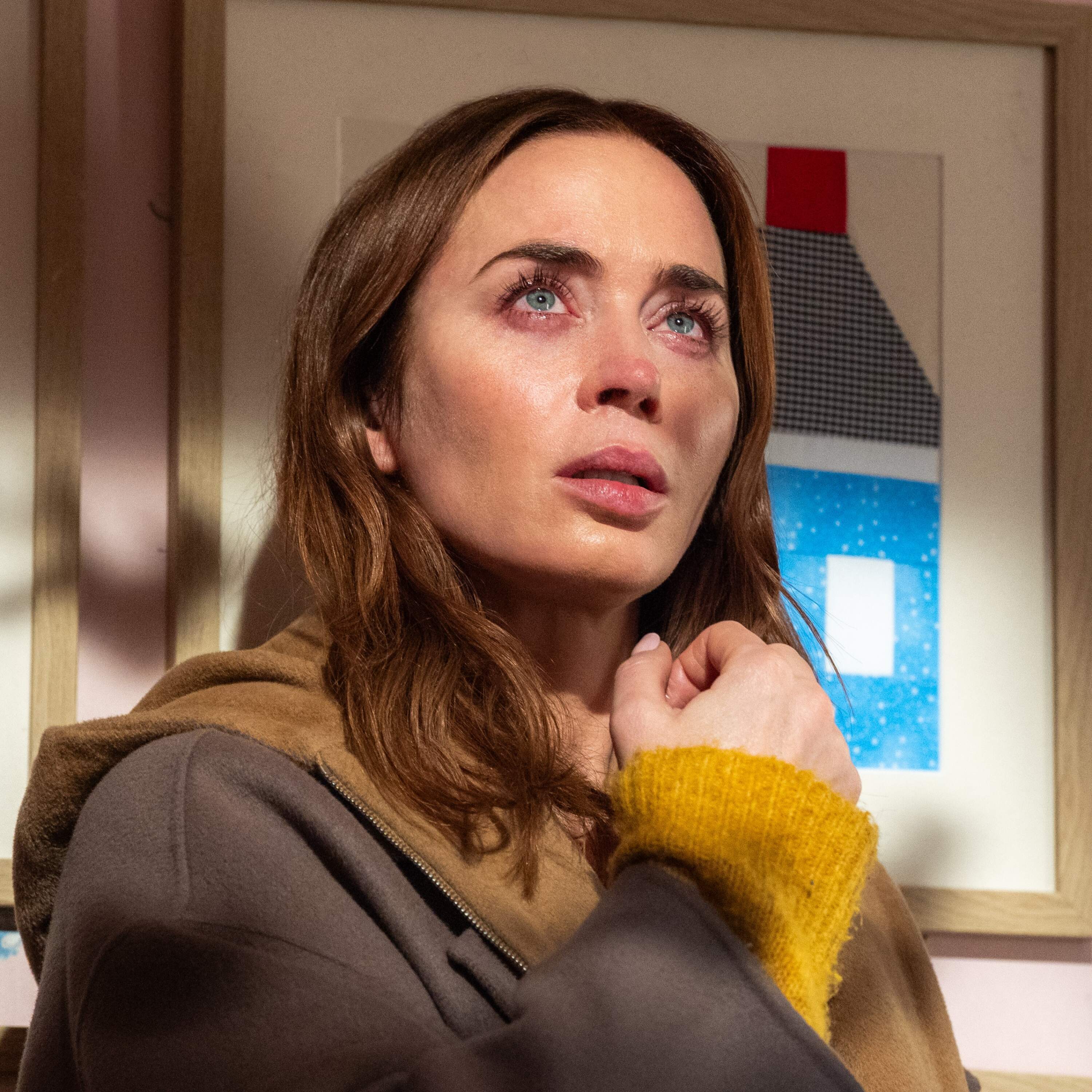
Very cool. I'm glad we're all peaceful. So in Disclosure Day, Josh o' Connor is Daniel, a computer expert who's stolen something from his employer, a sinister shadow organization led by Noah. He's played by Colin Firth. You can tell he's evil because he's trying to kill Daniel. But also his management style is really toxic. Emily Blunt plays Margaret, who does the weather at a Kansas City television station. She suddenly starts to experience strange abilities along with a mysterious compulsion to find Daniel and help him. Guiding both Daniel and Margaret is Hugo, who knows more about what's going on than either of them. He's played by the great and good Colman Domingo. Disclosure Day is in theaters now. Waylon, disclose to me what you think of Disclosure Day.
- [01:45]
D
You know, I mostly liked this movie, but I had to kind of like split my mind into two pieces because I think the film you could also think of in two different ways. Like one is just as a kind of sci fi thriller, paranoid kind of chase type movie, which is a lot of like the first part of it that I really enjoyed, especially as an X Files obsessive from back in the day. I really liked that. And it's a Spielberg movie, so it's gonna be well paced, well shot, well lit. All the things it's gonna be like technically superb. But then there's this other track you can analyze the movie on, which is thematic, emotional stuff that I was not syncing with Spielberg on this one. Often I do. It's important to kind of set expectations and for me, this was not a Spielberg movie where he says something with a capital S that's successful, but it does work from kind of just a purely, like, propulsive, entertaining piece of film with, like, all the thriller aspects of it.
- [02:48]
B
Okay, so summer blockbuster, but maybe not the emotional heft you were looking for.
- [02:52]
D
Yeah.
- [02:53]
B
Okay. How about you, Jarrett? What'd you think?
- [02:55]
E
Glenn? I don't appreciate your recap of Waylon, because that's about what I was gonna say. It's very big, blockbustery movie with cars driving through walls. And, you know, it was fun in that way. I'm grateful to hear I wasn't the only one that didn't fully get it. There were parts of it that I thought were really fun and interesting or, oh, maybe you're saying something that I would be fascinated by here. But, like, other than that, I was like, I don't know exactly when this could have been set for. Some of the things that they choose to do, the news pieces of it. As a person who worked in local news, on air, and in production, I was trying to understand, what world are we living in here? There were some parts of that that were really challenging for me as well.
- [03:40]
B
Okay, I get what you're saying about that. How about you, Aisha? Would you come down on this?
- [03:44]
C
I mean, I can sense that Spielberg and David Koepp, his screenwriter here, are trying to wrestle with our current social political turmoil through this old Spielbergian way of what is out there and, like, what do we want to know and what can we know? And I found a lot of that very compelling. And I think there are moments that really click here, especially when he gets into the realm of, like, what is this idea of the concept and practice of empathy and how much we extend to other people and what that means. The first third of this movie, if you go into it knowing absolutely nothing, especially if you haven't seen any of the trailers, I think it's fun and exciting to be like, where are we going? Because it kind of zigs and then it zags and then it kind of doles out ideas piecemeal. But then once we get to, oh, this is what Spielberg and Cap are trying to say, it becomes very obvious and even a little mushy and corny for even Spielberg in some places where the emotional heft, it felt old timey in a way that I don't think quite melds together well with what I think this moment is that we are currently living in. I also just think there was a lot of things about the execution of the storytelling that just didn't quite become clear to me. I was confused as to why certain characters acted the way they were, what we were supposed to get from those things. So all that to say, I still had a really fun time at the movies. Like, I love hearing John Williams score just pop up and especially during an action sequence. And I'm just like, oh, yeah, this is. They don't make movies like this anymore. Like, it sounds like my childhood. But overall, this just doesn't feel like a Spielberg movie that I will necessarily return to anytime soon. Huh.
- [05:32]
B
Okay. It's so fascinating you guys are talking about the blockbuster aspects of it as hitting more than the emotional stuff. I'm kind of not feeling the blockbuster aspects here. The thing about a Spielberg sci fi film is that there's always some set piece, right? Some moment that after the movie's over, it's indelible. Right? It's a moment that becomes the movie in your head. You got the kid getting abducted in Close Encounters. You got the moon, like the bike across the moon in E.T. those creepy drones in Minority Report and the tentacle in War of the Worlds. I still think about that. This movie mostly evaporated for me on the way home. I guess there is a train meets car sequence that I guess it's gonna stick with. I just haven't seen the physics of that before. And I was like, oh, that's how that would play out. That's interesting. But I was struck again and again by how much work in this film is left for the dialogue to do in the script. That felt unusual to me in a Spielberg film. Cause he's always counted on his imagery to do the heavy lifting. I will say you are dropped into this movie, as you mentioned in Media Res. You don't know what the hell's going on. And at one point very early on, a character says to another, well, was he an experiencer? Because you can't dive on them. And you're like, what the hell does that mean?
- [06:42]
C
I have that in my notes. What is an experiencer? And they never.
- [06:45]
B
Yes.
- [06:45]
D
I don't think they ever explain it either.
- [06:47]
C
Not fully.
- [06:48]
B
They kind of do. But here's the thing. If you're confused by those first opening 10, 15 minutes, just hang on. Cause my man Colman Domingo is eventually gonna show to download an entire PDF
- [07:00]
D
of exposition while wearing an earpiece. That's how you know he's official.
- [07:04]
B
Exactly. So you know, right? And he does it so well. Cause he's called my Domingo. He can't not. But it's not stuff we need. It's stuff that we could have gotten without it. Do you feel me there? Do you say what?
- [07:16]
E
We get into that? No, not exactly.
- [07:18]
B
Okay.
- [07:19]
E
I will agree with you on a couple of things, though, Glenn, here, I wrote down in my notes, car, train, suspension of disbelief. Because. Come on.
- [07:27]
B
Yeah,
- [07:30]
E
like, and I mean, I believe we see it in the trailer, but like the thing that they're doing with this train and this car, I was like, I don't know how I'm supposed to be buying this is happening. The ways that they accomplish a lot of things in this film, I don't understand. There's a moment of a reveal of, like, why I'm doing this. Right. And I was like, that was it. Like, I didn't care. I didn't, like, I didn't feel invested because of the things that they were demonstrating for me. I'm sort of with you here, but I'm kind of on both sides of it.
- [07:59]
B
Okay. There's a moment where the Josh o' Connor character has to sneak across a field.
- [08:04]
D
Yes. That was weird. Sneaking. I was like, don't sneak towards the people. You sneak away from the people.
- [08:11]
E
What are we doing?
- [08:11]
C
Well, but that's kind of the point, right?
- [08:13]
B
I know.
- [08:14]
C
That's what I mean about, like the first, I don't know, third or maybe even half of this movie feeling very strange. And again, you don't understand why these characters do. And to me, that's exciting at first because it feels kind of like an anti mainstream type of movie in that way where it's like, we're not going to explain everything. But it does seem like once we get into, okay, this is what we're trying to be about, and then it winds up trying to be about a hundred different things that don't all really coalesce into something I thought that worked like. So we have Jane, right, who is Daniel's partner, who's played by Eve Hewson. And we learn early on that she used to be a nun and she still has a connection to that world. And she enters with the religious component of this film, the religious themes. She kind of is supposed to carry all of that weight of the religious themes. And then other characters carry the weight of, like, issues with parents or, like, trauma with their childhood. And then there's the truth. There's the psychological thriller, paranoia, thriller aspect of it. But the Jane character I found interesting because the whole point is that they're trying to repress this information. And I love this idea of truth in an age where we can trust nothing, especially AI and all of that stuff. And to put that against religion and also, what does that mean? But then it just kind of fizzles out and doesn't really explore any of those. And I just think that Spielberg, I would think, would have a little bit more to say about that than what I think he says here.
- [09:49]
D
Yeah, I think that the discussions of faith versus. Oh, what would. Knowing that we're not alone due to people's faith. I think it was a little ham fisted. Like this Jane character gives some speeches that I thought were a little bit too speechy for me. I was not as engaged with that aspect of the film, mostly because I didn't feel like it added up to anything kind of cohesive or interesting or new. And in some ways, it felt kind of simplistic to me. You know, Spielberg has been obsessed with aliens for a really long time, right? So if you take this film in conversation with his earlier films, you want it to present like, you know, maybe cohesive thesis or something of like, how is he feeling about aliens in this stage of his life? Right. And it's like, also impossible to escape the meta narrative around Spielberg that he's getting older. So with each film you're like, is this his last one? Is this his, like, final statement about, like, everything that matters to humanity? Oh, my God. It's like all too much. But it's like, if you think about ET Being, you know, like what happens to kids when they encounter aliens. And War of the Worlds is kind of like the ultimate nightmare version of that. Like, what if the whole planet encounters aliens? It goes really poorly. Then you're like, what is this? And I'm like, I guess this is what happens when elder millennials interact with aliens. I mean, I'm an elder millennial myself and like the Emily Blunt character, I am a D lady who does the news. So in some ways, I should have been, like, really hooked into what this movie was saying. But I just wasn't sure that there was enough new ideas here in terms of, like, how do we feel about there being intelligent life elsewhere that is curious about us too? Didn't feel like there was breaking any new ground.
- [11:36]
E
You know, there's an allusion to the aliens being, like, of supreme being nature. And I'm sure that's like the best collection of words to say that. But, like, the way they said it, I was like, wait, what?
- [11:50]
C
They definitely say supreme being. That's for sure.
- [11:52]
D
David Kaplan had done it better.
- [11:54]
E
Yeah, well, and I remember thinking to Myself, like, if I were at home, I definitely would have rewound to rehear what they just said. Cause how did we get here? Like, what are we talking about? I feel like I spend a lot of time thinking about God and religion coming out of divinity school in the last year. And, like, I'm always interrogating these themes for myself as I've, like, left Christianity here recently and, like, am engaging religion in a lot different kinds of ways. And so when I saw this theme happening in the film, I was like, oh, this is interesting. But, like, I never really made any other notes past, like, supreme beings, God, question mark kind of thing. Like, what are we doing here?
- [12:27]
D
I think that speaks to kind of a weakness in the film for sure, because you are someone who is, like, really, like, open and receptive and wants to engage with these things. And it's like this, like, misconnection. Right. So then I'm wondering for people who are gonna go in maybe more skeptical about those kinds of aspects. This is really not gonna, like, do anything for them.
- [12:48]
C
Well, hi. That's me. Yeah.
- [12:50]
B
And that's what the script goes out of its way to attempt to do. It is Jane, the Eve Hewson character, his girlfriend, Daniel's girlfriend, who questions, you know, whether or not Daniel should release this information to the world. Because she says, we've been raised to believe in a supreme being. And now you're saying that there are these other supreme beings. And it's like, whoa, that's not. Who said. Exactly to your point, Jarrett? Nobody said anything about these. They're just different. They're not necessarily supreme. So I don't know why she'd make that leap. And while I'm wondering why she makes that leap, she consults a nun. The nun explains to her, oh, no, we'll put this in this box, and everything's fine. That's what I mean about this movie being over explained a lot and giving us too much information. So that this thing, which is Spielbergian, which is the sense of wonder and awe that just kind of keeps getting shut down. And speaking of getting shut down, like the Colin Firth character, Noah, who runs this evil organization, he should. On paper, he is a villain for the ages. He's doing a lot of nasty things. He's trying to kill Daniel. But when he gets this big confrontation with Hugo, that scene, because, again, of overwriting, it plays out like he's getting a performance review. Hugo keeps complaining that, well, you've been a bad boss and you're dismissive of ideas from the team. And that's like, that's not villain fodder. That's a bad HR meeting.
- [14:07]
E
I do remember thinking, like, you're telling him he's being a bad manager, but he's, like, trying to kill people and hide secrets and chasing people through woods.
- [14:17]
B
You said it better than I did.
- [14:18]
E
But also, you're not nice. It's like, I don't understand what we're talking about. Right. Like, I don't understand what's happening.
- [14:24]
B
You can stand to process feedback better.
- [14:26]
C
Well, that's sort of the sort of gloss that's over this and this sort of. I think it's a generational thing here maybe, where there's this idea of, you know, the Colin Firth character and all these other quote, unquote, bad guys. Bad people who are in this movie who are doing. Were supposed to be rooting against them. But the film eventually does also ask us to have empathy for them in ways that reveal themselves as the plot goes on. And meanwhile, have we even mentioned that apparently World War III is also supposed to be happening at the same time that this is happening? And that just kind of, like, simmers in the background but doesn't really present itself. Like, I kept forgetting that it was even supposed to be happening, except for, like, at one point, there's a scene where people are clearly, like, in disaster preparation mode and they're. They're rushing. But that's another thing that kind of I realized when watching this movie. And I went. I had to look back and kind of glance at Spielberg's, filmography, but I realized that, like, almost all of his films take place either in the past or the future. Rarely do they. Does he make a movie that's, like, relatively contemporary to the time that it comes out? Right. Like, some exceptions might be something like ET Jurassic Park, Close Encounters, but this movie is, like, you don't. I think Jared's already kind of mentioned this, but, like, you don't really get into, is this supposed to be the present day? Because the way that things play out. Religion. Yes, that is one aspect of it that is something that's. Some people would obviously be, you know, if alien life was revealed, it would shatter their whole world. But, like, does that apply to most of the world? Why is this the secret? That is the thing that is just like, ooh, we can't tell people. They can't handle this truth. I guess I just couldn't fully buy into that being such a bombshell. Would our worlds really be shattered? I don't know if mine would really be shattered.
- [16:17]
E
I would also offer, like, as a person who has been a local news reporter, as a person who worked in production in local news, as a person who was like a newspaper journalist in 11th grade. Right. I count those years, mind you.
- [16:30]
C
You should.
- [16:31]
B
You totally should.
- [16:31]
E
Right. Like, I'm thinking about the fact that I've been on social media for 20 years. Right. Like, 20 years I have. I worked in local news in ways over the years. And like, I'm like, I don't even think those jobs exist anymore in some of the roles that I had. Right. And so the idea that we're going to local news, that this is like a big broadcast television moment, it also makes it feel a little dated to. And so I'm like, when is this? What are we talking about?
- [16:56]
D
Yeah, yeah. That all kind of feeds into this feeling that I had that it's a little dated, it's a little old fashioned. And I don't begrudge Spielberg this feeling because he is like this elder statesman and I love him and I love his films. And so it's like, I don't really begrudge him going to this well, but it just was not resonating with me as a person like living in 2026, you know what I mean? And like, it's not just that this idea of the news being the perfect vehicle to kind of spread this information that feels old fashioned, but even the very sentiment that, like, we just need to have empathy and then like, aliens will like, teach us what it means to be human and what it means to relate to each other and stuff. Like, all of that feels a little overly earnest for me, for my current mental state. I just, you know, my 2026 brain cannot really accept these earnest feelings that Spielberg is giving me.
- [17:54]
E
It also kind of connects me to this other conversation a friend of mine has been having with. He is always talking about aliens and he's like, I think we have to stop thinking about aliens looking like some version of humans. We anthropomorphize aliens to give them heads and eyes and arms and legs like we have. And he's like, I don't think we would even know what an alien looked like. And I was like, say more. And he was like, well, you know, like, I think this plant could be an alien. How would you know? He's like, your iPhone could be an alien. How would you know? He's like, beyonce could be an alien. You don't know. And I was like, now, hold on now.
- [18:30]
C
An alien superstar, as it were.
- [18:32]
D
Right, Exactly.
- [18:34]
E
She might be Onto something there.
- [18:36]
F
Right.
- [18:36]
D
Well, she is a supreme being.
- [18:38]
E
Now, if they had started there with the supreme being conversation, I would have got it right.
- [18:43]
D
I'm all I'm for.
- [18:46]
E
I was also thinking about, like, the various different ways we could have seen an alien. Right. Or what that might have looked like or how that could have actually said something more about the message of supreme beings or about empathy or about the times or, you know, any of those things.
- [19:00]
D
Yeah. You could argue that, like, Arrival did that more effectively with how the aliens were rendered. Like, that was really interesting and new. Right?
- [19:07]
C
Yeah.
- [19:07]
D
Yeah.
- [19:08]
B
So are we coming down with this is lesser Spielberg, but it's still Spielberg. So what would you tell people? Are you going to tell people to go out to the movies this weekend?
- [19:16]
C
I think so, yeah. I mean, here's the thing. Emily Blunt is acting her butt off.
- [19:22]
D
Like, oh, she's so good.
- [19:24]
B
She's really good.
- [19:24]
C
Look, I also love Josh o'. Connor. I think he's great in everything I've seen him in, honestly. Like, there's no bad performances here. And that, to me, is kind of what kept me at all invested. Once we got past the first third of this movie, I think people should see it. I'm trying to think of the last Spielberg movie where I was like, I'm upset. I saw that. It probably would have been ready Player One. This is not that movie. This is far less cynical, far less bleak. I think, in a way, and for all of my cynicism and my feelings that this is a little too sweet and a little too mushy, I still had a really good time, so I would absolutely suggest it.
- [20:04]
D
I'm with you. Like, even minor Spielberg is so great to watch. And then you're like, again, we're not gonna get many more Spielberg movies, right? So, like, he's gonna make a movie. I'm gonna see it. It's gonna be great. It's gonna be great. On, like, just, like, a visceral level. I was entertained.
- [20:21]
B
All right, if I can sum up, you know, this is lesser Spielberg, but, I mean, you know, lesser Spielberg is still Spielberg. Coming up, what is making us happy this week?
- [20:31]
F
This message comes from Wise, the app for international people. Using money around the globe, you can send, spend, and receive in up to 40 currencies with only a few simple taps. Be smart. Get wise. Download the Wise app today or visit wise.com Ts and Cs apply. This message comes from LinkedIn ads. Ever invest in something that seemed incredible at first but didn't live up to the hype for marketers. That's impressions. When ads don't create revenue, that's a tough conversation with the CFO. Instead, invest in results your CFO will love. LinkedIn Ads generates the highest roas of all major ad networks. So advertise on LinkedIn. Spend $250 and get a $250 credit. Just go to LinkedIn.com NPRpod Terms and Conditions apply. This message comes from Vintage publisher of Martyr, a novel by Kaveh Akbar. The story of an Iranian poet and his journey to uncover a haunting family secretary, Martyr is a vivid portrait of how people spend their lives seeking meaning in faith, art, and each other. Martyr is now available in paperback.
- [21:41]
B
Now it is time for our favorite segment of this week and every week. What is making us happy this week? Waylon, kick us off. What's making you happy this week?
- [21:48]
D
Well, I am pre gaming for the Odyssey and I, like, could not be more excited about this movie. So in terms of my preparation for the Odyssey, I decided to reread the Odyssey, which I hadn't read since high school when it was assigned. So I picked up the Emily Wilson translation. This is a translation that came out in 2017, and it was the first translation into English by a woman. So that's kind of the hoopla around it. But I had such a great time reading the Odyssey in this translation. The action, it just clocks along. You're like, wow. You're like, everything's so exciting. Parts of it are funny, Parts of it are so violent that now I'm actually a little scared for the movie. I think I'm just gonna have my eyes closest to the too violent for me. There's so many little clever bits and she uses like pretty modern language, but it doesn't feel like try hard modern language. And I just devour this. So I what's making me happy is the Odyssey, the Emily Wilson translation.
- [22:47]
B
Thank you very much, Waylon. That's a great pick. And I'm gonna need to do some homework too, I think. Yes, thank you very much. Jarrett, what is making you happy this week, sir?
- [22:55]
E
Well, I as you were asking us whether or not we should have saw this movie, I was thinking about a show that I listened to called se, the Blackest show about Movies, who was hosted by one of our friends, Treville Anderson and Ray Love Jr. And they always rate movies by whether you should be seated in a theater, whether you should stream it at home, or whether you should skip it. And I thought to myself, like, mm, I could have streamed it right with this film and so I really enjoy the conversations that they have. They're covering all kinds of different films just from a black perspective. And obviously Trevel and I hosted a podcast together. We've written a book together. We know each other quite well. But I've enjoyed seeing them in this format because Trevel is a film critic at heart. They're covering all of these different films and many of them are films I've never seen or wouldn't see otherwise. But for the folks that are out there that really enjoy a film podcast, I tell you to go check out Seated.
- [23:44]
B
Thank you so much, Jared. Subscribed, done and done. Thank you very much. Aisha, what is making you happy this week?
- [23:50]
C
Have I mentioned on this show before that I am a millennial? Yes, I am.
- [23:54]
B
You might have come up.
- [23:55]
E
Wait, what?
- [23:56]
B
What the devil you say?
- [23:59]
C
I know, I read like a Gen Z. What is making me happy this week is Rob Anderson, Are youe afraid of the 90s? Rob Anderson is a very, very uber millennial comedian. His latest standup special, it's so enjoyable. It is the spirited tour through the chaotic, shambolic, and quite conservative pop culture of the 1990s. It's like this lo fi, yet I would describe as like very precisely rendered presentation, complete with clips, animations, musical numbers, some very inspired costume changes and inspired by certain things like the Samantha American Girl doll or the Princess Diana commemorative Beanie Baby, which I did own when I was a child. But yeah, it's just very enjoyable. He is using truly unhinged cultural references to jump off and observe about how the 90s sort of tackled all of these hot button social issues like queerness, drugs, race, all those things. So if you were like me and you are very, very heavily millennial coded or just fully millennial, I think you'll enjoy Rob Anderson's Are youe afraid of the 90s? And it's streaming on YouTube.
- [25:12]
B
Excellent. Thank you very much. Just for the jumpsuits alone, I think it's worth seeing. Thank you so much. All right, what's Making Me happy? Kylie is a three part documentary about the life and loves and career of the great Australian pop singer Kylie Minogue. On Netflix now.
- [25:29]
C
I thought you were gonna say Kylie Jenner.
- [25:32]
D
I would watch that documentary too.
- [25:34]
B
But this also now it is Kylie Minogue now. Yes, it was made with her full participation and no, it does not need to be three episodes long. And it's also weird how much it's devoted to her love life. But in the documentary's defense, she keeps dating a lot of very hot models and actors and musicians. I mean, she dated Lenny Kravitz and Michael Hutchence of nxs, and both of those men are what happens if you pour raw sex into a pair of leather pants. So you know, I'm in. It also spends a lot of time highlighting just how poorly she's been treated by critics over the years, which at first seems self indulgent, but then you get some clips of these dudes being crazily sexist and dismissive in this kind of boring, rock purist way. She gets the last word on them. She also worked with Nick Cave and the Bad Seeds. And Nick Cave. I love Nick Cave. He's just a delight every time he's on screen. It's a very flawed documentary, but especially for Americans who still don't seem to get what the rest of the world gets about Kylie Minogue, it's worth checking out the documentary Kylie on Netflix. And that is what is making me happy this week. And that brings it to the end of our show. Waylon Wong, Jared Hill, Ayesha Harris, thank you so much for being here.
- [26:43]
C
Thank you, thank you.
- [26:45]
B
This episode was produced by Liz Metzger. Hafsa Fathoma and Mike Katz have been edited by our showrunner Jessica Ready at hello. Cremin provides our theme music. Thank you for listening to Pop Culture Happy Hour from npr. I'm Glenn Weldon and we'll see you all next week.
- [27:01]
A
This message comes from Capella University. That spark you feel, that's your drive. For more Capella University's flexpath Learning format lets you earn your degree at your pace without putting life on pause. Learn more@capella.edu this message comes from MitiHealth introducing AgeWell Longevity Care, designed by women for women. Whether you're looking to prevent future health issues or just feel more like yourself, learn more@joinmidi.com that's joinmidi.com this message comes
- [27:34]
F
from Thumbtack Some tasks can feel easy, but home projects can bring second guesses. Is that noise normal? Is that water damage? Who should be called? That's where thumbtack comes in. Just upload a photo or voice note and it uses AI powered search to match with the right top rated local pros. So instead of guessing, there's clarity and confidence. When hiring for your next home project, try thumbtack. Hire the right pro today.