Loading summary
Transcript46 lines
- [00:01]
A
This message comes from Capella University. That spark you feel, that's your drive for more. Capella University's Flexpath learning format lets you earn your degree at your pace without putting life on pause. Learn more at capella.
- [00:14]
B
Edu.
- [00:20]
C
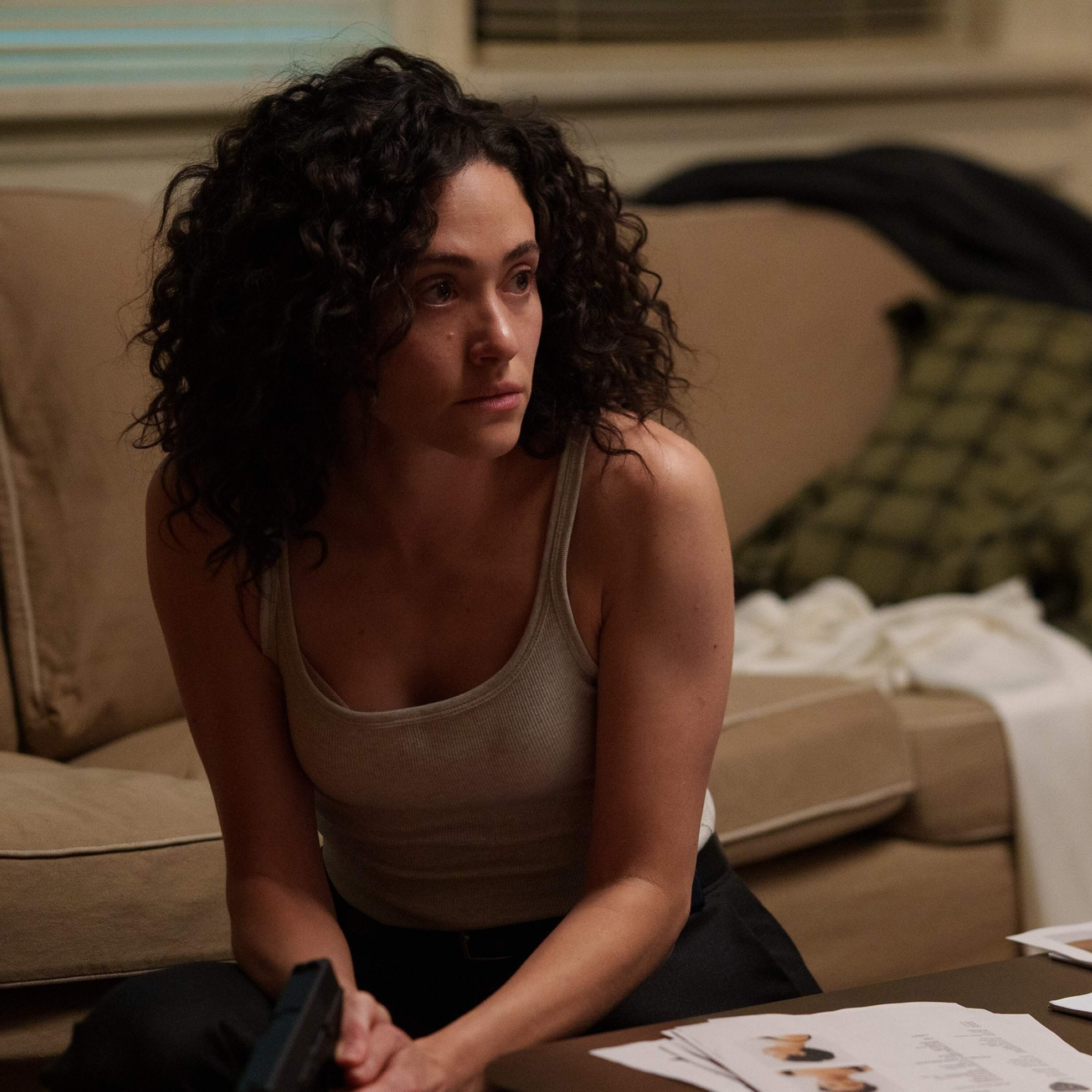
It's not too often you hear about female serial killers, which makes the new show Furious a rarity. It stars Emmy Rossum as a low level FBI agent on the hunt for a young woman who's been targeting prominent, prominent tycoons throughout New York City. The series comes from Liz Meriwether, the creator of New Girl, and the Elizabeth Holmes miniseries the Dropout. And it shows. It's thrilling and twisty the way serial killer dramas usually are, but it's also got a punchy sense of humor. I'm Aisha Harris, and joining me today on NPR's Pop Culture Happy Hour is my co host, Linda Holmes. Hey, Linda. Hello, Aisha. And also with us is Vulture TV critic Roxanna Hadadi. Hey, Roxanna. Welcome back.
- [00:59]
B
Hello. Thank you for having me.
- [01:01]
C
So great to have you here as always. So when Furious begins, powerful businessmen are turning up suspiciously dead. Emmy Rossum plays the troubled FBI agent Alice. She's got a dark past and few allies at work or home. Lola Petticrew plays Catherine, the crafty serial killer wrestling with her own trauma. Both cat and mouse share something in common. They're survivors of violence and of the systems that have failed to protect and support them. Now Alice has to work the case with an assortment of hard worn individuals, including Scoot McNary as Danny, her former partner in the NYPD and closest confidant. And Quincy Tyler Bernstein as Nora, a quirky, jaded FBI agent. Furious is loosely Adapted from the 1987 crime thriller Black Widow, and it's streaming on Hulu and Disney. So, Roxanna, I know that you have reviewed this show. You've also interviewed Liz Meriwether and Emmy Rossum for Vulture. Loved reading those. Everyone should check them out. So I know kind of how you feel about the show, but I really want to hear more about, like, what draws you to Furious.
- [02:04]
B
I think that it is something that you alluded to in your intro, which is the female serial killer to me is such an interesting concept because I think we societally have this obsession with male serial killers. And I'm part of that, right? Like I watched Mindhunter. I love Michael Mann's Manhunter, Silence of the Lambs. Like, we have so many of these sort of stories and I think we have a real fascination with why men kill people, including women. And usually the answer is it's because they hate women. Like, I think it's pretty cut and dry at a certain point. And so I'm sort of fascinated by, like, the oppositional point of that and what makes a woman do these things and what pushes her to that. And I'm not saying that because I think women are, like, naturally less violent than men. I don't want to make a gendered argument, but I think it's interesting because we have so little of it in our pop culture diet. So from a straight fascination point of view, I was drawn in. And then I just think that this is a fantastically constructed show. I mean, it is playing within a genre that we are all incredibly aware of. The cop show, the FBI show, these are all over our televisions. But I think that the writing on this, for me, felt very textured and sardonically funny in a way that I did not expect. And I think the performances across the board are just exceptional. I think Emmy Russum is doing something with Alys that is very unexpected. This is not really a spoiler necessarily, but something I think is very interesting is her character has been a victim of violence. And we see that she is almost incorporated. Incorporated that violence now into her sex life. She's trying to make sense of what happened to her now through the men that she hooks up with. And that's something that I don't think I've ever seen on television before. And that really blew me away in how prickly and thorny it is. Lola Petticrew is doing amazing work. Scoot McNary and his hang dog face is always welcome on my television. That face. So there's just a lot that I went into this thinking, like, the tropes are there. I don't want to diminish, like, the tropes are present, but I think that the show sort of turns them all on their head in a way that I really enjoyed. And I do have to say there is a cathartic thrill in this current moment in seeing evil 1% men get some sort of end point. I don't want to say, like, I'm pro murder, but I think socially, in light of the Epstein Files, I think there is something that the show is tapping into culturally, which is really interesting and fascinating.
- [04:54]
C
Right to that point. Catherine is targeting rich, powerful men who assaulted her when she was a teenager. So, yeah, it's scratching a very particular itch and I think tapping into a lot of the anxieties that a lot of us are feeling at this moment. So, yeah, I can totally relate to that, Roxanna. Linda, you and I have both watched our fair share of police procedurals and maybe even serial killer fare. How did this play for you?
- [05:17]
D
I have very mixed feelings about it. I think that I completely agree with Roxanna about the performances. I think they're all exceptional pretty much to a person. And I think that the way that some of these characters are drawn is really interesting. At the same time, I did not think of this as a serial killer show, in which case, I agree it would feel fresh. I thought of this as a vigilante show, in which case I don't think it feels so fresh. I think if you think of this as an extension, not of something like Mindhunter, but of something like Dirty Harry, Death Wish, stuff like that, you see the show trying to create this, like. But wouldn't everyone want to get violent revenge if something terrible happened to them or someone they loved? Yes, we know that that's the basis of vigilante films. It's also the basis vigilantism. So I think the show is saying something less interesting than it thinks it's saying, which is there is an urge to violence when you've been harmed. Like, yes, that is true. That is what vigilantes are. And I think that because I thought about it in that way, it did not feel particularly like an interesting story to me. I also think it's quite repetitive. In the middle part, I think you see the certain sequences of kind of how Catherine operates repeat over and over. And you kind of know what she's gonna do. And there was part of me that was like, I get it, I get it. I get what she's gonna do. I get that this is gonna be driven by the same stuff. And the last thing I will say is I am just exhausted from every story about, quote, unquote, Complex Women is a story about trauma from sexual violence. I feel like I have seen that now so many times that I need to feel like you have something new to say about that. Because otherwise it feels to me like kind of the pulling of a fairly familiar trope. And I don't care for that as a trope. You know, it's interesting. Cause I, too, have seen this stuff from Liz Meriwether where she's like, you know, what I wanted to think about was what could make a woman a serial killer? Well, it's like, I think a lot of things could make a woman a serial killer. You know, many people experience trauma and do not be serial killers. And many people kill people not because of trauma. You know, I watch Dateline, you know, so I have some mixed feelings about where they're actually coming from with this story. But I agree that the performances are so good. Particularly you made mention of Quincy Tyler Bernstein playing Nora, who is Alice's kind of boss. I think that performance is so cool and so odd and. And it was so welcome because that is a Not a typical law enforcement boss. That is not a typical anything. And it felt so individual that it was always interesting to me to watch her. So I just have deeply mixed feelings about it.
- [08:27]
C
I feel like having heard you both describe it, I would place myself firmly in the middle of both of your reactions, which is that, yeah, I do feel like if this had been, like, a tight six episodes, I think it would have been a bit more economical and would have been able to make the same points it makes, effectively, because the tropes are there. It's like, okay, yes, it is about exploring trauma, but then it's also. There is that sort of, like, desire, I think, that the writers are pulling on of, like, we want to also see this woman, or both these women get some sort of revenge. And so that becomes, okay, how many times are we gonna watch Catherine do the same thing? It's not even like she's doing anything really different every time she does. I was gonna also pick out Quincy Tyler Bernstein here. She was the character that I latched onto the most here. Her sort of dry delivery. She's playing a character who is, like, at once hardened and resigned by the failures of the system, yet still has a little glimmer of a conscience and just enough willpower to keep working the case. I just found that really interesting because out of all the tr, it's the one I don't think we often see in a performance this big and this prominent in the story. Bernstein has been in a lot of things. I realized after looking at her filmography, I was like, oh, she's been in a lot of things I've seen before, but this has to be the biggest, most complex role I've seen her in. And so she was kind of a revelation here. And I love that sort of dance that her and Emmy Rossum's character have. And I think Roxanna, you might have talked about this in your review, but this idea that, like, even though they are both women working this really hard case and the Nora character is actually, like, she is part of the sex crimes unit within the FBI, even though they're both women, they don't automatically just gravitate toward each other. And they have a very kind of like antagonistic and sort of like older versus younger, more experienced versus less experienced. But then they also have their own issues. And, you know, Nora's also an alcoholic. It's like those things, I think, are what makes this rich and enjoyable. But it also just like to what end, I guess is the question is like, what new here is being explored? And I'm not sure the show necessarily answers this for me.
- [10:45]
D
Anyway, I will also say I would not appoint myself the person to explain this, but I think the fact that Nora is a black woman in this office is integrated into this story more effectively and more interestingly than is often the case because it is in every relationship that she has. You can feel that as part of what is going on in that relationship without it being something that she brings up all the time or that other people bring up all the time. But you feel it. You feel it in her relationship with Alice. You certainly feel it in her relationship with her boss, and you feel it in her relationship to her job. When Aisha was talking about her kind of having just enough to stay engaged, I think it's related to that as well. So I really thought they did a good job of doing what we always talk about, which is like that kind of thing. It's part of the character. But that doesn't mean you want every conversation. The person has to be about that specifically out loud. You know what I mean? And so I did really, you know, beyond all the other things that I admired about that character, that was one of the things I thought was very effective.
- [12:01]
C
Totally. All right, well, we've got lots more to say about Furious. After a quick break.
- [12:07]
E
This message comes from cookunity, the first chef led meal delivery service where every meal is handcrafted in local micro kitchens, not mass produced in large facilities. With hundreds of dishes to choose from and over 10 different dietary preferences like high protein, low sodium GLP1 and more. Taste what happens when real award winning chefs make fresh small batch meals just for you? Go to cookunity.com happyhour or enter code happyhour before checkout. To get 50% off your first order.
- [12:39]
A
This message comes from Dell Technologies. Get long lasting battery life on the Dell XPS laptop powered by Series 3 Intel Core now from $699 with exclusive student pricing from $599 visit Dell.com deals
- [12:56]
E
this message comes from Great Wolf Lodge where there is adventure for the whole family. You and your pack can splash away in the indoor water park where it's always 84 degrees and filled with fun from water slides to pools, a lazy river and more. Plus adventurous attractions, delicious dining, spacious suites and daily entertainment all under one roof. With 22 lodges across the country, you're always just a short drive away, so bring your pack together at a lodge near you. Learn more@greatwolf.com this message comes from wise, the smart way to manage your money around the world. With Wise, you can send, spend and receive Money in over 40 currencies at the mid market rate. Learn more@wise.com Ts and Cs apply and we're back.
- [13:46]
C
So before the break, Linda, you were talking about what this show was sort of bringing to this genre. And Roxanna, I'd love to hear your thoughts on that as well.
- [13:54]
B
Aisha, I feel like Linda answered in the way that I was going to answer as to what feels new. It almost brings me back to our conversation about Nemesis. I think at this point in my endless TV consumption, I'm increasingly okay with something that doesn't necessarily feel new in terms of narrative, but new in terms of character and in terms of performance. And I do think that the cast here and sort of what they're doing with these characters and the twists that they're putting on them, I mean, there is a conversation between Emmy Russin's character and Quincy Tyler Bernstein's character in a hospital. And I won't say anything more than that, but it is one of the most antagonistic, confrontational, resentful conversation between two female characters that I have seen in this sort of show. And so on the one hand, no, I don't think it does anything really new in terms of our question of, like, vigilante justice or even what is justice like, how do you obtain justice in this current era, in the world we are living in right now, what does justice look like for a woman? Yeah. In the society we're living in right now, what does that look like? I don't think it offers, like, a new answer by any means, but I think that, like, the way that these actors are playing the struggle of that question and how impossible it is to answer is what kept me pressing play on each new screener.
- [15:26]
C
Yeah. Yeah. I also think there are moments, and again, not that this is necessarily new, but that I at least liked seeing here where kind of what Linda was talking about, where the fact that Nora is sort of she's a black woman, she's an alcoholic, she has all these things and it's always just like simmering beneath the surface of her interactions. There's also just moments where you see this Emmy Rossum character, Alice, in a room with, like, mostly white men, and they're talking about victims as if, like, they'll use the terms that are not sensitive. Right. Like, at one point, one of them is like, how do we know that this person isn't just, like, trying to get money? They're a prostitute. Like, how do we know that they weren't just trying to get money? And then, you know, Alice is like, well, no money has been withdrawn from the people who have been killed. So I don't think that's the issue. And, like, Alice knows all of these things that these men understand. And have we seen that before? Sure. Is it obvious? Yes. But to see it sort of played out in a not as overt way as some of the other conversations that happened in the show. I liked seeing that, and it can never be overstated. I think that that is the case, and that can be the way things work. One other relationship I did kind of latch onto was Catherine's relationship with Alden, who's played by Steve Way you may recognize him from the show, Rami, he's disabled. And in Furious, his character needs a nurse most of the time. Round the clock almost. And so Katherine has kind of stepped in as his nurse, but he is a character who knows that she's not who she says she is and, like, is totally fine with it. And it's interesting to me to see their relationship because we know she is a survivor of sex trafficking, and yet she has this sort of flirtatious relationship that in other situations, we might be like, this doesn't feel right. Like, he's asking her to, like, lift up a room, and she's totally complies. But I think it's interesting to watch that dynamic because she doesn't view him as a threat. And I think that that sort of aspect of how her character and how that plays out, it's not quite the way that I'm used to seeing it in pop culture. And that felt fresh to me, in a way.
- [17:37]
D
Yeah. My initial response to that character was a little bit to recoil from taking a person who, you know is killing a bunch of people and setting her up as a caregiver for this man who needs a nurse. Because my first thought was, like, ugh, is this supposed to, like, she must be nice. She takes care of this guy. Like, I immediately kind of recoiled from that because I wasn't sure what they were doing with it. There's also a kind of a Thing with the Scoot McNary character involving someone in his life with a disability. And I had this moment where I was like, I don't know about this, you guys, But I think as they go on, in part because the performance from Steve Way is so strong, he actually really becomes one of the more, I think, emotionally affecting and interesting people in the show, but also definitely one of the funnier people in the show. And I think the funny thing is, at first I wasn't sure that the comedy was fitting well with how bleak and sad a lot of the story is. But as I went on, I really did come to appreciate his performance. Rob Delaney, who is becoming such an interesting, odd duck of a supporting character in so many different things. I've talked to a couple of people about the fact that, like, this is sort of the first time that they present him as, like, oh, this is a handsome man. This is not someone that you'd meet at a party and be like, what a dweeb, right? Yeah, like, no, no, no. That's a handsome man. If you went to a party looking for a rich, handsome man, that could be a rich, handsome man.
- [19:10]
C
Right? He was also great in Dying for a sex.
- [19:13]
B
Yeah, he's becoming like a Merryweather repeat player.
- [19:15]
D
He's doing such interesting things. And I think if you want somebody who can be, you know, kind of like a smoothie, but then also pathetic at other times, I think he's very good at that. And then I would finally mention Rob Yang, who played Lawrence on Succession, the guy from Vaulter, and he plays one of the other FBI agents in this. And he also is just consistently so funny, and he's almost exclusively funny in this, and I think he's terrific. And it's another thing where, like, I'm not sure that I think this all fits together. I'm not sure that as a project, I like it, but there are individual elements of it that I can look at and say, this works really well. This works really well. And all of those performances, Steve Way, Rob Delaney, Rob Yang, all really work for me as kind of comedic flavor.
- [20:10]
B
Rob Yang is also. I'm rewatching the Americans, and it's like seeing him in the Americans, seeing him in this.
- [20:17]
D
He was in this movie.
- [20:18]
B
She rides shotgun as another sort of, like, cop chasing a big case. I just. I think it's interesting, Linda, what you said about, like, not being sure about the caregiver aspect to me was, oh, I respond to this because, again, it's doing something in terms of, like, the characters almost feeling at Odds with themselves. But also in reality, like, I think a lot of female serial killers are caregivers because it is this. Like, unfortunately, it is probably an easy way to kill people, right?
- [20:49]
C
Yes.
- [20:49]
B
So I do think there are elements here that feel pulled from the research that Meriwether and Russom did, speaking to FBI agents, speaking to female cops. I think maybe for me, what I am responding to is the fact that the show feels sometimes at odds with itself in a way that I think really fascinating.
- [21:07]
C
Sure.
- [21:07]
D
And I agree with you. What I'm responding to is just the concern that I don't think plays out in this show. I don't think this is what happens, but it's just like, I don't like the thing that they do do in some movies and shows where they'll be like, this person has a relative with a disability that they take care of, and that person with a disability becomes a kind of a. They exist to mitigate your feelings about someone else. And that is something that I don't like, but that is not what this ends up being. And I want to be really clear about that. That is an initial reaction that I had, but I don't think that's how this plays out.
- [21:42]
B
Yeah.
- [21:43]
C
Yeah. And a totally understandable position because I can't reach into Liz Meriwether's mind or any of the writers minds on this show. But I do think that feels like an intentional reaction that they wanted at first. And then the way it plays out is that we learn it's very integral to the plot, not just to the emotional aspect of it, but like we learn in the first episode that these men are turning up dead and they're supposed to be over. But of course, Alice, Emmy Rossum's character is like, I don't think this is. This doesn't look like an overdose. And the reason why Catherine can get these drugs to overdose with is through her job. So, yes, it's very layered. It's very complicated. It's both emotionally complicated, but also it's important to the plot. And I think that is what ultimately, as Linda said, it helps open it up and make it less icky. You feel bad for Catherine, but also you're like, you chose a different path than what Alice chose and what other women and other victims and survivors of abuse have chosen. And so I think it walks that very fine line.
- [22:45]
D
And I do want to leave space for the fact that I think Roxanna is legitimately pro Catherine murdering these people.
- [22:53]
B
Was that not clear?
- [22:54]
D
I think that is totally fine.
- [22:55]
B
Thank you, Linda.
- [22:56]
D
I think that I just want to, I just want to suggest, I think that is perfectly okay. Roxanna is like on Catherine's side when it comes to what she decides to do. And I am fine with that.
- [23:08]
C
Yes. And to be clear, Katherine is a fictional character. None of these people are real, despite the fact that they may hold some very strong similarities to actual real people in real life.
- [23:19]
B
Yes. We are talking about a made up story made of characters. Thank you, Linda.
- [23:26]
D
I just want to give Roxanna her space to be.
- [23:29]
C
No, thank you, Linda. We need to make sure we leave space for every.
- [23:34]
D
I will say Roxanna and I spoke offline about this a little bit and I was like, I don't know, I had a hard time with like these scenes where she's like torturing people and Roxanna was like, no, I wanted like more torturing.
- [23:45]
B
Literally, verbatim.
- [23:46]
C
Okay. Well, we are all, if not necessarily pro murdering these guys. We are pro at least checking this out, see if it vibes with you, see if it works for you. Their performances are great. That brings us to the end of this show. Roxanna Hadati, Linda Holmes, thanks so much for being here and I'm so glad we all had like varying perspectives on this. This was a fun conversation.
- [24:06]
B
This was fun. Thank you.
- [24:07]
D
Yep. Absolutely.
- [24:08]
C
This episode was produced by Lennon Sherburne, Hafsa Fathoma and Mike Katsif and edited by our showrunner, Jessica Reedy. Hello. Kamin provides our theme music. And thanks for listening to Pop Culture Happy Hour from npr. I'm Asha Harris and we'll see you all next time.
- [24:26]
A
This message comes from Jerry. Noticing your car insurance rate creep up even without tickets or claims you're not alone. That's why there's Jerry. Jerry handles the legwork by comparing quotes side by side from over 50 top insurers so you can confidently hit buy. No spam calls, no hidden fees. Jerry even tracks rates and alerts you when it's best to shop. Drivers who save with Jeri could save over $1,300 a year. Don't overpay, download the Jerry app or visit Jerry AI, NPR today. This message comes from NPR sponsor the NPR Wine Club, a place to find boutique wines from around the world and bottles inspired by popular NPR shows, as well as to explore the producers, regions and exciting stories that bring each selection to life. Whether you buy a few bottles or join the club, all purchases support NPR programming and help fund quality reporting. You can learn more@NPRWineClub.org podcast must be 21 or older to purchase.