Loading summary
Transcript69 lines
- [00:01]
A
This message comes from Capella University. That spark you feel, that's your drive for more. Capella University's Flexpath learning format lets you earn your degree at your pace without putting life on pause. Learn more at capella. Edu.
- [00:15]
B
Ooh, sex is back, baby. It is back.
- [00:24]
C
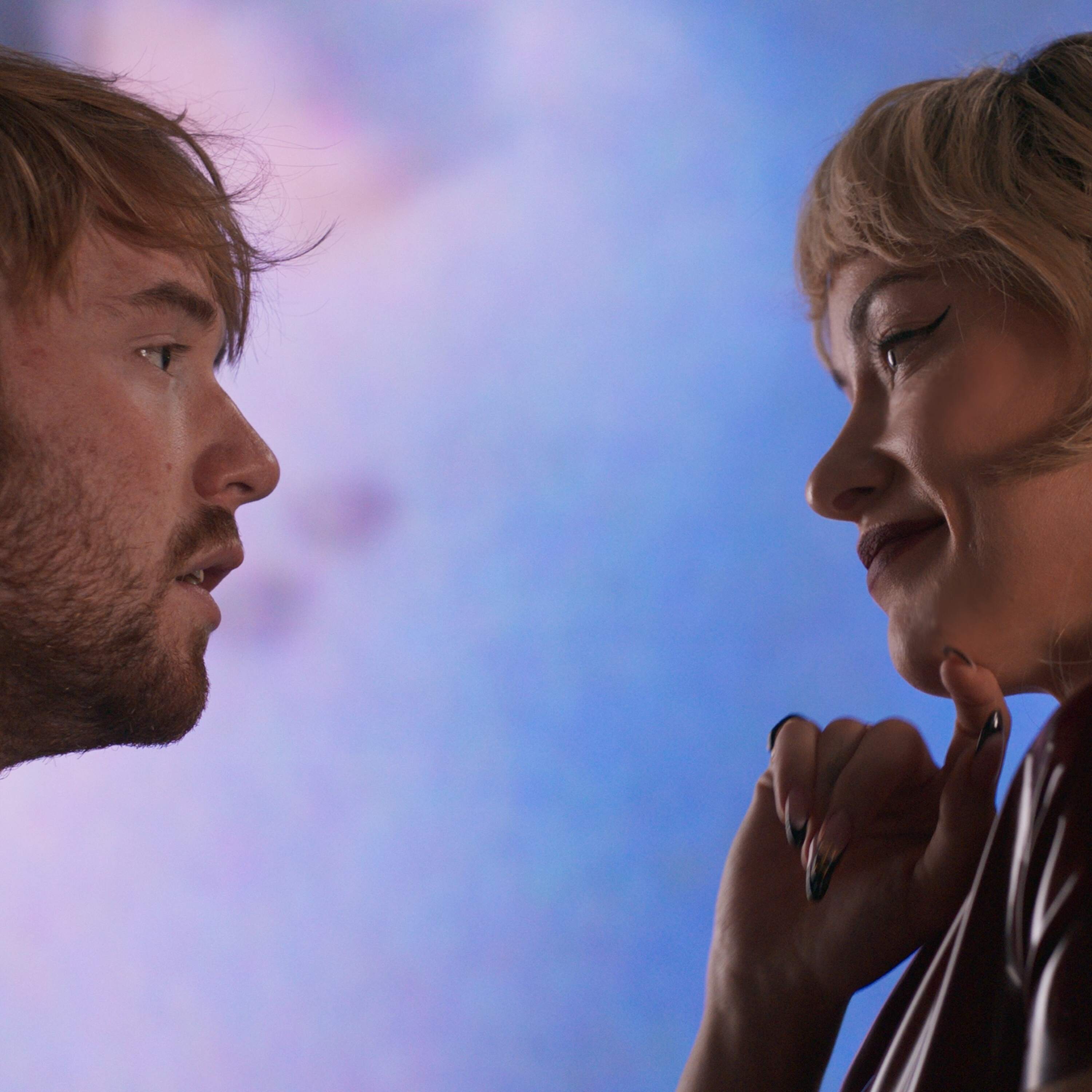
In the very fun new movie I Want yout Sex, olivia Wilde plays a mixed media artist named Erica who enters into a very consensual and very cute, kinky, but very unprofessional sub dom relationship with her assistant Elliot. He's a directionless kid just out of college, and he's played by Cooper Hoffman. Elliot is having the time of his life, exploring his every fantasy. But Erica is a lot. And soon Elliot's life starts to fall apart. It's directed by Greg Araki, and it doubles down on the fun in your face sexuality he's known for. So we will be talking about sex on this episode of NPR's Pop Culture Happy Hour. I'm Glenn Weldon. Joining me today is my co host, Ayesha Harris. Hey, Ayesha. Hey.
- [01:01]
B
Hey, Glen.
- [01:02]
C
Also with us is NPR producer Mark Rivers. Hey, Mark.
- [01:04]
D
Thanks for having me, guys.
- [01:05]
C
Aisha, let's start with you. What'd you think?
- [01:07]
B
Ooh, Sex is back, baby. It is back. If this movie is any indication of that. And also, of course, you've already mentioned the invite, which we've talked about on this show. I really, really dug this. This is a movie that, like, there are no lines to cross, there's no lines to bend. Like, everything's just like a mass puddle, like fluid circles in every sense. And that's what I love about it. It's like a very tricky tightrope to walk when you're talking about sex, and especially when you're talking about sex in the manner that Araki and his co writer Carly Ciartino are. This is a movie in which ethics don't exist for certain characters in ways that are really kind of unsettling and hard to process. But it also makes it fun. And that, I think, is something that has been missing with a lot of works that are about sex and sexuality and coming of age stories in that way. I've recently watched Pillion for the first time and I feel like it would be interesting to put that movie up against this very different but also some similarities in terms of, like, older person with younger person and bdsm and BDSM adjacent things. But yeah, I enjoyed it. It's fun. And I'm very excited to dig into this more with you both here.
- [02:26]
C
Great. What about you, Mark.
- [02:27]
D
Yeah. You know, I'm gonna say something I feel like I haven't gotten to say in quite a long time on this podcast, which is. I liked it.
- [02:33]
C
Yeah, I know, right?
- [02:34]
D
It's very funny. It's well acted. It comes from a real pov. Aisha, you mentioned this tightrope that is walking. I feel like Gregory Rocky is just, like, doing pirouettes on this tightrope. He's really enjoying being on this tightrope. It feels like such a refreshing rebuke to so many sad things. In this movie culture that we have, where so many films are gray and dreary, this movie just pops with color. Right. While many stories have the sex kind of, you have this supremely sexy performance from Olivia Wilde. I think about all these other shows and films where the sex kind of acts as trauma. You know, sex is pain. You know, something like Euphoria. Or in White Lotus, where sex, if it's there, is kind of this emblem of a kind of spiritual emptiness, you know? And Araki is here to say, no, no. Sex can be fun. Sex can be exciting. Sex can teach a lot about yourself. Yes, you might get hurt, but, you know, that's what life is like. You know, life. You get hurt. And so I like that it's not shying away from those. I don't know if it sticks the landing. I feel that the movie kind of takes very hard, pivots away from darker emotional terrain, particularly with regards to Chase V. Wonders, who plays Hoffman's roommate in the film. The movie gestures towards more emotionally complex ideas or plot threads and kind of pulls away, which I was a little disappointed by. But I think that's kind of part of Araki's overall design, which is, this is kind of supposed to go down pretty easily. Let's not overthink this. This is a romp, you know, and for that, I think it works okay.
- [04:03]
C
I also thought this was a lot of fun. It is so bright and messy. It's got a very playful sense of humor. It's more sexual than sexy for me. And it is satiric in a broad side of the barn kind of satiric. And that's very Greg Araki. I mean, Araki was one of the main voices in the new queer cinema of the 90s. I think this is probably his most conventional film in a while. The last thing I saw of him, though, was the series called Now Apocalypse, which was a mess. Threw a lot of things at every available wall and floor and ceiling and window, but it was never anything Less than interesting. Kind of like this. It is very identifiably him.
- [04:42]
D
He cannot make an uninteresting movie.
- [04:44]
C
This is the thing, I think though, what I'm going to remember most from this particular film is their performance. This is basically a two hander. And I kept admiring how much that Hoffman and Wilde were elevating what could be on the page, kind of a clunky script. I mean, the amount of times someone makes a pronouncement in this movie, this is what art is for. This is what sex is for. This is what's wrong with your generation. This is what my generation is like this because X, Y and Z, all that stuff could really just thud. But I was always impressed by how much life both Wilde and Hoffman were giving those lines. Like how conversational they made it. Wilde in particular, this character is a type, but their performance isn't. I mean, we really get to see layers of Erica. What's beneath that veneer of control. She really sees something in Eliot that she, yes, wants to manipulate. But you don't deny that she sees it. She sees something in Elliot that maybe I didn't always see. But Elliot too, you really get a sense of his affection for his best friend. Apple. You mentioned played by Chace Swee, wonders. That felt real to me. I was really impressed by this. But again, I'm coming back to the acting more than anything else.
- [05:49]
B
Yeah. I mean, Olivia Wilde seems to be channeling. I see her as the bossy bitch attitude of Regina George in Mean Girls and marrying it with this extremely sex positive and adventurous nature of Samantha Jones in Sex and the City.
- [06:04]
D
Also a little femme fatale in there as well.
- [06:06]
B
Yeah, yeah, a little femme fatale. And that's. That also kind of goes back to what you were talking about, Mark, the structure and kind of how it tries to stick the landing. Because it does kind of also. It's a romp, it's a farce, it's a sex comedy. But then there's also like this framing. Maybe like a film noir ish or
- [06:23]
D
like a. Yeah, kind of Sunset Boulevard.
- [06:25]
B
Exactly. But I think what the performances, yes, they are really elevating it. And you're seeing these conversations happen about, you know, contemporary art and satirizing all of that stuff. I do think to some extent though, like I still would say that what I find just so interesting about it is even with all of the clunkiness, there's something real that it's trying to get at here.
- [06:48]
D
Absolutely.
- [06:49]
B
You know, I've seen Greg Araki's Teen Apocalypse trilogy, those movies which came out in the 90s, totally effed up the Doom generation. And nowhere, all of those movies plus a movie like the Living End, which came before that in 1992, like, they are all kind of operating in the shadow of. And in the midst of the, you know, aids, HIV crisis, all of those things. And they have this very nihilistic tendency towards them. Sometimes there's aliens, literally. It's like everything is doomed. And it's interesting to see him kind of evolve over the. I've kind of come back here and there. I haven't followed his career completely, but it has been interesting to see him sort of shift with each, like, sexual era. And this era has been one that seems like it is repressive in many ways, but also, like, there's a lot more freedom at the same time. And so that tension, I think, is still very clear in those conversations that they're having about, like, what, Gen Z versus, you know, Olivia Welch, I guess, is kind of a millennial or elder millennial. I just found that really fascinating to look at. And the fact that it does make this fun. And not, like, trauma is not really a thing that is being explored here. It's just like, how do you grow from just being a person in the world and maybe getting taken advantage of, but also, like, that's not gonna necessarily derail your entire life.
- [08:09]
D
I think about an exchange in the film where. Between, I think, Cooper Hoffman and the roommate character, where the roommate asks, you know, what's the difference between this and porn? Like, Olivia Wild Work. And he says, I don't know. Lighting context, you know, and that felt very meta. I mean. I mean, Araki, as you're getting at, Aisha, like, this is someone who's thought a lot about sex in certain various contexts. You know, sex in the context of the AIDS crisis. Right. And now he's thinking about sex in this context of what has been reportedly been like, a sexless time in our culture. Right. You see all these stories and reports of how the youth are having less sex. And I think Iraqi is thinking about, like, just what sex means under that. Under that kind of climate. I'm very interested in just how much more optimistic this film is than in previous films. Like this is. There is very little nihilism in this, even when there's room for it. There's room for darkness in this story. And it is more hopeful. I think it is more optimistic. And it does feel like he is talking directly and maybe he's doing this and he's kind of getting on his soapbox, but it does feel like he is talking directly to a generation or directly to the youth in a way. And I appreciate what he's saying.
- [09:11]
C
Yeah, that is a great point. We'll have more of our thoughts about I Want yout Sex after this very quick break.
- [09:18]
A
This message comes from Dell Technologies. Get long lasting battery life on the Dell XPS laptop powered by Series 3 Intel Core now from $699 with exclusive student pricing from $599. Visit Dell.com deals this message comes from BetterHelp. One of the hardest parts about starting therapy? Not knowing what to expect. Instead of listening to an ad, hear from the people who've actually been there. Visit betterhelp.com reviews to explore real client reviews that are updated every day with an average live therapy session rating of 4.9 out of 5 based on more than 1.7 million client session reviews. The feedback speaks for itself. Visit betterhelp.com reviews this message comes from Progressive Insurance.
- [10:06]
E
Insurance isn't one size fits all. That's why drivers have enjoyed Progressive's name your price tool for years. Now, with the name your price tool, you tell them what you want to pay and they'll show you options that fit your budget. So whether you're picking out your first policy or just looking for something that works better for you and your family, they make it easy to see your options. Visit progressive.com progressive casualty insurance company and affiliates price and coverage match limited by state law. This message comes from NPR sponsor Carvana. Carvana makes car buying easy 100% online prices down to the penny, delivered to your door. Why make car buying hard when it could be easy? Visit Carvana.com today. Terms may apply.
- [10:48]
C
And we're back. The classic dig of Iraqi is even with all the nihilism, his stuff is so playful and fun that it can come off as glib and cartoonish and
- [10:58]
D
even slight, almost juvenile, right?
- [11:00]
C
You don't hire Margaret Cho and Johnny Knoxville to play cops if you want to disappear and do their parts, right? There are several moments in this movie that I want to ask you about. Like Elliot's sexual fantasies are literal cartoons. His sex life with his girlfriend Minerva, who is played, we should mention, by Charli xcx, the brat herself is cartoonishly bad. Did you guys roll with that or did that take you out?
- [11:23]
D
It's like watching a spike film and not getting that double dolly shot. Like I know you're gonna get that cartoonish stuff in Araki's movies and I kind of roll with it because this was not the work of AI, you know, this is someone's on the screen. I think even the Teen Apocalypse trilogy, there's stuff in there where I think I'm watching an adult cartoon, almost not necessarily in a bad way, but he's using different modes of media to kind of to express the interiority of the characters. Even though it is silly, I think it works in this world. The world is absurd. The world is kind of ridiculous and a little bit goofy. I wasn't taken out of it. It kind of brought me further in. I was like, oh, someone's doing this. This is by design. This is not just some automaton. I work here.
- [12:04]
C
Yeah.
- [12:05]
B
Well, I think that one of the aims of an Iraqi project tends to be to tap into that off kilterness. You want to always feel kind of destabilized, or maybe you don't want to, but that is what he's going to be giving you.
- [12:18]
D
And that is he's gonna force it upon you.
- [12:19]
B
That is the point. And so if you're not familiar with his work, then I can understand being kind of thrown off by what is happening. And it is the type of movie that kind of has to teach you how to watch it. And I enjoy those challenges. I'm also thinking of something like Boots Riley where it's like, you're either gonna ride with this or you're not. And I think if you get into this within 10, 15 minutes, you've gotten past the sort of copying around different storylines and finally settling into its groove. The cartoonish nature of things and just the sort of deadpan, the way that Minerva, the Charli XCX character, is just like this deadpan, totally sexless, like, I don't really care about sex.
- [12:58]
D
She's the real villain of the movie
- [13:00]
B
who studies like this. She's studying for some medical degree or something and she's just sitting there. Doesn't even have a highlighter. I don't know what do Charli xx I don't know. That's the humor, right? That's the fun in that. And if you like that kind of stuff, you will ride with it. I do wonder though, as sex positive as it is and as the fact that there is no sort of like traumatic thing going on here. I know Araki has talked about how he sat with this idea for this story for years. And initially it was actually the genders were reversed.
- [13:33]
D
And.
- [13:34]
B
And I do think that that plays a big part in why none of this, at least for me, felt. I mean, it Definitely feels icky sometimes, but it also has sort of the sheen of, like, he's gonna be okay. Like, Cooper Hoffman's character is going to be okay. And had the Olivia Wilde character been played by a man, I do wonder, like, that would have felt different and weird. And not that that's a bad thing, because I don't think everything should have a one to one correlation. Like, that's not the way real life works. But that does seem to be something. I think that, like, you can't ignore the fact that this would feel really different if the genders had been reversed as originally planned.
- [14:10]
C
We have to see the joy. We have to see the fun. Elliot is having a ball. We talked about the film Pillion Aisha. I talked about that movie on this podcast. And my main takeaway from that movie was, where's the fun? This is treated with such serious intensity that the fun never came through. Like, we didn't understand why. Why our main character in that movie kept coming back because it felt like something he was doing with such intensity and seriousness. This you cannot ignore. You can't ignore. You can ignore nothing about this movie. This movie will not let you ignore it.
- [14:40]
D
It's in your face. Yeah, I mean, the tone. I mean, the tone of this movie is very interesting. It's definitely not realism. It's not a psychological movie. And there's that. There's another line that Olivia Wilde's character has where she says, you know, sex means everything and it means nothing. I don't have time to explain this to you. I think that is kind of the point of view of Araki here, where
- [14:56]
C
it's like, this should be the logline.
- [14:58]
D
Yes, the log line. Do not look for deeper meanings here. It's. Do not overthink this. This is not a trauma plot. You know, it's like, have a good time. You know, And I do think we've been. We've been missing. Been missing the good times when it comes to portrayals of sex in movies.
- [15:11]
B
To be fair to the script, we do see the Elliot character kind of have a break like he does.
- [15:18]
D
There are scenes where it happens multiple
- [15:20]
B
small breakdowns, but he pushes back. And I think those moments are key to making sure it's not a completely smooth ride. Like, you see and you understand how he is coping with this. But again, the movie treats it as if this is just a part of growing up.
- [15:38]
D
It's just what happens.
- [15:39]
B
I want to be very careful with my words here. I do not think MeToo as a movement and culture went too Far. And this is not what I'm about to say.
- [15:47]
C
Okay.
- [15:48]
B
What I am saying is that I think there was a, especially in popular culture, there were a lot of attempts to wrestle with me too, in many different ways, in some very interesting ways. But oftentimes they could sometimes reduce it all to, this is the worst thing that could ever happen to me. This has trickled down into my life. That is a reality of certain types of abuse or just inappropriate relationships. There are also experiences that don't fall all the way on that side of the spectrum and that don't affect you or that they might affect you in the moment. But then years later you're like, you know what? I made decisions maybe on my end too, that like, I could like or I wouldn't make that decision now, but I learned from it. And I don't think we should shy away from being able to show those perspectives either. I think they're valid and then they can live alongside the ones that are far more consequential to who, like, who experienced them. And so that's what I like about this movie. It's not afraid to suggest that there's other alternatives.
- [16:45]
D
Yeah, you need both. You need both portrayals, I feel.
- [16:48]
C
And this film is signaling to you from the opening frame what take it has. I mean, let's talk about the production design. You mentioned the color mark. This movie bursts with color in a way that films today don't. I mean, and let's talk about Erica's art. It is tacky. It's supposed to be tacky. It feels also kind of blunt and very first drafty. It's kind of like Jeff Koontz by way of the Robin Byrd Show. It's not supposed to be this elevated thing. It's supposed to be the kind of grotty thing that it is.
- [17:15]
D
And she kind of knows that.
- [17:17]
C
She does. I mean, that's the point. But the entire production design of the movie, I mean, we see Elliot's apartment and it's meant to look crazy and like he's a broke student, but someone took the time to choose accent walls and rugs and bedspreads. And you're like, I mean, he's unhappy, but I mean, that's a nice space.
- [17:32]
B
Yeah. Yes, especially. Especially considering he's probably getting paid nothing at one point.
- [17:38]
D
Exactly.
- [17:39]
B
It's even made clear like, he's not getting paid a lot. Like, and that's because he's a 20 something, early 20 something. And who gets paid that much? You know, the production design is beautiful. The Olivia Wilde's entire wardrobe for this film is just fantastic.
- [17:54]
D
Oscar just for the costume.
- [17:55]
B
I mean, seriously, sometimes it feels like I'm watching, you know, like, Madonna's Sex. Even at one point, she's wearing what looks like this sort of, like, vinyl or latex, like, red outfit. And I was just like, oh, man, I want that. Like, everything in this movie that she was wearing almost everything. He's like, I want that. I want that. Great. And great wigs, Great wigs.
- [18:14]
D
And Araki's always been great at this. I think about just the Y2K pop arty vibe of his movies in the 90s were, like, just the fashion in those movies also were just so bright, so colorful and so vivid and not quite real, but, like, not real in the best way.
- [18:28]
B
I do want to give another shout out to Chase Sweet Wonders. As Apple, she was also in the studio. So good in the studio. She played one of the employees of Seth Ross Rogen's character, the sort of young, fresh, like, we're pitching ideas on that team. But she is so good here, as all of these characters, at least the ones we spend the most time with, are sort of dealing with sex and sexuality in their own terms. And she kind of gets short shrift at the. In the last part of the movie, but the first part of the movie, like, she is kind of another counter. Like, whereas, you know, you have Cooper Hoffman who's, like, very, very just obsessed with sex, and then the Charli XCX character is the opposite. And then, like, Apple's kind of in the middle where she's just, like, just figuring stuff out. Yeah, just figuring stuff out. And she just has this, like, way about her as this character of being both cute, but, like, also, like, very relatable and just like a lot of 20 somethings you would expect to meet.
- [19:24]
D
You can kind of see on her face, like, different emotions kind of clashing at the same time, you know? And I think. I think in the film, she works as the best sort of flesh and blood avatar of what Araki's trying to get at with her generation, which is like, this generation that is surrounded by sex and surrounded often by very unhealthy depictions of sex, while not truly getting to grapple with it or talk about it or even, like, have it, you know, like, it's that kind of, like, paradox of, like, sex is everywhere. And also it's not really in my life, you know. Like, I think she's really kind of selling the mental frazzledness of that, you know, and so I think she's really good in that part. And I wish, I wish there was more of her.
- [20:03]
C
Yeah, me too. I think we are all recommending you go and seek this film out. It's not going to be in every multiplex, but if you can find it, go, go and see it. And it's called I Want yout Sex, because what it's trying to say at the end of the day is that sex is natural, sex is fun. Sex is best when it's one on one. Or in case, you know, it's up to you, you could maybe invite some folks in. That brings us to the end of our show. Mark Rivers, Aisha Harris, thank you so
- [20:31]
E
much for being here.
- [20:31]
B
Thank you, Glenn.
- [20:32]
D
My pleasure.
- [20:33]
C
This episode was produced by Hafsa Fathoma, Lennon Sherburne and Mike Katzeff and edited by our showrunner, Jessica Reedy.
- [20:38]
D
And hello.
- [20:38]
C
Kim in provides our theme music. Thanks for listening to Pop Culture Happy Hour from npr. I'm Glenn Weldon and we'll see you all next time.
- [20:48]
A
This message comes from Rosetta Stone. Rosetta Stone is designed to make language learning intuitive. It mimics how people naturally acquire speech as children, helping users read, write and think in a second language. More@RosettaStone.com this message comes from Mint Mobile. If you're tired of spending hundreds on big wireless bills, bogus fees and free perks, Mint Mobile is for you. Shop plans@mintmobile.com Switch taxes and fees extra. See Mint Mobile for details. This message comes from Midi Health introducing agewell Longevity Care, designed by women for women. Whether you're looking to prevent future health issues or just feel more like yourself, learn more at joinmidi. Com that's joinmidi. Com.