Loading summary
Transcript90 lines
- [00:00]
A
This message comes from Great Wolf Lodge, where there's family fun all under one roof, including an indoor water park, attractions, dining and more. With 22 lodges across the country, you're only a short drive away from adventure. Learn more@greatwolf.com.
- [00:22]
B
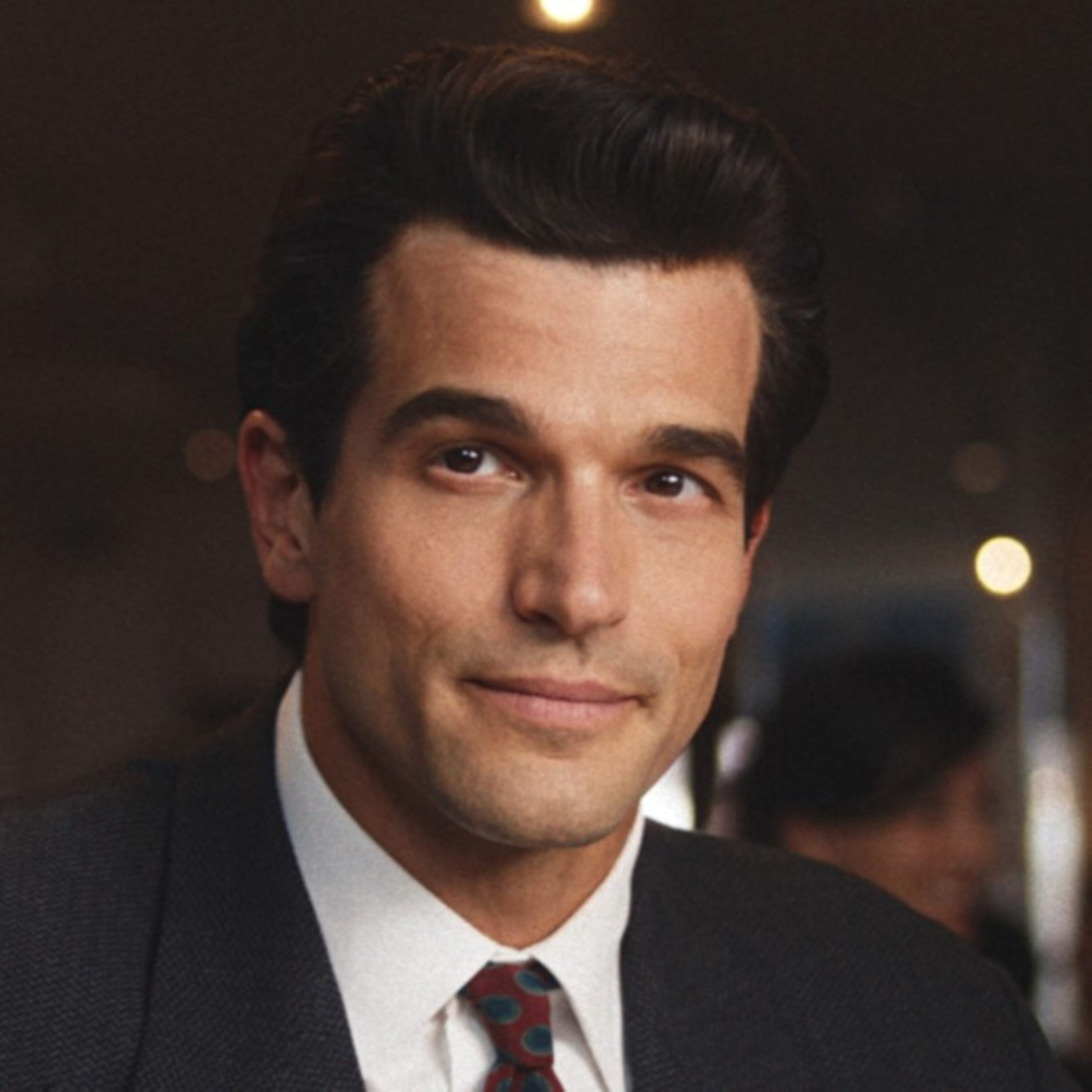
John F. Kennedy Jr. Was an object of public fixation from the moment he was born all the way through his death in a small plane crash in the summer of 1999. He's now the subject of the new FX series Love Story, which is getting some attention. It focuses on his relationship with his wife, Carolyn Bessette. The series follows their courtship, their marriage, and especially the great strain that she in particular experienced as part of what was for a time one of the most closely watched couples in the world. I'm Linda Holmes and today we're talking about love story on NPR's Pop Culture Happy Hour.
- [01:00]
A
This message comes from NPR sponsor Instagram. Instagram Teen accounts have automatic protections for what teens see and who can contact them, plus time management tools and Instagram will continue adding built in safety features to help create age appropriate experiences. Learn more about teen accounts and Instagram's ongoing work to protect teens online@instagram.com teenaccounts
- [01:25]
C
this message comes from Adobe. You need to make a huge presentation in an hour. Luckily, Adobe Acrobat uses AI and Adobe Express to take your files and generate a presentation in a few clicks. Need a last minute pitch deck? Do that with Acrobat. Need to level up your presentation design? Do that with Acrobat. Have 30 plus documents that need to be simplified into a proposal. Do that with Acrobat. Learn more@adobe.com do that with Acrobat. This message comes from NPR's sponsor Verizon Business. If you have a small business, you could be wasting money on your business mobile plan paying for stuff you don't actually need. But with my biz plan from Verizon Business, you can choose exactly what you want and only pay for what you need for your business. Visit verizon.combusiness today to learn how you can make every dollar count.
- [02:18]
B
The US Launches a military operation against Iran. Our objective is to defend the American people by eliminating imminent threats from the Iranian regime. On State of the World. We'll bring you the latest on the operation as well as reaction from the region and around the globe. Listen to State of the World on the NPR app or wherever you get your podcasts. Joining me today is Christina Tucker. She's the co host of the podcast Wait, Is this a Date? Hello Christina hello hello hello hello Hello. Also with us is culture writer Margaret H. Willison. Hello, Margaret.
- [02:55]
D
Hi, Linda.
- [02:56]
B
And rounding out the panel is the former host of Slate's Internet culture podcast, icymi, and former Pop Culture Happy Hour producer Candace Lim. Hello, Candice.
- [03:07]
D
Hi.
- [03:08]
B
It's so good to see you all. In Love Story, Paul Anthony Kelly plays John F. Kennedy, Jr. He was one of the two children of President John F. Kennedy and Jacqueline Kennedy Onassis, played here by Naomi Watts. Grace Gummer plays his sister Caroline. He and his sister were always closely scrutinized, maybe the closest thing the United States has had to a royal family, complete with a combination of glamour and tragedy. JFK Jr had already been linked to some famous women, including actress Daryl Hannah, played here by Dre Hemingway, by the time he met Carolyn Bassett in 1992. Sarah Pigeon plays Carolyn, who was not a public figure before they started dating. She worked PR for Calvin Klein. The press attention on them was enormous and impossible to escape. And over the course of nine episodes, the series focuses on the pressures this put on their relationship and on the ways his family did and did not support them. That pressure continued up to and even through the summer of 1999, when they, along with her sister Lauren, were killed when a small plane he was piloting crashed into the Atlantic Ocean. Love Story is executive produced by the prolific Ryan Murphy, but the creator is Connor Hines, who's also an actor and who whose previous TV writing credit was on the comedy Space Force. Love Story is airing on FX and streaming on Hulu. Candace, I am told this is an area of great interest for you, that you are a JFK junior Scholar. We should say, tell me how this struck you.
- [04:40]
E
Yeah, so I'm like one PhD away from being a scholar of JFK Junior and Carolyn Bessette. I instead have a master's from Tumblr University because I've seen every paparazzi photo, every Pinterest, every book, every doc. Like, I've read it all. I'm just obsessed with them as an entity because there's so little of them. They died when they were really young, in their 30s. The thing about this show is that it is unfortunate from the Ryan Murphy universe. So when I heard it was coming out, I had very low expectations. I'm like, this is either people versus OG or Glee. Therefore, I must bid on Glee. I think it is actually neither of those things. I actually really like the show. I actually think that the show does a really good job of creating an entire world. It's the music cues, it's the vibe. It is 90s New York City fashion girl vibes. And I really love it because there's so little we know about JFK Jr. And Carolyn Bissette as people that there is room to kind of make up what you want. But I think what they do put in the show is quite accurate to what I know or the way that I see them. I will also say that I think that a lot of people associate JFK Jr. And Carolyn with, like, Princess Diana. Princess Diana dies in 97. They die in 99. I'm just gonna say that this show actually makes me think a lot about Prince Harry and Meghan Markle. M. And how a lot of what Carolyn went through is a lot of the stuff I'm hearing Megan go through. It's a lot of JFK Jr. Talking about the way that growing up like a prince of a royal family is, like, very similar to the way that Prince Harry talks about it in spare. I just think that there's so much connective tissue in the way that, like, Harry and Meghan pick up where JFK Jr. And Carolyn left off in history. And I think this show is trying really hard to acknowledge both timelines. I like it.
- [06:20]
B
Got it. Got it. Okay. Christina, how about you? What'd you think?
- [06:23]
F
I'm like, meh to, like, meh on it. Like, I also similarly enjoyed every needle drop. Had me hooting and also hollering every single perfectly minimalist Calvin Klein outfit. I said, yeah, I do still want that. I also have a white Irish Catholic mother. So, like, I had my feelings about the Kennedys. Like, there's no getting around that. But for the most part, I think for me, I was just kind of like, okay, yeah, here are these two people. This is a version of their life. Am I learning anything new? Not particularly, but am I having fun watching specifically Sarah Pidgeon kind of slay every screen she's on? I am. I am. And if I'm gonna get to see that and get to hear Never gonna Get it, I'm gonna feel pretty good.
- [07:09]
B
Got it. All right. How about you, Margaret? What do you think?
- [07:11]
D
Yeah, I'm around the same space. I really enjoyed the first four episodes. Cause I feel like that's when we're in the courtship phase of the two of them. It's just a little fizzy and fun. And you can just sit back and relish the production values, which are incredible, and appreciate Sarah Pigeon, who is truly depicting Carolyn Bissette as that girl. She's so cool. She's gonna lead to a spike of cigarette sales. Absolutely.
- [07:38]
F
Bring back Parliament, baby.
- [07:40]
D
Once it's starting to get into sort of more of the tragedy of these two, it's just not working as well for me because I feel like it wants to present very idealized, very sanitized versions of these two characters. So it feels like more of the tragedy is external than internal to some of the ways they interacted and some of the people they were. And I just don't find that super plausible, particularly when it comes to JFK Jr. Yeah.
- [08:10]
B
I thought this was so boring. I was legitimately stunned by how boring I thought it was. And I should say, as this goes out, six episodes have aired. We saw eight out of nine as it goes on, I feel like I agree that Sarah Pidgeon is good in this. I don't know that I think she's necessarily as good maybe as other people do, but I think she's good in it. I think he is so bad. I think this performance from him is so bad and so distractingly bad. It feels to me. I don't have any idea if this is what happened, but it feels to me like they prioritized in casting JFK Jr somebody who looked like JFK Jr because the look of him was so important to how people sort of imagined him. He does look a fair amount like JFK Jr right?
- [09:04]
D
He really does.
- [09:04]
B
Absolutely. And she looks very little like Carolyn Bassett, interestingly enough.
- [09:08]
F
They have long hair. Yeah.
- [09:09]
B
Other than having long hair, she really doesn't look like Carolyn Bessette. His performance is enough of a weakness that it, for me, makes it very hard to invest in any of the scenes they have together. I also agree that it's not just that the more it gets into tragedy, the less interesting I thought it was. It's that the more it gets into being about, it's really hard to be followed around by the pop paparazzi. It's not that that's not true, and it's not that that's not very, very sad. But it is also the same story that I have heard presented many times about everybody from, you know, Britney Spears to Princess Diana to people who are not as lucky, necessarily, as rich white women who are also followed around by the paparazzi. And the press is very punishing to them. I kind of kept feeling like, what is this supposed to be about? And I think that by the time I got to the end, I will also say by the time I got to the end, I disliked both these characters intensely. I thought they were both really nasty and really, like, ugly to each other in A way that I did not think was enjoyable to watch. I think one of the interesting things about people who die young is that you get to project whatever you want to believe would have happened. So it's sort of like they become mythical in a way that is just because they never had to play it out. And it doesn't fully get played out to me, like, the way his family treats her in this. And I'm not an expert on the real Kennedys. His family treats her so badly, and he does very little to protect her. And I think the show maybe does not step up to that fact enough and kind of goes more in the direction of blaming Caroline Kennedy for how she treats her. Blaming, to some degree, Ethel Kennedy for how she treats her. Yes. The paparazzi stuff. But they don't really go to, like, it is your responsibility to tell your family that you cannot treat her like
- [11:08]
F
this, that there's some baroque breakfast signup that we have to go through.
- [11:13]
B
I just found it, like, very boring because it refused to engage with any of the stuff I actually wanted to be the conflict of the series.
- [11:23]
E
Yeah. I mean, I would love to ask, like, do you guys think that maybe the reason the show didn't, like, hit. Because for me, I have to say, I found it a less electric. But I will once again say that I am, like, obsessed with these people. So I wonder, do you guys think it's, like, your real life relationship with them that affected the show, or was it just like the show itself? Go in.
- [11:44]
F
I mean, I tend to be pretty easy to entertain, so I was kind of shocked that it kept stopping me from getting into it. And I think for me, there is a part that's, like, it is so still managing to, like, deify the Kennedys in a way.
- [11:57]
E
Yes.
- [11:58]
F
Like, one of my first notes I wrote was, like, do. What is this telling us about these people that we don't, like, already know?
- [12:03]
D
Right.
- [12:04]
F
And it's, like, not. It's not really giving me anything new or giving me, like, a new way to think about their relationship or this family or. I don't know. I'm like, the most I'm thinking about. I'm like, what is Calvin Klein's first marriage like? That does seem complicated.
- [12:17]
D
He was great.
- [12:18]
E
Alessandro Navola plays Calvin Klein. I gotta admit, kind of loved him. Also love Kelly Klein.
- [12:23]
D
Layla George.
- [12:24]
E
She's great. Yeah.
- [12:25]
F
But I think for me, this was really just a lot of, like, telling and not showing that moment where Daryl Hannah says, between your lineage and your heritage, you're the Poster child for emotional avoidance. I was like, daryl.
- [12:36]
B
They were so mean to Daryl Hannah in this. Like, I agree. Just mercilessly presenting her as this flake and whose, like, sort of greatest sin is that she's an actress and she really wants to marry him. Like, the performance, you know, by Dree Hemingway is so caricatured, and it's so mean. I was like, why is this the only person that they can really bring themselves to make a villain?
- [13:03]
E
Yeah. Well, see, this is interesting because I do think the Daryl Hannah depiction in here is unfair. I think it's because when we look at JFK Jr. And Carolyn Bessette as, like, characters, and what is really stopping them? What's really stopping them from getting together? I think the show does a little too much to be like, it's clearly Daryl Hannah. It's because he's clearly still kind of, like, tied to her in a weird situationship to which I make the argument, uh, it's Jackie O. Jackie O is the reason that they cannot be together. Because. Look, I'm just gonna say it. I did not love Naomi Watts in this role. I did not like her depiction of Jackie O because it felt like she was in a different show completely.
- [13:39]
B
Well, it feels to me like she's doing Natalie Portman doing Jackie.
- [13:43]
E
Exactly. Exactly. And I think in this show, there's this weird moment where, like, I did not expect Jackie O to be so much in it, even though she did have this very overwhelming presence in JFK Jr. S life. And so every time she was in the scene, I was just like, oh, my God, she's gonna make her. She's gonna draw everything back to her. And we know mothers like that.
- [14:02]
F
She's good at it.
- [14:03]
B
She speaks in these wisdom explosions that she's trying to. Which is partly because she's ill. And I understand a lot of people are trying to impart wisdom when they're ill, but, like, she just. Every time she opens her mouth, it's to be like, this is like, with your father. And I'm like, I honestly felt like the show sometimes found itself very boring and would sort of derail into these other. Like, the inspiration for this series is a book about Carolyn Bissett. Right. And yet you have all this weird stuff about Caroline Kennedy. You have all this weird stuff about, like, why am I, once again watching Jackie Kennedy waltz with a portrait of jfk, who? Camelot playing on the record player. I get it. Maybe she did that. I don't know. And then all of a sudden, I'm like, why am I watching a scene about Calvin Klein's marriage.
- [14:57]
D
I mean, I could have watched a lot more scenes about Calvin Klein.
- [15:00]
E
That's a show, right? Like, that's a show right there.
- [15:02]
B
Yes, but that's that show. You know what I mean? Like, make that show.
- [15:06]
D
Well, a journey I went on with the show is in the first three episodes, you know, Ryan Murphy's name. It brings with it, like, a lot of assumptions. And in the first three episodes, I was like, oh, this really doesn't feel very much like Ryan Murphy. The only thing that feels like it's flirting with camp is Naomi Watts performance as Jackie. And everything else feels, like, pretty grounded, pretty realistic. And I felt like the more accurate comparison would have been something like the crown. And it's as we get into this additional complexity that I actually started to, like Ms. Ryan Murphy.
- [15:33]
F
I had the exact same feeling.
- [15:34]
D
Unfortunately, Ryan Murphy's engagement with myths is trying to puncture them, trying to complicate them. Right. He likes the iconography, but he also is really interested in showing the steamy underbelly. And, like, Love Story really wants to be a fairy tale love story. And I just don't think this story supports that reading.
- [15:56]
B
One thing that I notice as I talk to the three of you about this show is that I think for a lot of people, it's actually possible to have a sort of a nostalgic, historical look at the 90s, which for me is just. I can't. Because to me, that's just, like, recently, like. So when you guys are talking about the needle drops, I'm like, that's just music. What are you.
- [16:18]
E
You're like, that's on my ipod. What are you talking about?
- [16:20]
F
I think that's why I liked the needle drops. Cause I was like, that's just music.
- [16:24]
B
And so what I'm curious. What I want to ask you about, Candice, is like, what. What do you think it is about this couple that has captivated you so much? Other than it's clearly not just sort of the aesthetic of the it girl in the 90s. And that kind of stuff. I'm trying to suss out. What about them is captivating to you?
- [16:47]
E
I think part of it is the fact that there is so little about them because they weren't able to live out their fullest potential. I think think a lot of times when we see young people, I'm gonna put, like, Amy Winehouse, Kurt Cobain in that category. When we see young people, like these stars, these people that, like, you really can picture an entire life for Them. And they were primed for it, and it was kind of cut off from them. There's almost this sense of, like, that could have been me. Am I losing out on my potential as well, without even dying to do it? And I think for them, the reason I'm obsessed is because, like, the aesthetic. I just love how regal she looks, and I love how, like, he looks so much like his father, but also not really. Carolyn Bessette is so quiet. She's very private. You know, when Meghan Markle, Princess Diana and Carolyn, you know, first became figures of the public eye, there was this idea, this kind of social contract that the second they get engaged, the life they lived before does not exist. And there's this part in the show where Carolyn quits Calvin Klein. And for some reason, immediately I went to, like, oh, my God, this is like when Meghan Markle quits suits. And I was like, okay. This demarcation between the person I built myself up to be, throwing that all away for what? Like, being a prince's wife. Okay. And I think in a weird way, I still, unfortunately, am growing up under that Disney princess fairy tale injection tunnel of just kind of like, is this not the greatest thing a woman can be? A princess of sorts, Anointed of sorts? When I think about Carolyn and JFK Jr. I think what it is is just that I'm surprised people don't talk about them more, because Carolyn would have loved Instagram. Oh, my God, she would have loved Instagram. They would have been literally on dumois all the time. They would have been what Prince Harry and Meghan Markle are, obviously, without the horrible, horrible racism that Meghan Markle gets. And I think that is what I mourn, but also fantasize about and kind of what the show inserts for me of just like, what could that have been if I lived in the 90s or they live now? What would that have felt like? This is the music we would have listened to. This is like the New York I would have seen. I mean, is this fan fiction? Oh, hey, now. Maybe.
- [18:54]
B
Well, it's interesting. Cause I think the show is working very hard to, I think, explain who she was. Yes. Because she doesn't have the kind of, like, your name kind of tells you who this was with him in particular. Is he interesting?
- [19:11]
E
No, it's the right question to ask.
- [19:12]
B
When you talk about the promise of somebody like Amy Winehouse or somebody like Kurt Cobain, you sort of have that feeling of like, they had such enormous talent and promise and had already done so Much. Right. And when you look at somebody like him, it's like he was very rich. There's a wonderful moment where he and Caroline are kind of grousing about holding an auction because they have to pay their inheritance tax, a $34 million inheritance tax. And it's like, you know, what has to happen for you to pay a $34 million inheritance tax?
- [19:44]
F
You wouldn't have to inherit for that tax.
- [19:47]
B
But at any rate, it's like he's very rich. He was very good looking. He was absolutely very good looking. Right. But beyond that, like. Yes, he was an attorney. Yes. He started this magazine that I have very mixed feelings about. In retrospect.
- [20:03]
F
In retrospect.
- [20:04]
B
Take a tour sometime of George covers and look at how the women were presented and how the men were presented.
- [20:10]
D
Right. I think I would find the second half of this show so much more interesting if the tragedy it was presenting was this bright woman thought this was a love story, and now she realizes what she signed herself up for instead of it being these wonderful people were so in love. And isn't it terrible that the world couldn't let them just be? Yeah. Because that's the story I find more persuasive.
- [20:35]
F
And it seems like the story she, at least in this interpretation, is telling him as their relationship is happening. It's like, what's happening to me is I'm losing who I am.
- [20:43]
D
Yes. But she's losing who she is because she loves him so much. Right. And she doesn't want to stop. And we don't ever get to see a moment when she realizes, like, oh, I fell in love with potential, not a person face and money and charm.
- [20:58]
F
I'll give him charm. He is good at charm, but, like, surface charm, it's not particularly deeper.
- [21:04]
D
I think it would work better, Right. If his performance did more to support the idea that there was, like, a deep, meaningful connection there. But I'm not getting something from the story that shows me why I should be that upset that JFK Jr isn't around anymore. I'm not getting something from his performance that shows me that. But the story seems to rely on feeling like it's their tragedy and not hers. And I don't know that it delivers on that.
- [21:29]
B
I mean, gosh, justice for Daryl Hannah. My gosh.
- [21:33]
E
I know. I mean, I'll say this. So, like, I do think, Margaret, I like your point about how this show is actually probably really about the. The. The way that Carolyn Bassett lost her spark. You can really see it in her eyes in the back of these town cars when she's on the floor smoking, smoking, smoking. And she becomes Jackie O. Just kind of this figment of the American imagination without any actual life behind her eyes. And like, it would be so easy to say, like, oh, well, it's obvious JFK Jr. Lost her spark. Every girl knows that story. But I, in a weird way, I think the whole point of the Kennedys is that it is all. It is so all consuming how like, tragically that family is that anyone brought into the tidal wave essentially becomes the eye of the storm and you lose who you are in terms of like two things I will say I wish this show did. First off, everyone's kind of familiar with the infamous fight in the park where they shoved each other, amongst other things. All each other, all that stuff. This is in the show. And look, I will be honest, we don't fully know in history what they actually said to each other. So this is a lot of TikTok lip readers clocking in. Okay? This is a lot of. This is a lot of people being like, if I was there, this is what I would have said if I was the Dog Friday, which I hate that name. It's fine. I actually wish they had taken that scene of them like fighting because they kind of move around certain areas of Manhattan. I would have loved if they had made that an entire one shot episode. Just that fight, breaking it down like la La Land vs Moonlight, Minute by minute by minute. I would have loved that. The other thing is, we've watched eight episodes. I really have to warn people, Carol Radziwill is not in this. Carol Radziwell is Anthony Radziwill's wife. Anthony is like cousins with JFK Jr. And Anthony's in the show. He's actually his best. And Carol's not in this. And it's actually very disappointing. I have to tell you guys. Carol Radzivill has a subset and she is writing on it. It's actually really good. So that's where I would direct y' all to go.
- [23:24]
B
And one thing speaking of the family that I do want to mention is that the creative team on this show did not consult with the family, do research with the family, interview the family. The series has definitely gotten some criticism for that, including from Jack Schlossberg, who is Carolyn Kennedy, who has called it a grotesque way to profit off of JFK Jr. S life. You know, it's very much kind of from an outside perspective on the family.
- [23:54]
F
You know, I do want to say, while I'm devastated To not see Carol portrayed in this show because I genuinely am like, justice for Carol. I do want to shout out my king. Eric Bergen as Anthony Raswell from say It With Me Friends. Madam Secretary. That's right.
- [24:11]
B
Yeah. I think there is always gonna be a challenge in portraying the Kennedys in a story like this because they are a family. I'm not a big fan of dynasties. Right. Not a big fan of powerful dynasties. They are always gonna be both a family that has experienced a ton of tragedy and a family that has been, in some ways, really insidious in other people's lives. Right.
- [24:36]
E
Yeah.
- [24:37]
D
A family that has caused a lot of tragedy.
- [24:39]
B
And so it's very awkward in a show like this to figure out, you know, do you position them as this family, including him is the worst thing that could have happened to this woman, or do you present it as this is yet another tragedy that befell them?
- [24:56]
D
Right.
- [24:56]
B
I think the show kind of wants to have that both ways a little bit, and I. It's hard to have that both ways.
- [25:03]
C
Right.
- [25:03]
B
It's hard to thread that needle because. Yeah, it's really difficult to figure out exactly how to treat them. I think, in a piece of fiction.
- [25:11]
F
Yeah. I do think I would have liked it if this had a little darker edge to the portrayal of the Kennedys kind of generally, or even just kind of an acknowledgement of, like, pretty chill
- [25:21]
B
portrayal of Ted Kennedy, I will say.
- [25:23]
D
Yeah, that's exactly what I was about to point out. There's a specific scene where, like, Ted Kennedy is brought in to talk to JFK Jr about what an embarrassment this is, and to have that scene with Ted Kennedy and, like, not say the name Mary Jo Kopechne, not mention Chappaquiddick. It's a choice and a wild one to make, especially when the Kennedys aren't involved in the production.
- [25:46]
B
Yeah.
- [25:46]
D
To be doing that level of cleanup work when they're not even going to endorse this.
- [25:53]
E
Maybe this is their version of Camp American Camp story.
- [25:58]
D
I mean, look, if it was campier, I could work with that same.
- [26:01]
E
Right. But the costumes are too tailored. That's the real issue.
- [26:04]
B
I, too, would have embraced more camp. Although waltzing around with a painting of your husband is getting there. All right, well, we want to know what you think about Love Story. Find us@facebook.com PCHH that brings us to the end of our show. Christina Tucker, Margaret H. Willison, Candice Lim, thank you so much for being here. The show was boring to me, but this was super fun. Thank you for having this chat.
- [26:28]
F
Oh, of course.
- [26:29]
E
Thank you.
- [26:30]
D
Thank you for having us.
- [26:31]
B
This episode was produced by Hafsa Fathoma and Mike Katzeff and edited by our showrunner, Jessica Reedy. Hello. Come in. Provides our theme music. Thank you for listening to Pop Culture Happy Hour from npr. I'm Linda Holmes, and we'll see you all next time.
- [26:49]
E
NPR News. Now is your podcast source for updates every hour on the US Military action in Iran. President Trump calls it a war and says the goal is regime change. He also says US Casualties are possible, with news changing rapidly. Listen to NPR News now. New episodes at the top of every hour on the NPR app or wherever you get your podcasts.
- [27:13]
B
On the latest episode of sources and methods, NPR's National Security Podcast, the U.S. and Israel have attacked Iran. President Trump is calling for regime change, telling Iranians, quote, when we are finished, take over your government. We break down the most important questions about what happens next. I'm Mary Louise Kelly. Listen now to sources and methods on the NPR app or wherever you get your podcasts.