Loading summary
Transcript64 lines
- [00:01]
Sponsor/Advertisement Voice
This message comes from Alexa. The all new Alexa will do more so you don't have to chat naturally while Alexa learns your style, anticipates what's next, and makes it happen free with prime on your Amazon devices. Learn more@Amazon.com AlexaPlus.
- [00:23]
Aisha Harris
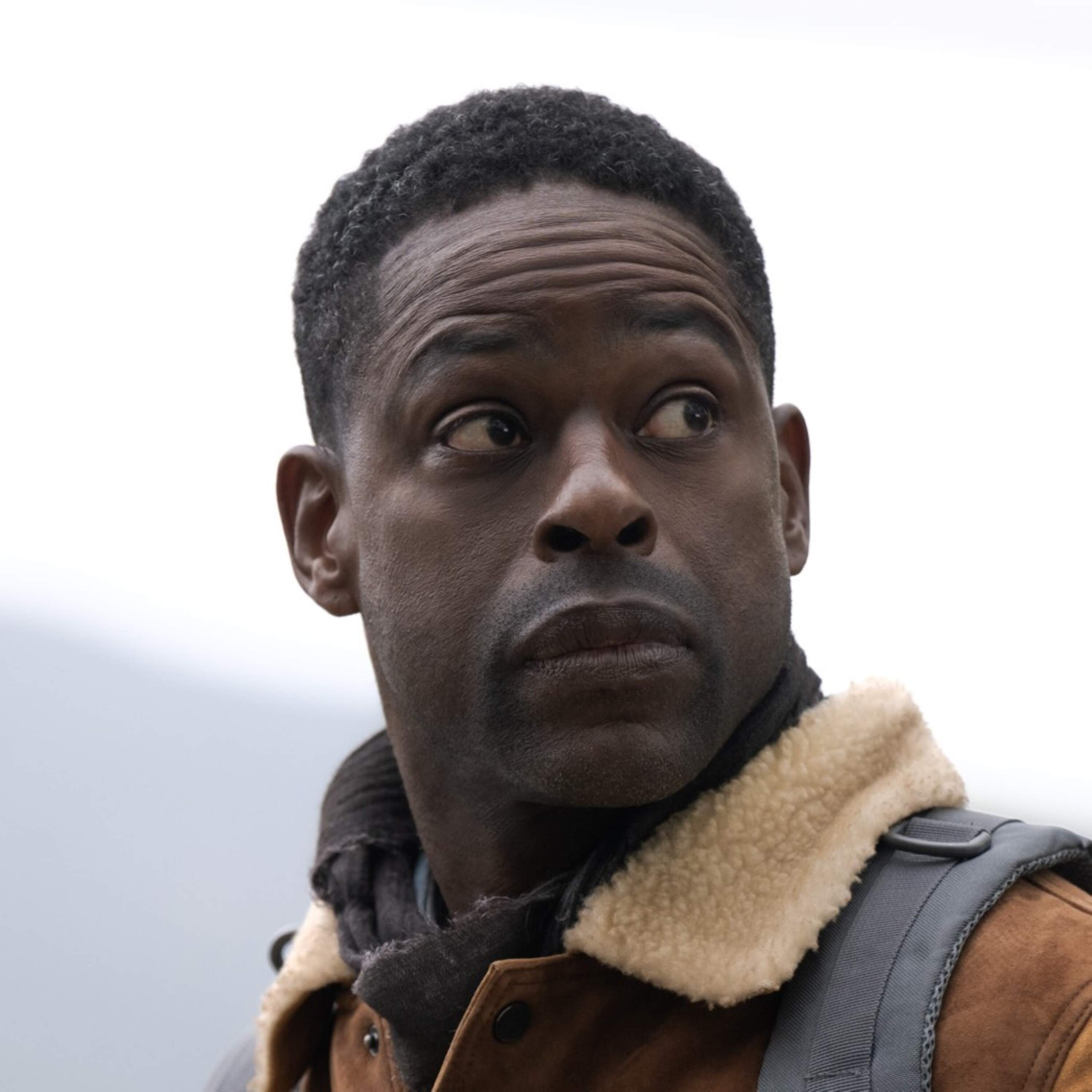
In the drama series Paradise, Sterling K. Brown is a Secret Service agent caught up in a web of intrigue after the President of the United States is assassinated with no suspect in sight.
- [00:33]
Glenn Weldon
The president is played by James Marsden, because of course he is. But at the end of the first episode, we learn this show is about way more than the murder of the head of state. Paradise is back for a second season, so we thought it would be a perfect time to revisit our conversation about the series. I'm Glenn Weldon.
- [00:48]
Aisha Harris
And I'm Aisha Harris. And today we're talking about paradise on Pop Culture Happy Hour from npr.
- [00:58]
Sponsor/Advertisement Voice
This message comes from Stars. The series that became a phenomenon comes to its epic conclusion in the highly anticipated final season of Outlander. Claire and Jamie thought they left the war behind, but peace proves elusive at home. Family secrets and news from the future threaten to tear the Frasers apart, forcing them to answer the question, what are they willing to sacrifice to stay together? Don't miss the final season of Outlander. Watch now only on Starz. This message comes from Apple Card It's a great time to apply for an Apple Card you'll love earning unlimited daily cash on every purchase. That includes 3% daily cash when you buy the latest iPhone, AirPods and Apple Watch at Apple through this special referral offer. When you get a new Apple Card, you can earn bonus daily cash. To qualify, you must apply at Apple Co getdailycash Apple Card issued by Goldman Sachs Bank USA Salt Lake City Branch offer may not be available elsewhere. Terms and limitations apply. Support for this podcast and the following message come from Alexa. Say hello to the all new Alexa. Need last minute concert tickets? Craving your favorite restaurant? Just sit back, relax and talk. Naturally, Alexa's on it. Alexa remembers what you love, anticipates what you need, and makes it all happen. Alexa brings thousands of possibilities to life, ready whenever inspiration strikes. And now Alexa is free with prime on your Amazon devices like echo and Fire TV. Amazon.com Alexaplus this message comes from Bombas.
- [02:35]
Ronald Young Jr.
You need better socks and slippers and underwear because you should love what you wear every day. One purchased equals one donated. Go to bombus.com NPR and use code NPR for 20% off.
- [02:51]
Aisha Harris
Joining us today is Ronald Young Jr. He's the host of the film and television review podcast leaving the theater. Welcome back, Ronald.
- [02:58]
Ronald Young Jr.
Hello, Aisha. Hello, Glenn.
- [03:00]
Aisha Harris
It's great to have you here. I feel like this conversation is going to be at least as fun as watching this weird kind of silly show is. Paradise was created by Dan Fogelman, who created the hit show this is Us, which also starred Sterling K. Brow. And it also had a big reveal in its first episode. So that's kind of his thing. Brown plays no nonsense Secret service agent Xavier Collins. He's serving under president Cal Bradford, played by James Marsden, until he finds Bradford dead on his bedroom floor one morning from an apparent head trauma. Who's responsible? Collins is obviously going to investigate, but we learn this is happening in a literal doomsday situation. They've all been living in a bunker for a few years following a catastrophic environmental event that wiped out most of the world. A select few were able to escape to the bunker, which was designed by tech billionaire Samantha Sinatra Redmond. She's played by Julianne Nicholson. And there's a not so small chance that the President's murder is connected to the decisions he made in those crucial moments during the natural disaster. Paradise is streaming on Hulu. So, Ronald, I'm gonna start with you. Did this show have enough Sterling K. Brown being very stoic and moody and all that stuff? Like, how do you feel about this?
- [04:18]
Ronald Young Jr.
I really liked it and I really Sterling K. Brown's performance. It's a show that, like, I think in the beginning I was like, what am I watching? What's going on here? I haven't seen Sterling K. Brown in this, but by the time I get to episode seven, I remember thinking out loud, I want to see Sterling K. Brown in more roles like this. Like, I like the emotion, I like what he brings to it. And I was just sitting there, I'm like, for instance, what if I saw Sterling K. Brown in the Christopher Nolan film Tenet instead of John David Washington? I would have bought it. It would have been incredible. You know what I mean? So most of my enthusiasm for this show comes from the fact that anytime it start to get too silly around the edges, all of a sudden they cut the Sterling K. Brown. And I'm like, nah, I'm in. I'm in. Which reminds me kind of like a hijack on Apple tv where it's the same thing, where it's like, this is starting to get silly. And then all of a sudden it'll be Idris Elpel. You'll be like, you know what? I'm in. Keep going. So that's kind of how I feel about it. I just. I really like it, and I'm excited to see what happens in the finale.
- [05:12]
Aisha Harris
Yeah. I'm so glad you brought up Hijack. Cause I had that in the back of my mind while watching this. And they all star some of our greatest black male actors. So I feel like there's an emerging trend happening.
- [05:22]
Sponsor/Advertisement Voice
Cool.
- [05:23]
Ronald Young Jr.
Yes.
- [05:23]
Glenn Weldon
Bring it on, GL.
- [05:24]
Aisha Harris
How do you feel about this?
- [05:25]
Glenn Weldon
I liked it. I mean, Sterling K. Brown, best posture on television. I think this guy just makes you want to stand up straighter. I think the show itself kind of improves as it goes. I mean, I was very worried in the beginning because of the reliance on flashbacks, which this is us did, too. But I remember souring on Lost as soon as I realized that the show's priorities and mine weren't exactly lining up. Because I wanted answers about what the hell's happening on the island. And the show wanted to waste an episode telling me that Kate had a bad relationship with her mom. That does characterizing work, ostensibly.
- [05:54]
Ronald Young Jr.
Great summation of Lost.
- [05:56]
Glenn Weldon
It's not why I'm watching the show. Right. Backstory isn't story. There's a reason it's called backstory. So you sit there and you think, well, there's gonna be a Sinatra episode. That's the billionaire played by Julianne Nicholson. There's gonna be an Agent Billy episode. There's gonna be. I mean, it's coming down the pike. Next season. We're gonna get a Gerald McCraney episode. He plays the father of the president. But now I'm gonna contradict myself. Cause that last episode you mentioned, Ron, is my favorite. Episode seven, which. The flashback to the day everything goes pear shaped. Easily the strongest episode of the series. One of the strongest episodes on TV I've seen in a while.
- [06:26]
Sponsor/Advertisement Voice
Yes.
- [06:27]
Glenn Weldon
And I want to get your. I think the show made a mistake by withholding it for so long. Cause I would have invested so much harder in this show a lot earlier. That episode makes some really gnarly choices. And they're not there to add extraneous detail, but to surprise and contradict what we think we know. I think I know why they put it that late in the season. Because there's something else happening in the main plot that's also tense. So they wanted to kind of parallel them, I guess. But I don't know. I think people might have opted out of the show before it got to the good stuff. What do you guys think?
- [06:55]
Ronald Young Jr.
I get why they did it, and I feel like if they did it any other way. If they put that episode first, I don't know if I love the rest of it as much. Right. But I feel like that episode feels like a reward for going through kind of like the ups and downs and little bits of silliness of plot that they're kind of like doling out to you little bit by bit, because there's stuff that they reveal over the course of time. And then they kind of get to this big part where everything we learned about Cal President Cal, played by James Marsden, everything we've learned about Sterling K. Brown's character, who I don't know. As far as I'm concerned, his name is Sterling K. Brown in the show. But everything we've learned about Sterling K. Brown or Xavier Collins, everything we've learned about him all comes to a head in these interactions. And they've been planting these little seeds, and it's rewarded in seven. I think if they give that to us too early, we'd probably be sitting here talking about how it's unearned that it happened this early in the series. You know what I mean?
- [07:49]
Sponsor/Advertisement Voice
Yeah.
- [07:50]
Aisha Harris
I don't know. I think I kind of feel as though it didn't need to be the first episode, but I would have liked it a bit.
- [07:56]
Sponsor/Advertisement Voice
Little.
- [07:57]
Aisha Harris
I think a little bit. Maybe in the first three or four episodes placed there.
- [08:01]
Ronald Young Jr.
Maybe four.
- [08:01]
Aisha Harris
Yeah. I do think the first several episodes do too much of the. I mean, granted, no one episode is, you know, other than that seventh episode is, like, focused on a very particular moment. Even when they're focusing on a specific character, they're still flashing back and jumping around in time a lot. Which was one of my quibbles with this show is there's just so much hopping around. There's usually not any sort of marker necessarily to distinguish easily or quickly. The entire show has this similar kind of, like, ethereal glow that I feel like a lot of, like, prime time type shows tend to have. This is Us again, like, it has that glow. And even when they're flashing back to the past and to the very not recent past, like in 1997, at one point it flashes back. It still kind of looks like the same. It's just James Marsden looks a little bit younger. One of the things that I've noticed with a lot of TV now and movie storytelling as well, is that there's always just this withholding, withholding, withholding. And sometimes, like, mystery is fine, but also, just give it to me straight. Let's talk a little bit about the world building here, because we learn at the end of the first episode that they're living in this bunker. And then slowly we kind of learn about what life has been like in this bunker. We learn that they all have these government wrist Fitbits, whatever, that they're basically tracking them. We learned that there's no animals, or at least we're not eating animals anymore. There's all these other things. So how does that world building work for you? When we think about other examples of dystopias or. I mean, this is presented as a sort of utopia in a way, but, like, when we think of the end of the world, the end of the earth, like, does this feel unique and novel to you? I mean, it did to me a
- [09:45]
Ronald Young Jr.
little bit, I think, in the fact that they're like, they're leaning more on political thriller, I think, more than they are on dystopian future. Like, dystopian future is the setting for this political thriller, which is what I'm excited about, because, I mean, I went from watching this to watching that show Zero Day on Netflix, starring Robert De Niro, which is another political thriller. And I remember in my mind, my mind easily connecting these two universes seamlessly in a very, like, easy way, because it was really about power politics and who has authority to do what thing here. So I feel like, for me, most of the things about it that are very dystopian fade to the background until they mention it as a part of the plot, which I think. I mean, that was really working for me.
- [10:29]
Glenn Weldon
Yeah, we do get some scenes set outside the bunker in the actual real world. And the question is, is anybody still alive? What is it like out there? I don't care. I think what the show has going for it. As close as it comes to Last of Us Walking Dead territory, it kind of misses me, I think. I mean, there's a reason that they filmed this on the Warner's backlot, you know, the Stars Hollow set. That's what he's running through at the beginning. That's the appeal here. That's what makes the show different, is this creepy small town setting that can't possibly exist. And yet they're going out of their way to make a. Try to believe that it does.
- [11:05]
Aisha Harris
Yeah, yeah. It's funny because I think for me, what I like most about this show, I think I was a little less high on this overall than you both. I think the fact that it leans on political thriller is absolutely right, Ronald. And I think for me, it's interesting because Fogelman, the creator, has talked about how he was drawing from, like, older political thrillers. Crimson Tide, man on Fire.
- [11:30]
Ronald Young Jr.
Like, Denzel Washington. Denzel Washington.
- [11:33]
Aisha Harris
Deadzo Washington. Deadzo Washington. And I guess there's a pluses and a minuses of this for me. We're living in a very tense time. We're living in a time where everything is political and all these institutions are crumbling. And when I'm looking at this, like, sort of disaster show where everything literally crumbles in the most horrific way possible, and the fact that there's no sense of, like, whether or not the James Marsden president is a Republican or a Democrat. There's hints at here and there, but it doesn't feel real. It feels like everything is very, very, like, the blandest possible version of politics. Do I want an escape? Yes. But I also kind of feel like it's a missed opportunity to at least kind of delve into more than just having Julian Nicholson, who is great here, by the way, as this, like, again, feeling like real life in some ways. Billionaire tech person who was given unchecked political power.
- [12:29]
Ronald Young Jr.
Yeah.
- [12:30]
Aisha Harris
Yes. But I guess I just wanted a little bit more of, like, the tensions that really arise when the world is falling apart and how the world doesn't necessarily sort itself out. Am I wishing for something that I shouldn't be wishing for here? I don't know.
- [12:44]
Ronald Young Jr.
Two things. One, I think I watched this and did feel like I was escaping, which was good. I think you mentioned something about the bland kind of political. Not basically choosing a side. Are these Republicans, Democrats, Progressives, Independents? What are we talking about here? And I think part of that is because their hands are a little bit tied right now, because by choosing a side that is the air quote, good guy or bad guy, you are now, like, tying your plot to something else. And now we can no longer pay attention to, like, the story that's in front of us. But we're also thinking in the background where this politically aligns with our own personal beliefs and what's going on in the world, which is, like, tough for creators right now because they are sitting still a message about somebody like the character Samantha Redmond played by Julianne Nicholson. But they're not necessarily politically aligning themselves one way or another as much as they're saying this thing is bad. You know what I mean? But that's, like, just tough to do as a creator right now.
- [13:37]
Aisha Harris
I want to clarify. I don't need them to say this is bad or that like. Or, like, have one side be the good guy or the bad guy. But, like, even Scandal. The show deeply flawed in so many ways.
- [13:47]
Glenn Weldon
Deeply silly.
- [13:48]
Aisha Harris
Yeah, and deeply silly. Even that show we had, like Fitz Grant, the president for much of the show, like he was a Republican. They planted that stake in the ground. And I feel as though it's a little bit mealy mouthed to not do that here, considering the time. I don't know, Glenn. I'm curious.
- [14:05]
Glenn Weldon
I don't feel that way. I feel that there is something off with the kind of alchemical mixture of the show. And that's, you know, he might want to gone back to something like Crimson Tide, but this is still Dan Fogelman. This is the this is Us guy. And I know I would like the show to seem a little less like it's always gonna be lunging for my heartstrings the way that this Is Us did. There's always a moment in every episode where the music swells and it targets your tear ducts and it just feels repetitive. Right. I mean, this show does have soapy ele. The family drama stuff misses me. The stuff with the daughter misses me. But the soapiest thing about it is the way the show seems to be structured around monologues. Right. Which makes it seem kind of unbalanced. Instead of two characters in a scene being more or less at the same emotional place, there are lots and lots of scenes where one character is having their moment, you know, their Emmy clip, while the other character just kind of sits and watches it happen. Agent Collins, I went from being one of the richest men in the world to a one term, now two term president almost overnight. I drink whiskey in the middle of the Oval Office. And I'm up front about telling a potential new lead agent that part of the reason he's appealing to me is the color of his skin. I did not get here by doing things by the book. I'm sure the actors love it, but it does make it feel off to me.
- [15:15]
Aisha Harris
I will say one of my favorite things about this show. We mentioned the silliness. And again, like, I think that's what keeps this from me from being like, ugh, I can't do this. Like, there's a scene in episode six where the Sterling K. Brown character is sitting in a chair diner waiting for the Doctor who he's having. He's been intimate with. Her name's Gabriella and she's played by Sarah Shahi. And he's just sitting in a diner. He's done something very drastic and he's dramatically eating a steak. And we learn that it's like not a real Steak. It's a plant based steak. Because, like, once the world ended, they stopped eating real meat. Which leads Xavier to give this very dramatic speech about how everyone who fled to this underground bunker, like cows being led to this lodge, all that muscle,
- [16:00]
Glenn Weldon
all that heft, and they just surrendered. And it makes you wonder if that's what she did to us, led us down here, corralled us, and sent us to slaughter.
- [16:16]
Aisha Harris
It's great. It's like Sterling hair Brown is giving, like, the performance of his life. And then he gets up, wipes his steak knife, cuts his government Fitbit watch tracker off his wrist, and then says, regarding the Redmond tech billionaire. He's like, tell your girl I'm coming for her. And then like two scenes later, this happens.
- [16:33]
Glenn Weldon
He said he was coming for you. Who the hell talks like that?
- [16:38]
Sponsor/Advertisement Voice
Then he hacks off his band with a knife. What the is he doing?
- [16:42]
Aisha Harris
I mean, besides dramatically eating those little moments? Like, it reminds me of the movie Cellular. I don't know if you remember this movie, but it's where Chris Evans gets a phone call from a kidnapped stranger and then spends the movie trying to save her and her son. And at one point he goes to the school and he's like, what's your kid's? Because he's like, trying to get her kid out of school. And she's like, ricky Martin. And he's like, you named your child Ricky Martin? And it's just like the script just keeps going. They don't dwell on it. But, like, that is what I think worked for me is the monol. I liked the monologue because it felt like a 90s political thriller in that way. Yeah.
- [17:18]
Ronald Young Jr.
I want to say I wanted to kind of go back to your comments on the performance by Julianne Nicholson as Samantha Redmond. Do not like her performance at all. And I think it's because it reads, let me speak to the manager over and over and over again. Like, it reads just like sitting in a chair saying these pithy lines. And I remember at one point, especially in episode seven, I was yelling at the tv, you have no real leverage.
- [17:44]
Glenn Weldon
Yeah, I see what you're saying, Ronald, but I like Julianne Nicholson and I like her here. I was just grateful that they explained the bad wig. She's wearing a terrible wig. A distractingly terrible, noticeable wig. And eventually they do explain why. And so that kind of put me at ease. James Marsden, guys, like, he is in his element here. He is a smarm machine. He is locked in.
- [18:06]
Aisha Harris
I had to look because I was like, of course he's playing the president. And I had to look and see, like, has he played the president?
- [18:13]
Glenn Weldon
He has JFK and the butler.
- [18:14]
Aisha Harris
Yes, yes, he played jfk. So I was like, of course he's the guy. You want to have a beer? Like, at one point he literally says, like, I don't know where Syria is, but the people like me. And I'm like, okay, of course. And then of course, Sterling K. Brown's character, Xavier Collins, is like. He tells him exactly where Syria. And this is like, of course, like, this is the deepest it gets with. It's like talking about race and politics is like, of course. The black, upstanding Secret Service agent knows way more than his dumb, kind of oafish boss. I like Marsden here. Like, again, not realistic to what a president really is or should be anyway, but fun. And he's having fun.
- [18:50]
Glenn Weldon
Yeah. And Sterling K. Brown, like, give him his props here because that role is so stoic and such a straight arrow that he could come off as a boar. He could come off as a cipher, right?
- [18:59]
Aisha Harris
He does.
- [19:01]
Glenn Weldon
And he kind of does. I'll admit that he does sometimes. But I mean, he has the emotional weight to come pull James Marsden in. Right. And ground him a little bit. And if he buys this pretty silly premise, you buy it too. I mean, I think he's doing a lot of the work to kind of de silify the show.
- [19:21]
Ronald Young Jr.
I think the other thing is, like, again, and we get to episodes five, six and seven, you really start to think about all of the things we've learned about these characters. All of the things that maybe one note or silly about their performance that all, like, kind of come to a head later on. Like, when you find out what the President, Cal Bradford, what was happening to him at the time that he's murdered, you know what I mean? You find out what he was thinking, what he was discovering. And I feel like without the range of James Marsden, you really don't get the opportunity to really see him all of a sudden turn around even though he's having a bourbon and say, look, something serious is going on and I need to talk to you about it. If he's like, too folksy, but the fact that he could turn around and be folksy is also good. And I think that plays so well when him, Xavier Collins, played by, again, Sterling K. Brown. I don't know why I keep going back and forth between their names. I wanna just call him Sterling K. Brown so bad. But they had this conversation in episode seven when they're like going back and forth at each other. And it's very, very tense in a way that I'm just like, yes, I love this. This is what I want. And I feel like both of them, like I said, clocked in to do that no matter how silly it gets in the margins at other times, that part was enough for me to say, yeah, I'll watch season two. Keep pumping them out.
- [20:33]
Aisha Harris
Yeah, yeah. Glenn, I'm just curious, like you mentioned this earlier, but kind of like, what is to draw besides not the mystery?
- [20:40]
Glenn Weldon
Oh, I'm here for the mystery. Yeah. I'm here for Kill the President. Yeah. I mean, that's it. I mean, I like the setting. It's kind of fascinating how they set up the mystery because this is probably the most observed surveilled person in the bunker, and yet somehow this happens and they have to come to jump through a lot of hoops to explain how and why that could happen. But yeah, I'm here for the mystery. I want to know who done it.
- [21:01]
Aisha Harris
Oh, well, paradise. Paradise is it's not paradise, but they that's what they call it. And we want to know what you think about it. Find us@facebook.com PCHH that brings us to the end of our show. Ronald Young, Jr. Glenn Weldon, thanks so much for being here.
- [21:18]
Glenn Weldon
Thank you.
- [21:18]
Ronald Young Jr.
Thanks for having me.
- [21:19]
Aisha Harris
And this episode was produced by Hafsa Fathoma and Lennon Sherburne and edited by Mike Katzeff. Our supervising producer is Jessica Reedy. And hello Kamen provides our theme music. Thanks so much for listening to Pop Culture Happy hour from npr. I'm Aisha Harris, and we'll see you all tomorrow.
- [21:40]
Sponsor/Advertisement Voice
This message comes from Capella University. That spark you feel, that's your drive for more. Capella University's flexpath learning format lets you earn your degree at your pace without putting life on pause.
- [21:51]
Glenn Weldon
Learn more@capella.edu this message comes from Rosetta Studio.
- [21:56]
Ronald Young Jr.
If you have travel coming up, like a spring break or summer vacation, imagine arriving actually understanding the language. Rosetta Stone has been the trusted leader in language learning for over 30 years. With millions of users and 25 languages to choose from, ready to start learning a new language this spring? Visit rosettastone.com NPR today to explore Rosetta Stone and choose the language that's right for you.
- [22:21]
Sponsor/Advertisement Voice
This message comes from BetterHelp International Women's Day is this March, time to celebrate all women, the leaders, the caregivers, the hype, friends, the how do you do it? All types. Women deserve to be reminded how much they matter and that therapy offers a space to care for themselves. BetterHelp makes it simple by matching you with a qualified therapist based on your needs and preferences. Visit betterhelp.com NPR for 10% off.