← Post Reports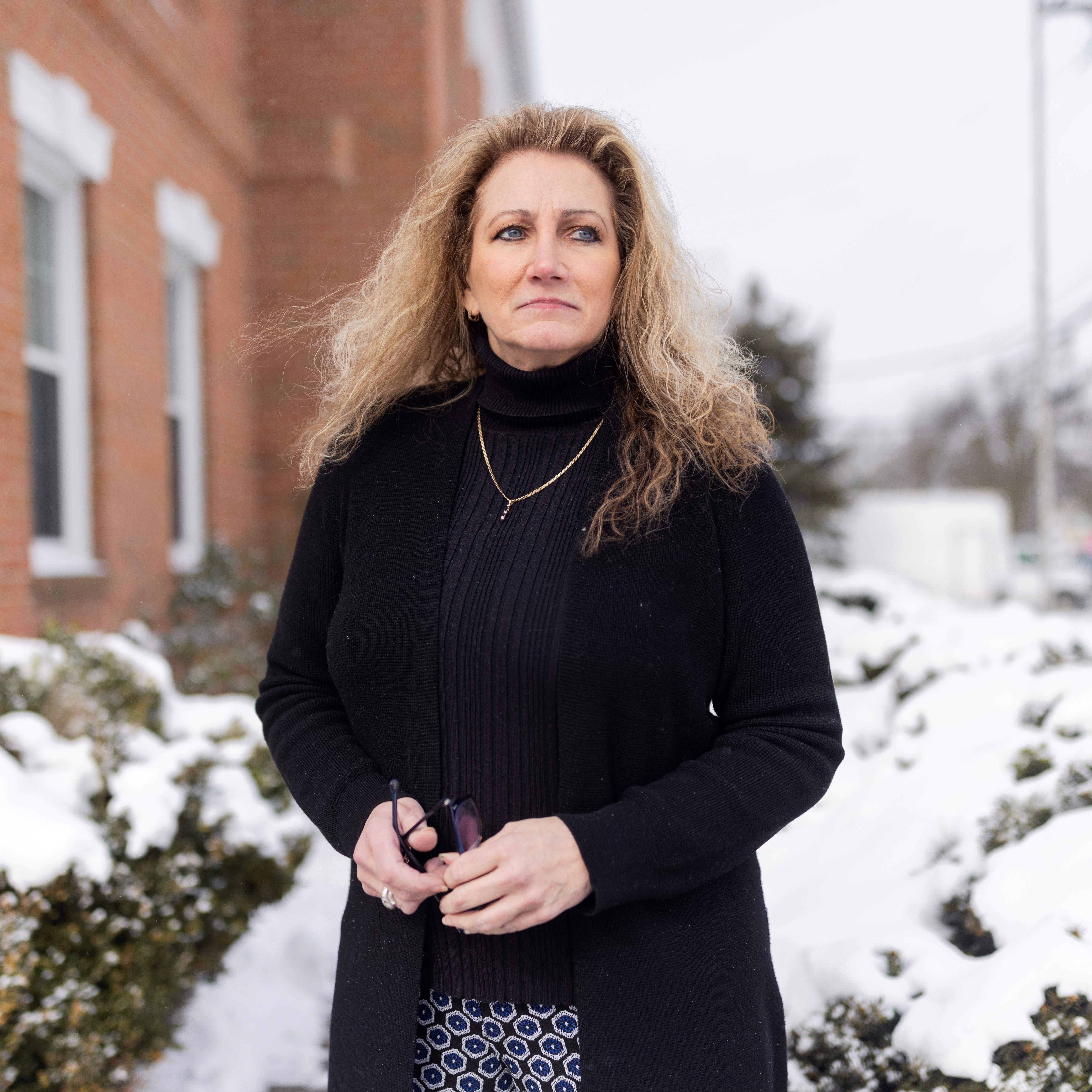
Post Reports
A straight, White person sued for discrimination. Her case is before the Supreme Court.
00:22:49
In 2019, Marlean Ames was demoted. A younger gay man got her old job. Her claim of anti-straight bias could rewrite discrimination law in much of the country.
Loading summary
Transcript66 lines
- [00:00]
Cascade Natural Gas Representative
Cascade Natural Gas believes a warm home, hot water and natural gas energy should be available to everyone. That's why Cascade established the Oregon Low Income Bill Assistance and Energy Discount Programs. These programs provide income qualified applicants a discount on their monthly bill and if needed, help with past due balances. Qualifying for assistance is easy by calling Cascade or any of our partner community action agencies. Get complete bill assistance info@cngc.com help.
- [00:32]
Justin Juven
Just sort of start at the beginning and talk about how you know what, what your interest was in working at the Ohio Department of Youth Services and how you got into that line of work.
- [00:41]
Marlene Ames
And I don't know, I mean, I have a degree in criminal justice and huh.
- [00:46]
Justin Juven
Did you have a particular interest in working with kids or anything like that or.
- [00:49]
Marlene Ames
Not necessarily.
- [00:51]
Justin Juven
Huh.
- [00:51]
Martine Powers
There's a case coming before the Supreme Court tomorrow. It's called Ames versus The Ohio Department of Youth Services. Washington Post Supreme Court reporter Justin Juven recently interviewed the woman bringing the suit. Her name is Marlene Ames. He went to her lawyer's office in Akron, Ohio. They chatted in an equity conference room.
- [01:13]
Justin Juven
What's the best outcome for you? What would you like to see happen ultimately with this case?
- [01:21]
Marlene Ames
I would like to see everybody have a fair shake.
- [01:25]
Martine Powers
Marlene says she was the target of reverse discrimination. In other words, she believes that she was held back at her job job because she is straight and white. She believes that her gay colleagues were shown favoritism and so she decided to sue. But proving a case of reverse discrimination turned out to be really difficult.
- [01:49]
Marlene Ames
Little did I know at the time that I filed that my burden was going to be harsher than somebody else's burden to prove my case. That's what I want people to try and understand is we're trying to make this a level playing field for everyone, not just for a white woman in Ohio.
- [02:16]
Martine Powers
From the newsroom of the Washington Post, this is Post Reports. I'm Martine powers. It's Tuesday, February 25th. Today we hear from Marlene Ames and learn about the case that her lawyers will be arguing in the Supreme Court tomorrow. Court sides with Marlene. It could upend discrimination law and it could open the floodgates to more reverse discrimination lawsuits. And as the Trump administration has been working hard to roll back diversity and inclusion programs, this suit could have a chilling effect on DEI efforts across the so Justin, I want to hear more about Marlene Ames and how she ended up bringing this lawsuit all the way to the U.S. supreme Court. How did her case start?
- [03:12]
Justin Juven
Yeah, Marlene ames is a 60 year old straight and white woman from Akron, Ohio, and she has a job in the Ohio Department of Youth Services, which is the agency that oversees the juvenile correctional facilities in the state. Marlee Names had been working at the Ohio Department of youth services for 15 years, and she was in a position overseeing efforts to combat sexual assault in juvenile correctional facilities. And around 2019, a new guy joined the department. He was 25 years old, a gay man.
- [03:49]
Marlene Ames
He started with the agency as a social worker at one of our facilities. He then applied for a position which was.
- [03:58]
Justin Juven
He was interested in the issues that she was working on. And she said that she kind of took him under her wing.
- [04:05]
Marlene Ames
I said, okay, well, you know, sure, you want to come along with me and, you know, watch and learn, and then, you know, we'll eventually incorporate you into some part of the training, you know, to give you some experience and so forth.
- [04:17]
Justin Juven
She said that she actually rented a room from him for a while, and they were friends and they were friendly.
- [04:23]
Marlene Ames
So once that happened then, and we worked together in central office, different departments, he started going around telling everybody that he wanted my position. And, you know, I.
- [04:39]
Justin Juven
She says that he went around the department telling other people that he wanted her job.
- [04:46]
Marlene Ames
It became like a constant thing. He would tell people everywhere we went. You know, it was annoying, and it was starting to bother me, like, you know, you've got to stop.
- [04:59]
Justin Juven
And she applied for a new job in 2019, where she would be a manager for the first time in the department. And as she was waiting to hear whether she got that position, she was called into the human resources offices one day.
- [05:17]
Marlene Ames
I thought they were going to tell me they were giving me the promotion for the bureau chief position. I had applied and interviewed for a month before. They said, have a seat. And as soon as I looked down and saw the piece of paper, I knew what was coming.
- [05:34]
Justin Juven
And she was told by her bosses that she could either be demoted or, you know, be out of a job at the Ohio Department of Youth Services.
- [05:43]
Marlene Ames
So naturally, I was absolutely devastated. Never did I dream that anything like that would have happened to me.
- [05:56]
Justin Juven
And she was distraught by this, but she was also financially strapped, so she felt like she had to take the demotion. And three days after she was given this ultimatum, she says she found out that her 25 year old protege was given the job that she used to have overseeing efforts to combat sexual assault in the Ohio Department of Youth Services.
- [06:18]
Marlene Ames
I became very antisocial after this happened. Yeah, you know, I'd go to work every day and I had to try and hide my emotions, but I would cry every day.
- [06:30]
Justin Juven
You know, she had spent 15 years working her way up in this department. She had gotten solid job reviews, she'd gotten steady pay raises, you know, and suddenly she was not only out of her job, but she was demoted to a job that she'd held many years earlier that had far less responsibility. So it was like a real. A real blow for her.
- [06:50]
Martine Powers
Wow. So, I mean, hearing her story from her perspective, you could understand why this was a really frustrating, very sad moment for her. What makes this a discrimination case and what is she arguing here that makes the case that she was in fact, discriminated against?
- [07:10]
Justin Juven
Yeah, she says there's basically two aspects to her claims. One is that her mentee, the 25 year old guy, got this job and he was gay. The other is that she applied for this management job at the department and she found out months later that it went to a woman who was a lesbian, who had less experience than her and also who had not initially applied for the job. So she said basically these two people who both were gay, a gay man and a lesbian, got jobs that she felt like that she was qualified for and she should have gotten.
- [07:49]
Martine Powers
I'm just curious, like, why is she making this argument of reverse discrimination versus other ways of how she could view these circumstances? Like maybe she was discriminated against because of her age. You know, the fact that she was older, I think 55 at the time, now 60. That the person who got her job was 25 at the time. Even sex, that she is a woman, this job was given to a man. Did she consider any of those?
- [08:16]
Justin Juven
Yeah, she did. In the early stages of her case, she actually argued that there was age discrimination going on because most of the folks that got the jobs were somewhat younger than her. But those ultimately were thrown out by the courts before it got to the Supreme Court.
- [08:33]
Martine Powers
So what do the people who Ames has accused of discrimination, what do they say happened in terms of the Ohio Department of Youth Services as a whole? What is their response here?
- [08:47]
Justin Juven
So they deny the claims that she was discriminated against because she was a straight woman. They said that there was good reasons in each of the cases that she was demoted from her job and that someone else got this management position that she was up for. Basically, her bosses said that sexual victimization in juvenile facilities in Ohio was an issue that the governor, Mike DeWine, wanted to tackle in a big way. And her bosses said in depositions in her lawsuit that they didn't feel like she had the skills or the vision to really tackle the issue in a major way.
- [09:26]
Martine Powers
But that's kind of confusing because she says that she had received good performance evaluations up until that point.
- [09:32]
Justin Juven
Yeah, she did receive solid job reviews. But in the depositions in her lawsuit, some of her superiors said that she was abrasive, she was difficult to work with, and that members of the community that worked with her had had issues with her as well. They said the lesbian woman who got the job that she was up for in management, Marlene did not have any management experience. This was a management job, and this other woman had management experience. So they thought that she had the necessary leadership skills to carry out the job, and Marlene did not.
- [10:09]
Martine Powers
So Marlene files this lawsuit. How does this lawsuit end up going all the way to the Supreme Court?
- [10:17]
Justin Juven
Yes, it's actually very. It's fascinating. So Marlene Ames filed her job discrimination lawsuit in 2020 in federal court in Ohio. And shortly after, the Ohio department of youth Services actually asked for the judge to issue what's called a summary judgment, which is basically, they say, you know, hey, judge, we don't think Marlene Ames has a case here, and you should rule before this even goes to trial. And the judge came back and ruled for the department. The judge said Ames has not really presented the evidence to back up her claims of anti straight bias. And they. The judge even said, there's a sizable gap between the allegations she's making and the evidence that she has. Then Marlee Names appealed her case to what's called the circuit court of appeals. It's the appeals court. And the judges in that case again sided with the department, and they felt like Marlee Names hadn't really met the burden of proof that she needed to prove discrimination. But an unusual thing happened, which was one of the judges who issued the ruling said, I agree, she hasn't met her burden of proof. But there is this standard that members of majority groups have to meet to prove claims of discrimination in many of the nation's courts. It's called background circumstances. And basically what it holds is historically in America, discrimination has flown from members of majority groups to minority groups. That's the historical pattern in the country. And so many courts in the country have said, if you're a majority member of a majority group, a man, a straight person, a white person, if you want to prove a discrimination claim, you have to show that your employer is the unusual job place that actually discriminates against members of a majority group. And the court found that Marlene Ames had not met this particular standard, Ames would have to have shown that the people who made the decisions about her not getting Those jobs were gay, or the plaintiff has to show that there's statistical evidence that this particular job place discriminates against majority groups.
- [12:43]
Martine Powers
Justin, I find this so interesting because, I mean, my understanding is that it's already pretty tough to bring a successful discrimination lawsuit and that you really have to have a preponderance of evidence, even if you are, for example, a woman who's claiming being discriminated against, a workplace full of men, or the normal discrimination that we think of. But what you're saying here is that because it's going in the reverse direction, that there's even more evidence that is required or a higher standard when you're kind of claiming discrimination against the usual flow of how people tend to be discriminated against.
- [13:21]
Justin Juven
That's correct. Yeah, that's exactly right.
- [13:23]
Martine Powers
Was she able to make the case that that evidence was there?
- [13:29]
Justin Juven
No. I mean, she had no statistical evidence that the department had discriminated against other straight people. When I interviewed her, I asked her, had you received any derogatory comments for being straight? Had anyone told you that you were demoted because you were straight? And she said, no. No one ever said anything like that.
- [13:49]
Martine Powers
Well, then that comes back to my question again of how this ended up at the highest court in the land. Like, how is it that she was able to continue making this case and escalating this case up to higher and higher courts without that evidence?
- [14:02]
Justin Juven
So what happened was in the Circuit Court of Appeals, one of the judges on the panel that ruled on her case, he ruled against Marlee names, but he issued a separate opinion saying this standard that members of majority groups have to meet is actually not fair. Title 7 of the Civil Rights act says job places cannot discriminate against people based on race, sex, religion, or national origin. And to have a separate standard that white people and men and straight people have to meet to prove a discrimination claim is fundamentally in conflict with the Civil Rights Act. And after that, Marlene Ames attorneys appealed to the Supreme Court and said, hey, Supreme Court, we want you to look at this standard and rule on whether it's constitutional.
- [14:58]
Martine Powers
After the break, how the Supreme Court might rule on Marlene's case and the profound impacts the decision could have. We'll be right back.
- [15:19]
Sally Jenkins
I'm Sally Jenkins, and I'm a sports columnist and feature writer for the Washington Post. My job entails pulling the curtain on really big sports events at what is going on in locker rooms, what's going on in the stadium tunnel. Most importantly, what's going on in the minds of the athletes that I cover. I think that we have an instinct that sports are really important in some primal way. We pay a lot of money for them, we build really big stadiums for them. And I think that athletics really gets us in touch with aspiration and teach something very, very important about accountability, about self determination. And so my job is to really make those links explicit for readers and users. Subscriptions support this work and the people behind it. Find out more@subscribe.washingtonpost.com I'm Sally Jenkins and I'm one of the people behind the Post.
- [16:18]
GoodRx Representative
Are you looking to save on heart medications? If so, you're not alone. More than a third of Americans are living with a heart condition and it can definitely get expensive. Luckily, there's GoodRx, which offers 30 popular heart medications and all under $30. GoodRx is free and easy to use. Just search for any prescription on the GoodRx website or app, get your coupon and show it to the pharmacist. In some cases, you can save up to 80% at pharmacies near you, including Walmart, Walgreens, CVS, Publix, Kroger and many more. GoodRx works whether you have insurance or not. And even if you have insurance, GoodRx could beat your copay price. I've suggested GoodRx to a few friends and they were amazed at how easy it is to find discounts for their prescriptions. GoodRx.com is my go to. Anytime I need a prescription to save on everyday prescriptions, go to goodrx.com reports. That's goodrx.com reports. If you're anything like me, you like keeping your money where you can see it. Unfortunately, traditional big wireless carriers also seem to like keeping my money too. So say bye bye to your overpriced wireless plan because Mint Mobile is here to rescue you with premium wireless plans starting at 15 bucks a month. All plans come with high speed data and unlimited talk and text delivered on the nation's largest 5G network. Use your own phone with any Mint Mobile plan and bring your phone number. Get three months of premium wireless service from Mint Mobile for 15 bucks a month. Shop plans at M I N T M O-B-I-L E.com reports. That's mintmobile.com reports. Upfront payment of $45 for three month 5GB plan required equivalent to $15 per month new customer offer for first three months only, then full price plan options available, taxes and fees extra. See Mint Mobile for details.
- [18:16]
Martine Powers
So tell me about why this case is important in this moment.
- [18:21]
Justin Juven
Yeah, I Mean, this case is playing out at a really significant moment in what's really a raging national battle over diversity, equity and inclusion. You could even go back to 2023, when the Supreme Court knocked down affirmative action in college admissions.
- [18:41]
Martine Powers
Today, the US Supreme Court effectively ended race conscious admissions policies at colleges and universities across the country. In a 6 to 3 decision, the justices ruled that Harvard University and the.
- [18:52]
Sally Jenkins
University of North Carolina violated the Constitution.
- [18:55]
Martine Powers
By considering race when deciding whether to.
- [18:58]
Sally Jenkins
Admit someone to their school.
- [19:00]
Martine Powers
That's where my mind immediately went of this idea of making the case that people who have historically been overrepresented, that they could make this case that they're actually being discriminated against.
- [19:12]
Justin Juven
Yes. In that case, the Supreme Court ruled that affirmative action was illegal because even though programs to include more minorities in colleges are well intentioned, the Supreme Court ruled the Constitution bans different treatment for different people based on their race. And there's been a huge push by the Trump administration to go after DEI initiatives. Trump has issued executive orders removing DEI from the federal government. He's also ordered the Justice Department and the Equal Employment Opportunity Commission to investigate DI in the private sector. And with all of this stuff as a background, a lot of legal experts think if you're going to make it easier for white people to sue for job discrimination claims, it's going to make employers a lot more reluctant to embrace DEI programs.
- [20:08]
Martine Powers
That's so interesting, and it gives a really good sense of the potential stakes and consequences of this case, depending on how the Supreme Court rules here. But I want to ask, from a bigger picture perspective, is there evidence that reverse discrimination is actually a real phenomenon?
- [20:27]
Justin Juven
I don't know if there's evidence that it's a major phenomenon. But I mean, one thing we can definitely say is in recent years, there's been an increase in reverse discrimination lawsuits. And a lot of that is being driven by conservative legal groups who are attacking DEI initiatives in various private sector companies. Macy's, Starbucks, and one of the big drivers of that is America First Legal, which was founded by one of Trump's top aides, Stephen Miller. And they've been filing a lot of claims, particularly on behalf of white men who have either claiming they've been passed over for jobs or raises because of DEI initiatives at various companies. America First Legal actually submitted a friend of the court brief and Marley names Supreme Court case where they say the idea that there should be a separate standard for white people and majority groups for proving job discrimination should not exist anymore. Because they say the idea that majority groups don't face as much discrimination in the workplace is no longer a valid idea. And they point to DEI initiatives as proof that white people and men and straight people are facing as much discrimination as minorities these days. One surprising aspect of the case is the political actors who've lined up behind Marley names. On one side, you have groups like America First Legal, and on the other side of the political spectrum, you have the Biden administration, which came out in support of her stance that the standard for proving a case by majorities should be changed.
- [22:09]
Martine Powers
Can you explain that a little bit more? Why is it that even the Biden administration had been advocating for reconsidering some of this?
- [22:17]
Justin Juven
Yeah, I mean, I think that the Biden administration thought that the standard was outdated. I think they feel that different groups of people should not have different standards for proving a job discrimination claim.
- [22:30]
Martine Powers
Who are some of the groups who are opposing this legal argument that there should just be one standard for regular discrimination and reverse discrimination. And what are they arguing? That things should be kept the way that they are, that it should be harder to argue reverse discrimination?
- [22:47]
Justin Juven
Yeah, I mean, I think the biggest group that's come out against aims is the naacp, and the NAACP is arguing that historically in the United States, minority groups have faced more discrimination than majority groups. And because of these structural inequalities in the United States, it makes sense to have one standard for white people and straight people and men who are trying to prove discrimination and a different standard for minorities, just because America has this historical pattern of discrimination that's been woven throughout its history.
- [23:26]
Martine Powers
So what might happen in this case? And can you walk me through some of the potential outcomes?
- [23:31]
Justin Juven
So the Supreme Court will hear oral arguments in this case on Wednesday, and it'll be the first indication we'll get of how the justices are thinking about ruling on this case. We'll probably get a decision in the case by this summer, by the end of the Supreme Court term. Many legal observers think that the justices will side with Ames, and they think the most likely outcome is that the Supreme Court will strike down the background circumstances standard, which means that white people, straight people, men, would no longer have a separate burden to prove from minority groups who are claiming discrimination. If the Supreme Court does make the bar lower for white people and straight people and men to file these job discrimination claims, a lot of legal experts think we're going to see a flood of these kind of cases in the courts, which would be something new, and it could be, you know, a total sea change.
- [24:32]
Martine Powers
Justin, thank you so much.
- [24:34]
Justin Juven
Thank you very much for having me on.
- [24:36]
Martine Powers
Justin Juvenile covers the Supreme Court for the Washington Post. That's it for Post Reports. Thanks for listening. Today's show was produced by Laura Benshoff. It was mixed by Sam Baer and edited by Peter Bresnin. Thanks also to Debbie Wilgorin. I'm Martine Powers. We'll be back tomorrow with more stories from the Washington Post.
- [25:17]
Cascade Natural Gas Representative
Cascade Natural Gas believes a warm home, hot water and natural gas energy should be available to everyone. That's why Cascade established the Oregon Low Income Bill Assistance and Energy Discount Programs. These programs provide income qualified applicants a discount on their monthly bill and, if needed, help with past due balance. Qualifying for assistance is easy by calling Cascade or any of our partner community action agencies. Get complete bill assistance info@cngc.com help.