← Post Reports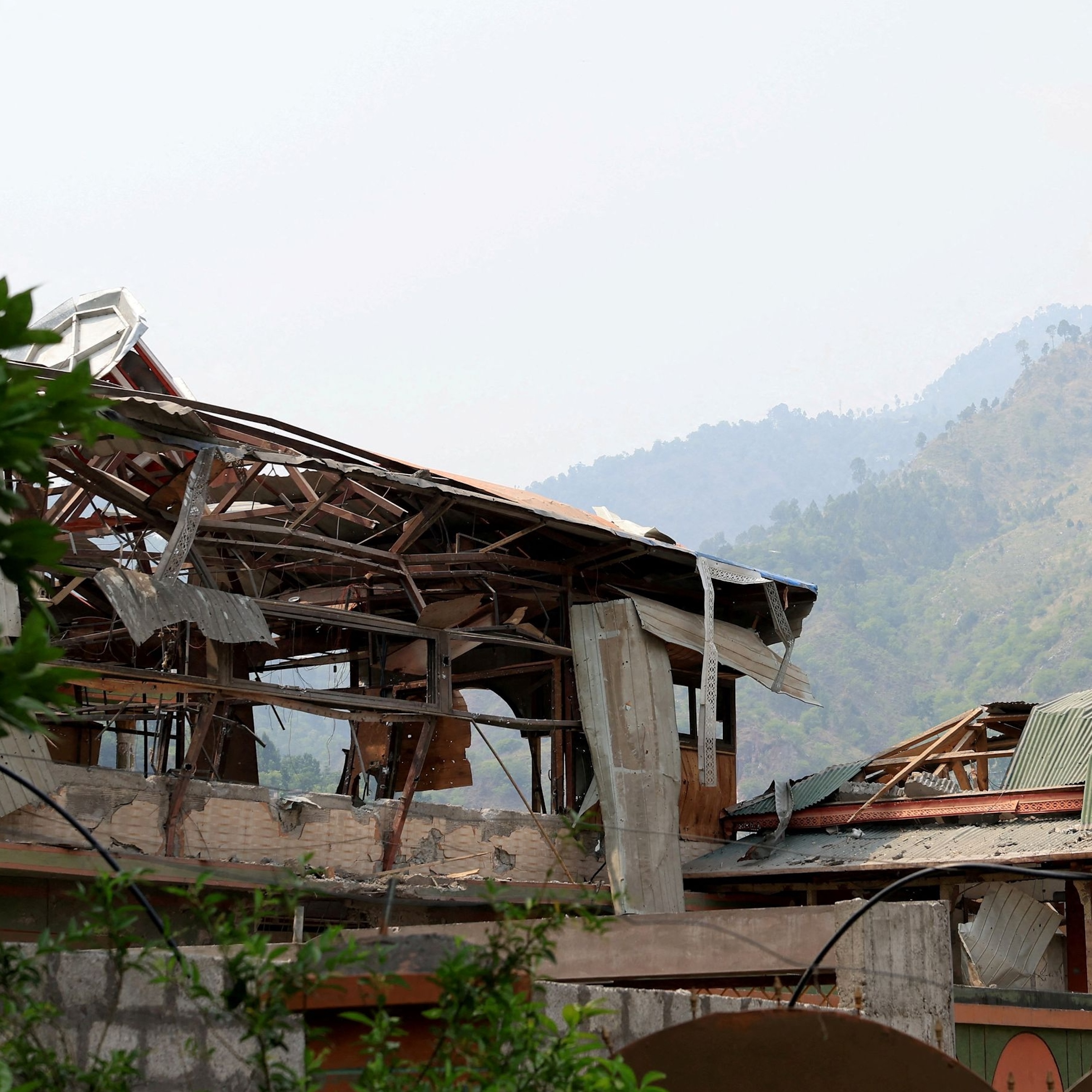
Post Reports
Are India and Pakistan at risk of war?
00:22:36
Tensions are boiling over between India and Pakistan. The nuclear-armed neighbors are in direct conflict for the first time in years.
Loading summary
Transcript33 lines
- [00:03]
Elahe Izadi
Nestled in the foothills of the Himalayas is a place many people have called one of the most beautiful areas of South Kashmir. Kashmir has also been the site of a struggle between two major powers, India and Pakistan. This decades long conflict has erupted at different times. Just last month, gunmen killed tourists in India administered Kashmir. India blamed a Pakistani separatist group. Then this morning, India launched what it called retaliatory strikes, killing at least 31 civilians, including two children. According to Pakistani officials. These strikes mark an escalation and the stakes feel especially high right now given given that both India and Pakistan have nuclear weapons. Now global leaders are on alert asking could we be at the brink of war in South Asia? From the newsroom of the Washington Post, this is Post Reports. I'm Elahe izadi. It's Wednesday, May 7th. Today, how the conflict between India and Pakistan began and where it might go from here. I speak with South Asia correspondent Karishma Meharotra who joins me from Delhi. Well Karishma, thank you for joining us.
- [01:33]
Karishma Mehrotra
Yeah, thank you so much for having me.
- [01:35]
Elahe Izadi
So you and I are talking Wednesday morning, my time. It's Wednesday evening your time. What is the latest between India and Pakistan as of this moment?
- [01:46]
Karishma Mehrotra
Yeah, so we're still in a moment where a lot is still changing. So the numbers keep getting updated. But last night or early this morning, Wednesday morning around 1 to 2am we got news that Indian armed forces had attacked multiple sites in both Pakistan administered Kashmir and in Pakistan itself. So immediately it was clear that this was a pretty significant escalation of what we've seen so far because this was the furthest into Pakistan that we've seen India attack in decades. And then what we started getting news of is some of the deaths that seem to have happened in Pakistan. And the Indian side had claimed that they were not hitting Pakistani military targets but were targeting specifically what they call, quote, terrorist infrastructure. And they frame the attacks as being non escalatory. So they are not looking for an escalation beyond this after that. One of the significant developments that we are trying to track is some claims from the Pakistan side that they've shot down Indian warplanes, Indian fighter jets. Now this is something that we're still trying to confirm from the Indian side. But, but there's obviously a lot of video footage coming in showing significant wreckage in both Indian Punjab and in Indian administered Kashmir. But we are still trying to verify some of those videos and these claims.
- [03:27]
Elahe Izadi
So Karishma, what led to this strike, these strikes from India against Pakistan, what happened right before that.
- [03:39]
Karishma Mehrotra
Yeah. So in the end of April, roughly two weeks ago, there was a pretty brutal attack, militant attack in Indian administered Kashmir against a large group of tourists.
- [03:54]
Hannah Jewell
Tourists were visiting the Baisaran Valley nearby, which is only accessible by foot or horseback.
- [04:00]
Karishma Mehrotra
Gunmen sort of appeared from this forest and opened fire on tourists who were gathering in a very popular meadow, tourist location in Indian administered Kashmir. And that attack led to at least 26 people being killed, 25 were Indians and one was Nepali. And because of that violence, it was clear in the past two weeks that India was trying to plan some sort of retaliation. Especially since the violence was one of the few times, one of the very rare times that we've seen this type of attack on tourists. It's very rare to see that in Kashmir. And so it clearly, you know, sent major shockwaves across the country. That also meant that a very fragile ceasefire that India and Pakistan had come to terms on in 2021 was slowly fraying. And we start seeing a lot of shelling and now we're seeing even artillery fire on that de facto border that India and Pakistan have in Kashm.
- [05:17]
Elahe Izadi
And Karishma. I want to understand more about this region and just how we even got to a ceasefire, like what even led up to that before we get there. Do we know who was behind that attack in April? Like, what do we know about who was responsible for it?
- [05:33]
Karishma Mehrotra
We don't have a lot of clarity on exactly who was responsible, but we do know that right in the aftermath of the attack, the Indian media blamed the attack on a military militant group called the Resistant Front. And this is a group that the Indian government has linked to Pakistan.
- [05:53]
Elahe Izadi
Resistance Front.
- [05:55]
Karishma Mehrotra
So this is Foreign Secretary of India Vikram Isri saying that the organization Resistant Front had itself taken responsibility or claimed responsibility for this attack, trf. But that group, some days after the attack, denied responsibility of the attack. And since then, we haven't seen any clear evidence from the Indian side for their claims that there are linkages to Pakistan. But the Indian side has been very clear and public that they do blame Pakistan for this attack.
- [06:38]
Elahe Izadi
So at this point, I think it would be helpful to take a step back and really understand more about this region. I mean, I've heard you say Indian administered and Pakistan administered. I'm curious what that means. And maybe the way to understand that is if you could sort of step back and help explain the origin of Kashmir and how these tensions developed over time.
- [07:01]
Karishma Mehrotra
Yeah, so we can't really talk about Kashmir and the conflict over Kashmir without tracing it back to partition in 1949, which was when Hindu majority India and Muslim majority Pakistan were separated after British rule. After partition, Muslim majority Kashmir chose to be independent from both Pakistan and India. But in the aftermath, Pakistan invaded into Kashmir to claim the territory. And Kashmir sought help from India and signed an agreement to legally become a part of India, but was also granted some special autonomy in constitutional provisions as well. This moment, the aftermath of this moment led to the first war between India and Pakistan over Kashmir, which was in 1947. And since then, it's led to a series of wars between the country and a continuing conflict between the country that at some point also created a de facto border in Kashmir called the Line of Control that gives the Indian side the ability to administer one side and the Pakistani side the ability to administer the other side. So that tension, that sort of unresolved and disputed nature of this territory continues to date, decades later. And one of the latest times that we saw the conflict erupt was in 2019. The Indian Prime Minister, Narendra Modi has promised a strong response after a suicide bomber killed 46 soldiers in India administered Kashmir on Thursday. And India also retaliated with the attack into Pakistan. Pakistan says it has shot down two Indian aircraft, which it claims were over Pakistani airspace. But that attack was not even close to the level of escalation that we're seeing today. What happened also after that brief sort of conflict between the two countries in 2019 was that India removed some of the special autonomy that it had given Kashmir and asserted more control, legal control over Kashmir. And since that time, you've seen that the sort of crackdown in Kashmir has significantly increased on human rights activists, journalists, various forms of civil society. But what has also happened since that revocation of Kashmir special autonomy is that tourism in this region has increased immensely. We've seen, you know, tourist numbers skyrocket in Kashmir to levels that we haven't seen in a long time. And a lot of that is because of a very concerted push from the Indian government to get tourists into Kashmir and present the idea of normalcy in Kashmir since they had asserted new legal control over the territory. And that's important context to then remember the attack that we saw in, in the end of April from the militants on tourists, because it was very clearly targeted to tourists and to sort of puncture this idea of normalcy with tourism in Kashmir.
- [10:28]
Elahe Izadi
Karishma, can you tell me a little bit more about what Kashmir is like? I mean, this is. You're describing a very hotly contested region for many decades, dating back to 1947 partition. What is this? What is this region like? And, you know, even talking about tourists and wanting to go there, what is it like? Have you ever been there?
- [10:49]
Karishma Mehrotra
I have been to Srinagar, which is the largest city in Kashmir, and Kashmir is one of the most beautiful areas in South Asia. It's, you know, deep into the Himalayas. And it has always had a very significant ethos in Indian culture. You know, for decades, it was sort of a honeymoon spot. And it's always been sort of a very sort of treasured part from an Indian perspective. But that sort of beauty of Kashmir is significantly just opposed to how militarized that area is. I was really shocked with how significant the military presence is in Srinagar. I walked around the old town and immediately saw, you know, random passerby being stopped by military tanks. So it's a bit of a jarring experience to both see the Himalayas and how beautiful it is next to all of these military tanks. It is known to be one of the most militarized territories in the world. And, of course, it's led to such significant conflicts between these two countries.
- [12:09]
Elahe Izadi
After the break, how nuclear weapons could change the calculus for India and Pakistan. We'll be right back.
- [12:29]
Robin Givhan
I'm Robin Givhan, and I'm the senior critic at large for the Washington Post. I write about politics and race and the arts. You know, there's so much information and misinformation coming at people. And for me, a critic's job is to really cut through that and attempt to direct people towards what is of value. Subscribers are definitely the most engaged, and they're the ones that I feel like I'm most often having a conversation with people who are really engaged in our culture and engaged in civic life in a way that can be really transformative. When you subscribe to the Washington Post, you support this kind of journalism. Learn more at subscribe.washingtonpost.com I'm Robin Givhan, and I'm one of the people behind the Post.
- [13:28]
Unknown
You probably have an app for music, but do you have an app for radio? You know, for what's happening right now? An app for breaking news that'll change your daily routine. An app that starts your morning with what you missed last night. An app you can throw on Friday night for a guaranteed party every time? Yeah, there's an app for all that. It's the iHeartRadio app, the app that lets you listen to thousands of live radio stations along with podcasts and a whole lot more. Download the number one radio app, the iHeartRadio app today.
- [14:08]
Elahe Izadi
So, Karishma, stepping back and now thinking about this conflict reigniting between India and Pakistan, how have global leaders responded to these attacks?
- [14:20]
Karishma Mehrotra
Yeah, so President Donald Trump had said in the Oval Office that it's a shame what he had seen and he hopes it ends very, very quickly.
- [14:29]
Donald Trump
No, it's a shame. We just heard about it just as we were walking in the doors of the Oval. Just heard about it. I guess people knew something was going to happen based on a little bit of the past. They've been fighting for a long time. You know, they've been fighting for many, many decades and centuries actually, if you really think about it. No, I just hope it ends very.
- [14:51]
Karishma Mehrotra
Quickly, which is a bit of a more distant response to be, to be honest.
- [14:58]
Elahe Izadi
Wait, why, why is that a bit of a distant response? Why did that strike you as unusual coming from President Donald Trump?
- [15:05]
Karishma Mehrotra
I think from an Indian perspective they look to the US to show strong support that no matter what circumstances, the US Sort of has India's back. And we did see some remarks from senior American officials that stated that, but we saw a bit of a mixed response. We saw also some officials globally as well sort of state talk about how they wanted to see more de escalation and didn't want to see the conflict spiral out of control. And I know from an Indian perspective some of the reactions to that have been disappointment that these global leaders are not more vocally taking India's side in the conflicts given the, the brutality of the initial militant attack that India claims is linked to Pakistan. On the other side, interestingly, we did see Chinese officials and experts coming out quite publicly talking about a quote, ironclad relationship between China and Pakistan. In the aftermath of this specific Indian attack into Pakistan and Pakistan administered Kashmir. The Chinese Foreign Ministry spokesperson did urge a sort of quote, restraint, not wanting to escalate the situation. We did see Secretary of State Marco Rubio also speak with Foreign Minister J. Shankar in India and several other countries have been communicating with both sides in this conflict. So it's clearly something that global leaders are watching and for the most part I think clearly hoping for some form of de escalation.
- [16:57]
Elahe Izadi
You know, Karishma, just In the past 24 hours, at least from where I'm sitting, you know, on the east coast of the United States, I'm seeing a lot of concern from people that this could really get out of control. And one of the reasons that people I think are really concerned about this is the presence of nuclear weapons. So can you just tell me about the role Nuclear weapons play here, do what weapons do India and Pakistan have?
- [17:23]
Karishma Mehrotra
Yeah. So each side, according to the Stockholm International Peace Research Institute SIPRI, each side has about 170 nuclear wars warheads. And according to a 2024 SIPRI report, the role of nuclear weapons in India, which was earlier focused only on Pakistan, appears to have shifted towards countering China as well with more longer range weapons. On the Pakistani side, the growing stockpile also seems to suggest that their nuclear arsenal is likely to expand. And neither country is a signatory to the UN treaty which is on the non proliferation of nuclear weapons. So yes, so I mean it is often mentioned that these are two nuclear armed rivals. Some, of course, some analysts say that the nuclear weapons acts as a form of deterrence for the country. I think on the escalation question for me right now, and one of the things that I think we really want to try and understand is the details around the Pakistani claims of Indian aircraft, both fighter jets and drones being shot down. And specifically if the Pakistani are correct, they have been shot down in Indian airspace. Whether or not it's even true that the Pakistanis have downed these jets and drones, you know, we still have to get a lot more verification of these. But if that is to be true, one of the things we have to think about here is how both India and Pakistan every time a conflict arises are looking for an exit route. Like they're looking for a way to save face. And if it's true that whether it's four, whether it's five, you know, we're trying to clarify the numbers. Fighter jets have been downed on the Indian side, that would be a significant embarrassment for India and unfortunately they might have to find a way to save face in the situation. So I to me right now the Next, you know, 24 hours is a lot about figuring out what these, what the details are of these downed fighter jets and drones. And of course also the civilian tolls is significantly important. We are still seeing fire, artillery fire on the de facto border between the countries. So there is still a lot that we have to see to figure out if it will de escalate or not.
- [20:17]
Elahe Izadi
And it's interesting to think about how in the past the sides have looked for an exit ramp. So beyond the next 24 hours in the coming days and weeks, what, what is the big question on your mind? Is it where could the exit ramp be? Or is it are more exit ramps being closed off as this progresses?
- [20:37]
Karishma Mehrotra
I think that is a question to think about. Like are the exit routes slowly shrinking in size as this escalates. I mean, one of the things I'm thinking in my head is even if, you know, we do do see things calm down from here out and the Indian side sort of decides to take this as a win and the Pakistani side decides to take this as a win, it doesn't really change the larger fundamental dynamic between these countries at all. So we're talking about two countries whose people to people ties have anyway, been extremely strained, especially since 2019, the last conflict between the two. And that's only gotten worse now. And so you sort of have two neighbors whose, interestingly, whose culture is actually not that different in many ways. I mean, the art, the music, the, you know, when we talk about just people's culture, it's, it's really not that different. But the exchange between the two countries, the this, those are just getting worse. The things that you're hearing me sitting in Delhi, the things that you're hearing about, yes, Pakistanis, but also about Muslims overall, about Kashmiris, is just reaching newer levels. And I think no matter if this situation even de escalates, that undercurrent of what we're seeing in the public and between these two governments is still worrisome, I think, and it's still something that I think the world will have to continue paying attention to for years to come.
- [22:24]
Elahe Izadi
Well, Karishma, thank you so much for taking the time to explain all this. I really appreciate it.
- [22:29]
Karishma Mehrotra
Great. Thank you so much for having me.
- [22:35]
Elahe Izadi
Karishma Mehrotra is a South Asia correspondent for the Post. That's it for Post Reports. Thanks for listening. Today's show was produced by Rennie Srinofsky with help from Alana Gordon. It was edited by Ariel Plotnick with help from Maggie Pendant. It was mixed by Sean Carter. Thanks to Jesse Messnerhaege. I'm Elahay Izadi. We'll be back tomorrow with more stories from the Washington Post.
- [23:14]
Hannah Jewell
There's an efficient way to get caught up on a lot of news. It's called the seven from the Washington Post. It's a newsletter and podcast. Whether you're reading or hit play, you get seven stories you need to know and you can consume it all in just a few minutes. The 7 is out every weekday morning by 7:00am Eastern. I'm Hannah Jewell. I'm one of the writers and I host the show. Find the seven podcast wherever you're listening. The newsletter link is waiting for you in the show notes.