← Post Reports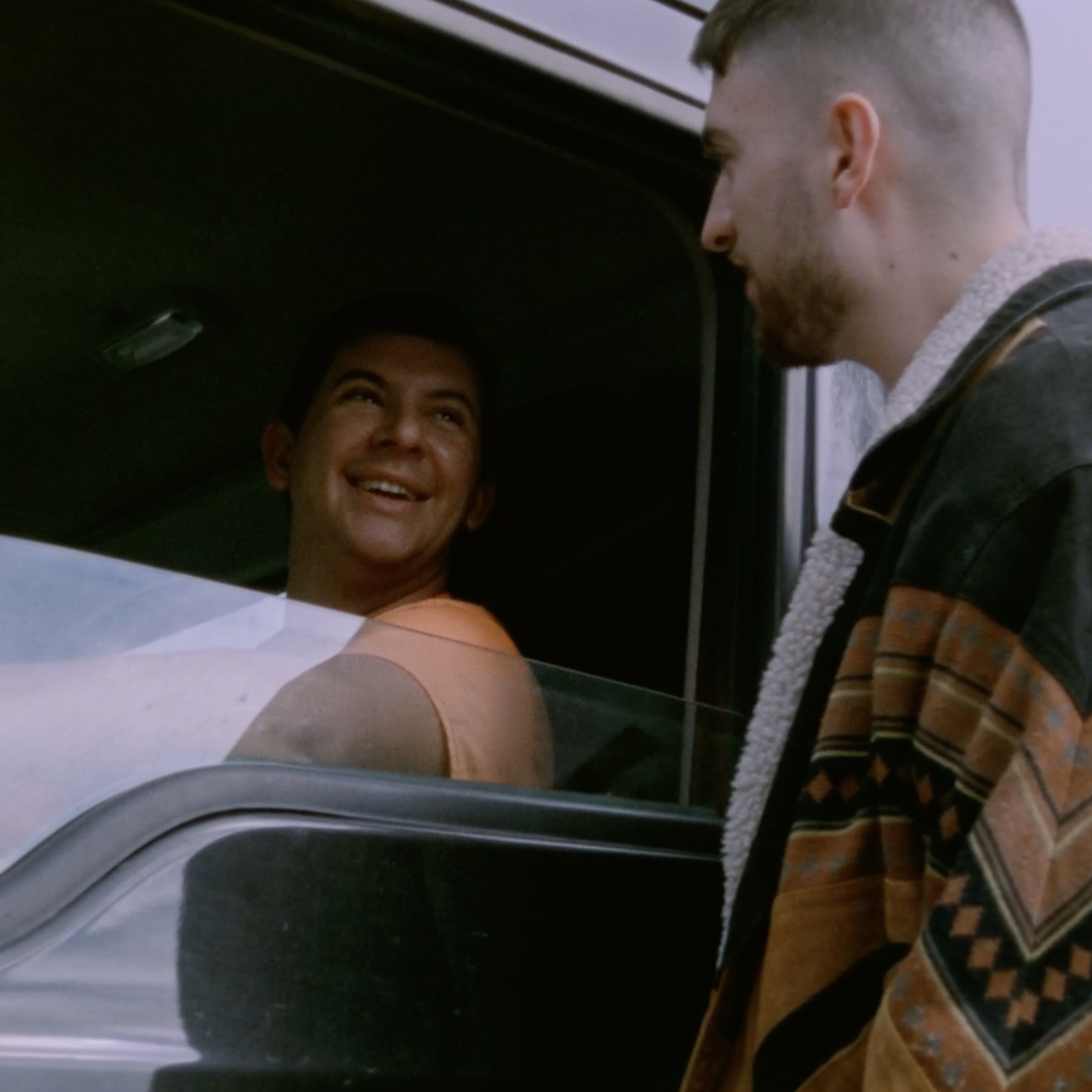
Post Reports
Can you choose to be happy?
00:17:32
For the past five years, filmmaker Atdhe Trepca has been going up to strangers and asking them if they’re happy. This is what he’s learned.
Loading summary
Transcript58 lines
- [00:03]
Maggie Penman
For the past five years, Alday Trepka has been going up to strangers and asking them a simple question.
- [00:09]
Alday Trepka
Can I ask you a question?
- [00:10]
Maggie Penman
Oh, my goodness, no.
- [00:13]
Alday Trepka
The question is, are you happy? I what?
- [00:19]
Maggie Penman
Who are you? These videos reach millions of people on Instagram and TikTok, and taken together, the answers tell a story. They've informed Alday's ideas about happiness, even the really silly ones.
- [00:33]
Dr. Fuchsia Siwa
Are you happy?
- [00:35]
Various Interviewees
Yeah, very happy.
- [00:36]
Dr. Fuchsia Siwa
What's making you happy?
- [00:37]
Various Interviewees
Maybe it's, I can't go a day without eating pickles if I don't eat pickles.
- [00:41]
Maggie Penman
When Alde first started doing this, it was just him and sometimes his brother helping him out. He quit his day job and traveled around with his camera. Now he has a whole team of other filmmakers helping him, and they've even made a documentary.
- [00:55]
Dr. Fuchsia Siwa
Are you happy?
- [00:56]
Various Interviewees
Of course I'm happy.
- [01:00]
Dr. Fuchsia Siwa
Out here. What makes you happy?
- [01:06]
Various Interviewees
Not much.
- [01:06]
Maggie Penman
Everything.
- [01:09]
Various Interviewees
Food, lunch, fresh, good weather, bad weather. I don't care. Happy anywhere.
- [01:18]
Maggie Penman
I wanted to know, what has Alde learned about happiness from having all of these conversations with strangers?
- [01:24]
Alday Trepka
Maggie.
- [01:27]
Maggie Penman
I'm Maggie Penman. This is Post Reports weekend. It's Saturday, October 18th. I'm a reporter for the Optimist. It's a section of the Post full of inspiring and hopeful stories about things that are going right in the world. And today, I'm talking to filmmaker Alday Trepka about how we can all be a little bit happier, even if you're going through something really difficult. And we hear from a researcher who offers some very tangible advice.
- [02:00]
Interviewer/Host
Okay, so could I help you start by just saying who you are and how we should identify you?
- [02:06]
Alday Trepka
Yeah. So my name is Alde Trepka, and I am the creator of are you happy? Which is a documentary series where I travel around the world and ask strangers if they're happy. It's also turned into a nonprofit, where we help other nonprofits promote their works on our page. So it's a little bit of a documentary series and supporting other nonprofits.
- [02:37]
Interviewer/Host
And how did you get this idea to start asking people if they're happy?
- [02:42]
Alday Trepka
So I, as a filmmaker, I'm always looking for different sort of stories to tell. And in the early 1960s, there was a documentary film that came out in France called Chronicle of a Summer. And it was like a psychologist going out on camera asking random people different questions. And one of those questions was, are you happy?
- [03:12]
Maggie Penman
What is your life? The question would be, are you happy?
- [03:21]
Alday Trepka
I was really fascinated by that idea, and so I thought, you know, what would it look like if we modernized that and took it around the world. And then we started recording in 2019, and then started publishing right around Covid. And within, like, a week, you know, it ended up catching fire.
- [03:44]
Maggie Penman
There's a comforting sameness to these videos. I have watched an embarrassing number of them on Instagram. Usually the filmmaker is off screen, so you just see the person they're approaching.
- [03:54]
Alday Trepka
Even though we've been doing this now for going on five years, every answer is still unique and every perspective is different. And it's always still very exciting for me to ask people. We are all quietly dealing with our own. Our own, you know, and, like, what are you happy?
- [04:20]
Maggie Penman
Does.
- [04:20]
Alday Trepka
Is it kind of, like, interrupts your day a little bit? And while you're sort of quietly dealing with this, your head, someone walks up to you and asks, are you happy? And what you'll notice is, like, when. When people get asked that question, they kind of, like, fan through all the things that they've been thinking about, all the things in their life, and in that moment, they. They will decide to tell you if those things are defining them as unhappy or as happy. And we're. Like I said, we're all dealing with sadness, with. With negative things and good things. But I feel like the difference between happy people and unhappy people is the ability to say, you know what? Despite the fact that I'm down on my luck, despite the fact that I might not have things, this sandwich is really making me happy.
- [05:13]
Maggie Penman
One video that I've watched over and over is of this young guy at a gas station in Miami. I think it's fair to say he is objectively beautiful. He's got a little bit of a smile on his face. He's in amazing shape, and. And he looks like somebody who's in a good place. He's got his life together. But when he's asked if he's happy, he says that he's not.
- [05:34]
Various Interviewees
I don't know, man. I just feel like I moved to Miami, like, four months ago, and I just feel like the pace of life is so fast that I. Yeah, I just feel like I wake up and the day's over, you know, I don't feel any sense of accomplishment in my days, really. Yeah, I do medical advice, sales.
- [05:48]
Maggie Penman
Even after all this time, Alde is surprised that he still can't predict how someone will answer his question.
- [05:55]
Alday Trepka
The happiest people I've met have oftentimes gone through the most unhappiest things you can imagine, and they're able to process what happened again in a way that they find they could move on or even find joy in it. And I think, you know, happiness has to come with some amount of sadness. You know, you can't be fully happy unless you've experienced real sadness.
- [06:29]
Maggie Penman
There's one of those people in the documentary, this dad who's been watching his son skateboard in a park. He's really thin and he's wearing a beanie. It turns out he has stage four cancer.
- [06:39]
Various Interviewees
Are you happy?
- [06:41]
Alday Trepka
Um, some days I have a stage four rectal cancer. So it's. I was happy to make it through the first year. I don't know, I'm. I guess I am because I'm happy that I even get to sit here and watch and do all this and everything because I never thought I'd feel. This might be a little controversial, but I. I do think happiness is a choice. And it's a choice we have to make every day and throughout the day. We have to decide if something that goes wrong or not according to our plan is going to be a negative or is going to be a positive.
- [07:29]
Maggie Penman
I struggle a little bit with the idea that happiness is a choice. Thinking about people who are grieving or seriously ill or just lost a job, I think it can be really reductive to say that they could just choose to be happier because there are so many things we can't control. But I spoke to a researcher who studies well being and she said there is some truth to what he's saying.
- [07:53]
Dr. Fuchsia Siwa
Positive psychological factors and factors related to resilience can help people reach their goals and improve their health and well being. So things like self compassion and gratitude and being future oriented, that type of.
- [08:12]
Maggie Penman
After the break, we'll tell you how you can be happier. No, really, we will. We'll be right back.
- [08:30]
Sponsor Narrator
If you're like me, Fall always feels like a reset between after school activities, busier routines and shorter days. Fall finding time to cook is pretty much impossible. That's why I love Factor. Their chef prepared diet friendly meals make it easy to get everything done while still enjoying something comforting and delicious, no matter how hectic life gets. Factor offers a wide selection of weekly meal options including premium seafood like salmon and shrimp at no extra cost. They've also added new Asian inspired meals. Ample choices with better Nutrition is why 97% of customers say Factor helped them live a healthier life. I've been with Factor for a few weeks now and so far I've had garlic, butter and mushroom chicken thighs, pomodoro herb salmon.
- [09:12]
Interviewer/Host
Ooh.
- [09:12]
Sponsor Narrator
And chimichurri shredded pork all amazing. Eat smart@factormeals.com post 50 off and use code post 50 off to get 50% off your first box plus free breakfast for one year. That's code post 50 off@factormeals.com for 50% off your first box plus Free breakfast for one year. Get delicious ready to eat meals delivered with Factor Authentic offer only valid for new Factor customers with code and qualifying auto renewing subscription purchase as the weather's starting to cool, it's time for layers that last and Quince is my go to for quality essentials that feel cozy, look refined and won't blow your budget. Quince really does have what you need for the fall $50 Mongolian cashmere premium denim that fits like a dream and luxe outerwear you'll wear year after year. I've had my eyes on their wool coats for a while now and they look designer level but cost a fraction of the price. Because Quint's partners directly with top tier ethical factories and cuts out the middlemen, they deliver luxury quality prices at half the price of similar brands. It's the kind of wardrobe upgrade that feels smart, stylish and effortless. Trust me, I know from firsthand experience. The cashmere sweater I have is literally my number one whether I'm going out or staying home. Find your fall staples@quinte's. Go to quince.com reports for free shipping on your order and 365 day returns. Now available in Canada too. That's Q U-I N C E.com reports to get free shipping and 365 day returns, quince.com reports.
- [10:46]
Interviewer/Host
So could I have you start by just introducing yourself, just saying who you are and what you do?
- [10:51]
Dr. Fuchsia Siwa
Sure. My name is Dr. Fuchsia Siwa. I'm a professor of social and Health Psychology at Durham University in the United Kingdom.
- [11:00]
Maggie Penman
I came across Fuchsia Serwa's research on optimism and how believing good things will happen can actually make good things happen. Stay with me here. I know this sounds a little woo woo and I'm not talking about like manifesting positivity or anything like that. Dr. Sirwa has done some research on people living with chronic incurable illnesses.
- [11:22]
Dr. Fuchsia Siwa
You know, you would think it might be really difficult to the future in a bright and positive way, but one of the things that I found in that research was that even people dealing with really distressing chronic condition can have an optimistic viewpoint. And so I think all that to say that optimism is very important for a number of reasons. But what it basically is Defined as having the expectation that outcomes will be positive. And it doesn't mean you sit back and just wait for everything to fall into your lap. It's a general mindset that's expecting that more good things than bad will happen to you in the future. And if you have that perspective, you are not more likely to sit around, wait for things to happen. Actually, what the research has shown is that you're more likely then to take action and do the sorts of behaviors that will support that belief. Because if you think there's no hope, you're not going to do anything. But if you think there's hope, if you think that things are going to work out somehow, then it's not actually going to be as bad as that. That there is a silver lining there somewhere, which is sort of like a core sort of cognitive process in optimism. Then you're going to go, yeah, and I'm going to do whatever I can to help that along.
- [12:40]
Maggie Penman
I think many of us know intuitively that thinking positively is good for us, no matter what is going on in our lives. It helps. If that's not the headspace you're in right now, though, that is okay, because Dr. Sirwa has done research on how you can get there.
- [12:56]
Dr. Fuchsia Siwa
I think the key thing is there is about being able to find ways to focus on the positives. Right. Because if you only focus on the negative, you only focus on how bleak things are, how terrible they are in the world or in your life or whatever. Yeah, you're going to get really depressed. You're going to get really unmotivated to do anything. But that is a mindset. That's a perspective. And so for every negative you can see, there are positives. And part of that is getting out of sort of black and white thinking. It either has to be all perfect or it's all disaster. And so that type of thinking can actually interfere with that and actually seeing things on a little bit more of a grayscale. To say that there may be some really negative things in this situation right now, my relationship or with my health, but there's actually some pretty positive things that are going on, and I can build on those positives. So it is about training your mind to notice those positives. Like try to find the silver lining in a dark exercise, and there are exercises for people to do. So as soon as you start running down, here's all the negatives. Well, is there anything positive in that? Anything positive you can see coming out of that situation? So it's getting your mind to become Aware and realize that there is a possibility for positives. And to that end, there's one practice that's actually quite simple and quite powerful though, too, for helping people shift their perspective to start noticing the positives, and that's practicing gratitude. Because gratitude, by definition, is noticing first the positives and then appreciating them. We always focus on the appreciating, you know, like, oh, I'm really thankful for this. You can't be thankful for something if you don't notice it as a positive. So that's actually a skill set where you have to cultivate that. And writing down gratitude lists, like, three good things that happened to you today, and you force yourself to think about three good things, you're now shifting your perspective to focus on what. There's some positives there. I'm going to make a list of them. And as you start to do that more. So one of the things that happens with these sort of gratitude lists or gratitude journals, and there's lots of apps out there that offer people these gratitude journals, it's quite popular right now. And, you know, you kind of think, oh, that's all really nice and light. It actually is a very powerful tool because what you're doing is you're resetting your thinking, right? You're resetting your mindset now so that you become better at spotting the positives. And when you become better at spotting the positives, that's now an opportunity to start realizing that positives are possible even in the most bleak and grim circumstances, which can then help you cultivate that hope and that optimism for the future.
- [15:30]
Interviewer/Host
Yeah, that's great. And I think, you know, it's funny. Gratitude, journaling and meditating, I think is advice a lot of people get when they're feeling down. And I think often it's easy to tune that advice out, right? Because you're like, yeah, everything sucks. I don't want to journal. Like, I don't want. You know, I'm like, I don't want to meditate. Like, I'm so stressed. You know, whatever. Whatever it might be. So is there. Is there, like, specific research you could talk about where you've seen the actual changes that happen in people when they practice these simple things?
- [16:07]
Dr. Fuchsia Siwa
I mean, so the research on gratitude has been around for a while. There was one study that was done a few years back, and they found that just engaging in sort of gratitude lists and journaling, that the effects persisted for six months later in terms of shifting people to become more grateful. Wow. And after a certain point, you don't need to keep doing those lists. It's a tool to train your mindset. That's what it is. So I think people get stuck on this idea that it's just a list. I'm going to do this list. No, it's actually a tool. You're retuning your brain to think. Notice those positives a bit more and it soon becomes a habit and then you will just think more gratefully about the world. Right?
- [16:54]
Maggie Penman
Dr. Sirwad did want to emphasize there are limits to what gratitude and self compassion can do.
- [17:01]
Dr. Fuchsia Siwa
If somebody is having moderate to severe depression or other, you know, mental ill health conditions, those are always best treated by professionals. First, they might prescribe some of these sorts of exercises in addition to medication and other practices and other therapeutic processes. I don't want to make it sound like a secure all for everybody. It's not going to be suitable for some people. And this is some of the gratitude research as well too, that just telling somebody who's really depressed to find something positive, it just, they tune right out.
- [17:41]
Maggie Penman
Learning more about the research, about retraining your brain reminded me of something Aldea Trepka said about happiness.
- [17:49]
Alday Trepka
Happiness is almost like a muscle, right? If you work that muscle and you start to sort of change the chemistry in your brain to turn negatives into positives and turn unexpected changes in your life into a positive, you're like working that muscle and then eventually that's just kind of who you become and how you'll naturally learn, look at things. And so it's been a journey for me.
- [18:18]
Maggie Penman
Of course, before I let him go, I had to ask if he was happy. And he said that he was, but not because of his success or how many followers he has on TikTok.
- [18:29]
Alday Trepka
I've got like my, my family and I think that people maybe take that for granted, but if you have that, you really are, I say, in the top one percentile of the happiest people in the world. If you have that support system around you, I feel like that's like paramount to happiness.
- [18:46]
Maggie Penman
Whether intentionally or not. It kind of sounds to me like Elda is practicing gratitude. I'm Maggie Penman. I'm a reporter for the Optimist. If you want to hear more stories like this on the weekend, please send me an email. You can reach the whole team@podcastoshpost.com or or just me at maggie.penmanashpost.com Today's episode was reported and produced by me with help from Ted Muldoon, Emma Talkoff and Shawn Carter, who also mixed the show. My editor is Alison Klein. If you want more optimistic content, check out our newsletter. I'll put a link in our show Notes where you can subscribe. Thank you for listening and have a great rest of your weekend.
- [19:47]
Washington Post Advertiser
You listen because you know the power of good journalism and the Washington Post is there for you 24 7. When you become a Washington Post subscriber, you get exclusive reporting you can't find anywhere else. You also get sharp advice, columns, delicious recipes, TV and music reviews, and so much more. Right now, you can get all of that for just $4 every four weeks. That's for an entire year. After that, it's just $12 every four weeks. And you can cancel anytime. Add to your knowledge and discover all the Post has to offer. Go to washingtonpost.com subscribe that's washingtonpost.com subscribe.