← Post Reports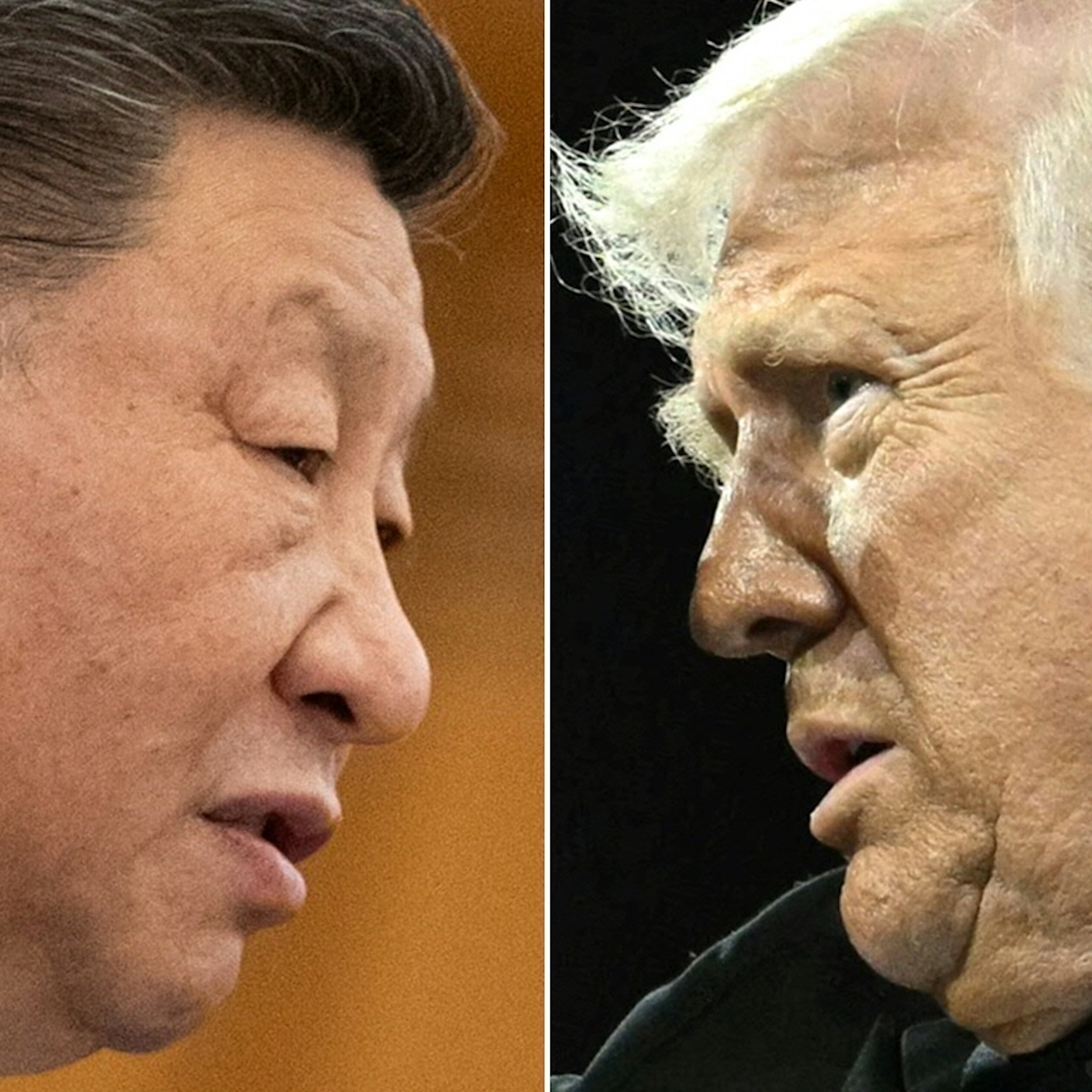
Post Reports
China's plan to win Trump's trade war
00:22:47
The world’s two largest powers are closer than ever to a full economic break. Why neither the United States nor China want to blink, and what it will take for China to survive the trade war.
Loading summary
Transcript64 lines
- [00:01]
Wix Advertiser
Got an amazing business idea, but haven't locked in a domain name. Search Wix domains and claim yours before someone else snags it. Your ideal.com net u is out there. Search Wix domains and set your brand in motion.
- [00:17]
Chris Velasco
So you may have heard there's a trade war going on.
- [00:21]
Lily Kuo
Yeah, it's been a lot. Every day it's different and it's definitely hard to keep up. I mean, so right now, tariffs on Chinese goods from the US and tariffs on US Goods from China are at historical highs, and they basically amount to a trade embargo on each other.
- [00:37]
Chris Velasco
Lily Kuo is the Post's China Bureau chief.
- [00:40]
Lily Kuo
And I've been covering the trade war for the last two weeks, and it feels like it's been a year.
- [00:48]
Chris Velasco
As it stands right now, U.S. tariffs on Chinese goods are at least 145%. Chinese tariffs on U.S. goods are at least 125%. And this has all evolved well beyond measured trade policy. It's actually gotten kind of mean. Here's Vice President J.D. vance earlier this month.
- [01:10]
Wix Advertiser
We borrow money from Chinese peasants to buy the things those Chinese peasants manufacture. That is not a recipe for economic prosperity. It's not a recipe for low prices, and it's not a recipe for good jobs in the United States of America.
- [01:24]
Chris Velasco
Then China's top official overseeing Hong Kong affairs, Xia Bao Long, bit back. He said U.S. tariffs would backfire and that, quote, those peasants in the US would wail in front of 5,000 years of Chinese civilization.
- [01:49]
Lily Kuo
So Beijing, you know, at every step of escalation from Trump, they've responded with pretty much an equal response, either in tariffs or other measures. But since Trump has just continued to escalate them, it seems like Chinese officials are now starting to be a little bit more spicy. And so they're casting the US as an irresponsible, selfish global power that is wreaking havoc on the global financial system and global trade.
- [02:21]
Chris Velasco
From the newsroom of the Washington Post, this is Post Reports. I'm your guest host, Chris Velasco, in for Colby itkowicz. It's Thursday, April 17th. Today, how China views the trade war. I speak with Lily about how the trade relationship between the US And China got so tense, how China thinks it can weather the storm, and what it means for the rest of the world. Lily, I really appreciate you joining to talk to me about this today, especially because you're in Taipei and I'm in California, and the time zones do not align in, in any productive, enjoyable way.
- [03:05]
Lily Kuo
No, this was very productive and enjoyable.
- [03:08]
Chris Velasco
So, Lilly, what's your sense of how we got here? Right. Like, what did the escalation between these two countries look like?
- [03:15]
Lily Kuo
So it's funny, because this really started with Trump's first term and the first trade war that he launched against China.
- [03:23]
Donald Trump
This has been long in the making. You've heard many, many speeches by me and talks by me and interviews where I talk about unfair trade practices.
- [03:35]
Lily Kuo
At that time, the reason was China's trade surplus with the US and that trade war eventually ended in what was called a phase one deal where China promised to buy more US Goods.
- [03:47]
Donald Trump
Today, we take a momentous step, one that has never been taken before with China, toward a future of fair and reciprocal trade. As we signed phase one of the historic trade deal between the United States and China.
- [04:02]
Lily Kuo
Then the pandemic hit, and China ultimately did not buy as much as it said it would. And so Trump sees China as not holding up its side of the bargain. And relations between China and the US Just continued to get worse during the Biden administration. And then when Trump came in, he had campaigned on promises to target China and its unfair trading practices and to, you know, levy Something like 60% tariffs.
- [04:26]
Donald Trump
You're talking about 60% tariffs on Chinese goods.
- [04:29]
Lily Kuo
Is that in the cards?
- [04:30]
Donald Trump
No, I would say maybe it's going to be more than that.
- [04:34]
Lily Kuo
So in February, Trump started off with a 10% tariff on Chinese goods. And he said that this was punishment for what he said was a lack of progress in China's efforts to stop the flow of fentanyl from China to the United States. What's happening, as you see, this is the president fighting a drug war.
- [04:54]
Unnamed Commentator
This is not a trade war.
- [04:56]
Lily Kuo
So China responded with a 15% levy on U.S. coal and liquefied natural gas. You know, there's further escalation where China then started to put tariffs on US Agricultural products. So that was chicken, pork, and soy. And then the next step was that Trump announced his Liberation Day tariffs in April.
- [05:18]
Donald Trump
So we're going to be charging a discounted reciprocal tariff of 34%, I think, in other words, they charge us, we charge them, we charge them less. So how can anybody be upset?
- [05:28]
Lily Kuo
So China came back with its own tariff of 34% on all products from the US and so we get to where we are now, which is that China now has a tariff of at least 125% on all US goods. And that's on top of the pre existing tariffs that were on agricultural products or energy. And the US has now put a tariff of at least 145% on all imports of Chinese goods. And that's on top of existing tariffs from the earlier trade war, which were on machinery parts and furniture and things like that. So that's how we got to where we are now. So for the Chinese side, the tariffs are more than they expected, and everything has happened faster than they expected, and it's a little bit worse than they expected, but also in a lot of ways, China's been preparing for this since the first trade war with Trump.
- [06:18]
Chris Velasco
And when it comes to those really high tariffs the US Is putting on goods from China, we've sort of entered this weird phase where those tariffs don't even apply uniformly to everything that we're importing. Like, my day job is actually a tech reporter for the Post, and so I've been following how tariffs were supposed to affect consumer electronics, for instance, of which China produces maybe the most in the world. And it seems like that situation has shifted now, too.
- [06:43]
Lily Kuo
Yeah, it's like a lot of the back and forth in this trade war. It's a bit confusing and very fluid. The US Customs and Border Protection had announced exceptions on things like semiconductors and consumer electronics, like iPhones and smartphones. China's a big exporter of electronics and a big exporter of smartphones to the US but then the Trump administration said that these exemptions would only be temporary and that the administration, in fact, is working on tariffs on those products and that they should come in about a month. But then to add a bit more confusion to the situation, Trump seemed to say on social media that that there are no exceptions to these tariffs. So there's a lot of moving parts here.
- [07:27]
Chris Velasco
Can you give us a sense of how big a deal this is? Right. Like, I feel like there is for many of the people I speak to, just a general sense that this entire trade situation is confusing and very bad. But how important is China to the US As a trade partner, and how dependent are these two countries on each other to function economically?
- [07:47]
Lily Kuo
I think this is a very big deal. China is the world's largest exporter, and trade between China and the US is, at its peak, it was about 700 billion. So for the US this means that costs are going to go up because China is such a dominant producer in a lot of different sectors, like toys, furniture, electronics. And so that means that US Importers, they're not going to be able to find alternatives in the short term, and they will have to pay those tariffs. For China, this is a big deal because China really relies on its exports, especially right now. When the economy is growing slower than it has been. So China exports about $500 billion worth of goods to the US every year, and the China's economy right now is too weak to absorb all of that.
- [08:26]
Chris Velasco
Lily, I'm so curious. You're the Post's China bureau chief. What is your sense of how Chinese leadership has been making decisions on how to handle these tariffs? There's been a lot of attention on, like, the deals that other countries have tried to strike with Trump or want to strike with Trump to avoid the tariffs that he promised to levy on them, but China was pointedly not one of those countries. Can you kind of peel back the curtains on the thinking there?
- [08:50]
Lily Kuo
So you'll often hear Xi Jinping described as China's strongest leader in decades. And so a big part of his legacy is that he's going to transform China into this major global power. This is called the rejuvenation of the Chinese nation, which curiously similar to, in some ways, to Trump's, Make America great Again. And so that means he can't afford to look weak to other countries, and he can't afford to look weak at home. The other part of their calculation is that they feel like they can wait it out and that they only need to wait it out for a little bit longer. So Chinese officials have definitely been watching the last few weeks of market turmoil and seeing some cracks in the support for Trump's tariffs. And increasingly, they think that they just need to wait a little bit longer for backlash to build, and then Trump will be more willing to come to the table to negotiate, and China will also be in a better position to bargain.
- [09:41]
Chris Velasco
The idea of Xi Jinping as this historical strongman type is fascinating to me, but it prompts me to think about. About the Chinese economy, right? Like, is the economy strong enough to withstand these tariffs, or does it have to sort of reevaluate its relationship with the US Kind of overall?
- [10:00]
Lily Kuo
Yeah, that's the big question. Can the Chinese economy withstand it? Obviously, the Chinese side says that they can. They say that the Chinese economy relies more on domestic consumption, domestic spending, and that they have diversified their exports so that they don't just rely on the US Market. But the problems in the Chinese economy are still there. I mean, they're still dealing with a property market slump. They still have high youth unemployment. That isn't going to get better once the tariffs bite and growth is slower.
- [10:30]
Chris Velasco
So I want to talk a little bit more about how things are unfolding at the ground level in China with the manufacturers and the sellers there Our colleague Christian shepherd, who's a China correspondent based in Singapore, he's been speaking with manufacturers in China and he sent us some voice notes about a trip he recently took to Shenzhen to attend a big e commerce expo just before the tariffs kicked in. So I want to play that tape. And just so you're aware, that water sound in the background, that's actually a fountain in the office of someone Christian spoke to.
- [11:06]
Christian Shepherd
So at the expo, there was really almost anything you could think of. You know, there were vendors who were selling toys. They were cybertruck design toys. There were people selling fake plants, lunchboxes, clothes. And then there was also fairly niche products, things that were designed purely for an American audience. These included things like infrared night vision, rifle scopes. Those would not be sold in China. And I was there trying to speak with people about how they were feeling about tariffs. And I met this one guy, Liao Changyi, who was one of the biggest sellers of fake nails in southern China. And we got to chatting about his business. Liao was reasonably upbeat initially, and he was kind of saying how Chinese e commerce vendors, including his business, they're very good at adapting. And he was looking to expand into lots of different markets. And he was saying things like, we can open a store or send a batch of goods to Spain or Mexico. The cost is not actually very high. We're willing to try. If it seems like business in that country is pretty good, it might be a new source of growth for our business. I might have followed up with him later after the tariffs had risen into the triple digits. He said it was going to be tough, that there aren't really any markets that can match the US Size and that even if they are able to expand elsewhere, it's going to be a difficult year. But Liao, like a lot of the other vendors I spoke to, they all tended to be pretty on the side of what the government was doing. To think that it made sense for China to hit back and not to bow down to pressure from the United States.
- [13:41]
Chris Velasco
It sounds like from the people Christian spoke with that they say they're feeling good about China's response to all this, but the trade war will still make things tough for them. Lily, is that your sense of things too?
- [13:54]
Lily Kuo
I think that people are feeling very nervous about the tariffs. One manufacturer that we talked to, he said that in the last three days, as China and the US kept ratcheting up their tariffs, that he had lost 80% of his orders. So this person is a family owned business and they export shoe material to The US and then he had to let go pretty much all of his staff.
- [14:17]
Chris Velasco
What's your sense of just how this narrative is unfolding and landing with people in China? Right. Not even just manufacturers and product suppliers, but regular people kind of living their lives and hearing what the Chinese government has to say. How is this all being portrayed to them?
- [14:32]
Lily Kuo
So this is being portrayed as the US Being selfish and greedy, basically. I was watching a video today that was posted by China's Ministry of Foreign affairs that has, you know, images of Americans protesting and images of stock market indices falling. And this narrator says in English, the.
- [14:54]
Unnamed Commentator
US Triggered tariff storm sweeps the globe. Markets are in panic. The so called global beacon now puts America first. It's slaps allies in the face, treats the world with predatory practices and makes other countries pay for maga, pushing the fragile world economy over the edge and pitching itself against the whole world.
- [15:16]
Lily Kuo
And so the US Is being portrayed as irresponsible.
- [15:19]
Chris Velasco
I gotta ask, is that, is that dramatically different from how China used to talk about the United States to its citizens?
- [15:25]
Lily Kuo
Yeah, no, that's the thing is that it's not actually different. It's just that now these messages resonate. There's also a video that one of the spokespeople for the Foreign Ministry posted of Ronald Reagan talking about how trade wars are bad and they're bad for Americans, too.
- [15:42]
Chris Velasco
We should beware of the demagogues who.
- [15:44]
Lily Kuo
Are ready to declare a trade war against our friends, weakening our economy, our national security, and the entire free world. And so is this wave, the Chinese using this conservative icon to criticize the Trump administration's policies.
- [15:59]
Chris Velasco
I kind of hate to say it, but between the. Those peasants should wail before 5,000 years of Chinese civilization and dropping Reagan bombs on us. Sounds like they're. They're nailing us pretty good, y'all. After the break, how China plans to replace the US Both in trade relationships and in global influence. We'll be right back.
- [16:37]
Sally Jenkins
I'm Sally Jenkins and I'm a sports columnist and feature writer for the Washington Post. My job entails pulling the curtain on really big sports events at what is going on in locker rooms? What's going on in the stadium tunnel? Most importantly, what's going on in the minds of the athletes that I cover. I think that we have an instinct that sports are really important in some primal way. We pay a lot of money for them, we build really big stadiums for them. And I think that athletics really gets us in touch with aspiration and teach something very, very important about accountability, about self determination. And so my job is to really make those links explicit for readers and users. Subscriptions support this work and the people behind it. Find out more@subscribe.washingtonpost.com I'm Sally Jenkins and I'm one of the people behind the Post.
- [17:37]
Wix Advertiser
Got an amazing business idea, but haven't locked in a domain name. Search wix domains and claim yours before someone else snags it. Your ideal.com.net u is out there. Search wix domains and set your brand in motion.
- [17:52]
Chris Velasco
Auto insurance can all seem the same until it comes time to use it. So don't get stuck paying more for less coverage. Switch to USAA Auto Insurance and you could start saving money in no time. Get a quote Today restrictions apply.
- [18:05]
Lily Kuo
USAA.
- [18:09]
Chris Velasco
So we mentioned that China has already put in place its own retaliatory tariffs on the US but how else is it trying to defy Donald Trump?
- [18:18]
Lily Kuo
So because China exports so much more to the US Than it imports, it has to resort to other means to retaliate. So that means China has put various US Companies on different trade blacklists. They have put in export controls to restrict U.S. access to critical minerals that are needed to produce high tech products. Other measures that have been talked about are investigating more companies, more used companies operating in China, or suspending US China cooperation on stopping fentanyl from going from China into the US does the fact.
- [18:52]
Chris Velasco
That we're talking about China specifically kind of make its reaction to these tariffs different than what we'd see anywhere else? Like, what is it about the government and its control over the Chinese economy that makes all of this possible?
- [19:05]
Lily Kuo
Yeah, I mean, you know, the Chinese economy is a state directed economy. And when, when the tariffs were first announced and markets in Asia were dropping, I mean, the Chinese government, they could put in these breaks into the stock markets on the mainland so that shares didn't fall that much. In the same token, they said that they're willing to spend a lot more in stimulus measures to support the economy and they have these tools that they can use to insulate the economy. And the other thing that's important is that the Chinese side is looking at the US and they feel that Trump is beholden to public opinion and that the more pain that American consumers feel, the more pressure that he will be under to lift the tariffs. And that's the kind of public pressure that Chinese leaders are not under because it's not a democratic system.
- [19:54]
Chris Velasco
That's so interesting. How else is China trying to protect its economy?
- [19:58]
Lily Kuo
So one method that Chinese manufacturers used, starting with the first trade war that Trump waged is that they rerouted goods through third countries like Vietnam, Mexico, Canada. And so if the tariffs on these other countries, if they remain low, then China can continue doing that. But a lot of analysts think that Trump's next target will probably be this method, which is called transshipment, and that the US Is going to try to cut off these backdoors to the US Market. If the US Closes off those routes, then China can find new markets. It's saying that it has found new markets and that it can find more new markets, for instance, in Southeast Asia. But these countries are also worried about a huge glut of cheap Chinese goods.
- [20:41]
Chris Velasco
So it sounds like China might have to expand its trade relationships with other countries to make up for the shortfall it's experiencing the US but is China also going to step up in other ways? Like, is China planning to take advantage of the fact that the US has backed off from many of its other international obligations, like international aid, for example? Like, is this a moment for China to step further into the spotlight?
- [21:04]
Lily Kuo
I guess, yeah. I think this is a huge opportunity for China. I mean, for years now, China's been trying to establish itself as a leader of the global South. And you see lots of investment and infrastructure and aid and development financing in developing countries from China. And so China has been trying to say we are a responsible, dependable global power, and the trade war is a perfect chance for them to make that case. But there's also a lot of distrust of China. It has a lot of territorial disputes in the region, in Asia, with many of its neighbors. That includes the South China Sea, Taiwan disputes with Japan. And another interesting dimension is, you know, Chinese state media has been saying that Beijing has communicated to countries that they can do whatever they want in their negotiations with Trump. China respects their, you know, sovereignty in that, in that regard. But if any of these agreements come at the expense of China, as in, there are tariffs put on China or other trade barriers, then there will be punishment. And so a lot of these other countries, especially in Southeast Asia, they're increasingly, they're stuck between China and the US and they're going to have to figure that out.
- [22:16]
Chris Velasco
Lily, thank you so much for talking to me about this today.
- [22:19]
Lily Kuo
Thank you for having me.
- [22:22]
Chris Velasco
Lili Kuo is the Post's China Bureau chief. You also heard from Christian Shepherd, a China correspondent for the Post. On Thursday afternoon, Trump briefly addressed the press during a meeting with Italy's prime minister. Trump was asked why he wouldn't call Chinese President Xi Jinping to discuss trade and Trump promised that he would reach a deal with China.
- [22:44]
Donald Trump
Oh, we're going to make a deal. We'll have a deal, Mr. President. I think we're going to make a very good deal with China.
- [22:50]
Chris Velasco
He did not provide further details. Today's episode was produced by Rennie Svarnovsky and Alana Gordon. It was mixed by Sam Baer and edited by Rena Flores. Thanks to Anna Fifield. If you love the show, help other people discover it by leaving a rating on Spotify or a rating and a review on Apple Podcasts. I'm Chris Velasco. Thanks to all of you for letting me guest host today and we'll be back tomorrow with more stories from the Washington Post.
- [23:35]
Wix Advertiser
Running a business is hard work. Building your website shouldn't be. With wix, you can express your ideas, give direction, then leave the heavy lifting to AI. From site creation to branded content and images. Have fun with the details, customize what you want the way you want, and manage your whole business from a centralized dashboard with expert AI tools. Build, scale and enjoy the incredible results. You can do it all yourself on wix.