← Post Reports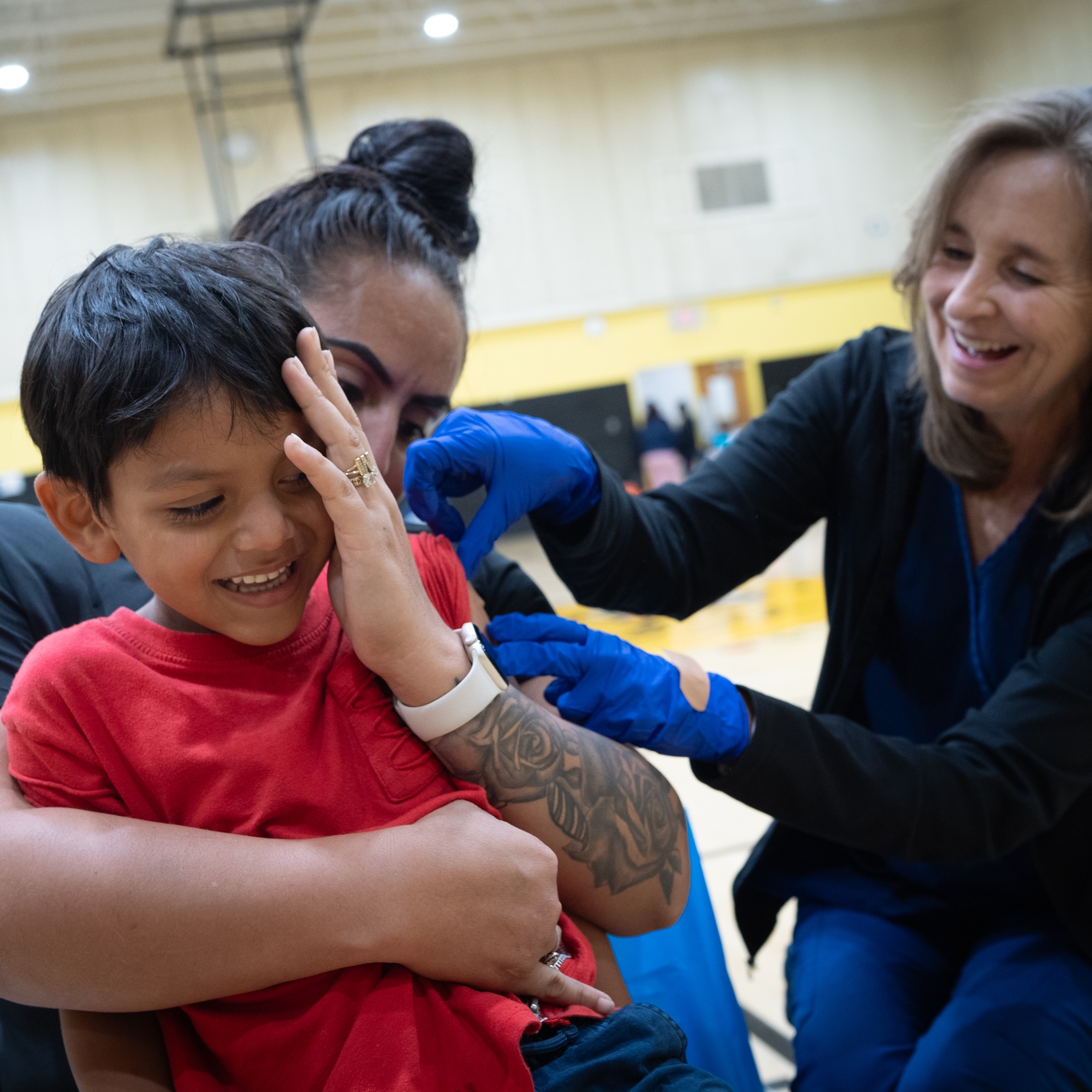
Post Reports
Confused about fall vaccines? We have answers.
00:31:40
Amid changing federal and state rules, health reporter Lena Sun answers listeners’ most pressing questions about vaccines and access this fall.
Loading summary
Transcript115 lines
- [00:00]
A
At Constellation, we bring the energy powering America's growing economy every minute, every day. As the nation's largest producer of clean and reliable American made energy, Constellation is wherever you are. From families to corner stores to manufacturers to the biggest data centers, we meet the nation's energy needs by generating emissions free electricity today and for our future.
- [00:29]
B
Okay, so I don't know about you, but I have a lot of questions about vaccines these days. The COVID shot, the flu shot, can I even get them? Should I get them? What about children or older adults? Will insurance cover these vaccines? Will pharmacies even have them?
- [00:48]
C
A lot of stuff is not clear. And we're also at a place where the country hasn't been before.
- [00:55]
B
Lena sun is a national health reporter for the Post. She's been bringing exclusive reporting on the big changes at the nation's top health agencies. And she says if you're also feeling confused about vaccines right now, you're not alone.
- [01:09]
C
Pediatricians haven't been in this spot before. The American Academy of Pediatrics hasn't been like this before. The OBGYNs because all the guidance used to come from one trusted source, the CDC's vaccine committee and Secretary Robert F. Kennedy Jr. The health secretary blew that up.
- [01:33]
B
From the newsroom of the Washington Post, this is Post Reports. I'm Elahe izadi. It's Tuesday, September 9th. We recently asked you, our listeners, to share your most pressing questions and concerns about vaccines right now. So today we bring Lena into the studio to answer them. She also explains why there's so much uncertainty about vaccines and what other changes to vaccine policy could be coming next. Lena, hi. Thanks for joining me today.
- [02:06]
C
Hi, Happy to be here. Although I'm not sure I'm going to be able to answer all your questions.
- [02:10]
B
I'm sure I'm confident if anyone can do it, it's you. That's why I want you here with me.
- [02:16]
C
Okay.
- [02:17]
B
So you know, we're about to enter fall and this is about the time of the year when I start getting calls from my mother every day. Have you gotten your flu shot? Have you gotten your Covid shot? And that's what this time of year signals for me. But this year feels very different. Getting those vaccines seems way more complicated and confusing. Before I used to just, you know, go to my doctor's office or go to the pharmacy down the street, no problem. First of all, why is there so much confusion this year?
- [02:47]
C
The reason it's so confusing is we are at an unprecedented moment. Earlier this year, the Health and Human Services Secretary Robert F. Kennedy Jr. Decided unilaterally to change who is eligible for Covid shots. Up until now, the recommendation had been everybody six months and older should get a shot. Okay, Right. That was up until he did this. He decided in May by putting a video on X, that, you know what, pregnant women and healthy kids, you shouldn't be getting the shots. I couldn't be more pleased to announce that as of today, the COVID vaccine for healthy children and healthy pregnant women has been removed from the CDC recommended immunization schedule. But because he's the Health and Human Services secretary, what he says, and he ordered the CDC to make that change in policy, we're now one step closer to realizing President Trump's promise to make America healthy again. And that threw everything up in the air because pregnant women are one of the highest risk groups for Covid. When you are pregnant, you know, your immune system is not working the same and you need to have more protection for you and for the baby because after the baby's first born, it needs a lot of protection. It's not eligible for a ton of shots. Right. And so when you get a vaccine, your antibodies transfer to the baby for the first six months. So pregnant women, no healthy kids know.
- [04:18]
B
And so what you're saying is that this new recommendation contradicted the science on why those groups should be getting shots. What else has RFK Jr done?
- [04:29]
C
He blew up the CDC vaccine panel that's in charge of making recommendations for vaccines. He fired all 17 members. Then two days later he named his own people, several of whom have said very critical things about COVID vaccine and other vaccines. And at their first meeting in the end of June, they announced that they were going to revisit a lot of things that public health medical experts say are settled science. The committee pushed for a review of the entire childhood vaccine schedule, a reevaluation of hepatitis B vaccinations for babies, and walked back. The long standing recommendations for flu shots containing thimerosal, a preservative that's long been the target of anti vaccine movement. And then very recently, the CDC director was fired and three senior leaders at the cdc, people in charge of key portfolios, resigned in protest because of politicization of science.
- [05:35]
B
So in short, there's a lot of confusion because the way things have been done at the CDC have been upended around vaccine guidance and policy. And also there is just chaos as to the personnel and who's even running these organizations and who are the people making these decisions.
- [05:57]
C
Correct. And it's not Just cdc, I would add. The vaccine recommendation process in the United States also includes the Food and Drug Administration. So here's how it works. You're the drug company, you do all these clinical trials, you come up with a vaccine and you submit all that data to the Food and Drug Administration and they look at all the stuff and say, hmm, safe and effective. Yes, we approve it. We greenlight it. Once the FDA approves something, it is up to the CDC vaccine panel, which Kennedy fired, to decide who should get it, at what age, when they should get it. That has been the long standing process and that is how we have gotten a lot of our shots. What he has done is the FDA has sort of taken over the CDC role. And the FDA also said only you and you and you can get the shot. And so we are having a meeting in mid September where this very important CDC panel is supposed to meet and make recommendations. The reason where it's hitting you, the consumer, is if the CDC recommends a vaccine, insurers are required to cover it. In other words, you shouldn't have to pay anything.
- [07:07]
B
So if the CDC says if you're over 65, you are recommended to get this shot, insurers have to pay for it. If the CDC says pregnant women, insurers have to cover it.
- [07:18]
C
Correct. But what has happened is CDC hasn't said anything yet. The FDA has said no pregnant women, no healthy children, only those 65 and older, and people with high risk conditions, underlying conditions that could make them at more severe risk for Covid. But what has happened is people have already started to go to the pharmacy.
- [07:39]
B
Yeah, because it's like it's almost mid September now, kids are back in school. People who want these shots are going to start trying to get them now.
- [07:48]
C
Right. And because of all this uncertainty, because the CDC hasn't said yay or nay, people are running into all sorts of problems.
- [07:56]
B
Okay, so let's get into some of these more practical questions. Thank you so much for, like, laying the groundwork for understanding what's happening here. And we're kind of in this limbo moment. So my biggest question really is, can anyone who wants the COVID shot today go and get one?
- [08:16]
C
I think it's hard and it depends because once the FDA says on its label, it's only for group A and group B and you are in group C. Doctors prescribe stuff off label all the time, you know, and that means, like group C. Right.
- [08:32]
B
Not for the recommended groups, but if.
- [08:36]
C
You'Re prescribing something off label, then you, the doctor, are Worried if you get sick and you die and you sue me, I may be worried about my liability.
- [08:48]
B
So they will probably not wanna be taking that risk.
- [08:50]
C
They might not wanna take that risk, or they might, but that's where it becomes it dep. Or what you see happening is that in some states, they are seeing this happen and they're changing to say, you know what? Pharmacists don't have to just rely on the CDC and the federal government for advice, for guidance on who can get the shot. If our state health department says you can get the shot, you can get the shot, and you the pharmacist and you, the insurer are required to cover it. So that happened in Massachusetts last week in New York. So every state is different. And so that's why you have this patchwork. I had a friend of mine call me up over the weekend, said, call me me back. I'm driving from North Carolina to Virginia to get my shot.
- [09:29]
B
Oh, wow. So the short answer is it really depends on where you live. Does the answer also depend on which pharmacy you go to and whether you have a doctor or what type of insurance you have?
- [09:41]
C
Depends on all those things. Right. So lots of people don't have doctors. Most adults get their shots at the pharmacy. Okay, so you'll be going to the pharmacy. CVS has been very clear. They say, okay, in these states, pharmacists can give you the shot without a prescription. In these other states, you need a prescription.
- [09:59]
B
Okay, so in some states you need a prescription and others you don't.
- [10:03]
C
Right. We don't know the landscape for all pharmacies. CVS has been the most clear about this as of right now, you know, and things could change. CVS says it is requiring prescriptions for Covid shots in Louisiana, Maine, Oregon, Utah and West Virginia. But remember, this is all changing in real time. And you should just also check the CVS website because in some places you may be able to get it at a minute clinic without a prescription. Over the weekend, I was in touch with someone who is in Louisiana, goes to The Walgreens, he's 65 and older. And the pharmacist tells him you need a prescription. Well, he has to drive to his doctor's office. And doctor says, well, which vaccine are you getting and what's the dosage? And the guy goes, I don't know. Then he has to drive back to the pharmacy to find out. Then he has to drive back to the doctor's office to get the prescription. When you have that kind of back and forth, what do you think is gonna happen? It's gonna be, like, hard enough. Like, people are gonna say, forget about it.
- [11:08]
B
I'm not gonna, like, don't even have enough difficulty even getting the shot that they wanna get to begin with.
- [11:13]
C
Right? You have to go all these times. The bottom line is it's gonna make it very difficult for.
- [11:22]
B
So, Lena, I wanna get to some big questions and concerns that listeners have been sharing with us and that you've been starting to address here. Let's start with two people who voiced somewhat similar concerns. Bob Hicks wrote in from Washington state, and he shared that his wife has struggled to find a place to get a COVID vaccine. She's immunocompromised. She recently had a bone marrow transplant. The delay in finding a vaccine, he wrot quote, placed my wife at risk for critical illness. He followed up to say that she was able to get it. There were new state rules in Washington, so she eventually did get this shot. Another listener wrote in, Macon Morrison from D.C. and she shared she's a breast cancer survivor. She takes medication that suppresses her immune system, and she wound up traveling several miles across state lines to Maryland in order to find a pharmacy that would give her a COVID vaccine. And she also shared that her mother lives in Virginia and she's 79 and has breast cancer and limited mobility, and that she has been unable to find a pharmacy nearby to get a COVID vaccine and got different responses depending on the state that the pharmacy was in. So, Lena, when you hear Bob Hicks and Macon Morrison share these experiences, I think both of their questions really boil down to why are so many people struggling to find a coronavirus vaccine right now, even if they are eligible?
- [12:53]
C
So it's, as I said before, explained, different states have different regulations and laws about what their pharmacists can administer. Some states say you can only administer vaccines that have been officially recommended by the CDC vaccine panel that Secretary Kennedy.
- [13:08]
B
Blew up and which has not weighed in yet.
- [13:10]
C
Which has not weighed in yet.
- [13:11]
B
Okay.
- [13:12]
C
That new panel is meeting September 18th and 19th, and one of the items on the agenda, widely expected to be an action item, is what is this panel gonna decide on COVID vaccine? So they have a couple options. The FDA has already said only people 65 and older and people with high risk conditions can get this. So the vaccine panel can say, yeah, we agree with that. So we'll say the same thing. But they could also say, you know what? We feel, otherwise, we don't agree.
- [13:46]
B
Okay. So there's still uncertainty about federal guidelines.
- [13:50]
C
But some States are now taking the additional step of saying, you know what? You don't have to follow the federal guidelines. You can do it if the state health department recommends it. If the American Academy of Pediatrics and the American College of Obstetrics and Gynecology, then you can give it. That's why people are having different experiences, because we live in different states.
- [14:09]
B
Okay, so I want to know how someone can actually find a place that will give them a Covid shot if they are eligible under FDA or state guidance. What are some tips you have?
- [14:19]
C
Well, some consumer tips for folks would be you want to cast a wide net. So doctors and patient advocates stress that you might need to make a lot of phone calls or book multiple online appointments with different providers and go to multiple websites. So there are some in addition to the pharmacies, like vaccine information or EasyVax that will help you find stuff. And also local health departments will often have. And you should be on the lookout. You can always call your state health department as a first place for reference.
- [14:50]
B
Lena, have you tried to do this yourself?
- [14:52]
C
Well, of course I wanted to experiment. I went onto the CVS website the other day to try to book something for somebody who's eligible.
- [15:00]
B
In what state?
- [15:01]
C
In Maryland.
- [15:01]
B
Okay.
- [15:02]
C
And it walked me right through. It's just like the last time for Covid. So there's dozens of states where pharmacists can give you the shot. If you're with CVS and you go online and you type in your information.
- [15:17]
B
And you don't need a prescription or anything, you don't need a prescription, just pull it out like you did before. Okay.
- [15:20]
C
Remember earlier during the pandemic, it was also certain groups could get it if they had certain conditions. And nobody is gonna make you prove like, oh, you really have this underlying condition. It's called self attestation. In other words, you tell them you believe me, Lena Sun, I have this condition, give me the shot.
- [15:37]
B
And then what about other pharmacies? Do we know the answer to that?
- [15:40]
C
Well, I mean, the big chain pharmacies are all working out their guidances. I think that individual, small mom and pops, I don't know what their policies are.
- [15:49]
B
So what if someone who does not fit this FDA approval of 65 or older or have one of these preexisting conditions, not in that group, but wants the shot. Someone like Bob Hicks, who doesn't want to get his wife sick, will he have to pay out of pocket for this? Will he have to, you know, have a physician sign off, like, can he get the shot? Or will it cost him money?
- [16:11]
C
It's very unclear because he's not in the group. There's pressure from lots of groups for these people. What if you're a healthcare provider or you work in a nursing home, but you're a 35 year old and healthy, but you don't wanna get Covid and make all these other people sick? Right. Those are all these can of worms that have been opened up by this policy.
- [16:31]
B
I guess. Lena, the reason I'm raising this is like there's a lot of people out there who are having a tough enough time trying to keep track of all the shifting guidance. And if they wanna get the vaccine for one of the reasons that we're laying, like maybe they're a teacher, maybe they are a healthcare worker, work in a nursing home, don't wanna get other people sick, that they have to be savvy enough to know how to navigate this new world in order to get a vaccine and not have to pay for it out of pocket. Right, right, right.
- [16:59]
C
And also, even if Bob Hicks was able to, you know, get the shot, his insurer may decide not to cover it. Now the insurers are under great pressure because they know for their bottom line, it is a lot cheaper to prevent you from getting Covid than from having to treat you. You get sick. So they have already made a lot of noises that for this respiratory season they will, you know, cover the same kinds of things they did before. That's the signal we've been getting from insurers that they want to cover these things, that these are common sense respiratory illnesses that make a lot of people sick, a lot of people die.
- [17:37]
B
But would you recommend people checking with their insurers first?
- [17:40]
C
Yeah, you could always call the insurers and then be on the phone for 20 minutes. Sure.
- [17:45]
B
But I wonder how much it costs if your insurer doesn't cover it.
- [17:48]
C
Honestly, I think it's gonna depend. Everything is so fluid in this moment. But right now, I checked with CVS and I think it could cost about $225 for the COVID shot.
- [17:59]
B
What about young children?
- [18:02]
C
Is little kids.
- [18:03]
B
Yeah, little kids. Like if I'm a parent, I want my kid vaccinated. Cause like Covid's just going around the school. What can I do?
- [18:10]
C
You could talk to your pediatrician, but a lot of pediatricians are no longer stocking the COVID vaccine because number one, there wasn't a lot of uptake before. And if you stock the vaccine, you know for sure it's gonna get reimbursed. When the parent comes in by insurance, well then you would stock it. But if it's uncertain now as it is, you are not going to be shelling out money to buy a vaccine that you know you won't get reimbursed for and the parent doesn't want.
- [18:37]
B
Oh, so parents weren't really vaccinating their.
- [18:38]
C
Children at high risk. Uptake for a COVID vaccine for kids is really low. But what I would suggest is the American Academy of Pediatrics, which is the group for all the pediatricians, has recommended differently from what the CDC was forced to do. They said kids under 2, under 24 months should get the shot because the hospitalization rate for this really young group of kids is as high as for the really older adults. So it's the little babies, the little kids that are vulnerable and these kids don't have underlying conditions.
- [19:17]
B
So if you are a parent and your kid is older than that or even younger than that, first step would be call the pediatrician and just hear what they have to say and sort of follow their guidance. That's what you would recommend?
- [19:27]
C
Yeah, I would recommend that. Now if you're an older kid, I think the data show that kids generally do better. And even before the politicization of this vaccine panel, before Kennedy blew it up and put in his new people, the old panel had been talking about a more targeted recommendation. Instead of everybody six months and older, they were already talking about maybe only certain groups, older little kids in between healthy adults. You can choose to get it if you want. That's where they were going before everything blew up.
- [20:04]
B
After the break, we put more of your questions to Lena, this time about flu and childhood vaccines. We'll be right back.
- [20:17]
A
At Constellation, we bring the energy powering America's growing economy every minute, every day. As the nation's largest producer of clean and reliable American made energy. Constellation is wherever you are. From families to corner stores to manufacturers to the biggest data centers, we meet the nation's energy needs by generating emissions free electricity today and for our future.
- [20:47]
B
Okay, Lena, now let's turn to flu shots. We talked about the changed guidance for the COVID vaccine. What is the latest on the flu vaccine?
- [20:58]
C
Believe it or not, the recommendation for flu vaccine has not changed. Everybody six months and older should still get a flu shot. Personally, I would recommend that unless you are gonna be traveling or you know, getting on a lot of trips or going to see somebody who's immunocompromised, I would wait until closer to the end of October to get your flu Shot.
- [21:18]
B
Why is that?
- [21:18]
C
Because the flu shot protection doesn't last as long, you know, and flu season tends to go into the spring. People were like, oh, it's March. How come I still have the flu? So if you get your shot in August, September, you know, it's not gonna have that much protection.
- [21:33]
B
I'm gonna tell my mother to stop calling me about it.
- [21:36]
C
If she bothers you just have her call me.
- [21:37]
B
Yeah, I'll say Lena said wait till the end of October.
- [21:40]
C
Yeah, end of October.
- [21:41]
B
But wasn't the recommendation before that you should get the flu and Covid shot at the same time? Or was that just something people were doing before?
- [21:48]
C
That's something people were doing before because here's why. Do you have a lot of time to go to get the pharmacy to get multiple shots, Alahia?
- [21:55]
B
No, I don't.
- [21:56]
C
So public health says if you wanna get the shots at the same time, they're called co administration. It's a fancy word. Just means at the same time. You can go and get them at the same time. Will you get a little bit more side effects? Sore arm, redness? Yeah. But it's not gonna cut down on the effectiveness of getting the shots.
- [22:15]
B
Okay.
- [22:15]
C
And I know someone who just went and got their Covid flu and RSV all at the same time.
- [22:22]
B
Can people still do that now? If they want, yes.
- [22:24]
C
Now, the reason why you might be asking about this is because the FDA sent out a memo recently saying, you know what, getting them at the same time, we think is not good. And so that's got everybody in a tizzy because they did not release any underlying data to explain why it's not good. And studies say it is okay to get it at the same time. It doesn't decrease efficacy. It does give you a little bit more of a side effect. But it makes sense from a public health perspective if you are a busy parent, to not have to be shoveling around going back to the pharmacy to get shots all at the same time.
- [23:01]
B
So it's basically like the guidance and recommendations from the top health agencies in the country. We're getting this messaging, but it doesn't mean that people can't do this if they want.
- [23:11]
C
Exactly.
- [23:11]
B
But there might be questions about it. Even though, as you said, the science doesn't really support that, it makes it less effective.
- [23:16]
C
Also, there is no official policy. There's nothing official that says do not get them at the same time. Got it. It is completely okay. I would heartily recommend before you get two shots at the same time, drink a lot of Water and use your arms after the shot to get everything all zhuzhed around.
- [23:32]
B
I love this dance that you're doing. I'm gonna do the Mylena Sundance when I get. If I go get my shots and get em all at the same time. All right, now let's just talk about vaccines for kids. Covid, shot aside, what's changed?
- [23:44]
C
Nothing. Nothing's changed yet. But this new panel of Kennedy's folks said that they wanna reexamine the entire childhood immunization schedule. So there's a schedule for when you have kids at two months, you get this job four months, you know, and there's a lot of shots. And parents have always said, oh, do I have to get little Johnny his shot? It's gonna hurt so much and they're gonna cry. And pediatricians say, look, the reason you want these shots at this time is because that's when the vaccines can give you the most protection. Right. If you spread them out too much, you are gonna be leaving your kid vulnerable. In fact, what happens when you space out over time is you get kind of behind. You know, if you're supposed to get this many shots at two months and this many at four or this many, and then if you space it out too much, then you, you know, you just run.
- [24:38]
B
You fall behind.
- [24:39]
C
You fall behind.
- [24:40]
B
I see.
- [24:40]
C
And then you lose your protection. You raise your window of vulnerability.
- [24:45]
B
We got several questions from listeners. One was about rsv. Let's take a listen to that one.
- [24:51]
C
Hi, my name is Mariam Esmaili, and.
- [24:54]
A
I would like to know why the.
- [24:56]
C
RSV vaccine is not widely available, why it has such specific time frames for application, and why hasn't it become a standard vaccine, given how dangerous RSV is for children, especially in their first year?
- [25:15]
B
Okay, so here Mariam is asking about rsv. First of all, what is rsv? Lena?
- [25:21]
C
So RSV is a virus, a very common respiratory virus that is the leading cause of hospitalization in babies in the United States and also very high in the world too. And many, many kids get hospitalized and too many babies die. And also RSV affects older people as well.
- [25:39]
B
Okay, in talking about kids, and specifically babies, what is the treatment for rsv or are there particular vaccines for it?
- [25:47]
C
So the treatment for RSV is a preventive antibody. It's called a monoclonal antibody, and it can prevent the severe lung disease that's caused by rsv. And. And what it does is it acts like a vaccine in your body. It's like, you know, triggers your immune system, but it's not Actually a vaccine, they call it a preventive treatment. I see. So recently there's this game changing product, monoclonal antibody nirsevimab that came out and it was used in the first season we've seen data for. It's used during the winter respiratory season. The first set of data we've seen for it in 24 showed that it cut hospitalization by as much as 43%. And now we have a second one which was just approved by the CDC vaccine panel. But the fear is that these two products may no longer be available if this panel decides to restrict or rescind their use.
- [26:43]
B
Okay, so there are questions going forward about the availability of this RSV treatment, which technically not a vaccine, but many people might think of it as a vaccine.
- [26:52]
C
Acts like one.
- [26:53]
B
Yeah, acts like one. So we also received a email from a listener, Marumita Chatterjee. She had a lot of questions about the childhood vaccine schedule. I'm summarizing her questions, but essentially she wanted to know what is the science that goes into determining that schedule, A schedule that we've said is now being reviewed and reexamined.
- [27:14]
C
So the childhood immunization schedule is something that Health Secretary RFK has repeatedly said he wants to look at because he makes a point. And this is valid. You used to get a lot fewer shots when he was little and you get a lot more shots now. There's a couple reasons why. Back in the old days when you got a vaccine, it had a lot more of the antigens of the stuff in it and it was heavier toll on your body. Now with medical science and everything, they can just put in fewer antigens or less of the stuff. And also we have more science to show you if you get this vaccine, it will protect you against more disease. And then they are very specific in the time when you, the kid, get the shot to get the best immune reaction. Right. If it's two months, it might not be as good, but if you give it at four months, then it's really good. Or maybe it makes sense to give it at, you know, six years. And so that's why this schedule has come up. And this is what is now under attack. And this new panel has said that they want to review all of these childhood vaccines, which include measles, mumps and rubella, diphtheria, pertussis, whoops, Whooping cough and polio.
- [28:29]
B
Finally, Lena, I wanted to end on this other listener question. And it has to do with what some people are feeling right now about whether, how and who to trust when it comes to making decisions about vaccines and their health. It's from Joanna Marie. She wrote to post reports and asked where can I go to find out trusted medical, proven scientific research data on vaccines if I can't go to the cdc?
- [28:53]
C
So, so back some years ago, the medical societies used to put out their own recommendations and they were often similar to cdc. But then they decided to harmonize so that CDC and the American Academy of Pediatrics and the AMA and acog, all these groups were the same. I would say now because of the concern about cdc, you could go to these other medical societies, the American Academy of Pediatrics, the American Medical association, the American College of Obstetrics and Gynecology. Because, because their recommendations, they will say, here's the science, here's what we know and here's how we know this, what works. Because the data is there. You know, the data hasn't disappeared.
- [29:36]
B
Lena, I guess just stepping back and thinking about this whole conversation, where does that leave you? Because you've been covering the CDC and public health for some time and we're kind of, we've said in this unprecedented moment, how are you feeling about all these questions that you're getting about vaccines and who people can trust and what that says about, you know, even like the idea that politics is influencing who we trust around our healthcare?
- [30:00]
C
I think it's very worrisome because you see this as part of a larger anti science approach and it's very easy to go down the rabbit hole on social media. You don't really have that face to face where when I talk to some pediatricians and you see them interact face to face, they've known these families and they explain to the families, then you see some of that trust come. But not everybody has that kind of relationship and they're constantly barraged with so many false things. So if you see the Same false thing 400 times on all sorts of media, you might start to believe that's the case. The fear that many experts say is that when you have somebody in the very top job of the health policy apparatus saying things that are, let's say, economical for the truth, it raises these illegitimate questions. You have doubt and you decide, I'm not going to do this. And I think overall, for the sake of public health, many people feel that that will not be a good thing for the country or for the world.
- [31:10]
B
Well, Lena, thank you so much for making time to answer all of our questions.
- [31:14]
C
Thank you for having foreign.
- [31:22]
B
Is a national health reporter for the Post. That's it for Post reports. Thanks for listening. This journalism and Lena's coverage of vaccines and the chaos at the cdc. That's what you support when you become a Washington Post subscriber. If you don't yet subscribe the Washington Post Labor Day sale is still happening, so it's a great time to subscribe. And you can get our core subscription for $20 for an entire year. This is billed as a single $20 payment for the first year, then renews at $120 per year thereafter. And you can cancel anytime. Go to washingtonpost.com subscribe that's washingtonpost.com subscribe we'll also include a link in our show notes. Today's episode was produced by Renny Srinofsky with help from Lucas Trevor. It was mixed by Sam Baer and edited by Ilana Gordon. Thanks to Fennet Neeripil. I'm Elahe Izadi. We'll be back tomorrow with more stories from the Washington Post.
- [32:36]
A
At Constellation, we bring the energy powering America's growing economy every minute, every day. As the nation's largest producer of clean and reliable American made energy, Constellation is wherever you are. From families to corner stores to manufacturers to the biggest data centers, we meet the nation's energy needs by generating emissions free electricity today and for our future.