← Post Reports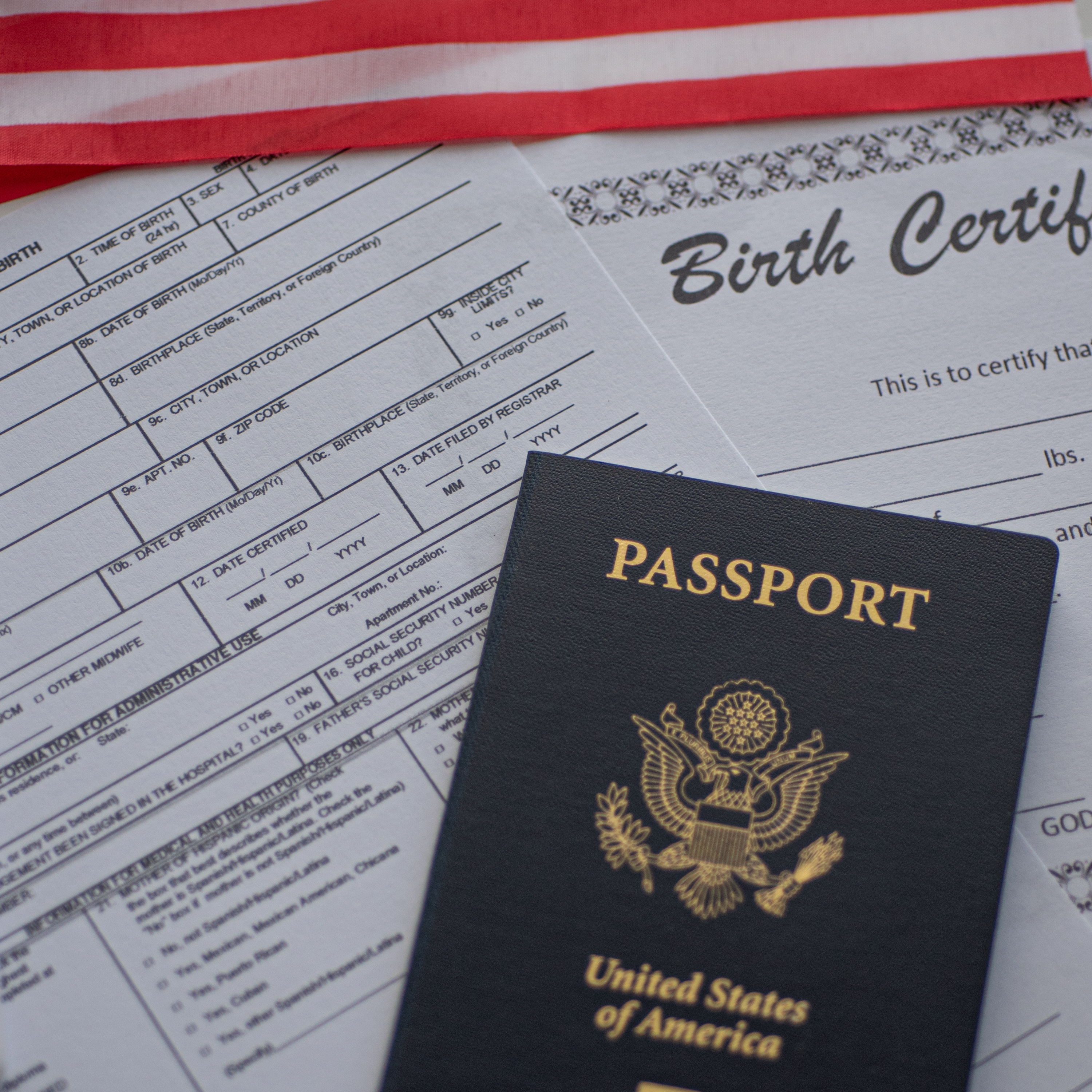
Post Reports
Could new laws make voting harder for married women?
00:22:13
Do you know where your passport is? What about your birth certificate? Today, we talk about what it means to require proof of citizenship to vote – and why Republicans in some states are pushing for it, even though it could hurt their voters.
Loading summary
Transcript99 lines
- [00:02]
Colby Ekowitz
Before we start the show, I want to say a quick thank you for being a listener and to explain a little more about why my colleagues and I hope you subscribe to the Washington Post. The Post newsroom has published more than 100 scoops so far this year, exclusive stories reported by our newsroom, holding power to account and keeping you informed. That's what drives our work. It's the work that you support as a subscriber. If you're not one already, this is a great time to take that step. Our Memorial Day sale is still going on for a few more days. You can unlock your subscription for just $2 every four weeks for a whole year. After that, it's just $12 every four weeks. You can cancel anytime. So hit pause right now and follow the link in our show notes or go to washingtonpost.com subscribe in a few minutes, you'll have more of what's happening in the world right at your fingertips. This offer is good for a limited time, so really, do not wait. We're so excited to welcome you as a subscriber. Now, here's the show.
- [01:04]
Patrick Marley
The House Committee on Elections will come to order. The clerk will call the roll chair.
- [01:08]
Colby Ekowitz
Shaheen here, Vice Chair Bussey. Representative Isaac that's a recent state legislative committee hearing in Texas about a possible new voting law.
- [01:18]
Patrick Marley
Chair lays out House Bill 5337 and recognizes representative Isaac to explain the bill.
- [01:25]
Colby Ekowitz
It would require anyone who wants to vote in Texas to prove they are a US Citizen. Here's bill sponsor Republican State Representative Kerry Isaac.
- [01:33]
Yvonne Winjet Sanchez
We already require proof of citizenship when.
- [01:36]
Colby Ekowitz
Applying for a passport or a driver's.
- [01:39]
Yvonne Winjet Sanchez
License, something far less sacred than voting in our elections.
- [01:43]
Colby Ekowitz
It's not unreasonable to apply the same.
- [01:45]
Yvonne Winjet Sanchez
Standards to the foundation of our democracy.
- [01:48]
Colby Ekowitz
Supporters of the bill say having to prove who you are with a birth certificate or other official document that that's necessary to prevent voter fraud. But that kind of fraud has never been proven to happen at any kind of meaningful scale. And critics say those laws are just going to make it harder for everyone to register to vote. Here's State Representative John Boosie iii, a Democrat from that same committee hearing.
- [02:12]
Yvonne Winjet Sanchez
I'm just afraid that what we're doing here is creating hurdles for legal eligible Texas citizens.
- [02:19]
Colby Ekowitz
From the newsroom of the Washington Post, this is Post Reports. I'm Colby IKOWICZ. It's Tuesday, May 27th. Today I speak with democracy reporters Patrick Marley and Yvonne Winjet Sanchez about how proof of citizenship laws are spreading across the country. Yvonne and Patrick explain why this is happening and whose votes are at risk. Patrick, Yvonne, I am so excited to have you in studio, especially because you're not normally here. Yvonne, you're normally across the country in Arizona. And Patrick, you are in Wisconsin. And I am doubly excited because you are my colleagues from the democracy team and we worked together so closely last year on the election. So thank you for joining me.
- [03:07]
Patrick Marley
We're excited to be here.
- [03:08]
Yvonne Winjet Sanchez
It's good to be reunited.
- [03:10]
Patrick Marley
It's nice to be in a studio and not a closet.
- [03:12]
Colby Ekowitz
Yes, yes. So for the sake of our listeners, describe where this push to require voters to prove their citizenship came from, largely from Donald Trump.
- [03:24]
Patrick Marley
He has been talking for years that undocumented migrants are voting in elections, which is not true. Certainly not. You know, there are instances of it happening, but there's no large scale effort.
- [03:35]
Yvonne Winjet Sanchez
To do this, jumping off from that as an example. This is one of the big categories of people that he cited as having stolen the election or helping steal the election from him in 2020. Our country has had enough. We will not take it anymore.
- [03:53]
Patrick Marley
And that's what this is all about.
- [03:58]
Yvonne Winjet Sanchez
And to use a favorite term that all of you people really came up.
- [04:03]
Patrick Marley
With, we will stop the steal.
- [04:07]
Yvonne Winjet Sanchez
So it was, you know, accusations that dead people had voted, accusations that illegal immigrants had voted. There's only one reason the Democrats could possibly want to eliminate signature matching, oppose.
- [04:21]
Patrick Marley
Voter ID and stop citizenship confirmation. Are you a citizenship. You're not allowed to ask that question.
- [04:29]
Yvonne Winjet Sanchez
This really traces back to that.
- [04:31]
Patrick Marley
He's focused on this for a long time. In March, he signed an executive order that was aimed at requiring voters to prove their citizens before they can register to vote. That has been blocked by a court. And so this effort has shifted to some degree to state legislatures to put documentary proof of citizenship requirements in place.
- [04:51]
Colby Ekowitz
Was this something that Republicans had even brought up or talked about before Trump or this is really a Trump made issue?
- [04:59]
Yvonne Winjet Sanchez
Republicans in Arizona have been talking about this for as long as I can remember. For 20 years they have been pushing to crack down in big ways and in small ways on non citizen voting, which as we've said, is exceedingly rare. We've passed laws in Arizona to try to prevent this and these laws have spread to other states, including New Hampshire and now possibly Texas.
- [05:27]
Colby Ekowitz
So Arizona does have a proof of citizenship requirement.
- [05:30]
Yvonne Winjet Sanchez
We do.
- [05:31]
Colby Ekowitz
So, guys, other states, they've passed this law. So what makes it so significant that Texas is also considering it?
- [05:38]
Patrick Marley
No place anywhere near as large as Texas has passed this second most populous state in the country. There's 18.6 million voters on the rolls. And Texas will go further than the law in some other states because it will not only apply to people who newly register, but to those who are already on the voter rolls. And so officials are going to have to look back at the 18.5 million people who are on the rolls and figure out which of them they don't know are citizens and require them to provide some kind of information. Initially, Texas officials think that's about half a million people, some of whom may have been voting for a very long time.
- [06:16]
Colby Ekowitz
Because right now in many states, it's just an honor system. Right. You check a box that says, yes, I'm a US Citizen, but they don't check to verify that.
- [06:24]
Patrick Marley
That's right. You know, the disincentive to do that is it's a criminal penalty. If you do it for non citizens who would sign that statement and attempt to vote, they could be deported. They could be charged with crime.
- [06:36]
Colby Ekowitz
Yvonne, how hard is it gonna be for people? How hard is it for people, maybe in Arizona to prove that they're citizens?
- [06:45]
Yvonne Winjet Sanchez
For a lot of people, it's not going to be difficult. And these are going to be the people who know exactly where their birth certificates are. They know where their naturalization papers are. They have a passport at the ready, and they can prove that they are who they say they are. But there's a whole class of people, I. E. Women who maybe have gotten married, have gotten divorced, have changed their name in some form or fashion, don't know where their papers are. Maybe in the instance of one of the women we talk to, like there's a tragic event, like a house burns down and you lose some of your documents. These people could be affected in a way that men probably won't be because it is more rare for men to change their names.
- [07:32]
Colby Ekowitz
Yvonne, you talk to a lot of women for this story. Tell me about another story.
- [07:37]
John Boosie III
You heard my name story. I'll tell you my name story. Okay. Perfect. Okay.
- [07:44]
Yvonne Winjet Sanchez
Okay. So Isabella is a Democrat from Dallas.
- [07:50]
John Boosie III
So I was born Janine. I that's I D E S the idea of March.
- [07:58]
Yvonne Winjet Sanchez
And Isabella has been married a couple of times.
- [08:03]
John Boosie III
I get married again and this time I decide I don't want to lose my last name like last time.
- [08:16]
Yvonne Winjet Sanchez
She's changed her first name and I.
- [08:19]
John Boosie III
Really wasn't fond of the name Janine. Okay. All right. Isabella russellai.
- [08:29]
Colby Ekowitz
Oh.
- [08:30]
Yvonne Winjet Sanchez
And so her name on her official documents now looks completely different than the name that she was born with 77 years ago.
- [08:42]
Colby Ekowitz
Wow.
- [08:43]
Yvonne Winjet Sanchez
She recently tried to get approval to get expedited security clearance at the airport.
- [08:51]
John Boosie III
And you have to prove who you are. Okay, I had the papers, the birth certificate, my first divorce, my legal name change, and they wouldn't give it to me.
- [09:08]
Yvonne Winjet Sanchez
And they essentially told her, like, look, lady, you're going to have to go figure it out and reconcile your paperwork. And this is the experience that people like her may be facing.
- [09:20]
John Boosie III
But this bill is very upsetting. It's going to be so much harder for women who don't have the economic means to go through all this.
- [09:32]
Colby Ekowitz
So I remember from my reporting on this, and you both have mentioned noncitizen voting nationwide is exceedingly rare. But is it a problem in Texas? Is it actually a thing there?
- [09:46]
Patrick Marley
I mean, there's not very many documented cases of non citizens winding up on the rolls. There's fewer cases of them attempting to vote. The ones who have been on the rolls. Often it happens because somebody's at the driver's license station and they click a box to register to vote, not being aware. And then when there's follow up, because they might get some other evidence that this person's a non citizen, they take them off the rolls. Or oftentimes the immigrants will say they want to be off the rolls because they don't want to break the rules. So there's no evidence that it's happening in Texas more than it's happening anywhere in the country. And it's just very rare to happen.
- [10:27]
Colby Ekowitz
Like, just how rare is it?
- [10:29]
Yvonne Winjet Sanchez
So just for example, we have about three dozen or so non citizens who were on the voter rolls in Kansas over 19 years, according to a federal judge in 2018. And most of those people ended up on the voter rolls because of administrative errors, not because they deliberately went out there, said they were eligible voters, and then voted.
- [10:56]
Colby Ekowitz
So these aren't even. It's not even a question of these people then voted, it's just the fact that they're registered to vote. Is that correct?
- [11:04]
Patrick Marley
That's right.
- [11:04]
Colby Ekowitz
Well, I was gonna say most races are not won by, you know, a couple dozen votes. They're won by hundreds, if not thousands. So for the Republicans, they're just saying it's principle.
- [11:17]
Patrick Marley
They're saying it's principle. And I mean, every vote counts. You do have some local elections that are decided by a handful of votes. And the argument is that one illegal vote diminishes by a small amount the vote of every legitimate vote that is cast. I did talk to some voting rights advocates who make the counterpoint that likewise, a vote that should have been cast. That was not is also a diminishment of the right to vote.
- [11:41]
Colby Ekowitz
Yeah.
- [11:42]
Patrick Marley
And so there's a, you know, that is the balance, I think everybody agrees that, you know, only eligible voters should vote. It's a matter of how do you strike that balance of getting all the people who want to vote and ability to vote and prevent the people who are not allowed to vote from voting.
- [11:57]
Yvonne Winjet Sanchez
And it's the kind of idea and proposal that seems pretty basic and common sense for a lot of people, including Democrats. And when you talk to them about the concept of ensuring that only American citizens are allowed to vote in American elections, almost everyone universally agrees with that.
- [12:18]
Colby Ekowitz
Right. Democrats even agree with that totally.
- [12:21]
Yvonne Winjet Sanchez
It's just how when the rubber hits the road, how is that implemented?
- [12:28]
Colby Ekowitz
After the break, we'll talk about what's happened in other states that have tried this and why Republicans are pushing for these laws even though their voters could be more affected. We'll be right back.
- [12:44]
Tom Sytsima
My name is Tom Citsima and I am the food critic for the Washington Post. I think a lot of great restaurant meals are like great books, films or concerts. You don't necessarily need them to live, but don't they make life more worth living? I see myself as sort of a reader advocate, going in there, spending the Post money, coming back and giving you the green light, yield sign or a stop sign. I like to be seen as sort of the best friend who happens to eat out a lot more than they do. I eat in about 10 restaurants a week and I like creating memories for people and helping them create memories, whether those are first date, a 50th anniversary, grandma's 90th birthday, if you have special needs, whether they're dietary or otherwise. When you subscribe to the Washington Post, you support this kind of journalism. Learn more at subscribe.washingtonpost.com I'm Tom Sytsima and I'm one of the people behind the Post.
- [13:44]
Unknown
Running a business means staying ready for anything, especially at checkout. One customer forgets their wallet, another one wants to tap their phone, and someone else just wants to get out of the door fast. That's why more and more businesses are using square. Square makes checkout easy. Customers can tap, swipe or dip, and it even works offline. No wi fi, no problem. Everything just works right when you need it to. And it's not just for retail stores. You'll see square at farmers markets, boutiques, yoga studios, coffee carts, and even pop up galleries. Whether you're selling in person, online or both, Square keeps up from one location to 10. It's designed to grow your business. There are no long term commitments and you get all the tools you need to take payments, manage inventory and stay organized. Square keeps up so you don't have to slow down. And right now you can get up to $200 off Square Hardware at square.comgoreports. that's sq U-A-R-E.comgoreports. run your business your way. With Square, we hear it all the time. There's a growing concern about kids, mental health and the role technology plays in their daily lives. Screens are everywhere and young people are spending more time on them than ever. It's a staggering reality, but for many parents, not a surprising one. One company tackling this issue is Gab with a solution called Tech in Steps, a gradual, age appropriate approach to introducing technology. Protect your kids with phones and watches designed just for them. Here's how it works. Gab devices have no social media, no Internet browser, and are tailored to different stages. For younger kids, the Gab Watch 3e offers GPS tracking, safe zones and limited calling and texting. Tweens move up to a starter phone and teens have access to a more advanced device with parent controlled apps and a premium camera, all with safety at the core. We recently got the watch 3e for our kids. It's been a great way to keep them connected and safe when they're out. To learn more and see current offers, visit gab.com reports that's G A B B.com reports terms and conditions apply.
- [15:43]
Colby Ekowitz
So other states have tried this and do we know how many voters in those states have been turned away? How many have faced these type of problems? Like has it been difficult to administer this law?
- [15:59]
Yvonne Winjet Sanchez
So speaking about Arizona, yeah, we've been doing this for about 20 years or so. There was recently a big error that was discovered where officials thought that they had the proof of citizenship for about 200,000 voters. Yeah, they didn't. And so now all of these county officials across the state are going back to these voters and they're notifying them with letters saying, hey, your voting status, your voter registration may be in jeopardy because we've realized that we don't have proof that your citizenship was checked. And what they're being met with on the ground is hostility from voters who are upset that they're being asked to prove their citizenship with incredulity that like, oh my gosh, I've been voting for 30 years and now you're asking me to prove something.
- [16:56]
John Boosie III
Why?
- [16:57]
Yvonne Winjet Sanchez
And suspicion. A lot of People think that these letters are scammy or they don't trust their local election officials because maybe they belong to the opposite party, or they think that this is somehow part of what President Trump is doing, you know, in Washington, and somehow they're being asked to prove something that they don't necessarily always want to prove. And so, again, the rollout is not as easy as the announcement or even in some instances, the passage of the policy.
- [17:30]
Colby Ekowitz
And in the Arizona case of those 200,000 voters, have they found actual non citizens in that group of people?
- [17:40]
Yvonne Winjet Sanchez
Not yet. Not that we're aware of.
- [17:41]
Patrick Marley
I've not heard of any cases of that. But even the officials who support this measure say they have no reason to suspect that these 200,000 people, it's kind of rooted in an IT quirk. These are people who are longtime voters, you know, likely been voting in Arizona.
- [17:57]
Colby Ekowitz
For decades, and now they might not be able to vote.
- [17:59]
Patrick Marley
That's correct.
- [18:00]
Yvonne Winjet Sanchez
And the biggest category of people who are affected are Republicans.
- [18:05]
Colby Ekowitz
So I wanted to talk about that because we mentioned that this push to root out noncitizens who might be voting has been a huge talking point for President Trump and the Republicans. Whenever there's a policy that's backed by one side of the aisle or the other, you have to assume maybe there's a political advantage. So can we talk about the politics of this?
- [18:27]
Patrick Marley
I mean, I don't think we really know what it's going to look like until it happens. And it's going to affect people from both parties and it's going to affect independents. I mean, it's just going to be this person happens to know where their documents are and the person next to them doesn't. And that sort of doesn't take into account partisanship. But there is some anecdotal data that it would hurt Republicans more than Democrats. In Texas, there was a review by some researchers at University of Maryland, and they found that Democrats were more likely to have passports or have access to a birth certificate than Republicans. You know, there's a lot of people who don't have passports. And, you know, rural people tend to be more Republican, and they might have more trouble getting their birth certificates if they don't know where they are because they're further from government offices and things like that.
- [19:15]
Colby Ekowitz
Have Republicans talked about that part of it, that it could politically hurt them?
- [19:21]
Yvonne Winjet Sanchez
Republicans will talk privately about that.
- [19:24]
Colby Ekowitz
Okay.
- [19:24]
Yvonne Winjet Sanchez
The people that we are in touch with and have talked quite a bit about this topic with are very much aware of what the challenges are for their own party. But they're sort of unwilling to talk about those challenges publicly because it runs counter to the prevailing Republican viewpoint on this, which is you must crack down and prevent voting by undocumented immigrants, which, again, is just like, not happening.
- [19:55]
Colby Ekowitz
So the way I've always understood it, at least the Republican argument is that the goal is to crack down on even the smallest possibility that someone could vote illegally. But the reality is that a lot of American citizens don't vote. And, Patrick, isn't it true that voting rights advocates have been arguing for years that we should be making voting easier, not harder?
- [20:16]
Patrick Marley
I mean, that's precisely what they're saying, is that voting should be easy. The system that we have in place now in most states, where you check the box, it's effective. We know that it's a deterrent because so few noncitizens attempt to vote, and even fewer actually vote. There's only a handful of states that have laws like this. In addition to Arizona, which was the first state to do this, you've got New Hampshire, Louisiana and Wyoming all have recent laws, and so there's already been lawsuits filed in those states. This is going to get back to the Supreme Court, you know, in the next couple of years. This is going to be one of the big voting rights issues for the courts to wrestle with.
- [20:54]
Colby Ekowitz
And what do those lawsuits say is unlawful? Like, what are they challenging?
- [21:00]
Patrick Marley
What they say is that this is a fundamental right, the right to vote, and that these kinds of laws interfere with their due process and equal protection aspects of the. Of the federal constitution. Somebody here in the country is a citizen, and, you know, they can't lay their hands on their paperwork. You can't charge them money. That's a poll tax to make them pay money to get on the rolls. And so there's constitutional questions that remain open for the Supreme Court to consider.
- [21:31]
Colby Ekowitz
I see. So is because of Texas's size, is it kind of seen like a test case for rolling this out nationally?
- [21:41]
Patrick Marley
Yeah, I don't know that I would say that it's a test so much as it's like they're on the front end of an emerging wave of states that are doing this. We've already had these other states do it, but I think the dam could sort of break with Texas because a lot of other states will look to them and see that this large Republican state was able to do this, and there'll be others who join on.
- [22:03]
Yvonne Winjet Sanchez
And there's a federal version of this, too. We have a bill that has already passed the House The SAVE act that would require this as well.
- [22:11]
Colby Ekowitz
Yeah. Patrick, you and I have written about the National SAVE act together, but it's been a few months now. So where does it stand?
- [22:18]
Patrick Marley
The House passed it. The Senate is now focused on its budget bill. It is popular with the Republican base, but it's tough to get stuff through the Senate because of the filibuster. And so, you know, I think they would have to either change the filibuster rules or have something really magical happen for them to get that through.
- [22:37]
Yvonne Winjet Sanchez
And we know that Republican senators are closely watching how the citizenship efforts in Arizona are going. They have read about the challenges that are unfolding as we speak in Arizona, and they are seeing the impact that that's having on their voters, on Republican voters. And so it'll be interesting to see, even if it's a watered down version, if this is something they decide to pass.
- [23:04]
Colby Ekowitz
So, guys, at the end of the day, if these bills do become law, do we have any idea if they would actually end up suppressing kind of large numbers of votes from legitimate citizen voters? As a lot of people seem to be warning?
- [23:17]
Patrick Marley
I mean, these laws are so new. We're gonna just have to see how this plays out. There's gonna be some number of people who aren't able to produce this material who, you know, are legitimate citizens. We just don't know how big a number that's going to be.
- [23:32]
Colby Ekowitz
Well, thank you both so much. It was so good to see you.
- [23:35]
Patrick Marley
Thanks for having us.
- [23:36]
Yvonne Winjet Sanchez
Thanks, Colby.
- [23:40]
Colby Ekowitz
Yvonne Winjet Sanchez and Patrick Marley cover democracy for the Post. That's it for Post Reports. Thanks for listening. Today's show was produced by Laura Benshoff and edited by Maggie Penman. It was mixed by Sam Behr. I'm Colby Ekowitz. We'll be back tomorrow with more stories from the Washington Post. There's an efficient way to get caught up on a lot of news. It's called the seven from the Washington Post. It's a newsletter and podcast. Whether you're reading or hit play, you get seven stories you need to know and you can consume it all in just a few minutes. The 7 is out every weekday morning by 7:00am Eastern. I'm Hannah Jewell. I'm one of the writers and I host the show Find the seven podcast. Wherever you're listening. The newsletter link is waiting for you in the show notes.