← Post Reports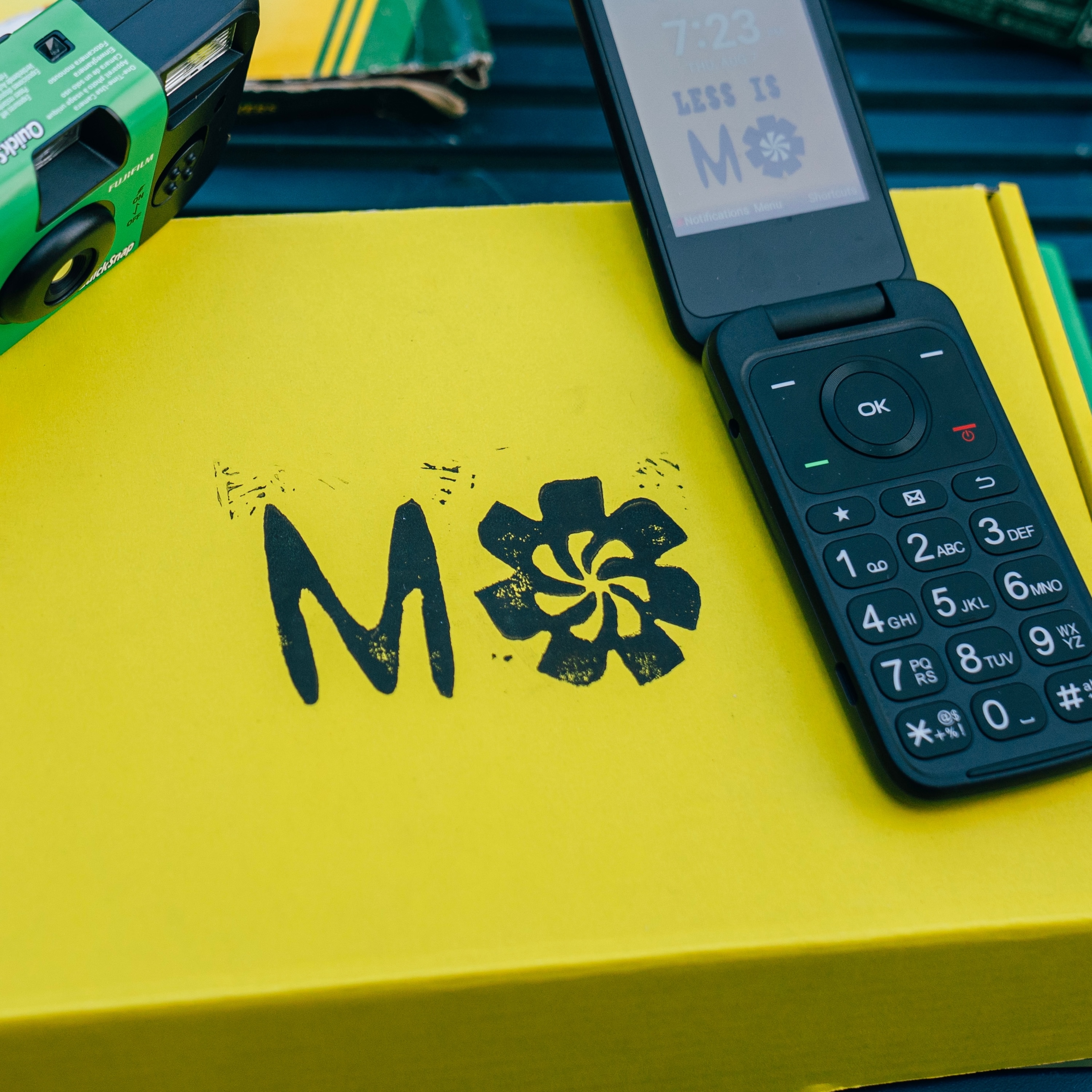
Post Reports
Could you give up your smartphone for a month?
00:23:11
A group in D.C. ditched their smartphones for a month. Washington Post reporter Brittany Shammas joined them. Here’s what she learned.
Loading summary
Transcript117 lines
- [00:00]
Spin Quest Advertiser
Spin Quest Social Casino It's Thanksgiving time. The turkey's hot and the family's loud. Instead of football, play a different game on your phone. Live dealer Blackjack, craps and slots. Play anytime, anywhere. Spinquest.com this Thanksgiving, gobble up a $30 coin pack for just $10. Come play.
- [00:24]
Maggie Penman
Today.
- [00:24]
Brittany Shammas
Spinquest is a free to play social casino void where prohibited. Visit spinquest.com for more details.
- [00:33]
Maggie Penman
I want you to tell me about this experiment you did on yourself. What did you do?
- [00:40]
Brittany Shammas
So for a whole month, I put away my smartphone and switched over to a flip phone or a dumb phone and navigated life like it was 1995, right?
- [00:54]
Maggie Penman
Exactly. Brittany Shammas is a local enterprise reporter for the Post.
- [00:58]
Spin Quest Disclaimer Voice
And.
- [00:59]
Maggie Penman
And a few months ago, she joined this group in D.C. to do something that a lot of us fantasize about. She put her smartphone away for a whole month. It all started for Brittany with this morning routine that a lot of us have.
- [01:14]
Brittany Shammas
So, I mean, I had this habit of starting all my mornings by reaching for my phone on my nightstand and scrolling through Twitter, immediately checking all the news. Tonight, President Trump's federal policing efforts, President Trump's assault on the judiciary, President Trump's.
- [01:30]
Maggie Penman
Order of Trump poses 100% terrible, but.
- [01:33]
Brittany Shammas
Also all the social media apps. And I had thought over the years like, this probably isn't the most healthy way to start a day, but I would just keep doing it.
- [01:45]
Maggie Penman
And then about a year ago, something happened that made Britney start to question her routine. She had a baby, and at some point, she realized her baby was starting to mimic her interest in this smartphone.
- [01:58]
Brittany Shammas
My baby would reach for the phone and, like, it seemed like he knew how to swipe. It scares me that he wants the phone, too, and he's doing that because of me. And so that alarmed me and where I was like, I should change something here.
- [02:16]
Maggie Penman
I'm Maggie Penman, and this is Post Reports weekend. It's Saturday, November 22nd. I'm a reporter for the Optimist, the section here at the Post where we talk about good news, things that are going right in the world, people who are trying to make the world a better place. There's so much that technology has done to connect us, and new research even shows that keeping up with technology can be good for our brains as we age. But if you're anything like me or Brittany, you sometimes spend more time on your phone than you want to and you struggle to stop. So today we're following Brittany as she joins this movement of people who are trying to get us off of our smartphones and back into the real world. Can I ask, what is your screen? I feel like this is such a personal question.
- [03:06]
Brittany Shammas
Okay, so embarrassingly, it used to be seven and a half hours. You have to tell me yours now.
- [03:13]
Maggie Penman
So let me check.
- [03:14]
Brittany Shammas
I will say I learned that seven and a half. Like, I was shocked by how many people were at that or higher.
- [03:22]
Maggie Penman
More than two hours a day. That's how much time on average I'm spending on my phone. And that feels like a depressingly huge amount of time, but it's actually a lot less than most Americans. If you want to have a humbling experience right now, open up your screen time report and look for yourself. You can also see what apps you're using, which I did. And it was weird. Okay, so most used messages, Chrome, Nanit, Baby Monitor, cvs.
- [03:49]
Brittany Shammas
Cvs.
- [03:49]
Maggie Penman
I don't know what I'm doing with the CVS app. I think. I don't know if this is your experience, but one thing that I've noticed, this phone has become the catch all. And so it's very hard to put fences around what you're using it for.
- [04:02]
Brittany Shammas
Totally.
- [04:03]
Maggie Penman
Yeah. Because you open it up thinking like, oh, I really need to order groceries. We're out of milk. And then before you know it, you're like deep on the Instagram of like, your friend's friend's friend. And you're like, how did I get here?
- [04:17]
Brittany Shammas
And then you snap out of it 30 minutes later and you're like, whoa.
- [04:22]
Maggie Penman
So this past summer, Brittany was going about her life spending over seven hours a day on her phone, feeling like it was probably bad, but also not knowing how to change it. And then she saw a sign.
- [04:34]
Brittany Shammas
A sign showed up literally on my streets one day and it said, ditch your smartphone, switch to a flip phone, join a cohort of like minded people for offline challenges. And I walked by this sign like twice a day every day because it was on my path to get to daycare, actually. And so I'm like, huh, what is this? Could it be a scam? Like, could it be?
- [04:59]
Maggie Penman
They're like, give us your smartphone.
- [05:01]
Brittany Shammas
Yeah, exactly. I'm like, what? So I called the number. It was like a toll free 1844 number. I left a message. Hi, my name is Brittany Shammas and I am actually a reporter with the Washington Post. I came across one of your signs. I was curious to learn more about what you guys are doing. And they called me back and they said, thanks for your application to the month offline program. Yeah. And I was like, whoa, whoa, whoa.
- [05:27]
Maggie Penman
That's not what I meant. Right.
- [05:28]
Brittany Shammas
I'm like, wait, Actually, I wasn't trying to apply. I wanted to write a story. And they're like, well, you can write a story if you join.
- [05:37]
Maggie Penman
They wanted you to experience it firsthand.
- [05:39]
Brittany Shammas
Exactly. That's what they said. Yeah.
- [05:41]
Maggie Penman
My first question when Brittany told me she was doing this was, what did your editor say? Because, as I mentioned, Brittany is a local enterprise reporter, which means she's constantly jumping on stories, running around the city, reporting and fielding messages from back in the newsroom.
- [05:57]
Brittany Shammas
I still remember her face. She was standing at my desk, and she's like, but how would I get ahold of you? And I was like, well, you can still call me. She's like, oh, I guess that's true.
- [06:06]
Maggie Penman
So you had to convince your editor. Was there anyone else in your life who was like, what the heck?
- [06:12]
Brittany Shammas
So my husband was all for it. Cause he was like, you are a power user of your phone. You use your phone way too much. You need to do this. Actually, my family seemed a little bit confused. My mom's like, well, I deleted your. Your phone number. Is that what I should do? And then.
- [06:31]
Maggie Penman
So Brittany got her friends and family on board, and then she had to prepare herself.
- [06:36]
Brittany Shammas
I started getting text messages from month offline that gave instructions on what to do next. So there was a text that said, come to the Saloon, a bar on U Street in D.C. i think it was like, seven o'. Clock. Look for the man in sunglasses, and tell him the secret password.
- [06:59]
Maggie Penman
Ooh. Okay.
- [07:01]
Brittany Shammas
My friends are like, did you just join a cult? Yeah.
- [07:04]
Maggie Penman
What's happening here?
- [07:05]
Brittany Shammas
So I was kind of nervous, actually.
- [07:07]
Maggie Penman
Yeah.
- [07:07]
Brittany Shammas
I remember it was raining that night. So I show up at the bar and, you know, I'm looking for the man in sunglasses On a rainy night. On a rainy night. So I walk up to him and I said my secret password.
- [07:21]
Maggie Penman
Do you remember what it was?
- [07:23]
Brittany Shammas
Les is mo m O for a month.
- [07:26]
Maggie Penman
Offline.
- [07:26]
Brittany Shammas
Yes.
- [07:27]
Maggie Penman
And who was this man?
- [07:29]
Brittany Shammas
It was Grant.
- [07:31]
Grant Bessner
I had this, like, funky fedora hat and, like, these glasses that I got at a thrift store. And I was just standing outside in front of the saloon and people that tell me the passcode, and then we, like, sent them in with, like, one of the offline wristbands.
- [07:43]
Brittany Shammas
Grant Bessner is one of the creators. He's in his late 20s. He's originally from South Florida.
- [07:50]
Maggie Penman
Looks a bit like Miles Teller.
- [07:52]
Brittany Shammas
Looks a bit like Miles Teller.
- [07:54]
Grant Bessner
It's really interesting. Tracking phone relationship by birth year. So I was born in 97. So my first phone was a flip phone in, like, sixth grade. And the iPhone came out in 2007.
- [08:10]
Maggie Penman
Grant told Brittany that by the time he was in high school, it felt like it was just a matter of time before he and everyone else he knew had a smartphone and spent a lot of time on it.
- [08:20]
Grant Bessner
I got my first iPhone, maybe, like, junior year of high school. You know, it was just, like, inevitable. It's like, oh, yeah, this is the world that we're in. Everyone has an iPhone now. Yeah. And I kind of was like, default on that until in graduate school when I was living in New York city, I was writing my thesis, and I was having a hard time focusing. I was just, like, watching tons of YouTube videos, and I was like, this is stupid. And I knew the city. It was an easy enough grid to get around, so I didn't really need my phone for navigation.
- [08:55]
Maggie Penman
So Grant got a quote unquote dumb phone. The one he got is called the punk'd phone, and it looks like a little calculator. It's basically a cell phone that can make calls and send texts, but that's about it.
- [09:07]
Grant Bessner
Yeah, it was great for a bit, but then I found that it, like, isolated me a little bit because I fell out of, like, all these group chats. So I kind of would go back and forth between my smartphone and the punked phone, and I would, like, move my sim card in between the two, maybe, like, several times a day.
- [09:27]
Maggie Penman
Then Grant moved to D.C. and he went to a shabbat dinner organized by this guy Danny. He was asked to put his phone in a bag at the door for the night, and he pulled out his dumb phone.
- [09:37]
Grant Bessner
And so we kind of connected over that and became friends, and in subsequent months had been going back and forth about our own phone usage and ways that we could try to inspire other people to try being off of a smartphone.
- [09:51]
Maggie Penman
Grant started experimenting with a different strategy. Forwarding calls from his smartphone to a dumb phone. That way he could still make plans. In the group chat, when he was at his computer, his imessages would appear on his laptop. But when he was sleeping or at dinner with someone or just out in the world, he wasn't glued to his phone. The dumb phone operated more like a pager, A way someone could call him if they really needed him, but not really engage him in conversation.
- [10:19]
Grant Bessner
I'd say anecdotally, it's just improved my life. I have a better attention span. I sleep better. I'm more present in conversation. I notice my thoughts more. I used to listen to a lot of podcasts when I would do other things and I have time to just notice what I'm thinking or really be immersed in the moment that I'm in. And so I think it's led to a slower but richer life experience.
- [10:49]
Maggie Penman
He and his friend Danny started talking about how to encourage more people to put their smartphones away, and they settled on asking people to try it just for a month.
- [11:00]
Grant Bessner
It felt important to like make this a time bound challenge because I think one of the biggest barriers, it seems like a permanent thing and it's like also like a big investment of like time and money to like buy a phone, figure out which phone to buy, getting a phone plan. So if you just made it really easy and there was like a hard cutoff, it's like, oh, it's only a month. Then you could try to leave your smartphone because you knew it had an end date so that there was less at stake to like make the switch.
- [11:30]
Maggie Penman
Enter Brittany. She sees one of Grant's signs, calls the toll free number, and signs up for the challenge. And after the break, we're going to hear about what she learned. We'll be right back.
- [11:48]
Shopify Advertiser
So there I was last night lying in bed, scrolling through my favorite clothing website. When I saw the sweater I've been craving is finally back in stock. I slammed the add to cart button. But then I remembered my card was downstairs and the last thing I wanted to do was get out of the warm bed. But just as I was ready to abandon my cart, boom. There it is. The purple shop button. That shop button has all my payment and shipping info saved, saving me time and letting me stay warm and cozy in bed. That's Shopify. And there's a reason so many businesses sell with it. Because Shopify makes everything easier from checkout to creating your own storefront. Shopify is the platform behind 10% of all E commerce in the US from household names like Mattel and Gymshark to brands just getting started, Shopify gives you that leg up from day one. With hundreds of beautiful ready to go templates to express your brand style, spread your brand's word with built in marketing and email tools to find and keep new customers. Oh, and did I mention that iconic purple shop pay button that's used by millions of businesses around the world? It's why Shopify has the best converting checkout on the planet. Your customers already love it. If you want to see less carts abandoned, it's time for you to head over to Shopify. Sign up for your $1 per month trial and start selling today at shopify.com reports go to shopify.com reports shopify.com reports to first responders every second counts. Firefighters, paramedics, law enforcement officers, and 911 operators need to communicate instantly. And that's why FirstNet exists. FirstNet is the only network built with and for first responders. It's a unique public private partnership with the FirstNet authority, making sure America's first responders always have priority access, whether in the heart of a big city, a rural county, or a remote territory. During natural disasters, major storms, or large scale events, first responders know they can count on FirstNet to keep them connected, even when other networks are congested or unavailable. FirstNet is more than a network. It's a commitment to first responders, a promise that America's public safety always comes first. FirstNet built with AT&T. Learn more@firstnet.com Public Safety first.
- [14:06]
Maggie Penman
So Brittany went to the first meeting of her month Offline Cohort. It cost $75 to join for the month. And at that first meeting, Brittany met the people who she would be spending every week with. And her first question was, who are these people who are willing to give up their smartphones for a month?
- [14:25]
Brittany Shammas
That night there was a guy who was very into movies and he wanted to use a flip phone because he was tired of watching movies while staring at his cell phone. There was a sociology professor who was in her 50s and, you know, said that she had this, like, very embarrassing Facebook habit that she wanted to break. There was a business owner who had this nostalgia for go go parties where people were just like, totally locked in and present. And it was like, interactive because the band would, like, shout out your name so you'd be, you know, listening for your name to be called out. Yeah, he missed that. He missed the friction of having to ask somebody for their phone number.
- [15:15]
Maggie Penman
Aw.
- [15:16]
Brittany Shammas
And figure out a way. Write it down.
- [15:23]
Maggie Penman
This word friction is something that researchers have been talking about a lot lately. The whole sell of the smartphone was that it would make things easier. Getting directions, taking pictures, looking up information, ordering things online, connecting with friends. But the idea of friction is that there might actually have been some value in a little bit of inconvenience or a little bit of difficulty. Grant Bessner and the other organizers of Month Offline talk about friction a lot. And the idea that the smartphone is actually taking something away from us, it.
- [15:57]
Grant Bessner
Reduces friction between you and needing to consciously make a decision about what you think about and how you spend your time so if I'm bored, I need to think. Okay, I'm feeling bored. What do I want to do now instead of impulsively reaching for my phone?
- [16:17]
Brittany Shammas
The people who created Month Offline were, like, obsessed with the word friction. Fruitful friction, they would say. And they basically were like, you should need to ask people for directions. Like, you should be.
- [16:29]
Maggie Penman
It's a moment of connection.
- [16:30]
Brittany Shammas
Exactly. Like, you should be more grounded where you live. The sort of, like, unexpected joys of having to pick up the phone to call somebody or having to, like, rely on your community for help. Help are strangers. And I think there's a real nostalgia for those kind of moments.
- [16:46]
Maggie Penman
One thing I notice, and I imagine this is even more striking if you don't have a smartphone. But, like, I'm always so struck by how odd it is. Like, you get into an elevator, everyone's looking at their phone. No one talks to each other. Exactly. I feel like anytime someone is, like, behaving strangely near me, I realize they're distracted by their phone.
- [17:06]
Brittany Shammas
Yeah.
- [17:11]
Maggie Penman
I asked Brittany how the month Offline actually worked logistically.
- [17:15]
Brittany Shammas
So the group would have us meet every Tuesday, and they gave us, like, everything we needed to make the switch. So they provided the flip phones. They had this tech support that they were calling the dumb bar instead of the genius bar. Troubleshoot issues that would come up. And then at those Tuesday meetings, people would, like, kind of compare notes on how it was going and try to help each other with challenges that people would run into.
- [17:43]
Maggie Penman
What Brittany quickly discovered is just how hard it is to do anything without a smartphone. Literally, everything in my house is like, do you want to connect this to your smartphone? I'm like, no, I just want to use my washing machine.
- [17:55]
Brittany Shammas
Right. Like, why do I have a smart oven? Who asked for this? No one.
- [18:00]
Maggie Penman
I hadn't really thought about this before talking to Brittany about it, but there's so many ways in which the world just assumes you have a smartphone now, and that's actually a pretty accurate assumption. According to Pew Research, 9 in 10 adults in the US do have a smartphone. But for Brittany to navigate the world without one, that took some planning.
- [18:21]
Brittany Shammas
Okay, so one of the big things was my baby monitor was on my.
- [18:26]
Maggie Penman
My baby monitor is also on my smartphone.
- [18:28]
Brittany Shammas
That was, like, the first thing is, I guess I need to buy a. A baby monitor with an antenna. I got one of those. I went through this whole thing of finding my smartrip cards for the bus and the metro system and trying to figure out, like, do these things have any money on them? Like, Do I have enough money to get around? The bus routes had all changed the night before this started.
- [18:52]
Maggie Penman
Oh my God.
- [18:53]
Brittany Shammas
So I was like, okay, I should try to figure those out. And I looked, but was like, ah.
- [19:00]
Maggie Penman
I'll just ask people.
- [19:02]
Brittany Shammas
Yeah, I'll just wing this. And so I like went to my bus stop and was staring at the physical map and if I drove somewhere I would have to like print out MapQuest directions basically.
- [19:12]
Maggie Penman
I also remember those days.
- [19:14]
Brittany Shammas
Yeah, yeah. I learned you can call Uber, you can call ChatGPT. It was funny to like listen to people's experiences with this stuff.
- [19:24]
Maggie Penman
Wait, how do you call Uber? They have like a phone.
- [19:26]
Brittany Shammas
They have a phone number.
- [19:27]
Maggie Penman
What?
- [19:27]
Brittany Shammas
I think it's like kind of intended for senior citizens, but a group of people in Washington D.C. was using it.
- [19:34]
Grant Bessner
That's amazing. I love it.
- [19:35]
Brittany Shammas
In our month. Yeah, somebody said they called it and the driver showed up and was like, I couldn't wait to see who, like who called. Who literally called Uber.
- [19:46]
Maggie Penman
So armed with MapQuest and a dumb phone and a low tech baby monitor, Brittany started her month offline. And right away she noticed how some things were different.
- [19:57]
Brittany Shammas
I used to, I'd give the baby a bottle in the morning and I used to just sort of be like looking at my phone in the other hand and like that was out. So I just hung out with the baby, which is really nice. Yeah, I mean I was like so much more present because I had no other choice. There was truly nothing to do on the flip phone. There were lots of things that were sort of like mysteries to me. Like it'd be like, what's the weather? I don't know, I'll have to go.
- [20:20]
Maggie Penman
Outside and find out.
- [20:21]
Brittany Shammas
Yeah, yeah, technically I was allowed to use my laptop, but you were supposed to keep it in one part of your house and sometimes was like enough friction that I just wouldn't bother. Yeah, so I read way more. I always had a book on me, like for the bus that was really nice. I did feel more like clear minded and more present. I would just have to like wonder things, you know, Like I would be like, oh, I want to look up.
- [20:46]
Maggie Penman
This, like, who is that actor?
- [20:48]
Brittany Shammas
I guess, Yeah, I guess it'll just remain a mystery to me.
- [20:53]
Maggie Penman
Britney said what was most revealing about this exercise was just learning which things she really missed.
- [20:59]
Brittany Shammas
The things that could be uncomfortable were like sort of the utilitarian purposes of the phone, like not having my Apple wallet. And so one time I forgot my money and I just had to like walk out of a coffee Shop because, you know, you just.
- [21:15]
Maggie Penman
You're so used to having a backup.
- [21:16]
Brittany Shammas
Yeah, exactly. I went on a road trip that was supposed to be four hours and turned into seven and that was a challenge.
- [21:25]
Maggie Penman
Yeah. So Brittany made it through the month. She got back on her iPhone and that was four months ago now. So my question for her was whether this experience had really changed anything about the way she uses her phone. Now.
- [21:40]
Brittany Shammas
I've changed some habits which I am happy about. I don't reach for the phone and scroll first thing every morning. Never brought that back. I have tried to be more mindful about what I'm using since I discovered things that I missed and didn't miss. So I try not to spend as much time on social media or sort of like randomly googling things. It's hard to be as like purist about it as you are when you just absolutely don't have the phone. And it wasn't really an option for me to just like completely switch over to a flip phone because I really, I use it a lot for work and I do use it for like some parenting things like for instance, my daycare communicates through WhatsApp. And I want to be reachable to the daycare, of course.
- [22:27]
Maggie Penman
And about that screen time, Brittany got it down to five hours a day, an improvement from seven and a half. She still wishes that number was lower. Earlier this month I actually went to an event for another month offline cohort at a phone free bar in dc. I wanted to see who else was interested in trying this out. My name is Sarah Reed and I'm an assistant principal. I'm someone who would love to experience life offline and like have a dumb phone instead of a smartphone. But I need my smartphone for work and I'm thinking a lot about who can participate in something like this and who can't. This question of access and scalability is something that I really wondered about myself. Is this really the solution to breaking our phone habits?
- [23:20]
Brittany Shammas
I think what I took away from it is like it's not giving up the smartphone entirely and using a flip phone, but more sort of examining how you're using your phone and are you happy with how you're using it and do you want to make changes? So I think like, I have thought of that month as not like this is how I'm going to live my life. Although in some ways I really wish I could. There are people from the group who still are using their flip phones the majority of the time. I do think they've tapped into something in the sense that there's a lot of people feeling like uncomfortable with the way they're using their phone or sort of starting to like interrogate it or second guess it and want to make changes. Is this the way? I don't know because it is hard to just sort of do it yourself, brittany said.
- [24:10]
Maggie Penman
One of the things that makes month offline effective is that you're not doing it alone. You're doing this with a community so you don't have FOMO or worry as much about what you're missing out on in your group chats at the end of the month. Where Brittany landed is that she's very happy to have Google Maps back and Apple Wallet and all the conveniences that many of us have gotten used to.
- [24:31]
Brittany Shammas
That was a big takeaway for me. Like this is an incredible tool. It's so much more convenient to have, but I should try not to get distracted by the other things that I didn't miss that much when I didn't have them.
- [24:46]
Maggie Penman
For me, that's often easier said than done. But after revealing my screen time to the world, I decided to make some changes. I've deleted some apps that often pull me in and try to leave my phone in another room when I don't need it. If you want to work on getting your screen time down too, send me an email@maggie.penmanashpost.com maybe some positive peer pressure can work for all of us. Brittany Shammas is a local enterprise Report for the Post. If you want more stories like this on the weekend, email us@podcastpost.com and we'd love to know what topics you want us to cover. We'll be doing a lot more stories about our habits and how we can change them around New Year's, so send us your questions. Today's episode was reported by Brittany Shammas and Ted Muldoon, who also produced and mixed the show. My editor is Alison Klein. I'm Maggie Penman. Have a great rest of your weekend.
- [25:58]
Spin Quest Advertiser
Spin Quest Social Casino It's Thanksgiving time. The turkey's hot and the family's loud. Instead of football, play a different game on your phone. Live dealer blackjack, crafts and slots. Play anytime, anywhere. Spinquest.com this Thanksgiving, gobble up a 30 coin pack for just $10. Come play today.
- [26:22]
Brittany Shammas
Spinquest is a free to play social casino void where prohibited. Visit spinquest.com for more details.
- [26:28]
Spin Quest Disclaimer Voice
With stays under $250 a night, VRBO makes it easy to celebrate sweater weather. You could book a cabin, stay with leaf views for days or a brownstone in a city where festivals are just a walk away, or a lakeside home with a fire pit for cozy nights with friends. Or if you're not a sweater person, we can call it corduroy weather. More flexible and with stays under $250 a night, you can book a home that suits your exact needs. Book now@vrbo.com.