← Post Reports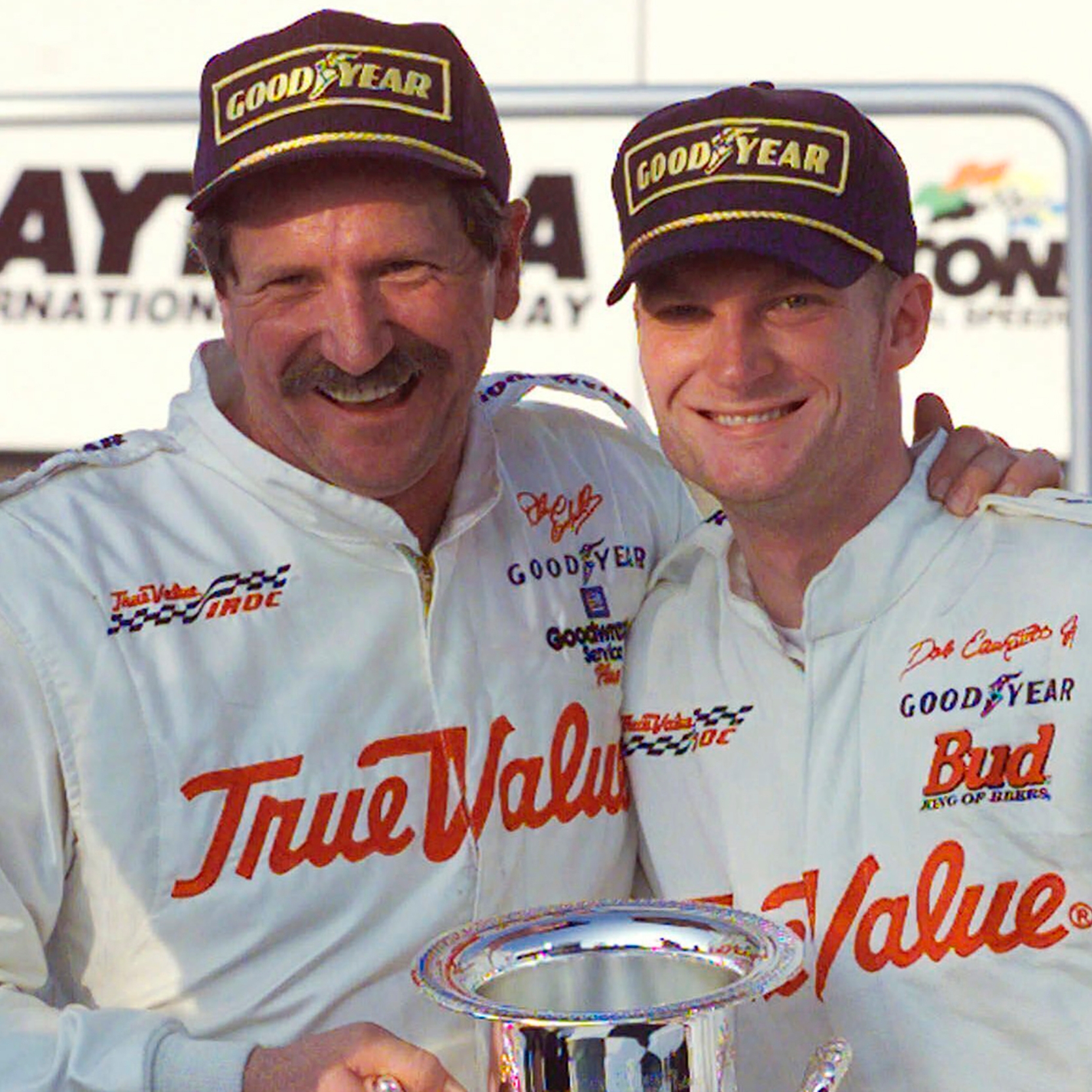
Post Reports
Deep Reads: Chasing ghosts with Dale Earnhardt Jr.
00:51:32
Approaching the age his dad was when he died at Daytona, a second-generation legend went looking for answers. Reporter Kent Babb went looking, too.
Loading summary
Transcript80 lines
- [00:00]
Advertiser
Tipping culture is out of control. Yesterday, I tipped someone just for handing me a napkin. So when hotels.com gives me up to 20% off for being a member, I finally get tipped. And you know what? It feels good. Hotels.com members save up to 20% off at hundreds of thousands of hotels.
- [00:16]
Kent Babb
Hi, I'm Kent Babb, a sports features writer for the Washington Post. From the newsroom of the Washington Post, this is Post Reports weekend. It's Saturday, July 26th. I wrote this story as part of our Deep Read series, which showcases our best narrative journalism. When I was 20 years old, my dad died unexpectedly. I was in college and really ever since that day, I've thought about turning the same age he was when he died. It's not that I'm scared of that. It's not that I think I'm going to die at that same age. It's just weird. I've learned it's pretty common among those of us who have lost a parent young or what's called an off time death. But we don't talk about it, I think, for a variety of reasons, especially men and even more especially men who are raised in the South. So about five years ago, I thought about who has dealt with something like this? Who can I talk about it with? And the person who kept coming up in my mind was Dale Earnhardt Jr. The legendary race car driver who in 2001 lost his dad in a shocking crash at the Daytona 500. Dale Sr. Was 49 when that crash happened. So when I reached out, Dale Jr. Was about to turn 49. And I guess I wanted to know, like, what feelings he was having, how he was dealing with this, also with me. Like, I knew I had one shot at this chance at personal closure. I've got two kids of my own now. They've started asking me about the grandpa and a lot of the questions I don't know the answers to. And I had a lot of new feelings as part of this reporting process because I did some things that I've never done. I mean, I've put off for 23 years now finding out who my dad was when he was a young man. Last fall, I went to Dirty Mo Acres, which is Dale Jr. S property in Mooresville, North Carolina, which is kind of a far away suburb of Charlotte, the hub of American stock car racing. I met with him, shadowed him during his podcast, rode around to see the graveyard on his property, spent a little time with him, talking about some of the things I don't think either of us had ever talked about. Okay, here's the story. For as long as you can Remember, Dale Earnhardt Jr. Has had this recurring dream. He's at some racetrack in the garage or in the pits, and there's his daddy talking to some guys, and he's.
- [02:51]
Dale Earnhardt Jr.
Talking to some people that I know in racing and that he knows. Some peers of his and maybe some are even alive.
- [02:59]
Kent Babb
Today, Dale Sr. Is in flannel and jeans like he just came off the farm. He looks the same as the day he died. Eyes still narrow, hair just as dark, creases rippling off his mustache like rings in a pond. Junior wants to walk toward him, maybe ask a question that's been percolating for years.
- [03:19]
Dale Earnhardt Jr.
And I badly want to walk over there and go, hey. But there's like this. It's like that's not working. Like, I can't. I can't move, I can't vocalize, or I can't. I can't play in this act. I can't be a part of this movie. I'm just like, man, that was cool to be near him. Being there, you know, it felt like as close as you can get to them without them actually coming back here, right?
- [03:49]
Kent Babb
Ancient civilizations believed dreams were spiritual rendezvous points where the dead could check in on the living. Until recently, Junior says he could count on one of these visits about once a year. And since he's not allowed at his dad's actual grave, he always tries to avoid waking up. He just stands there watching and listening for as long as he can. Before Junior's birthday one year, he looked in the mirror. He told me last fall that the face staring back at him looked old. Sunspots, gray hairs, lines around his lips and eyes. NASCAR's cocky boy wonder, with his cat perpetually backward and his tips forever frosted, was long gone.
- [04:34]
Dale Earnhardt Jr.
When I look in the mirror, I don't. I'm like, man, I don't feel this old. I don't feel like I look that old. At least not yet, but. And so it's kind of happened before. Before I expected it. I've gotten to this point in my life before I expected to. If that makes any sense. It's just a strange thing.
- [05:02]
Kent Babb
Middle age is sneaky like that. And though Junior is still lively and trim, he's just another husband and father whose glory years are gone. A big night used to be mainlining Bud heavy until the sun slipped through the pines outside his secret drinking hole. Now a sacuzzi hiding a non alcoholic brew. In October 2023, Junior turned 49. That's the same age his dad was. In 2001, when, before the last turn on the last lap of the Daytona 500, Dale Earnhardt Sr's iconic number three car bumped into sterling Marlins, sending it careening into the wall at 160mil. Two hours after the crash, NASCAR president Mike Helton.
- [05:50]
Mike Helton
This is undoubtedly one of the toughest announcements that I've ever personally had to make, but after the ACCIDENT in turn four at the end of the Daytona 500, we've lost Dale Earnhardt.
- [06:03]
Kent Babb
Dale Sr. Was dead. 17 million viewers had watched it live, a seemingly minor collision that turned haunting after driver Kenny Schrader looked through Earnhardt's driver's window and then frantically called for emergency personnel. In the quarter century since, Schrader's never spoken about what he saw. Until then, crashes were as intertwined with the sport as cigarettes and beer. Its top two levels were the Winston cup and Busch Series. Eight drivers died during races in the 1980s and 90s. And initiating contact and walking away from Rex was why Earnhardt Sr. Was nicknamed the Intimidator. It's also why it was so popular now. After a wreck he couldn't walk away from, NASCAR had no choice but to confront and overhaul its outdated safety mechanisms. No driver has died since. Junior spoke about this on his podcast, the Dale Junior Download in 2023.
- [07:00]
Dale Earnhardt Jr.
That was a. That was a horrible thing, but. And the whole sport had to go through it, you know.
- [07:07]
Kent Babb
Beneath something so unprecedented was a most relatable thing. A shell shocked young man who'd lost his dad. Gone in that same instant were the answers to a million questions, lessons to be learned, the hope of some beer fueled conversation that smoothed out wrinkles of the past.
- [07:23]
Kelly Earnhardt
You know, they were just developing this.
- [07:24]
Kent Babb
Relationship, says Kelly Earnhardt, Miller Jr. S older sister.
- [07:28]
Kelly Earnhardt
It's like, gosh, finally felt like things were going in a direction that was positive. And then just to have that taken away. And then the second tragedy was being thrust into that.
- [07:42]
Kent Babb
It's a lonely feeling, and one I happen to know. Fourteen months after Junior's dad died, so did mine. Michael Babb wasn't famous, but as a bass guitarist for a 1970 Southern rock band, he'd come close. When hi Cotton broke up, my father came home, bringing addictions to alcohol and drugs with him. I was 15 when, for the first time, I confronted him about his drinking and we got into a fist fight. I never listened to High Cotton's record, deciding it couldn't possibly be good. He loved nascar, which meant I hated it. I was into real sports and When I shared my dream of a career writing about baseball or football, he didn't understand. I was studying journalism in College in 2002 when my grandmother called. They think he's gone, she said. His heart had become enlarged, and while he was painting a house one day, it just stopped. He was 51. That's all I know. And because a pipeline of information got shut off, that's most of what I ever will. I'm 43 now, and since the day my dad died, there's been something unsettling about the idea of turning 51. I've learned this is common among people who've lost a parent young or what is called an off time death. Psychologists suggest these feelings of anxiety and fear alongside a gradually intensifying urge to learn about your bloodline, are like a final stage of grief. And it's one that most people, and in particular men, rarely talk about or explore. I wanted to talk about it with someone who understood, and though I never took to nascar, I knew Junior and I happened to be members of the same unfortunate club. I wondered if he thought about some of the things I did, how he coped and what it was like to actually turn the age his dad was. So before he turned 49, I asked if he'd be willing to talk. He said yes. Of the dozen stops on North Carolina's Dale Trail, none is more important and solemn than a quiet grove in downtown Kannapolis. Dale Earnhardt Sr. Grew up here and put the town on the map, and it became the epicenter of despair following his death. Now, past cypress shrubs are seven steps that represent the number of Earnhardt's cup championships, and benches grouped in sets of three nod at his iconic Number three car. At the center is a nine foot bronze statue. Our friend and champion, reads one of the plaques. In places like this, the homegrown star belongs to everyone, especially when, like Kannapolis, the place is one of a thousand Southern mill villages that sprouted a century ago, spun cotton into yarn, and then, when the textile industry cratered, plunged into decay. Dale Senior, a high school dropout, worked those looms. He married young and had his first son, Carrie, at 18. But he didn't know how to be a husband or a father, so he abandoned both and took off chasing his dream on some dirt track. Earnhardt fans love all that because their fantasy was his life. He'd achieved wealth and superstardom in America's most blue collar sport, doing so with a defiance and fury that made you either love him or hate him. By the time Kelly and junior Were born both to Dale's senior's second wife, Brenda. The local legend had gone regional. He skipped out of town to enter races in Charlotte or Atlanta, paying entry fees instead of his bills. And the last car that drivers wanted to see in their mirror in those years was the damn number three, because that meant they were about to get passed or knocked out of the way. Dale Sr. Didn't see racing as dangerous. That was a myth he once declared propagated by Yankees. When NASCAR started requiring drivers to wear a five point harness in 1976, the response to nearly a dozen deaths over the previous decade, Dale Sr. Said the added safety measures made the sport more hazardous. He told a reporter in 1980, the year he won five races in his Winston cup quote, the only reason I broke my collarbones was because I had my safety straps on. The folks back home loved that. And soon the whole sports world was taking notice. By the end of the 1980s, a million people a year were attending NASCAR races, more tuned in for live broadcasts, and Fortune 500 companies were angling to sponsor top drivers. Dale Sr. Went back to Kannapolis when he could, but never for long. He skipped his kids, bedtime, soccer games and high school graduations. Kelly says that when he was around, Junior took to playing with his toy cars.
- [13:00]
Kelly Earnhardt
He used to play with his Matchbox cars on braided rugs. He would make cardboard racetracks, you know, and Dale, you know, was looking for any kind of attention. Just paid attention, just noticed, right? Noticed.
- [13:14]
Kent Babb
Dale Sr. Had become a hero to millions of kids, including his own. Kelly stopped fighting for her dad's affection, but Junior never did. After races, he could often be seen elbowing through the crowd to be photographed next to his dad. When that didn't work, a teenage Junior found new ways to get Dale Senior's attention. He smoked cigarettes and played video games with his friends from nearby Mooresville, which they called the dirty mo. Del Sr. Liked Hank Williams Jr. And Alana Miles Jr. Preferred the stone Temple Pilots and Rob Base. He slept past noon, let the dishwasher and trash overflow, assembled an impressive collection of soiled dishes under his bed. For better or worse, it all led to the heavy sound of Daddy stomping toward his room. When Junior was 6, Dale Sr. Had started his own racing team, Dale Earnhardt Inc. And bought hundreds of acres near Kannapolis. NASCAR was becoming a national curiosity, with Dale Sr. As his pitch man, carrying the brand and commercials for Coca Cola and McDonald's.
- [14:18]
Dale Earnhardt Jr.
I've got the car, I've got the team.
- [14:23]
Kent Babb
In time, every Speedway in America overflowed with shirts and flags and decals with a slanted three. And kids built models of Earnhardt's menacing GM Good wrench car.
- [14:32]
Dale Earnhardt Jr.
When you get off to a great start, there's just no telling how far you can go.
- [14:40]
Kent Babb
Junior, meanwhile, got himself sent off to military school. That didn't take. So Dale Senior got his son a job changing oil at Dale Earnhardt Chevrolet. But he quickly got fired. When dad tried connecting with Junior by bringing him to the track or letting him get behind the wheel of one of Dale Senior's cars, Junior showed only a talent for wrecking them. In the 1990s, Earnhardt was trying to break Richard Petty's record of seven cup championships. His son was living in a double wide, smoking and drinking with his buddies. One day, Earnhardt stormed in, scolding Junior for wasting his life, and the two went at it. Junior erupted, accusing his father of caring more about strangers than his own family. His son, the kid named after an icon. He couldn't even get as much attention, Junior told him, as a pimple on your ass. Hidden on Junior's property along the banks of a narrow creek is a vast graveyard. There are at least 80 bodies out here, scattered across an unmarked wooded area accessible only by atv. Here in rural North Carolina lied the charred remains of the car Juan Pablo Montoya crashed into a track dryer during the 2012 Daytona 500. The tub of an Indy card that will power once wrecked and the quasi recognizable cars once driven by Tony Stewart, Jeff Gordon and Mark Martin. Junior tells me, I've never paid a dime for any of them. They're just trash, he says. So why does he want them? What's the point in dispatching Sonny Lunsford, an old buddy with a flatbed, to load up somebody else's junk? In 1998, Junior got serious enough about racing that his dad gave him a shot to drive one of his cars in the Busch Series, essentially NASCAR's AAA league. Considering Junior's clearest talent was destroying these hyper engineered machines, he had no idea why. The only advice Dale Sr. Gave him don't lift. He told Junior, because success requires fearlessness. Cars are often separated by inches even as they try to avoid or initiate contact while approaching 200 miles an hour on turns with gravity defying inclines. No matter the consequences, a good driver never lifts their foot off the accelerator. Yes, Sir. Junior, just 23, won seven Busch races in 1998 and six more the next year. He showed a familiarly aggressive style and a rare gift for feeling the air open up around his car, flying past competitors and in 2000, into the big leagues. Damn if he didn't win two cup races. One shy of his daddy.
- [17:41]
Dale Earnhardt Jr.
The next generation of nascar.
- [17:50]
Kent Babb
Still, it took getting to victory lane for his dad to tell him he was proud. If Junior didn't win, Dale Sr. Didn't show up. Junior was 26 when the 2001 season began. That year's Daytona 500, one of the most important events in motorsports featured Junior and Senior starting sixth and seven right next to each other as they fired up their engines. Both were among the favorites to contend for the victory with Dale Sr. Trying to win Daytona for the second time in four years. On the last lap, the Earnhardt's teammate, Michael Waltrip, was leading and Junior was in second. That's when he saw his dad's car in his rear view. But he wasn't trying to pass or wreck him. In third place, Earnhardt was blocking Sterling Marlin from a late surge, protecting a win for his team.
- [18:42]
Dale Earnhardt Jr.
I believe Dale Jr. And Dale Sr. Both are doing all they can to help Michael make that happen.
- [18:50]
Kent Babb
Sterling got into. Earnhardt Jr. Doesn't remember much about what came next. After he and Waltrip crossed the finish line, someone said something about a crash. Back behind them to the flag.
- [19:05]
Dale Earnhardt Jr.
Come on, Mikey. You got it, man. Got it. You got it. You got it.
- [19:08]
Kent Babb
You got it.
- [19:15]
Dale Earnhardt Jr.
I guess he's all right, isn't he?
- [19:19]
Kent Babb
A golf cart took him and Danny Earnhardt Junior's uncle and a member of Dale Senior's pit crew to a van then a crowded hospital lobby where he saw anguished faces and a curtain. He looked behind it and saw his dad, who'd been pronounced dead. Junior doesn't remember the trip back to Kannapolis either or convening with extended family at his grandmother's house. Instead of processing what happened, he tried to be everyone's rock. No one saw him cry. A week after Daytona, he was at the track in Rockingham acting as if nothing happened. Thousands of fans waved flags with Earnhardt's three on them. And 23 seconds after the green flag waved, Junior crashed into a wall. It isn't grief he remembers feeling, it's numbness.
- [20:06]
Dale Earnhardt Jr.
He told me after my dad died, I didn't care if I died. And, you know, it's silly, but I didn't have a family. I didn't have a wife. I was thinking, you know, I didn't. I didn't want it to happen, but I was like.
- [20:26]
Mike Helton
I was just like.
- [20:27]
Dale Earnhardt Jr.
I don't give a. What happens. The Next minute, I could care less.
- [20:32]
Kent Babb
Two months later, during a practice at Fontana, he crashed again.
- [20:36]
Dale Earnhardt Jr.
I had a crash in practice, and I was. During that experience of crashing in practice, I said, you know, kind of had.
- [20:48]
Kent Babb
This thought, he says. It took that wreck to, quote, get my together and focus on not dying. But there were other stresses back home. Dale Senior's last will and testament hadn't been updated since 1992, when Kelly and Junior were 20 and 18. It transferred the entirety of his estate, the race team, the property, nearly two dozen trademarks to Dale Senior's third wife, Teresa, who he'd married after divorcing Juniors and Kelly's mother. Junior's car and his number eight now belonged to his stepmother. Kelly says she and Dale were never invited to look through sentimental possessions, childhood items, or even family photos. Teresa rejected their input, she says, when planning Earnhardt's funeral or choosing a grave site. His final resting place is less than a mile off State Route 3, behind a tall screen fence, down a dirt road protected by cameras and more fencing. Not far from a pond is a walkway that leads to a mausoleum with Earnhardt stamped in gold. Kelly says Teresa invited her and Junior to see it after their dad's internment. Kelly hasn't been back. She says it's understood that she and her brother are unwelcome. She says of Teresa, quote, she's so extreme that we might get arrested. I tried to reach Teresa Earnhardt directly but couldn't. Her lawyers declined my interview request and did not respond to a question about whether Earnhardt's children actually are forbidden from visiting their dad's grave. Junior, for his part, said he, quote, might have gone back by himself. Once, fueled by some combination of liquid courage and Earnhardt defiance, he admits, I.
- [22:29]
Dale Earnhardt Jr.
Might have drove over there on my own one day back when I could get back in there just. Just to sit and think for a minute.
- [22:39]
Kent Babb
That was at least 20 years ago, he says. Around the same time, NASCAR was issuing sweeping changes in the wake of Earnhardt's death. Drivers complained about having to wear head and neck restraints, and cars had to be outfitted with stronger roll bars and carbon fiber seats. Speedway walls were updated with upgraded barriers that dissipated energy during a collision. Cars were expensive enough before the changes, but by 2002, teams were cutting full shells off car bodies to replace them with newly mandated materials. Junior hated the idea of sending those shells to the scrapyard, so whenever he wrecked, he asked Sonny to tow the car home and dump it in the yard. Other teams offered their cars, too, and the collection grew. Darrell Waltrip's number 11, covered in leaves and twigs. Mike Wallace is number 52, resting among the skinny trees, Kevin Harvick's number 29, resting in peace behind Montoya's. There is noticeably nothing ever driven or owned by Dale Senior. Teresa controls those things, too, and Kelly suspects that's the real reason her brother did this.
- [23:47]
Kelly Earnhardt
I mean, there's just this longing to put pieces together of things that you just didn't have access to, to or weren't, you know, readily shared and talked about and stuff like that, even at family gatherings and things like that.
- [24:05]
Kent Babb
Junior shrugs at that theory, but it's hard to deny what the assemblage amounts to. A graveyard he doesn't have to sneak into. Each car body is a rusting monument just five miles from his dad's more traditional memorial to stories and recollections and moments in time. He built a place he can visit whenever he wants, for as long as he'd like, thinking about things such as the oddities of grief and how it leads his son to gather up twisted metal because it's one of the only ways to feel close to his d. Junior dreaded turning 40, in part because that's when he thought people naturally slow down. Some drivers go so far as suggesting that having kids makes you two tenths of a second slower, but considering there's no evidence for this, it's just a convenient excuse for these Peter Pans to put off responsibilities while they keep chasing each other for a living.
- [25:23]
Dale Earnhardt Jr.
I feel. I feel a little bit lost, and I feel a little bit like I don't matter if there's not something happening that I'm excited about. I feel like when I don't have that thing to look forward to, I'm like, Where's my purpose? Where's life's purpose?
- [25:48]
Kent Babb
When he was in his 20s and early 30s, nobody staved off adulthood quite like Junior. Before the graveyard, he had Sonny build a thousand square foot tree house on his land, which he calls Dirty Mo Acres. He added a paintball course and a small herd of bison a bit farther down the hill. He started dreaming up plans for the town of Whiskey River. We needed a place to party, sonny says of Junior's bachelor paradise, specifically one that, unlike the local bars, had no last call. At Junior's direction, sonny brought in three 18 wheelers worth of reclaimed Kannapolis timber and spent nine months constructing an old West Main Dragon barbershop mercantile post office. The hub was a saloon, naturally across the street from a church in the.
- [26:38]
Dale Earnhardt Jr.
Jail, because when we partied, we didn't start until 10, 11 o' clock at night.
- [26:42]
Kent Babb
Dang.
- [26:42]
Dale Earnhardt Jr.
And then you watch the sun come up. You'd be sitting down here on the porch watching the sun come up. Many times.
- [26:48]
Kent Babb
I believe that while Sonny built, Junior kept the pedal down. Four months after his dad's death at Daytona, Junior dominated the same track to win the Pepsi 400, then the Daytona 500 itself three years later. This cemented him as NASCAR's most beloved figure, named the sport's most popular driver for the first time in 2003. Nobody else won the award. For 15 years, Budweiser was paying $1 million per race to sponsor Junior's Red Number 8 Chevy, which like his dad's black good wrench car, was becoming inextricably sewn into the fabric of Americana. It was Junior, after all, who'd won Dover 12 days after the terrorist attacks of 911 and then circled the mile long oval with an American flag dancing outside his window. He was like his dad, a perfectly imperfect brand ambassador. Relatable, sure, but also the guy who fired up his car at Pocono with a gash on his head after a drunken swan dive into the shallow end of a pool. Who occasionally started his own engine with a breakfast bud and a lung dart, who once scoured his house for anything carbonated because he wanted the hot tub to have more bubbles. At his 30th birthday party, his crew rented out an Irish pub in Morrisville. They closed it down. A Marilyn Monroe look alike sang Happy Birthday and somehow a few of them wound up in a boxing ring where a professional bull rider gave Junior a black eye. Refusing to grow up, 30 wound up being the age he stopped winning. Junior blew off post race analysis meetings to play Madden in his bus and had so much beer delivered to him that the distributor accused him of reselling it. His fans ignored the fact that over a 108 race stretch he won just three times. He withdrew, sparred with reporters, told girlfriends that he was never settling down. Yet people were buying so much merchandise, companies so keen on sponsoring him. The junior averaged about $20 million in yearly earnings. He made a cameo in Will Ferrell's Talladega Nights, flew to Monaco for dinner with Jay Z and Beyonce before appearing in a music video, traveled to nearby Concord, North Carolina and his private helicopter to race NBA legend Shaquille o' Neal and a made for TV spectacle. On the flight back to Mooresville, he looked through the window at a field below. Mike Davis, his longtime road manager and branding specialist, remembered the moment when they flew over his father's off limits gravesite, we would have been coming back. The trajectory from Concord Speedway where it was to Dale's house would have put us going right over dei. And I just remember him going, hey, there's Daddy. And I'm looking over at that, like that garden. And I'm like, what? You know? And I remember him saying that. In 2007, Kelly and Junior got tired of working for a company their father started, but was now controlled by their stepmom. They announced they were starting their own racing team, JR Motorsports, and leaving behind Junior's famed number eight bud car. When Junior won in Brooklyn, Michigan in 2008, his first victory in two years, it was in a number 88 owned by Rick Hendrick and sponsored by AMP an energy drink, he wouldn't win again for four more years. In 2012, he crashed during a tire test at Kansas, leaving him with the first of several concussions that would force him to miss starts for the first time. His reaction time and peripheral vision weren't sharp, and he was experiencing balance problems. That because Junior is Junior, he measured in beer. Small headache, he wrote in his phone's notes app, which became the basis of racing to the finish. His 2018 memoir, Drunk One Beer Feeling Another time, he wrote, I got out of the car and felt one or two beers drunk, felt lazy and one beer drunk rest of the day. Before the 2014 season, Steve Latart had become as much life coach as crew chief because it wasn't age that was slowing Junior down. It was immaturity, brain injuries and increasing self doubt. That year at Talladega Superspeedway, where Dale Sr. Won 10 times, Jr. Went into the pits before stomping the accelerator in an attempt to make up time. Then up ahead, he saw a massive crash unfolding. He did the one thing Daddy told him he couldn't. Junior lifted. And the worst part? There was no crash. He'd avoided a collision that existed only in his imagination.
- [31:39]
Dale Earnhardt Jr.
My team was like, what was that? I couldn't really hide what I had done from my team. They knew, they watched it. And so that was when I was like, oh, I wonder if I'm going to do this a whole lot longer.
- [31:53]
Kent Babb
With Latart in his ear, Junior, 39, won four races in 2014. That October, Kelly and Junior s girlfriend, Amy Ryman threw him a blowout party for his 40th. The band Twenty One Pilots played, Kid Rock mingled, and the night came alive out in Junior's woods. Everybody congregated in the saloon at Whiskey river, drinking and singing and pounding the keys of an old red piano. At some point long before sunrise, the guest noticed the birthday boy was gone, having slipped quietly into the night after walking past a painting of an aging cowboy. My dad, like juniors, is a frequent subject of my dreams. He is, as I remember, beaten down and resentful. Frizzy gray hair, knuckles swollen with rheumatoid arthritis and flecked with paint. He's frozen in time even as my 20s and 30s have come and gone. Eight years ago, I became a father myself. I want to know more about the old band and why it broke up, to tell my two daughters about him, to answer questions about him and therefore myself. The dreams often end with me feeling guilty. He's at home surrounded by guitars he rarely plays, but not wanting to bother him, I just haven't called. I explained this to Junior.
- [33:26]
Dale Earnhardt Jr.
Teresa said something really interesting one day, very recently after he passed away. She said I had I have to remember that when I'm missing Dale. It's just a selfish thought because I want him here for me. I want him here for me. I always kind of kept that in the back of my mind, and it made me try not to be selfish about it.
- [33:57]
Kent Babb
Once he accepted this, he realized that there's nothing selfish about grief. So he stopped caring about what anybody else thought and tried to think of new ways to connect. These days, people close to Junior joke that if you're up late trying to score some obscure piece of Dale Sr. Memorabilia on ebay and keep getting outbid, it's probably Junior who's outbidding you. Indeed, the last username you want to see in an auction history is DMA7488, who has bought and sold more than a thousand items since 2013 and with an estimated net worth of $300 million, isn't about losing vintage racing hats, early Dale Senior shirts, scale models of cars his daddy once drove. Most sellers have no idea it's Junior, but one figured it out. Junior bought so many of the sellers die cast cars that the two started emailing, and they recently spent an hour on the phone discussing the details of a custom 1976 number 8 Chevy, the first car Dale Sr. Raced at Daytona. His phone is a portal taking him to racing fan sites to look over photographs. Junior has never seen pictures of the icon or the ghost. That's not the objective, it's the man. Junior says he has a dozen photo streams organized by chapters of his dad's life. There in dad 70 sportsman is a bushy haired kid whose car is sponsored by a construction company here in 198081 is a young man toasting victory with a Coke Cup. Quote what hotel did they stay in? Junior wrote on social media alongside a black and white picture of the actual Chevy Nova his dad drove. Did they eat at any local restaurants? Who all went down there with him? Was he nervous? I want to time travel. These folders are precious, to be sure, but there's one he rarely shows anyone. Just dad contains photos of Dale Sr. Lounging at home or tinkering in a shop. Junior shows me a picture of his daddy at sunset, that familiar profile backlit as a fishing line drops into Lake Norman. Junior's smiling, he says, just being a person. In 2015, the portal took him to 18th century Bavaria, where Johann Ehrenhardt Sr. And his son boarded a passenger ship bound for Philadelphia. Two decades later, Johann Jr. Would be granted a tract of farmland in the British colony of Carolina. There he would turn over the same dirt where much later his descendants would plant seeds and play games and starting with Junior's grandfather, lay rubber. Junior was so moved that standing next to Amy in the ancient chapel where the Ehrenhardts once worshiped, he dropped to a knee and proposed marriage. He was 40 and engaged, two things he once believed would slow him down. But he won three times in 2015 after reaching Victory Lane just eight times in his 30s. The next season, he finished second in three of his first eight races. Then his concussion symptoms returned. There were no horrific crashes, just dozens of minor ones, each jostling his neck and head. He struggled to tie shoelaces and buckle a belt, and his reaction time and vision had dulled. Quote angry for no reason, he wrote in his notes app. He told no one, not even new wife Amy. Quote, close to puking, he wrote later. Seems to be getting worse. He pledged to donate his brain and was ruled out for the final 18 races of 2016. During his time off, he took interest in a new project, actually hosting his own podcast. His plan was to interview racing buddies and the sports pioneers, and soon Dirty Mo Acres was adding a dedicated studio. As time passed, Junior noticed that his questions and guests seemed to follow a Trend.
- [38:01]
Dale Earnhardt Jr.
In about 6 out of 10 podcasts I do with a guest, I'm usually apologizing at some point for some, you know, for not being more self aware, not being a better kid.
- [38:11]
Kent Babb
Well, it was clearly some like psychological like meaningfulness with Tony Senior just now and so.
- [38:16]
Dale Earnhardt Jr.
And so that would be great with dad, right? I would love to say, hey, you know what When I pissed you off that day, I get it, you know.
- [38:25]
Kent Babb
Never got to do like the. Get like bourbon drunk and like, you know, when you're like, equals, you know, like, that's, that's. I mean, I don't know. I'm over identifying here, so.
- [38:35]
Dale Earnhardt Jr.
No, that's it. Like, you know, we never got to sit down, drink a couple beers and Bull.
- [38:40]
Kent Babb
Yeah, like, I'm a dad. You're a dad. Hey, like, let's talk about, man, how stupid I was when I was like, yeah, 17.
- [38:47]
Dale Earnhardt Jr.
I think you're probably the same. We're sort of at that part of our lives where we're sort of reconciling with our past.
- [38:54]
Kent Babb
And we, like so many men who have lost their fathers, are attempting to understand it, if not make peace with it before time runs out. After my dad died, I felt an urgency to accomplish every goal and live as much as possible before age 51. I needed to be established in my career, to have started a family, to see the world in what felt like a truncated time. Even as I notched those things, I wondered what my dad would have thought. You never stop wanting to impress your parents. Even after they're gone. There's a longing to speak as equals. But when all you have are memories, yours and those held by others, you protect them. Concussions were now threatening Junior's long term brain circuitry, and after the 2017 season, he retired. When he spun out at Daytona after the front of Kyle Busch's car sent juniors careening into a wall, that was it. However much time he had left, he didn't want to spend it in pursuit of more wins. He wanted closure. Junior had traditionally avoided conversations about his dad's death, partly because he didn't remember much about that day. Now, armed with a microphone, he interviewed guests about the things they remembered, trying to bring a blurry picture into focus. Mike Helton, the NASCAR president in 2001, described the moments before his announcement that Earnhardt was gone.
- [40:16]
Mike Helton
I said, well, you know, we just, you know, we just lost the greatest driver we've ever had. What am I supposed to say? And I think it was Brian or Paul Brooks, both at the same time, stepped in and said, just say that. You know, just say we lost him.
- [40:29]
Kent Babb
Then came Kenny Schrader, who, after peeking into Earnhardt's car window after the wreck, frantically waved for emergency personnel. Schrader had never revealed what he had seen, and Junior didn't want him to do so on the podcast. Instead, he wanted to read Shrader something.
- [40:45]
Dale Earnhardt Jr.
You've been A great friend to me. You're one of only a few to see the darkest moment from my dad, that you have intimate knowledge of those moments. You are a keeper of that delicate information. It makes me feel close to you, Kenny. I feel pain for you to have to carry that memory. But you carry it for me. You carry it for Kelly, Dad's family. You carry it for anyone who's ever cheered for him. It's a secret that you'll keep to your last breath. Kenny. I know you might sometimes wish you weren't the one, but I'm glad it was you.
- [41:19]
Kent Babb
And Sterling Marlin, whose collision with Earnhardt had preceded the crash and in the weeks afterward spurred death threats.
- [41:26]
Dale Earnhardt Jr.
I just hope that you've had. I hope that you've carried no problems or carried no, no, no. No sliver of guilt or any kind of any kind of thing going forward with that, because I haven't. I've always thought the world of you.
- [41:42]
Kent Babb
Junior turned 46, and Age's grandfather Ralph had died before reaching and kept asking questions.
- [41:48]
Dale Earnhardt Jr.
I want to learn who this guy was and how he evolved and how, you know, what were some of the not so great things about him.
- [42:00]
Kent Babb
So Junior and Kelly asked their mother, Brenda, why she and Dale Sr. Had divorced. He was addicted to racing, yes, but there was also a clear avoidance of responsibility. His own father's fatal heart attack had shaken him, kicking off a few years of emotional instability and financial distress. Rather than confront his own grief, he distracted himself, driving, tinkering or disappearing into the woods. Hank Parker Sr. A pro fisherman and one of Dale Sr. S closest friends, came on to tell Junior about one of their hunting trips. As they were waiting for a deer, Parker's son called. And Parker told his boy he loved him. Dale Sr. Looked jealous.
- [42:40]
Hank Parker Sr.
Your dad looked at me and he said, I don't know how to love my kid like you love your kid. And I said, well, we're different, Dale. We're different. You love him just as much as I love Hank Jr. You just don't know how to express it. And he said, well, you know, I'm in broken marriages, and I'm not married to the mom, and it's hard. I said, you just have to let go. You are who you are, and I know how much you love your kids. You just have a hard time expressing it. And he never was able to express to you how much he loved you. He never was able. And you always felt like he loved you when you won and he didn't. When you didn't win and I could tell that. And I've always wanted somehow to get you and just grab hold of your shoulders and tell you how hurt he was that he did not know how to express his love to you, and he teared up. And for Big E, the intimidator, just he and I sitting in the living room to share that with me showed me how tight we were at heart as friends. But it also showed me a side of him that was sad because he really wanted to have the same relationship. I'm outgoing, I'm free to talk, and I'm not intimidated to say I love you all. That didn't fit his demeanor, but it was in his heart. I said, oh, you love him just as much. You just don't know how to express it.
- [44:18]
Dale Earnhardt Jr.
Dang.
- [44:19]
Hank Parker Sr.
And that was heartfelt.
- [44:24]
Dale Earnhardt Jr.
I'd have loved to have heard heard that story a long time ago.
- [44:31]
Kent Babb
Last year, Junior's longtime crew chief, Tony Yuri Senior was his guest. It was the same day JR Motorsports announced that after Teresa Earnhardt let the trademark expire on the old number eight Bud car, Kelly and Junior had bought it back. He and Yuri were talking about Dale Senior's fateful decision so many years ago to put Junior, after all those wrecks and so many arguments, into one of his cars.
- [44:55]
Tony Yuri Sr.
You knew he wasn't happy, but he let you know he wasn't happy, uri said.
- [45:00]
Kent Babb
Dale Sr. Wasn't sure Junior even wanted to race.
- [45:03]
Tony Yuri Sr.
I said, dale, they're kids. Put him in it. Spend your money on him. Quit spending on other people's kids. We'll go see. I said, we'll know in a year. I said we'll know in a year if he's got it or not.
- [45:24]
Kent Babb
It's September 2024, the end of summer sunset on a humid Friday. Junior's 49 since retiring from full time racing. He does one or two tracks a year. This time is Bristol Motor Speedway, where in 1979 Dale Sr. Got his first win. Jr. Won't say it, but everyone knows this is his last NASCAR race. There's something poetic about a circle closing here at the precise moment a new rotation begins. Junior and Amy's two young daughters, 6 year old Isla and 3 year old Nicole, are here on pit road, smelling the singed rubber and hearing the air guns. As Daddy stands next to his car, he picks up Nicole and and points toward the speedway lights. Then his blue number 88 car.
- [46:13]
Dale Earnhardt Jr.
I guess that's why I'm still driving, is to like to see my see if it might kind of register with my girls that I did this, that I do this, that this is what our family does. This is what our family's about. And they'll see Pictures of Pap. O' Dell Jr.
- [46:29]
Kent Babb
Kisses Amy and high fives Isla. Then he climbs in and buckles his head and neck restraint. Junior knows it won't be long before his girls start asking about the man they see in so many pictures, eyes hidden by sunglasses, usually looking fearsome. That'll be a good day, he says, to ride over to Kannapolis and because they can't visit the grave, show them the statue. It belongs to everybody, he'll explain, because the intimidator was everybody's but Papa Dale, the man Junior has spent the past decade getting to know, he's theirs. And the two little girls with strawberry hair don't have to share him.
- [47:06]
Dale Earnhardt Jr.
He was this guy and he did this thing and then he died. And dad did that thing, too. I hope you know that one day they go, hey, dad, tell me about, you know, Daytona. Yeah, you know. Or tell me about winning the. Winning the Daytona 520 2004. Or tell me about going to Victory Lane with your dad when you were a kid. What was that like? You know? I want them to get to a point to where they're asking me about that part of my life. And it may take some time, but I'm not pushing or rushing it because there's a lot to talk about.
- [47:53]
Kent Babb
As I wrote this story, I reached out to my dad's old bandmates to ask about the man I never got to meet before. He was my dad. They said Michael was a prankster who'd do anything for a laugh. The band toured the east coast, opening for the Doobie Brothers and the Allman Brothers. And a disagreement with Ted Nugent's road crew nearly led to an onstage brawl, lead singer Jeff Logan told me. Logan and Philip Flip Myers, the band's drummer, disagree on why things eventually fell apart. Too little money, Jeff says. Creative differences with legendary producer Alan Tucson. Flip says they recorded a second album that was never released. We were damn close to breaking through, says Flip, who's 76. I think about it every day. Not long after we spoke, a package from Jeff arrived. An eight track of hi Cotton's first record, a remastered cd. A half dozen pictures of a man in his early 20s, lively and grooving. I handed the packet to Lila and Lucy, my daughters. The guy with the dark hair flowing from beneath the cowboy hat, that's Grandpa Michael. That day in Bristol, Junior finishes seventh and climbs out of his car. Someone hands him a water on pit road. Then he drains it and asks for a beer. Fans line a walkway, yelling for an Earnhardt one last time, and drivers walk over for high fives and hugs. Junior empties the one can so somebody brings out a cooler. He reaches in and slips another Bud select into a koozie. This was a race, sure. It was also a goodbye, the kind drivers used to not get. Junior changes out of his fire suit and into a T shirt and jeans, opening a third beer as he walks over to mingle with fans. The staffer hands Junior his glasses, and the lines ripple across his cheeks as he smiles for selfies. It's nearly midnight when Amy and several friends join another party just getting started. I asked Junior about the podcast guest he wants most, the one he can never have. But if he could, what would be his first question? What is it he wants to ask his father? He pauses, thinking about it, and smiles. How'd I do? He says. Last October, just three weeks after Bristol, Junior woke up into what felt like a dream. His dad wasn't in this one. In fact, the visit stopped around the time junior turned 49. Instead, he was in a beach house in the low country, a wife and two daughters next to him in bed. It was his 50th birthday. He made it, reaching an age his daddy never did, the last person to ever pass the great Dale Earnhardt. The family spent a lazy day on the coast. Just Amy and my girls, he says. They went to a local joint with a balcony, and Kelly Venmoed Amy to buy her little brother a drink. The four of them sat there for hours, all Junior wanted, just feeling the breeze and listening to his girls for as long as he could. This story was reported, written and read by me and edited by Joe Tone and Matt Rennie. Audio was produced by Bishop.
- [51:48]
Advertiser
You listen because you know the power of good journalism and the Washington Post is there for you 24 7. When you become a Washington Post subscriber, you get exclusive reporting you can't find anywhere else. You also get sharp advice, columns, delicious recipes, TV and music reviews and so much more. Right now, you can get all of that for just four $4 every four weeks. That's for an entire year. After that, it's just $12 every four weeks, and you can cancel anytime. Add to your knowledge and discover all the Post has to offer. Go to washingtonpost.com subscribe that's washingtonpost.com subscribe.