← Post Reports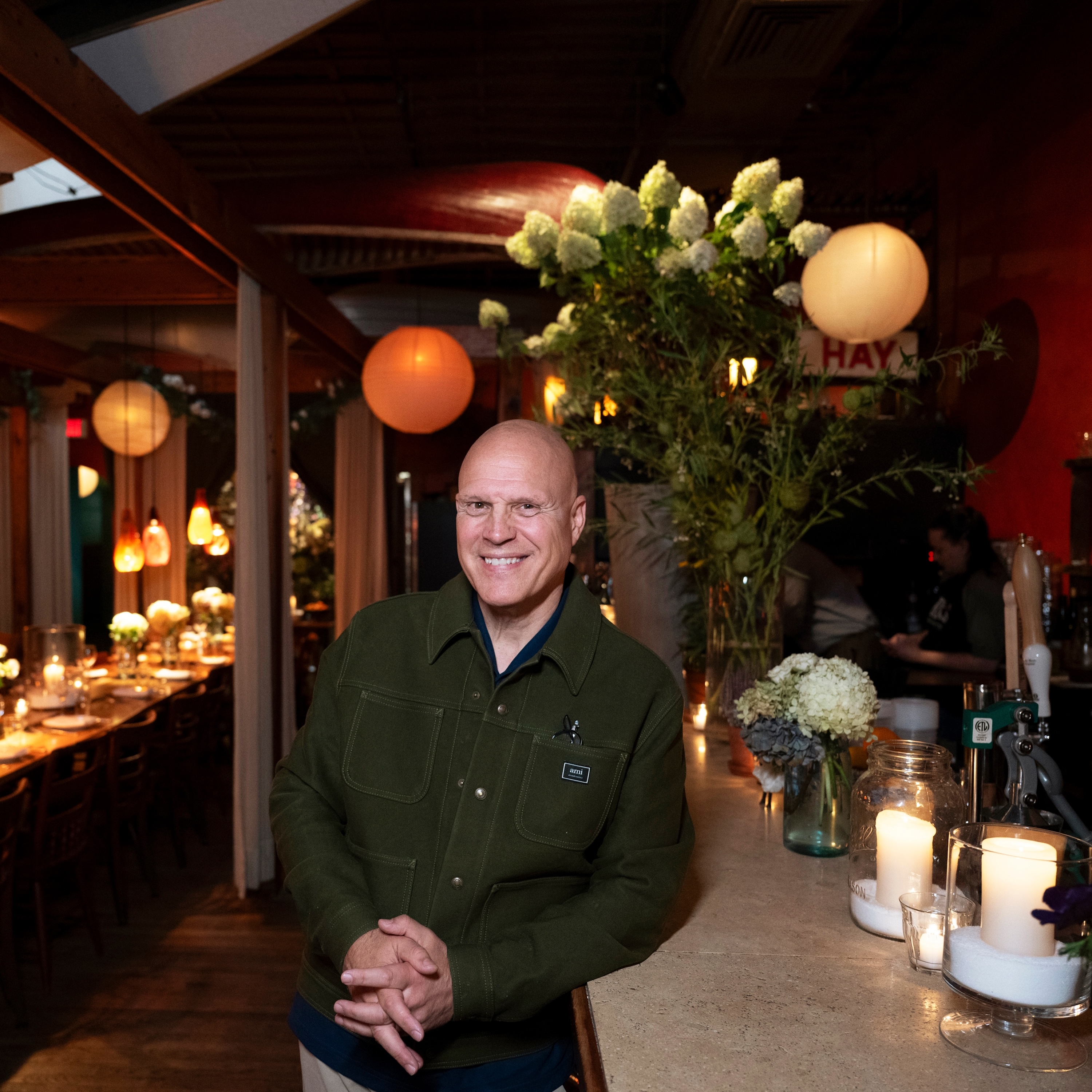
Post Reports
Dinner with The Post’s food critic
00:27:21
Tom Sietsema, The Post’s longtime food critic, is stepping down. In honor of his 26 years on the job, a re-run of one of our favorite episodes: a peek behind the curtain of the life of a food critic.
Loading summary
Transcript104 lines
- [00:02]
A
After 26 years on the job, the Post's food critic, Tom Sytsima, is hanging up his knife and fork. For years, he's dined incognito. He was so intent on keeping his identity hidden from restaurant owners that he didn't even let family post photos of him. But earlier this month, as he announced his retirement, he showed his face online for the first time. Now, in the spirit of celebrating his illustrious and delicious career, we wanted to re air this great episode from late 2024, when Tom takes Post Reports host Martine Powers out to dinner. The episode was a celebration of his 25th anniversary at the Post, and it's a fascinating behind the scenes look at the life of a professional food critic. Tom talks about his favorite parts of dining out some of his most savage reviews and how we can all be better diners. Okay, here's the show.
- [00:59]
B
Thank you so much.
- [01:02]
C
Cheers. Can I just say happy holidays. Great to meet both of you. Should I just, like, throw out some dishes then? Do you eat or not eat anything?
- [01:16]
B
I eat everything. I eat everything.
- [01:18]
C
Oh, I love people like you.
- [01:20]
B
A few weeks ago, I got to do something that I have been dreaming about for years. I, along with audio producer Ariel Plotnik, went out to eat with Tom Seatsma, the senior food critic for the Washington Post.
- [01:33]
C
Let's get some crudo. Let's get the. Let's get the tuna crudo, please. And if we got a focaccia, is there one you especially like?
- [01:43]
B
That's Tom there ordering appetizers for the table. For his job, he eats out almost every night of the week. Over the course of his career, he has reviewed thousands of restaurants. And on this particular night in early December, we were at a trendy new Italian spot in downtown D.C. the kind of place where a cocktail can cost upwards of $17.
- [02:07]
C
I would get, you know, whatever your taste is. I mean, if one of you could get like a Negroni or like an Italian kind of thing, can you do that? And we'll just. Do you like negronis? Okay. All right. All right. And otherwise you get, you know, it's just a chance for us to see how they do cocktails, right?
- [02:29]
B
And all of this evaluating has to happen secretly. The wait staff isn't supposed to know that Tom is there to judge the experience. So when you eat with him, you have to play it cool. You have to act like it's a normal dinner, except it's not, because you're not just ordering what you're in the mood for that day. You are there to help him order as many things off the menu as possible without attracting attention. So Tom takes a quick scan at the menu and suggests some possible options.
- [02:59]
C
Do you want to do the carbonara? That's kind of a good test. And it's kind of cold outside. It'd be good for that. Do you want to do the chicken Milanese? I would do anything Pounded fence. Oh, that's like. I'll do the rib eye. I'll do the rib eye.
- [03:18]
B
For Tom, reviewing a restaurant is a special kind of responsibility because he knows that regular people, the folks who read his reviews, they are often saving up their hard earned money to have a really special experience with their loved ones on a night out. And so while he always tries to arrive with a good attitude, he's smiley and jovial and friendly with with the waitstaff. He can also be pretty discerning. Like this moment where Tom shared with us his thoughts on the tuna crudo appetizer.
- [03:52]
C
So this is really pretty crappy. I mean, like, with your eyes closed, would you be able to identify the fish that you were eating? No way. And then on top of it, it's cut so thin you can't. You can't even taste it. And then it has some vague cream that might be avocado.
- [04:16]
B
Tom has been doing this for 25 years, and after a quarter century of middling crudo, you'd think that he might be sick of this job, but he's not. He says he loves this job because it's about more than just eating.
- [04:33]
C
What I found very early on was that there's a food story in everything. It's not just restaurants. The choices that people make in their daily lives about what and how they're going to eat says a lot about them. And there's so much more than food. You know, food is who grows it, who sells it, who cooks it. It's a little bit of everything.
- [05:00]
B
From the newsroom of the Washington Post, this is Post Reports. I'm Martine Powers. Today, on the occasion of his 25th anniversary as the Post's food critic, Tom Sytsma tells us what it's like to eat out for a living and write about it and why it's not always as glamorous as it seems. So let me ask you to pull back the curtain a little bit in terms of how your job actually works. And I want to kind of walk through, step by step, what it means to seek out a restaurant that you are going to be reviewing and then publishing your thoughts on it in the Washington Post. So let's start with how you make the choice of what restaurant you're going to review. Like, does somebody send you a list every week that's like, this is what's opening and you kind of choose from that list? No.
- [05:52]
C
Certainly publicists do send me news announcements about what's opening, what's coming up and everything. I think it's the responsibility of a critic to vary it up a little bit from price level, from neighborhood, from location, from cuisine type. Right. I wouldn't want a steady diet for myself of high end restaurants. So I try and juggle that.
- [06:16]
B
And how many are doing. How many restaurants are you going to per week?
- [06:19]
C
I go to eight to ten restaurants a week.
- [06:22]
B
Oh, my gosh.
- [06:22]
C
Yeah.
- [06:23]
B
That's a lot.
- [06:24]
C
Basically every night and maybe four lunches, brunches during the week.
- [06:32]
B
Wow.
- [06:32]
C
Yeah, wow.
- [06:34]
B
Okay. So you decide on a place where you're gonna go and as you said, you try to think about a nice mix of going to the high end, going to the medium end, or more casual places and different types of cuisine. Once you decide on a restaurant, do you just call them up and say, hi, this is Tom Sytsma from the Washington Post. Like, I'm coming to your restaurant. Can you please save a table for me?
- [06:55]
C
No, no, actually, I don't want them to know I' and I have the great luxury here at the Washington Post of going as many times as I need to to feel comfortable writing about that. Because unlike a book or a play or a piece of art, the dining experience changes. I mean, a restaurant Monday night is different from a restaurant on Saturday night is different from lunch on a Wednesday or breakfast on a Sunday. Right. So I go three or four times. And that puts the restaurant perspective. You can go. When you go multiple times, you can. Is the chicken always that dry? Is it always that moist?
- [07:35]
B
So you're trying to get an average.
- [07:38]
C
Absolutely. Right. Sometimes I'll go by myself and sit at the bar, you know, and you don't get to eat as much food. You don't want to give yourself away and order, you know, 10 entrees or something like that. But you get different color, you know, your exchange with the bartender, people sitting next to you. Or you can listen more closely the soundtrack or double check that the walls really are red, not, you know, cinnamon or something like that. Right.
- [08:02]
B
And it sounds like you're trying to avoid getting special treatment because you are a food critic that you want to get, you know, what everyone experiences at this point.
- [08:10]
C
Exactly.
- [08:11]
B
How do you preserve that anonymity Like, I mean, having done this for so long, I would assume that people recognize you.
- [08:19]
C
Like, even a new critic these days would have a hard time with social media and everything, especially with younger critics. You know, they have been on Facebook and social media and other things for a long time. Right.
- [08:31]
B
But I've noticed for you, I mean, if you go on your page on washingtonpost.com, like your author page, your photo.
- [08:37]
C
Isn'T hard to find. Right.
- [08:39]
B
Like, your hands are over your face, or you keep your face kind of private.
- [08:44]
C
I do, yeah. No photographs. I have credit cards and different names. I have about 15 or so.
- [08:50]
B
You have credit cards and different. You can do that.
- [08:52]
C
You can do that. You know, I can't give away all my trade secrets. Oh, my God.
- [08:56]
B
This is like being in the CIA.
- [08:57]
C
You know, it's funny because a couple years ago, I had someone. I took someone out from the CIA. She was. She was in charge of disguises for agents. Whoa. And we were talking about our mutual jobs, and she goes, it sounds like we work for the same place, you know?
- [09:14]
B
Do you wear disguises Sometimes?
- [09:16]
C
I have. You know, very early on, I thought it was important to go to all the top restaurants in some form of disguise, but I have used disguises. I have been on all the top restaurants where they have not known me. And I know that because things have happened that never would have happened had they known that the food critic from the Washington Post was there. Right.
- [09:35]
D
Amazing.
- [09:36]
B
I'm just imagining you in, like, a. With a fake mustache and a trench coat in some outrageous way.
- [09:43]
C
Yeah. You don't want to be obvious to people. You want to kind of blend in.
- [09:49]
B
Interesting. All right, so you make a reservation. You show up to this place, you hope that they don't know who you are. Maybe you're wearing a disguise. You've got your fake credit card ready, and then you sit down to. How do you think about ordering? How do you think about the actual job of trying food and, like, processing what you're eating and judging what you're eating?
- [10:11]
C
Sure. I mean, I guess the first visit is different from the last visit. Initially, what I want to do is try the go to dish that that chef might be known for. I want to try something that is vegetarian. I want to try something that shows me what kind of products they buy. Like with a salad. You know, what kind of salad greens they're using. I will try something grilled, something fried, and maybe fish and meat. It depends upon how many people I'm with, too. I do pass plates discreetly. With my dining companions.
- [10:46]
B
I see. Cause you're trying to maximize the number of things that you're trying out.
- [10:50]
C
Yeah. And I have about 70 people that I eat out with on a regular basis. And it sounds like a lot.
- [10:57]
B
How do I get on that list?
- [10:58]
C
Well, we can mesh our calendars here after this. It sounds like a lot, but it's really not. If you're eating out 10 meals a week, you can't eat out with the same people all the time. Right. People live in different places. So I have vegetarian friends. I have people for different needs.
- [11:16]
B
Interesting. So you call up the Rolodex and you're like, who's the right mix of people to come with me to this restaurant?
- [11:23]
C
And occasionally what I'll do too, if there's a cuisine that I might not be as familiar with. I have gone out with people from the embassies here, which is a great resource. People here have traveled all over the world too, so you'll meet someone at a party. I've done that before. I've asked my Uber driver out before, which sounds a little weird, but it was a long Uber ride and he was telling me this dramatic story about his exit from Afghanistan. I said, you know, this is gonna sound really weird, but I'm the food critic from the Washington Post and I wanna continue this conversation. Here's my card. Google me. Google me. Yeah.
- [11:58]
B
I'm not.
- [11:58]
C
Sorry. You can call me. Right. But I think one of the great joys of this job is it's a very social job. Right. You have to kind of be on every night. Not in a fake way, but just. I think people are so excited to be on a restaurant review and they don't realize it could go many different directions.
- [12:22]
B
Not all the places that you go.
- [12:23]
C
To are that great, but those can be fun too. Like the Titanic of restaurants, you know, like, things go wrong.
- [12:32]
B
After the break. How Tom handles the physical demands of his job and his advice for how to have a better time when you go out to eat. We'll be right back.
- [12:48]
E
If you're like me, Fall always feels like a reset. Between after school activities, busier routines, and shorter days, Finding time to cook is pretty much impossible. That's why I love Factor. Their chef prepared diet friendly meals make it easy to get everything done while still enjoying something comforting and delicious, no matter how hectic life gets. Factor offers a wide selection of weekly meal options, including premium seafood like salmon and shrimp at no extra cost. They've also added new Asian inspired meals. Ample choices with better Nutrition is why 97% of customers say Factor helped them live a healthier life. I've been with Factor for a few weeks now and so far I've had garlic butter and mushroom chicken thighs, pomodoro herb salmon, ooh and chimichurri shredded pork. All amazing. Eat smart@factormeals.com post 50 off and use code post 50 off to get 50% off your first box plus free breakfast for one year. That's code post 50 off@factormeals.com for 50% off your first box plus Free breakfast for one year. Get delicious ready to eat meals delivered with factories Offer only valid for new Factor customers with code and qualifying auto renewing subscription purchase as the weather's starting to cool, it's time for layers that last and Quince is my go to for quality essentials that feel cozy, look refined and won't blow your budget. Quince really does have what you need for the fall $50 Mongolian cashmere premium denim that fits like a dream and luxe outerwear you'll wear year after year. I've had my eyes on their wool coats for a while now and they look designer level but cost a fraction of the price. Because Quint's partners directly with top tier ethical factories and cuts out the middlemen, they deliver luxury quality prices at half the price of similar brands. It's the kind of wardrobe upgrade that feels smart, stylish and effortless. Trust me, I know from firsthand experience. The cashmere sweater I have is literally my number one whether I'm going out or staying home. Find your fall staples at Quint's. Go to quince.com reports for free shipping on your order and 365 day returns now available in Canada too. That's Q-U-I-N-E.com reports to get free shipping and 365 day returns quince.com reports.
- [15:02]
B
Okay, so Tom, let me ask you this. Do you ever find that the job of being a critic is like counter to your own enjoyment? Right. Of. Of like wanting to enjoy a meal out with people that you've invited to to join you there, but you're there, Kind of be tough on the food and in some cases like be kind of picky. Point out what's not so good, what should be better, like moments where the service needs to improve? I don't know. Do you find that having to be tough on restaurants makes it harder to just enjoy the experience and just be a little bit more positive about the whole thing?
- [15:45]
C
Yeah, I think I've had So much practice doing that that I can still find plenty of enjoyment in a restaurant. Right. And I'm able to, like, not totally relax because you want to remember the funny thing that the waiter said and the sauce that went on that duck breast and all that. You have to remember all those details.
- [16:05]
B
Yeah, it's right.
- [16:06]
C
So everyone else is having fun, like, ah, you know, eating and drinking and everything.
- [16:09]
B
And you're frantically like, okay, gotta remember to mention this and find out that.
- [16:13]
C
Yeah, especially with more complicated restaurants. You know, it's one thing if you're doing like a little mom and pop Greek diner or something like that. And it's another when you're in a fancy French or Chinese restaurant with multiple sauces and cooking techniques and lots of stuff is going on.
- [16:27]
B
Do you take notes as you're eating or would that give you away?
- [16:32]
C
As a critic, I used to take notes on a little piece of scrap paper with a pen, but now we have these things called phones. And I can just be like anyone else in the dining room checking my texts or my email. Right. So I can blend in. Now that is a positive with this job, is that technology has helped all of us. So you don't stand out anymore. But yes, I do record the meal as I go along because. And if I don't want to be that obvious, I might run to the men's room or something like that and just quickly type up things that I know that I won't remember the next day. The problem is if you don't immediately record something or go home and type it all up the next day, you're gonna have wait.
- [17:20]
B
Yeah, it's so easy to forget.
- [17:21]
C
I wake up at night like, oh, my God, those lamb chops, Were they from Monday night or Wednesday night? Those are the things that keep us up at night.
- [17:29]
B
Do you ever get sick of it?
- [17:31]
C
Rarely. Rarely. Sometimes, but rarely. Because you always get hungry again. It's true, it's true. You know, there's always a lot of.
- [17:41]
B
There's always gonna be a hard reset after six hours.
- [17:43]
C
I'm like, yeah, I could eat Barbe. Sort of like after Thanksgiving, oh my God, I ate so much I can never eat again. And then at 8 o' clock at night, you know, you're eating a turkey sandwich.
- [17:52]
B
What are some of the hardest reviews to write?
- [17:55]
C
The hardest reviews to write, the easy ones to write are the raves and the rants, you know, because very often you feel like rage at a restaurant, like, oh, my God, you are charging so much and you're treating people so poorly. And I'm outraged by this. Right.
- [18:11]
B
Well, I actually did want to ask about that, because we did. We pulled a couple of quotes from some of the rants that you have published over the years, including one about founding farmers, which I believe was in 2016. Quote, Never mind that it's noon. Order a Sazerac. It will help you forget what you're about to eat. There's another one of latagliatelle where he wrote, quote, someone needs to put a stop to this threat to our nation. Well, I mean, that's.
- [18:41]
C
That's rough. Yeah, it is rough. But what's also, you know, this gets back to my mission as a critic, too. I wanna point people in the direction of good food and steer them away from bad food. You know, I'm looking at their pocketbook. I just. I would much rather write about good restaurants, and I think I do that. A steady diet of either super good or super bad reviews is not my thing. And what I do mostly is write about that middle ground. And that's, I think, a bigger challenge because it's, this is good, this is okay. This is good, this is okay. This is really bad. You know, and to write that and put that in context and make it entertaining, I think that's part of it too. Because this job really is about putting things in your mouth, chewing it, and telling people about it. And how do you make that. How do you mix that up from week to week? Right. There has to be something in that restaurant that is worth telling all our readers about.
- [19:46]
B
So are there restaurants that you go to, you try, and then you just don't end up writing about them?
- [19:52]
C
Yeah, I go to about 125 different restaurants a year in the course of my job. And I would say that maybe 30, 50 are restaurants I will not write about.
- [20:04]
B
Oh, interesting.
- [20:05]
C
Because they're just not good enough to tell a large audience. You know, I'm not going to go after a bad mom and pop in the suburbs. Like, what's the point of that?
- [20:16]
B
I would love to hear a little bit more about your relationship with your audience, because it sounds like that's part of what drives you is a sense of people are going out, especially for the higher end places. Like, people are going out spending their hard earned money on a meal that they might be looking forward to for days or weeks or maybe even months, and that this is a really special experience and that you want to guide people to places where they know that. That. That their expectations are gonna be met or exceeded. So what is it like having this relationship with an audience who, it seems to me, hangs off your every word. I mean, you have these weekly dining chats online where, you know, people can send in their questions and you answer a bunch of questions in just a few hours. And I mean, people just are so excited to hear what you think about a place or to hear your advice on something.
- [21:06]
C
Yeah, well, I'm excited to interact with readers. I care deeply about my audience. I feel like people are trusting you with some of their biggest life moments. Whether they're proposing or it's grandma's 90th or a divorce dinner in the course of 25 years. I am not surprised by anything anymore. You know, just the kind of questions that people have. And very often they'll follow up. I mean, just today I came to the office and I had two thank you notes from people. And, you know, food is such an intimate thing, and I think it really matters to people. I mean, not everyone is eating out as much as I am, you know, and so people are saving up their money for big moments and everything, and I take their questions and their needs seriously and I follow up. And I mean, people might not know this, but I spend a lot of time, like, off the clock. I don't sleep a lot. So I answer people in real time at like five in the morning or midnight or something. Yeah. And they're always surprised, like, oh, my God. Like, I just. Thanks for the speedy response or something. Right.
- [22:16]
B
I wasn't even expecting you to respond.
- [22:17]
C
I wasn't even expecting, you know, I think people think, you know, I have like 10 assistants or something like that. No, it's just me, you know, dealing with my email and everything and staying.
- [22:26]
B
Up late because I ate all this food in my many nights out a week.
- [22:30]
C
Yeah, yeah. And I love that, you know, I just love that connection that I have with people. And, you know, certainly there are lots of people who disagree with me too, and I feel like I learned from them all.
- [22:45]
B
What you've been able to cultivate with that loyal audience in some ways feels like kind of counter to where things have been going in terms of, like, the Internet and I guess the, for lack of a better word, like the decentralization of the power of a critic. Right. Like, I'm thinking about when you started this job 25 years ago where a lot of newspapers around the country had their restaurant critic, and that critic had a lot of power to anoint some restaurants or pan some others. But now so much of that is in the hands of Google reviews and yelp, reviews and also influencers online, on TikTok, on Instagram, whatever. But when I'm going out to a restaurant, you know, I'm looking up to see what you have to say about it if, If. If it's a place that you've been. But also I'm seeing how many stars it has on Yelp or, like, what people have said in the last three days about their. Their experience eating there. What do you think about that? Like, is that a good thing or a bad thing that, like, the Internet as a whole can kind of say what the experience of this place is?
- [23:50]
C
I mean, welcome competition. I think it keeps critics on their toes. I think the more the merrier. What I will say on my behalf, and speaking for other critics, too, is people can go online, they can see a body of our work to see whether their views mesh with mine. They know that I've been doing this for a while. I always like to be perceived as your best friend who happens to eat out a little bit more than you do. Right. I get out. I get out and about. And I hope my agenda is I just want people to be eating good food and steer them away from bad food and sort of give a restaurant some context, too.
- [24:35]
B
What is your advice to people on how they should be dining out better and how they should be enjoying the experience? I think, you know, I have the experience of going out to restaurants and either looking around at other tables and seeing a lot of people looking at their phones while they're supposed to be enjoying this meal, or sometimes I'm the person who's like, realizes, oh, my God, I've been here in this nice place, and I've been just staring at my phone for the last 15 minutes. And, like, this is a depressing way to have this experience. And, like, what do you think people should be thinking about or doing to have better experiences when they're dining out?
- [25:15]
C
That's a great question. What I see a lot, like, even if I know I'm going to a restaurant that I'm probably not gonna review favorably, I always wanna go in with a good attitude. You know, leave your work stuff behind, your stuff with, like, relationship stuff, you know, go in with a good attitude, and you'd be surprised at how that is picked up by the staff. Oh, it's not gonna be that person, you know, And I think just going in with a good attitude gets you sometimes a better table or a little nibble from the kitchen that not everyone else is getting right. And, I mean, I see that over and over Again, that's what I do with restaurants where I can't get a reservation. Sometimes I'll go early right when they're opening, you know, because I stand in line and do all these things just like any other diner would do. Right. I can't just call up the chef and say, hey, I'm coming. I would never do that. I would never do that because I like the experience that people have to go through. But I think having a good attitude is super important. And just, you know, when you face the host or the manager and they're looking at you and you don't have a reservation, just say, I would so like to join you for dinner tonight. I don't have a reservation, but I'd be willing to take whatever table. Is there a room at the bar or something? More often than not, when you've got people standing in front of you with a smile on their face, they're in the hospitality business. They do want to seat you. It's no fun turning people away.
- [26:55]
B
Yeah. And they want to have people there at the restaurant who are excited to be there.
- [26:59]
C
Absolutely.
- [26:59]
B
Looking forward to this or saying, absolutely. I would really love to eat here. You said earlier that you like to think of yourself as your audience's friend who just happens to dine out a little bit more than they do.
- [27:12]
C
Right.
- [27:12]
B
And I think that as much as, you know, there are a lot of foodie scenes all over the world, you know, here in D.C. and in most every major city, there are people who are excited about trying out the new restaurants and keeping tabs on what just opened and scoring those reservations. But I think there are also a ton of people who are like, I have my three spots that I go to for my anniversary and my birthday, and I just cycle between those. Cause I know that I like it. I don't have to look at the menu when I get there. And it's like a very comforting experience to me. What would you say to those people about either how to branch out a little bit more, or maybe they don't need to branch out. I mean, what. What does that type of dining out experience mean to you?
- [27:55]
C
I get both sides. I get the people who want to eat at the latest hotspots. But I also think there's something really wonderful about identifying and patronizing a handful of restaurants where they know you always get your table. You can get in at 8 o' clock on a Friday night. I love those places because they just embrace you. Right?
- [28:19]
B
Yeah.
- [28:20]
C
And those are the places that, you know, when I retire from this job. I want to have six or seven places where it doesn't matter what I used to do. I just go in knowing that I will get good service, get a nice table, not have to try everything on the menu. That sounds kind of nice sometimes, right?
- [28:39]
B
I wish that for you so much someday. Tom, thank you so much for speaking with me.
- [28:48]
C
Thank you so much. This has been a pleasure.
- [28:51]
A
That was the Post's longtime food critic, Tom Sytsima, in conversation with host Martine Powers. Tom, we hope you enjoy being a regular at all your favorite spots. That's it for Post Reports. Thanks for listening. Today's episode was produced by Ariel Plotnick and edited by Maggie Penman. It was mixed by Sam Behr. I'm Colby Ekowitz. We'll be back tomorrow with more stories from the Washington Post.
- [29:36]
D
You listen because you know the power of good journalism, and the Washington Post is there for you 24 7. When you become a Washington Post subscriber, you get exclusive reporting you can't find anywhere else. You also get sharp advice columns, delicious recipes, TV and music reviews and so much more. Right now, you can get all of that for just just $4 every four weeks. That's for an entire year. After that, it's just $12 every four weeks. And you can cancel anytime. Add to your knowledge and discover all the Post has to offer. Go to washingtonpost.com subscribe. That's washingtonpost.com subscribe.