← Post Reports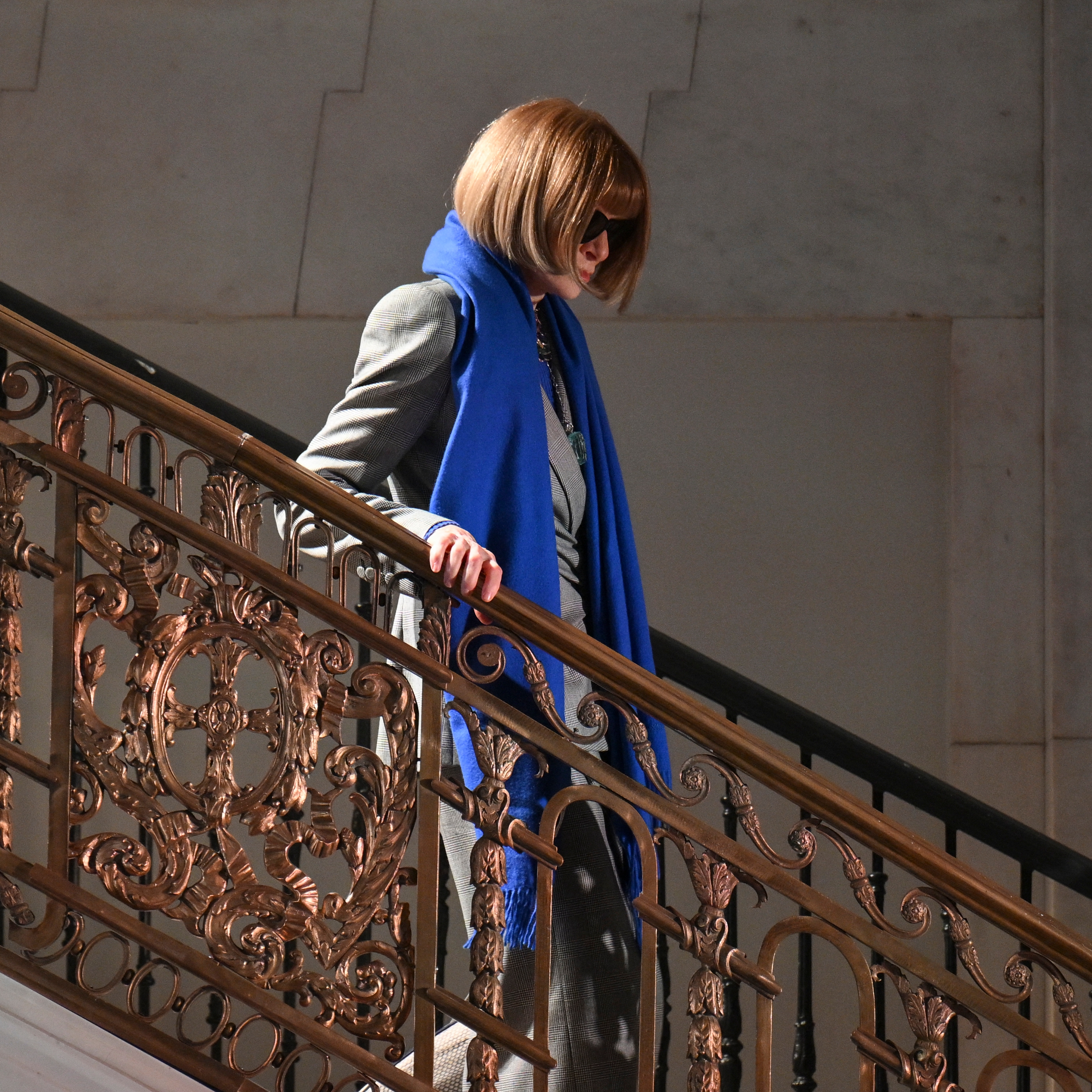
Post Reports
Does Vogue still matter?
00:20:39
After nearly 40 years, Anna Wintour will be stepping down as the editor in chief of American Vogue. This announcement marks the end of the dominance of the fashion editor in chief – so who are the new tastemakers?
Loading summary
Transcript61 lines
- [00:01]
Carol Lennig
Running a business is hard work. Building your website shouldn't be. With Wix, you can express your ideas, give direction, then leave the heavy lifting to AI, from site creation to branded content and images. Have fun with the details, customize what you want the way you want, and manage your whole business from a centralized dashboard with expert AI tools. Build, scale, and enjoy the incredible results. You can do it all yourself on on Wicks.
- [00:31]
Cole Bakowicz
So if we're around the same age, you might remember this iconic scene from the Devil Wears Prada stuff.
- [00:39]
Meryl Streep
Oh, okay, I see you think this has nothing to do with you.
- [00:44]
Cole Bakowicz
Meryl Streep is playing Miranda Priestley, a character seemingly modeled after editor Anna Wintour at a fashion magazine much like Vogue.
- [00:52]
Meryl Streep
What you don't know is that that sweater is not just blue. It's not turquoise, it's not lapis. It's actually cerule.
- [01:00]
Cole Bakowicz
She is describing the importance of fashion to Anne Hathaway's character, Andy, a recent college graduate who thinks it's frivolous and beneath her. But as Miranda explains, it's sort of.
- [01:11]
Meryl Streep
Comical how you think that you've made a choice that exempts you from the fashion industry when in fact, you're wearing a sweater that was selected for you by the people in this room from a pile of stuff.
- [01:28]
Cole Bakowicz
In 2006, when this movie came out, Vogue was at the height of its influence. But last month, Anna Wintour announced she was stepping aside as the American Vogue top editor after nearly four decades in the role. And our fashion critic, Rachel Tashian says this move is coinciding with the end of an era.
- [01:45]
Rachel Tashian
We're in the midst of basically, I would say, an unprecedented moment in fashion. This is essentially the end of the editor in chief as the highly aspirational job for women in fashion.
- [02:05]
Cole Bakowicz
From the newsroom of the Washington Post, this is Post Reports. I'm Cole BAKOWICZ. It's Saturday, July 19th. Today, even if you think fashion has nothing to do with you, Rachel is going to explain how what you are wearing right now was chosen for you not just by Anna Wintour and the people at Vogue, but by designers, brands, and an army of influencers who are working to select your wardrobe. Rachel, it's so great to have you back on the show.
- [02:39]
Rachel Tashian
It's so great to be here. Thanks for having me.
- [02:41]
Cole Bakowicz
Before we start, I want to let you know that I'm wearing something just for you. Today. I am wearing a vintage Millie dress that I bought at a thrift store for $35.
- [02:52]
Rachel Tashian
That is an incredible find, right? It's really, really chic.
- [02:56]
Cole Bakowicz
Thank you. When I saw it and I tried it on, I thought, this is the dress I must wear to talk to Rachel about Vogue and fashion.
- [03:03]
Rachel Tashian
I'm so honored.
- [03:04]
Cole Bakowicz
So, Rachel, we've established I love clothes, but there are probably many Andes in our audience. So let's start with the basics. Remind us, who is Anna Wintour, and how did she become so dominant in the fashion world?
- [03:18]
Rachel Tashian
So Anna Wintour has been the editor of vogue since the 1980s. So for the entire time that I've been alive.
- [03:25]
Cole Bakowicz
Me too.
- [03:28]
Rachel Tashian
And, you know, fashion is an industry that is all about change. It's about seasonal trends, what is new, what is happening. So for there to be one person who has been at a particular post in fashion for as long as Anna Wintour has is incredibly rare. Whether that's an editor, a designer, a stylist, a photographer. You know, there are so many different kinds of jobs in fashion, but she is sort of. This has had this incredible staying power. And I would also say that in fashion, you know, the idea of the editor is incredibly important.
- [04:04]
Cole Bakowicz
And Anna Wintour, in and of herself, is iconic. Right. Like, even if you aren't into fashion, if you've never read Vogue, you probably can still picture her in your mind.
- [04:14]
Rachel Tashian
Exactly. Yes. She has, first of all, a sort of celebrity presence, I would say. You know, she's known for wearing her sunglasses inside often while giving interviews on television. And she has a dress form that several of her famous designers have, and they make the dresses tailored to her exact dress form. So even if she's wearing, you know, she might be wearing Prada or, you know, she's wearing Chanel, the fit of the dress tends to be pretty similar. And then, of course, she's got this bob haircut. So, you know, it's interesting to think about, you know, that staying power that she's had sort of converging with this uniform. Right. That it's like we see her and she has become synonymous with fashion because her look is so consistent and recognizable.
- [05:04]
Cole Bakowicz
So with the news that Anna Wintour is stepping back as editor in chief of Vogue, she says she's not leaving the brand itself. She's just stepping back from that position, and she certainly not planning to leave the fashion industry. So what exactly is happening? How should we understand, like, what her role will be going forward?
- [05:21]
Rachel Tashian
Essentially, for all intents and purposes, I don't think that, you know, most of us will see a change. And she's still the global editorial director of all of the editions of Vogue, so she's still essentially overseeing what is in the magazine, what the vision is of the magazine on a global scale. And she's also the chief content officer at Conde Nast, which means that all of the other editors who are now called primarily heads of editorial content, they often review their magazines with her. She reviews a lot of their covers. She makes suggestions about who should be featured in the magazine. She also makes a lot of suggestions about, you know, oh, you're having trouble getting in contact with so and so I would be happy to make that connection for you. So she'll still be doing all of that, but there will be a new person who is sort of overseeing that day to day activity at Vogue in the United States.
- [06:16]
Cole Bakowicz
It sounds like her stepping down from that role is almost more symbolic than anything, that it's maybe says something about the changing in the fashion industry, even if it doesn't practically mean as much.
- [06:28]
Rachel Tashian
You know, she announced this in a meeting with her staff. And I read the remarks that she gave to her staff, and she was really emphasizing that it's important to her to nurture the next generation of editors. And we do see, for example, you know, Vanity Fair has recently appointed Mark Guiducci as its new head of editorial content, replacing Radhika Jones, who replaced, you know, the sort of infamous Greyden Carter. And Mark is someone who, I think he's 37 or 38 years old. You know, Will Welch, who is the head of editorial content at gq, is also pretty young. He's in his, you know, early 40s. So I think she's feeling that, you know, it's a moment for a younger generation to start to sort of come into their power. And it's interesting because, you know, in this sort of fashion system, the system of designers and brands, you also see this happening where there are a number of new designers who are coming in to these houses like Dior and Chanel, who are in their late 30s or early 40s. So perhaps it's kind of a bigger moment of generational change in fashion.
- [07:40]
Cole Bakowicz
Yeah. After the break, we talk about whether the role of the fashion editor still matters and who the new tastemakers are on social media and in the fashion world. We'll be right back.
- [08:04]
Carol Lennig
I'm Carol Lennig. I'm an investigative reporter at the Washington Post. My basic assignment is to help readers understand complex government policies and government officials claims and figure out if they're getting the true story. We work to expose what's hidden and what powerful people want to keep hidden. We dig deep to reveal what's True. And readers don't have time to do that. Only we can bring to you the reality of how a Medicare program is repeatedly failing. Only we can dig in and figure out that somebody who's nominated for a really important job made up a big part of his resume. Subscriptions support this work. I'm Carol Leonig and I'm one of the people behind the Post.
- [09:04]
Cole Bakowicz
Rachel, before coming to the Post, you actually worked in Anna Wintour's world. You were at fashion magazines. What is that actually like? Is it as difficult and stressful as the Devil Wears Prada makes it seem?
- [09:16]
Rachel Tashian
When you're working at a fashion magazine, you have a lot of interests to juggle. One is that you want to be an authority. You know, it's important in fashion. I think so many people in fashion are concerned about authority. And like, I want to put my finger on the right designers and the right trends and, you know, the right places to go, the right restaurants to eat in and that sort of thing. There is so much happening, and it's hard to know even today. I mean, I would actually say especially today, it's hard to know what is going on, what to make sense of all these clothes and these trends, what celebrities wear, what we wear on a day to day basis. And the editor is the person who helps us make sense of all of that. There's also, you know, this added pressure of these relationships that most fashion magazines have with advertisers, which have become in some ways stronger, in other ways more contentious over the past decade. You know, a lot of advertisers have pulled back their money from print advertising or they've wanted to collaborate with magazines in a different way, you know, perhaps with sponsored content or even in some cases, sponsored video content. So I think it can be difficult for people to understand how complex it is to juggle all of those interests of wanting to please your advertisers. Also give, you know, your staff of photographers, writers and editors the creative space to express themselves and then also be able to be that authority to the reader.
- [10:50]
Cole Bakowicz
You know, we. We work at a, at a newspaper, at a print publication. We know that it's harder and harder for print publications to survive. And not to keep quoting Devil Wears Prada, but is working at one of these luxury fashion magazines like working at Vogue? Is it still, quote, like a job a million girls would kill for?
- [11:08]
Rachel Tashian
I think that working at Vogue will always be appealing to people. You know, it has this kind of hold on people. It's. It's so synonymous with fashion that it will always be an appealing place to work. But I do think the idea of being the fashion kind of editor in chief, that aspiration has, I think, sort of it's not disappeared, but it's moved to these other kinds of industries. It's interesting, you know, to talk about that cerulean sweater monologue that we opened the show with, because it's such a great illustration of how influence has changed in fashion. There are still a lot of fashion trends in. In many ways, I would say we know more about fashion. The average person knows more about fashion now than they did maybe 15 years ago in terms of, you know, trends and designers and, you know, it. Bags and that kind of thing. But a lot of those trends and a lot of those conversations are coming from content creators and influencers in social media. If you think about fashion trends like quiet luxury or cottage core, you know, the trad wife trend, those are all really big and fascinating and compelling changes and conversations in culture, but they are not things that happened because Vogue put them into action. And that is a really profound shift.
- [12:41]
Cole Bakowicz
It reminds me a lot of just what's happening in journalism generally. Right. That people are finding in some ways that going out on their own and doing things, they can almost have more influence than sticking with kind of the traditional forms of media that we've known forever.
- [12:57]
Rachel Tashian
Absolutely. And I think it's appealing to people in any industry to be able to create, you know, your kind of. Your own rules and your own way of covering or talking about things.
- [13:07]
Cole Bakowicz
Yeah. I mean, because it does seem like as an influencer, as someone on TikTok or social media, you. You can kind of make your mark or kind of speak about trends in ways that maybe in the past, like, you would only find out about those things through flipping through the pages of Vogue.
- [13:25]
Rachel Tashian
I mean, a lot of what, you know, content creators do on TikTok or. Or on Substack, again, it goes back to what I was saying. That idea of the editor as being the person who's making sense of it all. That that role has just really migrated to social media.
- [13:41]
Cole Bakowicz
Does that make fashion more accessible? Because Vogue was something that, like, you know, I would flip through, but it never felt attainable to me. Like, what was shown in the pages of Vogue was very aspirational. Does the fact that they're now on Substack and various social media sites bring fashion closer to the consumer?
- [14:01]
Rachel Tashian
That's a great question, and I think the answer, frustratingly, is yes and no. So, you know, it's. It's funny that if you look Back in these older issues of Vogue, I completely agree with you. It does feel inaccessible in a lot of ways. And in fact, I didn't read Vogue growing up because I felt like I didn't really understand it. And I. I felt like I'm never going to be able to afford these things, and they're not really for me.
- [14:26]
Cole Bakowicz
Yeah.
- [14:27]
Rachel Tashian
But what was interesting is actually the clothing was not as expensive then as it's become now. And something that's been shocking to me, even just over the past two and a half years that I've been at the post, are these price hikes that have made it impossible for someone to sell, save up for a handbag or a great pair of shoes or find a really cool, you know, Dior jacket on sale. That's just really not possible anymore. I mean, a lot of these brands, they don't even go on sale anymore. So I think that, you know, a lot of things have made fashion less accessible, but then at the same time, you have these incredibly helpful and personable substacks. And also I would say, you know, a lot of TikTok accounts that are helping people figure out how to shop more intelligently and how to develop their personal style.
- [15:20]
Cole Bakowicz
How would you describe, like, the trends of this moment? Like. Cause it does seem so disparate. Like, I'm not sure how. I would just, like, in 10 years, how are we going to describe fashion in 2025?
- [15:32]
Rachel Tashian
Yeah, it's an interesting question because on the one hand, you could say, oh, this is great. Like, anything goes. And I think that in reaction to this obsession with micro trends and following these micro trends and participating in them, you know, this. This conversation emerged about, well, hey, why don't you instead develop your personal style? And I think that that is really important, and I would even say profound. You know, I think that that's really great. On the other hand, what happens as a result is that a lot of fashion brands are saying, well, well, let's just try a lot of things and let's produce a lot of stuff because we don't know what will catch on. And as a result, that is creating more waste and more pollution, frankly, of these clothes, which are often, you know, sent to other countries to be burned.
- [16:26]
Cole Bakowicz
To your point, like, you can just cycle through trends so quickly because of the fact that there's so much.
- [16:31]
Rachel Tashian
Yeah.
- [16:31]
Cole Bakowicz
Then we resort to fast fashion. Right. I mean, because it's. Then we can just try on a bunch of things and see kind of what fits. So what does all of that mean for the future? Of luxury fashion. Like, are people still going to care that they have a Chanel bag?
- [16:48]
Rachel Tashian
Well, the luxury industry, I think, is in the midst of an existential crisis, frankly. I think that a lot of consumers are feeling like either sort of pushed out of or alienated by the idea of luxury. And I think that the idea of an enormous corporation sort of churning out bags and shoes and clothing is really repulsive to a lot of people, and many of whom are in fashion. And when you look at what is really kind of exciting or getting people talking in the fashion industry, it is these kind of, like, smaller, not necessarily more discreet in terms of the designs, but, like, less available in some way. You know, I mean, I always point to Hermes as the one big success story in fashion right now. And it seems like a brand that is really hard to get and is very secretive and really, you know, small and elusive. But there are Hermes stores all over the world in, like, every major city. Anyone can walk into them.
- [17:55]
Carol Lennig
You.
- [17:55]
Rachel Tashian
You can't buy a Birkin, but you can buy something, and it's the most valuable luxury company in the world right now. So it's interesting to think about. You know, we have this perception of this brand being small and elusive and exclusive, which isn't really true, but that, I think, is what makes it compelling to people, is that it feels small and it feels sort of human in a way. And I. I do think if you're a really large brand, it's tough to know how to navigate things at the moment.
- [18:28]
Cole Bakowicz
Yeah. So looking ahead, it's only July, but September, it's just around the corner. And that's a big month for fashion and for Vogue. Right. There's the fashion weeks in New York and in Paris, there's the famous September issue of Vogue. What are you going to be watching for? As we approach that time?
- [18:45]
Rachel Tashian
We are in the midst of, basically, I would say, an unprecedented moment in fashion. Almost a dozen designers have changed jobs and are going to debut their first shows in September and October. Usually you have maybe one new designer who's debuting, maybe. And. And so this will be really fascinating. And they're really enormous brands, too. I mean, it's Chanel and Dior and Bottega, Veneta and Celine. I mean, the. Really. The big guns.
- [19:16]
Cole Bakowicz
You're saying there's new designers.
- [19:17]
Rachel Tashian
Yes.
- [19:18]
Cole Bakowicz
At the head of those companies.
- [19:19]
Rachel Tashian
Yes.
- [19:19]
Cole Bakowicz
Okay.
- [19:20]
Rachel Tashian
From a fashion perspective, this is really exciting. But what is intriguing to me is that many of these designers are not, you know, if you follow the fashion world somewhat closely, these are all familiar Names, you know, many of them are switching jobs. It's not like we have a lot of names we haven't heard before. And so if these designers don't do something I think profound and really seize this moment, then nothing will change. But this is an opportunity where designers could really think radically about, okay, how could I do something that really impacts the way that people dress in such a way that we do get back to that sort of cerulean paradigm, you know, where a designer does something that, you know, suggests, hey, we should all be, for example, wearing seasonless materials that can be layered and worn, you know, throughout the year. And so, you know, looking at climate change and the issues that that creates for. For clothing and for fashion, how do I maybe respond to that through my designs? I mean, that could be like a really radical idea that then ends up rippling out to the rest of the population. What will be really frustrating is if the fashion industry does its sort of typical solipsistic, you know, oh, it's just for the people in the room sort of attitude. But I don't know. I mean, a lot of the designers who I'm excited about or paying attention to are, as I said, doing things in a much smaller scale way, and many of them aren't even doing fashion shows. So I do think it's a powerful time to be a fashion consumer. If you know where to look for things.
- [21:09]
Cole Bakowicz
Is there still a role for someone like in Anna Wintour to set the standard for what is fashionable?
- [21:18]
Rachel Tashian
I don't know that anyone will ever have that much power in fashion again.
- [21:25]
Cole Bakowicz
Yeah. That's so interesting. Rachel, I always love having you on. Thank you so much for. For coming on and chatting with me about all this.
- [21:32]
Rachel Tashian
Thank you so much.
- [21:40]
Cole Bakowicz
Rachel Tashian is a fashion critic for the Post. That's it for Post Reports. Thanks for listening. Today's show was produced by Thomas Lu. It was mixed by Rennie Srinofsky with help from Shawn Carter, and edited by Maggie Penman. Thanks to Lindsay Underwood. I'm Colby Ikowicz. We'll be back Monday with more stories from the Washington Post.
- [22:11]
Washington Post Ad
You listen because you know the power of good journalism. And the Washington Post is there for you 24 7. When you become a Washington Post subscriber, you get excited. Exclusive reporting you can't find anywhere else. You also get sharp advice columns, delicious recipes, TV and music reviews, and so much more. Right now, you can get all of that for just $4 every four weeks. That's for an entire year. After that, it's just $12 every four weeks, and you can cancel anytime. Add to your knowledge and discover all the Post has to offer. Go to washingtonpost.com subscribe that's washingtonpost.com subscribe.