← Post Reports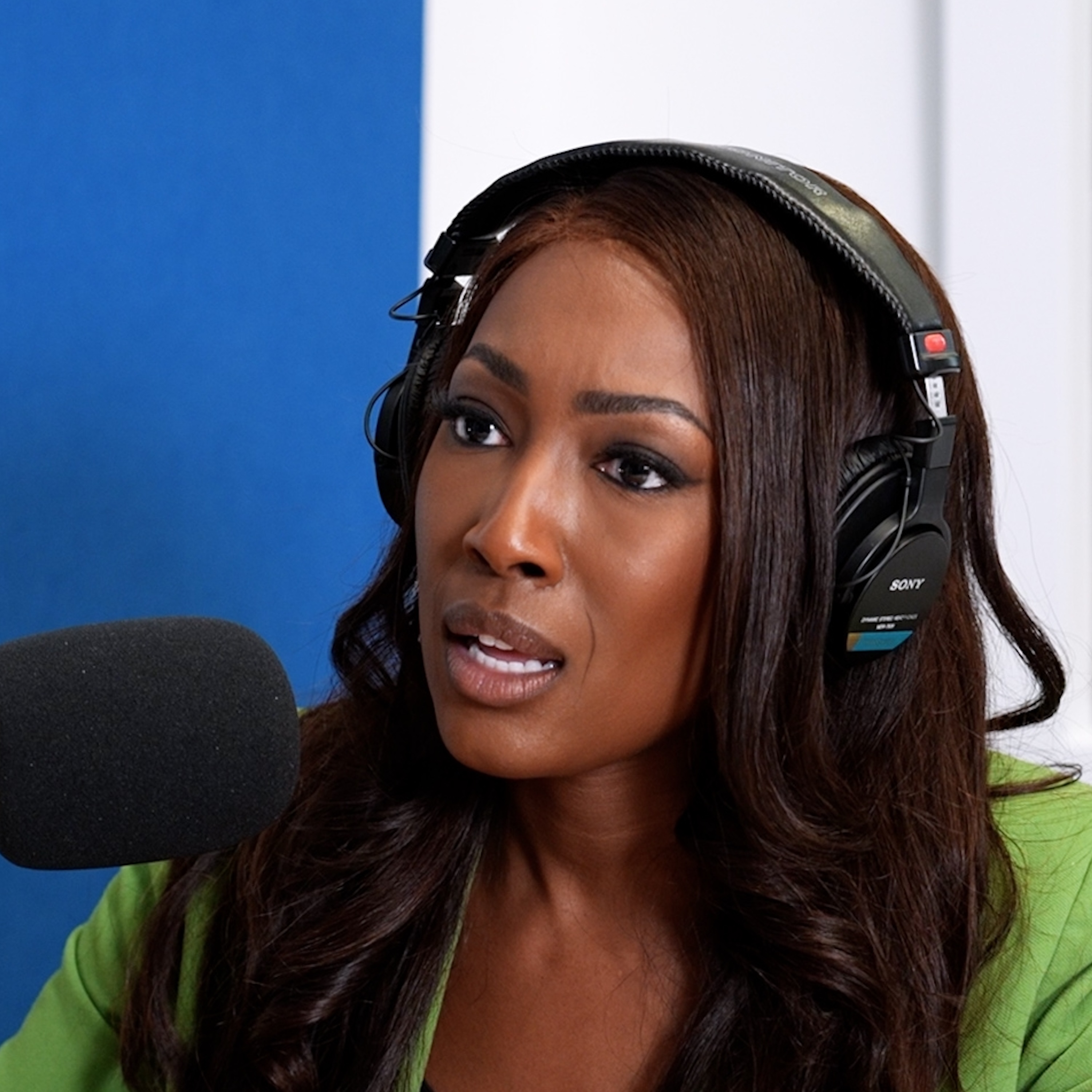
Post Reports
Former NASA scientist wrestles with Blue Origin backlash
00:23:32
Aisha Bowe had dreamed of going to space since she was a child. She studied rocket science, worked at NASA and became an entrepreneur focused on STEM education. Then she got the chance to take a Blue Origin flight — one that turned political.
Loading summary
Transcript55 lines
- [00:03]
Elahe Izadi
This is Post Reports Weekend. I'm Elahe Izadi. Today we're going to listen to a conversation between a colleague here at the Post and one of her friends. It's about navigating what happens when a dream comes true and then sparks public outrage. My colleague's friend was part of the Blue Origin flight into space last month. P minus 10, 9. You've probably seen video clips or memes or the critical columns and social media posts.
- [00:34]
Lizza Dwoskin
Two, one.
- [00:36]
Aisha Vo
Ignition.
- [00:39]
Elahe Izadi
Oh, the moon, you guys, I have to tell you, look at the moon taking up space. The flight took 11 minutes. For half that time, the crew was above the Carmen line. That's the boundary about 62 miles above the Earth's surface. It's considered the line between the Earth's atmosphere and space. The crew was made up of six women. This was the first all female crew since 1963. But some of those women were celebrities. The pop star Katy Perry. The broadcast journalist Gayle King. Lauren Sanchez was the trip's leader. She's a former broadcaster and the fiance of Jeff Bezos. Bezos owns Blue Origin, the private space company that organized the trip. He also owns the Washington Post and is the co founder of Amazon. The crew also included an independent film producer, Carrie Anne Flynn, Amanda Wynn, an astronaut. And then there was a former NASA aerospace engineer. My colleague Lizza Dwoskin first saw the whole group in a photo announcing the crew. It was an Elle magazine.
- [01:53]
Lizza Dwoskin
Everyone was in black. A leather wrap dress on Gayle King, Katy Perry in a pantsuit. And then I saw, whoa, there's my friend Aisha Vo.
- [02:06]
Elahe Izadi
Lizza covers Silicon Valley for the Post. She and Aisha have known each other for almost a decade. Aisha is the former NASA engineer.
- [02:16]
Lizza Dwoskin
So I saw this L cover and I was freaking out. I was sending it to everyone I knew. I knew that going to space was a lifelong dream of hers. So I was on the edge of my seat. I couldn't wait to hear what it was like. I waited two days until after the flight because I knew she was managing a lot, but I didn't realize how much she was managing.
- [02:39]
Elahe Izadi
Now that a bit of time has passed. Lizza asked Aisha if she was up for talking about how she's still managing all this. Aisha agreed. I mentioned Aisha as a former aerospace engineer to give you more background on things that will come up in their conversation. Aisha grew up in Michigan, in Ann Arbor. After high school, she attended Washtenaw Community College. From there, she transferred to the University of Michigan. She graduated with Degrees in aerospace engineering and space systems engineering. Aisha went on to work at NASA and now leads an engineering firm called STEM Board. She also founded a company promoting STEM education. Since the flight and the taping of this interview, Aisha has signed on with the talent agency caa. One of the other things you'll hear come up is research Aisha did during the flight. It was a collaboration with the Astrobotany lab of Winston Salem State University. That's an HBCU in North Carolina. All right, here's Aisha Bo and the Post's Lizza Dwoskin.
- [03:52]
Lizza Dwoskin
Aisha, thank you for being here.
- [03:53]
Aisha Bo
Thank you for having me.
- [03:55]
Lizza Dwoskin
So when I texted you a couple days after the flight, I asked you something like, so are you still basking in the glow? Do you remember what you said in response?
- [04:04]
Aisha Bo
I was really having a hard time. There were some pretty pointy criticisms out there coming from not just random people, but from some women that I admire. And it really forced me to ask some questions about why it was that the mission was being perceived in a way to some that felt negative.
- [04:27]
Lizza Dwoskin
Yeah, it was like there was this kind of cultural moment, like your flight became this moment of Internet outrage. And there were so many themes. There was like, the exploitation of girl power, feminism, and the fact that billionaires seem to own space now or only rich people get to go. And I know that there was a lot of racist stuff, too. Can you give me a sense for what effect that all had on you?
- [04:50]
Aisha Bo
For the first five days, I was in shock because it took me that amount of time to even begin to really figure out how to find the words to share what it was that I experienced. No matter how long you're in space, if you have the opportunity to see Earth and see humanity, you come back with a reflection that's widely been documented as an overview effect. And in that reflection, a lot of people feel a profound sense of responsibility to not only protect the Earth, but to preserve it and to make it better for the generations to come. I'm trying to figure out, how do I communicate the most amazing thing that has ever happened to me and at the same time say that I think the public conversation is valid. I've never seen more interest in the field and who gets to go and how space operates than I've seen since this mission was announced.
- [05:48]
Lizza Dwoskin
So why don't we step back? A lot of the people on that flight, you don't have a background in rocket science. You're an aerospace engineer. When did you first become interested in.
- [05:59]
Aisha Bo
Space travel as a Kid I was always interested in space. It was exciting. As somebody who grew up in an environment where I wasn't sure what it was that I wanted to become. I often used books as my escape. Let's just say I was an awkward child. I wasn't super involved in a lot of things because my parents were not affluent. And, you know, when you're younger and you really start to compare what you have versus what other people have, you can further retreat to worlds of your own making. And so I read a lot of books and I would read sci fi and I would dream about escaping the life that I was living. When I was younger, I was a high school student who was floundering. I was someone who sought guidance from a guidance counselor. And in that moment in high school, I was told, you should study cosmetology. And that was really painful for me because I did not understand why society required that I knew what it was that I wanted to be before I knew who I was. It wasn't until I, I was in community college that I actually decided that space might be a possibility. And it wasn't because I thought it was a probability. It was me defying the odds. I think that sometimes dreams can be a radical form of protest. And my dream was that I wanted to overcome the circumstances that I was in. I decided that the only thing I could control were my dreams. And my dream was that I would go to space.
- [07:42]
Lizza Dwoskin
How did you first hear about this trip?
- [07:45]
Aisha Bo
My first week at NASA, I met a lady named Nancy Conrad. And Nancy Conrad was the wife of Pete Conrad, the third man to walk on the moon. And I remember being so excited about Nancy because she was hosting a STEM workshop. So I went to see what she was up to. And I was really excited by kids that were getting exposed to these hands on activities that I didn't see when I was growing up. Nancy called me over a decade later and she said, aisha, there's an opportunity that I think that you should put your name in for. And I can't tell you about it, but I can say that I think you might be a good fit. And that conversation turned into me putting forward my resume, which was really the work that I had been doing over the last decade plus in education and opportunity and inclusion in aerospace. I mean, this is 2022. I've been talking about this, planning for this, praying for this, and preparing for this for years.
- [08:41]
Lizza Dwoskin
Wow. How else were you preparing for the trip?
- [08:44]
Aisha Bo
There were a lot of parts of this. So let's talk about physical, financial, and mental from the physical perspective. There is a human spaceflight regulation that the FAA has put out. And in that regulation, it essentially guides how one could prepare to go on a commercial space mission. And what I will say is that it basically boils down to putting your body through what it can expect to when it's in flight. And there are recommended training protocols and regimes that commercial spaceflight companies are following today. And I thought, what of these resources are available to me and in my budget because they can be fairly expensive. And so I set about putting together a plan that mimicked some of what other commercial spaceflight fighters were already doing. On the financial piece. What I really set out to do is I wanted to demonstrate that if you can raise the money to be in a seat, that access and opportunity are available for more people in the future. Because they can emulate the path that I took. In the history of space, less than 10 black women have gone as high as the Carmen line. And so when I thought about this, my challenge was not just visibility. It was that how could I create a model that other people can follow? Because if Aisha Bow can raise the money for her seat, and she's not a celebrity, and she's not somebody who has a rich uncle or a rich auntie, then what can the next person do with that? I'm also not a privately funded nonprofit. And so I put together a strategy that allowed me to do number of things. I traveled around and I gave keynotes. And in lieu of payment, I accepted funding for my seat. I worked with institutions who wanted to conduct research, who understand what some of the ticket prices look like to fly on other missions. And they came in and they wanted to back that.
- [10:46]
Lizza Dwoskin
And you did research with HBCUs, right?
- [10:49]
Aisha Bo
Absolutely. It was really important to me because when I was working at NASA, I had the opportunity to come across laboratories that were doing world class astrobotany research plants in space. And what I wanted to do was take the opportunity to conduct research in microgravity, which is very valuable, and provide that to students in the astrobotany lab at Winston Salem. That was a research project that I hand selected. And we worked with the laboratory to look at genetically sequencing six plants. And the idea was to determine how those plants responded to gravity on the molecular level. Because on the molecular level, those changes happen almost instantaneously. And so if anybody is listening to the recording in the cabin, they will actually hear the time marker for me to activate my FPA or fga. And what that allowed me to do was to timestamp exactly how long the plants had been exposed to microgravity. And now the laboratory will analyze it and they're going to publish the results.
- [11:54]
Lizza Dwoskin
So you went up to space with plants?
- [11:56]
Aisha Bo
Absolutely.
- [11:57]
Lizza Dwoskin
That's fascinating. And you said there was a physical training plan and some of it was really expensive. So what were the physical preparations that you did for the trip?
- [12:06]
Aisha Bo
There were a number of physical activities that I wanted to expose my body to. And the whole goal was to familiarize myself with the sensations that I could expect to experience on the flight, from high GS to falling. And when I say falling, we did not have the parachutes trigger until 10,000ft. There are a lot of people who don't like drops. And so I had to get familiar with what it felt like to drop quite a long ways. And I did that through a number of things. One, I had acrobatic flights. I also had flights that exposed me to GS. Think L39 fighter jet flying in an albatross, which was really exciting. I also conducted training in the only FAA approved human rated centrifuge in America, which is TR over 500 astronauts at the NASTAR facility where I trained up to six GS. I also did some hypoxia training, which most commercial pilots will experience. I got to do some pressurized spacesuit training. There were a lot of trainings over the course of the two years, but each step of the way I knew that I had more confidence because I not only completed them, but I felt that they would closely approximate what I could expect to experience on the day.
- [13:26]
Lizza Dwoskin
Let's talk about the crew. When did you learn who the crew was going to be and who you're going to be flying with?
- [13:31]
Aisha Bo
I learned about the crew less than a month before the flight and 24 hours before the public announcement of the woman who shared the trip with me.
- [13:40]
Lizza Dwoskin
And what was your reaction when you saw all these celebrities that you were going to be flying with that this.
- [13:45]
Aisha Bo
Was going to be world news? I mean, I was like, whoa, this is going to be, this is going to be cool. It's going to be the big deal.
- [13:53]
Lizza Dwoskin
Okay, Were you intimidated? Were you like, oh my God, or were you just. How did you feel knowing that it was going to be such a big deal?
- [14:01]
Aisha Bo
I was excited. I mean, I've been working in aerospace for a long time. And while I've had a lot of personal highs, I don't think that anybody cared as much about my career as they did in that moment. And so I was excited actually for space and I was excited for science on the launch day. I was so present that day that I felt every single moment of the flight. From when the seatbelt sign was off and we were free to move about the cabin to gently seeing the Earth rotate outside the window. And some say, oh, well, that seems like a really short period of time. I will say, when you're traveling at more than a couple thousand miles per hour, 11 minutes is enough.
- [14:44]
Lizza Dwoskin
Now, I've read that every astronaut who goes to space takes a special object up with them, and you test whether that object floats in zero gravity. What was your object?
- [14:54]
Aisha Bo
For me, the object that I took was the Bahamas flag patch. And the reason for this is the New Shepard vehicle follows a trajectory that mimics the 1961 NASA flight of Alan Shepard. Most people know where the rocket took off, but they do not think about where it landed. It landed in Grand Bahama. My family is from the Bahamas, and I, over the last decade, have worked to bring space to the Bahamas. I also wanted to nod to myheritage and the idea that I'm the product of a father who came to the United States so that he could one day potentially work at NASA. He was unable to fulfill that dream, but I was able to do that and also bring my heritage and that piece of history to the world stage. Unfortunately, we lost my father in January. However, my grandfather was able to attend, having been born 92 years ago. To take a flight. To come see me go to space was not only a moving moment, but it was one where I felt as though I was in alignment with everything I had hoped to be.
- [16:08]
Lizza Dwoskin
And I'm wondering, did you feel a particular legacy or weight of history in going up there?
- [16:13]
Aisha Bo
I think it's impossible to go to space and not feel legacy or history, because the very act of me being in the capsule meant that I was standing on the shoulders of so many people who came before me. Before I left on the launch day, I was greeted by Jeanette Epps and Joan Higginbotham, two African American women who went to space with NASA. Mae Jamison was there. We had so many legends who were in the room. I was literally surrounded by the very same women I looked up to my entire career.
- [16:59]
Elahe Izadi
After the break, Aisha and Lizza talk about what happened after the flight. We'll be right back.
- [17:13]
Ted Muldoon
Allergy season doesn't wait, and neither should you. Luckily, with Goodrx, you can get ahead of allergy symptoms and save money doing it. GoodRx helps you find big savings on the meds you need like popular Allergy Relief for as little as $15, so you, your family and even your pets can breathe a little easier. Using GoodRx is free and easy. Just search your prescription on the GoodRx app or website, compare prices at nearby pharmacies, and then show your coupon at the counter. That's it. You can save at over 70,000 pharmacies across the country, including CVS, Walgreens, Walmart, Publix, Kroger and more. And here's something extra. With GoodRx rewards, you earn points every time you use a coupon, points you can redeem later for gift cards and more. GoodRx isn't insurance, but it works whether you have it or not. In fact, it could even beat your insurance copay. So don't let allergy season slow you down. Visit goodrx.com reports today. That's goodrx.com reports.
- [18:13]
Aisha Vo
We hear it all the time. There's a growing concern about kids, mental health and the role technology plays in their daily lives. Screens are everywhere and young people are spending more time on them than ever. It's a staggering reality, but for many parents, not a surprising one. One company tackling this issue is Gab, with a solution called Tech in Steps, a gradual, age appropriate approach to introducing technology. Protect your kids with phones and watches designed just for them. Here's how it works. GAB devices have no social media, no Internet browser, and are tailored to different stages. For younger kids, the Gab Watch 3e offers GPS tracking, safe zones and limited calling and texting. Tweens move up to a starter phone and teens have access to a more advanced device with parent controlled apps and a premium camera, all with safety at the core. We recently got the watch 3e for our kids. It's been a great way to keep them connected and safe when they're out. To learn more and see current offers, visit gab.com reports. That's G-A-B-B.com reports. Terms and conditions apply.
- [19:16]
Lizza Dwoskin
So going back to some of the criticism of the trip, I feel like it basically boils down to people saying these are rich women who can do whatever they want. At a time when the government is being run by billionaires and marginalized people are getting stiffed, do you think that you should be the one answering for that? Like, is that your responsibility?
- [19:36]
Aisha Bo
I am not someone who was gifted this opportunity. I worked hard. I earned it. And in a world where I have so often felt powerless, I was powerful in this moment because I was able to represent the very same things that were meaningful to me.
- [19:56]
Lizza Dwoskin
I know you talked about the feeling of getting criticism from people you respect. There was this post from Kimberly Bryant, who leads Black Girls Code, and she wrote In a public LinkedIn post, basically, at a time when DEI is in retreat, when reproductive rights are under siege, symbolic elevation for women is too often mistaken for cultural change. How does that land for you?
- [20:25]
Aisha Bo
I welcome the conversation, and I think it's important to discuss what's happening in the country today. The question that I would ask is, do we opt out because the system is flawed, or do we do the work to change it for the better from the inside? I've never had the luxury of being in an ideal situation. I'm one of very few women who work in aerospace, who work in tech. I work in defense. And what I've always thought would be best is for me to be an example of what it is that I hope to see. I've never had the luxury of waiting for perfection. With this mission, I was able to elevate a school that may have otherwise gone unnoticed for their excellent work. I was able to work on research. I was able to conduct meaningful science. And I was able to do it because I earned it and I work for it.
- [21:25]
Lizza Dwoskin
One time you said to me, when we spoke about this, you said, look, it's been my dream to go to space. And you can either go with Elon Musk or Jeff Bezos.
- [21:34]
Aisha Bo
I mean, for a little bit of levity in the conversation, right? Like, you have two choices. What I will say about the missions is that NASA currently flies on the Falcon rocket. It is safe, it is reliable. It is a great way to go to space. And I have not seen the same criticism that I saw on our flight on those missions. And so I would ask for people to maybe think a little bit beyond the headline. Maybe there are other things that are motivating this attack. This mission allowed for us to do something that had never been done before. It also allowed for us to really put a mirror to society and see if it was ready to receive all of what could have come out of this. I mean, we have six women from incredibly diverse backgrounds, and had I not flown, I'm not sure the world would have known about my work.
- [22:36]
Lizza Dwoskin
Well, you said something to me when we spoke earlier. You said that it's like this flight became a symbol for a lot of the anger that people feel at billionaires at the election. Is that how you feel right now?
- [22:52]
Aisha Bo
I feel as though a lot of the good work and the things that I was hoping to accomplish ended up getting swept up in other issues that are relevant, that are important, but are not necessarily issues that my flight impact. I mean, earlier when you spoke about Kim, I was honestly disappointed and I was sad when I saw the comment because I care about female scientists. There were NASA astronauts that were at the launch because I invited them. They're my mentors. They're the people I look up to for inspiration, for guidance. I have often said that my goal is to be a bedtime story. I want to leave a story that is so rich and that is so great, that I inspire others to do more, to dream higher. And I feel as though in some ways this mission may have accomplished that. And what I mean is I've been walking down the streets in D.C. and I see kids with their parents and they're looking at me and they're smiling and they're waving and they're pointing because some kids and actually a large portion of people saw this launch, whether they were at school, whether they were at home. And so the audience that I was hoping to inspire, I think we've really inspired. I know that from the text messages from the DMs that I'm getting before they go to school. But on the other side, in my conversations with adults, I think it's really important for people to separate the issues that they might rightfully feel concerned about from what could have been accomplished with this mission and from who flew and why they flew.
- [24:42]
Lizza Dwoskin
Aisha, thank you so much for this conversation.
- [24:46]
Aisha Bo
It's great to be with you.
- [24:55]
Elahe Izadi
Aisha Bo is an aerospace engineer and entrepreneur. She spoke to our colleague Lizza Dwoskin. This episode was mixed by Ted Muldoon and edited by Maggie Penman, Renita Jablonski and James Graff. That's it for Post Reports weekend. Thanks for listening. I'm Elahe Izadi. We'll be back Monday with more stories from the Washington Post.
- [25:34]
Aisha Bo
How many discounts does USAA auto insurance offer?
- [25:36]
Elahe Izadi
Too many to say here.
- [25:38]
Aisha Bo
Multi vehicle discount, Safe driver discount, New vehicle discount, Storage discount.
- [25:43]
Elahe Izadi
How many discounts will you stack up?
- [25:44]
Ted Muldoon
Tap the banner or visit usaa.com autodiscounts restrictions apply.