← Post Reports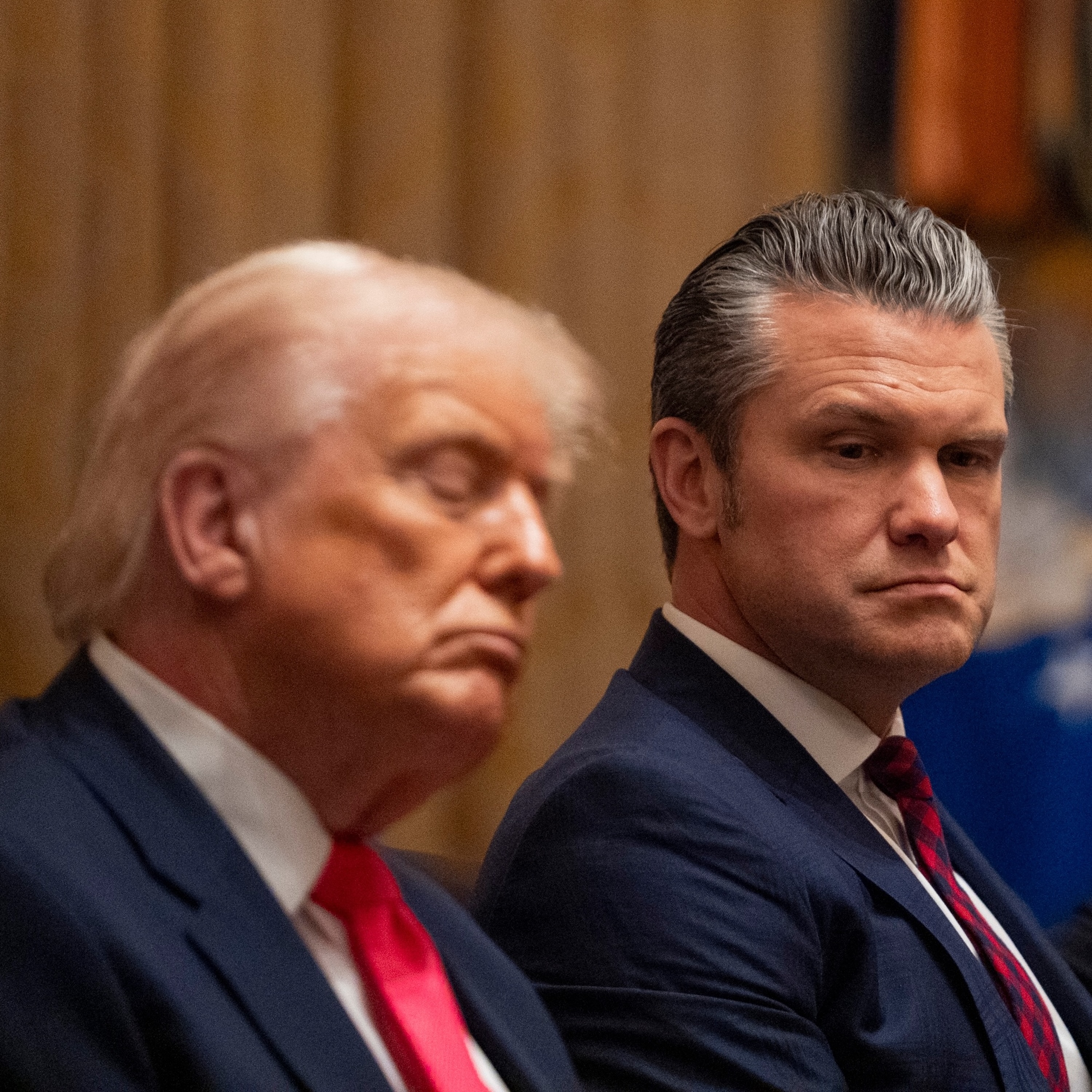
Post Reports
Hegseth defends boat strike; Putin rejects Trump peace plan
00:28:48
Defense Secretary Pete Hegseth is, once again, under scrutiny, this time for questions about a lethal boat strike in the Caribbean. Plus, why a peace deal between Russia and Ukraine fell short.
Loading summary
Transcript90 lines
- [00:00]
Michael Birnbaum
Running a business is hard enough. Don't make it harder with a dozen apps that don't talk to each other. One for sales, another for inventory, a separate one for accounting. That's software overload. Odoo is the all in one platform that replaces them all. CRM, accounting, inventory, E commerce, hr. Fully integrated, easy to use and built to grow with your business. Thousands have already made the switch. Why not you try Odoo for free@odoo.com.
- [00:28]
Colby Ekowitz
That'S odoo.com.
- [00:32]
How has the white House, the Pentagon defended what happened back in September?
- [00:37]
Michael Birnbaum
They have been all over the place, Colby. They've said a whole bunch of things. They are somewhat contradictory. Trump has said that he didn't know about the second strike and he said that Defense Secretary Pete Hegseth didn't either. Pete Hegseth has called our reporting fake news. Then the White House confirmed that there was a second strike. Then, then Hagseth, who first said that we were all about fake news. And he also said back in September shortly after this strike, that he had watched. Now he says he only watched the first strike and he had stepped out for a meeting during the second strike. It's been a journey in terms of the White House and Defense Department messaging.
- [01:23]
Colby Ekowitz
From the newsroom of the Washington Post, this is Post Reports weekly Politics Roundtable. I'm Colby Ekowitz. Is this it's Friday, December 5th. Today we're talking about the political fallout from the Post's exclusive reporting on Defense Secretary Pete Hegsev. And later we'll discuss why President Trump's efforts to broker a peace deal between Russia and Ukraine have fallen short. I'm thrilled to be joined today by Matthew Choi. He's the co anchor of our politics newsletter the Early Brief and by White House reporter Michael Birnbaum. Guys, thank you so much for joining me.
- [01:55]
Michael Birnbaum
Thanks for having us, Colby.
- [01:56]
Matthew Choi
Thanks for having us.
- [01:59]
Colby Ekowitz
So the big news this week was about Pete Hegseth. Back in September, the US Military launched its first attack on a boat in the Caribbean. The boat was allegedly carrying drugs to the US and officials told the Post that ahead of that first attack, Hegseth gave a spoken directive to kill everyone on board. So we covered that story in depth on the podcast earlier this week. But Matthew, remind us briefly what happened? What did the Post report?
- [02:26]
Matthew Choi
So the Post reported that on one of those boat strikes.
- [02:31]
The US Military struck the boat and there were two remaining survivors who were clinging onto the wreckage of the boat did not appear to pose an immediate threat to any military personnel. But it was Admiral Bradley, who was the commander of the Special Forces in charge of the operation, who ultimately gave the order to kill those two remaining survivors. And that's caused quite a lot of legal controversy since.
- [02:53]
Colby Ekowitz
Yeah, because there's been experts that have said, like, is this a war crime? Is it extrajudicial? Mur.
- [02:59]
See two survivors clinging to wreckage of a boat and then choose to strike them again.
- [03:05]
Matthew Choi
Right. Because there's a long standing principle in war that if somebody is not an immediate or not a military target, not a threat to your armed forces, that it's not appropriate to just kill them when they're kind of defenseless. So that's caused quite a storm on Capitol Hill as well, that potentially this was a violation of the rules of war.
- [03:27]
Colby Ekowitz
And Michael, how has the White House, the Pentagon, defended what happened back in September?
- [03:32]
Michael Birnbaum
They have been all over the place, Colby. They've said a whole bunch of things. They are somewhat contradictory. Trump has said that he didn't know about the second strike, and he said that Defense Secretary Pete Hegseth didn't either. Pete Hegseth has called our reporting fake news. Then the White House confirmed that there was a second strike. Then Hagseth, who first said that we were all about fake news. And he also said back in September shortly after the strike, that he had watched. Now he says he only watched the first strike and he had stepped out for a meeting during the second strike. It's been a journey in terms of the White House and Defense Department messaging. Hegseth's latest account is pointing toward Admiral Frank Bradley, who is the commander of the U.S. special Operations Command. And he's saying that Bradley ordered the second strike that killed those survivors.
- [04:30]
Colby Ekowitz
Right. And Hegseth is saying, like you said, I sat in the room, I watched them strike the boat, then I left. And I didn't realize or had no knowledge that then this Admiral Bradley ordered a second strike that killed those two remaining survivors. Hegseth also has defended the decision from Admiral Bradley. I think it's important to note that we're talking on Thursday afternoon and Bradley has a closed door meeting on Capitol Hill right now. So more details are gonna emerge, but we have a sense of what he plans to tell members of Congress. And what is his description of what happened?
- [05:08]
Michael Birnbaum
Our reporting suggests that his plan is to say that those two passengers who were shipwrecked were in fact, not shipwrecked, that they were seen climbing back onto the boat, and that meant that they were a threat and that they were legitimate targets.
- [05:24]
Colby Ekowitz
So the idea being that if they had been just like, clinging to wreckage, then you can't kill them. But if they're climbing back up, if they seem active, if it seems like they could call in help from somewhere, then you can kill them.
- [05:39]
Michael Birnbaum
That seems to be what he's using to justify the strike.
- [05:42]
Colby Ekowitz
Okay. You know, Matthew, you mentioned that one of the most interesting storylines is actually coming from Capitol Hill. Like we said, Bradley's up there on Thursday.
- [05:53]
Republicans who run the relevant kind of armed services committees have oversight of the Pentagon. They want more information about these strikes. That's why Bradley's up there. You know, you would expect Democrats to be critical of what this administration does, but were you surprised to see how many Republicans came out to question the Pentagon here?
- [06:12]
Matthew Choi
I think one thing that's worth noting is that the armed Services committees on the Hill are generally, or traditionally at least some of the most bipartisan committees. I mean, defending the safety and security of our troops. That is a nonpartisan, an imperative for lawmakers. So any kind of action that would either violate the laws, rule the rules of war, or potentially put our service members in danger, that's going to get called out pretty quickly by both sides of the aisle. I think it's also important to note that Secretary Hegseth had a bit of a frosty reception on Capitol Hill when President Trump first announced his pick to nominate him for defense secretary. He has a very untraditional background for a defense secretary. He is a former Fox News host. He never really held particularly senior roles within the Department of Defense. Before that, he did serve in the Army National Guard, serving in Iraq and Afghanistan. And he also ran veteran support groups where he was accused of some financial mismanagement. He also has numerous allegations about his character. He's responded to these by kind of brushing them off, saying that, you know, he is bringing a warrior ethos to the Pentagon. He has denied culpability and the allegations that have come against him, for example, in the financial malfeasance. So, I mean, he was confirmed by the Senate by the smallest possible margin.
- [07:34]
Colby Ekowitz
Since we broke this story last week, what have Republicans been saying right now?
- [07:38]
Matthew Choi
It seems to be kind of in like a fact finding mode. A lot of calls for more information, potentially more testimony. Unclear if Secretary Hegseth himself will be called before the committees to testify.
- [07:50]
Colby Ekowitz
Do we have a sense, Michael, of what Trump thinks about all this and thinks about the fact that Republicans are questioning Hegseth and questioning Hegseth leadership?
- [08:00]
Michael Birnbaum
When our reporting first came out last week, he was asked about it and he said he wouldn't have ordered a second strike. He was kind of putting some space between him and what took place. Since then, though, he has been pretty robust in his defense of Hegseth.
- [08:22]
You know, he likes to attack the media, and Hegseth was seated right next to him at the Cabinet meeting the other day. Trump was defending Hegseth and kind of bigging him up in that Cabinet meeting as president. Trump always has our back. We always have the back of our commanders who are making decisions in difficult situations than we do in this case. In all these strikes, they're making judgment calls, ensuring that they defend the American people. They've done the right things. We'll keep doing that, and we have their backs.
- [08:54]
Matthew Choi
Mr. President, good job.
- [08:55]
Michael Birnbaum
So it doesn't seem as though Hegseth is in immediate danger from Trump. Trump seems to be, you know, backing him, as he often does when people are attacked by reporting.
- [09:08]
Colby Ekowitz
Do people in the White House seem concerned at all about this issue, or is it like so many other things with Trump, where they think it'll just.
- [09:17]
Michael Birnbaum
Well, haggiseth. It is true. I mean, that he has from the beginning, not been the most firmly embedded cabinet secretary. He had all of that Republican opposition on the Hill at the beginning. And he's seen inside the White House as someone who brings a lot of issues, who's a little unpredictable, who is not quite as deep as some of the other cabinet secretaries. So.
- [09:47]
He'S focused on physical fitness and war fighting. You will note that when the Department of Defense needs to engage in complicated negotiations, such as on Ukraine, Hegseth actually isn't involved. They've been sending other people, like the army secretary, Dan Driscoll, who is just meeting with Ukrainians in the last couple of weeks. So Hegseth hasn't been the guy to do all of that complex stuff.
- [10:14]
Colby Ekowitz
That's really interest interesting. Speaking of Trump sticking with Hegseth, there's this other famous scandal from earlier this year known as Signalgate. This is when Hegseth texted what seemed to be war plans on a group chat, and then someone added a journalist from the Atlantic, and this became public, and it was a massive deal. The Defense Department inspector general actually came out with a report of its investigation on that incident this week and said that by doing that, Hegseth put, you know, US Service members at risk and that he had violated security protocols by, again, he was openly texting about military plans, you know, their military plans in Yemen. So I think the big question for me is, you know, you have that there were. There was already questions before he was nominated over whether or not he was right for this job. Now you have this incident with the boat strikes, like can Hegses survive this?
- [11:09]
Matthew Choi
Politically, I think there's been accumulation of a lot of frustrations on Capitol Hill. I mean, there's this fantastic reporting by our national security team that said that Republican members even are quite frustrated with a lack of transparency from this Defense Department. I mean, there are some Republican members who are saying even that President Biden's defense, Defense Department was more transparent. There was a briefing in October that our national security team reported on where the Defense Department didn't send any lawyers to justify those boat strikes, which many Republican members found unacceptable. So I think this brewing resentment is definitely accumulating what that leads to. We still need to wait and see.
- [11:47]
Colby Ekowitz
Yeah. And to your point, we don't know if they're going to bring Hegseth up to the Hill and question him. And to your excellent point too, Michael, is Trump tends to dig in when people around him are getting attacked. I think with this story, it's also important to take a step back and look at the bigger picture of why are we attacking boats in the Caribbean? The US Is claiming they're coming from Venezuela, claiming that they're carrying drugs into America. You know, you mentioned the cabinet meeting, Michael. Trump said this week that the US Was going to start striking on land too. And Trump has been teasing an all out war with Venezuela for weeks now. Is that actually going to happen? Is that what he was suggesting at the cabinet meeting by saying he's going to strike on land?
- [12:37]
Michael Birnbaum
He, as you say, Colby, he's been teasing this possibility. He's clearly trying to put a lot of pressure on Venezuelan President Maduro, who has long been a foe of the United States of presidents of both parties. Trump is pushing super hard and he has a number of members of his cabinet who've long been focused on antagonism.
- [13:05]
With Madrid, Maduro, the Secretary of State, Marco Rubio former Senator of Florida Cuban American this is something that is very close to home for him. It's really interesting though, because it's not really what Trump ran on. He ran on restraint, he ran on achieving peace and he likes to brag about all the peace deals he says that he has struck around the world since he became president.
- [13:33]
So starting a new war in Venezuela would seem not to track with that. But it does feel like this is kind of part of his domestic agenda, something that is more about controlling migration, about controlling the flow of drugs into American communities. I think that he's using those political goals to justify what he's doing.
- [13:57]
Colby Ekowitz
Right. I mean, Matthew, you had this great piece that you wrote this week about Trump's fascination with Venezuela. And why would a self proclaimed peace president want war?
- [14:08]
Matthew Choi
I mean, I think Michael hit the nail on the head there with he's tying this really closely to his domestic policy promises. There's also this really interesting dynamic of Cuba's role in this equation. Cuba has a very strong relationship with Venezuela. One former diplomat I spoke to essentially called Venezuela a colony of Cuba at this point because Cuba very much relies on Venezuelan oil and in exchange provides a lot of intelligence to the Venezuelan regime. And folks like, you know, Secretary Rubio and and other hawkish Republicans have always kind of viewed the threat of Cuba as an existential one in the Western Hemisphere.
- [14:42]
Colby Ekowitz
That makes me wonder how much of this is being driven by Rubio versus is this something Trump really wants?
- [14:48]
Michael Birnbaum
I think Rubio has found a way to push this and integrate it with Trump's agenda in a really interesting manner. But it's still hard to know what Trump's real intentions are. Right. And I was on duty in Florida during the Thanksgiving holiday and I was sitting in the Mar a Lago parking lot on Saturday when Trump.
- [15:12]
Launched or posted a truth social missive saying that we should consider the Venezuelan airspace closed.
- [15:20]
Colby Ekowitz
Right.
- [15:21]
Michael Birnbaum
Which to those of us sitting in vans waiting for him to go golfing and to follow along with his golfing, that felt to us a imminent declaration of war almost. That's what you do when you're about to launch airstrikes into a country and nothing happened in the end. And he later said, well, you know, no, it's not. That doesn't mean anything and all this. But it is very disruptive to, you know, it's a big country, it's a mountainous country, air travel is important. And I think Maduro is feeling intense pressure about, you know, what Trump is up to and what the United States could do to him.
- [15:59]
Matthew Choi
Yeah. And I think it's interesting to note the way that Trump approached Venezuela in his first term, which was much more traditional, how you would kind of approach an antagonistic leader. He focused on sanctions, withdrawing, you know, embassy staff recognizing Juan Guaido as the legitimate president. But he never, you know, actually flirted with kinetic action like what they're doing right now.
- [16:22]
Colby Ekowitz
Speaking of Trump wanting to be a peacetime president, after the break, we'll talk about how Trump's efforts to bring peace in Ukraine fell short this week. We'll be right back.
- [16:42]
Ad Read Announcer
Here's a situation I think we've all been in before. You're in bed, about to go to sleep, doing some last minute scrolling through your favorite shopping sites looking for those great deals. Then boom. The sweater or pants or kitchen appliance or whatever is finally back in stock. You hit that add to cart button as fast as you can. But when it's time to check out, you realize your cart is downstairs and the last thing you want to do is get out of that warm and cozy bed. As soon as you're about to sadly abandon the cart though, you see it the purple Shop button. That shop button has all your payment and shipping info saved so you can stay in that warm bed and still get that great deal you've been waiting for for months. That's Shopify. And there's a reason so many businesses sell with it. Because Shopify makes everything easier from checkout to creating your own storefront. Shopify gives you that leg up from day one with hundreds of beautiful, ready to go templates to express your brand style and forget about the code. Tackle all those important tasks in one place, from inventory to payments to analytics and more. Spread your brand's word with built in marketing and email tools to find and keep new customers. If you want to see less carts being abandoned, it's time for you to head over to Shopify. Sign up for your $1 per month trial and start selling today at shopify.com reports go to shopify.com reports shopify.com reports.
- [18:01]
To first responders Every second counts. Firefighters, paramedics, law enforcement officers and 911 operators need to communicate instantly. And that's why FirstNet exists. FirstNet is the only network built with and for first responders. It's a unique public private partnership with the FirstNet authority, making sure America's first responders always have priority access, whether in the heart of a big city, a rural county, or a remote territory. During natural disasters, major storms or large scale events, first responders know they can count on FirstNet to keep them connected, even when other networks are congested or unavailable. FirstNet is more than a network. It's a commitment to first responders, a promise that America's public safety always comes first. FirstNet built with AT&T. Learn more@firstnet.com Public Safety first.
- [18:59]
Colby Ekowitz
So Michael Trump sent some pretty important envoys to meet with Russian President Vladimir Putin this week because Trump's made this big push, saying he's going to secure a peace deal in Ukraine. So who went and what are they trying to accomplish?
- [19:16]
Michael Birnbaum
So Trump sent his Good buddy Steve Witkoff, a fellow New York real estate developer who is now working as a jack of all trades to try to resolve conflicts around the world. He also sent his son in law, Jared Kushner, who was involved in some diplomacy in the first term but hasn't been as involved this time around. Around they're trying to find a way to end the four year, full scale war that has happened after Russia invaded Ukraine. Ukraine has been struggling, but Russia has not been taking a lot of territory. Wytkov floated a plan that he seemed to have developed with a tremendous amount of Russian input. It really seemed to favor Russia and would have forced Ukraine to give up even more territory to the Russians, except a lot of limits on its sovereignty. It didn't have a lot of Ukrainian input or European input. They've been kind of negotiating back and forth between the Ukrainians and the Russians over the last few weeks. So they were just now in Russia after meeting with Ukrainians over the weekend.
- [20:31]
Colby Ekowitz
But Putin, even though it seems to favor Russia, seems to have still maybe rejected it or at least not been able to come to a compromise.
- [20:37]
Michael Birnbaum
It didn't favor Russia enough from Russian President Vladimir Putin's perspective. Even though the Ukrainians looked at it and said, wow, this is a Russian plan. The Europeans looked at it and said, wow, this is a Russian plan. A lot of Americans looked at it and said, wow, this is a super Russian plan. Putin is feeling as though he is in the power seat. He invaded Ukraine because he wanted to really make it impossible for it to exist as a fully independent state. And anything short of that, he still doesn't appear to be in a place where he's ready to cut a deal.
- [21:10]
Colby Ekowitz
You worked for the post as our Moscow bureau chief, so you know this area and these relationships really, really well. Trump's had some success in other areas, right, securing peace deals. But what does it say about his deal making or about dealing with Putin that he's been unable to get Putin to stop his war in Ukraine?
- [21:32]
Michael Birnbaum
Well, so Trump and I think very much Steve Witkoff, they've both been going into these negotiations as though it's real estate deal, as though the conflict is about territory, and that if you just kind of figure out the right land configuration, you're going to end the conflict and achieve peace. That's not what Russia wants and that's not what the Ukrainians are really contending with either. Russia wants something quite strong. Maximal wants to really nip Ukrainian sovereignty in a pretty fundamental way. They want to restrict the size of Ukraine's Army. They want to prevent it from joining NATO and the European Union. They basically want to keep it from moving on a course toward European integration. Kind of liberal democratic.
- [22:27]
Movement that it's been moving in that direction and fits and starts ever since the breakup of the Soviet Union in 1991. The Ukrainians want to stand free. They want to be able to determine their future. They've been fighting in various ways since 2014, but in a really intense way for the last four years. And that's not really something that you can negotiate away or broker by just talking about some territory in eastern Ukraine. So Russian President Vladimir Putin has been totally inflexible so far in his dealings with the Americans. This seems to frustrate Trump, even though Trump seems to feel quite a bit of affinity toward Putin. And there's a sense, I think, you know, when Trump talks about Putin, as though he feels that they are aligned enough in terms of worldview that they ought to be able to work out an understanding. So far, that hasn't been the case.
- [23:30]
Colby Ekowitz
It doesn't seem like Trump has the same leverage over Putin, or Putin maybe doesn't care as much about what Trump thinks as maybe some other world leaders, like Israeli Prime Minister Benjamin Netanyahu.
- [23:45]
Michael Birnbaum
Well, in that ceasefire, which was brokered in early October, the Israelis kind of said half a yes. Hamas kind of said half a yes. Each side had a bunch of reservations, and Trump basically took their yes, ignored the reservations, smashed them together, and said, we have a deal. And that was kind of successful. I mean, it stopped the fighting at the level that was going on for a long time. There's still some Israeli attacks on Palestinians, but it was an achievement. Trump has a lot of leverage over the Israelis, and Hamas was ready to change the terms of the conflict for a host of reasons. The Ukrainians and the Russians are totally different. The United States does not have a lot of leverage over Russia. Even if Ukrainian President Volodymyr Zelenskyy were willing for some reason to agree to some kinds of deals, it's possible he could say yes, but the Ukrainian people won't go along with him. He might even order the Ukrainian military to pull out of certain territory. And there exists the possibility they wouldn't listen, they would defy his orders. So. So there are some limits here that Trump can't kind of wish away some of the contingencies and the interests on both sides.
- [25:10]
Matthew Choi
And as much as President Trump likes to brand himself as the peacemaking president, there is reason to be skeptical about the thoroughness of some of These agreements, the Israel, Gaza agreement, left a lot of pretty fundamental questions unanswered about, for example, what is Hamas role in the future of Gazan government. And, you know, he often times likes to say, at least before the Israel peace agreement, that he ended seven wars. But if you talk to some of the parties in the wars, for example, the conflict between India and Pakistan, there's dispute about his actual role there. So, I mean, when you're motivated by a desire to be the peace bringer, it's harder to guess, to maybe see the, see the fundamentals of the philosophical differences in a conflict like Russia versus Ukraine.
- [25:54]
Colby Ekowitz
Right. Because at the end of the day, what Trump wants more than anything is a deal. And the details are less important.
- [26:01]
Michael Birnbaum
He really wants a Nobel Peace Prize. I think that's what he wants at the end of the day. And he sees Ukraine as his ticket.
- [26:07]
Colby Ekowitz
Right. Gaza won't be enough. He's got to get Ukraine, too.
- [26:09]
Michael Birnbaum
He's got to get Ukraine.
- [26:11]
Colby Ekowitz
Well, finally, guys, we have again asked the Early Brief Newsletter readers to send us their questions that we answer here on the podcast. This is a new feature that I'm super excited about. And, and this week we got a question from Don Atwell in South Carolina. I'm going to read his question and then have you guys respond to it. So what he says is Trump renamed the Gulf of Mexico and the Department of Defense. I have lived through a few corporate renamings, and they are very complex and very expensive. So we, the taxpayers, pay for it. And nobody, I mean, nobody uses the new names. I mean, when was the last time you heard someone mention a storm in the Gulf of America? Okay, guys, is Don right and is it costing taxpayers a ton of money for Trump to be making all these changes?
- [27:01]
Matthew Choi
Yeah, I mean, you just need to think about the scale of the Department of Defense. It is the largest employer in America. It has millions of employees. You know, it is, it's an enormous operation. So to do rebranding for something of that scale, NBC News put a figure of around maybe $2 billion. It's going to be very expensive. And then it's also important to note that Congress has not statutorily changed the name of the Department of Defense to the Department of War. That's why we still call it the Department of Defense in our copy. So if a future president just goes back to calling it the Department of Defense, that's another rebranding exercise. It's going to cost another, you know, however many billions of dollars.
- [27:37]
Michael Birnbaum
So, yeah, I did just listen to a reporter from one of the right wing outlets that has a lot more access these days to the White House. Refer to the Gulf of America when asking Trump a question. And Trump was really delighted. He said people laughed about it at first and you just kind of get used to it over time. And now people are really using it. I don't think that he sees what he has done as a failure. He's been pretty focused on branding and on sending a message to his base. And, you know, I think that, you know, putting America first, putting, making it the Gulf of America, talking about Department of War, he does see these things as embodying a kind of virile American ness that his followers support. So I think he's still pretty excited about it, even if the numbers do tally up.
- [28:34]
Colby Ekowitz
And on the subject of renaming things, this week, President Trump is visiting the new Donald J. Trump Institute of Peace, which is had originally been the US Institute of Peace. He gets excited about these rebrandings, but a lot of it has to do with legacy.
- [28:50]
Michael Birnbaum
Yeah. Well, so the US Institute of Peace is a congressionally funded institute think tank. Indeed, just this week, they emblazoned his name across it in these raised letters, donald J. Trump above the old US Institute of Peace, which is sort of engraved on the entryway. And it hasn't been used much over the last few months, but it's going to be used, as you said, the signing stage for a peace deal nominally between the Democratic Republic of Congo and Rwanda, both of whose leaders are in town.
- [29:31]
Colby Ekowitz
And to Don's point, putting that name up on that building cost taxpayers some amount of money.
- [29:37]
Michael Birnbaum
That did cost some money. One could, I saw an old source of mine, a longtime U.S. diplomat who used to be an ambassador, saying it's not going to cost that much money to chip it down when there is a new president.
- [29:51]
Matthew Choi
Yeah. And it is a much smaller organization than the Defense Department. So maybe not, maybe not $2 billion.
- [29:57]
Colby Ekowitz
Right.
- [29:57]
Matthew Choi
But I really like the point that you made about, you know, him wanting to preserve his legacy because if you look at some of the other institutions that he's really kind of targeting for a rebrand, they're ones that have very, very public, so the Kennedy center, for example, you know, the embodiment of the American arts, he's really put had a really active role in kind of making less, quote, unquote, woke, I suppose he recently said that he wants to revamp Dulles Airport, which is the gateway to America for millions of immigrants or visitors who come to this country every year. So I mean, he really wants to make sure that, like, his legacy is as visible to as many people as possible.
- [30:28]
Colby Ekowitz
Guys, I think we're going to leave it there. Matthew Michael, thank you so much for joining me.
- [30:33]
Michael Birnbaum
Colby, thank you.
- [30:34]
Matthew Choi
Thanks for having us.
- [30:35]
Michael Birnbaum
Thank you, Colby.
- [30:39]
Colby Ekowitz
Matthew Choi is the co anchor of our Politics newsletter, the Early Brief. Michael Birnbaum is a White House reporter for the Post. If you'd like to watch this episode, we also filmed it. You can find it on the Washington Post podcast channel on YouTube. We'll include a link to that in our show. Notes Today's episode was produced by Laura Benchhop, Josh Carroll and Thomas Lu. It was mixed by Shawn Carter. It was edited by Rena Flores. Thanks also to our Politics editors. Our team also includes Ted Muldoon, Alana Gordon, Ariel Plotnik, Rennie Sparnofsky, Savvy Robinson, Emma Talkoff, Peter Bresnan, Elahi Ezadi and Martine Powers. I'm Colby Ekowicz. Have a great weekend.
- [31:35]
Save over $200 when you book weekly stays with VRBO this winter. If you need to work, why not work from a chalet? If you haven't seen your college besties.
- [31:44]
Ad Read Announcer
Since, well, college, you need a week.
- [31:46]
Colby Ekowitz
To fully catch up in a snowy cabin. And if you have to stay in a remote place with your in laws.
- [31:51]
Ad Read Announcer
You should save over $200 a week.
- [31:54]
Colby Ekowitz
That's the least we can do. So you might as well start digging out the long johns because saving over.
- [31:59]
Ad Read Announcer
$200 on a week long snowcation rental.
- [32:02]
Colby Ekowitz
Is in the cards book now@vrbo.com Spinquest.
- [32:06]
Michael Birnbaum
Social Casino the presents are open and.
- [32:09]
Matthew Choi
You'Re over the in laws. It's a perfect time to grab your.
- [32:13]
Michael Birnbaum
Phone and play spinquest.com with live dealer blackjack, craps and a ton of slots.
- [32:19]
Matthew Choi
And here's a great deal for the.
- [32:21]
Michael Birnbaum
Holiday, a $30 coin pack for $10. And if you're hearing this ad, you can play right now on spinquest. Com spinquest is a free to play social casino, voidware prohibited. Visit spinquest.com for more details.