← Post Reports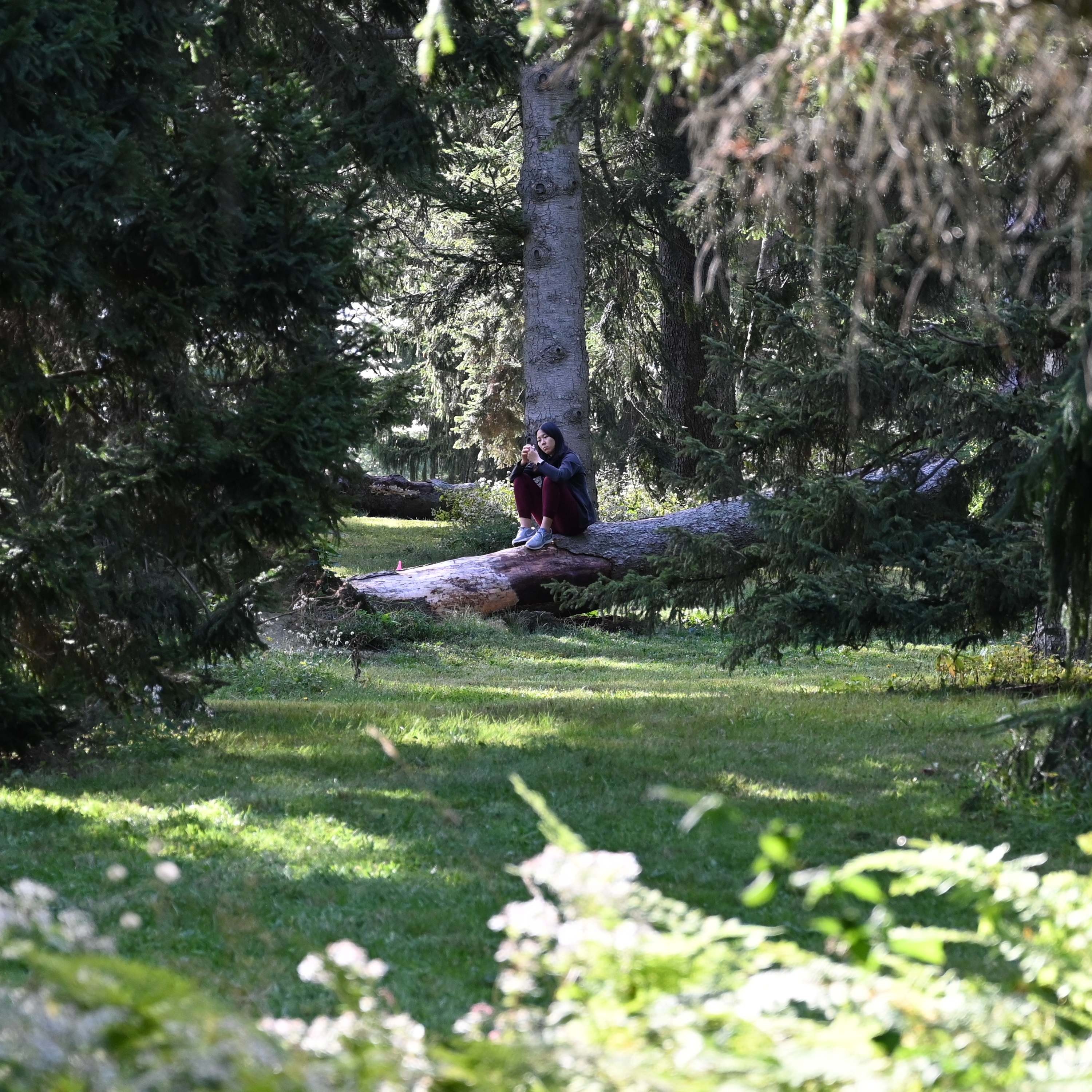
Post Reports
How a former politics columnist is finding awe
00:18:57
Until recently, Dana Milbank was a political columnist for The Post. Now he’s writing about restoring our connections and reviving our sense of awe. Optimist reporter Maggie Penman interviews him about how we can all feel more of it.
Loading summary
Transcript32 lines
- [00:01]
A
What is awe, Dana? If someone's hearing this and they don't know what we're talking about, what is awe and when have you felt it recently?
- [00:10]
B
I think awe is anything that takes you outside of yourself. There's more to it than that. It has an element of beauty to it, but it's something that says that the world and the universe are much greater than you and your problems. And it's a humbling thing to do, but it's also relaxing in a way, saying, no, I'm not carrying the weight of the world on my shoulders. So it's any of those things, but it definitely is an element of beauty. And it's an element of something. It's transcendental. It takes you from the focus inward to a focus outward.
- [00:56]
A
Feeling awe might sound like something we get to experience just a few times in our lives. It's if we visit the Himalayas or see the northern lights. But researchers say that there are opportunities to feel awe all around us. We just have to look for them, and the benefits are huge. Feeling awe makes us feel less stressed, less lonely. It's good for our bodies, our brains, our hearts. So how do we feel more of it? I'm Maggie Penman. I'm a reporter for the Optimist, and this is Post reports. It's Friday, November 28th. Today, I'm joined by former opinions columnist Dana Milbank, who knows a lot about awe. He's been writing a column about it for the Washington Post. Dana, thank you for joining me.
- [01:41]
B
Maggie, it's an awesome experience.
- [01:46]
A
You had a very different job until recently. You were writing about politics for the Washington Post for a long time. Before that, you were a White House correspondent. You covered Congress. So what made you make this switch?
- [02:00]
B
Self preservation. I was, you know, I loved covering politics. I'd been doing it for, you know, 30 years, and I loved it for the first 20. Then something happened. I don't know if you. I can't remember what it was, but it was around 2015 and things really started going south in our political system. And I was finding, you know, that it sort of. I wasn't getting as much enjoyment out of it. But I think even more importantly, I felt like it wasn't having the desired result anymore. I just felt that it was just sort of screaming into the void and at best, sort of reinforcing the views of people who already agreed with me. So it was sort of soul crushing. And a few years ago, my wife and I bought a farm out in Virginia, which was a little ludicrous. Thing for me to do. A kid from the suburbs in the city. I didn't know anything about anything on a farm, but I really fell in love with the experience. I got a tractor and I got a rifle so I could go deer hunting and a shotgun and other country stuff. So my friends no longer recognized me, but I started writing about it. And I was finding that the columns that I was writing were generating more interest from readers than my political columns. Not always as many readers, but the readers who read it were just passionately interested in it. So I felt like I was really onto something. And so I decided both to preserve my sanity and to see if I can give the readers something that they're really interested in to do this and to make this switch. And so far, I'm certainly enjoying it. But does seem that the early indications are the readers are looking for this sort of thing, too, as I'm sure you see in your work.
- [04:02]
A
Yeah, absolutely. I hear from people all the time who say, like, this is exactly what I needed. I'm so glad the Washington Post is covering this. I also sometimes hear from people, as you might, too, saying, like, why are you writing about this? And is this news? Have you heard from any readers who want you back in the trenches, who are like, you should be talking about the, you know, important things happening in our government?
- [04:25]
B
Absolutely. I get emails and, you know, often in the comment section is, you know, the world is burning. And the Washington Post sent Milbank to go trout fishing. Which is funny, but I would say it's, you know, 10 to 1, 20 to 1 in favor of what I'm doing here. Because the truth is, people were largely turning away from political journalism anyway just because, I mean, I can't blame them. It's like, who wants to, you know, be part of this? And I thought long and hard about it. Am I stepping away from doing something that is important? But I feel what I am doing now is more important because it's not just a matter of one side or the other in our political debate. I mean, anybody who's read what I've written over the years knows where I came down on that. But it seems like our problems are deeper than that, and we've sort of lost the ability to talk to each other. There's no sense of a shared mission in the country or of good faith. And it just seems like we're pretty lost. So what internally here, we call this rehumanizing, how we get back in touch with nature, with each other, with our institution. So what I feel like I'm actually achieving more now and trying to rebuild what's been lost. Because truth is, we're not going to fix our political system with a few more op eds. We're not gonna fix it even with an election or two. The problems are much deeper than that. So I'm trying to get at the root of the problem. So, you know, give me a month or two, we'll have it fixed, and.
- [06:06]
A
I'm glad you're on the case, and.
- [06:07]
B
Then we can go back to writing politics.
- [06:10]
A
Yeah. So why did you choose this particular topic of focusing on awe, which you have written about for a couple of your columns?
- [06:17]
B
Well, there are many aspects that I'm trying to get at. As I mentioned earlier, it's, you know, getting in touch with nature, getting touch with community, other components of this. So the awe piece, the first one I did, launching this new column, and I had decided I wanted to just take a small plot of land on my farm, but I said people could do it in their own backyards or on their balcony or in a city park and just slow down, take out a little $10 hand lens and just look at tiny blades of grass and their flowers. And when you do that, you see the most extraordinary, beautiful things. And that was revelatory to me because when we think of awe, as you suggested in the intro, the notion is like we're looking out on the vast ocean. We're standing on a mountaintop and seeing just the ang. Angels are singing, you know, that kind of thing. But there is awe all around us. And that's what you can get from just standing there with your little magnifying glass, looking at these beautiful grass flowers. But you can do it in so many other ways. And it's something we need to be doing on a daily basis because let's face it, whether it's our politics or AI or social media, I mean, we're pretty grouchy for good reason. And it doesn't have to. So this is a way to get outside of yourself and say, wow, there's a whole lot more going on in this world than me and my problems. It's all been here a long time before. It'll be here a long time after we're gone.
- [08:12]
A
So have you noticed that the way you move through the world has changed or that your mental health has improved?
- [08:19]
B
Well, I guess you have to say what the baseline is when it comes to my mental health.
- [08:24]
A
Well, you've been covering politics for a long time, so we can assume it was pretty poor.
- [08:29]
B
You assume correctly. And I'm pretty hard charging. And I mean, there's a certain irony to starting this new beat because look, I'm a pretty old guy now and change is hard. So what I've discovered is even though I'm writing about things that make me feel good, I'm working a lot harder. So that's more stressful because I gotta learn all these things like covering politics. I could do it in my sleep, but I don't know all these social scientists who study these things. I've got to learn a whole new language, but it's a rare chance. I'm being paid in a way to go see mountain lions or go trout fishing or go forest bathing and then tell readers about it. So I'm enjoying that very much. I'm enjoying the interaction with readers. So it's definitely ennobling and uplifting even though it's hard work. But I'll take the hard work because the payoff is worth it.
- [09:40]
A
Okay, we're going to take a quick break there and after the break I'll ask Dana about how we can all find more awe in our lives. We'll be right back.
- [09:57]
C
You may have heard of HelloFresh. They're the number one meal kit in America, making home cooking easier with chef crafted recipes and fresh ingredients delivered straight to your door. But this fall, they're serving up even more to love. This isn't the HelloFresh you remember. HelloFresh is now bigger, having just doubled its menu. Choose from over 100 options each week, including new seasonal dishes and recipes from around the world. HelloFresh is also healthier. You can choose from over 15 high protein recipes each week and you can eat greener too with new veggie packed recipes. Best of all, HelloFresh is tastier than ever. Get steak and seafood recipes delivered every week for no extra cost or savor the season with hearty fall recipes like classic Beef Chili or Honey Glazed Pork Tenderloin. I actually just put in an order for the beef chili and cannot wait. The idea that I can eat a well cooked hearty fall classic without having to go shopping is a game changer. The best way to cook just got better. Go to hellofresh.com posttenfm now to get 10 free meals plus a free breakfast for life. One box with active subscription free meals applied as discount on first box. New subscribers only. Varies by plan. That's hellofresh.compostfm to get 10 free meals plus free breakfast for life why do most of us want to learn a new language? For me it's definitely not about memorizing grammar tables or topping a leaderboard. It's because I actually want to know how to speak it in the actual real world with real people. That's why I use Babbel, who gets you there fast. Learning a language with Babbel is about small steps, big wins and progress you can actually track and feel. Just 10 minutes a day is enough to start seeing real results. Babbel lets you practice real life conversation without the stress. You'll build the confidence to speak up when it matters, from ordering a coffee to chatting with new friends abroad. I'm personally super excited to try to learn French and then actually go to France, put my new skills to the test and immerse myself even deeper into the culture than I can now. Here's a special limited time deal for our listeners right now. Get up to 55% off your Babbel subscription at babbel.com reports. Get up to 55% off at babbel.com reports spelled B-A-B-B-E-L.com reports rules and restrictions may apply.
- [12:18]
A
Dana, we all know awe is really good for us, but how do we find it? If I am listening to this and I want to change my perspective and start seeking it out, what should I do?
- [12:29]
B
Well, I can answer this based on. I've talked to people like Dacher Keltner, who I know you've spoken to out at Berkeley and others based on his work. And he's done a terrific book on this whole subject, which I recommend. We talked about looking at grass, flowers, looking at or for the Milky Way at night. You know, you can find it in an art gallery or at a symphony. I went up to New York just recently to they were putting on an event there called Cities of Awe. And basically they're asking New Yorkers to say, well, what about New York? Just gives you that feeling of awe, that transcendental feeling. So they're just starting to collect those now. But, you know, I tried to go through that exercise and I was thinking, well, for me it was growing up as a kid during the holidays and looking in the Macy's window and smelling the roasting chestnuts, that sort of thing. Just thinking about that transported me to a different place. And, you know, it's in. I mean, and we see awe in the beauty of other people, the moral beauty of people. People find awe, of course, in church or synagogue, but it's all around us. You can look at the clouds as they shift and shape in the sky. One of the scientists I talked to said, just put some grains of flour or rice under a microscope and look at that. And then you think, wow, these things didn't just get here by accident. It was either God's creation or millions of years of selection or some combination thereof. But the awe is there to behold. You just gotta slow down, put down the screens and look at it.
- [14:39]
A
I'm curious for you, what does your news consumption look like these days? Because I imagine you used to be someone who got every news alert and was incredibly plugged in. So how have you changed the way that you consume the news?
- [14:55]
B
You know, I think the key is, you know, being informed is one thing, doom scrolling is another thing. So from what I've learned from talking to folks so far is, yeah, so you know, set aside your time the morning, probably not right when you're about to go to sleep and get your fix from all the newsletters, from the posts from the Times, whatever, substack, whatever account. I don't think it matters so much as long as you're getting them from some sort of general interest news outlets. And then that's it. Yeah, I still get those headline alerts from the Post and others on my phone, so I'll have a general idea of what's going on. Am not on social media at all for the rest of the day.
- [15:45]
A
I.
- [15:46]
B
Mean, unless I'm using it to research something for a story. But it seems to me that if you can keep it confined and then say, right, I'm informed now, I don't think I like what I've heard, but I'm informed. And then go on with your life. And none of this is to say we shouldn't be engaged in politics. If protesting is your thing, if working on campaigns is your thing, this all is extremely important. So I'm not saying to unplug and step away from politics. I'm just saying to take it in a dose and just don't let it bleed into everything.
- [16:28]
A
Yeah, I mean, to that point, I think screens and social media are such a big part of this and I think a big part, and I think there's a lot of research to back this up of how we became so isolated, how we became so ideologically polarized. So have you changed your habits at all on, you know, how you use screens, or do you have advice based on what you've researched about how our audience should.
- [17:02]
B
Well, even as a political journalist, I was using social media much less I just found it unpleasant and distasteful. So it may have been to my detriment. But I wasn't very active in social media more than posting my column or looking at what reporters are reporting. But what I'm doing now for my job, which I'm also finding helps a lot in life, is just get away from the screens altogether. You know, one of the early pieces I wrote was about being in a coffee shop out in Sperryville, Virginia, in this coffee klatch with some MAGA Republicans, some liberal Democrats who just hang out every day and talk to each other as human beings. They may go out and say terrible things on social media, but they're not saying it to each other. So I wouldn't say it so much as changing. You're not going to change social media. That's how it's going to be. But I think you'd be surprised if you get out there and just strike up conversations with real people. They're not going to say to your face the horrible things that they might be saying online. And that makes sense because nobody wants to be that person when you're face to face. So I'm just trying to have a lot more actual human interaction rather than virtual interaction. And that feels very good.
- [18:29]
A
That sounds healthy. So I wonder if after thinking about these big ideas for the last few months, do you feel more hopeful or less hopeful about our future as a country?
- [18:44]
B
You know, Maggie, I've always been very hopeful. It's just sort of a long term hope. Because if you're a student of history, it's like we get it right after exhausting all other things, possibilities. And there have been much worse times in American history. And yeah, things are bad and we can't get anything done and the world hates us and whatever, but we are going to get past it. Now it may not be in my lifetime, it may not even be in your lifetime, but we will get there. And when I'm out, whether it's at that coffee shop or talking to people at the dump or whatever else I'm doing, I'm realizing that there's beauty in all of these people and people that I was. I didn't have a lot of nice words to say about MAGA Americans, but I don't know, I'm encountering them in my daily life now. And it's a bit of an exercise. We're not talking politics, we're talking about or we're talking about the local board of supervisors or we're talking about whether they should have had that development. Ordinary things, the school board. But mostly we're talking about why it hasn't been raining, and that really sucks for all of our plantings. How many deer are you looking for this season? That kind of thing. And it's a whole different perspective.
- [20:22]
A
That is a lovely note to end on, I think. Thank you so much for doing this. I really appreciate it, Maggie.
- [20:27]
B
It was uplifting. I'm feeling more optimistic.
- [20:31]
A
Oh, good. Okay. That's the effect I hope to have on people. Dana Milbank is a columnist for the Post. And that's it for Post Reports. Thanks for listening. Today's show was produced by Josh Carroll, Ted Muldoon and Renny Svernofsky. It was edited by Alison Klein and Ariel Plotnick and mixed by Sean Carter. If you want more stories from the Optimist, send me an email@maggie.penmanashpost.com and subscribe to our newsletter. I'll put a link in the show Notes. I'm Maggie Penman. Have a wonderful holiday weekend.
- [21:16]
D
You listen because you know the power of good journalism and the Washington Post is there for you. To 247 when you become a Washington Post subscriber, you get exclusive reporting you can't find anywhere else. You also get sharp advice, columns, delicious recipes, TV and music reviews and so much more. Right now, you can get all of that for just $4 every four weeks. That's for an entire year. After that, it's just $12 every four weeks. And you can cancel any time. Add to your knowledge and discover all the Post has to offer. Go to washingtonpost.com subscribe. That's washingtonpost.com subscribe.