← Post Reports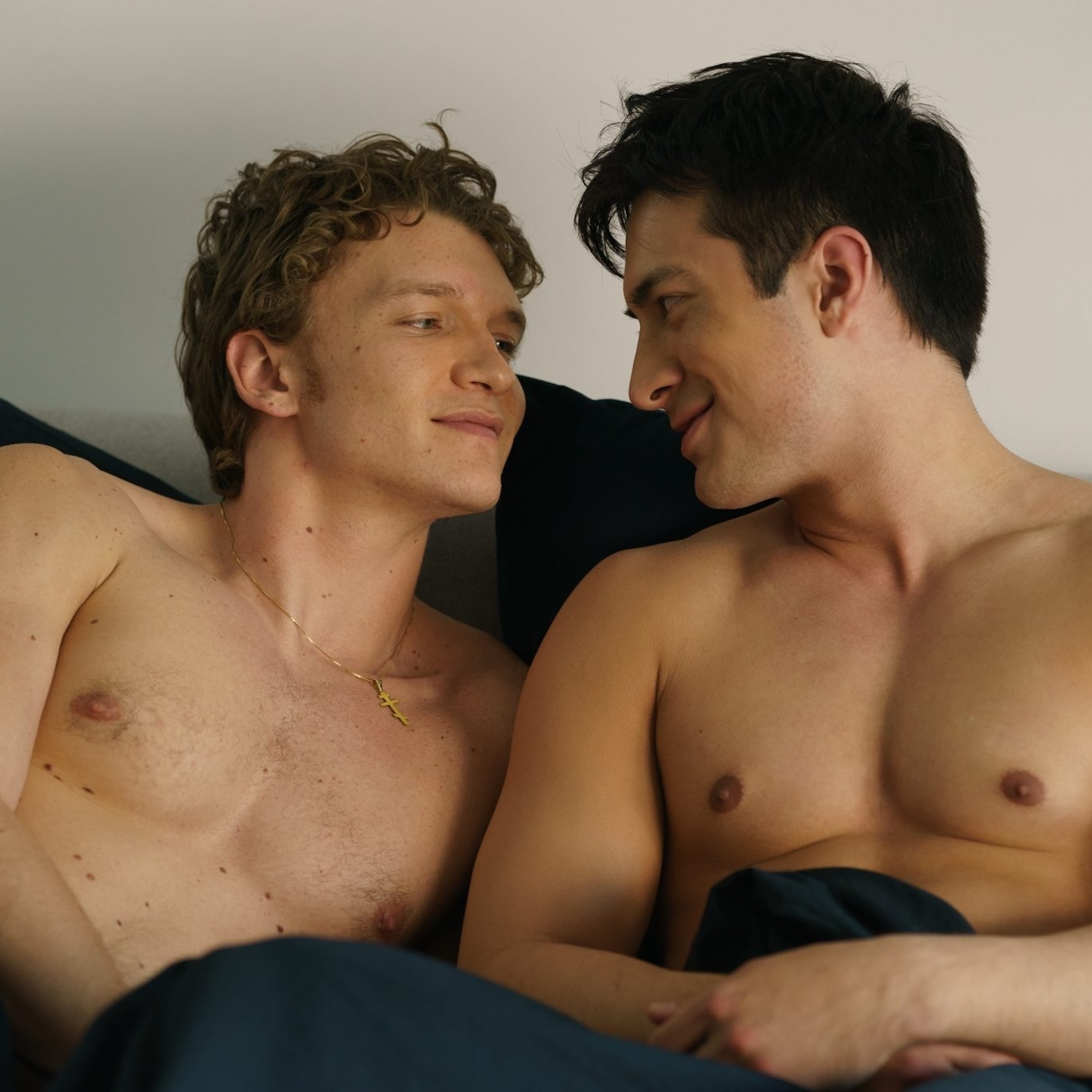
Post Reports
How a gay hockey romance became a global phenomenon
00:24:13
How a gay romance TV series brought the steam into America’s living rooms, and what it reveals about our collective horniness.
Loading summary
Transcript64 lines
- [00:01]
Martine Powers
This is Michael J.
- [00:02]
Shane O'Neill
Fox. With your support, we can end Parkinson's once and for all. Get involved@michaeljfox.org the Michael J. Fox foundation here. Until Parkinson's isn't.
- [00:17]
Rachel Kurzius
Okay, guys. So when we decided that we were gonna have this conversation about this show, Heated Rivalry, I was like, oh, let me start watching the trailer for the show at my desk at work.
- [00:27]
Shane O'Neill
And then you got an HR violation.
- [00:29]
Rachel Kurzius
Well, I started watching the trailer and was, oh, no. And then I was like, let me go into an office and start watching. And then that was too much. I ended up just staying up until 1 o' clock in the morning last night watching this show because it seems like that's the only right way to do it.
- [00:44]
Martine Powers
I think that's right. You need the kiddos in bed before you can turn on this show and fully enjoy it to the maximum potential.
- [00:56]
Rachel Kurzius
From the newsroom of the Washington Post, this is Post Reports. Martine. I'm Martine powers. It's Thursday, December 18th. Today, we are talking about Heated Rivalry. It's a new show on HBO Max that has been getting a lot of attention. It follows two young male pro hockey players. The reserved and cautious Canadian Shane Hollander and the brash and cocky Russian Ilya Rozanoff. In public, they are fierce competitors, and in private, they nurture a blossoming romance. The show is based on a book that has now reached the New York Times bestseller list, and the TV adaptation has shot to the top of HBO Max's viewing charts. Part of what's got everybody talking about this show is how this relationship is depicted. And here's where I need to mention that this episode will talk about sex and might not be appropriate for kids who are listening. Because as you'll hear, one thing that's notable about Heated Rivalry is its frank and vivid depictions of gay intimacy. I sat down with lifestyle reporter Rachel Curzias and Post style reporter Shane o' Neill to talk about why this extremely steamy show has struck a chord with audiences and what it says about our collective anxieties around sex and relationships. All right, so before we dive into this TV series, I wanna get a little bit of backstory because, Rachel, as I understand it, you basically made this TV series happen, that you were the single person who got this to be adapted from a book to something that now we're all watching.
- [02:46]
Martine Powers
I think that's an overly generous interpretation of my role in this television show. Back in August 2023, I wrote a story for the books team, all about the surprising popularity of hockey romance and I included Heated Rivalry, and I interviewed its author, Rachel Reed, because I love this book, and I was really excited to talk to Rachel Reed, the showrunner. Jacob Tierney read that article. He had already.
- [03:14]
Rachel Kurzius
But you know that he read your story.
- [03:16]
Martine Powers
Yes, I spoke with him about it. Basically, he had already read Heated Rivalry, enjoyed it very much, but wasn't quite sure, like, oh, I like it, so I'll adapt it for tv. That wasn't really on his mind. After reading my story in the Washington Post, he basically got this intense feeling of preemptive fomo, like, someone else is.
- [03:40]
Rachel Kurzius
Gonna read this and know that this needs to be adapted, and when someone else makes it and it's not me, I'm gonna be mad.
- [03:44]
Martine Powers
That's exactly what happened. And literally, after speaking with his production partner the very next day, he reached out to Rachel Reed on Instagram, and they shortly thereafter inked a D to option all six books in her Game Changer series. The wild part is that his sense of urgency wasn't off base. Shortly after that, Warner Brothers reached out to Rachel Reed. She told me. So there was a feeling that, oh, someone. Someone's gotta do something with this book.
- [04:14]
Rachel Kurzius
And Rachel Kersey has had her finger on the pulse pacemaker right here. Well, so let me ask you this, and Shane, I wanna hear you on this too. Like, what is it about this and then about the TV series that caught your attention? Or, like, why did you have this feeling of like, oh, this is really good. And this is a thing for me.
- [04:35]
Martine Powers
The characters, Shane and Ilya, who are the main characters in the book and the television show, they are pro hockey players who are rivals on the ice. They're always pitted against one another. And in the book, you learn that they're also hooking up over the course of nearly a decade. And that pairing has always had a really intense chokehold on me. It's one of my very favorite romance pairings. I mean them specifically, because I think if I have a critique of romance novels more broadly, it is the idea that the quote book boyfriend in particular is now too perfect. Right? He's the kindest guy ever with a six pack and also a billionaire. And I just find that kind of dull. What is so beautiful to me about romance is the idea that two imperfect people can find in one another and cultivate their own ideal of perfection. And throughout the book and the series so far, we're seeing that happen. And so I think that Shane and Ilya are just a very special pairing. And that's what spoke to me about it.
- [05:47]
Rachel Kurzius
Shane, what about you?
- [05:48]
Shane O'Neill
I'm not sure. I know it's good, but I know that it was a thing because.
- [05:53]
Rachel Kurzius
Let's talk more about that. Like, why do you think it's a thing, even if it is not good? And why do you think it's a good thing? Well, I'm also.
- [05:59]
Shane O'Neill
I'm being facetious. I mean, like, I'm enjoying watching it. I think it is exactly what it is and not trying to be anything else. And I think it's really successful at being a sort of like soft core soapy fantasy. And I think it's hitting a lot of sweet spots between camp and genuine enjoyment. The short answer is that, like, you know, I'm gay and like my community online and in real life, this really struck a chord. Like people were talking about this before it came out and when it came out in a way that, you know, I haven't really heard maybe since like RuPaul's Drag Race or something.
- [06:29]
Rachel Kurzius
And the thing that I feel like we just have to put out there is like, it's pretty. I mean, I don't know if explicit is the right word. There's just a lot of sex in this TV show. And I would like to say, as I've been watching, there are other parts of the narrative that I find compelling. I find there with their parents and their family is interesting and like their relationship to the sport of hockey. But like, really this is a show that is just a lot of sex scenes between these two very good looking men. And I think that's maybe in terms of like actually depicting what those relationships look like behind closed doors, that that's not something that we always see in TV when it comes to depictions of queer relationships.
- [07:09]
Martine Powers
I think that's right. And the one thing I do want to say about the sex scenes which have rightfully caught people's att is in the book and in the show, the language that these characters have long before they understand how they feel about one another or even what their own identities are, is they have sex with each other consistently. And the way that this sex happens between them shifts over the course of the narrative. And I think that for the reader or the viewer, you can understand plot or character development through the kind of sex that they're having, which. So for me, when I hear people say it's just a sex scene, like just a sex scene, this is plot, this is character, this is everything happening. This is how they're telling the story.
- [08:00]
Shane O'Neill
I would really second that. I think that, like, you know, sex is always Communicative. And I don't think that's often communicated in art or pornography for that matter. And I do think that what you said is absolutely right. That like you're getting plot moving forward and you're realizing how their relationships are shifting, which I think is true for a lot slash all relationships. But I think it's especially true for how gay guys get to know each other. Where it's like, especially as relationships blossom, I think they start out sexually and that can be the communication point that like allows things to grow and change. So I found that extremely realistic. The other element of this, and I don't think this can be understated, frankly, is the sound editing is really shocking.
- [08:40]
Rachel Kurzius
Say more what you mean by that.
- [08:42]
Shane O'Neill
I have seen much more explicit things on my computer screen than I've seen on HBO Max. I'm not sure I've heard the sound effects quite so graphic. I mean, like, I gasped at the first one of the scenes where I was just like, I can't believe the audio that they're using for this. If I did have a dream interview, I'd love to talk to like the Foley artist who's doing this. It's really true. The audio, I think is particularly turnt up in a way that I think is maybe subconsciously making it all seem a little more. Cause you know, you're. There's a lot of sex, but you're not like. It's not. What do you call it?
- [09:18]
Martine Powers
It's not like full frontal. There's no full frontal. There's a lot of back frontal. A lot of buts.
- [09:23]
Rachel Kurzius
Or specifically just the two butts over and over again.
- [09:26]
Shane O'Neill
Exactly. And it's not like urological. It's not like an anatomical exploration. But I think that that audio really. That audio really puts you in the room.
- [09:37]
Rachel Kurzius
Well, let me ask this. What do you guys make of the show's success right now? You know the fact that when I open HBO Max, this is the first like on the new end and watching kind of screen. Why do you think that this has hit a nerve with people and why so many people are into it?
- [09:55]
Martine Powers
I want to first kind of set the scene of this being a little bit of a Cinderella story. Because the idea that this is even on HBO was not a foregone conclusion. Heated Rivalry was originally just going to air on Crave, which is a Canadian streaming platform. And it was entirely funded by Crave, which kind of took a swing on this. And when I spoke with Showru Jacob Tierney, what he said was when they were looking for other funding. There were all of these execs who would come into the room with notes that would have basically changed what this show is, whether it was, maybe we don't need to actually see or hear the sex, right? Or maybe we need to introduce this one female character in the first episode. And Tierney basically said, no, that would functionally change what this show is and not really make it a faithful adaptation. And crave backed him and funded the entire thing. And now they're really reaping the benefits of that, getting to distribute all of this internationally. But up until the last minute, heated rivalry fans were thinking, am I gonna have to travel to Canada to watch.
- [11:07]
Rachel Kurzius
This show, get a Canadian vpn?
- [11:09]
Martine Powers
Right, Exactly.
- [11:10]
Rachel Kurzius
Shane, I'm curious your thoughts on this. And particularly the fact that, I mean, it seems like this is a. That is really resonating with queer audiences. But also, I think, as Rachel and I demonstrate, is also taking off with straight people, with straight women. I mean, well, what do you make of the broad appeal of this? And do you think that's a good thing?
- [11:33]
Shane O'Neill
I mean, short answer, yes, of course it's a good thing. I mean, I think people enjoying something as fun and fundamentally innocuous as this is, is a great thing. So, you know, I'll take an extremely long scope. Like, why is this so successful? I mean, go to an art muse. People always like to look at beautiful bodies. Like you can, you know, if you, if you go to the Metropolitan Museum of Art, you're gonna see a Kouros statue of like a ripped, you know, athletic male figure. And that's just a beautiful thing to behold, period. So I really do think that's a fundamental thing. I would also say that, like, historically in, like American culture, there are these moments where things, you know, we just have like, I don't know what you'd call them, collective horny moments where I'm thinking about, like, when Deep Throat came out in the 70s, it was, you know, like a low budget hardcore pornography film from 1972. It had like a mainstream theatrical release and became a sort of chic thing for people to attend. So celebrities were attending screenings. It was not just in adult movie theaters. It was also in mainstream movie theaters, like Ed McMahon and Johnny Carson. Going to like, see Deep Throat in a theater was sort of like mainstream culture wondering how we can integrate these, like, radical ideas about sex and the way culture is shifting. And it was a way to sort of be like, okay, like, how do we fit into this? Or 50 shades of gray. A woman said this to Me. And it stuck with me. I don't know how you could see 50 shades of gray and not see this as an exploration of the feminine shadow self in society that, like. And I think that you do sort of see that as a precursor to, like, all this discourse about trad wives and, you know, like, the role of women who find power in being submissive or being otherwise, you know, like, subservient to men.
- [13:09]
Rachel Kurzius
Yeah. That, like, as power dynamics are changing between genders in, like, the real world and the workplace and more widely, like, how that plays out in romantic or sexual relationships.
- [13:18]
Shane O'Neill
And I would say that, like, we're also seeing this real crisis of, like, there's a lot of discourse about how hard it is to date and how difficult it is for heterosexual women to find meaningful relationships with men. And I think there's a lot of anxiety about, like, male female couplings. And then from a gay perspective, I think it's just. It's really hitting a sweet spot between, like, mostly fantasy, but a little bit reality. The premise is there's enough conflict, but no one's scared that these characters are gonna get killed if they're outed for being gay. But, like, the conflict of not want to be a professional athlete and coming out is real. And then just, like the content itself, I think is really striking. An incredible balance between, like, being just prurient enough that, you know, jaded queens like myself will gasp, but still being, like, dreamy and fantasy driven enough that it still feels, like, wholesome and kind of silly and sweet.
- [14:14]
Rachel Kurzius
After the break, I talk with Shane and Rachel about whether heated rivalry is just shallow, sexy fun or whether it says something deeper about how audiences are thinking about sexuality in a post MeToo era. We'll be right back.
- [14:40]
Podcast Advertiser/Host
Holiday gifting can be really stressful sometimes. Let's be honest. It's really hard to give things people will actually love. You know, the beautiful, timeless pieces they'll wear for years. That's why this year I'm going with Quince. From Mongolian cashmere sweaters to Italian wool coats, everything is premium quality at a price that actually makes sense. Quince really does have something for everyone, like soft Mongolian cashmere sweaters for $50 that look and feel like designer pieces. Silk tops and skirts for dressing up, perfectly cut denim for everyday wear and outerwear that actually keeps you warm. Every piece is made with premium materials from ethical, trusted factories and priced far below what other luxury brands charge. It's elevated, timeless, and made to wear on repeat. I've told you before how much I love the cashmere sweaters. I also just got myself an Italian wool coat. It looks designer and I get compliments all the time. When I tell people the price though, they genuinely don't believe I actually have to show them on the Quint site. So this holiday find gifts so good you'll want to keep them with quintessential go to quince.comreports for free shipping on your order and 365 day returns. Now available in Canada too. That's Q U I N C dashe.com reports to get free shipping and 365 day returns. Quince.com reports as a listener of this podcast, you've by now no doubt heard of HelloFresh. They're the number one meal kit in America, making home cooking easier with chef crafted recipes and fresh ingredients delivered straight to your door. But here's the thing. This fall they're serving up even more to love. This isn't the HelloFresh you remember. It's bigger. After literally doubling its menu, you can now choose from 100 options each week, including new seasonal dishes and recipes from around the world. HelloFresh is now healthier too. Choose from 15 high protein recipes each week with options like grass fed ribeyes or lamb chops. HelloFresh now helps you eat greener with new veggie packed recipes that have two or more veggies per dish. Best of all, it's even tastier. Savor the season with hearty fall recipes like Classic Beef Chili or Honey Glazed Pork Tenderloin. Discover new seasonal produce each week from broccolini to Italian Eggplant and more. Last time I told you I had just put in an order for the beef chili. Well, it was even better than expected. Super easy to cook, as hearty as any chili I've ever had, and tasted so good. Best of all, zero minutes spent shopping the best way to cook just got better. Go to hellofresh.com posttenfmnow to get 10 free meals plus a free breakfast for life one per box with active subscription free meals applied as discount on first box. New subscribers only. Varies by plan. That's hellofresh.compostfm to get 10 free meals plus free breakfast for life.
- [17:17]
Rachel Kurzius
Shane, I find what you said super fascinating and I want to hone in on that a little bit more because I feel like that was my feeling in watching this as well. I guess what makes romance at least romance for straight people a little bit more complicated right now, as you said. Like this is this moment where we're sort of in the aftermath of the MeToo era. And there's a lot about how men and women in the US Are not politically aligned or that, you know, lots of women feel like there aren't men that they see day to day, that they are actually interested in dating. And so I hear you on that in that it feels like. Because being. I don't know, I guess like being a straight person in a relationship is so complicated right now. Watching something else is really fun.
- [17:59]
Martine Powers
There's definitely an escapist element, I think, for women who date men of I'm not in it. And isn't that great? I can just fully immerse myself into this cultural artifact without feeling like I'm comparing myself or otherwise a part of it in any way. But I think when you talk about the chemistry, that's another thing I really want to hit on. Because what heated rivalry dares to imagine is what if we cast romances with leads who have chemistry with each other? Which is something I think, that we just simply don't see a lot. Haven't you seen all of these rom coms where these characters have this alleged scripted repartee, but there's nothing kind of zinging off the screen?
- [18:42]
Rachel Kurzius
Yeah. And I wonder if maybe that's because we're. Or I guess, like, the people who do casting for movies are more interested in getting two celebrities.
- [18:49]
Podcast Advertiser/Host
That's right.
- [18:49]
Rachel Kurzius
Who just have their own following versus, like, two people who are.
- [18:52]
Martine Powers
These are two complete. You know, I don't think that people knew who these actors were on a broad scale at all. I'd never seen them anymore, this show. And instead, they were cast for their abilities and in particular, their chemistry with one another. And it shows.
- [19:08]
Shane O'Neill
I would also just say, though, like, yeah, what you were saying about their chemistry. Their chemistry really is remarkable. I mean, the scenes feel extremely intimate. And I think they feel intimate in a way that we're just not used to seeing. Like you said, I don't think that mainstream art or media is taking the time to create scenes that have this kind of intimacy. Pornography, which is enormous, certainly is not creating these markets for intimacy. So I think in that sense, it is shocking because it's something that we're not seeing. We're not seeing mainstream people approach this with care. And we're seeing everything anatomically in pornography, but we're not seeing these intimate moments.
- [19:43]
Rachel Kurzius
Well, Shane, I wanna ask this question because this is a criticism that I've seen and heard about this series. And I'm curious if you feel like it holds water, the suggestion that this Is a romance about two queer men that's actually written and filmed for straight women. Do you think that's fair?
- [20:02]
Shane O'Neill
Well, do we have a problem with Sex and the City? I mean, that was a show that was about women having sex with men. That was r by and for gay guys. I mean, that was Darren Starr being like, this is my fantasy of what it would be like to be a gay guy. So if you do have a problem with that, then don't watch the Golden Girls, because that's also just like straight women living out a gay metaphor, period.
- [20:22]
Martine Powers
And I just wanted to add one element to this conversation that I feel like we constantly hear. Is it for gay men? Is it for straight women? And I think that we're forgetting a lot of the fans who are on the front lines of the heated rivalry fandom are lesbians. And I just think that it's overly simplistic to think that this is for one or for another when, you know, the creator of the show is a gay man. And this was something that Jacob Tierney told me is that your general understanding of a story arc is totally different here, right? And ironically, like, quote unquote, your average romance kind of mirrors the arc of a male climax, right? There's like rising, rising action and then climax and then falling action. Whereas here they're hooking up from the outset, and they meet first physically and get to know one another physically far before any emotion comes into it. And I think that that mirrors a lot of people's real world experiences that you don't see as often on television or in movies.
- [21:25]
Shane O'Neill
I mean, you know, I'm feeling a little blushy about talking about this, but, like, you know, I have heard from many lesbian women for years that, like, a lot of lesbians enjoy gay male pornography. And I think that, like, gay male erotica has the advantage of extricating itself from patriarchy. And I think that there are things in this show that you're seeing that would make you uncomfortable if it were a male female dynamic. For example, a workplace romance, for example, hitting on each other in a shower, you know, so I think there are explorations of sort of, like, taboos that when you're subtracting the idea of, like, a man subjugating a woman, we're more comfortable with two men sort of exploring these things. And, you know, it sort of opens things up a little bit when you're not worried about sort of like the health and wellness of the woman involved. I think that's one theory that I have for it.
- [22:17]
Martine Powers
Yeah, I think that's right. It speaks to this escapist idea. And I don't think that the show itself is free of the idea of patriarchy. Right. Like, most of their reason for secrecy is that they're professional athletes in this hyper masculine world. And it's only when they are with each other that they are kind of free from those burdens. Even though by being together, it almost heaps those burdens on them more. Which is, as a romance lover, forbidden romance is like one of the sweetest of them all. And, you know, and I think that that is also part of the appeal sometimes of an MM romance is that a lot of times when you read contemporary romance, the things that are keeping the characters apart are frankly stupid. Like, text each other, you know, like, this isn't a Regency romance. Like, give. Give the other person a call, send them a DM on Instagram. Like, it's not that hard, actually.
- [23:07]
Rachel Kurzius
Yeah. I feel like it becomes increasingly difficult to set up obstacles. Believable. Cause it's like you can just be with each other and talk to each other if you want.
- [23:15]
Martine Powers
And I feel like in this show the obstacles are very believable and makes sense to me. And also they're external of the characters, even though certainly they feel them, which allows their romance to bloom in really fascinating ways.
- [23:30]
Rachel Kurzius
Yeah. Yeah. Well, I could talk about this for hours and hours, but just to close, I wanna hear from you guys, what do you think this show says about the state of American sexuality?
- [23:42]
Martine Powers
It's strong. The state of our union is strong. But also, I just wanna say, like, I think in framing this about American sexuality, you're erasing the fact that this is a Canadian show.
- [23:54]
Rachel Kurzius
Yeah, you're right. You're right.
- [23:55]
Martine Powers
This was funded by Canada. Like, this is Canada's greatest cultural export since, what, Hockey itself.
- [24:00]
Rachel Kurzius
Okay, so what does this say about the state of Canadian sexuality?
- [24:03]
Martine Powers
Unfortunately, I can't speak to that.
- [24:06]
Rachel Kurzius
Shane, what about you?
- [24:07]
Shane O'Neill
I mean, I think the fundamental thing is just that there's always an appetite for watching the human form be beautiful. And I think that that's sort of a constant. So I don't think that's new as far as what it says about sexuality. What's most interesting to me is how wholesome it all feels and that we're certainly at a place right now where even though one of the fundamental conflicts is just like, coming out of the closet, which to a lot of gay guys feels extremely retrograde and extremely. Like, we did that in the. Whatever, whatever, the basic tenet of it still feels wholesome and it still feels something that is not a filthy secret unto itself. I think that's really telling. We're at a sweet spot where we are comfortable with a gay relationship, but there's still enough discomfort that there's a spark. And I think that we're at a place where it's fun to feel consequence free titillation or nervousness. And I think maybe a lot of us are trying with so much genuine anxiety about our future. I think sort of reverting to these sort of like smaller scale schoolyard anxieties about like, I like him, but can we be together? I think that it's a really welcome escape and also like a really welcome way to live out conflict in a way that doesn't feel just so dark and heavy and guilty.
- [25:25]
Rachel Kurzius
Rachel and Shane, thank you so much for chatting with me about this amazing show.
- [25:31]
Martine Powers
The idea that we're paid to do this is so delightful I can't even begin to tell you.
- [25:36]
Shane O'Neill
I second that wholeheartedly.
- [25:42]
Rachel Kurzius
Rachel Kurzius and Shane o' Neill are reporters for the Post. That's it for today's episode of Post Reports. Thanks for listening. And before we go, I've got one quick request for you. So we want to learn more about you, about your listening habits and about how you think we can be doing better. So we've got a new survey that we're running for a limited time and we would love to hear from you. It shouldn't take more than 10 minutes to complete. And to do that, you go to washingtonpost.com podcastsurvey again, that is washington post.com podcastsurvey and when you're done with the survey, you can enter to win a $100 gift card. So if that has persuaded one more time, it's washingtonpost.com podcastsurvey and thank you so much for taking the time to help us. Today's show was produced by Thomas Lu. It was mixed by Sam Baer. It was edited by Peter Bresnan. And thanks to editor Nicole Arthur. I'm Martine Powers. We'll be back tomorrow with more stories from the Washington Post.
- [27:06]
Martine Powers
This is Michael J.
- [27:06]
Shane O'Neill
Fox. With your support, we can end Parkinson's once and for all. Get involved@michaeljfox.org the Michael J. Fox foundation here until Parkinson's isn't. I'm here with spinquest where you can play and win from the comfort of your own home with hundreds of slot games and all of the table games you love with real cash prizes. Right now, $30 coin packs are on sale for $10 for new users. It's all@spinquest.com that's S-P-I-N Q U-E-T.com Spinquest is a free to play social casino void where prohibited. Visit spinquest.com for more details.